Short Honey Hunting Tour in Nepal - 4 Days
Start
1
Country
Nepal
Difficulty
Moderate
Destination
Chamche
Activity
Honey Hunting
Accommodation
Hotel/Teahouse
Meals
Breakfast, Lunch & Dinner
Transportation
Private/Shared Bus/Jeep
Max Altitude
1,550 m
Group Size
1-12
Trip Starts
Kathmandu
Trip Ends
Kathmandu
Best Season
Apr-May & Oct-Nov
Overview
Key Highlights of the Honey Hunting Tour
- Witness the daring tradition of honey collection from cliffs with skilled local Gurung hunters.
- Explore lush forests, terraced hills, and charming remote villages along the Annapurna foothills.
- Taste the raw and pure mad honey directly from hive
- Experience the authentic lifestyle, rituals, and warm hospitality of local communities.
- Perfect fusion of trekking, wildlife, and adrenaline-pumping experiences.
Why Choose Best Heritage Tour for Your Honey Hunting Tour?
- Free airport pick-up and drop-off service
- Online pre-trip briefing and booking confirmation for better preparation
- Multiple communication channels (Phone, Email, WhatsApp, Viber) for easy support
- 24/7 customer support available at +977-9851149197 / +977-9810043046
- Simple and secure payment options including Cash, Card & Bank Transfer
- Provide essential medical kit and oximeter to monitor oxygen levels at high altitude
- Complimentary duffle bag and sleeping bag (used one & to be returned after the trek)
- Free luggage storage facility at Best Heritage Tour store during the trek
- We plant a tree in the name of travelers (upon request), as a part of our commitment to sustainable tourism
Short Honey Hunting Tour Route Overview
Embark on a one-of-a-kind Himalayan adventure with the Honey Hunting Tour in Nepal, a thrilling journey that combines trekking, culture, and adrenaline-pumping experiences. Over four days, you will explore the enchanting landscapes of Besisahar, Bhulbhule, and Chamche, immersing yourself in the natural beauty and traditional lifestyles of the Annapurna region.
The tour begins with a scenic drive from Kathmandu to Besisahar, followed by a jeep ride to Bhulbhule, a picturesque village surrounded by terraced hills and lush greenery. From here, the trekking adventure unfolds as you make your way to Chamche, passing through charming villages, rhododendron forests, and serene riversides. The journey allows you to experience the local way of life, witness the harmony of nature, and enjoy breathtaking Himalayan vistas.
The highlight of the tour is the mad honey hunting experience, where local Gurung honey hunters skillfully collect wild honey from high cliffs - a tradition that has been passed down through generations. This rare and daring activity offers an authentic glimpse into Nepalese culture and is an unforgettable opportunity for photography and storytelling.
After this unique adventure, you will trek back to Besisahar and drive to Kathmandu, carrying memories of an offbeat journey that blends adventure, culture, and nature. Perfect for thrill-seekers, culture enthusiasts, and nature lovers alike, this tour promises a once-in-a-lifetime Himalayan experience filled with excitement, discovery, and unforgettable moments.
What Can You Expect on the Honey Hunting Tour?
1. Taste the Pure Mad Honey
Indulge in the rare, wild Himalayan mad honey, carefully harvested from cliffside hives by experienced local Gurung hunters. Renowned for its unique flavor and natural medicinal properties, tasting this honey is not just culinary - it’s a connection to the mountains and the daring tradition that has thrived here for generations.
2. Witness Century-Old Tradition
Experience the thrill of observing the courageous and centuries-old honey hunting practices. Learn about the techniques, rituals, and cultural significance that have been passed down through generations of Gurung hunters. This rare glimpse into Nepalese heritage offers both excitement and deep cultural insight.
3. Trek Through Scenic Himalayan Trails
Embark on a mesmerizing trek through lush rhododendron forests, terraced farmland, riverside trails, and remote villages. Each step provides breathtaking views of the Annapurna foothills, pristine landscapes, and serene natural surroundings, making the journey as captivating as the destination.
4. Immerse in Local Culture
Engage with the warm and hospitable Gurung communities, discover their daily life, traditional rituals, and deep-rooted connection to nature. Learn fascinating stories about the honey hunters, their way of life, and how this ancient tradition has shaped the culture of the region.
5. Capture Unforgettable Moments
From adrenaline-pumping cliffside honey hunts to tranquil Himalayan vistas, every moment of this tour is picture-perfect. Capture extraordinary photographs, create lifelong memories, and share the story of a journey that blends adventure, culture, and natural beauty in a truly unique way.
Are You Ready for the Honey Hunting Tour in Nepal?
Prepare yourself for an unforgettable Himalayan adventure like no other! The Honey Hunting Tour in Nepal is not just a trek - it’s a journey into the heart of Nepal’s culture, nature, and daring traditions. Are you ready to witness fearless Gurung honey hunters scale cliffs, taste the rare wild mad honey, and explore hidden villages far from the beaten path?
This trip is perfect for thrill-seekers, adventure lovers, and cultural enthusiasts who crave authentic experiences. With stunning landscapes, rich local traditions, and unforgettable moments at every turn, this tour promises memories that will stay with you forever.
Pack your sense of adventure, bring your camera, and get ready to immerse yourself in Nepal’s breathtaking Himalayas. If you’re ready to step off the ordinary path and embrace a journey filled with excitement, discovery, and wonder, then this adventure is calling your name!
Itinerary
1Day 1: Drive from Kathmandu to Besisahar then to Bhulbhule
Kick off your adventure with a scenic journey from Kathmandu to Besisahar, the gateway to the Annapurna region. The drive offers stunning views of terraced hills, rivers, and traditional Nepalese villages, giving you a first taste of the country’s breathtaking landscapes. Upon arrival in Besisahar, you’ll transfer by jeep to Bhulbhule, a charming village nestled beside the Marsyangdi River and surrounded by lush forests. Along the way, enjoy glimpses of local life, rustic villages, and verdant farmland that showcase Nepal’s serene countryside. Once in Bhulbhule, settle into your accommodation and prepare for the trekking adventure ahead.
2Day 2: Trek from Bhulbhule to Chamche
Today marks the beginning of your thrilling trekking adventure. From Bhulbhule, you will follow a scenic trail along the Marsyangdi River, passing through dense forests, terraced farmlands, and small riverside settlements. The trek gradually ascends, allowing you to enjoy stunning panoramic views of the surrounding hills and distant Himalayan peaks. Along the way, interact with friendly local villagers and witness traditional rural life - women carrying baskets of produce, children playing along the trail, and farmers tending to terraced fields. The trail is dotted with small tea houses and rest stops, where you can relax and enjoy the serene environment. Arrival at Chamche, a quiet village known for its natural beauty and proximity to the cliffs where wild honey is harvested, marks the end of today’s journey. Spend the evening preparing for the highlight of the tour: the Mad Honey Hunting experience.
3Day 3: Honey Hunting Experience in Chamche
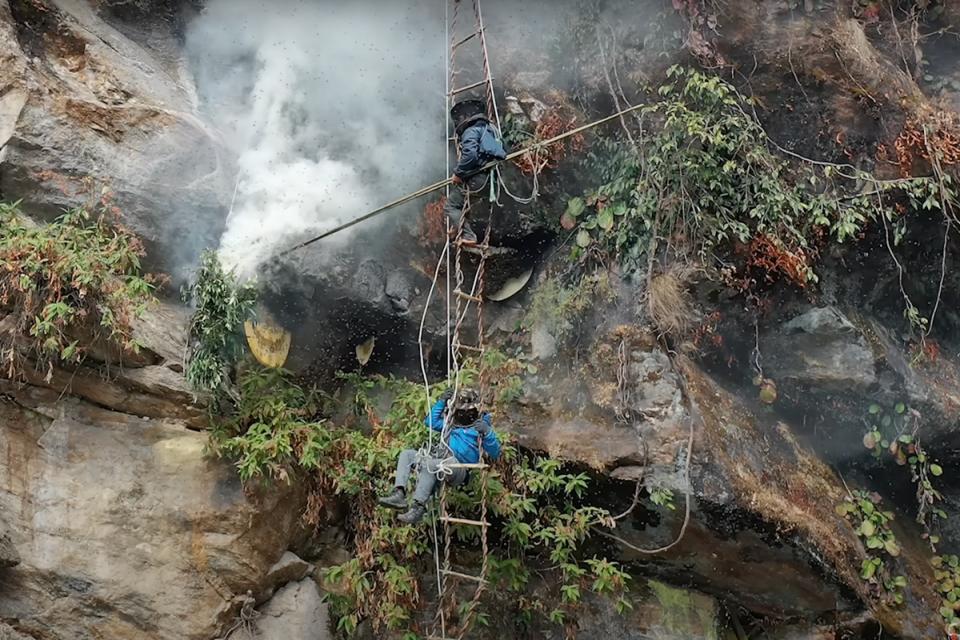
Today is the highlight of your adventure - the legendary Mad Honey Hunting experience. After an early breakfast, join the local Gurung honey hunters as they prepare for this daring tradition, collecting wild honey from sheer cliff faces. Witness their skillful techniques, passed down through generations, as they climb precarious rock faces with minimal equipment to harvest honey from Himalayan cliffs. This thrilling activity offers incredible insights into the cultural and spiritual significance of honey hunting in the region.
Beyond the adrenaline, enjoy the serene surroundings of Chamche - lush forests, distant snow-capped peaks, and terraced fields below. Take photographs of the hunters in action and the spectacular landscape. In the afternoon, explore the village, interact with the locals, and learn about their lifestyle, food, and customs. The day is a perfect mix of adventure, culture, and natural beauty, leaving you with memories that will last a lifetime.
4Day 4: Drive from Chamche to Besisahar then to Kathmandu
On the final day of your adventure, you will drive back from Chamche to Besisahar, retracing the scenic trails you explored earlier. Enjoy the calm morning air, lush forests, and terraced hills as you descend through charming villages, saying goodbye to the warm locals who made your journey memorable. This gentle descent allows you to reflect on the unique experiences of the past days, including the daring honey hunt and cultural encounters.
Upon reaching Besisahar, transfer by road back to Kathmandu. The drive offers stunning views of rivers, valleys, and Himalayan foothills, giving one last glimpse of Nepal’s enchanting landscapes before returning to the bustling city. Arrive in Kathmandu in the evening, concluding your offbeat Himalayan adventure filled with thrills, cultural immersion, and breathtaking scenery.
Cost Includes / Excludes
Included
- PRIVATE AIRPORT PICK-UP & DROP : Airport - Hotel transfer - Airport (Pick Up and Drop).
- MEMBER TRANSPORTATION : Transportation in standard tourist bus from Kathmandu to Bhulbhule and in Jeep while returning from Chamche to Kathmandu.
- LODGING : Best available accommodation in mountain lodges and tea houses during the trek.
- FOOD : 3 meals a day (breakfast, lunch, and dinner; including tea/coffee) during the trek, with Ef-Chlor purification tablets provided for safe drinking water.
- GUIDE : One experienced government licensed trekking guide (English speaking) during the trek.
- STAFF SALARY AND ALLOWANCE : All trekking staff wages, salary, equipment, food & clothing.
- PERMITS : All necessary paper works: Annapurna Conservation Area permit, TIMS Card & conservation entry fee, Ward Local Government Support, Local Cultural Preservation Support, Hunting Worker Community Support, Local Youth Club Support.
- STAFF INSURANCE : Insurance for all involved trekking staff during the trek.
- GEAR (IF NEEDED) : Sleeping bag, down jacket, and duffle bag (to be returned after the trek).
- MEDICAL KIT : A well equipped first aid kit, including an oximeter and emergency oxygen, carried by the guide for your safety.
- IN CASE OF EMERGENCY : Assistance in rescue operations in case of emergency covered by travel insurance.
- SOUVENIR : Best Heritage Tour’s Appreciation Certificate after the successful trek & Purse, an authentic Nepali product made from hemp.
- FAREWELL DINNER : A farewell dinner with an authentic cultural program after completion of the trek.
Excluded
- INTERNATIONAL AIRFARE : International flight airfare (from and to Kathmandu).
- NEPAL VISA FEES : You may issue the visa upon your arrival at Tribhuvan International Airport - Kathmandu or apply manually in your home country.
- TRASNPORTATION IN PRIVATE JEEP : Private Jeep will be arranged on request for transporation from Kathmandu to Bhulbhule and while returning from Chamche to Kathmandu.
- ACCOMMODATION & MEALS : Accommodation and meals in Kathmandu before and after the trek.
- INSURANCE POLICY : Travel insurance covering medical expenses and high-altitude evacuation is mandatory. If you do not have suitable coverage, we can also assist in arranging travel insurance for you upon your arrival in Nepal. Check Over Here
- PERSONAL EXPENSES : Clothing & gears, telephone, internet, toiletries, hot shower, laundry, soft drinks and any Alcoholic beverages.
- OPTIONAL PORTER SERVICE : USD 22 per day, including all taxes (each porter can carry up to 25 kg of luggage).
- TIPS : Tips for guide and porters.
- EXTRA : Any additional costs due to factors beyond our control, or for services not specifically mentioned in the Itinerary & Included section.
- TAXES & SERVICE CHARGE : All government taxes (13%) and service charge (10%).
Trip Info
Useful Information About the Honey Hunting Short Tour
Before heading to the Honey Hunting Short Tour, we recommend reviewing key details such as accommodation, food, best time to visit, cost, safety, culture, and other essentials below. Since the journey includes travel in remote Annapurna villages, preparation ensures a smoother experience.
Airport Pick-up and Trip Briefing for the Honey Hunting Short Tour
Your Mad Honey Hunting Tour starts the moment you land in Nepal. As you exit the arrivals terminal at airport, our representative will be waiting to greet you. He will welcome you by offering a traditional Khada. Later, he will drop you to your hotel via a private vehicle.
Please note that our standard package does not cover the hotel in Kathmandu itself. However, we are happy to arrange your Kathmandu hotel upon request or even guide you to book a hotel according to your preferences and budget.
Trip Briefing Session for the Honey Hunting Short Tour
After you check-in to your hotel and take a little rest, we will host an essential pre-trek orientation at our office in Thamel and is personally led by our Managing Director, Mr. Bimal. During this meeting, he will:
-
Explain the full tour itinerary in detail
-
Provide essential information on safety and required gear
-
Introduce you to your experienced tour guide and porter (if applicable)
-
Answer any last-minute questions or concerns you may have
This session ensures you are fully prepared, well-informed, and mentally ready for the ultimate wild honey hunting tour.
What Type of Transportation is Used for the Honey Hunting Short Tour?
At Best Heritage Tour, we handle all necessary road transport logistics to ensure a seamless transition to and from the trail. Ground transportation for this specific itinerary is required only on the opening and closing days of your journey.
Standard Tourist Bus & Local Connecting Jeeps
For our standard packages, we utilize comfortable, shared tourist buses for the primary overland journeys connecting Kathmandu to the transport hub of Besisahar.
-
Heading Out (Day 1): You will ride the tourist bus from Kathmandu to Besisahar, and then transfer to a shared jeep to reach your first night's stop at Bhulbhule.
-
Returning Home (Day 4): Since the road down from the honey hunting site at Chamche is rugged and unpaved, we use a sturdy local sharing jeep to bring you safely down to Besisahar. From Besisahar, you will board standard tourist bus for the drive back to Kathmandu.
Upgrade Option
If you prefer a faster, more flexible, and completely private journey, we can easily upgrade your entire transport to a private 4x4 Scud/Scorpio Jeep upon request for an additional fee.
Route and Vehicle Used for Honey Hunting Short Tour
|
Route |
Mode of Transport |
Distance |
Travel Time |
|---|---|---|---|
|
Kathmandu to Besisahar & Bhulbhule (Day 1) |
Standard Tourist Bus + Local Sharing Jeep |
~182 km / 113 miles |
7 to 9 Hours |
|
Chamche to Besisahar & Kathmandu (Day 4) |
Local Sharing Jeep + Standard Tourist Bus |
~210 km / 130 miles |
8 to 10 Hours |
What is the Maximum Altitude Reached on the Mad Honey Hunting Short Tour?
The Mad Honey Hunting Short Tour is an extraordinary cultural expedition that takes adventurers through the deep sub-tropical river valleys, pristine traditional cliffsides, and rugged canyon environments. The absolute highest point reached is the traditional village and hunting grounds of Chamche, which sits at an elevation of 1,410 meters (4,626 feet) above sea level.
What is the Total Distance Covered on the Honey Hunting Short Tour?
The Honey Hunting Short Tour seamlessly blends overland vehicle travel through the middle hills of Nepal with a targeted foot expedition. The entire journey covers an estimated 415 to 435 kilometers (258 to 270 miles), which includes your scenic road travel along the Prithvi and Besisahar-Chame highways as well as your active time on the foot trails.
What is the Total Trekking Distance Covered on the Honey Hunting Short Tour?
The total trekking distance is roughly 22 to 24 kilometers (13.6 to 15 miles) of pure hiking through the Marsyangdi River valley. Because this package isolates the specific cliffsides of Chamche, it avoids weeks of walking while still delivering a fully authentic Himalayan foot-trail experience.
Day-by-Day Distance & Walking Time on the Honey Hunting Short Tour
|
Day |
Specific Route Segment |
Distance Covered |
Duration |
|---|---|---|---|
|
Day 1 |
Kathmandu → Besisahar → Bhulbhule |
~195 km / 121 miles (Drive) |
7 to 9 Hours |
|
Day 2 |
Bhulbhule → Chamche |
~22.5 km / 14 miles (Trek) |
5 to 6 Hours |
|
Day 3 |
Honey Hunting Experience in Chamche |
Side hikes vary near cliffs |
3 to 4 Hours |
|
Day 4 |
Chamche → Besisahar → Kathmandu |
~218 km / 135 miles (Drive) |
8 to 10 Hours |
What Type of Accommodation is Available on the Honey Hunting Short Tour?
Accommodation throughout the Honey Hunting Short Tour relies on well-established, family-operated mountain teahouses and comfortable local lodges. These setups provide an authentic foothill experience, blending straightforward modern amenities with genuine Gurung and Tamang hospitality.
Because this specific itinerary remains in the lower, sub-tropical valleys of the Lamjung district, the lodge configurations are highly stable, cozy, and structurally better equipped than the remote high-altitude shelters found on longer alpine expeditions.
Accommodation on the Honey Hunting Short Tour
Our comprehensive package covers handpicked teahouse and lodge stays tailored to your 4-day itinerary:
-
Bhulbhule (Day 1): Clean, standard low-altitude lodges featuring cozy twin-sharing rooms.
-
Chamche (Days 2-3): Comfortable mountain teahouses for easy access to the local honey hunting cliffsides.
Tea House Essential Services on Honey Hunting Short Tour
1. Bathroom & Toilet Facilities
At our selected lodges in Bhulbhule and Chamche, you can find both western-style flush basins alongside traditional squat toilets. Many properties in this specific zone even offer rooms with attached private bathrooms, which can be secured based on seasonal availability.
2. Hot Showers
Gas or solar-powered hot showers are readily accessible throughout this short tour. Because heating water requires local resources, lodges typically request a small fee ranging between NPR 200 to NPR 400 per hot shower.
3. Power Supply & Device Charging
The villages of Bhulbhule and Chamche are fully connected to the reliable national electricity grid, supplemented by solar backup arrays. You can easily recharge smartphones, power banks, and camera batteries via power outlets located right in your room or at centralized power strips in the communal dining halls.
4. Internet & Wi-Fi Networks
Paid Wi-Fi networks are widely available at almost all lodges in Bhulbhule and Chamche, costing between NPR 200 to NPR 400 for access. The connection is fast enough for checking messages, sending emails, and posting photos from your honey hunting experience.
5. Cellular Network Connectivity
Cell signals are remarkably strong and dependable throughout this entire short itinerary. Both Nepal Telecom (NTC) and Ncell deliver stable 3G/4G coverage along the road lines and trail sectors of Bhulbhule and Chamche.
Food and Drink on the Honey Hunting Short Tour
Our package provides a comprehensive meal plan covering freshly prepared breakfasts, lunches, and dinners every single day of your journey, paired with 2 to 3 daily cups of hot tea or coffee. Every meal is prepared fresh by your overnight or trailside lodge and contains a blend of traditional Nepalese staples and popular international dishes.
Daily Meal Configurations
-
Breakfast: Enjoyed directly at the lodge where you spent the previous evening before driving or hitting the foot trails.
-
Lunch: Prepared en route at designated trailside teahouses to provide a refreshing, scenic midday break.
-
Dinner: A hearty, sit-down meal served at your designated overnight destination.
Please Note: Guests are welcome to select one primary main course from the available teahouse menu for each meal. Any additional side meals or personal items ordered outside of our standard allocation must be covered directly by the traveler.
Available Menu Options on the Trail
|
Meal |
Standard Teahouse Offerings |
|---|---|
|
Breakfast |
Oatmeal, porridge, Tibetan fried bread, eggs (scrambled, fried, or omelets), pancakes, muesli, chapati, toast, and seasonal fruits. |
|
Lunch |
Traditional Nepalese Dal Bhat, chowmein, seasonal pasta, local momo dumplings, warm Thukpa, and varied potato entrees. |
|
Dinner |
Fresh vegetable curries with rice, spring rolls, macaroni dishes, specialized local soups, and freshly baked flatbreads. |
Crucial Culinary Notice: Wild Honey Tasting Caution
The highlight of this tour is witnessing the traditional harvest of wild cliff honey. It is important to know that wild Himalayan spring honey can contain grayanotoxins from rhododendron flowers, giving it strong medicinal properties and mild psychoactive effects.
In absolute compliance with safety protocols, we strongly advises our clients to only taste this wild honey under the direct supervision and portion guidance of our expert local guide. Consuming too much wild honey at once can cause dizziness, nausea, or drop your blood pressure, so a tiny taste is all you need to safely appreciate this rare nectar!
Ultimate Trekker’s Meal Choice: Dal Bhat
We strongly encourage you to prioritize Dal Bhat at least once a day, particularly for your midday lunch. This legendary platter serves as the ultimate fuel source across the Nepalese foothills.
Drinks and Proper Hydration
Remaining continuously hydrated is vital to keeping your energy levels high during active outdoor days. Teahouses along the Marsyangdi River valley stock an array of beverages to keep you refreshed and healthy:
-
Black tea, milk tea, and traditional ginger-lemon tea
-
Coffee (instant or freshly brewed style)
-
Hot lemon with local honey (a fantastic throat soothing option)
-
Bottled water, filtered water, and boiled water (available for purchase or refill)
Dietary Restrictions: Vegetarian, Vegan, and Gluten-Free
Plant-based and vegan diets remain incredibly easy to maintain along the Honey Hunting route. The foundation of traditional Himalayan cooking naturally revolves around rice, lentils, seasonal greens, and root vegetables.
If you have any acute food allergies, lactose intolerance, gluten sensitivities, or specific dietary rules, please inform our team during your Thamel briefing. Your guide will proactively coordinate with the kitchen staffs along our route to ensure your meals are prepared safely and cleanly.
When is the Best Time for the Honey Hunting Short Tour?
The Mad Honey Hunting Tour can be experienced during a limited and highly seasonal window, as wild honey hunting is closely tied to the natural flowering cycles of cliff bees and the traditional schedules of local indigenous communities in the Annapurna region.
Ideal Season (Primary Honey Hunting Period)
The best time for this tour is typically:
Spring Season (April to May)
-
Peak season for traditional wild honey hunting in the Chamche and surrounding regions
-
Bees are most active due to rich seasonal flowering in the lower Annapurna hills
-
Clear weather conditions make trekking and cliff-viewing safer and more enjoyable
-
Best opportunity to witness authentic, large-scale honey harvesting rituals
Alternative Season (Occasional Hunting Period)
Autumn Season (October to November)
-
Secondary window depending on local community decisions and natural bee activity
-
Excellent trekking conditions with stable weather and clear mountain views
-
Less rainfall and comfortable temperatures for travel and village stays
Off Season (Not Recommended)
Winter (December to February)
-
Cold temperatures and reduced bee activity
-
Honey hunting is generally not conducted
-
Some trekking routes may feel harsh due to weather conditions
Monsoon (June to September)
-
Heavy rainfall can make trails slippery and unsafe
-
Limited visibility and travel disruptions on road sections
-
Honey hunting activities are rarely organized during this period
Our Recommendation
We strongly recommend planning the Honey Hunting Short Tour between April-May for the most authentic and culturally active experience. This period offers the highest chance to witness traditional cliff honey hunting in its true form.
Documents Required for the Honey Hunting Short Tour
To ensure a smooth, well-organized, and hassle-free Mad Honey Hunting experience, travelers are required to carry certain essential travel documents. These documents are mandatory for permit processing, entry into conservation areas, and compliance with Nepal’s trekking regulations.
Nepal Visa for the Honey Hunting Short Tour
All international travelers (except Indian) need a tourist visa to visit Nepal, which can be obtained on arrival at Kathmandu airport or online.
Key Details:
-
Duration: 15, 30, or 90 days (330 days recommended for this trek)
-
Fees: 15 days - USD 30 | 30 days - USD 50 | 90 days - USD 125
-
Requirements: Valid passport (6+ months), visa form, passport photo, and payment in cash (USD/EUR/GBP/NPR)
Citizens of certain countries do not get Nepal Visa on arrival. They must have to apply for the Nepal Visa on advance through the Nepalese Embassy.
For the further details check: Nepal Immigration
Travel Insurance for the Honey Hunting Short Tour
For this tour, standard travel insurance is enough. At Best Heritage Tour, we require proof of a comprehensive insurance policy before you can begin the tour. Your policy must include the following specific coverages:
-
Altitude Coverage (Up to 3,000m)
-
Medical Emergency & Hospitalization
-
Trip Cancellation & Interruption
-
Cashless Claims & Direct Payment
What are the Permits Required for the Honey Hunting Short Tour?
Participating in the Honey Hunting Short Tour within the Lamjung district requires specific official permits to ensure regulatory compliance, safety, environmental conservation, and direct financial support for the local indigenous communities.
To process these documents smoothly, we require a clear digital copy of your valid passport (with at least six months’ validity remaining) and two recent passport-sized photographs. Rest assured, we handle 100% of the permit arrangements on behalf of our valued guests.
-
Annapurna Conservation Area Permit (ACAP): Because the village and hunting cliffs of Chamche are located within the Annapurna Conservation Area.
-
Local Community Honey Hunting Royalty & Permit: Wild honey harvesting is a sacred, communal heritage belonging entirely to the local Gurung and Magar village committees. To witness this rare event, a specialized community royalty and access fee must be cleared.
-
Trekkers’ Information Management System (TIMS) Card: This registration ensures your safety and assists local authorities in tracking traveler.
How Difficult is the Honey Hunting Short Tour?
The Honey Hunting Short Tour is a moderate adventure experience, suitable for travelers with a basic level of fitness and a willingness to walk on uneven Himalayan terrain. This tour is designed to be accessible for most adventure travelers, but it still requires a reasonable level of physical readiness due to changing trail conditions, elevation gain during trekking days, and remote rural environments.
- Overall Difficulty Level: Moderate
-
Trekking intensity: Moderate (3-5 hours walking on trekking day)
-
Road journey: Long and sometimes bumpy mountain drive
-
Altitude: Low to mid-hill region (no high-altitude risk)
-
Technical skill required: None
-
Suitable for: Beginner to intermediate trekkers, cultural adventure seekers, photographers, and experience-focused travelers
What Makes the Honey Hunting Short Tour Moderate in Nature?
Although this is not a high-altitude trek like Everest or Annapurna Base Camp, the tour includes:
-
Narrow and sometimes uneven village trails
-
Stone steps, suspension bridges, and forest paths
-
Occasional steep ascents and descents during trekking
-
Remote terrain with basic facilities in Chamche village
Travelers should be comfortable walking for a few hours on consecutive days and adapting to simple local accommodation conditions.
Is the Mad Honey Hunting Tour Suitable for Beginners?
The Mad Honey Hunting Short Tour offered is generally suitable for beginners, especially for travelers who are new to trekking in Nepal but have a strong interest in cultural exploration and light adventure experiences.
Unlike high-altitude trekking routes in the Himalayas, this tour takes place in the lower Annapurna region, where the altitude remains moderate and does not require acclimatization. The focus is more on cultural immersion, scenic travel, and short trekking walks, making it an excellent entry-level Himalayan experience.
Why Mad Honey Hunting Tour is Beginner-Friendly?
This tour is well-suited for first-time visitors because:
-
No technical climbing or trekking experience is required
-
Walking distances are relatively short and manageable
-
Altitude remains low to mid-hill (no risk of altitude sickness)
-
Guided support is provided throughout the journey by experienced local teams
Even travelers with limited trekking background can comfortably complete this journey with basic preparation.
For Whom, Mad Honey Hunting Tour Is Best For?
The Mad Honey Hunting Tour is ideal for beginners who are:
-
Interested in unique cultural traditions of Nepal
-
Comfortable with light walking and outdoor activities
-
Looking for a short Himalayan adventure (without high-altitude trekking)
-
Photographers, cultural explorers, and documentary travelers
-
First-time visitors seeking an authentic rural Nepal experience
What are the Essential Gears to Pack for the Honey Hunting Short Tour?
Packing the right gear is important for a comfortable and enjoyable experience on the Honey Hunting Short Tour, as the journey includes a mix of scenic road travel, short trekking sections, and village stay. As a general overview, travelers are advised to pack comfortable walking shoes, layered clothing, weather-appropriate outerwear, and essential personal items suitable for both trekking and village accommodation environments.
If wanted, we can provide a complete and detailed packing checklist for this experience.
Physical Fitness Required for the Honey Hunting Short Tour
The Honey Hunting Short Tour is a moderate adventure experience in the lower Annapurna region and does not require advanced trekking fitness like high-altitude expeditions. However, a reasonable level of physical fitness is important, as the journey includes short trekking sections, uneven village trails, stone steps, and several hours of walking during the Bhulbhule to Chamche route.
Travelers should be comfortable walking for 3-5 hours per day on mixed terrain and adapting to simple rural travel conditions. With basic preparation, even beginners can complete this tour comfortably.
How to Prepare Physically for Honey Hunting Short Tour?
To make your journey smoother and more enjoyable, Best Heritage Tour recommends light but consistent preparation before arrival in Nepal:
-
Start light cardio training (2-4 weeks before travel): Walking, jogging, or cycling to build stamina
-
Practice walking on uneven surfaces: Helps adapt to village trails and natural terrain
-
Do short hikes or stair climbing: Improves leg strength for uphill and downhill sections
-
Carry a light backpack during practice walks: Simulates real trekking conditions
-
Focus on endurance over speed: Steady walking is more important than fast hiking
Health and Safety on the Honey Hunting Short Tour
Health and safety are key priorities on the Honey Hunting Short Tour, as the journey involves travel through rural Himalayan terrain, short trekking sections, and participation in a culturally significant event that takes place in steep cliff environments. Although the tour is not a high-altitude trek, careful planning and professional guidance are essential to ensure a safe and comfortable experience.
At Best Heritage Tour, all honey hunting tours are organized with experienced local guides and coordinators who are familiar with the terrain, village routes, and seasonal conditions of the Annapurna region. Our guides are trained to handle basic travel-related concerns, provide first aid support when needed, and ensure that all activities are conducted in coordination with local communities in a safe and respectful manner. Special attention is given during the honey hunting day to maintain safe distances from cliff areas while still allowing guests to witness this unique cultural practice.
How Safe is the Honey Hunting Short Tour?
The Honey Hunting Short Tour is generally safe for travelers with professional guidance and proper logistical planning. Since the itinerary takes place in the lower Annapurna region, there are no high-altitude risks such as Acute Mountain Sickness (AMS). However, safety depends on factors such as trail conditions, weather, and adherence to guide instructions.
Porter and Luggage Management on the Mad Honey Hunting Short Tour
Porter Service on the Honey Hunting Short Tour
Since the Honey Hunting Short Tour is a short-duration adventure involving only one trekking day between Bhulbhule and Chamche, porter service is generally not required for most travelers. However, for those who prefer additional comfort or are carrying extra photography, filming, or personal equipment, porter service can be arranged upon request.
-
Porter service available on request
-
USD 22 per day per porter
-
Each porter can carry up to 25 kg of luggage
-
One porter can be shared between one or two travelers
-
A duffle bag can be provided for easier transportation of trekking gear
Luggage Storage Facility
For items not required during the tour, we provide complimentary luggage storage at our Kathmandu office. Travelers can safely store extra bags, suitcases, and personal belongings before departing for the Annapurna region.
Additionally, most hotels in Kathmandu offer free luggage storage facilities for their guests. We recommend confirming availability directly with your hotel as an additional convenience option before the tour begins.
Honey Hunting Short Tour Cost for 2026/2027
The cost of the Mad Honey Hunting Short Tour can vary depending on the trekking agency, group size, transportation arrangements, accommodation standards, guide services, and overall inclusions.
At Best Heritage Tour, we are committed to providing an authentic, safe, and affordable honey hunting experience while maintaining high service standards at just USD 890. We also offer attractive group discounts, making the tour more cost-effective for families, friends, students, researchers, and organized travel groups.
Group Size Based Price for Honey Hunting Short Tour (2026/2027)
|
Group Size |
Price per Person (USD) |
|---|---|
|
1 pax |
$1190 |
|
2-4 pax |
$790 |
|
5-6 pax |
$690 |
|
7-10 pax |
$650 |
|
11-16 pax |
$590 |
|
17-29 pax |
$550 |
The larger the group size, the more economical the tour becomes, as transportation and operational costs can be shared among participants.
Note:
-
Extra 13% Government Tax and 10% Service Charge are not included in the above prices
-
Porter cost is not included in the package price
For an accurate quote based on your preferred travel dates and group size, we provides customized pricing options upon request.
Booking & Payment for the Honey Hunting Short Tour
Booking your Mad Honey Hunting Tour with Best Heritage Tour is simple and secure. To confirm your trip, a 20% deposit of the total trip cost is required at the time of booking, while the remaining balance must be cleared at least one day before departure. Payments can be made via cash, bank transfer, or card; bank transfer and card fees are the responsibility of the trekker, and incur a 4% transaction fee. All booking and cancellation terms are clearly explained by Best Heritage Tour staff during the booking process and can also be reviewed on our website.
Bank transfer:
-
Account Name: Best Heritage Tour And Treks Pvt. Ltd.
-
Account Number: 13201040254106
-
Bank Name: Nepal Investment Mega Bank Ltd.
-
Address: Thamel, Kathmandu, Nepal
-
SWIFT Code: NIBLNPKT
-
Bank Transfer Link: www.bestheritagetour.com/payment
Once we receive the deposit, we will issue the official invoice and booking conformation right away. If you need any clarification, we are happy to answer your questions or provide additional details you may require.
Last-Minute Booking for the Mad Honey Hunting Short Tour
For travelers planning on short notice, Best Heritage Tour accepts last-minute bookings up to 24 hours before departure. In such cases, full payment (100% of the trip cost) is required at the time of booking. Trekkers should be aware that accommodation, logistics, and services may be limited, and the company cannot be held responsible for any compromises arising from late arrangements.
Flexible Trip Extension
The Honey Hunting Short Tour can be easily extended to match your travel interests and schedule. After completing the tour, travelers can continue their adventure with exciting activities in Pokhara or explore some of the region's most popular trekking routes in the Annapurna region. For those seeking a more relaxed experience, cultural sightseeing tours, heritage walks, and day excursions can also be arranged in Kathmandu and Pokhara, allowing you to make the most of your time in Nepal.
Our team will help customize your itinerary to match your schedule, interests, and fitness level, ensuring a seamless extension to your journey.
Who are the Mad Honey Hunters?
The Mad Honey Hunters are experienced traditional harvesters, primarily from the Magar and Gurung communities of Nepal's Annapurna region, who have preserved the ancient art of wild honey hunting for generations. Renowned for their courage, skill, and deep knowledge of the Himalayan environment, these hunters play a vital role in safeguarding one of Nepal's most unique cultural traditions.
More than just honey collectors, they are the custodians of a centuries-old heritage, passing their knowledge and practices from one generation to the next while maintaining a strong connection to their community and the natural world.
What are the Traditional Equipment’s Used by the Mad Honey Hunters?
For centuries, mad honey hunters have relied on simple yet highly effective traditional tools to harvest wild honey from towering Himalayan cliffs. Many of these tools are handmade using locally available materials and have been passed down through generations.
-
Bamboo Fiber Ropes: Strong handwoven ropes used to climb cliffs, secure ladders, and support hunters during the harvest.
-
Prang (Long Bamboo Ladder): A traditional bamboo ladder suspended from the top of cliffs, allowing hunters to reach beehives hanging on vertical rock faces.
-
Tokari (Bamboo Basket): Lightweight bamboo baskets used to collect and transport freshly harvested honeycombs.
-
Chhyakhal (Basket Lining): A protective lining placed inside baskets to keep honeycombs intact during transportation.
-
Tango (Long Bamboo Stick): A long bamboo pole used to reach and carefully detach honeycombs from difficult-to-access locations.
-
Saaton (Bamboo Stick): A specialized bamboo tool used to handle and guide honeycombs during the harvesting process.
-
Chcora (Honey Filter): A traditional filter used to separate pure honey from wax, bee parts, and other natural impurities.
-
Donga (Wooden Wax Pot): A wooden container used for collecting, storing, and preserving freshly harvested honey.
-
Dabilo (Wooden Knife): A handcrafted wooden blade used to carefully cut honeycombs from the cliff while minimizing damage to their structure.
Together, these traditional tools reflect the ingenuity, craftsmanship, and generations of knowledge that have kept Nepal's ancient honey hunting culture alive.
How Do the Mad Honey Hunters Harvest the Honey?
Mad honey hunting is a carefully coordinated traditional practice that requires teamwork, skill, and generations of experience. Although methods may vary slightly between communities, the harvesting process generally follows these steps:
1. Locating the Beehives
Before the harvest begins, experienced hunters identify active beehives built by Himalayan giant honey bees on steep cliff faces. The timing is carefully chosen based on the season and the condition of the honeycombs.
2. Preparing the Equipment
The hunting team gathers traditional tools such as bamboo fiber ropes, the Prang (bamboo ladder), Tokari baskets, bamboo sticks, and honey collection containers. All equipment is checked before the climb begins.
3. Setting Up the Bamboo Ladder
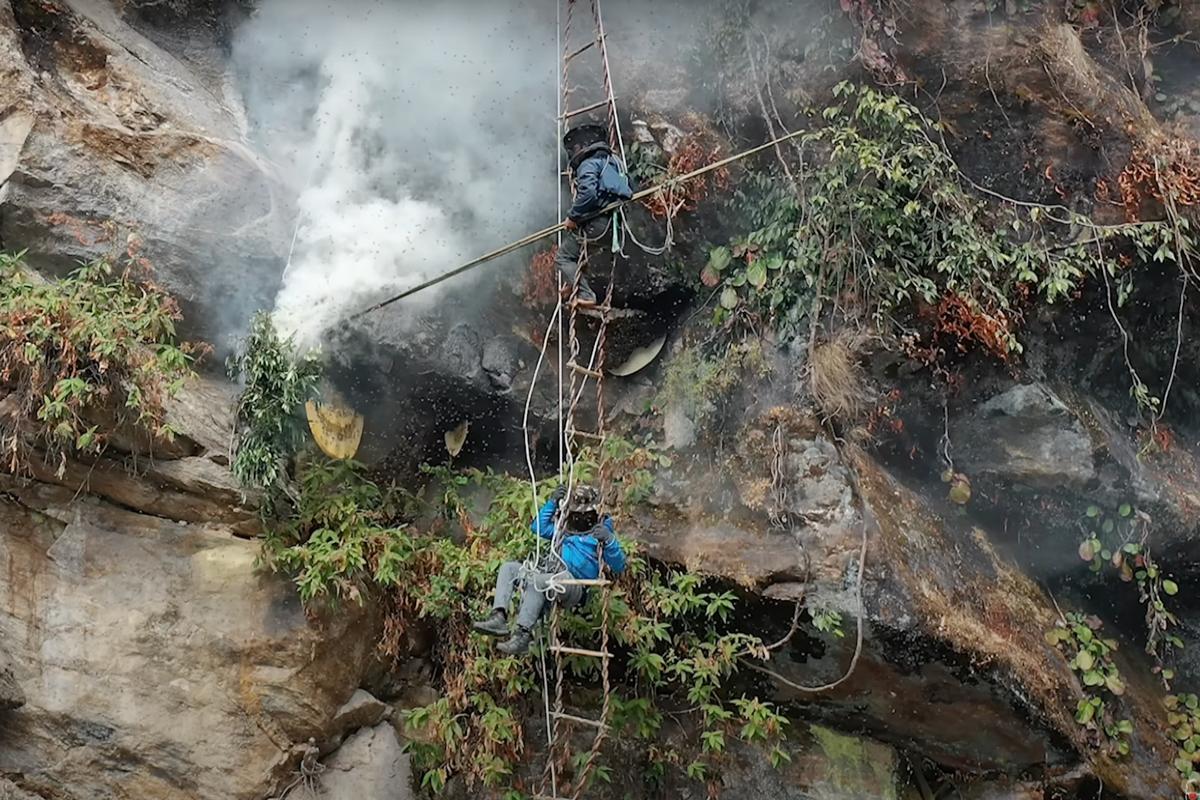
From the top of the cliff, team members secure the long bamboo ladder and ropes. The ladder is carefully lowered down the rock face, providing access to the hanging beehives.
4. Creating Smoke to Calm the Bees
A controlled fire is lit below the hive to produce smoke. This traditional technique helps calm the bees and reduces their aggression, allowing hunters to work more safely.
5. Descending the Cliff
An experienced honey hunter climbs down the bamboo ladder while other team members support him from above. This is one of the most challenging and dangerous stages of the process.
6. Cutting the Honeycomb
Using traditional tools such as the Dabilo and bamboo sticks, the hunter carefully separates sections of the honeycomb from the cliff face while trying to preserve its structure.
7. Collecting the Honeycomb
The harvested honeycomb is placed into Tokari baskets and lowered safely to the ground, where other team members receive and organize the collection.
8. Filtering and Storing the Honey
Once the harvest is complete, the honey is filtered using traditional methods such as the Chcora filter to remove natural impurities before being stored in containers like the Donga.
9. Sharing and Preserving the Harvest
The collected honey is traditionally shared among community members, used for household purposes, sold locally, or preserved according to local customs and practices.
Sustainable and Responsible Tourism
At Best Heritage Tour, the Honey Hunting Short Tour is operated with a strong commitment to sustainable and responsible tourism practices that help preserve both the natural environment and the cultural heritage of the Annapurna region. We work closely with local communities in Chamche and surrounding villages to ensure that honey hunting traditions are respected and supported rather than commercialized. A significant portion of the benefits from this tour directly contributes to local livelihoods, encouraging the continuation of this ancient practice while minimizing environmental impact.
We are committed to sustainable and responsible tourism. We strictly follow the "Leave No Trace" principles on all our treks and actively promote eco-friendly travel practices. As part of our environmental commitment, we plant a tree in the name of travelers (upon request), as a part of our commitment to sustainable tourism.