
Everest Base Camp Trek with Island Peak Climbing - 17 Days
Insight on EBC Trek with Island Peak Climbing
The Everest Base Camp Trek with Island Peak Climbing is a perfectly designed high-altitude adventure that combines the world-famous trek to the base of Mount Everest (8,848.86m) with an exhilarating climbing experience of Island Peak (6,189m / Imja Tse). This journey is crafted for trekkers who want more than just reaching Everest Base Camp - they seek a real Himalayan mountaineering experience under the guidance of professional climbing experts. Offered by Best Heritage Tour, this package blends scenic trekking trails, rich Sherpa culture, glacier landscapes, and a rewarding peak climbing summit, making it one of the most complete adventure experiences in Nepal.
Trip at a Glance
-

Country: Nepal
-

Trip grade: Strenuous
-

Destination: Everest Region
-

Activities: Trekking + Peak Climbing
-

Accommodation: Teahouse + Camps
-

Meals: Breakfast, Lunch & Dinner
-
.png)
Transportation: Flight
-

Maximum altitude: 6,189m / 20,305ft
-

Group size: 1-12
-
Trip Start / End: Kathmandu - Kathmandu
-
.png)
Best Season: Mar-May & Sep-Nov
Key Highlights
- Stand at the legendary Everest Base Camp (5,364m), the gateway to the world’s highest peak, Mount Everest
- Summit the thrilling Island Peak (6,189m / Imja Tse) for a real Himalayan mountaineering experience
- Witness breathtaking sunrise views from Kala Patthar (5,545m) - the best viewpoint of Mount Everest
- Trek through the heart of the Khumbu Valley, home of the world-famous Sherpa culture
- Explore vibrant Namche Bazaar, the bustling Sherpa capital of the Everest region
- Visit the iconic Tengboche Monastery, surrounded by panoramic Himalayan peaks
- Experience diverse landscapes - from lush forests and suspension bridges to glaciers and alpine wilderness
- Enjoy guided climbing training and glacier practice led by professional mountain guides
- Walk beneath towering peaks including Everest, Lhotse, Nuptse, Ama Dablam, and Makalu
- Perfect blend of Everest trekking adventure + introductory peak climbing challenge in one expedition
Trip Overview
The Everest Base Camp Trek with Island Peak Climbing offered by Best Heritage Tour is a remarkable Himalayan expedition that combines two of Nepal’s most iconic adventures into one unforgettable journey. This 17-day itinerary takes you deep into the legendary Khumbu region, where trekkers not only reach the base of the world’s highest mountain, Mount Everest (8,848.86m), but also experience the thrill of climbing Island Peak (6,189m), one of the most popular trekking peaks in Nepal.
The journey begins with a scenic flight to Lukla and follows the classic Everest Base Camp trail through charming Sherpa villages, alpine forests, suspension bridges, and dramatic mountain landscapes. Along the way, trekkers acclimatize in Namche Bazaar and Dingboche, ensuring a safe and gradual ascent into high altitude. The route offers stunning views of Himalayan giants such as Everest, Lhotse, Nuptse, Ama Dablam, and Thamserku.
A major highlight of the trek is reaching Everest Base Camp, where climbers witness the powerful Khumbu Icefall and the spirit of mountaineering history. The adventure continues with an early morning hike to Kala Patthar, offering the closest and most breathtaking panoramic view of Mount Everest.
The second phase of the journey focuses on Island Peak climbing, where participants receive professional guidance, technical training, and safety support before attempting the summit. Standing at 6,189 meters, Island Peak offers a genuine alpine experience without requiring decades of technical expertise. Under the expert guidance of our Best Heritage Tour climbing Sherpas, you will navigate a stunning glacier and tackle a thrilling 45-degree snow headwall. The reward is a summit ridge that feels like the top of the world, with the massive south face of Lhotse towering directly above you.
This trip is ideal for adventurous trekkers seeking a challenging yet achievable introduction to mountaineering while experiencing the natural beauty and rich culture of the Everest region.
What Can You Expect on the EBC Trek with Island Peak Climbing?
1. Expert-Led Mountain Safety
Safety is the cornerstone of our operations at Best Heritage Tour. You can expect a dedicated team of IFMGA-certified guides and high-altitude Sherpas who monitor your oxygen levels and heart rate daily. From technical training at Base Camp to managing fixed ropes on the summit headwall, our crew ensures you have the professional support needed to navigate the high-altitude terrain with total confidence.
2. Immersive Sherpa Culture
Beyond the trails, expect a deep dive into the "Highland Heritage." You will visit ancient monasteries like Tengboche, witness daily rituals, and stay in traditional Sherpa teahouses. We ensure you experience the authentic hospitality of the Khumbu region, learning about the local traditions, the history of Everest exploration, and the spiritual significance of the peaks that define the lives of the Sherpa people.
3. Everest Base Camp Exploration
Reaching Everest Base Camp is a defining moment of the trek. Situated at the foot of the Khumbu Icefall, it offers a close look at Everest expedition life. Although climbers do not see the summit from here, the sense of achievement and surrounding glacial scenery make it an unforgettable highlight.
4. Sunrise Hike to Kala Patthar
The early morning ascent to Kala Patthar provides the best panoramic view of Mount Everest. Watching the golden sunrise illuminate Everest, Nuptse, and surrounding peaks is a magical experience. This viewpoint is often considered the ultimate photographic moment of the entire Everest Base Camp trek.
5. Island Peak Climbing Adventure
The climb to Island Peak (6,189m) introduces trekkers to basic mountaineering. With guidance from professional climbing experts, you will use ropes, crampons, and ice axes to reach the summit. The climb is challenging yet achievable, rewarding you with incredible views of the surrounding Himalayan giants.
6. Authentic Teahouse Living
During the trekking phases, you will stay in hand-picked, local teahouses. Expect cozy, communal dining rooms heated by yak-dung stoves - the perfect place to swap stories with climbers from around the world. While accommodations are simple and rustic, they provide a warm, dry sanctuary. At Island Peak Base Camp, you’ll transition to high-quality tented camps for a true "expedition-style" mountaineering experience under the stars.
7. Unmatched Himalayan Panoramas
Prepare for views that no photograph can truly capture. From the top of Kala Patthar, you will see Everest in its full glory, and from the summit of Island Peak, the 360-degree panorama is breathtaking. You’ll be surrounded by the immense Lhotse Shar, Nuptse, and the elegant Ama Dablam. These moments of silence atop the world’s highest ridges are the highlights of the journey.
8. Seamless Logistic Management
Expect a stress-free journey where every detail is handled by Best Heritage Tour. From the complex logistics of Lukla flights and national park permits to the transport of your heavy gear by yaks and porters, we manage the background work. This allows you to focus entirely on your trekking performance and the spiritual experience of being in the mountains, knowing your safety is guaranteed.
Are You Ready for the EBC Trek with Island Peak Climbing?
The Everest Base Camp Trek with Island Peak Climbing is a high-altitude adventure that requires a good level of physical fitness and endurance. Trekkers should be comfortable walking several hours a day on varied terrain, including steep ascents, rocky paths, and glacier landscapes. As altitude increases, the air becomes thinner, so cardiovascular fitness and prior hiking experience are highly beneficial for a more enjoyable and safe journey.
Mental readiness is just as important as physical preparation. This expedition takes you into remote Himalayan regions where comfort is basic and conditions can change quickly. A positive mindset, patience, and adaptability will help you fully embrace the challenges of mountain life. The experience is about simplicity, resilience, and appreciating nature at its purest form.
For the Island Peak climbing section, no advanced mountaineering background is required, but willingness to learn is essential. You will be guided by experienced climbing experts and trained in the use of basic equipment such as ropes, crampons, and ice axes. If you are determined, adventurous, and eager to push your limits, this journey will reward you with one of the most unforgettable achievements in the Himalayas.
Itinerary
Your Himalayan adventure ignites with a thrilling flight to Lukla, offering a bird's-eye view of the jagged peaks that define the Khumbu. Depending on the season, we depart from Kathmandu or the Ramechhap airstrip. Upon landing at the Tenzing-Hillary Airport, you’ll begin your first steps on the trail. The path winds through the heart of the Dudh Koshi valley, descending gently past traditional stone-walled houses and lush farmland.
The trek to Phakding is a sensory introduction to the region. You will pass through small Sherpa hamlets like Chheplung and Ghat, where the air is scented with pine and the sound of the rushing river below provides a constant soundtrack. This section is adorned with beautifully carved mani stones (prayer-inscribed boulders) and colorful prayer flags. Crossing your first suspension bridge over the turquoise waters of the Dudh Koshi, you’ll arrive at the riverside village of Phakding, where a cozy teahouse awaits for your first night in the mountains.
Today is a legendary day of trekking as we head toward the bustling Sherpa capital. The trail follows the river north, crossing several high suspension bridges, including the famous Hillary Bridge, which hangs high above the river gorge. We enter the Sagarmatha National Park at Monjo, a UNESCO World Heritage site, where the flora shifts into dense forests of blue pine, fir, and rhododendron. The final two hours involve a steep, zig-zagging climb known as the "Namche Hill," a physical test that rewards you with your very first glimpse of Mount Everest peeking through the trees.
Namche Bazaar is a spectacular horseshoe-shaped town carved into the mountain. It serves as the primary trading hub for the region, where ancient Tibetan traditions meet modern trekking culture. You’ll find everything from bakeries and gear shops to monasteries and cyber cafes. The village is vibrant and full of energy, providing a fascinating glimpse into the Sherpa way of life.
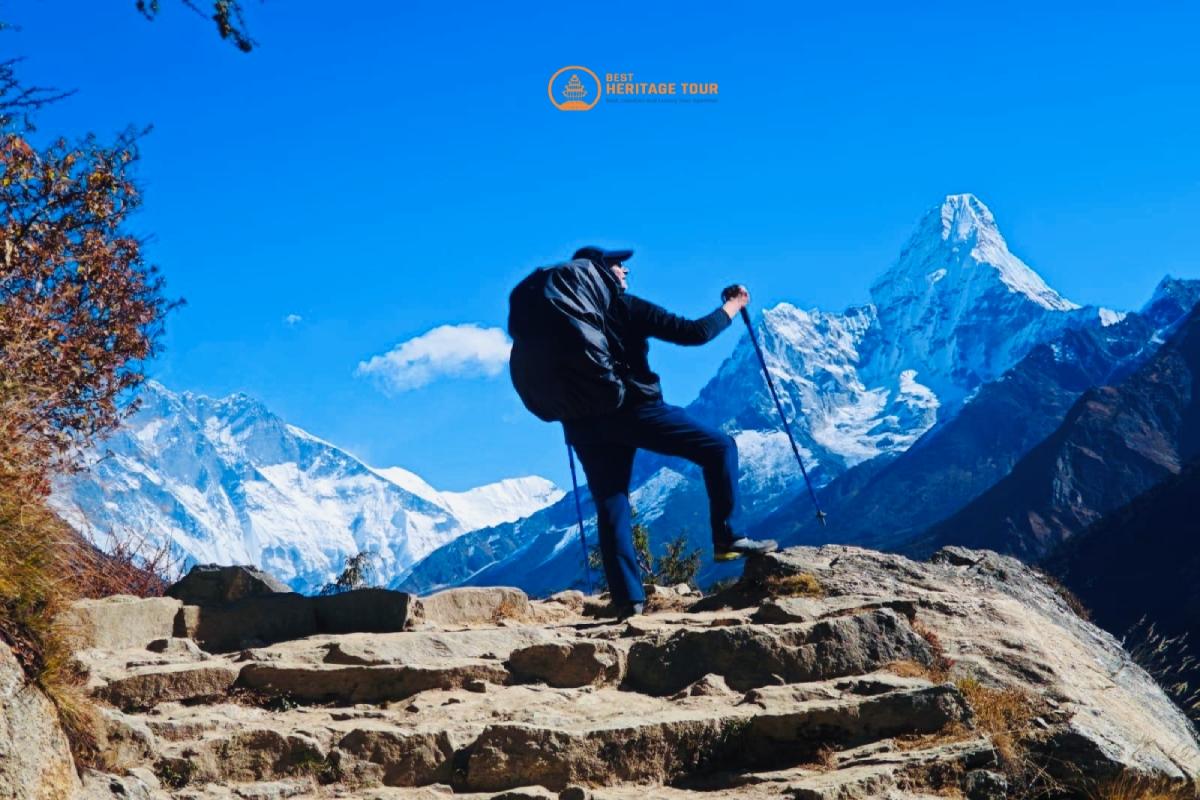
Acclimatization is the secret to a successful Island Peak summit, and Namche is the perfect place for it. We spend the day "climbing high and sleeping low" to help your body adjust to the thinning air. The hike up to the Everest View Hotel is steep but breathtaking, offering a wide-angle panorama that includes Everest, Lhotse, and the iconic, needle-like peak of Ama Dablam.
After descending from the viewpoint, we visit the Sherpa Culture Museum and the Everest Photo Gallery to learn about the history of the region’s mountaineering legends. You can also explore the Khumjung village, where the Hillary School stands as a testament to the bond between the mountaineering community and the Sherpa people.
The trail out of Namche is one of the most scenic in the world, contouring smoothly along the side of the mountain with a constant view of the Everest massif. As we walk, keep an eye out for Himalayan Tahrs (mountain goats) and the colorful Danphe (Nepal's national bird). The path eventually drops down to the river at Phunki Tenga, where we stop for a hearty lunch before beginning the afternoon’s challenge: a steady, winding ascent through a thick forest of rhododendrons that leads to the high ridge of Tengboche.
Tengboche is the spiritual heart of the Khumbu. It is home to the Tengboche Monastery, the most famous Buddhist site in the region. Upon arrival, the sight of the monastery set against the backdrop of Ama Dablam is truly awe-inspiring. We encourage our guests to visit the monastery during the afternoon prayer ceremony to witness the monks chanting and playing traditional instruments.
Leaving the forest behind, we descend through a beautiful forest of moss-covered trees to Deboche before crossing the Imja Khola via a steel bridge. The landscape begins to transform into a high-altitude desert as we pass through the upper village of Pangboche. This is a significant cultural site, home to the oldest monastery in the region which reportedly once housed a "Yeti scalp." As we move higher, the trees disappear completely, replaced by low-lying shrubs and vast, open alpine meadows that offer unobstructed views of the surrounding peaks.
The final stretch of the day takes us into the Imja Valley, leading to the "summer settlement" of Dingboche. This village is unique for its kilometers of stone walls, built to protect crops of buckwheat and potatoes from the cold mountain winds. Dingboche is remarkably picturesque, nestled beneath the towering north face of Ama Dablam and the south face of Lhotse. The air is noticeably thinner here, and the silence of the high mountains begins to settle in as we prepare for our second round of acclimatization.
Today is a critical milestone for our Island Peak objective. We tackle a steep acclimatization hike up the ridge of Nangkartshang Peak, located directly above Dingboche. This hike is physically demanding, but it offers some of the most spectacular views in the Everest region. As you ascend, you’ll gain a perspective of the entire Imja Valley, including a stunning look at Makalu (the world’s 5th highest peak) and the massive glaciers flowing down from the Lhotse face.
From the top of the ridge, you can clearly see Island Peak - your ultimate climbing goal - sitting like an island in a sea of ice. This hike serves as a vital "dry run" for your lungs and legs, pushing you past the 5,000-meter mark for the first time. We spend about an hour at the top to soak in the views and let our bodies adapt to the elevation before returning to Dingboche for a restful afternoon.
The trek to Lobuche takes us deeper into the high-altitude wilderness. We walk along the broad valley floor before reaching Thukla, where the trail climbs steeply up the terminal moraine of the Khumbu Glacier. At the top of the pass, we reach the Thukla Pass (Chupki Lhara), a somber yet beautiful place filled with stone monuments dedicated to climbers who lost their lives on Everest.
From the pass, the trail levels out as we follow the western edge of the Khumbu Glacier. The environment here is raw and powerful; you can hear the occasional creak and groan of the moving ice nearby. Lobuche is a small cluster of lodges nestled in a narrow valley between the glacier and the Lobuche peaks. The sunset here is often spectacular, painting the surrounding giants in shades of deep orange and purple.
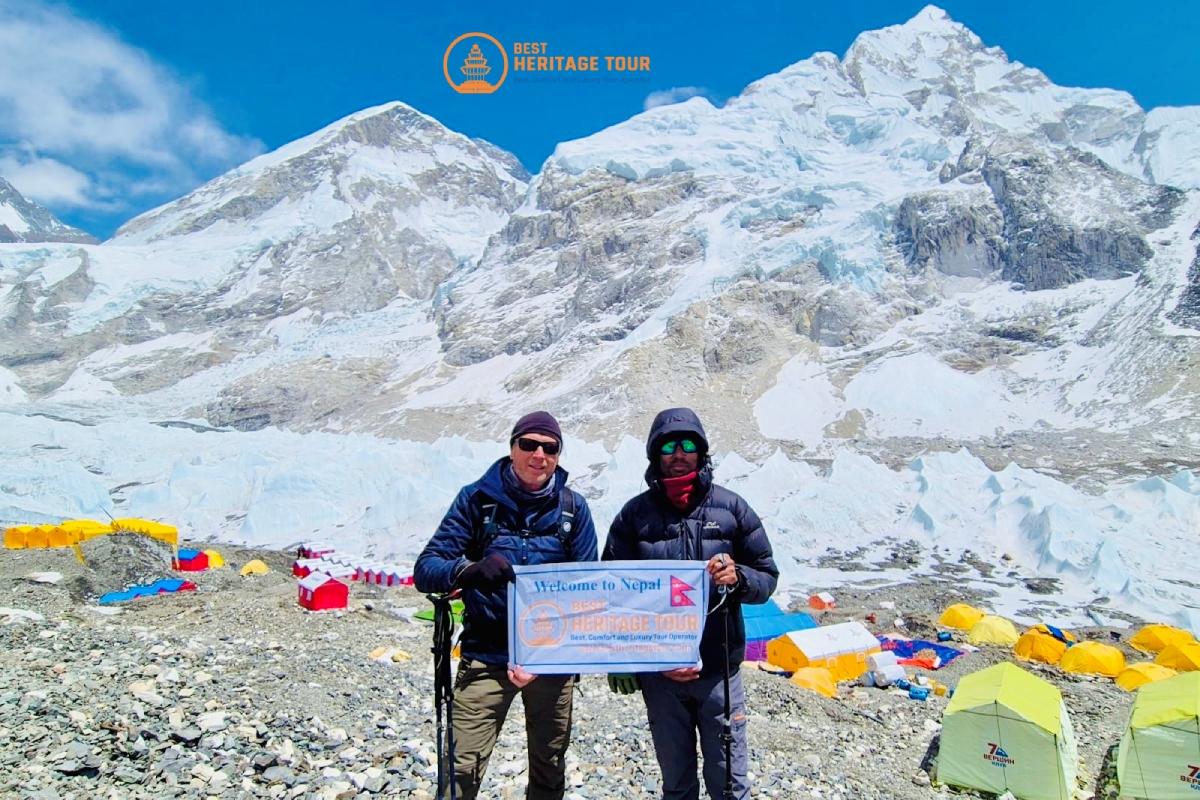
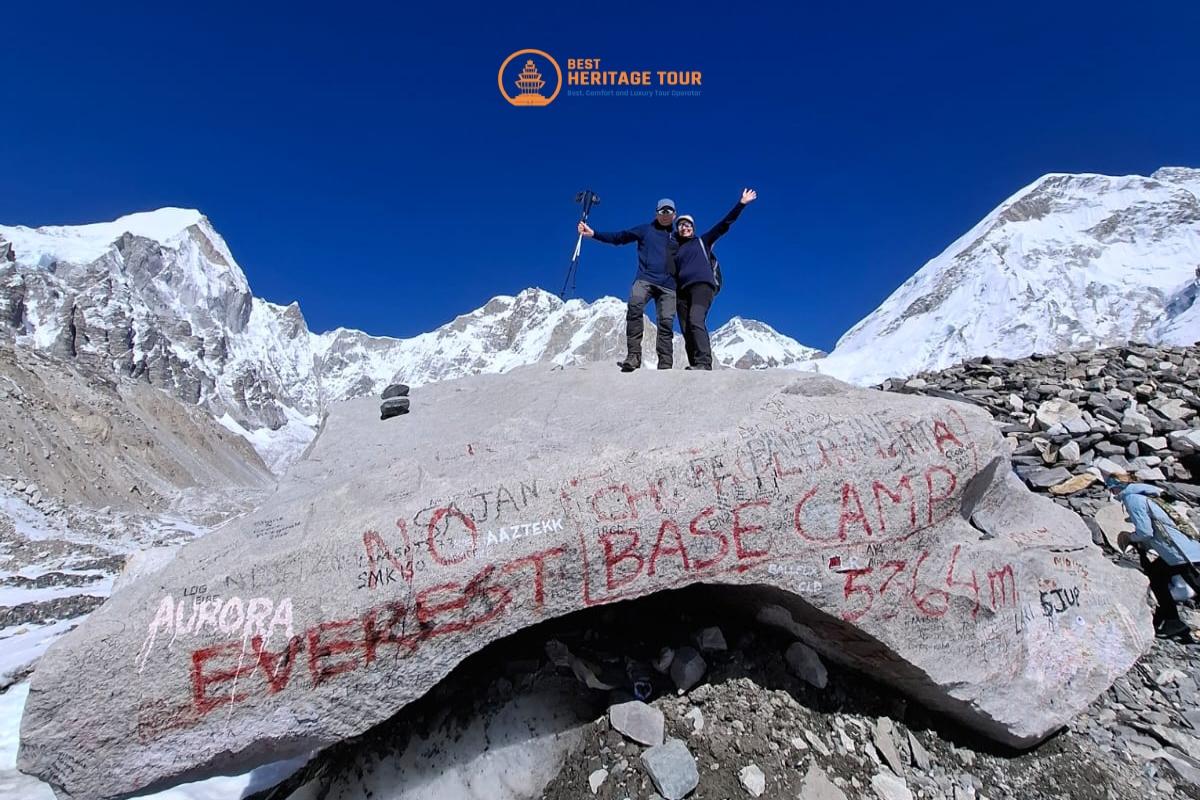
Today is a day of immense achievement. We begin with a trek across rocky moraine to Gorak Shep, the site of the original Base Camp for the 1953 expedition. After a quick lunch, we continue our journey along the edge of the Khumbu Glacier toward Everest Base Camp. The terrain is rugged, consisting of loose rocks and frozen sand, but the excitement of reaching the foot of the world’s highest peak provides plenty of fuel. Reaching the iconic rock marked "Everest Base Camp" is a bucket-list moment for every adventurer.
While at Base Camp, you will stand in the shadow of the terrifyingly beautiful Khumbu Icefall and look up at the soaring ridges of Nuptse and Lhotse. During the spring climbing season, you’ll see the famous "Yellow City" of expedition tents where elite climbers prepare for their summit bids. After celebrating and taking photographs, we retrace our steps back to Gorak Shep for a well-earned dinner and a night spent at the highest sleeping point of the trek.
We rise before dawn to tackle the steep climb to the summit of Kala Patthar. This is the highest point on the trekking portion of our trip and offers the most comprehensive view of Mount Everest. As the sun rises from behind the Everest-Lhotse massif, the peaks are bathed in a golden glow, revealing the sheer scale of the mountain in a way that isn't possible from Base Camp. The 360-degree views from the top include Pumori, Ama Dablam, and the vast expanse of the Khumbu Glacier below.
After descending to Gorak Shep for breakfast, we begin our journey back down the valley. The descent is noticeably easier on the lungs as we drop in altitude, passing through Lobuche and Thukla once more. We return to the familiar comfort of Dingboche. While we are retracing our steps, the view looking down the valley is entirely different, and the relative warmth and increased oxygen levels of Dingboche feel like a luxury after the harsh conditions of Gorak Shep.
Today we diverge from the main Everest trail and head east toward the Island Peak region. The trek to Chhukhung is relatively short and easy, following the Imja Khola valley floor. This provides a much-needed "active recovery" day after the strenuous efforts at Base Camp and Kala Patthar.
Chhukhung is a small outpost used primarily by climbers heading for Island Peak. Upon arrival, our climbing guides will perform a final inspection of your mountaineering gear. If you need any additional equipment like double boots or gaiters, these can be rented here. We spend the afternoon resting and mentally preparing for the technical phase of the trip. The atmosphere shifts from "trekking" to "expedition" as we check our harnesses, crampons, and ice axes in the shadow of the mountains.
We leave the comfort of the lodges behind and head toward Island Peak Base Camp. The trail climbs steeply onto the south side of the moraine below the Lhotse Glacier. The path winds through the rugged terrain, crossing several small streams fed by the melting ice above. As we approach the base camp, the proximity of the peaks is overwhelming; you are truly in the heart of a high-alpine amphitheater.
At Base Camp, our team will have already set up a professional tented camp. This is where your "mountaineering clinic" takes place. Our expert Sherpas will set up a practice area where you will learn to use a jumar on fixed ropes and practice rappelling (abseiling) with a figure-eight. This training is vital for the headwall you will face tomorrow. We have an early dinner and settle into our sleeping bags early, as our summit push begins well before midnight.
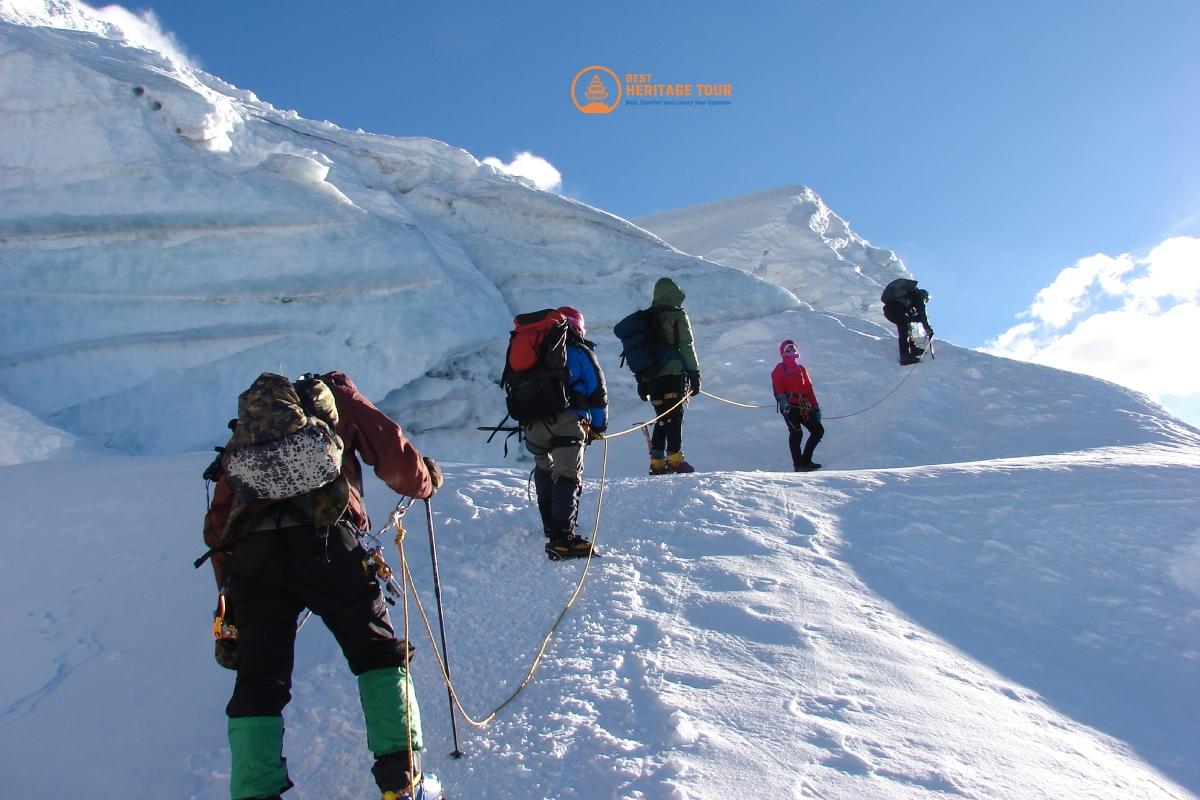
This is the climax of your journey. We wake up at 1:00 AM, have a light "alpine breakfast," and begin our climb under the light of headlamps. The initial scramble through a rocky gully leads to the "Crampon Point," where we rope up and step onto the glacier. Navigating crevasses using ladders and crossing the ice fields brings us to the foot of the 100-meter snow headwall. Using jumars and sheer determination, we ascend the steep slope to reach the narrow, exhilarating summit ridge of Island Peak.
Standing at 6,189 meters is a life-changing moment. The view of Lhotse's 3,000-meter south face is so close you feel you could touch it, and the surrounding vistas of Makalu and Baruntse are unparalleled. After celebrating our summit, we carefully abseil down the headwall and navigate back across the glacier. We pack up at Base Camp and continue all the way back to Chhukhung. It is a long, 10-12 hour day, but the sense of accomplishment makes every step feel lighter.
Himalayan weather is notoriously unpredictable. We include this contingency day in our itinerary to ensure that if Day 12 is hit by high winds or heavy snow, we still have a window for a successful summit bid. Our priority is always your safety and the success of the expedition.
We begin our long descent back toward civilization. The trail takes us back through Dingboche and Pangboche, but the experience is vastly different now that the pressure of the summit is gone. You’ll notice the air becoming richer with oxygen, and your energy levels returning. The descent through the alpine meadows, with the towering peaks now at your back, offers a different perspective on the landscape you climbed through a week ago.
We arrive back in Tengboche by the afternoon. This is a wonderful opportunity to revisit the monastery if you missed it the first time or simply to sit on the grassy meadow and watch the sunset hit the peak of Everest one last time. The rhododendron forests surrounding Tengboche feel incredibly lush and vibrant after the stark, colorless world of the high-altitude glaciers.
Instead of taking the direct route, we take a scenic detour through the beautiful village of Khumjung. This village is the largest in the Khumbu and offers a more intimate look at Sherpa life away from the main trekking trail. We visit the Khumjung Monastery to see the "Yeti Scalp" and stop at the Hillary School to see the impact of the Himalayan Trust. The path from Khumjung to Namche offers a final, sweeping view of the valley before we drop back down into the bustling streets of the Sherpa capital.
Returning to Namche Bazaar feels like returning to a major city. You can finally enjoy a real espresso at a local bakery, buy some last-minute souvenirs, or even catch a mountaineering documentary at a local bar. It’s a day for celebration and reflection.
The final day of trekking is a long but joyful descent back to Lukla. We descend the Namche Hill for the last time and cross the suspension bridges over the Dudh Koshi. Tonight is our final night in the mountains. It is customary to have a "farewell party" with your trekking and climbing crew. For many of our guests, the bond formed with the Sherpas and porters is the most meaningful part of the trip. We share a final dinner together, hand out well-deserved tips, and prepare our bags for the early morning flight.
We board our morning flight from Lukla, bidding a final farewell to the peaks of the Khumbu. The flight is a final chance to see the mountains from above. Depending on the airline schedules and season, you will land in Kathmandu or Manthali (Ramechhap). If landing in Manthali, we provide a private, comfortable vehicle for the 4-5 hour drive back to the capital, winding through the rolling hills and terraced farms of rural Nepal. Upon arrival in Kathmandu, our team will transfer you to your hotel. In afternoon, Best Heritage Tour will host a celebratory farewell dinner. We’ll present you with your official Island Peak Summit Certificate and share photos from the trip.
What is included?
- PRIVATE AIRPORT PICK-UP & DROP : Airport - Hotel transfer - Airport (Pick Up and Drop).
- ROUND TRIP DOMESTIC FLIGHT FARE : Fly from Kathmandu - Lukla and while returning Lukla - Kathmandu, as per itinerary. (through manthali during peak trekking season).
- ACCOMMODATION :
- During Treks : Best available accommodation in mountain lodges and tea houses during the trek.
- At High Camp : Accommodation in a fully supported tented camps with complete camping arrangements.
- FOOD : 3 meals a day (breakfast, lunch and dinner; including tea/coffee) during the trek, with Ef-Chlor purification tablets provided for safe drinking water.
- GUIDE :
- During Trek : One experienced government licensed trekking guide (English speaking) during the trek.
- During Climb : One experienced government-licensed climbing Sherpa during the entire climb from Basecamp to the summit and back.
- CLIMBING PORTERS : Climbing Porters for carrying your gears from Basecamp to High camp.
- STAFF SALARY AND ALLOWANCE : All staff wages, salary, equipment, food & clothing.
- PERMITS : All necessary paperwork : Expedition Royalty and permits fee of Nepal Mountaineering Association, Sagarmatha National Park permit, Khumbu Pasang Lhamu Rural Municipality entry permit and fees.
- GARBAGE MANAGEMENT : Stool Shipment Transfer & Garbage Deposit fees.
- STAFF INSURANCE : Insurance for all staff involved during the trek & climb.
- CAMPING ESSENTIALS : Necessary equipment including high altitude tents, cooking utensils, and other equipment required during the climb.
- GEAR (IF NEEDED) : Sleeping bag, down jacket and duffle bag (to be returned after the trek).
- MEDICAL KIT : A well equipped first aid kit, including an oximeter, carried by the guide for your safety.
- OXYGEN BOTTLE & MASK: Oxygen cylinders and masks will be available at base camp for emergency use (additional charges apply).
- IN CASE OF EMERGENCY : Assistance in rescue operations in case of emergency covered by travel insurance.
- CERTIFICATE & SOUVENIR : NMA Certificate after successfully climbing Island Peak & Best Heritage Tour Purse, an authentic Nepali product made from hemp.
- FAREWELL DINNER : A farewell dinner with an authentic cultural program after completion of the trip.
What is not included?
- INTERNATIONAL AIRFARE : International flight airfare (from and to Kathmandu).
- NEPAL VISA FEES : You may issue the visa upon your arrival at Tribhuvan International Airport - Kathmandu or apply manually in your home country).
- ACCOMMODATION IN KATHMANDU : Accommodation & Meals in Kathmandu.
- INSURANCE POLICY : Travel insurance covering medical expenses and high-altitude evacuation is mandatory. If you do not have suitable coverage, we can also assist in arranging travel insurance for you upon your arrival in Nepal. Check Over Here
- PERSONAL EXPENSES : Clothing & climbing gears, telephone, internet, toiletries, hot shower, laundry, soft drinks and any Alcoholic beverages.
- OPTIONAL PORTER SERVICE : USD 22 per day, including all taxes (each porter can carry up to 25 kg of luggage).
- TIPS : Tips for guide and porters.
- EXTRA : Any additional costs due to factors beyond our control, or for services not specifically mentioned in the Itinerary & Included section.
- TAXES & SERVICE CHARGE : All government taxes (13%) and service charge (10%).
Route Map
Equipment
Technical Climbing Kit
-
Boots: Modern Double Mountaineering Boots (plastic or insulated)
-
Crampons: 12-point steel crampons with anti-balling plates
-
Tools: Straight-shaft Ice Axe and one Ascender (Jumar)
-
Hardware: Climbing Harness, Figure-8 or ATC, 2 Locking + 2 Non-locking Carabiners
-
Safety: Climbing Helmet and two 2-meter Tape Slings
High-Altitude Clothing
-
Head: Warm Beanie, Sun Hat, and a Buff (Neck Gaiter)
-
Hands: Lightweight liner gloves + Heavy insulated Summit Mittens
-
Base: 2 sets of Merino Wool thermals (Top & Bottom)
-
Mid: Fleece jacket and softshell trekking pants
-
Outer: Waterproof Gore-Tex Shell (Jacket & Pants) + Expedition-weight Down Jacket (-20°C)
Footwear & Eye Protection
-
Boots: Sturdy, waterproof trekking boots (broken in)
-
Socks: 4 pairs of trekking socks + 2 pairs of thick wool summit socks
-
Eyes: Category 4 Glacier Glasses (Mandatory for snow blindness prevention)
Trekking Gear & Accessories
-
Sleeping: -15°C to -20°C rated Sleeping Bag
-
Day Pack: 35-45L Daypack
-
Lighting: LED Headlamp with spare lithium batteries
-
Hydration: 2 Liter Water bottle or Hydration Pack
-
Trekking Poles: Lightweight collapsible
Personal Items & First Aid
-
Skincare: SPF 50+ Sunscreen and Lip Balm
-
Hygiene: Wet wipes, 2 rolls of TP, and biodegradable soap
-
Medical: Personal First Aid Kit (Diamox, Ibuprofen, Blister Plasters)
-
Power: 20,000mAh Power Bank
Trip Info
Best Time for EBC Trek with Island Peak Climbing
Choosing the right window is the difference between a scenic success and a grueling retreat. At Best Heritage Tour, we focus on two peak windows:
Spring (March to May):
This is the classic mountaineering season. The snowpack on the Island Peak headwall is usually more stable, and the temperatures are slightly milder. You’ll also share the trail with climbers heading for Everest, creating a vibrant "expedition" atmosphere. The lower trails are a riot of color as the rhododendron forests bloom against the white peaks.
Autumn (September to November):
Post-monsoon, the dust is washed from the air, providing the sharpest, high-contrast views of the Himalayas. While the temperature at Island Peak Base Camp can drop significantly lower than in Spring, the weather is remarkably stable with deep blue skies. This is the preferred time for photographers seeking that perfect shot of the Milky Way over Ama Dablam.
Permits Required for the EBC Trek with Island Peak Climbing
To navigate the high valleys of the Khumbu and legally stand atop Island Peak, specific documentation is mandatory. These permits fund the conservation of the fragile alpine ecosystem and support local infrastructure. For this expedition, the following permits are required:
-
Khumbu Pasang Lhamu Rural Municipality Permit: This is the local entry permit required for all travelers entering the Everest region, replacing the old TIMS card system.
-
Sagarmatha National Park Entry Permit: As you will be traveling through a UNESCO World Heritage site, this permit is required to support the protection of the region's unique flora and fauna.
-
Island Peak (Imja Tse) Climbing Permit: Issued by the Nepal Mountaineering Association (NMA), this specific authorization is what allows you to legally attempt the summit of a 6,000-meter "Trekking Peak."
Documents Required for Permits
At Best Heritage Tour, we handle the entire bureaucratic process from start to finish. Our team coordinates with the NMA and local authorities so that when you arrive in Nepal, your paperwork is already in order. To ensure a seamless application, we will need the following from you:
-
Clear Passport Copy: A high-resolution, color scanned copy of your passport’s main page (must be valid for at least 6 months from your travel date).
-
Passport-Sized Photos: Four recent digital photos with a plain background, which are used for the official climbing license and park registration logs.
-
Comprehensive Travel Insurance: A copy of your insurance certificate. Crucial: Your policy must explicitly state coverage for mountaineering/climbing and emergency helicopter evacuation at altitudes up to 6,500 meters.
Pro Tip: Your lead guide will carry the original permits throughout the trip. However, we recommend keeping a digital copy on your phone. You will pass through several checkpoints in Monjo and Namche where these documents are officially logged.
Accommodation & Meals
At Best Heritage Tour, we believe that a successful summit is built on a foundation of restorative sleep and high-energy nutrition. We handle every detail of your lodging and dining logistics, ensuring you are well-rested and fully fueled for the challenges of the Everest region.
Cozy Teahouse Living
For 15 nights of your journey, you will experience the legendary hospitality of Sherpa teahouses. these are iconic, family-run mountain lodges that serve as a sanctuary for trekkers from around the globe.
-
The Rooms: We provide twin-sharing accommodations with clean, comfortable beds. While we provide thick blankets, the high-altitude nights are cold; therefore, we recommend using a professional-grade sleeping bag (rated to -15°C/0°F) for maximum warmth.
-
The Common Area: The social heart of your trek is the central dining hall. Here, a yak-dung stove radiates warmth, creating the perfect atmosphere to bond with your team, enjoy a hot drink, and reflect on the day’s achievements.
Professional Base Camp Camping
For your summit push on Island Peak, we transition from teahouses to a high-altitude expedition camp. This is where the true mountaineering experience begins.
-
The Setup: At Island Peak Base Camp (5,200m), we provide high-quality, four-season insulated tents on a twin-sharing basis. We also set up a dedicated kitchen tent and a dining tent with tables and chairs.
Hearty Meals: Fueling Your Ambition
Mountaineering burns thousands of calories daily. Your package includes Breakfast, Lunch, and Dinner, with a menu designed to maintain your stamina and combat appetite loss at high altitudes.
-
The Iconic Dal Bhat: Known as the "Fuel of the Himalayas," this traditional platter of steamed rice, lentil soup, and vegetable curry is our go-to recommendation. It is healthy, delicious, and comes with unlimited refills, living up to the famous motto: "Dal Bhat Power, 24 Hour!"
-
Sherpa Specialties: We encourage you to try local "Superfoods" like Syakpa (Sherpa Stew) - a dense, warming soup made of handmade noodles and vegetables - and Momos, the famous Nepali dumplings that are a favorite celebration meal.
Staying hydrated is your first line of defense against Altitude Sickness. We provide a wide selection of hot beverages, including ginger-lemon-honey tea, masala chai, and hot chocolate. Whether you are Vegetarian, Vegan, or Gluten-Free, we’ve got you covered. Most Himalayan dishes are naturally vegetarian-friendly. Simply inform Best Heritage Tour during your booking, and our guides will coordinate with the kitchens to ensure your specific dietary requirements are met without compromising on taste or nutrition.
Physical Fitness & Technical Experience
This is a "Strenuous+" rated trip. While Island Peak is often a person's first Himalayan summit, it should not be underestimated.
-
The Physical Demand: You will be trekking for 16 consecutive days, often ascending 500m to 1,000m in a single day. You need high cardiovascular endurance and, more importantly, "mountain stamina" - the ability to keep moving even when tired.
-
Technicality: You don't need to be a pro, but you must be comfortable with heights. The final 100-meter headwall is a near-vertical snow slope where you will use a jumar (ascender) on a fixed rope. If you have never used crampons or an ice axe, our pre-climb clinic at Base Camp will teach you, but a background in basic scrambling or indoor rock climbing is a massive advantage.
Safety & Acclimatization
Safety isn't just a buzzword for us; it’s our operational backbone. High Altitude Pulmonary/Cerebral Edema (HAPE/HACE) are real risks that we mitigate through science and experience.
-
Scientific Monitoring: Our lead guides carry pulse oximeters to check your blood oxygen levels every morning and evening. We track your trends - if your oxygen drops too low while resting, we make the professional call to rest or descend.
-
Expert Crew: Our Sherpas are born and raised at altitude. They are trained in Wilderness First Aid and carry high-altitude medical kits, including Diamox and emergency steroids. We maintain a 24/7 link with Kathmandu-based helicopter rescue coordinators to ensure that if an evacuation is needed, it happens within the hour (weather permitting).
Travel Insurance
For this trip, standard travel insurance is simply not enough. At Best Heritage Tour, we require proof of a comprehensive insurance policy before you can begin the trek. Your policy must include the following specific coverages:
-
Mountain Expedition Coverage (Up to 6,500m)
-
Medical Emergency & Hospitalization: Including treatment for Altitude Sickness (AMS, HAPE, or HACE).
-
Emergency Helicopter Evacuation
-
Search and Rescue (SAR)
-
Trip Cancellation & Interruption
-
Cashless Claims & Direct Payment
Pro Tip: Always carry a physical print-out of your insurance policy and the 24-hour emergency contact number in your chest pocket. In an emergency, every second counts, and having your policy number ready allows Best Heritage Tour to launch a rescue immediately.
Visa for Nepal
All international travelers (except Indian) need a tourist visa to visit Nepal, which can be obtained on arrival at Kathmandu airport or online.
Key Details:
-
Duration: 15, 30, or 90 days (30 days recommended for this trek)
-
Fees: 15 days - USD 30 | 30 days - USD 50 | 90 days - USD 125
-
Requirements: Valid passport (6+ months), visa form, passport photo, and payment in cash (USD/EUR/GBP/NPR)
Tip: Keep a copy of your visa and passport during the trek and consider applying visa online (through Nepal Immigration Website) for a smoother arrival. Also register to Foreign Nationals Management Information System (FNMIS) as this is now mandatory for any Tourists entering Nepal from 2026.
Booking & Payment
Booking your EBC Trek with Island Peak Climbing with Best Heritage Tour is simple and secure. To confirm your trip, a 10% deposit of the total trip cost is required at the time of booking, while the remaining balance must be cleared at least one day before departure. Payments can be made via cash, bank transfer, or card; bank transfer and card fees are the responsibility of the trekker, and incur a 4% transaction fee. All booking and cancellation terms are clearly explained by Best Heritage Tour staff during the booking process and can also be reviewed on our website.
Bank transfer:
-
Account Name: Best Heritage Tour And Treks Pvt. Ltd.
-
Account Number: 13201040254106
-
Bank Name: Nepal Investment Mega Bank Ltd.
-
Address: Thamel, Kathmandu, Nepal
-
SWIFT Code: NIBLNPKT
-
Bank Transfer Link: www.bestheritagetour.com/payment
Once we receive the deposit, we will issue the official invoice and booking conformation right away. If you need any clarification, we are happy to answer your questions or provide additional details you may require.
Last-Minute Booking
For travelers planning on short notice, Best Heritage Tour accepts last-minute bookings up to 24 hours before departure. In such cases, full payment (100% of the trip cost) is required at the time of booking. Trekkers should be aware that accommodation, logistics, and services may be limited, and the company cannot be held responsible for any compromises arising from late arrangements.
FAQ's
The entire EBC Trek with Island Peak Climbing spans 17 days from Kathmandu. This duration, designed by Best Heritage Tour, guarantees a perfectly balanced pace between trekking to Everest Base Camp, essential high-altitude acclimatization, and technical preparation required for the final summit push up Island Peak.
Yes, beginners can join the EBC Trek with Island Peak Climbing, provided they possess excellent physical stamina and determination. Best Heritage Tour structures this itinerary with gradual acclimatization and provides thorough basic mountaineering training at base camp, allowing fit trekkers without technical experience to summit safely.
The maximum elevation attained during the EBC Trek with Island Peak Climbing is the summit of Island Peak itself, standing at an impressive 6,189 meters (20,305 feet). Additionally, you will reach Kala Patthar at 5,545 meters, which offers unparalleled panoramic views of Mount Everest.
Summit day on the EBC Trek with Island Peak Climbing is physically demanding, involving an alpine start around midnight. You will navigate a fractured glacier and ascend a steep 45-degree snow headwall using fixed ropes, which requires a strong mindset and solid cardiovascular endurance.
No prior mountaineering experience is necessary for the EBC Trek with Island Peak Climbing. While helpful, our expert climbing Sherpa’s teach you fundamental skills - including using crampons, harnesses, ice axes, and ascenders - during dedicated pre-climb training sessions before you attempt the actual mountain summit.
We highly recommend starting a rigorous physical training regimen 12 to 16 weeks before your EBC Trek with Island Peak Climbing. Focus heavily on cardiovascular exercises, stair climbing, core strength stability, and regular weekend day hikes carrying a weighted backpack to build specific muscular endurance.
Participating in the EBC Trek with Island Peak Climbing requires several official documents, including the Sagarmatha National Park entry permit, the Khumbu Pasang Lhamu rural municipality permit, and an NMA peak climbing permit. Best Heritage Tour completely manages these bureaucratic arrangements for you.
The optimal windows for the EBC Trek with Island Peak Climbing are spring (March to May) and autumn (September to November). Spring brings beautiful blooming rhododendrons and warmer temperatures, while autumn provides exceptionally stable weather and crystal-clear mountain views across the Khumbu valley.
Safety is our top priority during the EBC Trek with Island Peak Climbing. Best Heritage Tour provides IFMGA-certified guides who perform daily health checks, monitor oxygen levels, and carry comprehensive medical kits, while our professional Sherpas skillfully manage all fixed-rope logistics on the mountain.
During the trekking phase of the EBC Trek with Island Peak Climbing, you will stay in traditional Sherpa teahouses. At Island Peak Base Camp, Best Heritage Tour switches to premium, expedition-style tented camps, complete with comfortable sleeping mattresses and freshly prepared nutritious meals.
The EBC Trek with Island Peak Climbing features high-carbohydrate, energetic meals to sustain your stamina. Teahouses serve local Dal Bhat, pasta, eggs, and soups, while our specialized kitchen crew prepares hot, hygienic, and fresh continental dishes during your tented camping days at base camp.
Essential technical gear for the EBC Trek with Island Peak Climbing includes plastic mountaineering boots, crampons, a climbing harness, a helmet, an ice axe, and a Jumar ascender. Trekkers must also bring heavy expedition-grade down jackets and category 4 glacier glasses to prevent snow blindness.
Yes, you can easily rent all necessary technical gear for the EBC Trek with Island Peak Climbing. Best Heritage Tour assists clients in sourcing high-quality, certified climbing equipment directly from professional rental shops in Chhukung or Namche Bazaar, saving you from carrying heavy gear internationally.
Yes, round-trip domestic flights between Kathmandu/Ramechhap and Lukla are fully included in the EBC Trek with Island Peak Climbing package. Best Heritage Tour manages these flight arrangements and coordinates all land transfers to the airstrip according to seasonal flight operational schedules.
Himalayan weather is highly unpredictable, and Lukla flights can face delays. For the EBC Trek with Island Peak Climbing, we recommend factoring extra contingency days into your international travel plans, or Best Heritage Tour can arrange chartered helicopter alternatives to keep your schedule intact.
For the domestic flight segment of the EBC Trek with Island Peak Climbing, the strict weight limit is 15 kg per person, including your main duffel bag and daypack. Best Heritage Tour provides professional porters and pack yaks to transport your heavy gear smoothly along the trail.
Absolutely! Reaching the legendary Everest Base Camp at 5,364 meters is a central highlight of the EBC Trek with Island Peak Climbing. You will spend time exploring the historic glacier site, observing expedition life, and admiring the powerful Khumbu Icefall up close.
Yes, the early morning hike up Kala Patthar (5,545m) is an integral part of the EBC Trek with Island Peak Climbing. This spectacular viewpoint provides the absolute best, unobstructed photographic perspective of Mount Everest, Nuptse, and Lhotse illuminated by the golden morning sunrise.
Your EBC Trek with Island Peak Climbing will be led by licensed, English-speaking trekking guides paired with IFMGA-certified climbing Sherpas. These seasoned professionals from Best Heritage Tour possess extensive high-altitude experience, local cultural knowledge, and advanced wilderness first-aid training.
Yes, valid travel insurance is strictly mandatory for the EBC Trek with Island Peak Climbing. Your insurance policy must specifically cover high-altitude trekking up to 6,200 meters, technical mountaineering activities, and emergency helicopter evacuation services throughout the remote Khumbu region.
Safe hydration is vital during the EBC Trek with Island Peak Climbing. We advise drinking boiled water provided at teahouses or utilizing reliable water purification tablets and chlorine drops. Best Heritage Tour emphasizes strict hygiene practices to ensure your health remains protected on the trail.
During the EBC Trek with Island Peak Climbing, stay alert for symptoms of Acute Mountain Sickness, including persistent headaches, dizziness, nausea, loss of appetite, and fatigue. Inform your Best Heritage Tour guide immediately if you experience any discomfort so proper safety protocols can be implemented.
We highly recommend bringing a personal four-season sleeping bag rated down to -15°C or -20°C for the EBC Trek with Island Peak Climbing. Alternatively, Best Heritage Tour can assist you in renting high-quality, sanitized down sleeping bags in Kathmandu before heading into the mountains.
Wi-Fi connectivity is widely available across most teahouses during the EBC Trek with Island Peak Climbing via prepaid local networks like Everest Link. Alternatively, you can purchase a local Ncell or Nepal Telecom SIM card, though coverage becomes irregular at higher altitudes.
Yes, you can charge your electronic devices at teahouses during the EBC Trek with Island Peak Climbing for a small local fee. As electricity can be limited in remote areas, Best Heritage Tour strongly recommends carrying a high-capacity solar power bank to keep your cameras operational.
The cancellation policy for the EBC Trek with Island Peak Climbing depends on how close to the departure date you cancel. Best Heritage Tour offers flexible booking terms and partial refunds according to our standard booking guidelines, protecting your investment against unexpected medical or personal emergencies.
Tipping is not included in the standard EBC Trek with Island Peak Climbing package price. While tipping is completely voluntary, it is a deeply appreciated custom in Nepalese mountaineering culture that directly supports the hardworking Sherpas, guides, and porters who ensure your expedition success.
The EBC Trek with Island Peak Climbing offers profound cultural immersion. You will explore historic Sherpa capitals like Namche Bazaar, visit the sacred Tengboche Monastery, walk past ancient mani stones, and experience the warm, authentic hospitality of traditional mountain families.
The standard minimum age requirement for the EBC Trek with Island Peak Climbing is 16 years, accompanied by a parent or guardian. Participants must demonstrate physical maturity, mental resilience, and prior outdoor experience to handle the rigorous demands of this high-altitude mountaineering package.
Yes, our specialized team can fully customize the EBC Trek with Island Peak Climbing itinerary to match your specific preferences. Best Heritage Tour accommodates private groups by adding extra acclimatization days, modifying overnight stops, or integrating helicopter returns to fit your personal time frames.
For medical emergencies on the EBC Trek with Island Peak Climbing, our team is equipped with satellite communication tools and comprehensive first-aid kits. Best Heritage Tour coordinates swift helicopter evacuations to top-tier hospitals in Kathmandu if severe altitude sickness or urgent injuries occur.
Hot showers are available in most teahouses during the trekking portion of the EBC Trek with Island Peak Climbing for an additional fee. However, showers are unavailable during the tented camping phase at Island Peak Base Camp, where we provide warm washing water instead.
The professional guides assigned to your EBC Trek with Island Peak Climbing are fluent in English and Nepali. Best Heritage Tour can also provide specialized guides who speak fluent French, German, Spanish, or Chinese upon advanced request to ensure seamless, comfortable communication throughout the trip.
The final summit ridge of the EBC Trek with Island Peak Climbing is a thrilling, exposed snow arete. It requires walking with crampons while clipped into fixed safety lines. The spectacular ridge walk delivers a true alpine mountaineering feel with dramatic exposure on both sides.
Yes, a single supplement option is available for the EBC Trek with Island Peak Climbing. This option secures private rooms in teahouses where available and a single tent at base camp. Best Heritage Tour can arrange this comfort upgrade for an additional fee during booking.
The typical group size for our EBC Trek with Island Peak Climbing ranges from 2 to 12 participants. Keeping groups small allows Best Heritage Tour to maintain personalized attention, high safety standards, and optimal guide-to-client ratios on the technical climbing sections.
While solo trekking is possible on standard routes, the EBC Trek with Island Peak Climbing requires a mandatory licensed guide and climbing permits by Nepalese law. Best Heritage Tour can organize a fully supported, private solo expedition tailored exclusively to your personal pacing and safety requirements.
During the glacier crossing on the EBC Trek with Island Peak Climbing, you will navigate crevasses using specialized aluminum ladders secured across the ice gaps. Our experienced climbing Sherpas guide you step-by-step, ensuring you are safely roped up and secured to anchor lines.
ATMs are available in Lukla and Namche Bazaar along the EBC Trek with Island Peak Climbing route. However, these machines can occasionally run out of cash or experience power failures, so we recommend carrying sufficient Nepalese rupees from Kathmandu to cover personal expenses.
For the EBC Trek with Island Peak Climbing, pack reliable base layer thermals, fleece jackets, waterproof shells, trekking poles, a headlamp, and a daypack. Don't forget polarized glacier sunglasses, high-SPF sunscreen, lip balm, personal toiletries, and a well-stocked personal first-aid kit.
Weather on the EBC Trek with Island Peak Climbing changes dynamically. Mornings are typically clear and sunny, while clouds and cold winds frequently build up in the afternoons. Nighttime temperatures drop significantly below freezing, highlighting the absolute necessity of high-quality layered clothing.
Yes, a helicopter return option can easily be integrated into your EBC Trek with Island Peak Climbing package. Best Heritage Tour can arrange a scenic helicopter flight directly from Chhukung, Pangboche, or Namche Bazaar back to Kathmandu, saving you days of downhill trekking.
On average, you will walk between 5 to 7 hours per day during the EBC Trek with Island Peak Climbing. The summit day on Island Peak is considerably longer and more intense, often requiring 10 to 12 hours of strenuous, focused physical movement over rocky and icy terrain.
While traversing Sagarmatha National Park on the EBC Trek with Island Peak Climbing, you may spot unique Himalayan wildlife. Look out for Himalayan Thars, musk deer, colorful Danphe pheasants, and grazing yaks. The lower forested trails also feature beautiful rhododendron and pine woodlands.
Pre-climb technical training on the EBC Trek with Island Peak Climbing takes place at Island Peak Base Camp or Chhukung village. Here, our professional climbing Sherpas set up practice ropes so you can master the Jumar ascender, practice knot tying, and perfect your crampon technique.
Best Heritage Tour utilizes premium, weather-resistant, three-person dome tents shared by two climbers during the EBC Trek with Island Peak Climbing. This configuration provides ample space for your personal gear. We also set up spacious dining, kitchen, and toilet tents at the campsite.
Yes, emergency bottled oxygen is always available on our EBC Trek with Island Peak Climbing departures. Our professional guiding team carries supplementary oxygen cylinders and comprehensive medical supplies during the high-altitude phases to handle severe cases of hypoxia or advanced altitude sickness swiftly.
You can wash clothes by hand at lower stops like Namche Bazaar during the EBC Trek with Island Peak Climbing. Many teahouses provide laundry services for a fee. However, due to freezing temperatures, clothes take a long time to dry at higher elevations.
The success rate of our EBC Trek with Island Peak Climbing is exceptionally high. Best Heritage Tour achieves this through a carefully planned 17-day itinerary that prioritizes slow, gradual acclimatization, meticulous safety tracking, and expert technical guidance provided by our veteran climbing Sherpas.
Environmental conservation is foundational to Best Heritage Tour operations. During the EBC Trek with Island Peak Climbing, we enforce a strict "Leave No Trace" policy. All group waste generated at base camp is collected, carried out, and responsibly disposed of via local environmental management committees.
There are no hidden costs when you book the EBC Trek with Island Peak Climbing with Best Heritage Tour. Our comprehensive package transparently outlines all inclusions like permits, accommodation, meals, and transport. Personal expenses, bar bills, hot showers, and tips remain your responsibility.
Electricity on the EBC Trek with Island Peak Climbing relies primarily on solar power and micro-hydro networks. While stable at lower elevations, power availability can fluctuate during cloudy weather or at higher altitudes, which is why bringing a durable portable solar charger is highly recommended.
The best way to prevent AMS on the EBC Trek with Island Peak Climbing is to maintain a slow, steady pace, stay adequately hydrated by drinking 4 liters of water daily, and eat well. Always listen to your Best Heritage Tour guide regarding proper acclimatization protocols.
Yes, many trekkers use Diamox (Acetazolamide) as a preventative measure on the EBC Trek with Island Peak Climbing to help accelerate the acclimatization process. We recommend consulting your personal doctor before departure, and you must keep your lead guiding team informed about any medication you consume.
If you cannot complete the EBC Trek with Island Peak Climbing due to physical fatigue or altitude sickness, our support team will safely escort you down to a lower altitude. Best Heritage Tour coordinates all logistics for your safe descent, medical care, or helicopter evacuation if required.
Mobile network coverage from Ncell and NTC is weak or completely unavailable at Island Peak Base Camp during the EBC Trek with Island Peak Climbing. To maintain essential contact, our guiding crew carries satellite phones and radio communication equipment to manage all necessary expedition logistics and safety updates.
For the trekking portion of the EBC Trek with Island Peak Climbing, you need high-quality, waterproof trekking boots that offer solid ankle support. Ensure your boots are thoroughly broken in before arriving in Nepal to avoid painful blisters that could disrupt your multi-day mountain journey.
Yes, you can safely leave all non-trekking clothes, suitcases, and extra travel items at Best Heritage Tour store for free during the EBC Trek with Island Peak Climbing. This ensures you only fly into Lukla with essential mountain gear within weight limits.
Summit day on the EBC Trek with Island Peak Climbing typically starts around 1:00 AM. Climbing early allows you to cross the glacier safely before sunrise warms the snow and ice, and ensures you reach the 6,189-meter summit during clear, stable morning conditions.
Yes, lightweight, collapsible trekking poles are highly beneficial throughout the EBC Trek with Island Peak Climbing. They significantly reduce the impact on your knees during steep descents and help you maintain balance while traversing rocky moraines and uneven alpine terrain.
While tipping on the EBC Trek with Island Peak Climbing is entirely optional, a general guideline is to pool around $150 to $200 per climber. This collective tip is distributed among the guiding team, climbing Sherpas, and porters as a sincere token of appreciation for their hard work.
Yes, you can buy chocolate bars, snacks, and energy drinks at various teahouses along the EBC Trek with Island Peak Climbing trail. However, prices increase significantly as you ascend higher into remote areas, so we recommend purchasing your favorite high-energy snacks in Kathmandu.
No, you will not cross the dangerous Khumbu Icefall during the EBC Trek with Island Peak Climbing. You will walk right up to its base while exploring Everest Base Camp, but the technical climbing portion of your trip takes place on the safer slopes of Island Peak.
Temperatures at the summit of the EBC Trek with Island Peak Climbing can be extremely cold, ranging from -10°C to -20°C during the early morning hours. Strong winds are common, emphasizing the absolute necessity of wearing heavy down clothing and insulated summit mittens.
Island Peak, known locally as Imja Tse, is iconic because it sits like an island amidst a sea of ice, surrounded by giant peaks like Lhotse. It provides a perfect, accessible bridge between high-altitude trekking and entry-level alpine mountaineering.
No, emergency helicopter rescue fees are not included in the standard package price for the EBC Trek with Island Peak Climbing. Any helicopter evacuation expenses must be directly covered by your mandatory travel insurance policy, which Best Heritage Tour coordinates immediately during an emergency.
To safely scale the 45-degree snow headwall during the EBC Trek with Island Peak Climbing, our climbing Sherpas pre-install high-strength fixed lines. You will secure yourself using a harness, mechanical Jumar ascender, and safety slings, ensuring complete fall protection.
For the EBC Trek with Island Peak Climbing, category 4 glacier glasses are strictly mandatory. These specialized sunglasses provide maximum UV protection and feature side shields that block intense lateral glare reflected from snow and ice fields, effectively preventing dangerous snow blindness.
Depending on weather conditions and group safety, you will typically spend 15 to 30 minutes at the 6,189-meter summit during the EBC Trek with Island Peak Climbing. This allows ample time to celebrate, take photographs, and admire the breathtaking views before descending safely.
For the EBC Trek with Island Peak Climbing, you need a multi-layered glove system. Bring lightweight liner gloves for lower trekking, windproof softshell gloves for glacier work, and heavy, insulated, waterproof mountaineering summit mittens to fully protect your hands against severe frostbite conditions.
The standard route for the EBC Trek with Island Peak Climbing is carefully chosen to minimize objective alpine hazards like avalanches. Our experienced climbing Sherpas constantly monitor snow pack stability and local weather patterns, ensuring summit attempts only proceed under safe, stable conditions.
For the EBC Trek with Island Peak Climbing, bring a high-quality LED headlamp with a brightness rating of at least 300 lumens. It must feature a dependable cold-resistant lithium battery system, as you will rely heavily on it during the dark alpine midnight summit push.
Your daypack during the EBC Trek with Island Peak Climbing will typically weigh around 5 to 7 kg. It should only hold your personal essentials for the day, such as drinking water, a camera, extra clothing layers, sunscreen, rain gear, and personal snacks.
If you develop a blister during the EBC Trek with Island Peak Climbing, inform your guide immediately. Our guiding staff is trained to treat blisters using antiseptic wipes, specialized blister tape, or moleskin padding to prevent infection and ensure you continue walking comfortably.
Choosing Best Heritage Tour for your EBC Trek with Island Peak Climbing guarantees an unparalleled, safe, and authentic Himalayan experience. Our focus on safety, certified guides, top-tier base camp infrastructure, and sustainable tourism ensures your high-altitude dream is realized seamlessly.