
Manaslu TSUM Valley & Upper Mustang Trek - 34 Days
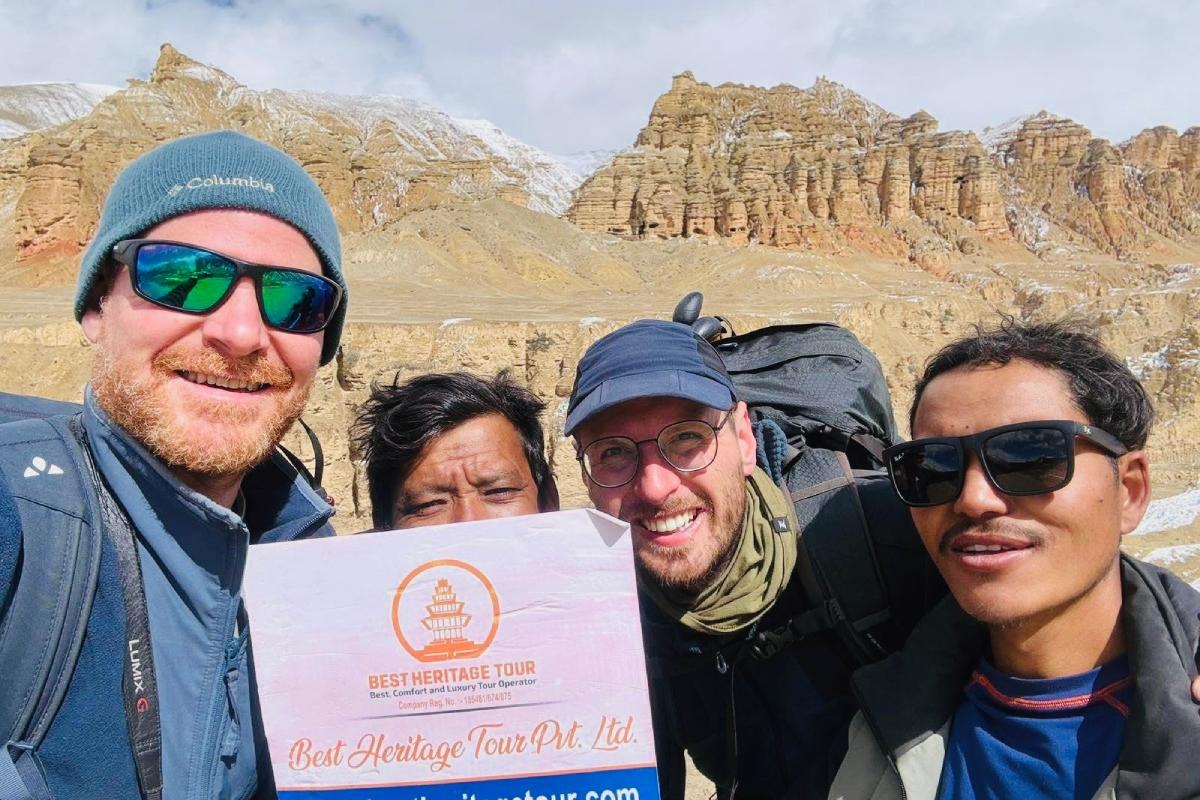
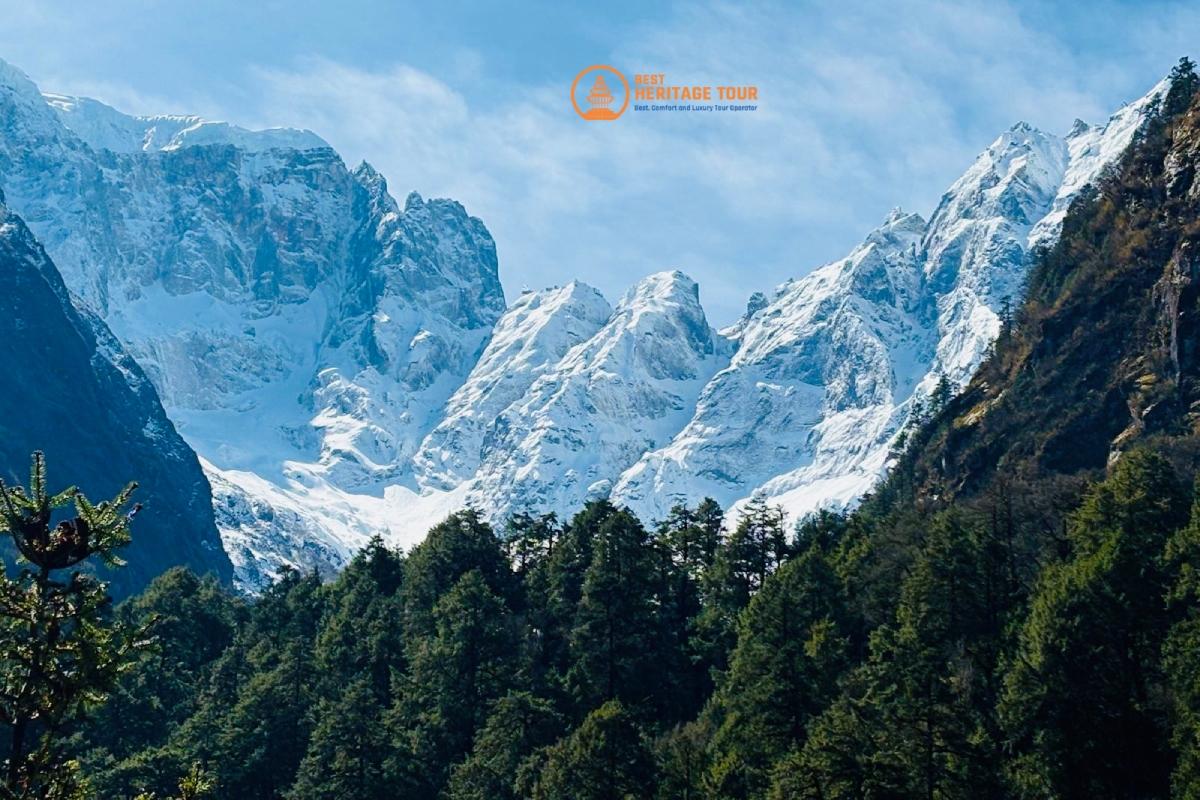
Insight on the Manaslu Tsum Valley & Upper Mustang Trek
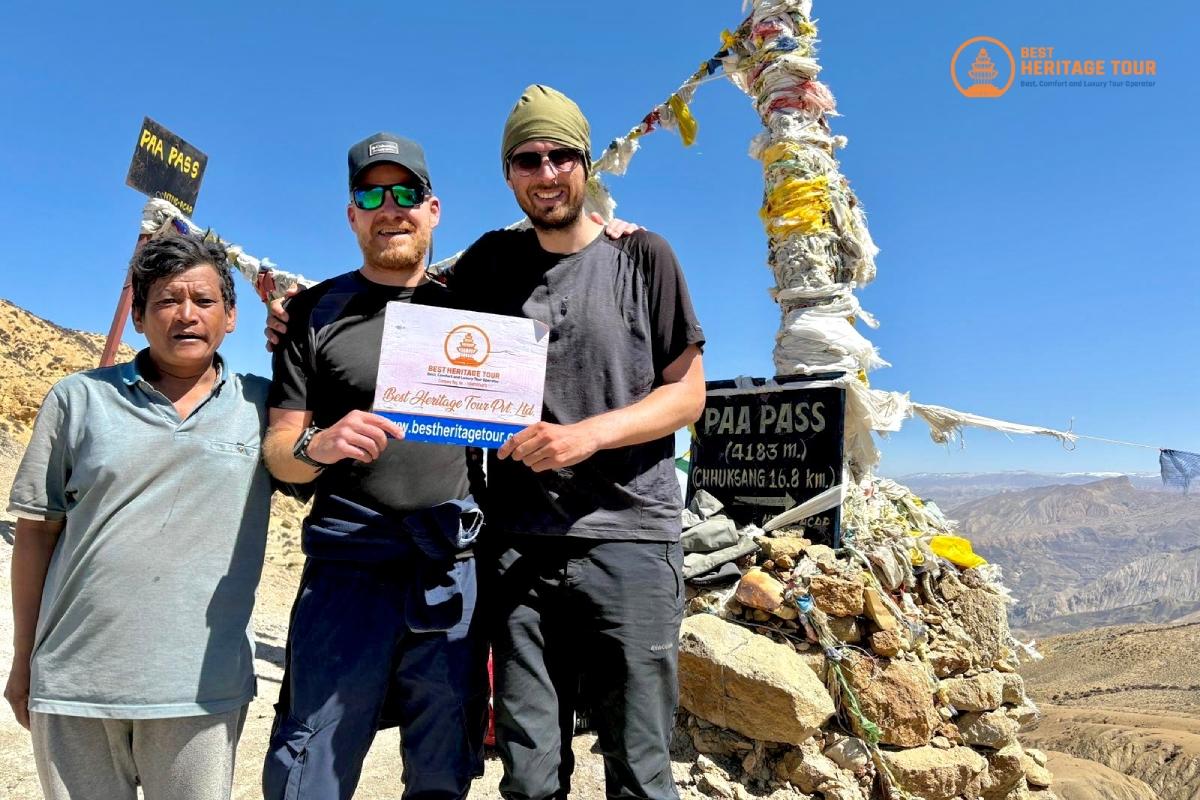
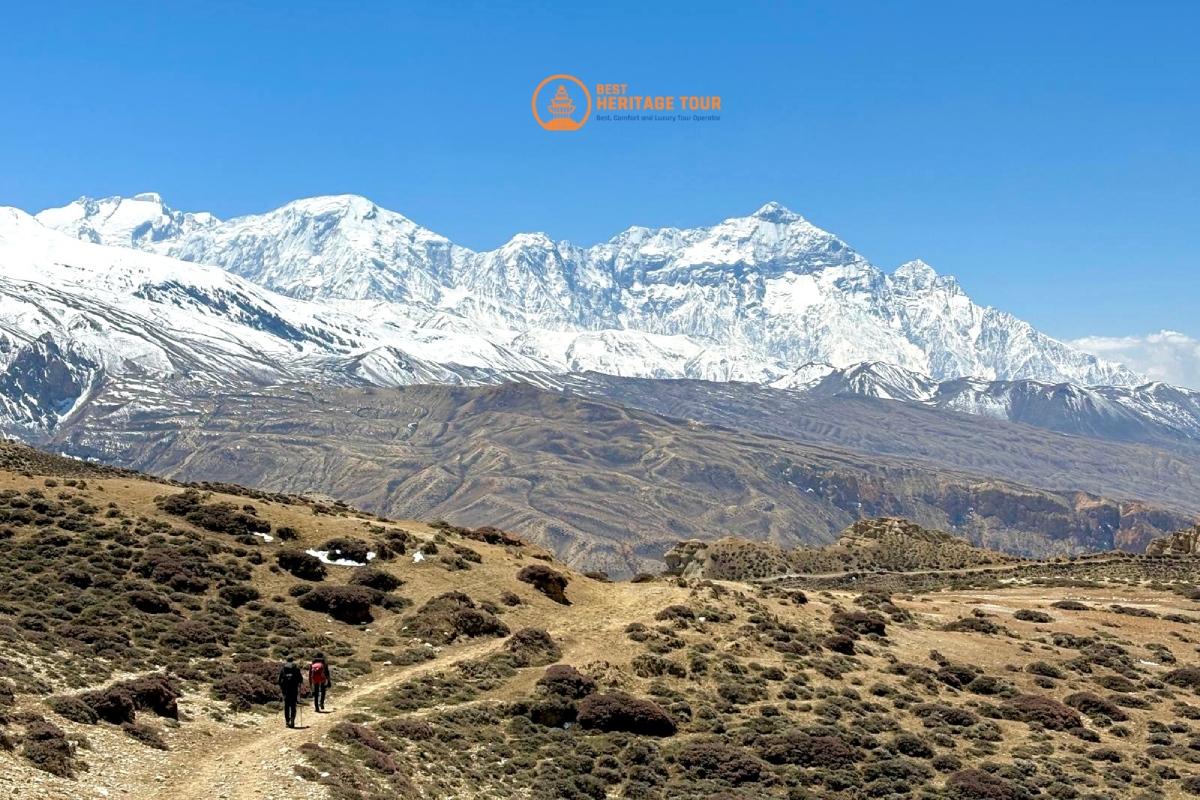
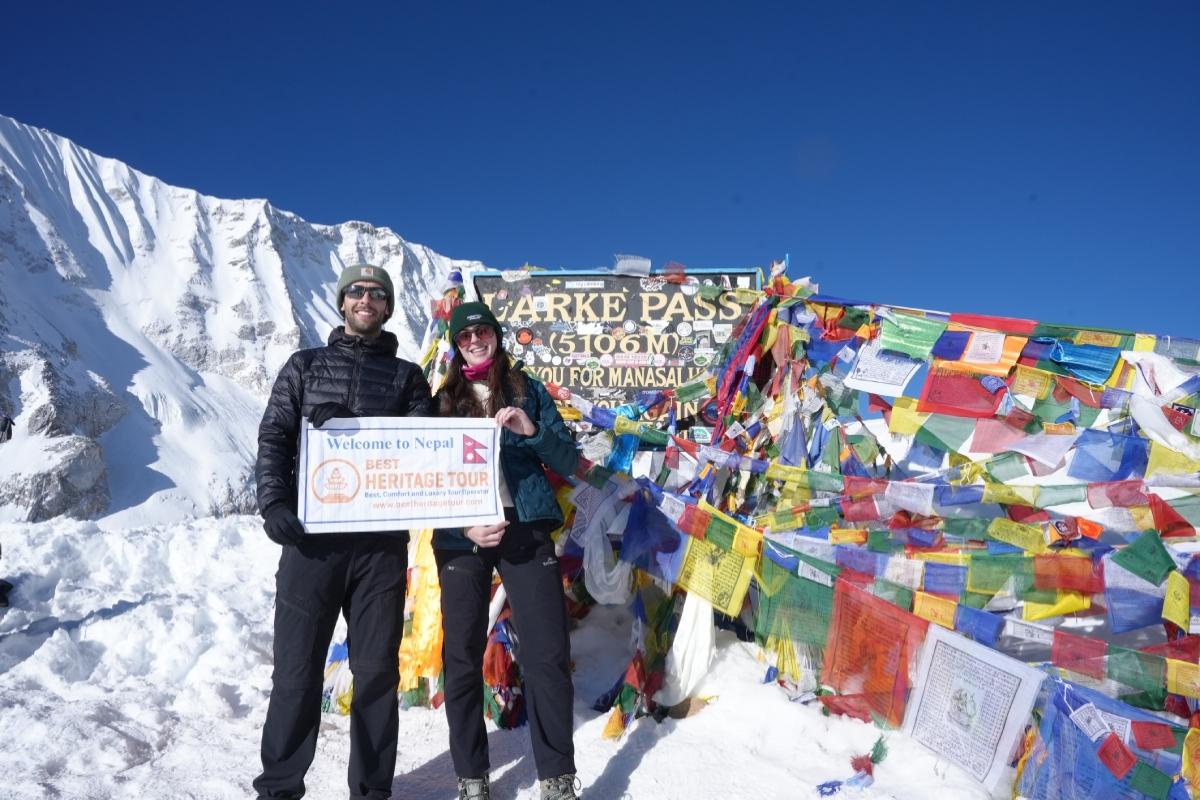
Step into one of Nepal’s most extraordinary trekking adventures with Best Heritage Tour. The Manaslu Tsum Valley & Upper Mustang Trek leads far beyond ordinary trails into hidden Buddhist valleys, high Himalayan passes, and the ancient walled city of Lo Manthang. Cross two iconic crossings - Larkya La Pass (5,160 m) and Thorong La Pass (5,416 m) - while exploring sacred monasteries, remote mountain villages, and dramatic desert landscapes. This epic journey perfectly blends culture, challenge, and untouched Himalayan beauty.
Trip at a Glance
-

Country: Nepal
-

Trip grade: Hard
-

Destination: Manaslu & Annapurna Region
-

Activities: Trekking
-

Accommodation: Hotel & Teahouse
-

Meals: Breakfast, Lunch & Dinner
-
.png)
Transportation: Private/Shared Bus/Jeep
-

Maximum altitude: 5,416 m / 17,769 ft
-

Group size: 1-12
-
Trip Start / End: Kathmandu - Kathmandu
-
.png)
Best Season: Mar-May & Sep-Nov
Key Highlights
- Explore the hidden Tsum Valley (the Valley of Peace), known for its peaceful Buddhist culture and untouched villages
- Complete a full circuit of Mount Manaslu (8,163 m), the world’s eighth-highest peak
- Cross two legendary Himalayan passes: Larkya La Pass (5,160 m) and Thorong La Pass (5,416 m)
- Visit the sacred Mu Gompa and ancient Piren Phu Cave meditation site
- Experience authentic Tibetan-influenced life in Sama Gaon and Manang Valley
- Trek to the stunning Tilicho Lake (4,920 m), one of the world’s highest alpine lakes
- Enter the restricted and culturally preserved Upper Mustang region
- Explore the ancient walled city of Lo Manthang and its historic monasteries
- Discover hidden Mustang gems including Yara, Luri Gompa, and Tange villages
- Walk through dramatic landscapes ranging from lush forests to high-altitude deserts
- Enjoy breathtaking views of Manaslu, Annapurna, Dhaulagiri, and Nilgiri ranges
- Trek with experienced local guides ensuring safety, cultural insight, and proper acclimatization
- A rare combination of culture, adventure, and remote Himalayan exploration
Benefits of Booking with Best Heritage Tour
- Airport pick up and drop off services in a private vehicle are provided at no additional cost
- Convenient booking and reservation process
- Simple payment system
- Multiple communication channels (Email, WhatsApp, Facebook, WeChat, Viber, Skype, Zoom)
- 24/7 phone support at +977-9851149197/+9779810043046
- Provision of first aid kit along with oximeter for monitoring blood oxygen levels at high altitudes
- Provision of sleeping bags and trekking poles if needed
- Duffle bags provided for porters
- Free storage for excess luggage at Best Heritage Tour store during the trek
Trip Overview
The Manaslu Tsum Valley & Upper Mustang Trek is a truly exceptional Himalayan expedition that brings together Nepal’s most remote landscapes, living Tibetan Buddhist culture, and classic high-altitude challenges in one carefully designed journey. Operated by Best Heritage Tour, this 34-day adventure is created for trekkers who wish to explore beyond popular routes and experience the untouched heart of the Himalayas.
The journey begins in the Manaslu region, following ancient trade trails through deep river gorges, dense forests, and traditional villages. A special highlight is the exploration of the Tsum Valley, a sacred and culturally preserved area known for its peaceful monasteries, chortens, and centuries-old Tibetan traditions. Visits to Piren Phu Cave and Mu Gompa offer rare insight into the spiritual heritage of this hidden valley.
Continuing along the Manaslu Circuit, the trek reaches Sama Gaon and gradually ascends toward the dramatic crossing of Larkya La Pass (5,160 m), one of Nepal’s most scenic high passes. After descending into the Annapurna region, the route leads through Manang Valley, allowing time for proper acclimatization before trekking to the breathtaking Tilicho Lake (4,920 m).
The adventure intensifies with the crossing of Thorong La Pass (5,416 m), Nepal’s highest trekking pass, followed by a visit to the sacred pilgrimage site of Muktinath. From here, the landscape transforms dramatically as the trek enters the restricted Upper Mustang region, often referred to as the “Last Forbidden Kingdom.”
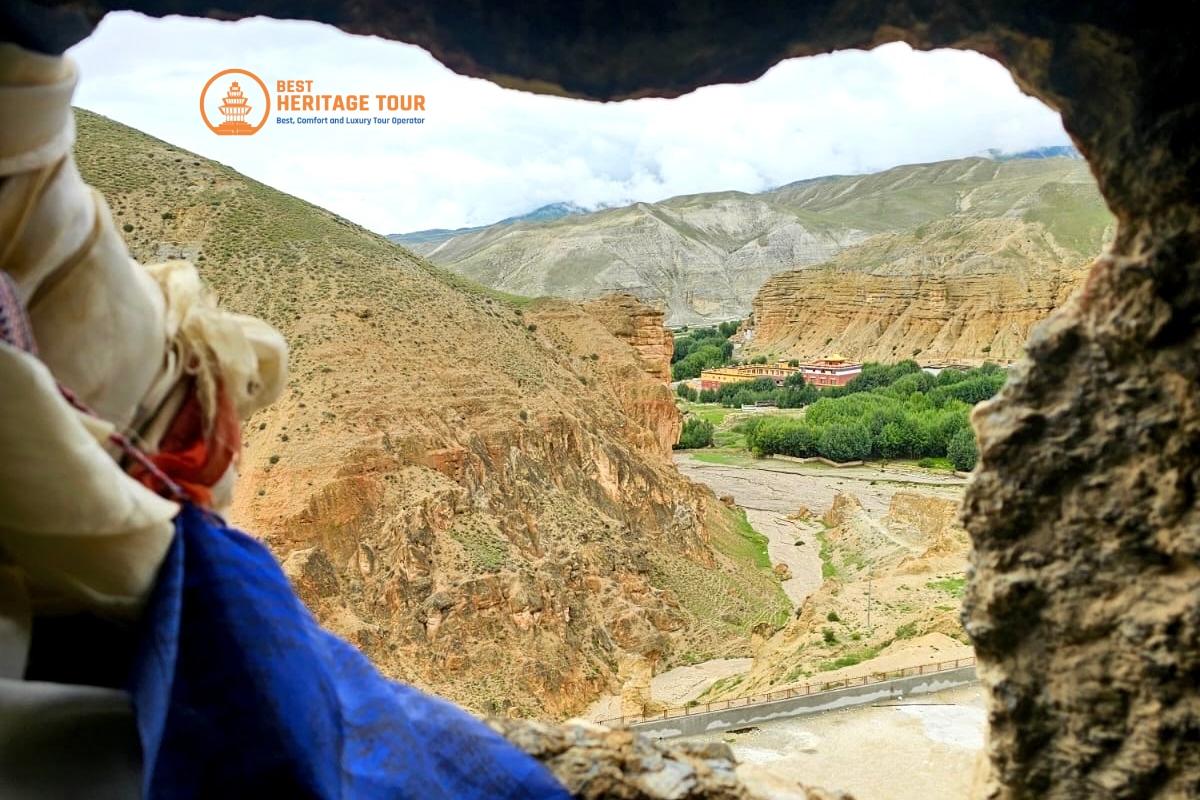
In Upper Mustang, trekkers explore the ancient walled city of Lo Manthang, remote villages such as Yara and Tange, and the hidden Luri Gompa, renowned for its ancient cave murals. With its striking desert terrain, deep canyons, and preserved culture, Upper Mustang offers a rare contrast to the green Himalayan valleys.
This demanding yet deeply rewarding trek combines adventure, culture, and spiritual discovery, making it one of the most complete trekking experiences in Nepal. By linking the sacred "Hidden Valley of Happiness" (Tsum Valley), the formidable Manaslu Circuit, and the forbidden forbidden kingdom of Upper Mustang, Best Heritage Tour offer a rare traverse through forbidden landscapes, ancient Tibetan Buddhist heritage, and high-altitude mountain passes.
What Can You Expect on This Trek?
1. Remote & Untouched Himalayan Trails
Expect to walk on some of Nepal’s most remote trekking routes, far from crowded paths. The trail passes through deep river gorges, dense forests, high alpine meadows, and dramatic trans-Himalayan deserts. Many sections follow ancient trade routes, offering a true sense of exploration and wilderness throughout the journey.
2. Deep Cultural & Spiritual Immersion
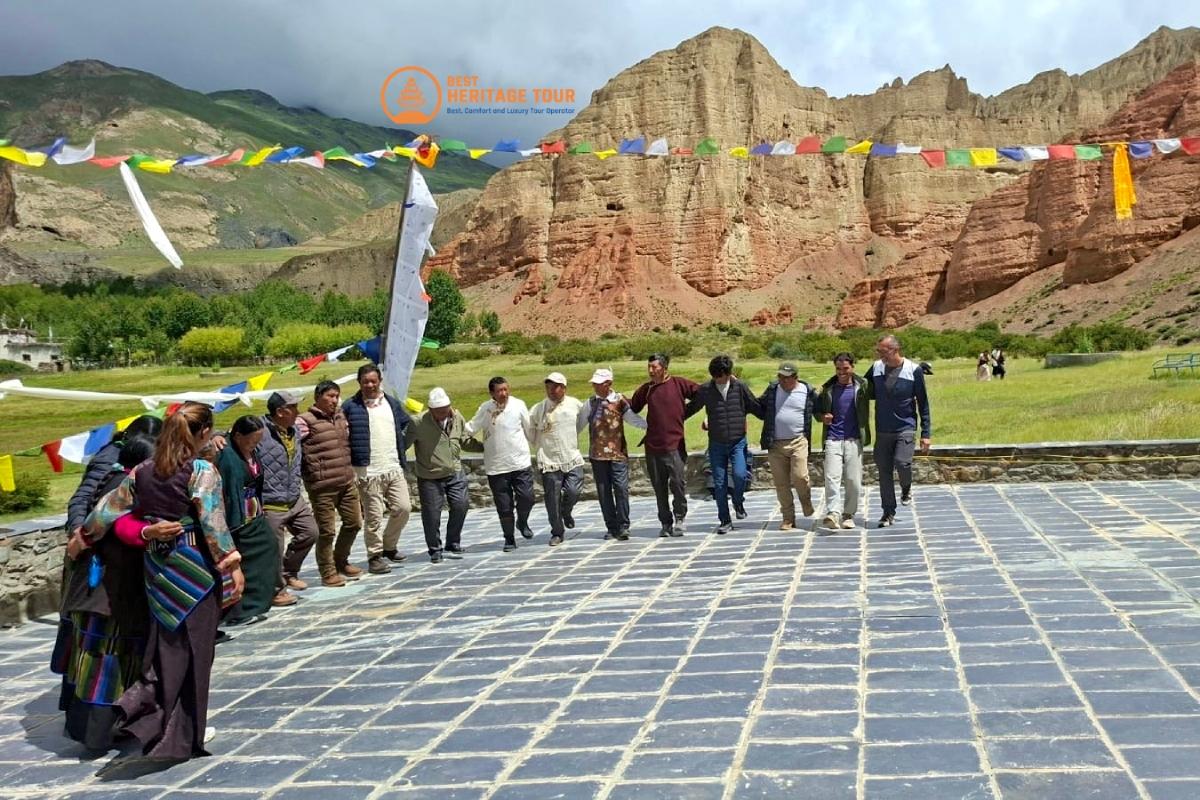
This trek offers rare access to living Tibetan Buddhist culture in the Tsum Valley and Upper Mustang. You will encounter centuries-old monasteries, sacred caves, prayer walls, and traditional villages where daily life remains unchanged. Interaction with local communities provides meaningful insight into Himalayan traditions, beliefs, and spiritual practices.
3. Sky Caves of Mustang
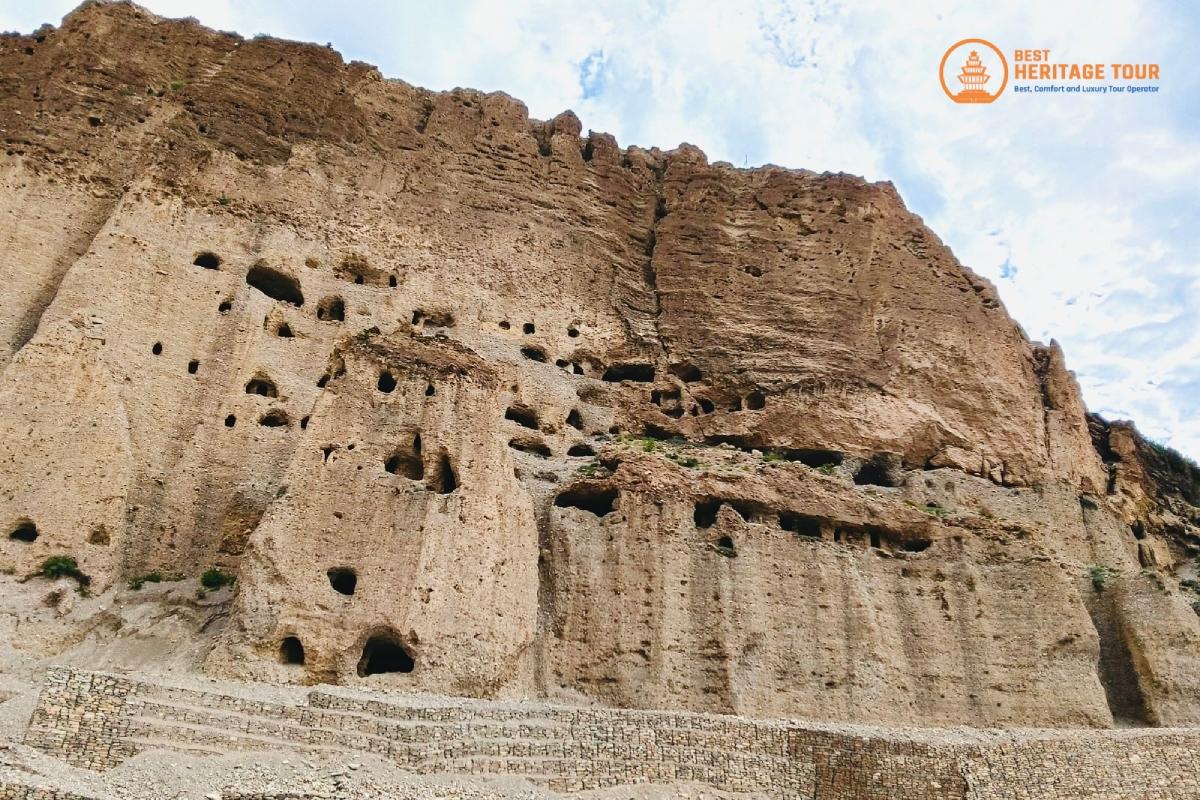
Perched high on vertical, wind-sculpted sandstone cliffs, you will see thousands of man-made "Sky Caves." These archaeological mysteries, some dating back 3,000 years, were used as burial chambers, dwellings, and meditation retreats. Walking beneath these "honeycombed" cliffs feels like navigating a lost civilization, a sight that is visually unique to the arid trans-Himalayan landscapes of Upper Mustang.
4. Spiritual Footprints at Milarepa’s Cave
High above the village of Burji, we visit the Piren Phu (Pigeon Cave). This is not just a monastery; it is a site of immense spiritual power where the great Tibetan saint Milarepa is said to have meditated. Inside, you can view ancient murals and what are believed to be the saint’s actual footprints embedded in the rock, a site of deep pilgrimage for Buddhists worldwide.
5. Challenging High-Altitude Adventure
The trek is physically demanding, featuring long walking days and significant altitude gains. Crossing Larkya La Pass (5,160 m) and Thorong La Pass (5,416 m) requires endurance, mental strength, and proper acclimatization. In return, trekkers are rewarded with breathtaking views and a profound sense of achievement.
6. Ever-Changing Landscapes
One of the most remarkable aspects of this trek is the diversity of scenery. Expect lush green valleys, glacial rivers, snow-capped peaks, and vast high-altitude deserts. The transition from the Manaslu region to Annapurna and finally to Upper Mustang creates a constantly evolving and visually stunning environment.
7. Authentic Teahouse & Lodge Experience
Accommodation during the trek is primarily in local teahouses and simple lodges, offering warm hospitality and traditional meals. While facilities are basic in remote regions, they provide comfort after long trekking days and allow travelers to experience genuine Himalayan mountain life.
Are You Ready for the Manaslu Tsum Valley & Upper Mustang Trek?
Embarking on the Manaslu Tsum Valley & Upper Mustang Trek requires more than physical endurance; it calls for determination, mental strength, and a genuine spirit of adventure. Trekkers must be prepared for long days on rugged trails, steep ascents, and high-altitude terrain while maintaining patience and focus. The journey through remote valleys, high passes, and basic teahouse accommodations demands adaptability and a willingness to step beyond your comfort zone.
Equally important is curiosity and respect for the diverse Himalayan cultures encountered along the way. From the spiritual Tibetan Buddhist traditions of Tsum Valley, to the resilient, trade-influenced communities of Manang, and the timeless, preserved heritage of Upper Mustang, cultural appreciation will deepen your experience. A love for untouched landscapes, courage to cross Larkya La (5,160 m) and Thorong La (5,416 m), and openness to authentic local life will allow trekkers to fully immerse themselves in this epic Himalayan adventure.
With the right mindset, preparation, and enthusiasm, the Manaslu Tsum Valley & Upper Mustang Trek promises a life-changing journey through Nepal’s most remote, awe-inspiring regions.
Itinerary
Your journey begins at Tribhuvan International Airport, where a representative from Best Heritage Tour will meet you at the terminal and will take you to your 3-star hotel in the city.
The rest of the day is for you to relax and recover from your flight. In the evening, we will have a pre-trek meeting. We will introduce you to your guide, check your trekking gear, and discuss the plan for our 34-day journey. If you need any last-minute items like sunblock or trekking poles, the shops in Thamel are just a short walk away.
Today we leave the city behind for a long but scenic drive into the countryside. We start early to avoid the city traffic and follow the Trishuli River for the first part of the journey. The road is paved and smooth until we reach the town of Dhading Besi.
After lunch, the road becomes more of a rough, dirt track as we wind through green hills and pass small farming villages. You will see terraced fields, waterfalls, and local life along the way. We eventually reach the Budhi Gandaki River valley and arrive at the small village of Machha Khola. "Machha Khola" means "Fish River," and you will spend your first night in a mountain teahouse listening to the sound of the flowing water.
Today is our first day of walking! We follow the Budhi Gandaki River upstream, walking through a landscape that is lush and green. The trail has many ups and downs as it winds along the riverbank and through small forests.
One of the morning highlights is reaching Tatopani, which means "hot water" in Nepali. Here, you will see natural hot water springs flowing from the cliffs. After crossing several high suspension bridges over the rushing river, we climb a set of stone stairs to reach Jagat. Jagat is a beautiful village with stone-paved streets and is an important stop because it is where our restricted area permits are officially checked by the mountain police.
We begin the day by climbing over a rocky ridge to Salleri and then descending to Sirdibas. The valley widens as we continue toward Ghatta Khola, where we cross a long suspension bridge to reach Philim, a large Gurung village.
After Philim, the trail becomes very interesting. We walk through a narrowing canyon and reach a junction where the path splits. While most trekkers continue straight for the Manaslu Circuit, we turn right and enter the Tsum Valley. A steep climb through a pine forest brings us to Lokpa, the first village of the Tsum region. From here, on a clear day, you can get your first beautiful views of the Manaslu range and Shringi Himal.
Today, we go even deeper into the "Hidden Valley of Happiness." The trail starts with a descent toward the Lungwa River. From here, the path climbs steeply through a thick, beautiful forest of rhododendron and pine trees.
As we walk, you will see the landscape change and open up to show stunning views of Baudha Himal and Ganesh Himal. This part of the journey feels very quiet and peaceful compared to the main river valley. We cross a few more suspension bridges before reaching the village of Chumling. This is a traditional Tsumba village where you will see ancient houses, stone mani walls (prayer walls), and three famous monasteries: Pango Gumba, Gurwa Gumba, and Mani Dhungyr.
Today, we leave the lower valley and climb into the "Upper Tsum" region. The day begins by crossing a suspension bridge over the Shiar Khola. As we walk, you will notice the valley opening up, revealing a wide, flat landscape that looks very much like Tibet.
The highlight of today is the view. You will get clear sights of Ganesh Himal to the south and the massive Himalchuli (7,893 m) to the west. We pass through the village of Rainjam and cross the Serpu Khola before a final climb brings us to Chokhangparo. This is actually two settlements (Chokhang and Paro) that have joined together. The people here are very welcoming, and the village is famous for its stone houses and beautiful fields of barley and buckwheat.
Today we walk toward the final village in the upper part of the Tsum Valley. The trail is relatively easy as we pass through open, flat land, which is a nice break for your legs. The landscape here is very dry and looks like the Tibetan plateau.
As we walk, we pass by several small villages like Phurbe and Pangdun. You will see many "Mani walls" (long walls made of stones carved with Buddhist prayers). It is a local tradition to always walk to the left of these walls. One of the highlights today is visiting the Piren Phu Cave (also called the Pigeon Cave). This is a very sacred cave where it is said the famous Buddhist saint Milarepa once meditated. From the cave, you get a great view of the valley below. We finish our day in Nile, a beautiful village located on the western side of the Shiar Khola river.
Today we trek to the highest and farthest point in the Tsum Valley. The trail climbs steadily as we move closer to the Tibetan border. The trees disappear, and the landscape becomes a high-altitude desert with rocky hills and wide views.
Our destination is Mu Gompa, a very old and isolated monastery built in 1895. It is the largest monastery in the region and sits on a high hill overlooking the valley. Living here are monks who spend their lives in prayer and meditation. Visiting the monastery is a peaceful experience, and the views of the surrounding snowy mountains and the border of Tibet are incredible. Because the hike is shorter today, you will have plenty of time to explore the monastery and rest while your body adjusts to the higher altitude.
Today, we begin our descent from the highest and most remote part of the Tsum Valley. After a final, peaceful morning at Mu Gompa, listening to the monks' morning prayers and looking out at the border of Tibet, we start our trek back down the valley.
The walk is much easier on the lungs today as we lose altitude. The trail takes us through the high alpine meadows and past the small village of Nile. You will notice the landscape becoming a bit greener again. We follow the Shiar Khola river, crossing suspension bridges and passing long, beautiful Mani walls carved with Buddhist prayers. By the time we reach Chhokangparo, the air feels warmer and the stone houses look very welcoming. It is a day of reflection, enjoying the wide-open views of the valley that we missed on the way up.
Today is a long descent as we leave the upper "Inner Tsum" region and head back toward the lower valley. We follow the trail through the twin villages of Chhokang and Paro, descending past the ancient stone houses and wide fields of buckwheat and barley.
As we lose nearly 700 meters of altitude, you will notice the air getting warmer and the vegetation becoming much thicker. The trail winds along the Shiar Khola river, offering different perspectives of the mountains we saw on the way up. We pass through small settlements like Rainjam and finally arrive back in Chumling. This village feels much more lush than the high-altitude landscapes of Mu Gompa, and you can enjoy the view of the Ganesh Himal range from a lower, greener vantage point.
Today, we officially say goodbye to the Tsum Valley and rejoin the main trail of the Manaslu Circuit. The walk begins with a pleasant descent back toward the junction where the two valleys meet. You will walk through peaceful forests and cross the Shiar Khola over a sturdy suspension bridge.
As we merge back onto the main route, the trail follows the deep gorge of the Budhi Gandaki River. You will notice the path becoming a bit more rugged, with some parts carved directly into the rocky cliffs. We pass through the small settlement of Pewa and continue through bamboo forests until we reach the village of Deng. This village marks our entry into the heart of the Manaslu region. The surroundings are very natural and quiet, and you can see the culture starting to shift as we move toward the higher peaks of the Manaslu range.
Today’s walk is one of the most beautiful sections of the trek as we climb higher into the alpine region. We start by crossing the Budhi Gandaki River and climbing up toward the village of Rana. The trail winds through lush forests of pine and oak, and you will hear the sound of waterfalls along the way.
As we continue, we pass through small Buddhist villages like Ghap, where you can see intricate Mani walls and carvings. The climb becomes a bit steeper as we approach Namrung. This village is famous for its excellent viewpoints. From here, you get your first grand views of Siringi Himal, Ganesh Himal, and Himal Chuli. Namrung also has some of the best teahouses on the circuit, making it a comfortable place to rest after a day of climbing.
Today is one of the most exciting days of the trek because you finally get close to the world’s eighth-highest mountain, Mt. Manaslu. We start with a steady climb through a beautiful forest of rhododendron, fir, and oak.
Our first major stop is the village of Lho. This village is famous for its large monastery (Ribung Gompa) and the amazing view of Manaslu’s double peak that towers over the houses. After exploring Lho, we descend slightly and walk through the village of Shyala, which is surrounded by gigantic glaciers and mountains like Himal Chuli and Peak 29. Finally, we reach Samagaon, the largest and most important village in the region. The houses here are made of stone, and the valley is wide and open, filled with yak pastures and ancient Buddhist culture.
Since we are now above 3,500 meters, it is very important to stay here for an extra night. This helps your body get used to the thinner air before we go even higher. Staying active is better than just sitting around, so we have two great options for a side trip:
-
Birendra Tal: This is a short, easy walk (about 45 minutes) to a beautiful glacial lake at the base of the Manaslu Glacier. The water is a stunning turquoise color.
-
Manaslu Base Camp (4,800 m): For those feeling strong, we can hike up toward the Base Camp. This is a steep and challenging climb, but it offers incredible views of the icefall and the mountain peaks.
In the afternoon, you can explore the village of Samagaon, visit the local monastery, and watch the yaks grazing in the fields.
Today is a demanding day as we skip the usual overnight stop in Samdo to reach the high camp directly. We head north, following the Budhi Gandaki river as it thins into a small stream.
We first reach Samdo (3,860 m), the last permanent settlement. After a short break there, we continue upward through the desolate, high-altitude landscape. We cross a wooden bridge over the river and begin the steady climb toward the Larkya Glacier. The air becomes noticeably thinner as we approach Dharmasala (Larkya Phedi). Since you’ve gained nearly 1,000 meters in elevation today, it is vital to drink plenty of water and move at a very slow, steady pace. We will have an early dinner and rest to prepare for the 3:00 AM start for the pass tomorrow.
This is the biggest and most challenging day of the entire trek! We wake up very early (around 3:00 or 4:00 AM) and eat breakfast by candlelight. We start walking in the dark with headlamps to avoid the strong winds that usually blow at the pass later in the day.
The climb is long and steady. You will be walking on rocky paths and sometimes over snow or ice. It is hard work, but the views are incredible. When you reach the top of the Larkya La Pass, you will see colorful prayer flags and a massive view of peaks like Himlung Himal, Cheo Himal, and Annapurna II.
After taking photos and celebrating at the top, we begin a very long and steep descent. The trail goes down quickly through rocks and loose dirt until we reach the beautiful valley of Bhimthang. This village is a wide, flat meadow surrounded by huge snowy mountains - it is one of the most beautiful places to stay in Nepal.
After the long climb of the pass yesterday, today is a much easier and more relaxing day. We leave the high, snowy peaks of Bhimthang and head back down into the lush, green world. The trail descends through beautiful forests of pine, rhododendron, and oak.
As we walk, you will follow the Dudh Khola (Milk River). The air becomes warmer and easier to breathe. We pass through the village of Tilije, which is known for its traditional stone houses and apple orchards. Eventually, we cross the Marsyangdi River and reach Dharapani.
Dharapani is an important junction where the Manaslu Circuit meets the famous Annapurna Circuit. You will notice more trekkers here and slightly bigger teahouses. This marks the end of the Manaslu portion of our trip, but the adventure is far from over!
Today, we take a break from walking and hop into a 4WD jeep. This ride is a real adventure! The road is bumpy and exciting, carved right into the side of massive cliffs. As we drive along the Marsyangdi River, the scenery changes completely. We leave the green, wet forests behind and enter a wide, dry valley that looks like a mountain desert.
When we arrive in Manang, you will feel the cold, crisp air. This is a big, beautiful village with stone houses and lots of bakeries. It is surrounded by giant peaks like Annapurna II and Gangapurna. We spend the afternoon relaxing, drinking tea, and letting our bodies get used to the high altitude.
Today is all about resting and letting your lungs adjust to the thin air. Manang is a wonderful place to explore. It feels like a small mountain town frozen in time, with flat-roofed houses and long Mani walls with spinning prayer wheels.
If you feel like stretching your legs, we can take a short walk to Gangapurna Lake, a bright turquoise glacial lake just a few minutes from the village. For a bit more of a challenge, we can hike up to a viewpoint to see the massive Gangapurna Icefall crumbling down the mountain. In the afternoon, it’s a local tradition to visit a bakery for a slice of warm apple pie and watch a mountain documentary in one of the tiny local cinemas. It’s a very cozy and peaceful day.
Today, we leave the main trail and head toward one of the most famous lakes in the world. The journey begins with a walk toward the village of Khangsar. As we move forward, the path becomes very dramatic and "wild." You will walk through the famous landslide area, where the trail is narrow and carved into steep slopes of grey gravel and stone. It feels like walking on another planet!
The views are breathtaking as the mountains look closer and bigger than ever. We eventually reach Tilicho Base Camp, a small cluster of teahouses tucked right at the bottom of a massive wall of snow and ice. The air is cold and the silence of the mountains is incredible. We get some early rest tonight to prepare for the climb to the lake tomorrow.
We wake up very early, while the stars are still out, to start our climb to Tilicho Lake. The trail is a steady zig-zag uphill, and because the air is so thin, we take it very slow. As the sun rises, the mountains turn gold around us.
When we finally reach the lake, the view will take your breath away. It is a massive, deep-blue lake sitting at nearly 5,000 meters, surrounded by a giant wall of ice and snow. It is so quiet and peaceful there. After taking plenty of photos and enjoying the magic of the "highest lake in the world," we hike back down to the Base Camp for a warm lunch. In the afternoon, we continue walking back down the valley to the village of Shree Kharka, where the air feels a little bit thicker and easier to breathe.
Today, we rejoin the main trail that leads toward the famous Thorong La Pass. We walk along the high slopes, looking down into the deep valleys below. The path takes us through Yak Kharka, a wide open area where you can see long-haired yaks grazing on the dry mountain grass.
The landscape is very rocky and open now, with no trees in sight. We cross a small wooden bridge and make a final short, steep climb to reach Thorong Phedi. "Phedi" means the foot of the hill, and that is exactly where we are - right at the bottom of the big mountain we must cross tomorrow. The teahouses here are cozy and full of excited hikers from all over the world. We will have an early dinner and go to bed very early, as our "morning" starts in the middle of the night!
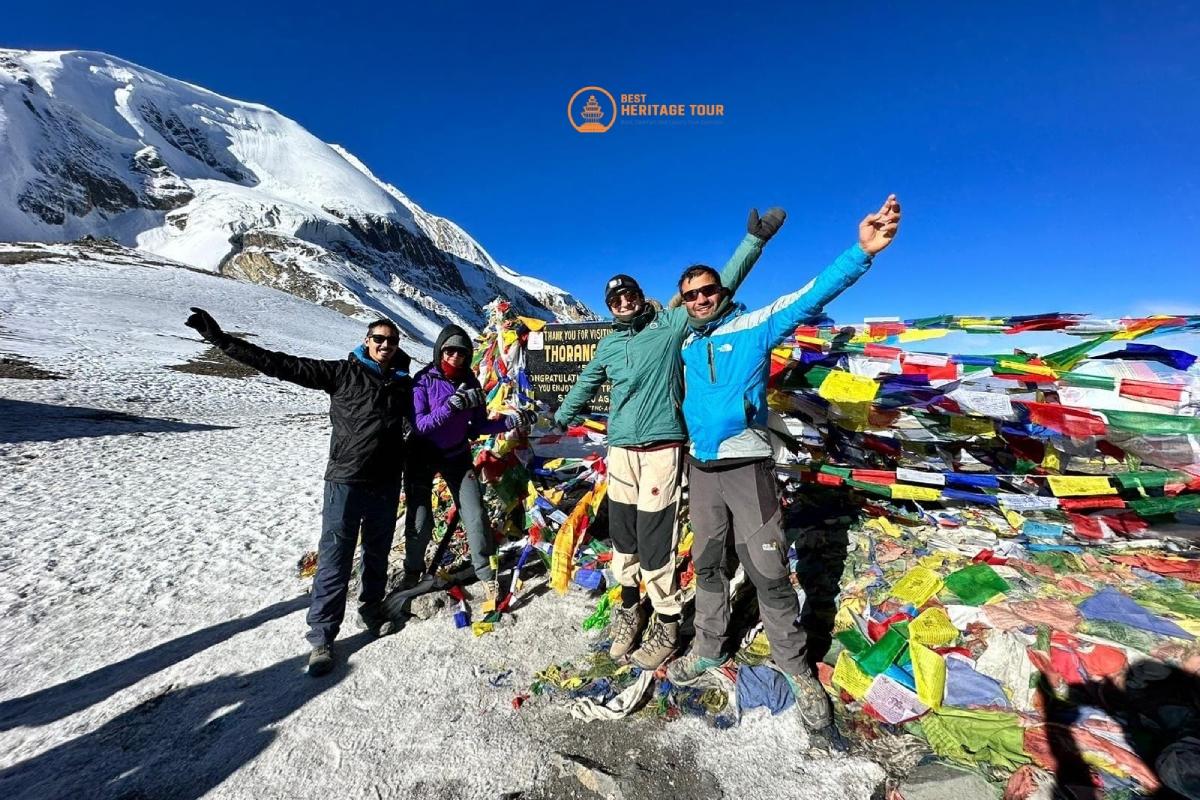
This is a day you will remember for the rest of your life! We wake up around 3:00 AM, put on all our warm layers, and start climbing by the light of our headlamps. The trail is a long, steady climb up the snowy slopes. It’s hard work, but when you reach the top of Thorong La Pass, marked by a huge pile of colorful prayer flags, the feeling of achievement is incredible. You are standing at 5,416 meters!
The descent is long and steep, taking us down into a completely different world. We reach Muktinath, a very sacred place with 108 water sprouts where pilgrims come to bathe. After a quick visit to the temple, we take a short, dusty jeep ride to Kagbeni. This village is the gateway to Upper Mustang. It feels like a medieval town with narrow alleys and mud-brick houses, sitting right on the edge of the wide, windy Kali Gandaki River.
Today, we travel deep into the "Forbidden Kingdom" of Upper Mustang. As we leave Kagbeni, the landscape changes into a vast, high-altitude desert. You will see incredible rock formations in shades of red, orange, and grey, looking like a giant’s playground. The wind here is famous, blowing through the wide Kali Gandaki valley.
As we drive, we pass through tiny, white-washed villages and cross high passes that give us a bird’s-eye view of the world below. Finally, the ancient walled city of Lo Manthang appears in the distance - a square fortress of mud and stone standing alone in the desert. Entering the city gates feels like stepping back hundreds of years in time. The culture here is purely Tibetan, and the silence of the high plateau is magical.
Today, you don’t need to pack your bags! We spend the entire day exploring the mysterious and ancient walled city of Lo Manthang. It is a place of deep silence, spinning prayer wheels, and heavy wooden doors. The city was once the capital of an independent kingdom, and the royal family still lives here.
We will visit the great monasteries (Gompas), like Jampa Lhakhang and Thubchen Gompa, which are famous for their giant statues and beautiful wall paintings that are hundreds of years old. Walking through the narrow, winding alleys, you will see local people spinning wool and traditional houses decorated with colorful flags. It is a day to soak in the culture, drink some traditional butter tea, and feel the peaceful energy of this "Hidden Kingdom."
Today, we say goodbye to the walled city and head toward the more remote and quiet eastern side of Upper Mustang. The journey is visually stunning; the landscape looks like a painting with deep canyons and orange-colored cliffs that have been carved by the wind over thousands of years.
The trail descends quite steeply at times, leading us down to the riverbed. As we walk, you will notice "Sky Caves" high up in the rock faces - ancient man-made caves that were used as homes and burial sites long ago. We eventually reach Yara, a small, peaceful village tucked away in the desert landscape. It feels very far away from the rest of the world, and the starry sky at night here is absolutely incredible because there are no lights around.
Today is a very special day as we visit one of the most hidden and sacred places in all of Mustang: Luri Gompa. The walk is a bit of an uphill climb through a landscape that looks like a forest of giant sandcastles. The red rock pillars rise high into the blue sky, creating a scenery you won't find anywhere else on earth.
Luri Gompa is a "cave monastery" built right into one of these tall rock towers. To get inside, we climb up a steep path. Inside the dark, quiet chambers, you will see incredible Buddhist murals and a beautiful stupa that have been there for hundreds of years. The atmosphere is very spiritual and mysterious. We spend the night nearby, feeling the deep peace of this remote mountain sanctuary.
Today is one of the more remote and quiet days of our journey. We leave the sacred caves behind and trek across the high, rolling hills of the Mustang plateau. The trail takes us through wide, open spaces where the only sound is the wind and the occasional cry of a bird.
The scenery is vast and dramatic, with colors ranging from deep purple to bright yellow in the rock layers. We make a long descent toward the village of Tange. As we approach, you will see a long row of beautiful, colorful Chortens (Buddhist shrines) standing against the desert backdrop. Tange is a very traditional and well-preserved village, where the houses are clustered together to protect against the afternoon winds. It feels like a secret oasis in the middle of the high-altitude desert.
Today is a long but visually stunning day as we continue our journey south. The trail takes us across a high ridge with a panoramic view of the vast Mustang landscape - it feels like you are standing on the roof of the world looking out over a sea of red and yellow hills.
The highlight of the day is the descent through incredible rock formations. We walk through narrow canyons and past cliffs that look like they have been melted by the sun. As we get lower, the landscape softens, and we start to see green patches of apple orchards and fields. We eventually arrive in Chhusang, a lovely village located at the junction of the Narshing Khola and the Kali Gandaki River. After the quiet of the high desert, the sound of the rushing river is a beautiful change.
This is your final day of trekking, and it is a beautiful way to finish. We follow the wide, stony bed of the Kali Gandaki River. The valley here is immense, and the wind usually picks up in the afternoon, blowing through the canyon. You might even find some "Saligrams" - ancient black fossils that are millions of years old and considered sacred by the local people.
We pass through the village of Tangbe with its white-washed houses and eventually reach the bustling town of Jomsom. Reaching Jomsom is a big moment! It is the administrative center of the region and marks the successful completion of your incredible walking journey. Tonight, we enjoy a special dinner to celebrate the hundreds of kilometers you have trekked through Manaslu, the Annapurnas, and the hidden kingdom of Mustang.
Today, we trade the trekking trail for the road as we head down the mountain. We take a morning drive from Jomsom to Pokhara. The road follows the deepest gorge in the world, carved between the two giant mountains, Dhaulagiri and Annapurna. You will see the landscape change dramatically before your eyes - the dry, brown desert of Mustang slowly disappears, replaced by lush green forests, waterfalls, and tropical trees.
Arriving in Pokhara feels like a dream after so many weeks in the high mountains. The air is warm and thick with oxygen. After checking into your hotel, you have the rest of the day to relax at Lakeside.
The morning is yours to enjoy the beauty of Pokhara. If you are an early riser, you can head up to Sarangkot to see one last sunrise over the Annapurna range - watching the peaks turn pink and gold is a sight you will never forget. You can also take a peaceful boat ride on Phewa Lake or visit the thundering Devi’s Fall.
In the afternoon, we head back to the capital city of Kathmandu. Whether you take a short, scenic flight with views of the Himalayas or a drive through the winding river valleys, the journey brings you back to the vibrant energy of the city. After checking into your hotel, you can enjoy a hot shower and a celebratory dinner in Thamel, perhaps trying some of the foods you missed while in the mountains.
Today is your final full day in Nepal, and it is all about relaxation and reflection. After 32 days of adventure, your body will appreciate the break! You can spend the morning sleeping in or enjoying a slow breakfast at a garden café.
The rest of the day is perfect for souvenir shopping in the colorful streets of Thamel. You might look for hand-woven pashminas, singing bowls, or local tea to take home. If you still have some energy, you can visit any landmarks you missed at the start of the trip, like the peaceful Garden of Dreams or the ancient Boudhanath Stupa. It’s a great day to organize your photos, write in your journal, and enjoy a final farewell dinner with your team to celebrate the incredible journey you've just completed.
Today is the final day of your extraordinary 34-day journey through the heart of the Himalayas. After a final breakfast at your hotel, it’s time to pack those last-minute souvenirs and your well-worn trekking gear. A representative will pick you up from your hotel and drive you to Tribhuvan International Airport.
What is included?
- PRIVATE AIRPORT PICK-UP & DROP : Airport - Hotel transfer - Airport (Pick Up and Drop).
- MEMBER TRANSPORTATION :
- Transportation in a stadard tourist bus from Kathmandu to Arughat and to Machha Khola (by sharing Jeep) and while returning from Pokhara to Kathmandu.
- Transportation in a sharing Jeep from Jomsom to Pokhara.
- ACCOMMODATION : 3 nights in Kathmandu and 1 night in Pokhara in a 3-star hotel on a bed & breakfast basis.
- LODGING : Best available accommodation in mountain lodges and tea houses during the trek.
- FOOD : 3 meals a day (breakfast, lunch, and dinner; including tea/coffee) during the trek, with Ef-Chlor purification tablets provided for safe drinking water.
- GUIDE : One experienced government licensed trekking guide (English speaking) during the trek.
- STAFF SALARY AND ALLOWANCE : All trekking staff wages, salary, equipment, food & clothing.
- PERMITS : All necessary paper works : Trekking Permit (including MCAP & ACAP), Manaslu Restricted Area Permit (RAP), Upper Mustang Restricted Area Permit & conservation entry fee.
- STAFF INSURANCE : Insurance for all involved trekking staff during the trek.
- GEAR (IF NEEDED) : Sleeping bag, down jacket and duffle bag (to be returned after the trek).
- MEDICAL KIT : A well equipped first aid kit, including an oximeter and emergency oxygen, carried by the guide for your safety.
- IN CASE OF EMERGENCY : Assistance in rescue operations in case of emergency covered by travel insurance.
- SOUVENIR : Best Heritage Tour’s Appreciation Certificate after the successful trek & Purse, an authentic Nepali product made from hemp.
- FAREWELL DINNER : A farewell dinner with an authentic cultural program after completion of the trek.
What is not included?
- INTERNATIONAL AIRFARE : International flight airfare (from and to Kathmandu).
- NEPAL VISA FEES : You may issue the visa upon your arrival at Tribhuvan International Airport - Kathmandu or apply manually in your home country.
- TRASNPORTATION IN PRIVATE JEEP : Private Jeep will be arranged on request.
- ACCOMMODATION & MEALS : Accommodation and meals in Kathmandu before and after the trek.
- INSURANCE POLICY : Travel insurance covering medical expenses and high-altitude evacuation is mandatory. If you do not have suitable coverage, we can also assist in arranging travel insurance for you upon your arrival in Nepal. Check Over Here
- PERSONAL EXPENSES : Clothing & gears, telephone, internet, toiletries, hot shower, laundry, soft drinks and any Alcoholic beverages.
- OPTIONAL PORTER SERVICE : USD 22 per day, including all taxes (each porter can carry up to 25 kg of luggage).
- TIPS : Tips for guide and porters.
- EXTRA : Any additional costs due to factors beyond our control, or for services not specifically mentioned in the Itinerary & Included section.
- TAXES & SERVICE CHARGE : All government taxes (13%) and service charge (10%).
Route Map
Equipment
Clothing
-
Base Layers: Moisture-wicking T-shirts, thermal tops, and leggings
-
Mid Layers: Fleece jackets, insulated sweaters
-
Outer Layer: Waterproof and windproof jacket and pants
-
Down or Insulated Jacket
-
Trekking Pants
-
Shorts / Trekking T-shirts for lower-altitude days
-
Gloves: Liner gloves and insulated waterproof gloves
-
Hat / Beanie
-
Sun Hat / Cap
Footwear
-
Socks: Wool or synthetic, 3-4 pairs
-
Trekking Boots: Waterproof and well-broken-in
-
Sandals / Camp Shoes for evenings
-
Gaiters (optional): For snow or mud protection
Trekking Gear
-
Backpack: 40-50 L for your essentials
-
Daypack
-
Trekking Poles
-
Sleeping Bag: Rated -15°C (-5°F)
-
Water Bottles / Hydration Bladder
-
Headlamp / Flashlight with extra batteries
-
Sunglasses with UV protection
-
Trekking Map / Guidebook (optional)
Personal Items
-
Toiletries (toothbrush, toothpaste, biodegradable soap)
-
Sunscreen & Lip Balm (SPF 50+)
-
Quick-dry Towel
-
Personal Medications
-
Hand Sanitizer / Tissue Paper
-
Camera / Smartphone / Power Bank
-
Water Purification Tablets / Filter
-
Personal First Aid Kit
Extra / Optional Items
-
Binoculars
-
Notebook / Travel Journal
-
Travel Permits & Passport Photocopies
-
Snacks / Energy Bars
Trip Info
Best Time for the Manaslu Tsum Valley & Upper Mustang Trek
The Manaslu Tsum Valley & Upper Mustang Trek is a high-altitude, long-duration adventure that spans diverse climatic zones, from lush river valleys to arid trans-Himalayan deserts. Choosing the right time to trek is crucial for safety, comfort, and optimal views of the Himalayan peaks.
Spring (March - May)
Spring is one of the best seasons for this trek. The weather is generally stable, with clear skies and moderate temperatures ranging from 10°C to 20°C in lower regions, and slightly colder in higher altitudes. Rhododendron forests bloom spectacularly along the Manaslu Circuit, creating vibrant trails of red, pink, and white blossoms. Snow on the high passes, including Larkya La Pass, is usually manageable for experienced trekkers. This season offers excellent mountain views and a lively trekking environment without overcrowding.
Autumn (September - November)
Autumn is another ideal trekking window, immediately following the monsoon season. The rain clears the air, leaving the skies crystal clear and providing unobstructed panoramic views of peaks like Manaslu, Annapurna, and Dhaulagiri. Temperatures are mild, ranging from 8°C to 18°C in lower regions and colder at higher elevations. Trails are dry and firm, making it the most comfortable season for crossing high passes like Thorong La and Larkya La. Autumn also coincides with local festivals, offering an opportunity to witness authentic cultural experiences in villages along the route.
Other Seasons
-
Summer/Monsoon (June - August): Trekking during the monsoon is not recommended due to heavy rainfall, slippery trails, landslides, and leeches in lower regions. However, some trekkers may attempt the lower sections in early June if properly equipped.
-
Winter (December - February): Winter treks are possible but extremely challenging due to heavy snow, freezing temperatures, and limited daylight. Upper Mustang, being arid, is relatively accessible in winter, but high passes may be blocked.
In summary: For the best experience combining safety, weather, cultural exposure, and peak scenery, spring (March-May) and autumn (September-November) are the most recommended seasons for this epic Himalayan adventure.
Permits Required for the Manaslu Tsum Valley & Upper Mustang Trek
Navigating the regulatory landscape of the Himalayas can be complex, but at Best Heritage Tour, we simplify the process for you. Because this traverse enters highly sensitive border regions and culturally protected enclaves, specific permits are non-negotiable. As your official trekking partner, we handle all document submissions to the Department of Immigration and the Nepal Tourism Board on your behalf.
1. Manaslu Restricted Area Permit (MRAP)
This permit is required for the stretch from Jagat until you cross the Larkya La pass.
2. Tsum Valley Restricted Area Permit
Since the Tsum Valley is a specifically protected cultural zone, a separate "special permit" is required.
3. Upper Mustang Restricted Area Permit (RAP)
This permit is required to enter beyond the Lower Mustang.
4. Conservation Area Permits (MCAP & ACAP)
In addition to the restricted permits, you must contribute to the environmental protection of the regions you walk through.
-
Manaslu Conservation Area Permit (MCAP)
-
Annapurna Conservation Area Permit (ACAP)
-
Local Entry Fee: A small local municipality fee is also collected to support village infrastructure.
Mandatory Regulatory Requirements
The Nepal Department of Immigration enforces strict rules for these zones. To secure your permits through Best Heritage Tour, you must adhere to the following:
-
Minimum Group Size: You must be at least two trekkers in a group. Solo trekking is strictly prohibited in these restricted zones. Best Heritage Tour can find you a group.
-
Licensed Guide: You must be accompanied by a government-licensed trekking guide which will be provided by Best Heritage Tour.
-
Document Checklist: To process your permits, we require:
-
A clear scanned copy of your Passport (valid for at least 6 months).
-
Four recent passport-sized photographs.
-
A valid Nepal Entry Visa.
-
Proof of Travel Insurance that specifically covers emergency helicopter evacuation up to 6,000 meters.
-
Accommodation & Meals
Accommodation
On the Manaslu Tsum Valley & Upper Mustang Trek, Best Heritage Tour ensures comfortable and well-managed stays throughout your journey.
City Stays: 3-Star Comfort in Kathmandu and Pokhara
-
Guests stay in 3-star hotels, offering modern amenities, warm hospitality, and convenient locations for sightseeing, rest, and pre- or post-trek arrangements.
On the Trail: Authentic Teahouse Experiences
During the trek, we stay in Teahouses (traditional mountain lodges). These are the heart of the Himalayan trekking culture - family-run establishments that offer a warm bed and a cozy communal atmosphere.
-
The Rooms: Typically twin-sharing with two single beds. In lower regions (like Jagat or Dharapani), we aim for rooms with attached bathrooms where available. At higher altitudes (like Dharamsala or Mu Gompa), facilities become more basic with shared toilets.
-
The Dining Hall: Every teahouse features a central dining area warmed by a traditional wood or yak-dung stove. This is the social hub where you’ll share stories with fellow trekkers and enjoy your evening meals.
-
Facilities: Most teahouses offer hot bucket showers and electronic charging for a small additional fee.
Meals
At Best Heritage Tour, we provide Full Board Meals (Breakfast, Lunch, and Dinner) throughout the trekking duration. We focus on high-carb, protein-rich, and hygienic food to keep your energy levels consistent.
1. Breakfast
-
Classic: Eggs (boiled, fried, or omelets), pancakes, porridge (oatmeal or rice pudding), and muesli.
-
Local Touch: Tibetan bread (deep-fried and delicious) or Chapati served with honey, jam, or peanut butter.
2. Lunch
Lunch is usually enjoyed at a scenic teahouse along the trail.
-
The Trekker’s Choice: Dal Bhat (Lentil soup, rice, and vegetable curry). It is fresh, organic, and - best of all - comes with free refills!
-
Variety: If you need a change, we offer noodles (Chowmein), macaroni, Thukpa (Himalayan noodle soup), or potato-based dishes.
3. Dinner: Regional & Seasonal Specialities
Dinner is our most elaborate meal, often featuring regional specialities unique to the Tsum and Mustang cultures.
-
Tsum & Mustang Flavors: Try Syabhale (meat or veg-filled deep-fried bread), Momos (dumplings), or Dhido (a nutritious buckwheat porridge common in the high hills).
-
Seasonal Freshness: Whenever possible, we try to provide organic vegetables directly from the village greenhouses, ensuring you get the freshest spinach, cabbage, and potatoes available.
-
Soups: We highly recommend Garlic Soup, a local remedy that helps significantly with blood circulation and altitude acclimatization.
Tea, coffee, and hot drinks are available at most teahouses to keep you refreshed along the trails. As for the dietary restrictions like: Vegetarian, Vegan, or Gluten-Free, most mountain meals are naturally vegetarian. Simply inform our guides at the start of the trek, and we will ensure the kitchens prepare your meals according to your specific dietary needs.
Trip Difficulty and Fitness Requirements
The Manaslu Tsum Valley & Upper Mustang Trek is classified as a challenging high-altitude trek, suitable for trekkers with a good level of physical fitness, mental resilience, and previous trekking experience. Covering 34 days and multiple high passes, the trek demands endurance, stamina, and adaptability to varying terrain and weather conditions.
Difficulty Level
-
Altitude: The trek reaches Thorong La Pass (5,416 m) and Larkya La Pass (5,160 m), requiring careful acclimatization.
-
Terrain: Trails range from gentle river valleys to steep ascents, rocky ridges, narrow suspension bridges, and high desert plateaus. Some sections may be slippery or uneven, especially after rain or snowfall.
-
Duration: Daily trekking ranges from 4-9 hours, often on consecutive days, demanding consistent physical effort.
Fitness Requirements
-
Cardiovascular Endurance: Trekkers should be capable of walking long distances at a steady pace for several hours each day. Regular aerobic exercises such as running, cycling, or swimming are recommended in preparation.
-
Strength & Stability: Core and leg strength are essential for ascending and descending steep trails, carrying daypacks, and maintaining balance on rocky or uneven terrain.
-
Acclimatization & High-Altitude Readiness: Previous exposure to altitudes above 3,000 m is beneficial. Proper acclimatization days are built into the itinerary to reduce risks of altitude sickness.
-
Mental Resilience: Trekking in remote regions requires patience, adaptability, and the ability to face physical and environmental challenges with a positive mindset.
Preparation Tips
-
Start regular cardiovascular and strength training at least 2-3 months before departure.
-
Practice day hikes with a loaded backpack to simulate trek conditions.
-
Consult a physician regarding altitude medications and personal health considerations.
-
Maintain hydration, healthy diet, and rest to build stamina for consecutive trekking days.
With proper preparation, the trek offers a highly rewarding Himalayan adventure, combining breathtaking landscapes, cultural immersion, and a profound sense of accomplishment.
Is This Trek Right for You?
-
Experienced Trekkers: Ideal for those who have previously completed treks like Everest Base Camp or the Annapurna Circuit and are looking for a "Grand Traverse" challenge.
-
Healthy Adventurers: Suitable for individuals with no pre-existing heart or lung conditions and a high level of general fitness.
-
Cultural Enthusiasts: Perfect for those who value deep immersion into Tibetan Buddhist culture and are willing to trade modern luxury for authentic heritage.
Health & Safety
At Best Heritage Tour, your health and safety are our top priority. Trekking in remote, high-altitude regions requires careful planning, experienced guidance, and awareness of potential risks. Our team of professional trekking guides are highly trained, experienced, and familiar with the terrain, weather conditions, and local culture, ensuring your journey is both safe and enjoyable.
1. Expert Guides with Medical Training
Every Best Heritage Tour group is led by a government-licensed lead guide who has undergone specialized Wilderness First Aid and AMS (Acute Mountain Sickness) training.
-
Symptom Monitoring: Our guides are experts at spotting early, subtle signs of altitude sickness that trekkers might overlook.
-
Daily Health Checks: We conduct twice-daily health briefings (morning and evening) to check your oxygen saturation levels and heart rate using portable pulse oximeters.
2. Comprehensive High-Altitude First-aid Kit
While we recommend you carry a personal first-aid kit, our lead guide carries a comprehensive medical kit specifically designed for remote, high-altitude traverses. This includes: Altitude Medication (Diamox), Emergency Meds & Trauma Care
3. Acclimatization Strategy
Our 34-day itinerary is not a race; it is a carefully calibrated ascent. We follow the "Climb High, Sleep Low" philosophy and strictly adhere to the rule of not gaining more than 300 - 500 meters of sleeping altitude per day once above 3,000 meters. With built-in rest days in Samagaon, Manang, and Lo Manthang, your body is given the time it needs to produce more red blood cells and adapt to the thinning air.
4. Emergency Evacuation Protocols
In the rare event that a trekker is unable to continue due to health or injury, Best Heritage Tour has an established emergency response network.
-
Helicopter Rescue: We have 24/7 priority access to helicopter rescue services that can evacuate you from the remote valleys of Mustang or Manaslu to a world-class hospital in Kathmandu.
-
Insurance Liaison: Our office team works directly with your insurance provider to ensure the rescue and medical paperwork are handled seamlessly, letting you focus entirely on your recovery.
Trek Facilities & Essentials
On the Manaslu Tsum Valley & Upper Mustang Trek, Best Heritage Tour ensures trekkers enjoy essential facilities while maintaining the authenticity of remote Himalayan trekking.
Water
Clean drinking water is available at most teahouses and lodges along the trail. Trekkers are advised to carry a refillable water bottle or hydration bladder. Boiled or filtered water is recommended in some villages to ensure safety. Water purification tablets or filters are also suggested as a backup.
Electricity & Charging
Electricity is generally available at teahouses in trekking regions, though often limited to a few hours per day and may require a small charging fee. Hotels in Kathmandu and Pokhara provide uninterrupted power supply, making it easy to charge electronic devices.
Wi-Fi / Internet
Wi-Fi access is available in major hotels and selected teahouses in larger villages, though the connection can be slow or intermittent in remote areas. Trekkers are encouraged to enjoy the disconnect from digital life and embrace the natural environment.
Shower & Toilets
Most teahouses provide hot showers for a nominal fee, especially in larger villages. Basic western or squat toilets are available throughout the trek. In remote areas, facilities may be simpler, but well-maintained and hygienic.
Other Amenities
-
Common dining areas for meals and socializing
-
Fireplaces or heaters in some lodges during cold months
-
Local shops in major villages for snacks, batteries, or trekking essentials
While trekking in remote regions comes with simpler facilities, Best Heritage Tour carefully selects accommodations to ensure comfort, hygiene, and convenience wherever possible, allowing trekkers to focus on adventure, culture, and breathtaking landscapes.
Travel Insurance
For this, standard travel insurance is simply not enough. At Best Heritage Tour, we require proof of a comprehensive insurance policy before you can begin the trek. Your policy must include the following specific coverages:
-
High-Altitude Coverage (Up to 6,000m)
-
Medical Emergency & Hospitalization: Including treatment for Altitude Sickness (AMS, HAPE, or HACE).
-
Emergency Helicopter Evacuation
-
Search and Rescue (SAR)
-
Trip Cancellation & Interruption
-
Cashless Claims & Direct Payment
Pro Tip: Always carry a physical print-out of your insurance policy and the 24-hour emergency contact number in your chest pocket. In an emergency, every second counts, and having your policy number ready allows Best Heritage Tour to launch a rescue immediately.
Visa for Nepal
All international travelers (except Indian) need a tourist visa to visit Nepal, which can be obtained on arrival at Kathmandu airport or online.
Key Details:
-
Duration: 15, 30, or 90 days (90 days recommended for this trek)
-
Fees: 15 days - USD 30 | 30 days - USD 50 | 90 days - USD 125
-
Requirements: Valid passport (6+ months), visa form, passport photo, and payment in cash (USD/EUR/GBP/NPR)
Tip: Keep a copy of your visa and passport during the trek and consider applying visa online (through Nepal Immigration Website) for a smoother arrival.
Booking & Payment
Booking your Manaslu Tsum Valley & Upper Mustang Trek with Best Heritage Tour is simple and secure. To confirm your trip, a 10% deposit of the total trip cost is required at the time of booking, while the remaining balance must be cleared at least one day before departure. Payments can be made via cash, bank transfer, or card; bank transfer and card fees are the responsibility of the trekker, and card payments incur a 4% transaction fee. All booking and cancellation terms are clearly explained by Best Heritage Tour staff during the booking process and can also be reviewed on our website.
Last-Minute Booking
For travelers planning on short notice, Best Heritage Tour accepts last-minute bookings up to 24 hours before departure. In such cases, full payment (100% of the trip cost) is required at the time of booking. Trekkers should be aware that accommodation, logistics, and services may be limited, and the company cannot be held responsible for any compromises arising from late arrangements.