
Badimalika Trek - 12 Days into Nepal’s Far Western Region
Insight on the Badimalika Trek
The Badimalika Trek is Nepal’s ultimate hidden frontier, a rare blend of high-altitude spirituality and "Switzerland-like" alpine beauty. Located in the remote Far-West, this off-the-beaten-path journey traverses the vast, emerald grasslands of Bajura to reach the sacred Badimalika Temple at 4,200m. Unlike commercial routes, it offers untouched wilderness, panoramic views of Mt. Api and Saipal, and deep cultural immersion. It is a soul-stirring pilgrimage through pristine meadows and mystical lakes, perfect for those seeking solitude beyond the crowded trails.
Trip at a Glance
-

Country: Nepal
-

Trip grade: Moderate
-

Destination: Triveni Patan & Badimalika Temple
-

Activities: Trekking
-

Accommodation: Hotel/Teahouse + Tents
-

Meals: Breakfast, Lunch & Dinner
-
.png)
Transportation: Flight +Jeep
-

Maximum altitude: 4,200m / 13,780ft
-

Group size: 1-29
-
Trip Start / End: Kathmandu - Kathmandu
-
.png)
Best Season: Mar-Aug & Sep-Nov
Key Highlights
- Scenic mountain flight from Kathmandu to Dhangadhi
- Adventurous off-road drive through remote far-western hills
- Explore untouched trekking trails away from crowded routes
- Visit the sacred Badimalika Temple (4,200m), a powerful "Shakti Peeth"
- Experience rolling green meadows (Patan) of Bajura
- Discover the pristine beauty of Dhawalpur Lake
- Trek through dense forests, rolling meadows, and Himalayan foothills
- Breathtaking panoramic views of far-western Himalayan landscapes
- Enjoy the authentic lifestyle, folklore, and "Deuda" culture of the Far-Western Khas people
- Peaceful and less commercial trekking experience in Nepal
Benefits of Booking Badimalika Trek with Best Heritage Tour
- Simple and convenient booking process
- Simple and multiple payment methods (cash, bank transfer, card or payment gateway)
- Complementary Airport pick up and transfer from/to hotel
- Various communication channel for conversation (Email, Facebook, WhatsApp, Viber, WeChat)
- 24/7 phone service at: +977-9851149197 / +977-9810043046
- Provide sleeping bag and trekking poles (used) if needed
- Duffle bag provide to Porters
- Free luggage storage during the trek in Best Heritage Tour store
Trip Overview
The Badimalika Trek is not only a hiking expedition; it is a profound journey into the most remote and spiritually charged corner of Nepal’s Far-Western region. While the world flocks to the well-trodden paths of the Khumbu and Annapurna valleys, Badimalika remains a "hidden gem" in the truest sense of the word. Located primarily in the Bajura district, this trek offers a rare opportunity to witness a landscape that feels suspended in time - a place where nature’s grandeur and ancient legends coexist in perfect harmony.
The defining characteristic of the Badimalika region is its vast, rolling alpine meadows, often referred to as "Patans." These emerald-green grasslands stretch as far as the eye can see, rolling like waves on an ocean. During the monsoon and post-monsoon seasons, these meadows transform into a vibrant botanical garden, blanketed with hundreds of species of wildflowers and rare medicinal herbs. Walking across these high-altitude plateaus provides a sense of freedom and scale that is virtually unmatched elsewhere in the Himalayas.
Spiritually, the trek is a pilgrimage to the Badimalika Temple, situated at an altitude of 4,200 meters. According to Hindu mythology, this is the site where the malika (shoulder) of Sati Devi fell, making it one of the most significant Shakti Peeths in the country. The temple itself sits precariously atop a hill, offering a 360-degree theater of the giants, including the towering peaks of Mt. Api (7,132m) and Mt. Saipal (7,031m). The spiritual energy of the site is intense, especially at Triveni, the sacred confluence where trekkers and pilgrims perform ritual cleansings before ascending to the shrine.
Beyond the scenery and spirituality, the Badimalika Trek is a masterclass in cultural authenticity. Because the region lacks the heavy lodge infrastructure of popular routes, we rely on a combination of local home-stays and high-altitude camping. This allows for genuine interactions with the Khas people of the Far-West, whose language, attire, and traditions remain remarkably preserved. From the deep oak and rhododendron forests of the lower foothills to the mystical shores of the turquoise Dhawalpur Lake, this trek is an invitation to explore the "Wild West" of Nepal with Best Heritage Tour, ensuring an adventure that is as safe as it is transformative.
What Can You Expect on the Badimalika Trek?
1. Vast Alpine "Patans" (Meadows)
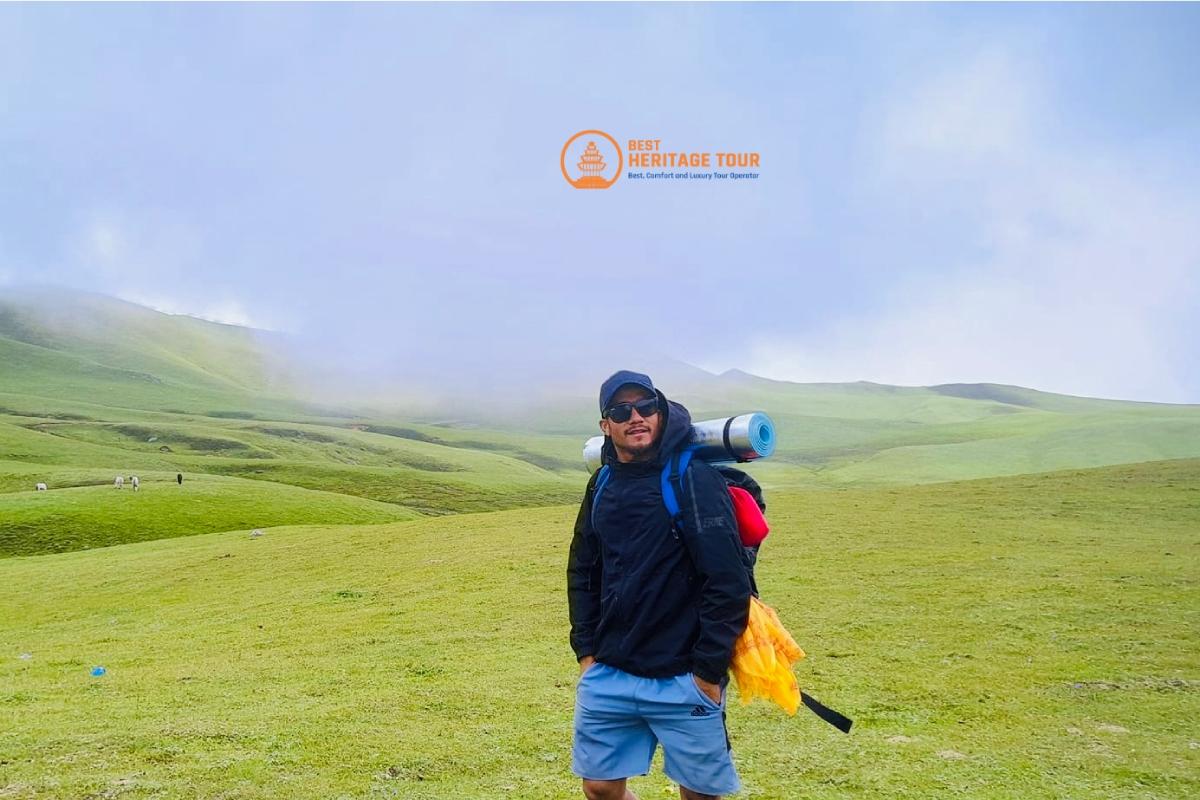
You can expect to walk through the largest and most beautiful alpine meadows in Nepal. Unlike the rocky trails of Everest, Badimalika features endless rolling hills of emerald-green grass that feel like a natural velvet carpet. These "Patans" are often shrouded in mystical fog or glowing under a brilliant sun, offering a sense of space and freedom that is incredibly rare in the crowded Himalayan corridors.
2. High-Altitude Spiritual Energy
Expect a profound spiritual atmosphere that transcends simple sightseeing. This trek is a pilgrimage route to one of Nepal’s most sacred Shakti Peeths. You will witness the deep faith of local pilgrims and feel a unique "energy" at the Triveni confluence and the Badimalika Temple. It is a place for reflection, where the silence of the high peaks encourages a deep, meditative connection with the natural world.
3. Authentic Off-the-Grid Camping
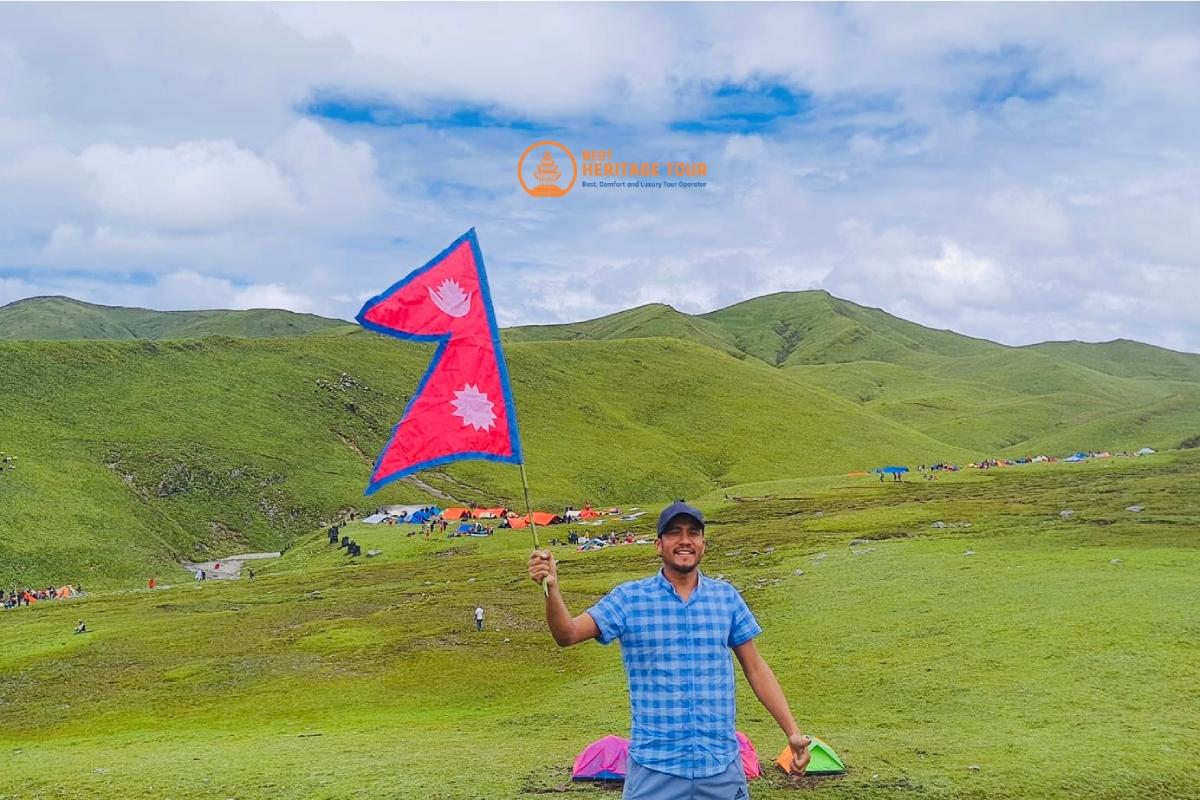
Since this region lacks commercial trekking infrastructure, expect a true wilderness camping experience. Our professional crew will set up high-quality tents in remote locations, from the misty shores of Dhawalpur Lake to the high ridges of the temple. Dining under a canopy of billion stars and waking up to the sound of distant horse bells provides an authentic expedition feel that luxury teahouses simply cannot match.
4. Raw and Rugged Terrain
Prepare for a trail that is untouched and sometimes challenging. You can expect steep climbs through ancient oak forests and narrow ridgeline walks that offer 360-degree views. The path isn't paved with stone steps like the Annapurna circuit; it is a raw shepherd’s trail that requires a good level of fitness and a sense of adventure. Every drop of sweat is rewarded with a completely private view.
5. Untouched Far-Western Culture
Expect to be a guest in a land where "Deuda" songs and Khas traditions remain the heartbeat of daily life. In villages like Lamagadh and Jadanga, you won’t find tourist menus; instead, you’ll find genuine hospitality. You will witness a way of life that has remained unchanged for centuries, from traditional stone architecture to unique agricultural practices, providing a deep cultural immersion into the soul of Sudurpashchim.
6. Unrivaled Himalayan Solitude
One of the greatest luxuries you can expect is solitude. On the Badimalika trail, you are more likely to encounter a Himalayan Monal or a grazing horse than another group of foreign trekkers. This "private" access to the mountains allows you to experience the Himalayas as they were decades ago - quiet, pristine, and powerful. It is the perfect escape for those looking to disconnect from the modern world.
7. Dramatic Weather and Vistas
Expect the weather to be a dynamic part of your journey. The Far-West is known for its dramatic transitions, where morning sunshine suddenly gives way to rolling mists that dance across the meadows. These weather shifts create incredible photographic opportunities, especially when the clouds part to reveal the massive, snow-covered summits of Mt. Api and Mt. Saipal standing guard over the lush, green valleys of the Bajura district.
Are You Ready for the Badimalika Trek?
The Badimalika Trek is designed for adventurers who seek more than just physical challenge - it calls for a sense of curiosity, patience, and openness. Trekkers should be ready to embrace remote landscapes, unpredictable weather, and rustic accommodations while appreciating the deep cultural and spiritual significance of the region. A genuine interest in nature, Himalayan ecology, and local traditions will allow travelers to fully immerse themselves in the trek’s authentic and off-the-beaten-path experience.
This journey is perfect for those who love solitude, reflection, and the thrill of exploring untouched territories. Ideal participants are those who are moderately fit, adaptable, and eager to step away from crowded tourist trails to witness far-western Nepal’s pristine beauty and sacred sites like Badimalika Temple. If you possess the patience to watch the clouds dance over the Saipal range and the grit to embrace the "Wild West" of Nepal, then you are more than ready for this trek. If you seek adventure combined with spiritual and cultural immersion, this trek promises a once-in-a-lifetime experience.
Itinerary
Your journey to the remote far-west begins with a scenic flight from Kathmandu to Dhangadhi. The one-hour flight to Dhangadhi is a spectacular introduction to Nepal’s geography; you’ll witness a dramatic transition from Himalayan peaks to the vast plains of the Terai. Upon landing in Dhangadhi, the gateway to the Sudurpashchim province, we quickly board our private vehicle to begin the ascent into the hills, leaving the flatlands behind as we climb the winding roads of the Bhimdatta Highway.
As the drive progresses, the temperature drops and the scenery shifts from mustard fields and sal forests to terraced hills and pine groves. This 5-6 hour drive is an experience in itself, offering glimpses of the deep Mahakali river valley and the distant, mist-covered mountains. By the time we reach Dadeldhura, often called the "Queen of the Hills," you’ll feel the true spirit of the Far-West. We settle into our hotel in this historic town. The evening is perfect for a short stroll to the Amargadhi Fort to catch the sunset over the rolling hills, marking the end of your first day in this untouched frontier.
After a hearty breakfast in Dadeldhura, we embark on a thrilling jeep drive that takes us through the dramatic landscapes of the Doti and Achham districts before entering Bajura. This route follows the outlines of the Budhiganga River, where the turquoise waters carve through deep limestone gorges. The road is a mix of paved sections and dusty tracks, offering a "real Nepal" experience. You’ll witness the unique architectural style of the region - tiered stone houses with wooden balconies, nestled against steep, emerald hillsides.
As we reach the riverside settlement of Jadanga, the air becomes warmer and more humid, signaling our arrival at the base of the trek. Jadanga serves as the vital gateway where the motorable road ends and the ancient footpaths begin. This evening provides a fantastic opportunity for cultural immersion; we stay at a local lodge or tea house, where you can taste local organic produce and interact with the villagers.
The official trekking begins today as we leave the dust of the road behind and step into the emerald heart of the Bajura wilderness. After crossing a suspension bridge over the Budhiganga River, the trail immediately tests our lungs with a steady ascent. We leave the subtropical river valley and climb through dense forests of oak, rhododendron, and Himalayan pine.
As we reach the higher reaches of the forest, the trees begin to thin, giving way to the first of the region’s famous alpine meadows. Budha Krodh is a breathtaking transition point, where the deep green of the forest meets the vast expanse of the high-altitude pastures. We set up our first wilderness camp here, surrounded by ancient trees and the gentle ringing of bells from grazing livestock. This evening is a true "off-the-grid" experience; as the sun dips behind the ridges, the sky transforms into a masterpiece of orange and purple.
After a peaceful night at Budha Krodh, the trail continues with a gradual uphill ascent towards Bhito. The trail from Budha Krodh is a steady climb that follows ancient shepherd paths carved into the mountainside. As we ascend, the rhododendron trees become shorter and gnarled, eventually giving way to vast, open slopes. This is where you truly begin to feel the "Wild West" of Nepal; the horizon expands, revealing a dramatic layer of blue and purple ridges that stretch toward the Indian border.
Reaching Bhito feels like standing on the balcony of the Himalayas. This scenic camping spot is situated on a prominent ridge that offers unobstructed views of the foothills and the deep valleys we have traversed over the past few days. The landscape here is characterized by rolling mounds of grass and scattered rocky outcrops, creating a surreal, almost cinematic environment. As our crew sets up the tents, you can spend the afternoon exploring the nearby ridges to spot local birdlife, including the colorful Himalayan Monal. Watching the evening mist roll through the valleys below while the peaks above catch the final golden rays of the sun is an experience that defines the spiritual allure of the Badimalika region.
Today’s trek is widely considered one of the most aesthetically stunning stretches of the entire journey. As we leave Bhito, the trail climbs steadily toward the expansive alpine plateaus that define the Badimalika region. The landscape undergoes a dramatic transformation into vast, rolling emerald grasslands known as "Patans," which look like a never-ending green velvet carpet draped over the mountains. There are no permanent settlements here, only the occasional stone hut used by migratory shepherds.
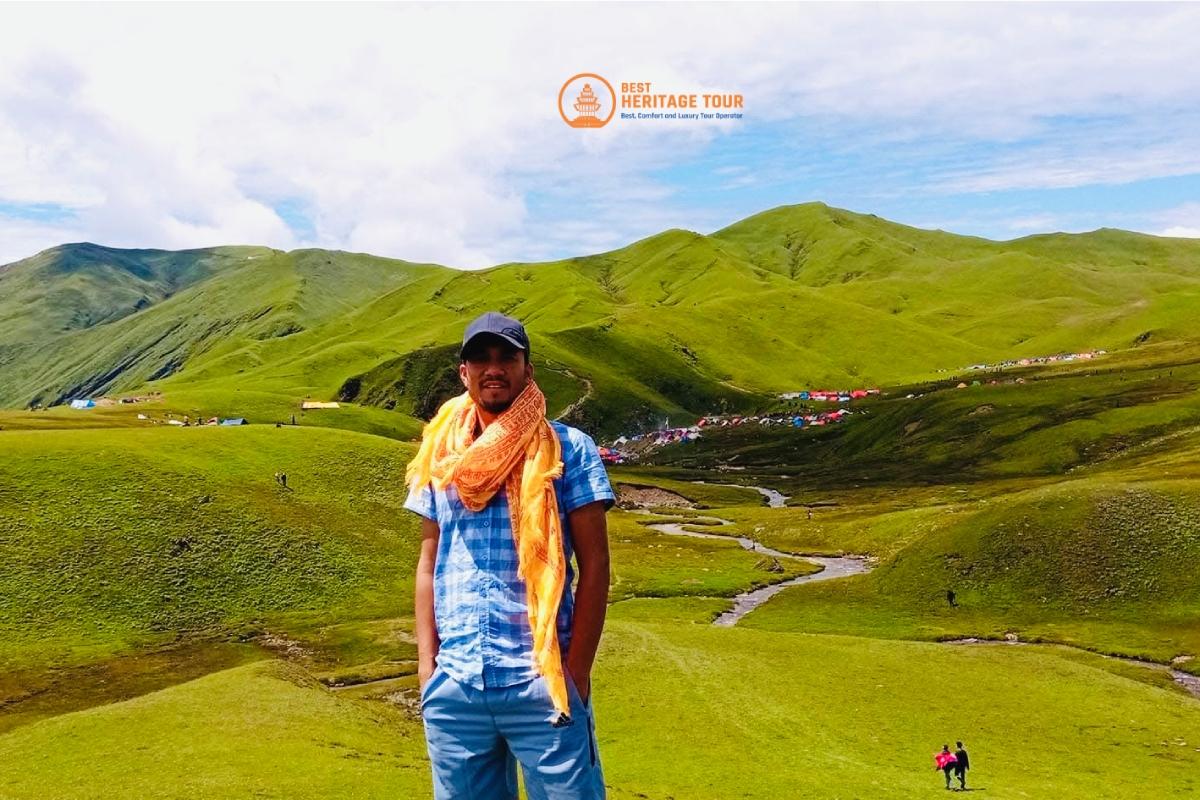
Our destination is the sacred meeting of Triveni, where three holy rivers meet in a high-altitude basin. This area holds immense spiritual significance; it is believed that bathing in these icy waters cleanses the soul before reaching the Malika shrine. The campsite at Triveni is nothing short of mystical, surrounded by low-lying hills and wide, marshy grasslands that reflect the changing colors of the sky. As the sun sets, the temperature drops significantly, reminding us of our high-altitude location.
Acclimatization at Triveni is not just a safety necessity; it is a profound opportunity to absorb the quiet majesty of the Far-West’s high-altitude plateaus. The morning begins slowly, allowing you to enjoy a warm cup of tea while watching the mist lift from the sacred confluence where the three rivers meet. The vastness of the Triveni meadows is truly humbling - a seemingly endless sea of green velvet that undulates toward the horizon, broken only by the occasional rocky outcrop or a distant shepherd’s hut.
For those feeling energetic, we take a short, scenic hike to the surrounding ridgelines to gain a few hundred meters of elevation - the classic "climb high, sleep low" strategy. From these vantage points, the scale of the landscape becomes even more apparent; you can see the distant, snow-capped peaks of the Saipal range and the deep, verdant valleys of Bajura and Kalikot below. This day is also perfect for botanical exploration, as these meadows are home to rare Himalayan herbs and vibrant wildflowers that thrive in the nutrient-rich alpine soil.
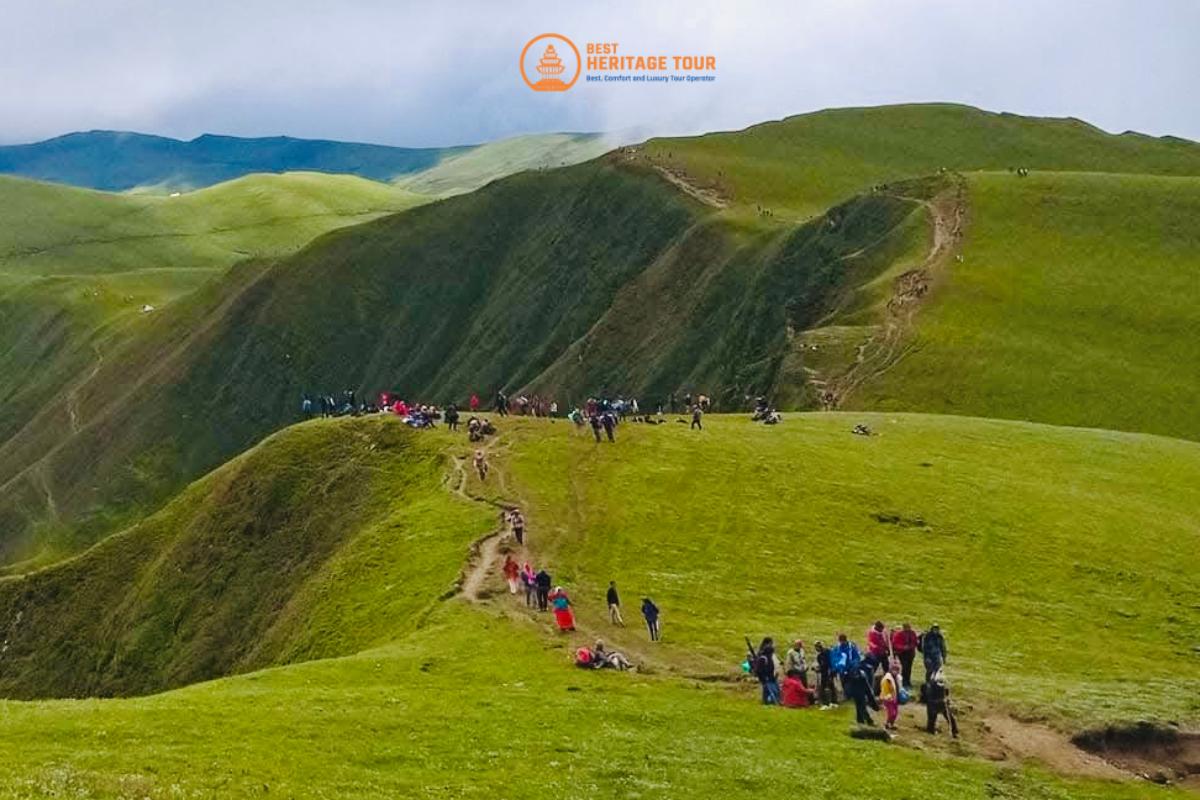
Today’s trek is the highlight of your journey, as you ascend to the sacred Badimalika Temple. The trail from Triveni is a steady, rhythmic ascent that carries us onto the high ridges of the Bajura district. As we climb, the emerald "Patans" fall away below us, replaced by a dramatic, wind-swept landscape where the earth meets the sky. The final approach to the temple follows a narrow, exhilarating ridgeline that feels like walking on the spine of the world. Upon reaching the Badimalika Temple, situated at a breathtaking 4,200 meters, the sense of achievement is overwhelming. The temple itself is a modest yet powerful stone structure, standing as a sentinel over the vast wilderness of Far-West Nepal.
The reward for our climb is a staggering 360-degree panorama that defies description. To the north, the massive, snow-clad peaks of Mt. Api and Mt. Saipal and to the south, the endless layers of the Mahabharat range. We spend the afternoon exploring the sacred temple grounds, learning about the local legends of Sati Devi, and soaking in the profound silence of this high-altitude sanctuary.
After a sunrise, we begin our descent from the high ridges of the Badimalika Temple. As we lose altitude, the air becomes thicker and warmer, and the silence of the high plateaus is replaced by the rustle of bamboo thickets and the distant calls of Himalayan birds. This section of the trek is a masterclass in biodiversity, as we transition through diverse ecological zones, passing through groves of ancient oak and rhododendron draped in hanging moss.
Our destination is the hidden and mystical Dhawalpur Lake, a serene turquoise gem tucked away in a deep, forested basin. Unlike the open grasslands of the previous days, the lake is surrounded by steep, verdant slopes that create a natural amphitheater of greenery. The water is remarkably clear, reflecting the surrounding trees and the occasional passing cloud like a perfect mirror creating stunning photographic opportunities. Local legends say the lake has deep spiritual significance, and the tranquility of the site is deep as we set up our camp near its shores. The evening is spent relaxing by the water, listening to the gentle sounds of the forest as the stars begin to reflect in the still surface of the lake.
After the serene high-altitude experience at Dhawalpur Lake, today’s trek involves a gradual descent toward Lamagadh. The trail leads us through a final stretch of magnificent high-altitude grasslands. As we descend, the "Wild West" of Nepal reveals its softer side; the rugged ridges give way to rolling hills dotted with grazing livestock and the occasional shepherd’s temporary shelter. The transition from the high alpine zone back into the sub-alpine region is visually stunning, as the vibrant green of the meadows slowly blends into the deep, earthy tones of the ancient oak and rhododendron forests that cling to the mountainsides.
As we approach Lamagadh, the landscape begins to show signs of permanent human habitation, offering a fascinating window into the remote village life of the Far-West. This is a region where traditional Khas culture remains vibrantly alive, untouched by the commercial pressures of more popular trekking routes. You’ll see locals tending to their terraced fields and children playing near stone-roofed houses that have stood for generations. Reaching our local stay in Lamagadh feels like returning to a simpler time. The evening is perfect for engaging with the villagers, sharing stories over a cup of local tea, and reflecting on the immense journey from the sacred heights back to the heart of the community.
Today marks the final day of trekking as you descend from the hills toward Silgadhi, a small town at the foothills of far-western Nepal. Leaving Lamagadh, we follow a well-worn trail that winds through terraced hillsides where golden wheat or green paddy fields sway in the mountain breeze. The path takes us through fragrant pine forests and across small streams, with the air becoming noticeably warmer and thicker as we drop toward the district headquarters of Doti.
Our arrival in Silgadhi marks the official completion of our trek. Silgadhi is a historic town centered around the famous Shaileshwari Temple, one of the most important religious sites in the region. We take the afternoon to wander through the local bazaar, where the vibrant colors of traditional fabrics and the scent of local spices fill the air. It’s the perfect time to celebrate our successful journey with the trekking crew, perhaps sharing a final meal of authentic "Pahadi" Dal Bhat.
Today, we trade our trekking boots for the comfort of a jeep as we begin our descent from the rugged hills of Doti back to the tropical plains of the Terai. After a final breakfast in the historic town of Silgadhi, we embark on a scenic 7-8 hour drive along the winding Bhimdatta Highway. As we lose altitude, the air grows warmer and more humid, and the vegetation shifts from mountain pines to lush subtropical forests and eventually to the golden mustard fields of the plains.
Upon arrival, you’ll check into a comfortable hotel, giving you time to rest and enjoy the amenities. The evening is yours to relax or take a quiet stroll through the city, perhaps visiting the nearby aircraft museum or enjoying a meal featuring the unique flavors of the Tharu community, marking our last night in the "Wild West" before returning to the capital.
On the final day of your Badimalika adventure, you’ll take a one-hour scenic flight from Dhangadhi back to Kathmandu. Upon arrival in Kathmandu, you’ll have time to rest, enjoy some shopping for souvenirs, and soak in the vibrant city atmosphere In the evening, the Best Heritage Tour team will host a special Farewell Dinner at a traditional Nepalese restaurant. Over authentic cuisine and perhaps some local folk music, we will share stories, exchange photos, and celebrate the successful completion of your Badimalika trek.
What is included?
- PRIVATE AIRPORT PICK-UP & DROP : Airport - Hotel transfer - Airport (Pick Up and Drop).
- MEMBER TRANSPORTATION :
- Domestic Flight : Flight from Kathmandu to Dhangadhi & while returning from Dhangadhi to Kathmandu.
- Vehicle Transport : Transportation in a Jeep from Dhangadi to Dadeldhura, Dadeldhura to Jadanga and while returning from Silgadhi to Dhangadi.
- LODGING : Best available accommodation in mountain lodges and tea houses in Dadeldhura, Jadanga, Silgadhi & Dhangadhi and in Tents for upper portion of trek.
- FOOD : 3 meals a day (breakfast, lunch, and dinner; including tea/coffee) during the trek, with Ef-Chlor purification tablets provided for safe drinking water.
- GUIDE : One experienced government licensed trekking guide (English speaking) during the trek.
- STAFF SALARY AND ALLOWANCE : All trekking staff wages, salary, equipment, food & clothing.
- PERMITS : All necessary paper works : Khaptad National Park permit, Local Government, TIMS Card & other entry fee.
- STAFF INSURANCE : Insurance for all involved trekking staff during the trek.
- CAMPING ESSENTIALS : Necessary equipment including tents, kitchen tent, dining tent, toilet tent, table, chairs etc.
- GEAR (IF NEEDED) : Sleeping bag, down jacket, and duffle bag (to be returned after the trek).
- MEDICAL KIT : A well equipped first aid kit, including an oximeter and emergency oxygen, carried by the guide for your safety.
- IN CASE OF EMERGENCY : Assistance in rescue operations in case of emergency covered by travel insurance.
- SOUVENIR : Best Heritage Tour’s Appreciation Certificate after the successful trek & Purse, an authentic Nepali product made from hemp.
- FAREWELL DINNER : A farewell dinner with an authentic cultural program after completion of the trek.
What is not included?
- INTERNATIONAL AIRFARE : International flight airfare (from and to Kathmandu).
- NEPAL VISA FEES : You may issue the visa upon your arrival at Tribhuvan International Airport - Kathmandu or apply manually in your home country.
- TRASNPORTATION IN PRIVATE JEEP : Private Jeep transportation will be arranged on request.
- ACCOMMODATION & MEALS : Accommodation and meals in Kathmandu before and after the trek.
- INSURANCE POLICY : Travel insurance covering medical expenses and high-altitude evacuation is mandatory. If you do not have suitable coverage, we can also assist in arranging travel insurance for you upon your arrival in Nepal. Check Over Here
- PERSONAL EXPENSES : Clothing & gears, telephone, internet, toiletries, hot shower, laundry, soft drinks and any Alcoholic beverages.
- OPTIONAL PORTER SERVICE : USD 28 per day, including all taxes (each porter can carry up to 25 kg of luggage).
- TIPS : Tips for guide and porters.
- EXTRA : Any additional costs due to factors beyond our control, or for services not specifically mentioned in the Itinerary & Included section.
- TAXES & SERVICE CHARGE : All government taxes (13%) and service charge (10%).
Equipment
Clothing
-
Base layers: Comfortable T-shirts, light thermal tops & leggings
-
Mid layers: Fleece jacket or warm sweater
-
Outer layer: Lightweight waterproof and windproof jacket
-
Warm jacket (down or insulate)
-
Trekking pants
-
Light shorts or T-shirts
-
Gloves (light or insulated depending on season)
-
Warm hat/beanie
-
Sun hat/cap for sun protection
Footwear
-
Comfortable trekking boots (well broken-in)
-
Wool or synthetic socks (5-6 pairs recommended)
-
Lightweight sandals or slippers
Accessories & Essentials
-
Trekking Backpack (50-65L)
-
Sunglasses (UV Protection)
-
Trekking Poles
-
Sleeping Bag (Rated for -10°C / 14°F)
-
Headlamp with Extra Batteries
-
Water Bottles / Hydration Bladder
-
Water Purification Tablets or Filter
Health & Hygiene
-
Personal medications and basic first aid kit
-
Sunscreen and Lip Balm
-
Toiletries and Quick-Dry Towel
-
Hand sanitizer and wet wipes
Electronics & Miscellaneous
-
Camera / Smartphone
-
Power Bank / Portable Charger
-
Snacks / Energy Bars
-
Passport, Trekking Permits and ID
Trip Info
Best Time for the Badimalika Trek
Choosing the right time for your Badimalika Trek is crucial, as the Far-West region possesses a distinct climatic personality compared to the rest of Nepal. To help you plan your journey with Best Heritage Tour, here is a breakdown of the three primary windows for this adventure:
1. Spring (March to May)
This is widely considered the best time for photography and wildlife enthusiasts. As the winter snow melts, the trail through the oak and rhododendron forests comes alive with color, and the lower "Patans" begin their transition into vibrant green. You can expect clear morning skies with stunning, crisp views of Mt. Api and Mt. Saipal, followed by pleasant trekking temperatures that are neither too hot in the valleys nor too freezing at the temple.
2. Monsoon (June to August)
Unlike many other treks in Nepal that are avoided during the rains, the Badimalika region is famous as a prime monsoon trekking destination. This is when the rolling grasslands reach their peak "velvet" stage, blanketed in an incredible variety of wildflowers and medicinal herbs. It is also the time of the great Janai Purnima festival (usually in August), where thousands of pilgrims descend upon the temple, offering a unique cultural spectacle that brings the silent meadows to life.
3. Autumn (September to November)
As the monsoon rains wash the atmosphere clean, autumn offers the most stable weather and the sharpest mountain views of the year. The grasslands begin to turn a beautiful golden-brown, and the deep blue of the Himalayan sky provides a perfect contrast to the snow-capped peaks. This is the ideal window for those who prioritize long-distance visibility and comfortable, dry trekking conditions before the harsh winter snows begin to close the high-altitude passes in November.
Permits Required for the Badimalika Trek
To embark on the Badimalika Trek, trekkers need to secure the following permits:
-
Khaptad National Park Entry Permit - Some sections may fall under protected zones, requiring a special entry permit.
-
TIMS Card (Trekkers’ Information Management System) - Mandatory for all foreign trekkers in Nepal to track trekking activity and ensure safety.
Documents Required for Permits
Best Heritage Tour takes care of all necessary permits on your behalf, so you can focus entirely on enjoying the trek without worrying about paperwork. To process these permits, Best Heritage Tour will need:
-
Clear Passport Copy: A scanned color copy of your passport (valid for at least 6 months).
-
Passport-Sized Photos: 3 recent digital photos (for permit forms and conservation logs).
-
Travel Insurance: Your policy must explicitly cover emergency helicopter evacuation at altitudes up to 4,500 meters.
Note: There are several checkpoints along the trail where local authorities will check permit so keep permit safe.
Accommodation and Meals
On the Badimalika Trek, you can expect a raw and authentic expedition experience that prioritizes wilderness immersion over modern luxury. Since this route remains one of Nepal’s best-kept secrets, there are no commercial "trekking lodges" or heated dining halls once we leave the lower villages. In settlements like Jadanga and Silgadhi, we stay in modest local guesthouses that offer a true glimpse into Far-Western life. However, for the majority of the journey, especially in the high-altitude "Patans" of Triveni and the Badimalika Temple, we utilize high-quality tented camps. Our professional crew sets up weather-resistant sleeping tents, a dedicated dining tent, and kitchen facilities, ensuring you have a private and comfortable sanctuary amidst the vast, silent meadows of the "Wild West."
The culinary experience on this trek is a hearty blend of high-energy trekking staples and organic local flavors. Our mountain cooks are experts at preparing diverse, nutritious meals in remote conditions, typically starting your day with a hot breakfast of porridge, eggs, and local bread. Lunch and dinner often feature the classic "Powerhouse of the Himalayas"- Dal Bhat (lentils, rice, and seasonal vegetable curry), supplemented by pasta, soups and local specialties unique to the Sudurpashchim province. We source as many fresh ingredients as possible from the villages we pass through, ensuring that your meals are not only fueling your climb to 4,200m but also connecting you to the rich agricultural heritage of the Bajura and Doti districts. Vegetarian, Vegan, and Gluten-Free options can be accommodated upon request.
Trek Difficulty & Fitness Level
The Badimalika Trek is a "Moderate to Challenging" wilderness expedition that demands both physical stamina and mental resilience. Unlike the well-trodden paths of Central Nepal, this route features raw, remote trails that navigate the rugged geography of the Far-West. The challenge lies in the significant elevation gain, the isolation of the "Wild West" landscape, and the unpredictable nature of alpine weather, making it an adventurous undertaking for those seeking a true Himalayan frontier.
-
Hiking Duration: 6 to 8 hours of active walking per day.
-
Altitude: Starting at 109m (Dhangadhi) and peaking at 4,200m (Badimalika Temple).
-
Terrain: A diverse mix of humid river valleys, steep forest climbs through oak and rhododendron, narrow ridgeline walks, and vast, undulating alpine grasslands (Patans).
Fitness Requirements
To fully embrace the beauty of the Badimalika plateau without being sidelined by exhaustion, a solid baseline of physical conditioning is essential. You don’t need to be an elite athlete, but you should be a confident walker capable of maintaining a steady pace over varied, uneven terrain for several consecutive days. Preparing your heart, lungs, and legs will allow you to focus on the spiritual energy of the temple rather than the strain of the climb.
Recommended Exercises:
-
Cardiovascular Conditioning: Engage in 45-60 minutes of aerobic activity (running, cycling, swimming, or rowing) 3 to 4 times a week to build high-altitude lung capacity.
-
Leg Strength & Stability: Focus on squats, lunges, and step-ups to prepare your lower body for the steep descents and vertical climbs.
-
Core Endurance: Incorporate planks and mountain climbers to help maintain balance on narrow ridges and while carrying a daypack.
Basic Facilities
1. Electricity and Charging
In the lower villages like Silgadhi and Martadi, you will find reliable grid electricity to charge your devices. However, once we enter the high-altitude wilderness of the Badimalika meadows, there is no electricity. We strongly recommend carrying a high-capacity power bank or a portable solar charger. Our trekking crew can sometimes provide emergency charging via small portable solar panels during sunny days.
2. Internet and Connectivity
Mobile connectivity is surprisingly available in many parts of the Far-West, with Ncell and Nepal Telecom (NTC) providing sporadic 3G or 4G signals. However, expect total "digital detox" zones as you approach the Badimalika Temple and Dhawalpur Lake. There is no Wi-Fi available on the trekking trail. For the best chance of staying connected in remote areas, an NTC SIM card is generally recommended.
3. Shower and Hygiene
Warm showers are only available in the hotels at Dhangadhi and basic guesthouses in Silgadhi. On the mountain, we practice "bucket hygiene." Our kitchen staff provides a small bowl of warm water every morning and evening for basic washing. Because we camp near pristine water sources like Triveni, we use biodegradable soaps to protect the environment while maintaining hygiene during the trek.
4. Toilet Facilities
In the lower villages, you will use basic sit-down or squat toilets in local guesthouses. Once we reach the tented camps in the alpine "Patans," our team sets up private, eco-friendly toilet tents. These are portable structures placed over a deep pit, which is covered and restored to its natural state before we leave, ensuring a "Leave No Trace" impact on the sacred meadows.
5. Drinking Water
Staying hydrated is vital for preventing altitude sickness. We provide unlimited boiled and filtered water throughout the trek. In the mornings and evenings, our kitchen team will refill your reusable bottles with safe, treated water. We strictly discourage the purchase of single-use plastic mineral water bottles in the mountains to preserve the pristine beauty of the Bajura and Doti districts from plastic pollution.
Travel Insurance
For this trek, standard travel insurance is simply enough. At Best Heritage Tour, we require proof of a comprehensive insurance policy before you can begin the trek. Your policy must include the following specific coverages:
-
Medical Emergency & Hospitalization.
-
Emergency Helicopter Evacuation
-
Search and Rescue (SAR)
-
Trip Cancellation & Interruption
-
Cashless Claims & Direct Payment
Pro Tip: Always carry a physical print-out of your insurance policy and the 24-hour emergency contact number in your chest pocket. In an emergency, every second counts, and having your policy number ready allows Best Heritage Tour to launch a rescue immediately.
Visa for Nepal
All international travelers (except Indian) need a tourist visa to visit Nepal, which can be obtained on arrival at Kathmandu airport or online.
Key Details:
-
Duration: 15, 30, or 90 days (30 days recommended for this trek)
-
Fees: 15 days - USD 30 | 30 days - USD 50 | 90 days - USD 125
-
Requirements: Valid passport (6+ months), visa form, passport photo, and payment in cash (USD/EUR/GBP/NPR)
Tip: Keep a copy of your visa and passport during the trek and consider applying visa online (through Nepal Immigration Website) for a smoother arrival. Also register to Foreign Nationals Management Information System (FNMIS) as this is now mandatory for any Tourists entering Nepal from 2026.
Booking & Payment
Booking your Badimalika Trek with Best Heritage Tour is simple and secure. To confirm your trip, a 10% deposit of the total trip cost is required at the time of booking, while the remaining balance must be cleared at least one day before departure. Payments can be made via cash, bank transfer, or card; bank transfer and card fees are the responsibility of the trekker, and incur a 4% transaction fee. All booking and cancellation terms are clearly explained by Best Heritage Tour staff during the booking process and can also be reviewed on our website.
Bank transfer:
-
Account Name: Best Heritage Tour And Treks Pvt. Ltd.
-
Account Number: 13201040254106
-
Bank Name: Nepal Investment Mega Bank Ltd.
-
Address: Thamel, Kathmandu, Nepal
-
SWIFT Code: NIBLNPKT
-
Bank Transfer Link: www.bestheritagetour.com/payment
Once we receive the deposit, we will issue the official invoice and booking conformation right away. If you need any clarification, we are happy to answer your questions or provide additional details you may require.