Khopra Danda Trekking - 6 Days
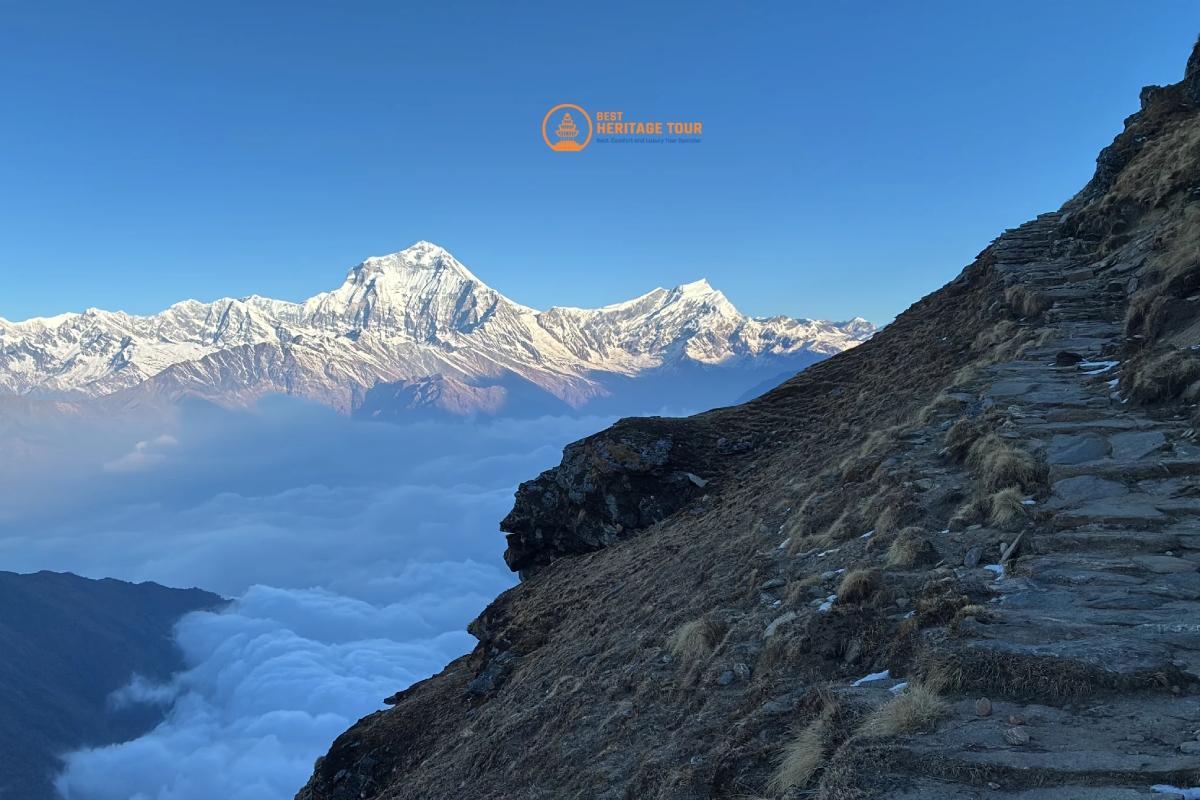
Insight on Khopra Danda Trek
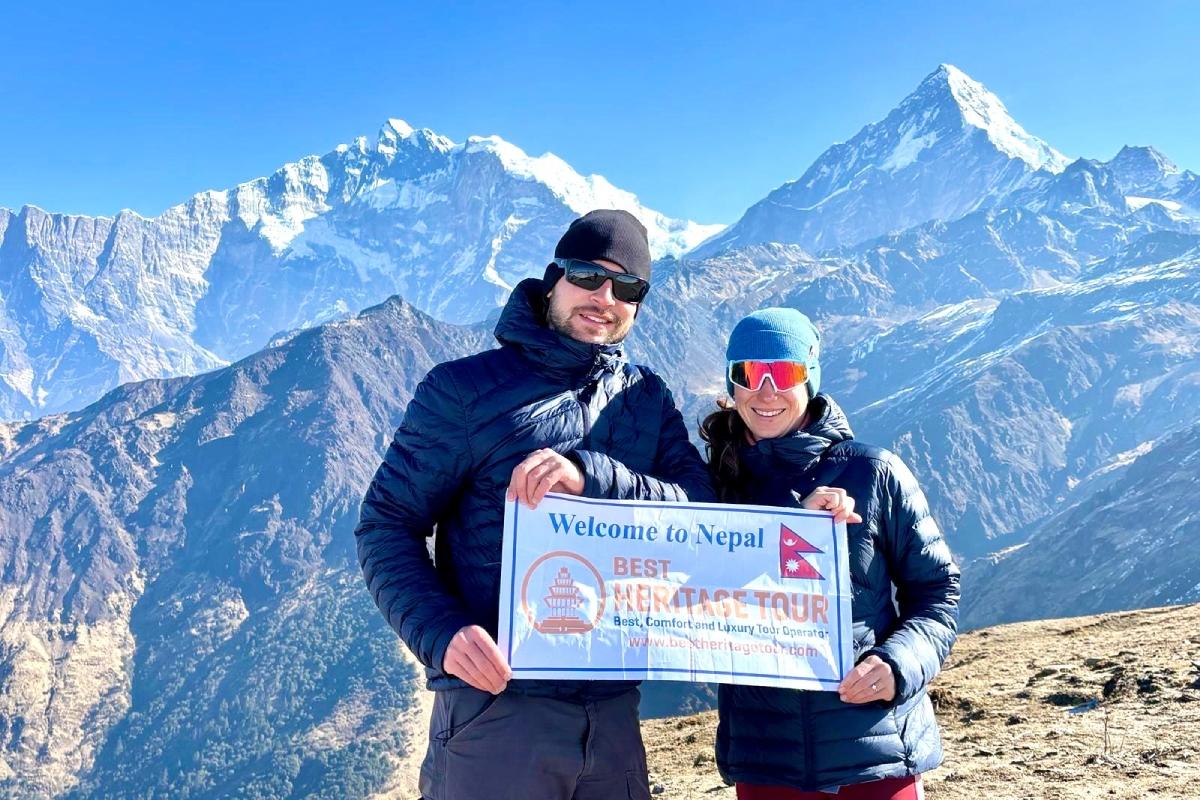
The Khopra Danda Trek offers a serene and immersive journey into the less-traveled Annapurna region. It’s a trek of discovery, with quiet trails, hidden valleys, and spectacular ridgelines that reward every step. Trekking here lets you escape the crowds, connect with nature, and enjoy the sense of accomplishment that comes from reaching high altitudes. Perfect for travelers seeking a mix of adventure, tranquility, and authentic Himalayan experiences.
Trip at a Glance
-

Country: Nepal
-

Trip grade: Medium
-

Destination: Khopra Danda
-

Activities: Trekking
-

Accommodation: Hotels/Lodges/Teahouses
-

Meals: Breakfast, Lunch & Dinner
-
.png)
Transportation: Tourist Bus & Private Vehicle
-

Maximum altitude: 4,660 m / 15,289 ft
-

Group size: 2 – 12 people
-
Trip Start / End: Pokhara - Pokhara
-
.png)
Best Season: Feb-Jun & Sep-Dec
Key Highlights of the Khopra Danda Trek
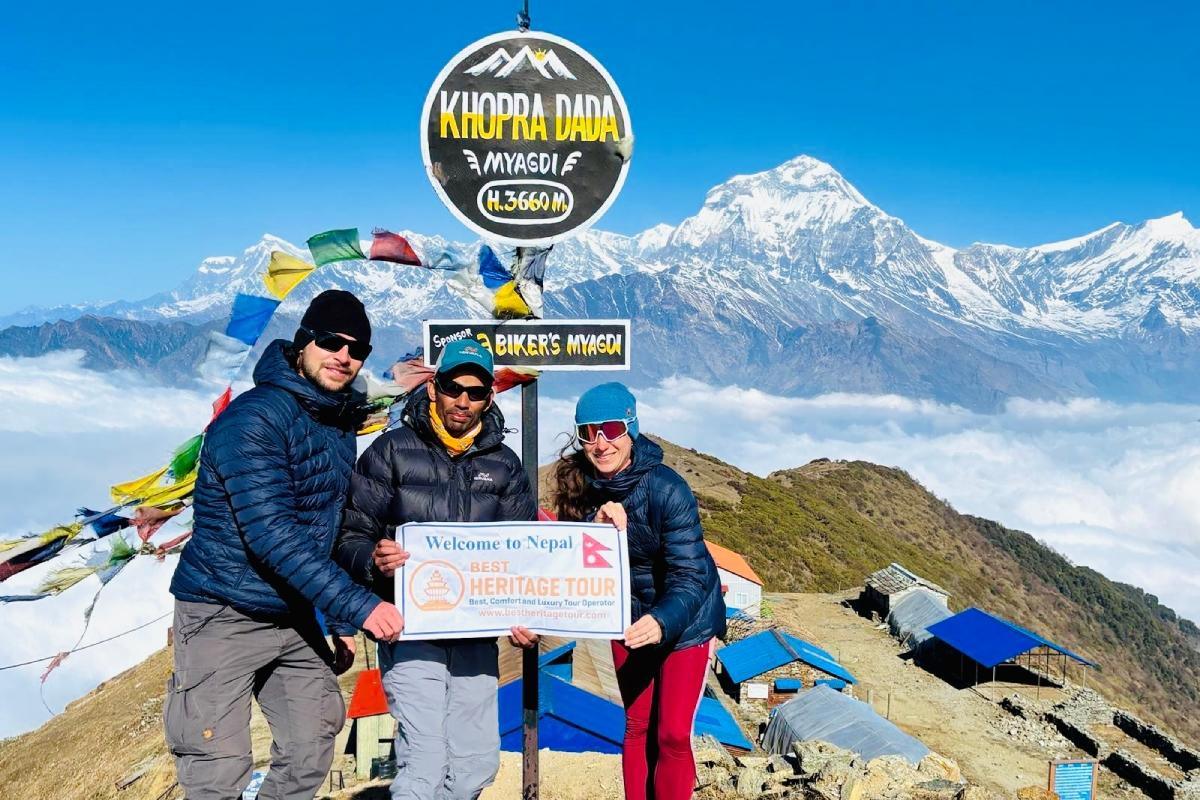
- Trek to the breathtaking Khopra Ridge (3,660 m) with panoramic Himalayan views.
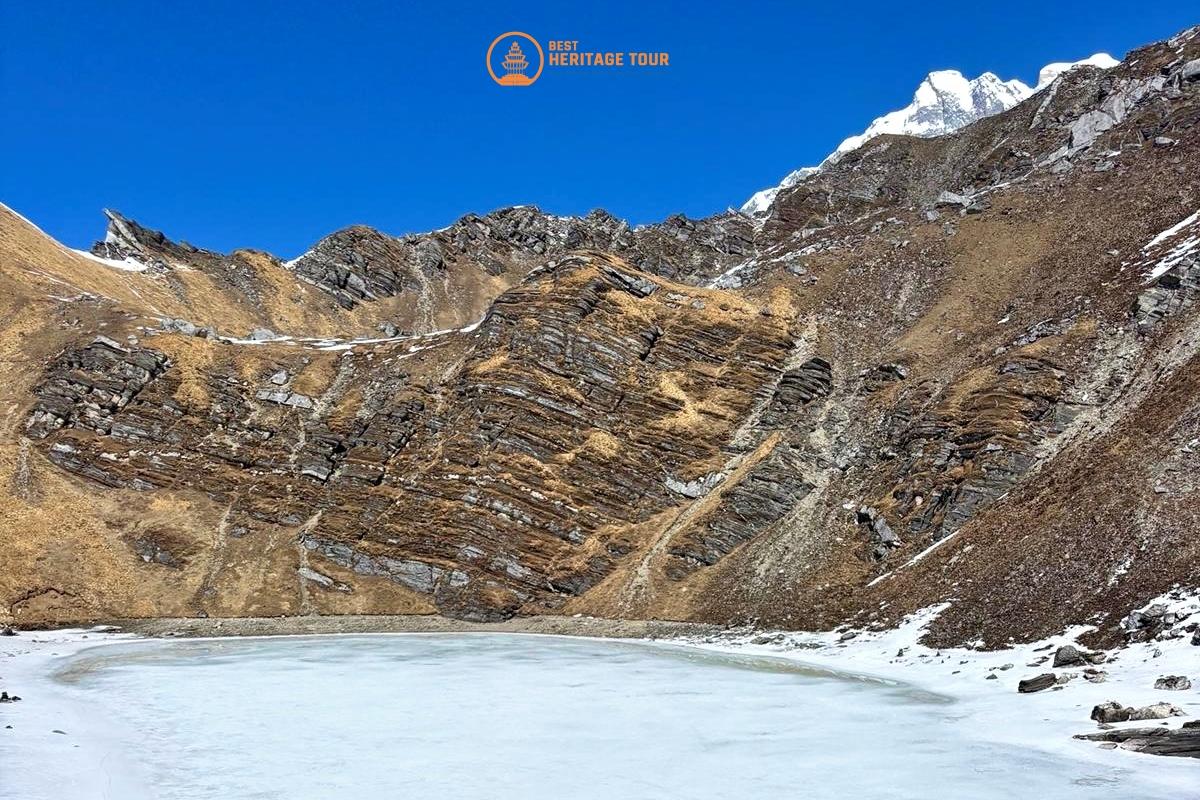
- Hike to the sacred Khayer Lake (4,660 m), one of the highest alpine lakes in the Annapurna region.
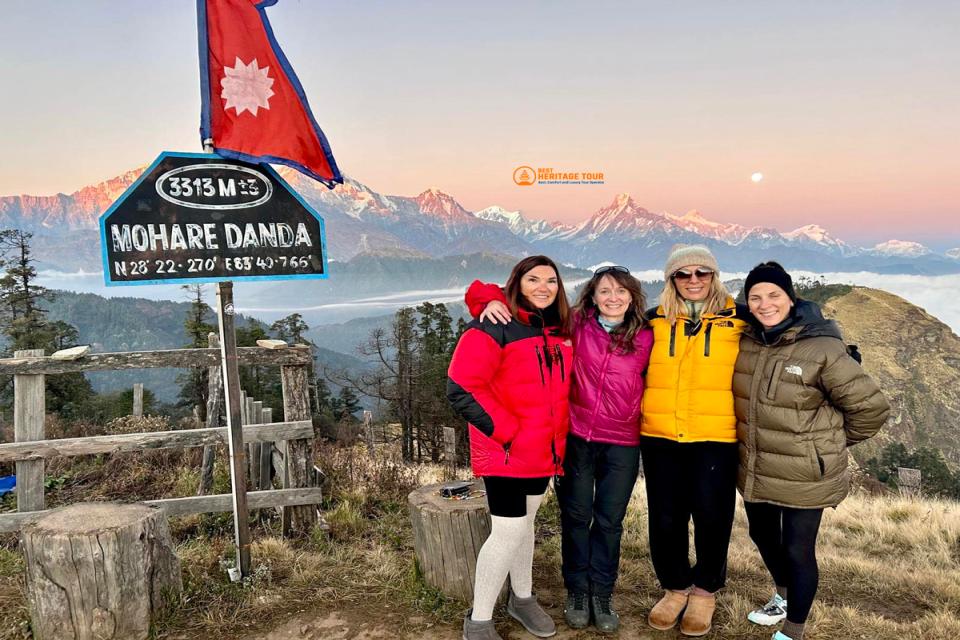
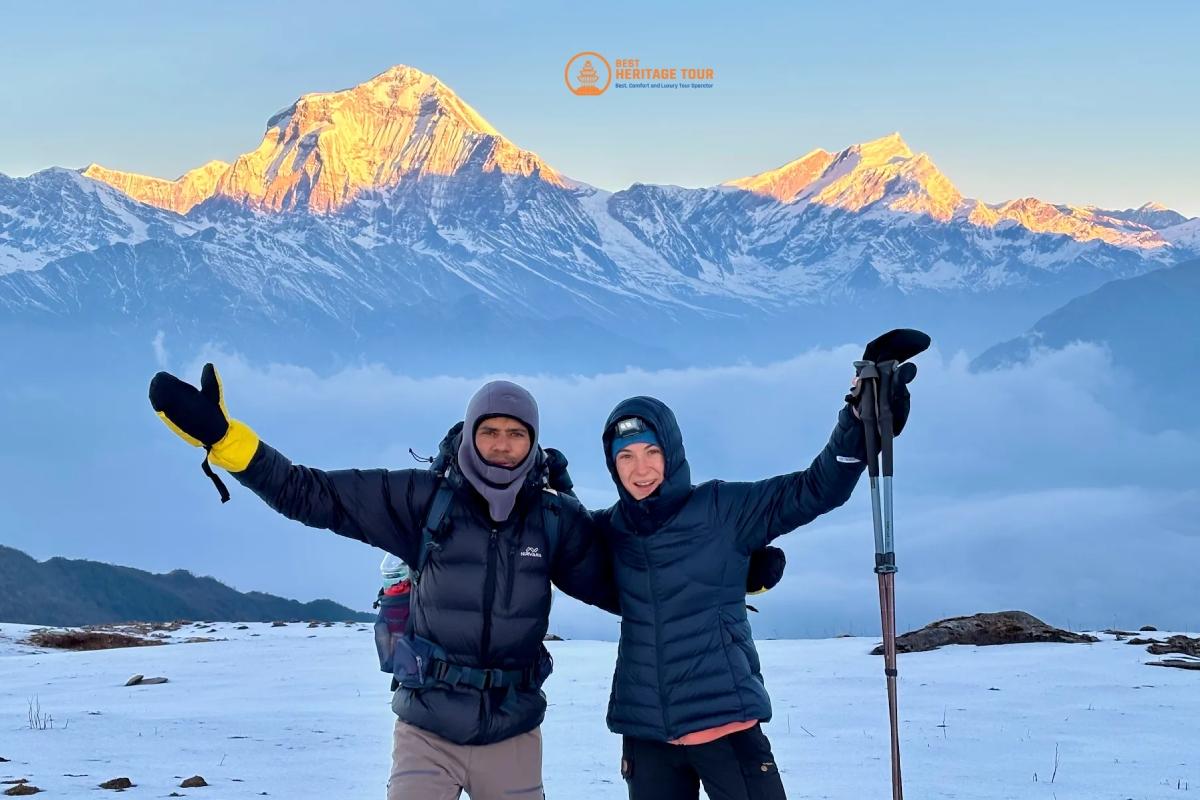
- Witness unforgettable sunrises from both Khopra Danda and Poon Hill.
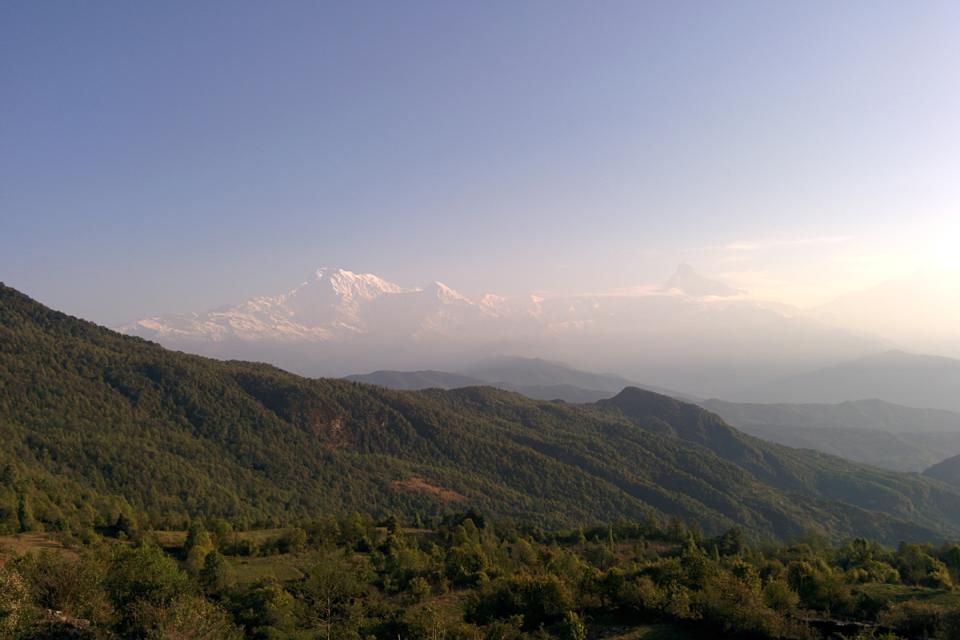
- Enjoy spectacular views of Dhaulagiri, Annapurna South, Nilgiri, Hiunchuli, and Machhapuchhre (Fishtail).
- Explore a peaceful off-the-beaten-path trekking route away from the crowds.
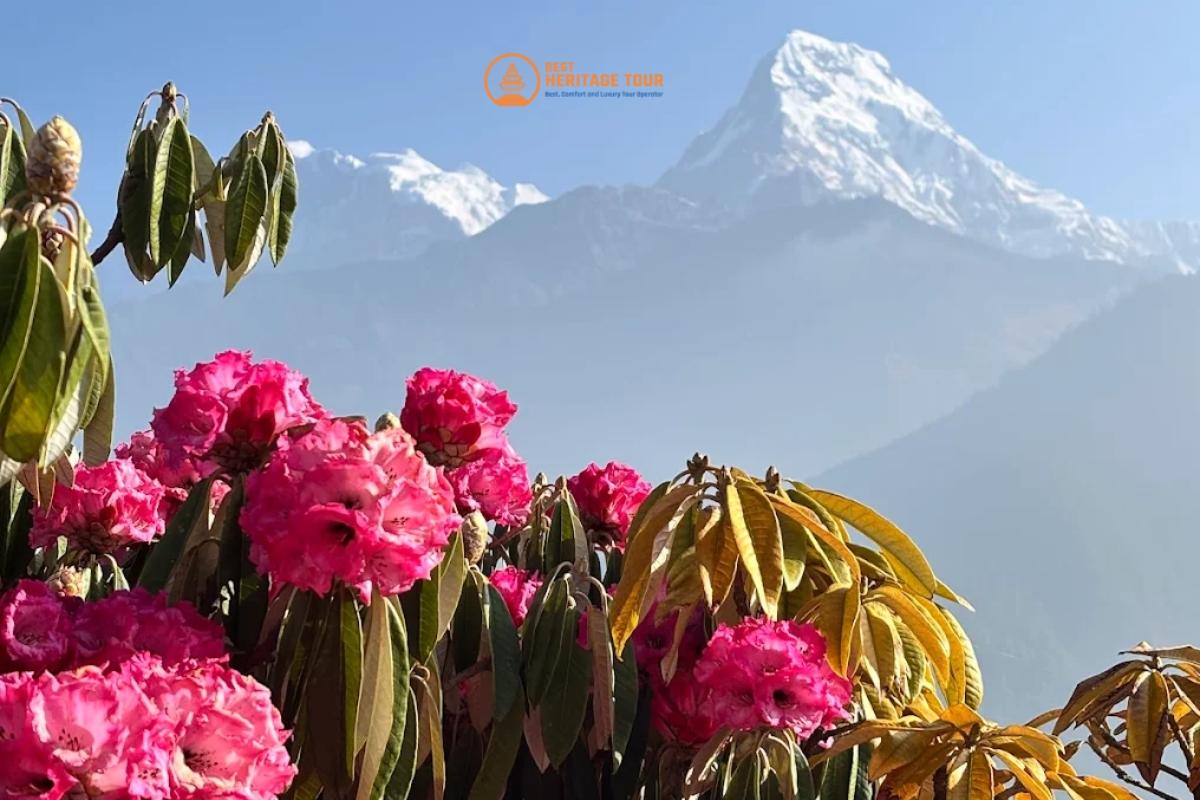
- Walk through vibrant rhododendron forests, alpine meadows, and picturesque mountain landscapes.
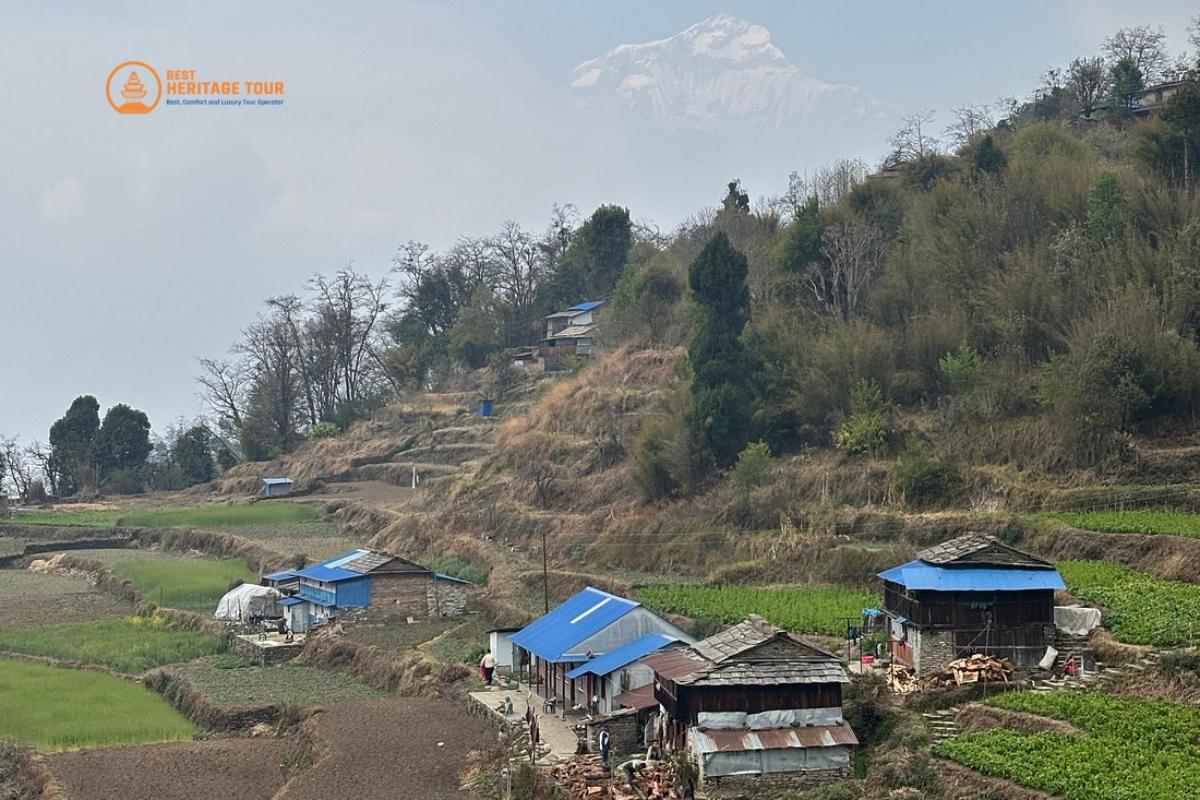
- Experience the warm hospitality of traditional Gurung and Magar villages, including Ghandruk and Swanta.
- Perfect for trekkers seeking a moderately challenging Himalayan adventure with rewarding scenery.
Why Choose Best Heritage Tour for Your Khopra Danda Trek?
- Free airport pick-up and drop-off service
- Online pre-trip briefing and booking confirmation for better preparation
- Multiple communication channels (Phone, Email, WhatsApp, Viber) for easy support
- 24/7 customer support available at +977-9851149197 / +977-9810043046
- Simple and secure payment options including Cash, Card & Bank Transfer
- Provide essential medical kit and oximeter to monitor oxygen levels at high altitude
- Complimentary duffle bag and sleeping bag (used one & to be returned after the trek)
- Free luggage storage facility at Best Heritage Tour store during the trek
- We plant a tree in the name of travelers (upon request), as a part of our commitment to sustainable tourism
Khopra Danda Trek Route Overview
The journey begins with a scenic drive from Pokhara to Kimche via Nayapul, and Syauli Bazar. From Kimche, you will start the trek and drive to Gurung village Ghandruk. After an overnight stay at Ghandruk, drive to Bayli Kharka the next day passing through Tadapani. The trail we follow is a remote path that is rarely used. Some huts at Bayli Kharka add a homely feel to the trek.
On the third day of the Khopra Ridge trek, we reached Khopra Danda. The trail passes through Chistibang meadows and tree-lined forests. From the trail, we can enjoy views of Dhaulagiri, Mt Dhamphus, Mt Tukuche, Nilgiri, Annapurna I, and Annapurna South. After waking up at Khopra Danda, you will visit Kayal Lake. The trail is quite steep and will take you around 5 hours to return to Khopra Danda. From Khopra Danda, you will trek to Swanta village, known for its community-run cheese factory. The next day after the Khopra Danda trek, you will travel from Swanta to Ghorepani. However, before reaching Ghorepani, you will pass through Chittre village and encounter the classic trail of the Annapurna Circuit trek.
On the last day of this trek, we wake up early from Ghorepani and climb to the world-famous lookout point, Poon Hill. From Poon Hill, we watch the early morning sunbathe in the surrounding mountains in golden light. Poon Hill is one of the most popular places for photography and we take as many photos as we like. After enjoying the amazing views from Poon Hill Viewpoint, we return to Ghorepani and trek to Birethanti. From Birethanti, we board a bus to Pokhara via Nayapul. The trek ends in Pokhara. For more details about the trek, see the Khopra Danda Trekking Itinerary section below.
What Can You Expect on the Khopra Danda Trek?
1. Spectacular Himalayan Mountain Views
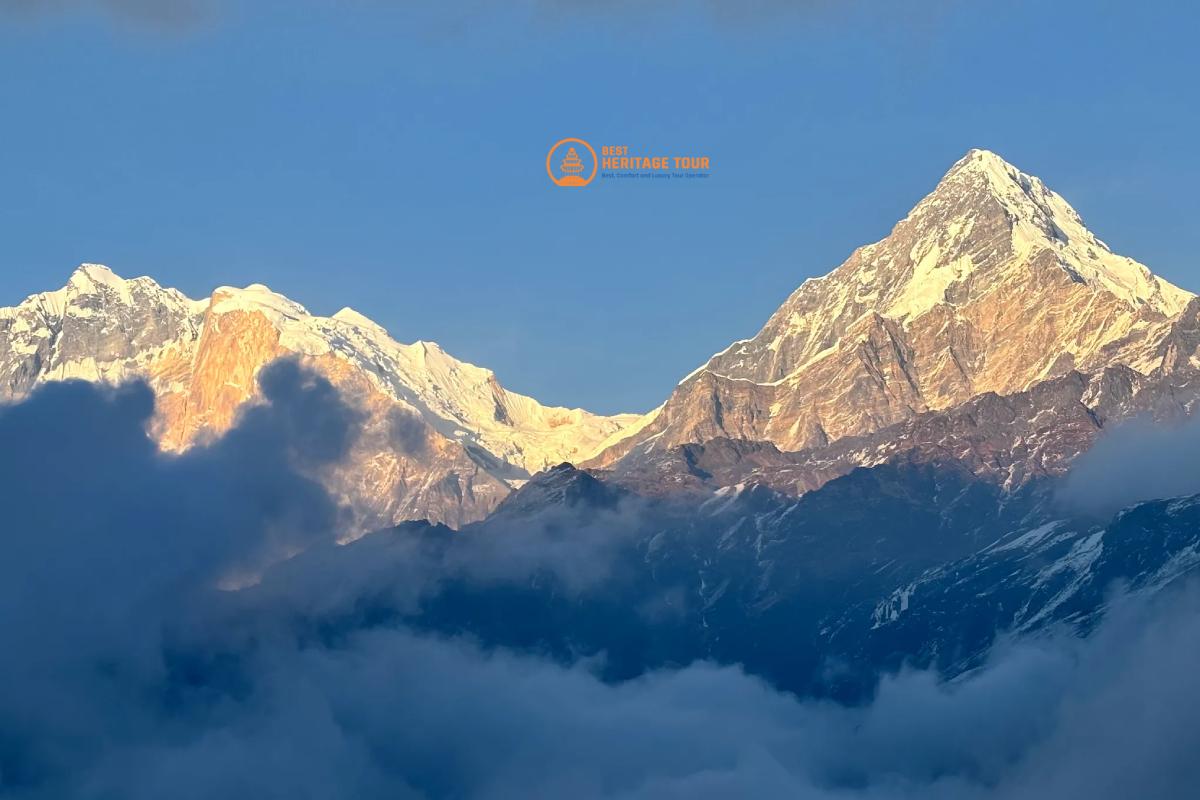
The Khopra Danda Trek rewards you with uninterrupted views of some of Nepal's highest peaks, including Dhaulagiri, Annapurna South, Nilgiri, Hiunchuli, and Machhapuchhre (Fishtail). From Khopra Ridge and Poon Hill, you'll witness breathtaking sunrises and sunsets that paint the snow-capped Himalayas in vibrant colors, making every step of the journey worthwhile.
2. Peaceful Off-the-Beaten-Path Adventure
Unlike many popular Annapurna trekking routes, the Khopra Danda Trek offers a quieter and more peaceful experience. The less-crowded trails allow you to immerse yourself in nature, enjoy tranquil mountain landscapes, and experience the authentic charm of the Himalayas away from the busy trekking crowds.
3. Visit the Sacred Khayer Lake
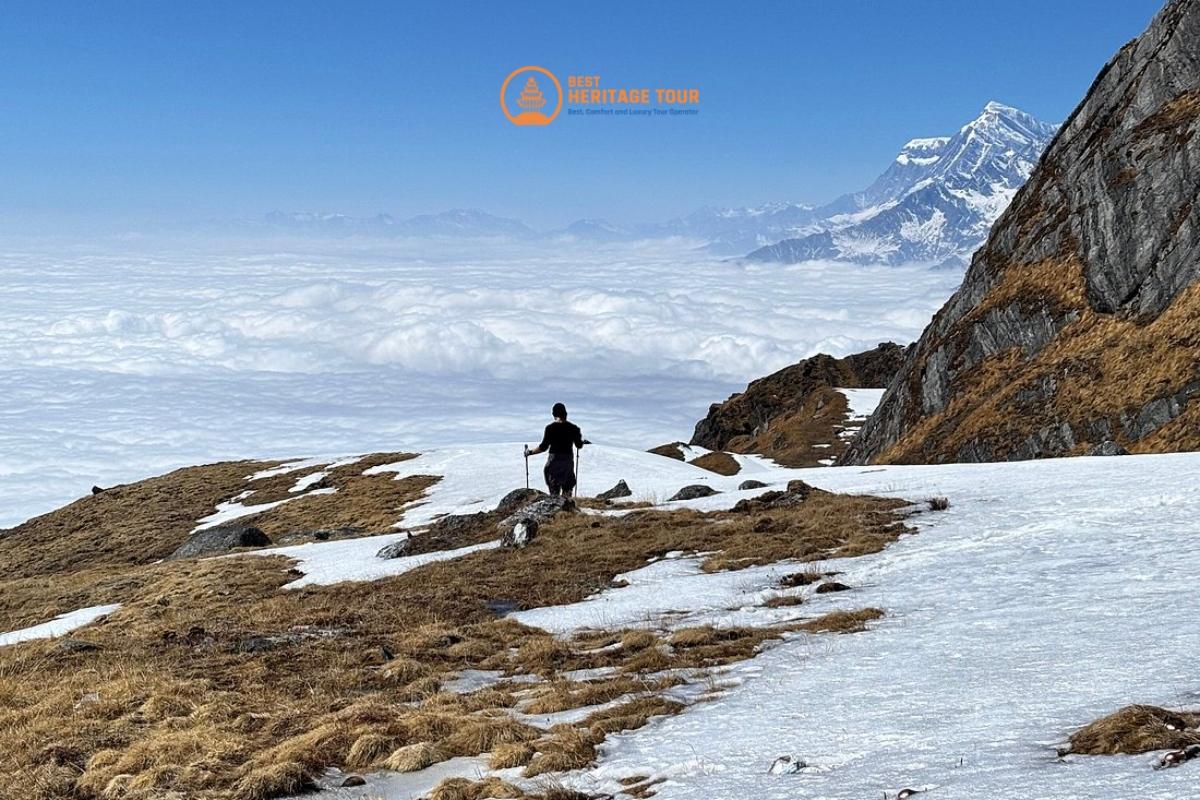
One of the biggest highlights of this trek is the hike to Khayer Lake (4,660 m), a sacred alpine lake revered by both Hindus and Buddhists. Surrounded by dramatic mountain scenery, the lake offers a rewarding experience for trekkers seeking breathtaking landscapes, spiritual significance, and one of the highest viewpoints in the Annapurna region.
4. Authentic Local Culture and Hospitality
The trek passes through traditional Gurung and Magar villages, where you'll experience genuine Himalayan hospitality and local culture. Staying in family-run teahouses, interacting with friendly locals, and learning about mountain traditions provide a cultural experience that is just as memorable as the spectacular scenery.
5. Diverse Landscapes and Natural Beauty
From terraced farmlands and rhododendron forests to alpine meadows and rugged mountain ridges, the Khopra Danda Trek showcases the incredible diversity of the Annapurna region. Each day brings changing scenery, making the journey visually rewarding for photographers, nature lovers, and adventure seekers alike.
6. Comfortable Teahouse Trekking Experience
Throughout the trek, you'll stay in traditional teahouses that provide comfortable accommodation, freshly prepared local meals, and a welcoming mountain atmosphere. Combined with the support of experienced guides from Best Heritage Tour, the trek offers an enjoyable balance of adventure, comfort, safety, and authentic Himalayan hospitality.
Are You Ready for the Khopra Danda Trek?
The Khopra Danda Trek is more than just reaching a destination - it's about embracing the journey. To truly enjoy this adventure, you don't need to be an expert mountaineer or an elite athlete. What matters most is a positive mindset, a reasonable level of fitness, and a willingness to step outside your comfort zone.
Be prepared for early mornings, long days on the trail, changing mountain weather, and simple teahouse living. In return, you'll experience peaceful trails, genuine local hospitality, breathtaking Himalayan panoramas, and unforgettable moments at Khopra Ridge, Khayer Lake, and Poon Hill.
If you're looking to escape the crowds, connect with nature, challenge yourself, and create lifelong memories in one of Nepal's most beautiful trekking regions, then you are more than ready for the Khopra Danda Trek.
Itinerary
After breakfast in Pokhara, drive to Nayapul and drive off-road to Syauli Bazar and then to Kimche. From Kimche we start our trek to the beautiful Gurung village of Ghandruk. Ghandruk is known for its Buddhist monasteries and houses made of slate and stone. Today's trek is short, and we will stay overnight in Ghandruk.
Leaving behind the terraces and Ghandruk village, we trek through rhododendron, primrose, and oak forests to Bayeli Kharka via Tadapani. There are no villages beyond Tadapani but there is a tea house at Bayeli Kharka. Continue hiking through open landscapes until you reach a small pass. From this pass, the path descends through rhododendron trees to a clearing called Bayeli Kharka where you will spend the night. Bayeli Kharka village presents a breathtaking view of Dhaulagiri (8,167 m), the seventh tallest mountain globally.
From Bayeli Kharka, descend through the forest to reach Chistibang pastures and hike for around 2 hours until you reach Khopra Danda above the tree line. On the way, you might catch a glimpse of Himalayan Tahr (goat) or Danfe (pheasant). Look across the horizon for breathtaking views of Dhaulagiri, Mt. Damphus, Mt. Tukuche, Nilgiri, Annapurna 1, Annapurna South. Khopra Ridge also offers views of the Kali Gandaki Valley, the deepest gorge in the world.
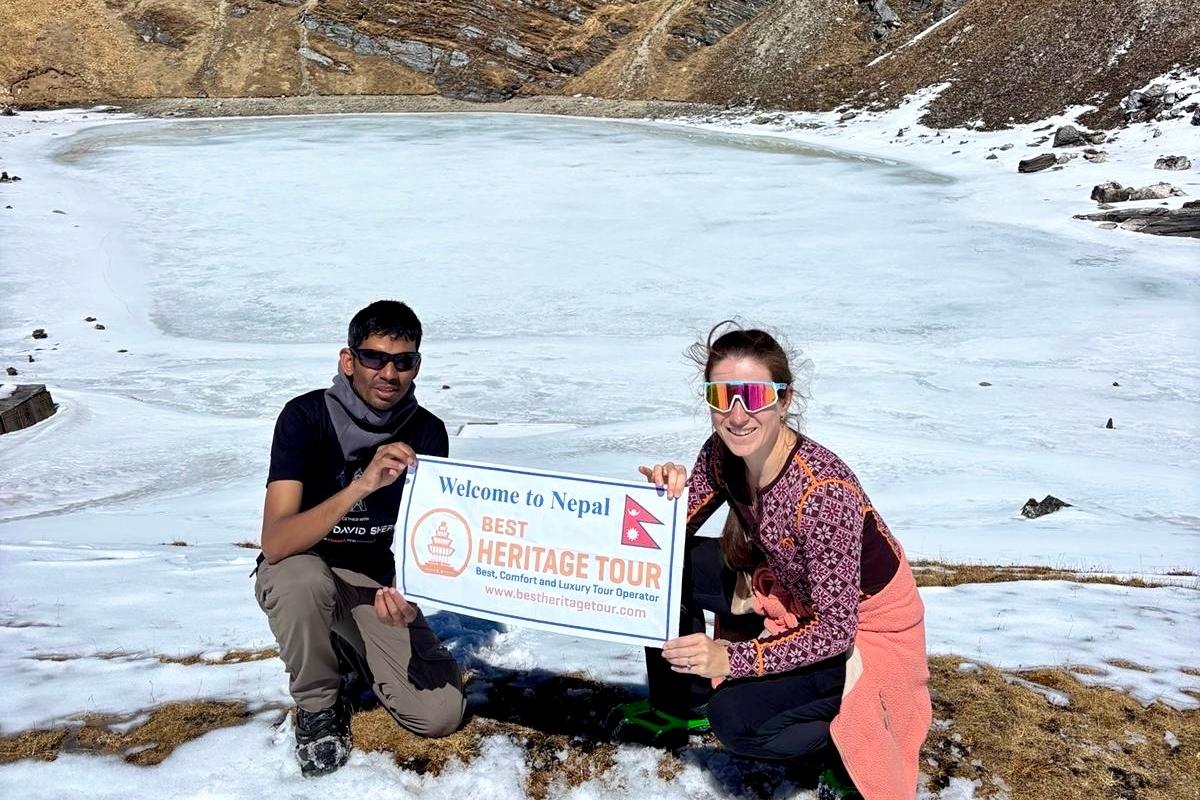
Today is another highlight of the trek, starting with a steep climb to the pristine, reflection-filled Khayer Lake. Hindus consider this lake sacred and believe that by bathing in it they can attain nirvana. After visiting the lake & soaking in the alpine views, we will return to Khopra and trek to the village of Swanta. Swanta village is known for its community cheese factory. You can explore Swanta village and taste cheese.
Today we leave the beautiful village of Swanta and head towards our destination for the day, Ghorepani. We start by descending through the village fields to a small river, crossing it on a suspension bridge, and hiking to Chittre village, where we join the classic Annapurna Circuit hiking trail. After a short climb, you will reach Ghorepani.
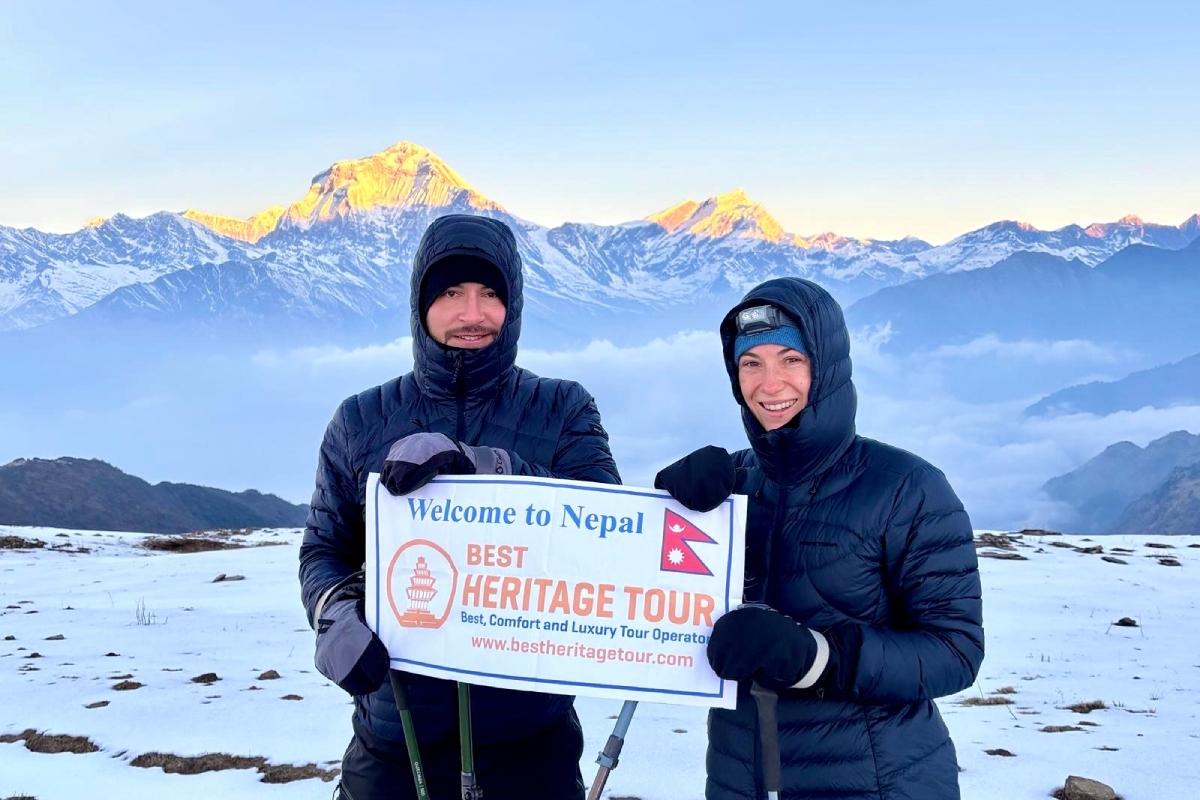
Early morning climb to Poon Hill (3,210 m) to watch the sunrise over the Annapurna and Dhaulagiri massifs, including Machhapuchhre (Fishtail). Poon Hill is also a popular spot for photographers looking to capture the best views of the Himalayas, so don't leave without taking your fill of photos. After witnessing a heavenly sunrise over the mighty mountains and rice terraces, return to Ghorepani and trek to Birethanti. From Birethanti, board a bus to return to Pokhara via Nayapul. The trek ends in Pokhara.
What is included?
- PRIVATE AIRPORT PICK-UP & DROP : Airport - Hotel transfer - Airport (Pick Up and Drop).
- MEMBER TRANSPORTATION : Private vehicle transportation from Pokhara to Kimche & Birethanti to Pokhara.
- LODGING : Best available accommodation in mountain lodges and tea houses during the trek.
- FOOD : 3 meals a day (breakfast, lunch, and dinner; including tea/coffee) during the trek, with Ef-Chlor purification tablets provided for safe drinking water.
- GUIDE : One experienced government licensed trekking guide (English speaking) during the trek.
- STAFF SALARY AND ALLOWANCE : All trekking staff wages, salary, equipment, food & clothing.
- PERMITS : All necessary paper works: Annapurna Conservation Area permit, TIMS Card & conservation entry fee.
- STAFF INSURANCE : Insurance for all involved trekking staff during the trek.
- GEAR (IF NEEDED) : Sleeping bag, down jacket, and duffle bag (to be returned after the trek).
- MEDICAL KIT : A well equipped first aid kit, including an oximeter and emergency oxygen, carried by the guide for your safety.
- IN CASE OF EMERGENCY : Assistance in rescue operations in case of emergency covered by travel insurance.
- SOUVENIR : Best Heritage Tour’s Appreciation Certificate after the successful trek & Purse, an authentic Nepali product made from hemp.
- FAREWELL DINNER : A farewell dinner with an authentic cultural program after completion of the trek.
What is not included?
- INTERNATIONAL AIRFARE : International flight airfare (from and to Kathmandu).
- NEPAL VISA FEES : You may issue the visa upon your arrival at Tribhuvan International Airport - Kathmandu or apply manually in your home country.
- ACCOMMODATION & MEALS : Accommodation and meals in Pokhara before and after the trek.
- INSURANCE POLICY : Travel insurance covering medical expenses and high-altitude evacuation is mandatory. If you do not have suitable coverage, we can also assist in arranging travel insurance for you upon your arrival in Nepal. Check Over Here
- PERSONAL EXPENSES : Clothing & gears, telephone, internet, toiletries, hot shower, laundry, soft drinks and any Alcoholic beverages.
- OPTIONAL PORTER SERVICE : USD 22 per day, including all taxes (each porter can carry up to 25 kg of luggage).
- TIPS : Tips for guide and porters.
- EXTRA : Any additional costs due to factors beyond our control, or for services not specifically mentioned in the Itinerary & Included section.
- TAXES & SERVICE CHARGE : All government taxes (13%) and service charge (10%).
Route Map
Equipment
Head
-
Sun hat or scarf
-
Winter hat, insulated hat, or wide-brimmed hat
-
Headlamp with extra battery
Face
-
Sunscreen
-
Sunglasses with UV protection
-
Face/body wipes
Hands
-
Lightweight gloves
-
Thick winter gloves
Body
-
Hiking shirt
-
Long sleeve shirt
-
Hooded rain jacket
-
Fleece jacket
-
Lightweight cotton pants
-
T-shirt (bring a light woolen one)
-
Polypropylene underwear
-
Down jacket (rentable in Kathmandu)
-
Sweater
-
Waterproof jacket and pants
Footwear
-
Hiking boots
-
Thick woolen socks (bring an extra pair of thick, lightweight socks)
Basic Equipment
-
Backpack or daypack (size depends on whether you use a luggage rack)
-
Thermos
-
Water treatment
-
Trekking poles
-
Sleeping bag (-15 degree sleeping bag is best for high altitude trekking)
Bath Amenities
-
A medium-sized drying towel
-
Toothbrush
-
Toothpaste
-
Toilet paper
-
Deodorant/dental floss
-
Biodegradable soap
-
Nail clippers
-
Small mirror
Personal accessories
-
Money
-
A watch
-
Cell phone
-
Camera
Extras
-
First aid kit
-
Extra passport photo and passport copy
-
Notebook and pen
-
Binoculars
Trip Info
Useful Information About the Khopra Danda Trek
To help you enjoy a safe, comfortable, and well-organized Khopra Danda Trek, we recommend reviewing the important trip information provided throughout this page. Understanding the itinerary, fitness requirements, packing list, weather, and altitude will help you prepare for a rewarding trekking experience in the Annapurna region.
Airport Pickup and Trip Briefing for the Khopra Danda Trek
At Best Heritage Tour, we provide complimentary airport pickup and drop-off in Kathmandu for your convenience. Upon your arrival at Tribhuvan International Airport, our representative will warmly welcome you with a traditional Khada (ceremonial scarf) and transfer you to your hotel.
Trip Briefing Session
Before your trek begins, we arrange a trip briefing at our office in Thamel, where we explain the itinerary, packing essentials, safety guidelines, and answer any questions you may have.
If you arrive with limited time or are joining the trek directly from Pokhara, our trekking guide will conduct the complete briefing in Pokhara before the trek starts, ensuring you are fully prepared for your Khopra Danda adventure.
What Type of Transportation is Used for the Khopra Danda Trek?
At Best Heritage Tour, we provide private jeep/car transportation for all road transfers included in the Khopra Danda Trek. Traveling by private jeep offers greater comfort, flexibility, and convenience compared to public transportation, allowing you to enjoy a smooth journey through the scenic foothills of the Annapurna region.
Your trek begins with a private drive from Pokhara to Kimche, passing picturesque villages, terraced farmlands, and lush hillsides. After completing the trek at Birethanti, our private jeep will take you back to Pokhara, ensuring a comfortable return after several days of trekking.
Transportation Used for the Khopra Danda Trek with Khayer Lake
|
Type of Vehicle |
Route |
Approx. Distance |
Duration |
|---|---|---|---|
|
Private Jeep/Car |
Pokhara → Kimche |
~55 km / 34 miles |
2.5-3 hours |
|
Private Jeep/Car |
Birethanti → Pokhara |
~45 km / 28 miles |
2-2.5 hours |
What is the Maximum Altitude Reached on the Khopra Danda Trek?
The maximum altitude reached during the Khopra Danda Trek is Khayer Lake at 4,660 meters (15,289 ft) above sea level. Trekkers reach the lake on Day 4 as a day hike from Khopra Danda before descending to Swanta. Although this is the highest and most challenging day of the trek, the gradual ascent throughout the itinerary helps with natural acclimatization.
What is the Altitude of Khopra Ridge?
Khopra Ridge (Khopra Danda) sits at an elevation of 3,660 meters (12,008 ft) above sea level. It is one of the most spectacular viewpoints in the Annapurna region and serves as the overnight stop before the hike to Khayer Lake.
Unlike the busier viewpoints on the classic Annapurna routes, Khopra Ridge offers a quieter trekking experience with panoramic views of Annapurna South (7,219 m), Dhaulagiri I (8,167 m), Nilgiri (7,061 m), Hiunchuli (6,441 m), and the sacred Machhapuchhre (Fishtail) (6,993 m). The ridge is also renowned for its unforgettable sunrise and sunset views over the Himalayas.
Where is Khayer Lake Located & What the Altitude of Khayer Lake?
Khayer Lake is located high above Khopra Ridge on the southern slopes of the Annapurna Conservation Area in western Nepal. The Khayer Lake lies at an altitude of 4,660 meters (15,289 ft), making it the highest point of the Khopra Danda Trek. From the lakeshore, trekkers enjoy exceptional close-up views of the Dhaulagiri and Annapurna mountain ranges, along with a pristine alpine landscape that is among the highlights of the entire trek.
Day-by-Day Maximum Altitude Reached During the Khopra Ridge Trek
|
Day |
Route |
Maximum Altitude Reached |
|---|---|---|
|
Day 1 |
Pokhara → Kimche (Drive) → Ghandruk |
1,940 m (6,364 ft) |
|
Day 2 |
Ghandruk → Bayeli Kharka |
3,450 m (11,319 ft) |
|
Day 3 |
Bayeli Kharka → Khopra Danda |
3,660 m (12,008 ft) |
|
Day 4 |
Khopra Danda → Khayer Lake → Swanta |
4,660 m (15,289 ft) |
|
Day 5 |
Swanta → Ghorepani |
2,880 m (9,449 ft) |
|
Day 6 |
Ghorepani → Poon Hill → Birethanti → Pokhara |
3,210 m (10,531 ft) |
What Is the Total Distance Covered on the Khopra Danda Trek?
The Khopra Danda Trek covers approximately 150 km (93 miles) in total, including both road travel and trekking. This scenic journey combines comfortable private jeep transfers with an unforgettable trek through traditional Gurung villages, peaceful rhododendron forests, alpine meadows, and the breathtaking viewpoints of Khopra Ridge, Khayer Lake, and Poon Hill.
At Best Heritage Tour, our carefully designed 6-day itinerary offers a perfect balance of adventure, natural beauty, and cultural experiences while allowing trekkers to explore one of the quieter trails in the Annapurna region.
What Is the Total Driving Distance on the Khopra Danda Trek with Khayer Lake?
The total driving distance is approximately 100 km (62 miles).
Your journey begins with a private jeep/car drive from Pokhara to Kimche, covering around 55 km (34 miles). After completing the trek at Birethanti, you will return to Pokhara by private jeep, traveling approximately 45 km (28 miles) through the scenic hills of the Annapurna region.
What Is the Total Trekking Distance on the Khopra Danda Trek?
The total trekking distance is approximately 50 km (31 miles).
Over six days, the trail passes through charming villages, dense rhododendron forests, open alpine pastures, and high ridges with spectacular Himalayan views. Major highlights include Ghandruk, Khopra Ridge, the sacred Khayer Lake, Swanta Village, and the famous sunrise viewpoint at Poon Hill.
Day-by-Day Distance & Walking Time on the Khopra Danda Trek
|
Day |
Specific Route Segment |
Distance Covered |
Duration |
|---|---|---|---|
|
Day 1 |
Pokhara → Kimche (Drive) → |
~55 km / 34 miles (Drive) |
2.5-3 Hours Drive |
|
Day 2 |
Ghandruk → Bayeli Kharka |
~12 km / 7.5 miles |
6-7 Hours Trek |
|
Day 3 |
Bayeli Kharka → Khopra Danda |
~5 km / 3.1 miles |
3-4 Hours Trek |
|
Day 4 |
Khopra Danda → Khayer Lake → Swanta |
~18 km / 11.2 miles |
8-9 Hours Trek |
|
Day 5 |
Swanta → Ghorepani |
~11 km / 6.8 miles |
5-6 Hours Trek |
|
Day 6 |
Ghorepani → Poon Hill → |
~13 km / 8 miles (Trek) |
5-6 Hours Trek |
Note: The distances and trekking durations above are approximate and may vary depending on trail conditions, weather, and the pace of the group. Walking times include short breaks for rest, photography, and meals.
What Type of Accommodation Is Available on the Khopra Danda Trek?
Accommodation on the Khopra Danda Trek is simple, comfortable, and well-suited to the mountain environment. During the trek, you will stay in locally operated teahouses, where you can experience warm Himalayan hospitality and traditional local culture.
Accommodation in Pokhara
Our standard Khopra Danda Trek package does not include accommodation in Pokhara before or after the trek. However, we are happy to assist you in booking hotels that match your budget, from comfortable budget stays to luxury accommodations.
Accommodation During the Khopra Danda Trek
During the trek, accommodation is provided in traditional teahouses with basic but comfortable facilities.
-
1 Night in Ghandruk: Mountain lodge with a private room and attached bathroom
-
1 Night in Bayeli Kharka: Traditional teahouse with a private room and shared bathroom
-
1 Night in Khopra Danda: Traditional teahouse with a private room and shared bathroom
-
1 Night in Swanta: Traditional teahouse with a private room and shared bathroom
-
1 Night in Ghorepani: Mountain lodge with a private room and attached bathroom
The rooms are simple yet comfortable, providing a warm place to rest after each day's trek. Blankets are generally available, but we recommend carrying a sleeping bag during colder seasons for extra warmth.
Facilities in Teahouses Along the Khopra Ridge Trek
|
Major Stop |
Toilet |
Hot Shower |
Wi-Fi |
Charging |
Mobile Network |
|---|---|---|---|---|---|
|
Ghandruk |
Attached |
Generally Free |
Generally Free |
Generally Free |
Available Both |
|
Bayeli Kharka |
Sharing |
Cost |
Cost |
Cost NPR 100-200 per device |
NTC Works Best |
|
Khopra Danda |
Sharing |
Cost |
Cost |
Cost NPR 200-300 per device |
NTC Works Best |
|
Swanta |
Sharing |
Cost |
Cost |
Cost NPR 100-100 per device |
Available Both |
|
Ghorepani |
Attached |
Cost |
Cost |
Cost NPR 200-300 per device |
Available Both |
Note: Facilities and prices may vary slightly depending on the season, weather conditions, and individual teahouse. Wi-Fi and mobile network coverage become less reliable at higher elevations, particularly around Bayeli Kharka and Khopra Danda.
Food and Drinks on the Khopra Danda Trek
During the Khopra Danda Trek, you'll enjoy freshly prepared meals at local teahouses along the trail. The food is simple, nutritious, and provides the energy needed for trekking through the Annapurna region.
Our standard package includes Breakfast, Lunch, and Dinner, along with 2–3 cups of tea or coffee per day.
Meals are served as follows:
-
Breakfast: At the teahouse where you stay overnight.
-
Lunch: At a local teahouse along the day's trekking route.
-
Dinner: At the teahouse where you spend the night.
Ordering and Meal Policy
Trekkers may choose one main dish per meal from the available teahouse menu. Any additional meals, snacks, desserts, or beverages beyond the package are payable directly by the trekker.
Available Menu Options on the Khopra Danda Trek
|
Meal |
Common Teahouse Menu |
|---|---|
|
Breakfast |
Porridge, eggs, pancakes, Tibetan bread, toast, chapati, muesli, oatmeal, tea & coffee |
|
Lunch |
Dal Bhat, fried rice, chowmein, momo, pasta, thukpa, noodles, potato dishes |
|
Dinner |
Dal Bhat, vegetable curry with rice, soups, noodles, fried rice, pasta, Tibetan bread |
Dal Bhat - The Best Meal for Trekkers
Dal Bhat is the most popular meal on the Khopra Danda Trek. This traditional Nepali meal consists of rice, lentil soup, seasonal vegetables, and pickles, providing the carbohydrates and nutrients needed for long trekking days. Since it is unlimited at most teahouses, it is an excellent choice for maintaining energy throughout the trek.
Drinks and Hydration on the Trail
The following beverages are available at most teahouses:
-
Tea (milk tea, black tea, ginger tea, lemon tea)
-
Coffee
-
Hot lemon and soups
-
Boiled drinking water
-
Bottled water and soft drinks
We recommend drinking plenty of water throughout the trek, especially on the hike to Khayer Lake (4,660 m), to stay hydrated and reduce the risk of altitude sickness.
Is Vegan and Vegetarian Food Available on the Khopra Danda Trek?
Yes. Most teahouses along the Khopra Danda Trek serve vegetarian and vegan-friendly meals, including Dal Bhat, vegetable fried rice, noodles, soups, potatoes, and chapati.
If you have any food allergies or special dietary requirements, please inform Best Heritage Tour before your trek so we can coordinate with our guides and the teahouses whenever possible.
How Are the Drinking Water Facilities on the Khopra Danda Trek?
Safe drinking water is available throughout the Khopra Danda Trek at teahouses in Ghandruk, Bayeli Kharka, Khopra Danda, Swanta, and Ghorepani. We recommend drinking boiled or purified water instead of untreated tap water to stay healthy during the trek.
At Best Heritage Tour, we encourage trekkers to carry a reusable water bottle and refill it with boiled water or use water purification tablets or a portable filter to reduce plastic waste.
How Much Does Hot Drinking Water Cost on the Khopra Danda Trek?
Hot drinking water is available at all major teahouses, with prices increasing at higher elevations.
|
Location |
Hot Water Cost (Per 250 ml Cup) |
|---|---|
|
Ghandruk |
NPR 50-80 |
|
Bayeli Kharka |
NPR 100-150 |
|
Khopra Danda |
NPR 150-200 |
|
Swanta |
NPR 100-150 |
|
Ghorepani |
NPR 80-100 |
How Much Does Bottled Mineral Water Cost on the Khopra Danda Trek?
Bottled mineral water is available at most teahouses, although prices increase with altitude.
|
Location |
Bottled Water Cost (1 Liter) |
|---|---|
|
Ghandruk |
NPR 80-100 |
|
Bayeli Kharka |
NPR 150-200 |
|
Khopra Danda |
NPR 200-300 |
|
Swanta |
NPR 150-200 |
|
Ghorepani |
NPR 150-200 |
Note: To help protect the environment, we strongly recommend using a reusable water bottle and refilling it with boiled or purified water instead of purchasing single-use plastic bottles. This supports sustainable trekking in the Annapurna Conservation Area.
When is the Best Time for the Khopra Danda Trek?
The Khopra Danda Trek can be completed throughout the year, but the experience varies with the seasons. Each season offers unique landscapes, weather conditions, and mountain views. At Best Heritage Tour, we recommend choosing your trekking season based on the type of experience you are looking for.
Spring (March to May)
Spring is one of the best times for the Khopra Danda Trek. The trails come alive with blooming rhododendron forests, pleasant temperatures, and crystal-clear mountain views. It is an excellent season for trekking to Khopra Ridge, Khayer Lake, and Poon Hill.
Pros:
-
Rhododendron forests in full bloom
-
Excellent mountain views
-
Mild temperatures and stable weather
-
Perfect for photography
Cons:
-
More trekkers on popular sections near Poon Hill
-
Teahouses may be busier during peak season
Summer/Monsoon (June to August)
Summer coincides with Nepal's monsoon season. While the Khopra trail receives lush greenery and fewer visitors, rain can make trails muddy and cloud cover may limit mountain views. However, the rain-shadow effect is less noticeable here than in Upper Mustang or Manang.
Pros:
-
Lush green landscapes
-
Wildflowers and waterfalls at their best
-
Peaceful trails with fewer trekkers
Cons:
-
Frequent rainfall and slippery trails
-
Limited mountain visibility
-
Leeches may be present in forested areas
Autumn (September to November)
Autumn is the most popular and highly recommended season for the Khopra Danda Trek. The weather is dry, skies are clear, and panoramic Himalayan views are at their finest. This season also coincides with Nepal's major festivals, adding cultural richness to the journey.
Pros:
-
Crystal-clear mountain views
-
Stable weather and comfortable temperatures
-
Ideal trail conditions
-
Opportunity to experience local festivals
Cons:
-
Peak trekking season with busier teahouses
-
Advance booking is recommended
Winter (December to February)
Winter offers a peaceful trekking experience with fewer visitors and spectacular snow-covered mountain scenery. While Khopra Ridge remains accessible most of the season, heavy snowfall can sometimes make the hike to Khayer Lake difficult or temporarily inaccessible.
Pros:
-
Beautiful snowy landscapes
-
Quiet trails and peaceful teahouses
-
Stunning winter mountain views
Cons:
-
Cold mornings and nights
-
Possible snowfall at higher elevations
-
Khayer Lake hike may not be possible after heavy snow
What is the Recommended Season for the Khopra Ridge Trek?
At Best Heritage Tour, we highly recommend trekking during spring (March to May) and autumn (September to November). These seasons provide the best combination of stable weather, comfortable temperatures, clear Himalayan panoramas, and ideal trekking conditions.
If your priority is colorful rhododendron forests, choose spring. If you want the clearest mountain views and the most reliable weather, autumn is the perfect time for the Khopra Danda Trek. Winter is suitable for experienced trekkers seeking solitude, while the monsoon season is best for those who don't mind occasional rain in exchange for quieter trails and lush scenery.
Documents Required for the Khopra Danda Trek
For the Khopra Ridge Trek, trekkers are required to carry a few essential documents to ensure a smooth, legal, and hassle-free trekking experience in the Annapurna region.
Nepal Visa for Khopra Danda Trek
All foreign nationals (except Indian citizens) must obtain a Nepal visa to enter the country. The visa can be easily acquired upon arrival at Tribhuvan International Airport in Kathmandu or at designated land entry points.
Key Information:
-
Duration: 15, 30, or 90 days (15 days is generally sufficient for tourism activities)
-
Fees: 15 days - USD 30 | 30 days - USD 50 | 90 days - USD 125
-
Requirements: Valid passport (minimum 6 months validity), completed visa form, passport-size photo, and visa fee payment (cash in USD/EUR/GBP/NPR)
Some nationalities may not be eligible for visa on arrival and are required to obtain a visa in advance through the Nepalese Embassy or Consulate in their home country.
Travel Insurance for Khopra Danda with Khayer Lake Trek
Travel insurance is mandatory for the Khopra Danda Trek. Due to the high-altitude nature of the trek, insurance must cover trekking activities and emergency situations.
Your insurance should include:
-
High-altitude trekking coverage (up to 4,800 m)
-
Emergency helicopter evacuation
-
Medical treatment and hospitalization
-
Trip cancellation or interruption coverage
We require a copy of your insurance policy to issue a permit.
What are the Permits Required for the Khopra Danda Trek?
Two essential permits are required for the Khopra Ridge Trek, as it lies within the Annapurna Conservation Area.
-
ACAP Permit (Annapurna Conservation Area Permit)
-
TIMS Card (Trekkers’ Information Management System)
We handles both ACAP and TIMS permits on behalf of our guests, ensuring a smooth and worry-free trekking process.
How Difficult is the Khopra Danda Trek?
The Khopra Danda Trek is considered a moderately difficult trek. It is suitable for trekkers with a reasonable level of fitness and some hiking experience. The trail does not require any technical climbing, but it involves several long walking days, continuous ascents and descents, and trekking at high altitudes.
On average, you will walk 5-8 hours per day through forests, stone staircases, alpine meadows, and mountain ridges. The most challenging day is the hike from Khopra Danda to Khayer Lake (4,660 m / 15,289 ft), where the higher altitude and longer trekking hours make the day more demanding.
What Makes the Khopra Danda Trek with Khaer Lake Difficult?
The main challenges of the trek include:
-
High Altitude: The trek reaches Khayer Lake, where the thinner air can make walking more strenuous.
-
Long Trekking Days: Expect to walk 5-8 hours daily, with the Khayer Lake excursion being the longest day.
-
Steep Ascents and Descents: Some sections, particularly between Ghandruk, Bayeli Kharka, Khopra Danda, and Swanta, involve sustained uphill and downhill trekking.
-
Remote Trails: Compared to the classic Annapurna routes, the Khopra trail is quieter with fewer facilities between villages.
-
Changing Mountain Weather: Weather at higher elevations can change quickly, especially near Khopra Ridge and Khayer Lake.
With proper preparation, a steady pace, and the support of our professional guides, the Khopra Danda Trek is a rewarding adventure for both first-time Himalayan trekkers and experienced hikers seeking a less-crowded route in the Annapurna region.
Is the Khopra Danda Trek Suitable for Beginners?
Yes, the Khopra Danda Trek is suitable for beginners who have a good level of physical fitness and are prepared for several days of hiking in the mountains. While the trek reaches a high altitude of 4,660 meters (15,289 ft) at Khayer Lake, the itinerary is designed with a gradual ascent, helping trekkers acclimatize naturally along the way.
Is the Khopra Ridge Trek Beginner-Friendly?
Yes. The Khopra Danda Trek is considered beginner-friendly because:
-
No technical climbing or mountaineering skills are required.
-
The itinerary follows a gradual ascent for better acclimatization.
-
Comfortable teahouse accommodation is available throughout the route.
-
Well-established trails are easy to follow with an experienced guide.
-
Private jeep transfers reduce long road journeys and make the trip more comfortable.
Can Beginners Complete the Khopra Danda Trek?
Absolutely. Most beginners with reasonable fitness, a positive attitude, and proper preparation can successfully complete the trek. Regular walking, light cardio, and leg-strengthening exercises for 4-6 weeks before the trip can make the experience much easier.
The most demanding part of the trek is the hike to Khayer Lake (4,660 m) due to its altitude and longer walking hours. However, with a steady pace, proper hydration, and the guidance of our experienced team, beginners can safely enjoy one of the Annapurna region's most rewarding off-the-beaten-path trekking experiences.
What Are the Essential Gears to Pack for the Khopra Danda Trek?
Packing the right gear is important for a safe and comfortable Khopra Danda Trek, especially as the trail reaches Khayer Lake (4,660 m / 15,289 ft), where temperatures can drop below freezing and weather conditions can change quickly. You'll also encounter a variety of terrain, including stone staircases, forest trails, alpine meadows, and high mountain ridges.
We recommend packing layered clothing, a warm down jacket, waterproof jacket and pants, sturdy trekking boots, warm gloves, a woolen hat, sunglasses, trekking poles, a reusable water bottle or hydration bladder, a headlamp, sunscreen, lip balm, personal toiletries, and any necessary medications. During the colder months, a four-season sleeping bag is also highly recommended for added comfort.
For a complete packing checklist, please refer to our detailed Khopra Danda Trek Packing List guide.
Physical Fitness Required for the Khopra Danda Trek
The Khopra Danda Trek requires a moderate level of physical fitness. Trekkers should be comfortable walking 5-8 hours a day over varied terrain, including steep uphill and downhill sections, stone staircases, and high-altitude trails. While no technical climbing skills are required, good endurance and stamina will make the trek more enjoyable.
Whether you are a beginner or an experienced trekker, being physically prepared will help you complete the trek safely and comfortably.
How to Prepare Physically for the Khopra Danda Trek with Khayer Lake?
We recommend starting your preparation 4-6 weeks before your trek. Here are a few simple ways to improve your fitness:
-
Go for regular walks or hikes (3-5 times a week), gradually increasing distance and elevation.
-
Build cardiovascular endurance through jogging, cycling, swimming, or stair climbing.
-
Strengthen your legs and core with exercises such as squats, lunges, step-ups, and planks.
-
Practice hiking with a backpack to get used to carrying your daypack.
-
Stay active and hydrated in the weeks leading up to the trek.
At Best Heritage Tour, we recommend arriving with a good fitness level so you can fully enjoy the spectacular mountain views, peaceful trails, and rewarding experience of the Khopra Danda Trek.
Health & Safety on the Khopra Danda Trek
At Best Heritage Tour, your health and safety are our highest priorities. Throughout the Khopra Danda Trek, you will be accompanied by an experienced, government-licensed trekking guide trained in basic first aid and high-altitude safety. Our guides are well-equipped to recognize the early symptoms of Acute Mountain Sickness (AMS) and carry a first-aid kit and a pulse oximeter to monitor your oxygen saturation, especially before hiking to Khayer Lake (4,660 m / 15,289 ft), the highest point of the trek.
Our itinerary is designed with a gradual ascent to support natural acclimatization, helping you enjoy a safe and rewarding trekking experience in the Annapurna region.
How Safe is the Khopra Ridge Trek?
The Khopra Danda Trek is considered a safe and well-established trekking route. The trails are clearly marked, and teahouses are available throughout the journey. Although the route is quieter than many popular Annapurna treks, it is regularly used by trekkers during the main trekking seasons.
With the support of our experienced guides, proper preparation, and responsible trekking practices, most trekkers complete the journey safely and comfortably.
Is There Any Risk of AMS on the Khopra Danda Trek?
Yes. Since the trek reaches Khayer Lake at 4,660 meters (15,289 ft), there is a moderate risk of Acute Mountain Sickness (AMS). Some trekkers may experience mild symptoms such as headache, dizziness, fatigue, nausea, or loss of appetite after gaining altitude.
Our guides closely monitor every trekker's condition and will take appropriate action if any symptoms appear.
How to Prevent AMS on the Khopra Danda Trek?
You can reduce the risk of altitude sickness by following these simple precautions:
-
Drink plenty of water and stay well hydrated.
-
Walk at a steady, comfortable pace without rushing.
-
Eat nutritious meals and maintain your energy levels.
-
Avoid alcohol and smoking at higher elevations.
-
Inform your guide immediately if you experience symptoms of AMS.
-
Follow your guide's instructions and allow your body time to acclimatize.
At Best Heritage Tour, your safety always comes first. Our experienced team continuously monitors your health throughout the trek and is prepared to respond quickly should any altitude-related concerns arise.
Porter and Luggage Management for the Khopra Danda Trek
At Best Heritage Tour, we strive to make your Khopra Danda Trek comfortable and hassle-free by offering flexible porter and luggage management services. With a porter carrying your main trekking bag, you can enjoy the scenic trails to Khopra Ridge, Khayer Lake, and Poon Hill with greater ease.
Porter Service for the Khopra Danda Trek
Our standard trekking package does not include porter service by default. However, porter service is available upon request for trekkers who prefer to travel with a lighter daypack.
-
Porter service cost: USD 22 per day
-
Maximum carrying capacity: Up to 25 kg per porter
-
Sharing option: One porter can be shared between one or two trekkers
-
Duffle bag: We provide a complimentary duffle bag to safely carry your trekking gear
Hiring a porter is highly recommended, especially for the longer trekking days, where carrying less weight makes the journey more comfortable.
Luggage Storage
We offer free luggage storage at our office in Thamel, Kathmandu, where you can safely leave your suitcase and other non-essential belongings before your trek.
If you have additional luggage while staying in Pokhara, most hotels also provide secure luggage storage facilities. We recommend confirming this service directly with your hotel before starting the trek.
Khopra Danda Trek Cost for 2026 & 2027
The Khopra Danda Trek cost for 2026 and 2027 depends on factors such as the itinerary, transportation, accommodation, group size, and the services included in the package. At Best Heritage Tour, we offer this 6-day trek with professional local guides, private jeep transportation, comfortable teahouse accommodation, and quality service at a competitive price of USD 550 (+tax) per person.
We also offer attractive group discounts for couples, families, friends, and private group departures.
Group Price for the Khopra Danda Trek
|
Number of Trekkers |
Price Per Person (USD) |
|---|---|
|
1 Pax (Solo Trek) |
USD 550 |
|
2-4 Pax |
USD 450 |
|
5-6 Pax |
USD 420 |
|
7-10 Pax |
USD 390 |
|
11-16 Pax |
USD 370 |
|
17-29 Pax |
USD 350 |
Note:
-
Extra 13% Government Tax and 10% Service Charge are not included in the above prices
-
Porter cost is not included in the package price
For larger groups or customized itineraries, we can further tailor the Khopra Ridge Trek cost for 2026 & 2027 based on specific requirements and service preferences.
How Much Extra Money Should You Carry for Personal Expenses on the Khopra Danda Trek?
While our Khopra Danda Trek package covers your accommodation, meals during the trek, permits, guide, and major trekking logistics, we recommend carrying around USD 120-180 (approximately NPR 16,000-24,000) for personal and optional expenses. The exact amount depends on your spending habits and the additional services you use along the trail.
Below are the most common personal expenses during the trek:
-
Hot Shower: Usually USD 2-4 per shower at teahouses.
-
Wi-Fi / Internet: Approximately USD 2-4, depending on the location.
-
Phone & Device Charging: Around USD 1-3 per device at higher-altitude villages.
-
Boiled Drinking Water: Typically USD 1-3 per refill, with prices increasing at higher elevations.
-
Bottled Water, Soft Drinks & Snacks: Generally USD 2-5 per item, depending on the village.
-
Laundry Service: Available only in a few lower villages and usually charged separately.
-
Personal Shopping & Souvenirs: Local handicrafts, woolen products, snacks, and souvenirs can be purchased in villages such as Ghandruk and Ghorepani.
-
Tips for Guides & Porters: Optional but greatly appreciated for their dedication and service throughout the trek.
We recommend exchanging your currency into Nepalese Rupees (NPR) in Pokhara or Kathmandu before the trek begins. Carrying enough cash ensures you can comfortably pay for personal expenses and optional services, as banking facilities and digital payment options are very limited along the Khopra Danda Trek.
How Much Should You Tip Your Guide & Porter During the Khopra Danda Trek?
Tipping is a respected tradition in Nepal's trekking industry and is a thoughtful way to thank your trekking crew for their hard work and dedication. While tipping is completely optional, it is always appreciated by the guides and porters who help make your Khopra Danda Trek safe, comfortable, and memorable.
As a general guideline, many trekkers choose to tip around 10-15% of the total trek cost, depending on the quality of service and their overall satisfaction.
How Much Should You Tip the Trekking Guide During the Khopra Danda Trek?
Your trekking guide is responsible for leading the trail, ensuring your safety, monitoring your health at higher elevations, arranging accommodations and meals, and sharing insights into the local culture, villages, and Himalayan landscapes throughout the journey.
Suggested Guide Tip:
-
USD 10-15 per day per group
For this 6-day Khopra Danda Trek, many trekkers tip approximately USD 60-90+ per group, depending on the level of service and their overall experience.
How Much Should You Tip the Porter During the Khopra Danda Trek?
If you hire a porter, they will carry your trekking luggage, allowing you to enjoy the trek with only a lightweight daypack. Their support is especially valuable during the longer uphill sections to Bayeli Kharka, Khopra Danda, and the challenging hike to Khayer Lake.
Suggested Porter Tip:
-
USD 7-10 per day per porter
For this 6-day trek, a common tip is approximately USD 40-60+ per porter, depending on the workload and your satisfaction with their service.
Group Tipping Practice
If you are trekking with friends, family, or as part of a group, it is common for everyone to contribute toward a shared tip. The combined amount is usually presented to the guide and porter at the end of the trek as a gesture of appreciation for their professionalism, support, and commitment throughout your Khopra Danda Trek.
Booking & Payment for the Khopra Danda Trek
Booking your Khopra Danda Trek with Best Heritage Tour is simple, secure, and well-organized. To confirm your trip, a 20% deposit of the total trip cost is required at the time of booking, while the remaining balance must be settled before the trek departure in Kathmandu or Pokhara. We accept cash, bank transfer, or card. Please note that bank transfers and card payments incur a 4% processing fee; must be covered by the trekker. All booking and cancellation terms are clearly explained by Best Heritage Tour staff during the booking process and can also be reviewed on our website.
Bank transfer:
-
Account Name: Best Heritage Tour And Treks Pvt. Ltd.
-
Account Number: 13201040254106
-
Bank Name: Nepal Investment Mega Bank Ltd.
-
Address: Thamel, Kathmandu, Nepal
-
SWIFT Code: NIBLNPKT
-
Bank Transfer Link: www.bestheritagetour.com/payment
Once we receive the deposit, we will issue the official invoice and booking conformation right away. If you need any clarification, we are happy to answer your questions or provide additional details you may require.
Last-Minute Booking for the Khopra Danda Trek
For travelers planning on short notice, Best Heritage Tour accepts last-minute bookings up to 24 hours before departure. In such cases, full payment (100% of the trip cost) is required at the time of booking. Trekkers should be aware that accommodation, logistics, and services may be limited, and the company cannot be held responsible for any compromises arising from late arrangements.
Flexible Trip Extension
If you want to stay in Nepal for a few days after completing the Khopra Danda trek, we can arrange a sightseeing tour of the Kathmandu Valley and the surrounding areas and also other day tour in Pokhara. There are other options too. You can take part in a jungle safari in Chitwan, Paragliding, Rafting, canyoning, another trek, etc.
Our team will help customize your itinerary to match your interests, schedule, and fitness level, ensuring a seamless and memorable extension to your adventure.
Is It Possible to Combine the Khopra Danda Trek with Another Trek?
Yes. The Khopra Danda Trek can easily be combined with other trekking routes in the Annapurna region if you have extra time. One of the best and most popular combinations is the Mardi Himal Trek.
Combine the Khopra Danda Trek with the Mardi Himal Trek
Combining these two treks lets you experience the peaceful trails of Khopra Ridge and the spectacular ridgeline of Mardi Himal, offering more diverse landscapes, stunning Himalayan views, and a longer adventure. At Best Heritage Tour, we can customize this combined itinerary to suit your schedule and preferences.
Sustainable and Responsible Tourism on the Khopra Danda Trek
The Khopra Danda Trek passes through the pristine landscapes of the Annapurna Conservation Area, making responsible travel essential. At Best Heritage Tour, we encourage trekkers to minimize plastic waste, carry a reusable water bottle, respect local culture and religious sites, stay on marked trails, and support local teahouses and communities.
We proudly follow the Leave No Trace principles on all our treks and promote eco-friendly tourism. As part of our commitment to sustainability, we also plant a tree in the name of our travelers (upon request) to help preserve Nepal's Himalayan environment for future generations.
Review
P
Unforgettable Experience
Best heritage tour one of my remarkable travel arranger in Nepal, I had 6 days Khopra Danda Trek and I asked bimal to manage time within hour he brings very nice itinerary with...
View DetailY
Journey through Nature and Culture
Khopra Danda Trek with the best Heritage Tour was an unforgettable journey and offers the right mix of adventure, peace and cultural immersion. Our guide, Wangchu Sherpa and...
View DetailC
A hidden gem in Annapurna Region
I recently did the Khopra Danda Trek, and it was actually an unforgettable journey. It offered a perfect balance between adventure, peace and cultural immersion. Unlike the busy...
View DetailD
perfect trek for us
We couple wanted a trek that would give us the authentic Himalayan experience without too much difficulty, and the Khopra Danda trek was perfect. We could see the sunrise and...
View DetailY
Lost in Beauty of Khopra Danda
The sunrise at Khopra Ridge was the most unreal view I had ever witnessed. When first light reached the peaks of Dhaulagiri and Annapurna South, they were golden against a deep...
View DetailFAQ's
The Khopra Dada Trek is a scenic trekking route in the Annapurna region of Nepal, offering breathtaking views of the Annapurna mountain range and an opportunity to experience local culture
The Khopra Dada Trek offers a more isolated and serene experience compared to the heavily trafficked routes like the Annapurna Base Camp or Everest Base Camp. This journey diverts from the primary trekking routes, enabling you to fully engage with the serene rural landscapes of Nepal and foster meaningful connections with the local Gurung and Magar communities. Khopra Dada’s vantage point provides stunning 360-degree views of the Annapurna and Dhaulagiri ranges, making it a hidden gem for trekkers seeking solitude and spectacular panoramas.
The total trekking distance is approximately 55-60 kilometers (34-37 miles), depending on the exact route taken. The daily hikes range from 5 to 7 hours, covering distances of about 8 to 12 kilometers per day.
Some of the trek's highlights include:
- The mesmerizing sunrise and sunset views from Khopra Ridge, offering a clear sight of peaks like Annapurna South, Dhaulagiri, and Nilgiri.
- Khopra Lake (Kaire Lake), a sacred lake located at an altitude of 4,500 meters, considered holy by local Hindus.
- The cultural richness of Ghandruk village, known for its stone houses and vibrant Gurung culture.
- A mix of landscapes, from rhododendron forests to terraced farmland, alpine meadows, and small villages.
- The serene Khayer Lake, an optional detour, provides a spiritual experience and a tranquil location for contemplation.
The best seasons for the Khopra Dada Trek are spring (March to May) and autumn (September to November) when the weather is stable and the views are clear.
This trek is considered moderate. The trail involves both gradual and steep ascents, but the daily walking distances are manageable for most trekkers in reasonable shape.
Indeed, the path traverses the Annapurna Conservation Area, which hosts a diverse array of wildlife. Trekkers might spot musk deer, blue sheep, and if lucky, even the elusive red panda. The forests are rich in birdlife, making it a delight for birdwatchers as well.
Trekkers are required to obtain two permits: the Annapurna Conservation Area Permit (ACAP) and the Trekkers’ Information Management System (TIMS) card. You can get permits in Kathmandu or Pokhara.
Weather conditions may vary, with pleasant daytime temperatures typically between 15°C and 20°C (59°F to 68°F) observed during the spring and autumn months. Nights can be cold, dropping to around 0°C (32°F) or below at higher altitudes.
Rain is more common during the monsoon season (June to August). During spring and autumn, the weather is generally dry.
While trekking, temperatures may fall below freezing at higher altitudes, especially during nighttime. In winter months, it can reach as low as -10°C (14°F) in the mornings and nights, but the daytime temperatures remain moderate, especially in lower areas.
Autumn (September-November) and spring (March-May) provide the clearest skies for mountain views. The monsoon season, occurring from June to August, is characterized by overcast skies, diminished visibility, and slippery trails.
You can arrive at Tribhuvan International Airport in Kathmandu, where a variety of international airlines operate flights to Nepal.
Yes, most visitors require a visa, which can be obtained upon arrival at the airport or in advance through a Nepali embassy or consulate.
The package generally encompasses accommodation, meals throughout the trek, a guide, and the necessary permits.
Yes, additional costs may include tips for guides and porters, drinks, snacks, and personal expenses like souvenirs or entry fees for specific attractions.
In Nepal, it is customary to provide tips, which are appreciated by the trekking staff. It’s common to tip around 10-15% of the total trip cost. For example, you could tip $5–$10 per day to your guide and $3–$6 per day to your porter.
Yes, the Khopra Dada Trek is suitable for trekkers with basic fitness levels. However, previous trekking experience can be helpful.
Children may join the trek under the guidance of their parents. It's essential to consider their physical ability and comfort with trekking.
Yes, solo trekking is possible, though it’s always recommended to have a guide for safety reasons, especially in remote areas like Khopra Dada. Guides also enhance the cultural experience and manage logistics.
The accommodations along the Khopra Dada Trek are typically tea houses or lodges, which are basic yet comfortable guesthouses run by local families. The rooms usually offer twin beds, simple mattresses, and a shared bathroom. Tea houses provide a cozy atmosphere and are the heart of trekking in Nepal, offering warmth, local hospitality, and home-cooked meals.
Electricity is available in most tea houses, but it’s often generated by solar panels, which can make the supply less reliable, especially in cloudy or rainy weather. Power outages can happen frequently. Charging stations for electronics are typically available in the dining areas, but expect to pay a small fee (around $1–$3 per device per charge). Carrying a portable power bank is a clever idea.
The tea house at Khopra Dada is a bit more basic than those in lower villages due to its remote location. You’ll have simple lodgings, shared bathroom facilities, and possibly limited access to hot water or electricity. However, what the accommodation lacks in luxury, it more than makes up for in incredible views of the surrounding mountains.
Meals typically include Nepali staples such as dal bhat (lentil soup with rice), momos (dumplings), noodles, pasta, and sometimes pizza or fried rice. Breakfasts are usually simple, with options like eggs, toast, porridge, and tea or coffee.
Some tea houses offer Wi-Fi, but the connection is often slow and can be unreliable, especially as you ascend to higher altitudes. Wi-Fi is usually available for an additional charge (about $2 to $5 per day). It's best to keep expectations low regarding internet connectivity and focus on the natural beauty and peacefulness of the trek.
Tea houses on the Khopra Dada Trek offer basic, no-frills accommodations with simple beds, blankets, and shared bathrooms. Some lodges may offer Wi-Fi, but it is often limited or slow
Essential items include trekking boots, warm clothing, a sleeping bag, a backpack, a water bottle, snacks, and trekking poles.
Yes, it's advisable to bring a warm sleeping bag (rated for temperatures down to -10°C/14°F) as tea houses often provide only basic bedding. You can also rent sleeping bags in Kathmandu or Pokhara.
Yes, but they are limited and may come at an additional cost. Solar-powered charging stations are available in some tea houses, so bring a portable power bank or solar charger for convenience.
A moderate level of fitness is recommended. Regular cardiovascular exercise and hiking practice before the trek can be beneficial.
Cardiovascular exercises like running, cycling, or swimming are helpful for building endurance. Practice day hikes with a loaded backpack to simulate trekking conditions. Focus on leg strength with squats, lunges, and uphill walking.
Yes, though the Khopra Dada trek doesn’t reach extreme altitudes, acclimatization is still important as you will trek above 3,500 meters. Prepare for a gradual increase in altitude and ensure adequate hydration.
Yes, as the trek reaches altitudes above 3,000 meters (9,843 feet), altitude sickness can be a concern. It is essential to adapt appropriately and maintain adequate hydration.
Your guide will be trained in first aid and can assist in emergencies. Make sure to have travel insurance that covers trekking and emergencies.
Altitude sickness occurs when your body cannot adjust to lower oxygen levels at higher altitudes. Symptoms include headaches, dizziness, and nausea. To prevent it, ascend slowly, stay hydrated, and avoid alcohol. Carry altitude sickness medication (Diamox) if needed.
The currency that is officially recognized in Nepal is the Nepalese Rupee (NPR). It is prudent to carry some cash, particularly in less accessible regions.
Transportation options include tourist buses, private vehicles, or domestic flights to Pokhara, followed by a drive to the trek's starting point.
The drive from Kathmandu to Pokhara takes approximately 6-8 hours, and the transfer to the trek starting point may take an additional 1-2 hours, depending on the route.
You can take a local bus or hire a private jeep to reach the trailhead. The journey to Ghandruk or Kimche (the starting points) takes approximately 2–3 hours by road from Pokhara.
There are indeed daily domestic flights that connect Kathmandu and Pokhara, with a flight time of around 25 minutes. This is the fastest and most convenient way to reach Pokhara, but you can also opt for a scenic 6-8 hour bus ride.