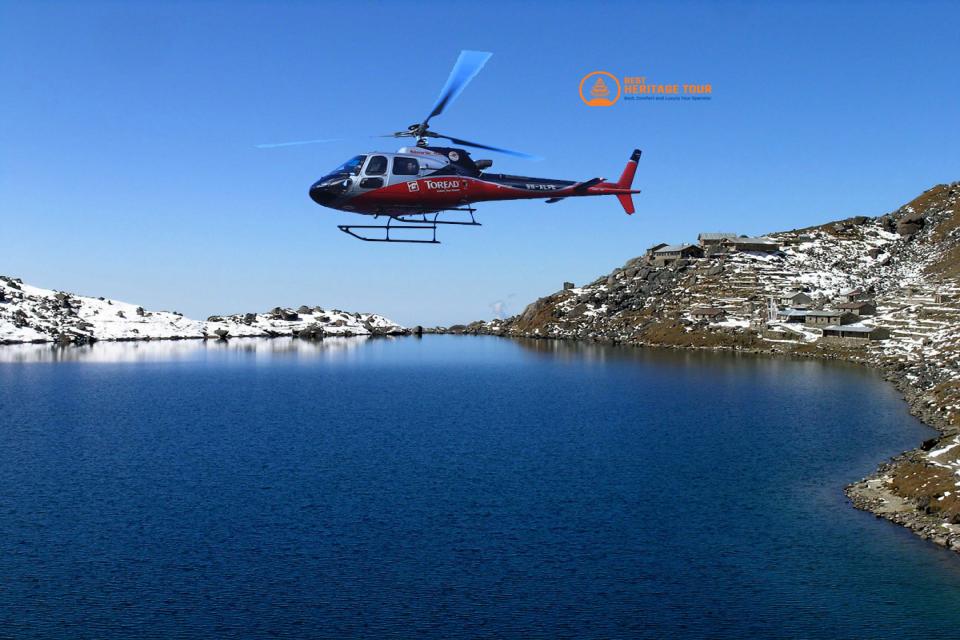

Everest Base Camp Trek by Road - 14 Days

Start
1
Country
Nepal
Difficulty
Hard
Destination
EBC & Kala Patthar
Activity
Trekking
Accommodation
Hotel/Teahouse
Meals
Breakfast, Lunch & Dinner
Transportation
Private/Shared Jeep
Max Altitude
5,545m / 18,192ft
Group Size
1-12
Trip Starts
Kathmandu
Trip Ends
Kathmandu
Best Season
Mar-May & Sep-Nov
Overview
Key Highlights of the EBC Trek by Road
- Scenic drive from Kathmandu to Salleri and Thamdanda, avoiding Lukla flights
- Authentic trekking route through traditional Sherpa villages and landscapes
- Gradual altitude gain with well-planned acclimatization days
- Exploration of the vibrant Sherpa hub of Namche Bazaar
- Visit to the sacred Tengboche Monastery with Himalayan backdrops
- Trek to the legendary Everest Base Camp (5,364m)
- Sunrise hike to Kala Patthar for breathtaking Everest views
- Professional guidance ensuring safety, comfort, and local insight
Why Choose Best Heritage Tour for Your EBC Trek by Road?
- Free airport pick-up and drop-off service
- Online pre-trip briefing and booking confirmation for better preparation
- Multiple communication channels (Phone, Email, WhatsApp, Viber) for easy support
- 24/7 customer support available at +977-9851149197 / +977-9810043046
- Simple and secure payment options including Cash, Card & Bank Transfer
- Provide essential medical kit and oximeter to monitor oxygen levels at high altitude
- Complimentary duffle bag and sleeping bag (used one & to be returned after the trek)
- Free luggage storage facility at Best Heritage Tour store during the trek
- We plant a tree in the name of travelers (upon request), as a part of our commitment to sustainable tourism
EBC Trek by Road Route Overview
The Everest Base Camp Trek by Road is an adventurous and thoughtfully designed journey that takes trekkers deep into the heart of the Khumbu region without relying on flights to Lukla. This overland approach not only reduces travel uncertainties but also adds a sense of exploration as the adventure begins with a scenic drive from Kathmandu to Salleri and Thamdanda, passing through winding mountain roads, terraced hillsides, and remote rural settlements.
From Thamdanda, the trek gradually joins the classic Everest trail, allowing trekkers to experience the region at a natural pace. Walking through lush forests, crossing iconic suspension bridges, and passing charming Sherpa villages, the trail offers continuous immersion into Himalayan life. The itinerary includes carefully planned acclimatization days in Namche Bazaar and Dingboche, ensuring a safer and more comfortable ascent while enhancing overall enjoyment of the trek.
As the journey progresses, the landscapes transform dramatically - from green valleys to alpine terrain framed by towering peaks. Highlights such as the spiritual ambiance of Tengboche Monastery, the lively atmosphere of Namche Bazaar, and the stark beauty of high-altitude settlements like Lobuche and Gorakshep add depth to the experience. The ultimate achievement comes with reaching Everest Base Camp (5,364m), where trekkers stand beneath the world’s highest mountain, surrounded by icefalls and legendary expedition routes.
The adventure continues with a sunrise hike to Kala Patthar (5,545m), offering unmatched panoramic views of Mount Everest and neighboring giants before descending through familiar trails back to Thamdanda and Kathmandu. Designed by Best Heritage Tour, this trek balances challenge, safety, and authenticity - making it an exceptional choice for trekkers seeking a reliable, immersive, and truly rewarding Everest experience.
What Can You Expect During the Everest Base Camp Trek by Road?
1. A Scenic and Rugged Overland Journey
The trip begins with a thrilling drive through the winding BP Highway, moving from the Kathmandu Valley into the terraced hills of the east. You can expect a long but rewarding day of travel, transitioning from paved roads to rugged 4WD tracks. This journey offers a rare window into rural Nepalese life that fly-in trekkers often miss.
2. Natural and Gradual Acclimatization
By starting your trek from the lower elevations of Thamdanda, you give your body a significant advantage. Expect a steadier, more natural pace of ascent compared to the sudden jump into Lukla. This gradual climb allows for better oxygen adaptation, significantly reducing the risk of altitude sickness and making your journey to the base camp much more comfortable.
3. Authentic Sherpa Cultural Immersion
Beyond the mountain views, you will encounter the heart of Sherpa culture. From the bustling Saturday markets in Namche Bazaar to the ancient mani walls and prayer flags lining the trail, the cultural depth is immense. Expect warm hospitality in local teahouses, where you can taste traditional Sherpa stew and learn about the spiritual heritage of the Khumbu.
4. Dramatic Landscapes and High-Alpine Tundra
Prepare for a visual feast as you move through diverse ecological zones. You will walk through lush rhododendron and pine forests in the lower regions before entering the stark, moon-like landscapes of the high-altitude tundra. The sight of the Khumbu Glacier and the towering walls of Nuptse and Lhotse will become your daily backdrop as you approach the base of the world.
5. Physical Challenge and Mental Reward
Trekking for 5 to 7 hours a day over rocky moraines and steep switchbacks is physically demanding. However, the sense of accomplishment you feel when standing at Everest Base Camp or watching the sunrise from Kala Patthar is unparalleled. Expect a test of endurance that rewards you with lifelong memories and a profound sense of peace.
6. Reliable Logistics and Minimal Delays
One of the greatest advantages of this route is the independence from Lukla’s volatile weather. You can expect a smooth, predictable schedule without the frustration of being grounded by mountain fog. This road-based logistics plan provides peace of mind, ensuring you reach your destination and return to Kathmandu on time for your international flight.
7. Authentic Teahouse Hospitality
Throughout the journey, expect to stay in charming, family-run teahouses that offer a warm refuge after a day on the trail. While the amenities become more basic as you gain altitude, the atmosphere remains incredibly cozy. You’ll spend evenings around a central dung-fueled heater, sharing stories with fellow trekkers and enjoying hearty, home-cooked Himalayan meals.
Are You Ready for EBC Trek by Road?
This trek is best suited for travelers who carry a genuine spirit of adventure and an open mind. The Everest Base Camp Trek by Jeep is not just about reaching a destination, but about embracing long scenic drives, remote mountain trails, and the natural rhythm of life in the Himalayas. A positive attitude, curiosity, and adaptability allow trekkers to fully enjoy the journey, even when conditions are simple or challenging.
Physical readiness and mental resilience play an equally important role. While no technical skills are required, the trek involves long walking days, steady ascents, and high-altitude environments. Respecting acclimatization, maintaining a slow and consistent pace, and listening to your body are essential for a safe and rewarding experience in the Everest region.
Beyond fitness, readiness also means openness - to local culture, shared teahouse living, and basic comforts. Those who appreciate cultural exchange, warm Sherpa hospitality, and the simplicity of mountain life will find this trek deeply fulfilling. With the right mindset and preparation, this journey becomes an unforgettable Himalayan adventure rather than just a physical challenge.
Itinerary
1Day 01: Drive frpm Kathmandu (1,400m / 4,593ft) to Thamdanda (2,300m / 7,546ft) via Salleri (1,800m / 5,906ft)
Today marks the beginning of our grand adventure. Instead of heading to the airport, we board our comfortable bus for a fascinating overland journey across the diverse landscapes of Nepal. Leaving the bustle of the Kathmandu Valley, we follow the winding BP Highway, enjoying views of the Sun Koshi River and lush terraced hillsides. This drive is a great way to see the "middle hills" of Nepal, passing through small roadside towns and vibrant green forests.
Upon reaching Salleri, you switch to a 4WD jeep for the thrilling drive to Thamdanda, traversing rough, winding mountain roads, crossing small rivers, and passing through traditional Sherpa and Rai settlements. The journey introduces you to the remote landscapes of eastern Nepal, offering a glimpse of daily mountain life far from the beaten path. This overland approach is not just about avoiding flights; it’s a beautiful transition from the lowlands to the base of the high Himalayas. You’ll spend your first night in the fresh mountain air, feeling the excitement of the trail ahead.
2Day 02: Trek from Thamdanda (2,300m / 7,546ft) to Phakding (2,610m / 8,563ft)
After a hearty breakfast, we finally lace up our boots and begin our trek. Today’s walk is the perfect "warm-up" for the days to come. The trail from Thamdanda winds through beautiful oak and rhododendron forests, offering glimpses of the Dudh Koshi River below. We pass through several small settlements and traditional farming communities where you can witness the daily life of the local Rai and Sherpa people.
As we merge with the main trail coming from Lukla, the atmosphere becomes more lively. You’ll cross your first few suspension bridges - decorated with colorful prayer flags - over the turquoise waters of the river. The walk to Phakding is relatively gentle with some "Himalayan flats" (slight ups and downs). Arriving at our teahouse, you can relax by the river and enjoy the peaceful sound of the flowing water as you prepare for the climb to Namche tomorrow.
3Day 03: Trek from Phakding (2,610m / 8,563ft) to Namche Bazaar (3,440m / 11,286ft)
Today is one of the most famous days on the Everest trail. Today’s trek takes you deeper into the heart of the Khumbu region. We begin by following the Dudh Koshi River, crossing several high suspension bridges, including the famous Hillary Suspension Bridge. The trail takes us through the entry point of Sagarmatha National Park at Monjo, where we clear our permits. The air begins to feel thinner and crisper as we enter this protected wilderness.
After a lunch stop by the river, the real challenge begins: a long, steep zig-zag climb up to Namche Bazaar. This climb is tough, but it offers a magnificent reward - on a clear day, you will get your very first view of Mt. Everest peeking through the trees. Finally, the trail opens up to reveal the amphitheater-shaped town of Namche, the "Sherpa Capital." It is a vibrant hub filled with bakeries, gear shops, and colorful markets.
4Day 04: Rest Day in Namche Bazaar (3,440m / 11,286ft)
Acclimatization is the secret to a happy trek. Instead of moving higher today, we stay in Namche to let our bodies adjust to the thinner air. But "rest day" doesn't mean sitting still! We’ll take a short, scenic hike up to the Everest View Hotel. From here, you’ll get a stunning panoramic view of Everest, Lhotse, and the beautiful Ama Dablam.
In the afternoon, you can explore the narrow streets of Namche. You’ll find local museums, cozy bakeries, and even the world’s highest Irish Pub. It’s a great day to soak in the Sherpa culture and enjoy the mountain vibes before we head deeper into the Khumbu.
5Day 5: Trek from Namche Bazaar (3,440m / 11,286ft) to Tengboche (3,860m / 12,664ft)
Today’s trek is filled with stunning Himalayan scenery and cultural experiences. Leaving Namche Bazaar, the trail climbs gradually through birch and rhododendron forests, with occasional views of the Dudh Koshi River below. Small villages along the way offer a glimpse of traditional Sherpa life, with prayer flags and mani walls adding spiritual charm to the path.
The highlight of the day is arriving at Tengboche, home to the region’s most famous Buddhist monastery. Perched on a ridge, the monastery overlooks dramatic peaks including Ama Dablam, Lhotse, and Thamserku, making it one of the most photogenic stops on the trek. The spiritual atmosphere, combined with panoramic mountain views, provides a peaceful and memorable experience.
6Day 6: Trek from Tengboche (3,860m / 12,664ft) to Dingboche (4,410m / 14,469ft)
Today’s trek takes you through stunning alpine landscapes as you gradually ascend to Dingboche. Leaving Tengboche, the trail descends slightly through forests and small settlements before climbing along the Imja Khola valley. Along the way, you will pass through Rongbuk-style villages and mani walls, enjoying glimpses of terraced fields and yak pastures.
The final approach to Dingboche is surrounded by majestic peaks, including Lhotse, Ama Dablam, and Island Peak, creating dramatic scenery at every turn. Dingboche itself is a charming village of stone-walled fields and cozy teahouses, perfectly positioned for acclimatization and preparation for higher altitudes. Dingboche is a beautiful "summer settlement" nestled in a wide valley. You are now well above 4,000 meters, so we’ll keep our pace very slow and steady. The crisp mountain air and open landscapes make this section one of the most scenic of the trek.
7Day 7: Acclimatization Day in Dingboche (4,410m / 14,469ft)
Today is a rest and acclimatization day in Dingboche, allowing your body to adjust to the higher altitude before ascending further. Trekkers can take short hikes to nearby viewpoints, such as the ridge behind the village, offering panoramic views of Ama Dablam, Lhotse, and Island Peak.
This day is also ideal for exploring the village, observing local farming life, and enjoying the serene Himalayan atmosphere. Light walks and gentle activity help improve acclimatization, while resting ensures you are prepared for the demanding trek ahead to Lobuche and Gorakshep. Proper hydration, nutrition, and rest are emphasized today to prevent altitude-related discomfort.
8Day 8: Trek from Dingboche (4,410m / 14,469ft) to Lobuche (4,910m / 16,108ft)
Today’s trek feels like walking on another planet. The trail is wide and barren, with massive peaks on all sides. We’ll stop for a break at a small place called Thukla before tackling a steep climb up the Thukla Pass.
At the top of the pass, we’ll see many stone memorials dedicated to climbers who lost their lives on Everest. It is a very powerful and quiet place. From here, we walk along the lateral moraine (the rocky edge) of the Khumbu Glacier until we reach the small cluster of teahouses at Lobuche. As you approach Lobuche, the mountains feel closer than ever. The village itself is small, consisting mainly of teahouses nestled against the backdrop of towering peaks such as Pumori, Nuptse, and Cho Oyu.
9Day 9: Trek from Lobuche (4,910m / 16,108ft) to Gorakshep (5,170m / 16,961ft) and to Everest Base Camp (5,364m / 17,598ft)
Today is the highlight of the trek as you reach the legendary Everest Base Camp. Leaving Lobuche, the trail climbs steadily over rocky moraines and glacial terrain, offering breathtaking views of Nuptse, Pumori, and Lhotse. The path is challenging but rewarding, with the landscape growing more rugged and dramatic with every step.
Arriving at Gorakshep, the highest settlement on the trail, you can leave your main bags and continue to Everest Base Camp. Standing at the foot of the world’s tallest mountain is a truly humbling experience, surrounded by icefalls, prayer flags, and the energy of countless climbers who have passed through this historic site. After exploring the base camp, you return to Gorakshep for the night.
10Day 10: Trek from Gorakshep (5,170m / 16,961ft) to Kala Patthar Viewpoint (5,545m / 18,192ft) then trek to Pheriche (4,280m / 14,042ft)
Today begins with an early morning hike to Kala Patthar, the highest viewpoint on this trek, providing unforgettable panoramic views of Mount Everest, Nuptse, Lhotse, and Pumori. The climb is steep but manageable, and the sunrise over the Himalayan peaks makes every step worthwhile. After soaking in the breathtaking scenery, you return to Gorakshep for a short rest.
From Gorakshep, the trek descends through rocky trails and glacial moraines, passing small teahouses and yak pastures, eventually reaching Pheriche. This village sits in a serene valley surrounded by towering peaks and is known for its natural beauty and welcoming lodges. The descent provides relief to the lungs and legs while offering more stunning mountain vistas.
11Day 11: Trek from Pheriche (4,280m / 14,042ft) to Namche Bazaar (3,440m / 11,286ft)
Today begins your descent back toward Namche Bazaar, retracing parts of the trail while offering new perspectives of the Himalayan landscapes. The trek follows the Dudh Koshi River valley, passing through small villages and yak pastures. The air feels lighter with every descent, and the views of surrounding peaks remain dramatic, offering plenty of photo opportunities along the way.
Descending through alpine meadows and forests, you will pass through Dingboche and Tengboche, revisiting the serene monasteries and villages you encountered on the way up. The vibrant atmosphere of Namche Bazaar welcomes you back, with shops, tea houses, and local culture providing a lively contrast to the remote high-altitude villages. This day is less strenuous but still allows for enjoyable exploration and acclimatization adjustment.
12Day 12: Trek from Namche Bazaar (3,440m / 11,286ft) to Lukla (2,860m / 9,383ft)
Today’s trek takes you downhill through the beautiful Khumbu valleys toward Lukla, the gateway to the Everest region. Leaving Namche Bazaar, the trail winds through forests of rhododendron and pine, crosses suspension bridges over the Dudh Koshi River, and passes through villages like Phakding, where local life and prayer flags enrich the journey.
The descent is gradual but long, offering spectacular views of mountains and rivers, while the changing vegetation marks your return to lower altitudes. Arriving in Lukla, trekkers feel a sense of accomplishment and relief, surrounded by the bustling airstrip, tea houses, and shops that mark the end of the trekking trail. Lukla’s charm is a perfect setting to rest and celebrate the high-altitude adventure.
13Day 13: Trek from Lukla (2,860m / 9,383ft) to Thamdanda (2,300m / 7,546ft)
Today marks the beginning of your return journey by road, leaving the trekking trails behind. From Lukla, you trek a short distance before connecting with the jeep route toward Thamdanda. The trail passes through forests, terraced fields, and small villages, giving a final glimpse of rural Himalayan life and the Khumbu culture.
The descent is gradual, allowing your legs to recover while soaking in the panoramic mountain vistas one last time. Arriving in Thamdanda, you enjoy the comfort of a teahouse and the satisfaction of completing the high-altitude trek portion. This stop is also perfect for reflecting on the journey and preparing for the drive back to Kathmandu.
14Day 14: Drive from Thamdanda (2,300m / 7,546ft) to Salleri (1,800m / 5,906ft) and to Kathmandu (1,400m / 4,593ft)
On the final day of your adventure, you begin the return drive from Thamdanda to Salleri in a comfortable 4WD jeep, retracing the scenic mountain roads you traveled at the start of the journey. The ride offers breathtaking views of terraced hills, forests, and traditional villages, giving you one last chance to absorb the beauty of rural Nepal.
From Salleri, a comfortable bus takes you back to Kathmandu, winding through rivers, valleys, and hillside communities. This drive concludes your overland Everest journey, combining both adventure and cultural exploration. Arriving in Kathmandu, you can celebrate completing the Everest Base Camp Trek by Road, carrying memories of stunning mountains, Sherpa culture, and an unforgettable Himalayan experience.
Cost Includes / Excludes
Included
- PRIVATE AIRPORT PICK-UP & DROP : Airport - Hotel transfer - Airport (Pick Up and Drop).
- MEMBER TRANSPORTATION : Transportation in Sharing Jeep from Kathmandu - Thamdanda and while returning Thamdanda - Kathmandu, as per itinerary
- LODGING : Best available accommodation in mountain lodges and tea houses during the trek.
- FOOD : 3 meals a day (breakfast, lunch and dinner; including tea/coffee) during the trek, with Ef-Chlor purification tablets provided for safe drinking water.
- GUIDE : One experienced government licensed trekking guide (English speaking) during the trek.
- STAFF SALARY AND ALLOWANCE : All trekking staff wages, salary, equipment, food & clothing.
- PERMITS : All necessary paperwork : Sagarmatha National Park permit, Khumbu Pasang Lhamu Rural Municipality entry permit and fees.
- STAFF INSURANCE : Insurance for all involved trekking staff during the trek.
- GEAR (IF NEEDED) : Sleeping bag, down jacket and duffle bag (to be returned after the trek).
- MEDICAL KIT : A well equipped first aid kit, including an oximeter and emergency oxygen, carried by the guide for your safety.
- IN CASE OF EMERGENCY : Assistance in rescue operations in case of emergency covered by travel insurance.
- SOUVENIR : Best Heritage Tour’s Appreciation Certificate after the successful trek & Purse, an authentic Nepali product made from hemp.
- FAREWELL DINNER : A farewell dinner with an authentic cultural program after completion of the trek.
Excluded
- INTERNATIONAL AIRFARE : International flight airfare (from and to Kathmandu).
- NEPAL VISA FEES : You may issue the visa upon your arrival at Tribhuvan International Airport - Kathmandu or apply manually in your home country.
- TRASNPORTATION IN PRIVATE JEEP : Private Jeep will be arranged on request for transporation from Kathmandu - Thamdanda and while returning Thamdanda - Kathmandu
- ACCOMMODATION IN KATHMANDU : Accommodation & Meals in Kathmandu.
- INSURANCE POLICY : Travel insurance covering medical expenses and high-altitude evacuation is mandatory. If you do not have suitable coverage, we can also assist in arranging travel insurance for you upon your arrival in Nepal. Check Over Here
- PERSONAL EXPENSES : Clothing & gears, telephone, internet, toiletries, hot shower, laundry, soft drinks and any Alcoholic beverages.
- OPTIONAL PORTER SERVICE : USD 22 per day, including all taxes (each porter can carry up to 25 kg of luggage).
- TIPS : Tips for guide and porters.
- EXTRA : Any additional costs due to factors beyond our control, or for services not specifically mentioned in the Itinerary & Included section.
- TAXES & SERVICE CHARGE : All government taxes (13%) and service charge (10%)
Trip Info
Useful Information About the Everest Base Camp Trek by Road
The Everest Base Camp Trek by Road combines a scenic overland journey with one of Nepal's most iconic high-altitude treks. Understanding important details such as permits, road conditions, accommodation, altitude, weather, transportation, and trekking logistics will help you prepare for a safe, comfortable, and enjoyable adventure. Since this itinerary travels by road to Thamdanda instead of flying to Lukla, trekkers should also be prepared for long but scenic mountain drives before and after the trek.
Airport Pick-up and Trip Briefing for Everest Base Camp Trek by Road
Upon your arrival at Tribhuvan International Airport in Kathmandu, a representative from Best Heritage Tour will warmly welcome you and transfer you to your hotel in a private vehicle or another suitable vehicle based on your group size.
If you have not yet arranged accommodation in Kathmandu, our team will be happy to help you find a hotel that matches your budget and preferences.
Trip Briefing Session in Thamel
Before your trek begins, we will organize a comprehensive trip briefing at our office in Thamel. This session is designed to ensure you are fully prepared and confident for your Everest Base Camp Trek by Road.
During the briefing, Mr. Bimal, the Managing Director of Best Heritage Tour, will personally:
-
Explain the complete 14-day itinerary in detail.
-
Provide important information about the road journey, trekking route, and trail conditions.
-
Review the required trekking gear and equipment.
-
Introduce you to your experienced trekking guide and porter (if included or requested).
-
Discuss altitude awareness, acclimatization, and essential safety guidelines.
-
Answer any final questions or concerns before your adventure begins.
This briefing ensures that you start your Everest Base Camp Trek by Road well-informed, properly prepared, and ready to enjoy an unforgettable Himalayan experience with confidence.
What Type of Transportation is Used for the Everest Base Camp Trek by Road?
For the Everest Base Camp Trek by Road, we provide comfortable shared jeep transportation between Kathmandu and Thamdanda at the beginning of the journey and from Thamdanda back to Kathmandu after completing the trek, following the itinerary. This overland route is an excellent alternative to the Lukla flight, allowing trekkers to avoid weather-related flight delays and cancellations while enjoying a scenic drive through the picturesque hills, traditional villages, and beautiful landscapes of the Solu region.
Route & Vehicle Used for Everest Base Camp Trek by Road
|
Route |
Mode of Transport |
Distance |
Travel Time |
|---|---|---|---|
|
Kathmandu → Salleri → Thamdanda |
Sharing Jeep |
~275 km / 171 miles |
10-12 Hours |
|
Thamdanda → Salleri → Kathmandu |
Sharing Jeep |
~275 km / 171 miles |
10-12 Hours |
Note: The travel distance and duration may vary slightly depending on weather conditions, road conditions, and traffic.
What is the Maximum Altitude Reached on the EBC Trek by Road?
The highest point reached during the Everest Base Camp Trek by Road is Kala Patthar (5,545 m / 18,192 ft), one of the most iconic viewpoints in the Everest region. Reached on Day 10, Kala Patthar rewards trekkers with breathtaking panoramic views of Mount Everest (8,848.86 m) along with Nuptse, Lhotse, Pumori, and the surrounding Himalayan giants. It is widely regarded as the best location to witness the closest and clearest views of the world's highest mountain.
Day-by-Day Elevation Breakdown During Everest Base Camp Trek by Road
To help our guests understand the altitude progression throughout the trek, here is the daily maximum elevation reached on our 14-day Everest Base Camp Trek by Road itinerary:
|
Day |
Trail Section |
Maximum Altitude Reached |
|---|---|---|
|
Day 1 |
Kathmandu → Salleri → Thamdanda |
2,300 m / 7,546 ft |
|
Day 2 |
Thamdanda → Phakding |
2,610 m / 8,563 ft |
|
Day 3 |
Phakding → Namche Bazaar |
3,440 m / 11,286 ft |
|
Day 4 |
Acclimatization at Namche Bazaar |
3,440 m / 11,286 ft |
|
Day 5 |
Namche Bazaar → Tengboche |
3,860 m / 12,664 ft |
|
Day 6 |
Tengboche → Dingboche |
4,410 m / 14,469 ft |
|
Day 7 |
Acclimatization at Dingboche |
4,410 m / 14,469 ft |
|
Day 8 |
Dingboche → Lobuche |
4,910 m / 16,108 ft |
|
Day 9 |
Lobuche → Gorakshep → Everest Base Camp |
5,364 m / 17,598 ft |
|
Day 10 |
Gorakshep → Kala Patthar → Pheriche |
5,545 m / 18,192 ft |
|
Day 11 |
Pheriche → Namche Bazaar |
4,280 m / 14,042 ft |
|
Day 12 |
Namche Bazaar → Lukla |
3,440 m / 11,286 ft |
|
Day 13 |
Lukla → Thamdanda |
2,860 m / 9,383 ft |
|
Day 14 |
Thamdanda → Salleri → Kathmandu |
2,300 m / 7,546 ft |
Note: The altitudes mentioned above are approximate and may vary slightly depending on the trekking route, accommodation location, and GPS device used for measurement.
What Is the Total Distance Covered on the EBC Trek by Road?
The Everest Base Camp Trek by Road is a complete Himalayan adventure that combines a scenic overland journey with one of the world's most iconic trekking routes. Including both the road transportation and the trekking sections, the total distance covered during this 14-day journey is approximately 570 km (354 miles).
What Is the Total Driving Distance on the Everest Base Camp Trek by Road?
The total road travel distance during this trek is approximately 550 km (342 miles), including:
-
Kathmandu → Salleri → Thamdanda: ~275 km (171 miles)
-
Thamdanda → Salleri → Kathmandu: ~275 km (171 miles)
At Best Heritage Tour, we arrange comfortable shared jeep transportation for both the outbound and return journeys, ensuring a safe, reliable, and hassle-free travel experience to and from the Everest region.
What Is the Total Trekking Distance Covered on the Everest Base Camp Trek by Road?
The total trekking distance is approximately 120 km (75 miles). The trail follows the classic Everest Base Camp route through the heart of Sagarmatha National Park, passing traditional Sherpa villages, ancient monasteries, suspension bridges, alpine forests, glacial valleys, and high-altitude landscapes. Along the journey, trekkers enjoy spectacular views of Mount Everest, Lhotse, Nuptse, Ama Dablam, Thamserku, Pumori, and many other Himalayan peaks while experiencing the unique Sherpa culture and warm mountain hospitality.
Day-by-Day Distance & Walking Time on EBC Trek by Road
|
Day |
Specific Route Segment |
Distance Covered |
Duration |
|---|---|---|---|
|
Day 1 |
Kathmandu → Salleri → Thamdanda (Drive) |
~275 km / 171 miles |
10-12 Hours |
|
Day 2 |
Thamdanda → Phakding |
~14 km / 8.7 miles |
6-7 Hours |
|
Day 3 |
Phakding → Namche Bazaar |
~10 km / 6.2 miles |
6-7 Hours |
|
Day 4 |
Acclimatization Hike around Namche Bazaar |
~5 km / 3.1 miles |
3-4 Hours |
|
Day 5 |
Namche Bazaar → Tengboche |
~10 km / 6.2 miles |
5-6 Hours |
|
Day 6 |
Tengboche → Dingboche |
~11 km / 6.8 miles |
5-6 Hours |
|
Day 7 |
Acclimatization Hike around Dingboche |
~5 km / 3.1 miles |
3-4 Hours |
|
Day 8 |
Dingboche → Lobuche |
~8 km / 5 miles |
5-6 Hours |
|
Day 9 |
Lobuche → Gorakshep → Everest Base Camp |
~15 km / 9.3 miles |
7-8 Hours |
|
Day 10 |
Gorakshep → Kala Patthar → Pheriche |
~13 km / 8.1 miles |
7-8 Hours |
|
Day 11 |
Pheriche → Namche Bazaar |
~20 km / 12.4 miles |
7-8 Hours |
|
Day 12 |
Namche Bazaar → Lukla |
~18 km / 11.2 miles |
6-7 Hours |
|
Day 13 |
Lukla → Thamdanda |
~11 km / 6.8 miles |
4-5 Hours |
|
Day 14 |
Thamdanda → Salleri → Kathmandu (Drive) |
~275 km / 171 miles |
10-12 Hours |
Note: All distances and walking times are approximate and may vary slightly depending on the exact trail conditions, weather, acclimatization pace, and individual walking speed.
What Type of Accommodation is Provided During the Everest Base Camp Trek by Road?
During the Everest Base Camp Trek by Road, trekkers stay in locally operated mountain tea houses and lodges that provide a warm and comfortable place to rest after each day's trek. These accommodations offer an authentic Himalayan experience while allowing trekkers to enjoy the renowned hospitality of the Sherpa community. At Best Heritage Tour, we always strive to arrange the best available tea houses throughout the journey.
Accommodation in Kathmandu for Everest Base Camp Trek by Road
Please note that accommodation in Kathmandu before and after the trek is not included in our standard package. If needed, Best Heritage Tour can assist in booking the most suitable hotel based on your budget, comfort preferences, and travel style.
Accommodation During the Everest Base Camp Trek by Road
Below is the typical accommodation arrangement during the trek. Please note that hotel selection, private rooms, and attached bathrooms are subject to seasonal availability.
|
Location |
Accommodation Type |
|---|---|
|
Thamdanda (1 Night) |
Basic Tea House; Private Room with Shared Bathroom |
|
Phakding (1 Night) |
Private Room with Attached Bathroom (subject to availability) |
|
Namche Bazaar (2 Nights) |
Private Room with Attached Bathroom |
|
Tengboche (1 Night) |
Private Room; Attached Bathroom may be available depending on the lodge |
|
Dingboche (2 Nights) |
Private Room with Shared Bathroom Facilities |
|
Lobuche (1 Night) |
Shared Room with Shared Bathroom Facilities |
|
Gorakshep (1 Night) |
Shared Room with Shared Bathroom Facilities |
|
Pheriche (1 Night) |
Private Room; Shared or Attached Bathroom depending on the lodge |
|
Lukla (1 Night) |
Private Room with Attached Bathroom |
Facilities Inside the Rooms During the Everest Base Camp Trek by Road
Accommodation facilities vary according to altitude. Lower villages generally offer better amenities, while higher Himalayan settlements provide more basic facilities due to their remote location, harsh climate, and limited resources.
1. Toilet Facilities
Toilet facilities become more basic as you ascend higher into the Everest region.
-
Phakding, Namche Bazaar, and Lukla: Most tea houses offer private rooms with attached bathrooms and Western-style toilets.
-
Thamdanda, Tengboche, Dingboche, and Pheriche: Shared toilets are common, although some lodges may offer attached bathrooms depending on availability.
-
Lobuche and Gorakshep: Shared toilet facilities are the standard. Due to freezing temperatures, squat toilets are more common at these elevations.
2. Hot Shower Availability
Hot showers are available in most villages along the trek, including Phakding, Namche Bazaar, Tengboche, Dingboche, Pheriche, Lobuche, and Lukla.
Most tea houses charge an additional fee of approximately NPR 500-700 per shower, with prices generally increasing at higher elevations.
3. Electricity and Device Charging
Electricity is available throughout most of the trekking route, although charging policies vary by lodge.
-
Phakding, Namche Bazaar, and Lukla: Charging is often available free of charge or at a minimal cost, depending on the hotel.
-
From Tengboche onwards: Charging usually requires an additional fee of around NPR 300-600 per device. Charging stations are commonly located in the dining hall rather than inside guest rooms.
4. Wi-Fi and Internet Access
Wi-Fi is available in many tea houses throughout the Everest region, but the quality and speed vary with altitude.
-
Namche Bazaar, Phakding, and Lukla: Many lodges provide Wi-Fi, either complimentary or for a small fee.
-
Higher villages: Internet access is generally slower and often requires an additional payment.
For more reliable connectivity, many trekkers purchase an Everest Link Wi-Fi Package, which works across several villages on the Everest trail.
5. Mobile Network Coverage
Mobile network coverage is available in much of the Everest region, although signal strength varies by location.
Nepal Telecom (NTC) generally offers the most reliable coverage, with service available in many villages, including Namche Bazaar, Tengboche, Dingboche, Lobuche, and parts of Gorakshep. Ncell also provides coverage in some lower sections of the trail but is generally less consistent at higher elevations.
Tip: We recommend carrying a 20,000 mAh (or larger) power bank to keep your electronic devices charged throughout the trek, especially at higher elevations where charging costs increase and electricity availability may occasionally be limited.
Food and Drinks on the Everest Base Camp Trek by Road
The Everest Base Camp Trek by Road package with Best Heritage Tour includes three freshly prepared meals each day (breakfast, lunch, and dinner) throughout the trek, along with 2-3 cups of tea or coffee daily. Our meal plan is carefully designed to provide the energy and nutrition needed for long days of trekking while allowing you to experience the authentic flavors of the Himalayas.
As you gain altitude, all food supplies are transported by porters, yaks, mules, and helicopters, making meals more expensive in the higher mountain villages. Despite the remote location, tea houses along the Everest trail offer a wide variety of freshly prepared Nepalese, Sherpa, Tibetan, and international dishes.
Meal Arrangement During the Everest Base Camp Trek by Road
-
Breakfast: Served at the tea house where you stay before beginning the day's trek.
-
Lunch: Enjoyed at a local tea house along the trekking trail.
-
Dinner: Served at your overnight lodge after completing the day's walk.
This arrangement provides a balanced trekking routine while supporting locally owned tea houses and mountain communities throughout the Everest region.
Meal Inclusion Policy
-
One main meal item is included for breakfast, lunch, and dinner.
-
Trekkers may choose one item per meal from the available menu.
-
Additional food, snacks, desserts, soft drinks, or extra portions are not included and should be paid for personally.
-
2-3 cups of tea or coffee per day are included in the package.
Food Options Available on the Everest Base Camp Trek by Road
Tea houses along the Everest trail serve a surprisingly diverse selection of meals to suit different tastes and dietary preferences.
|
Meal |
Common Food Options |
|---|---|
|
Breakfast |
Tibetan bread, toast, pancakes, porridge, oats, muesli, cornflakes, chapati, eggs (boiled, fried, omelet), peanut butter, jam, honey |
|
Lunch |
Dal Bhat, fried rice, chowmein, noodles, pasta, momos, potato dishes, macaroni, vegetable curry, thukpa, soup |
|
Dinner |
Dal Bhat, vegetable curry with rice, fried rice, noodles, pasta, garlic soup, thukpa, potatoes, chapati, macaroni |
Please note that menu options may vary depending on the village, season, and altitude.
Drinks and Hydration During the EBC Trek by Road
Staying well hydrated is essential for a safe and enjoyable high-altitude trek.
Common beverages available along the route include:
-
Black tea, milk tea, ginger tea, lemon tea
-
Honey ginger lemon
-
Coffee (instant or brewed)
-
Hot chocolate
-
Hot lemon drinks
-
Boiled drinking water (available for purchase)
-
Bottled soft drinks and mineral water (available in most villages but more expensive at higher elevations)
We encourage trekkers to drink plenty of fluids throughout the journey to support acclimatization and reduce the risk of altitude sickness.
Can You Find Vegetarian and Vegan Food During the EBC Trek by Jeep?
Yes. Vegetarian meals are widely available throughout the Everest Base Camp Trek by Road, and vegan options can also be arranged at most tea houses, although the variety becomes more limited at higher elevations.
At Best Heritage Tour, we are happy to accommodate dietary requirements whenever possible. We kindly request trekkers to inform us in advance about any food allergies, vegetarian or vegan preferences, gluten intolerance, or other dietary restrictions so that we can coordinate with the tea houses along the route and ensure the best possible dining experience during your trek.
When is the Best Time for the Everest Base Camp Trek by Road?
The Everest Base Camp Trek by Road can be completed throughout the year, but the overall trekking experience varies significantly with the seasons. Weather, mountain visibility, trail conditions, temperatures, and especially road conditions between Kathmandu and Thamdanda all play an important role in determining the best time to travel.
Spring Season (March to May)
Spring is one of the most popular times to trek to Everest Base Camp by road. The weather is generally stable, the forests bloom with colorful rhododendrons, and the mountain views are exceptionally clear. Daytime temperatures are comfortable, making it ideal for both beginners and experienced trekkers.
Pros
-
Stable weather and excellent visibility
-
Comfortable daytime temperatures
-
Blooming rhododendron forests
-
Spectacular views of Everest and surrounding peaks
-
Ideal conditions for photography
Cons
-
One of the busiest trekking seasons
-
Tea houses can fill up quickly during peak months
Summer / Monsoon Season (June to August)
Summer brings the monsoon to Nepal, with frequent rainfall, cloudy skies, and lush green landscapes. While the Everest region receives less rainfall than many other parts of Nepal, the road section between Kathmandu and Thamdanda can be affected by heavy rain and landslides.
Pros
-
Fewer trekkers on the trail
-
Peaceful tea houses
-
Beautiful green hills and forests
-
Excellent opportunity for photographers seeking dramatic landscapes
Cons
-
Higher chance of rain and cloudy mountain views
-
Roads are prone to landslides and delays
-
Slippery trekking trails
-
Leeches may be present at lower elevations
Is it Possible to Do EBC Trek by Jeep During the Monsoon Season?
Yes. The Everest Base Camp Trek by Road can still be completed during the monsoon season, but it largely depends on road conditions. The mountain roads between Kathmandu, Salleri, and Thamdanda are prone to landslides, muddy sections, and temporary road closures during periods of heavy rainfall.
Autumn Season (September to November)
Autumn is widely regarded as the best season for the Everest Base Camp Trek by Road. After the monsoon, the air becomes clean and fresh, offering crystal-clear views of the Himalayas. The weather remains stable, making it ideal for long trekking days and high-altitude adventures.
Pros
-
Crystal-clear mountain views
-
Stable weather with minimal rainfall
-
Pleasant trekking temperatures
-
Excellent trail and road conditions
-
Ideal season for Everest photography
Cons
-
Peak trekking season with more visitors
-
Tea houses can become busy, especially in October
Winter Season (December to February)
Winter transforms the Everest region into a spectacular snowy landscape. The trails become much quieter, offering a peaceful trekking experience and stunning snow-covered mountain scenery. However, temperatures at higher elevations can fall well below freezing, particularly during the night.
Pros
-
Quiet trails with fewer trekkers
-
Spectacular snow-covered Himalayan landscapes
-
Clear skies and excellent mountain visibility
-
Peaceful tea house experience
Cons
-
Very cold mornings and nights
-
Heavy snowfall may occasionally affect higher sections of the trail
-
Some tea houses at higher elevations may operate with limited services
Is it Possible to Do EBC Trek by Jeep During Winter Season?
Yes. The Everest Base Camp Trek by Road is possible during winter for trekkers who are well prepared for cold conditions. The roads to Thamdanda generally remain accessible unless affected by exceptionally heavy snowfall or adverse weather. While the trek is more challenging due to freezing temperatures at higher elevations, it rewards trekkers with peaceful trails, fewer crowds, and breathtaking winter scenery.
What is the Recommended Season for the EBC Trek by Jeep?
For the best overall experience, Best Heritage Tour recommends trekking during Spring (March to May) or Autumn (September to November). These seasons offer the perfect combination of stable weather, outstanding mountain views, comfortable trekking conditions, and more reliable road access to Thamdanda, making your Everest Base Camp Trek by Road safer, more enjoyable, and more memorable.
Documents Required for the Everest Base Camp Trek by Road
To ensure a smooth and hassle-free trekking experience in the Everest region, trekkers must carry a few essential travel documents. These documents are mandatory for entry, safety, and permit regulations in Nepal’s protected trekking areas.
Nepal Visa for the Everest Base Camp Trek by Road
All international travelers (except Indian) need a tourist visa to visit Nepal, which can be obtained on arrival at Kathmandu airport or online.
Key Details:
-
Duration: 15, 30, or 90 days (30 days recommended for this trek)
-
Fees: 15 days - USD 30 | 30 days - USD 50 | 90 days - USD 125
-
Requirements: Valid passport (6+ months), visa form, passport photo, and payment in cash (USD/EUR/GBP/NPR)
Citizens of certain countries do not get Nepal Visa on arrival. They must have to apply for the Nepal Visa on advance through the Nepalese Embassy.
Travel Insurance for Everest Base Camp Trek by Road
Travel insurance is highly recommended and mandatory for trekking in Everest region. For this trek, standard travel insurance is simply not enough
Your insurance policy should cover:
-
High-Altitude Coverage (Up to 6,000m)
-
Medical Emergency & Hospitalization: Including treatment for Altitude Sickness (AMS, HAPE, or HACE).
-
Emergency Helicopter Evacuation
-
Search and Rescue (SAR)
-
Trip Cancellation & Interruption
-
Cashless Claims & Direct Payment
What are the permits required for the Everest Base Camp Trek by Road?
For trekking in the Everest region, proper permits are mandatory to ensure safety, conservation, and legal access. For this trek, the following permits are required:
-
Sagarmatha National Park Permit: Required to enter the national park and trek within its protected areas.
-
Khumbu Pasang Lhamu Rural Municipality Permit: This permit allows trekkers to enter and travel within the Khumbu region.
-
Gaurishankar Conservation Area Permit (GSCAP): Because the road is through Salleri and Thamdanda, you will pass through the beautiful Gaurishankar region.
A valid visa and travel insurance is must to get the permits for Everest Base Camp Trek. One does not need to worry about the permits arrangement as we will do all the arrangements on behalf of our valued guest.
How Difficult is the Everest Base Camp Trek by Road?
The Everest Base Camp Trek by Road is considered a moderately to highly challenging trek. While traveling by road to Thamdanda eliminates the need for a Lukla flight, the trekking portion remains physically demanding. Trekkers walk for 11 days through rugged mountain terrain, covering approximately 120 km (75 miles) while reaching a maximum altitude of 5,545 m (18,192 ft) at Kala Patthar.
The combination of long daily hikes, steep ascents and descents, high altitude, and changing weather conditions makes this trek best suited for people with a good level of physical fitness and determination.
What Makes the Everest Base Camp Trek by Road Challenging?
Although the road journey avoids the Lukla flight, the trekking section remains physically demanding due to several factors:
-
11 days of trekking, walking 4-8 hours daily on mountain trails.
-
High altitude, reaching Everest Base Camp (5,364 m) and Kala Patthar (5,545 m).
-
Steep ascents and descents on rocky and uneven Himalayan terrain.
-
Cold temperatures and changing mountain weather, especially above 4,000 meters.
-
Basic tea house facilities at higher elevations with limited modern amenities.
Who Can Join the Everest Base Camp Trek by Road?
This trek is suitable for:
-
Beginners with good physical fitness and determination.
-
Experienced trekkers looking for a road alternative to the Lukla flight.
-
Adventure seekers who want to experience both the scenic drive and the classic Everest trekking route.
-
Nature lovers and photographers eager to explore the breathtaking landscapes of the Khumbu region.
-
Anyone prepared for a challenging high-altitude trek with proper acclimatization.
Is the Everest Base Camp Trek by Road Suitable for Everyone?
Yes, the Everest Base Camp Trek by Road is suitable for a wide range of trekkers, including beginners, experienced hikers, solo travelers, and adventure enthusiasts. Although it is a physically demanding high-altitude trek, it does not require any technical climbing skills or prior mountaineering experience.
The itinerary is carefully designed with two acclimatization days in Namche Bazaar and Dingboche, allowing trekkers to gradually adapt to the increasing altitude. With proper physical preparation, a steady walking pace, and the support experienced guides and porters, most healthy individuals with a reasonable level of fitness can successfully complete this unforgettable Himalayan adventure.
What Makes the EBC Trek by Jeep Suitable for All?
Several factors make the Everest Base Camp Trek by Road accessible to many travelers:
-
No technical climbing or mountaineering experience is required.
-
Well-planned itinerary with two acclimatization days to reduce the risk of altitude sickness.
-
Road access to Thamdanda eliminates the need for the often weather-dependent Lukla flight.
-
Comfortable tea house accommodation and regular meal stops throughout the route.
-
Experienced guides and porter support provided by Best Heritage Tour.
-
Suitable for beginners, experienced trekkers, solo travelers, couples, friends, and small groups who are in good physical health.
Can One Go on the EBC Trek by Jeep Solo?
Yes, it is possible to complete the Everest Base Camp Trek by Road as a solo traveler. Many trekkers choose to join this adventure alone and enjoy meeting fellow travelers along the trail.
For a safer and more enjoyable experience, we highly recommend trekking with an experienced local guide. The Everest region involves high-altitude trekking, changing weather conditions, and remote mountain terrain, where professional guidance can be invaluable. Whether you are traveling solo, with friends, or as part of a group, our team is committed to providing a safe, well-organized, and memorable Everest Base Camp trekking experience.
Physical Fitness Required for the Everest Base Camp Trek by Road
The Everest Base Camp Trek by Road requires a good level of physical fitness due to its long trekking days, rugged mountain trails, and high-altitude environment. Although no technical climbing skills are required, trekkers should be prepared to walk 4-8 hours daily for 11 trekking days, reaching a maximum elevation of 5,545 m (18,192 ft) at Kala Patthar.
The combination of steep ascents, descents, rocky terrain, and reduced oxygen levels above 3,000 meters makes good endurance and stamina essential. Trekkers who maintain a regular exercise routine and prepare in advance will find the journey more comfortable and enjoyable.
How to Prepare Physically for the EBC Trek by Jeep?
To prepare for the Everest Base Camp Trek by Road, we recommend starting your training 6-8 weeks before your departure.
-
Walk or hike 3-5 times per week to build endurance.
-
Practice walking 5-7 hours with a light backpack.
-
Include stair climbing or hill hiking in your routine.
-
Improve cardiovascular fitness through running, cycling, or swimming.
-
Strengthen your legs with squats, lunges, and step-ups.
-
Perform core exercises to improve balance and stability.
-
Stretch regularly to increase flexibility and reduce muscle stiffness.
-
Get adequate rest and avoid overtraining before the trek.
Health and Safety on the Everest Base Camp Trek by Road
At Best Heritage Tour, the safety and well-being of our guests are our highest priorities. Our itinerary is carefully designed with two acclimatization days in Namche Bazaar and Dingboche, helping trekkers adapt to the increasing altitude and significantly reducing the risk of altitude-related illnesses.
Our government-licensed and experienced trekking guides are well-trained in high-altitude trekking and wilderness safety. Every guide carries a basic first aid kit, and our team is prepared to respond to common trekking issues such as minor injuries, dehydration, fatigue, and symptoms of altitude sickness. In the event of a medical emergency, we coordinate the appropriate rescue and evacuation procedures as quickly as possible.
How Safe is the Everest Base Camp Trek by Road?
The Everest Base Camp Trek by Road is considered very safe for trekkers who are physically prepared and follow the guidance of experienced trekking professionals. The trail is one of Nepal's most popular and well-established trekking routes, passing through numerous Sherpa villages with tea houses, health posts, and communication facilities along the way.
Choosing the road route to Thamdanda also eliminates the uncertainty of weather-related Lukla flight delays and cancellations, making it an attractive alternative for many trekkers. However, as with any mountain journey, road conditions should be carefully considered, particularly during the monsoon season when landslides may occasionally affect travel.
Is There Any Risk of Altitude Sickness on the Everest Base Camp Trek by Road?
Yes. Since this trek reaches Everest Base Camp (5,364 m / 17,598 ft) and Kala Patthar (5,545 m / 18,192 ft), there is a genuine risk of Acute Mountain Sickness (AMS) if proper acclimatization is not followed.
To minimize this risk, we include two acclimatization days in the itinerary and encourage trekkers to walk at a steady pace, stay well hydrated, eat nutritious meals, and immediately inform their guide if they experience symptoms such as headache, dizziness, nausea, unusual fatigue, or shortness of breath.
Porter and Luggage Management on the Everest Base Camp Trek by Road
Proper luggage management plays an important role in making your Everest Base Camp Trek by Road more comfortable and enjoyable. At Best Heritage Tour, we offer optional porter services and secure luggage storage facilities, allowing you to trek with only your daily essentials while the heavier gear is taken care of.
Porter Service (Optional Add-On) for Everest Base Camp Trek by Road
Our standard Everest Base Camp Trek by Road package does not include porter service by default. However, trekkers can easily hire a porter for a more comfortable trekking experience.
-
Porter service is available for USD 22 per day.
-
One porter can carry up to 25 kg (55 lbs) of luggage.
-
One porter can be shared between two trekkers (maximum combined weight of 25 kg).
-
A waterproof duffle bag is provided to safely pack and transport your trekking gear.
Hiring a porter is highly recommended, especially for high-altitude trekking, as it helps reduce fatigue, conserves energy, and allows you to enjoy the spectacular Himalayan scenery more comfortably.
Luggage Storage in Kathmandu
Any luggage that is not required during the trek can be safely stored in Kathmandu before your departure. At Best Heritage Tour, we provide complimentary luggage storage at our office, where your belongings will be kept securely until you return from the trek. Many hotels in Kathmandu also offer free luggage storage for their guests, so you may choose whichever option is more convenient for you.
Everest Base Camp Trek by Road Cost for 2026 & 2027
The Everest Base Camp Trek by Road cost for 2026 and 2027 depends on several factors, including the group size, level of service, accommodation preferences, and overall trip arrangements. At Best Heritage Tour, we offer a professionally organized trekking package at just USD 1090 (+ tax) per person, with experienced local guides, tea house accommodation, transportation and permits to ensure a safe and memorable Himalayan adventure.
We also offer special group discounts for families, friends, couples, private groups, and travel clubs, making the trek even more affordable when traveling together.
Group Price for Everest Base Camp Trek by Road
|
Number of Trekkers |
Price Per Person (USD) |
|---|---|
|
1 Pax (Solo Trek) |
USD 1090 |
|
2-4 Pax |
USD 890 |
|
5-6 Pax |
USD 850 |
|
7-10 Pax |
USD 830 |
|
11-16 Pax |
USD 790 |
|
17-29 Pax |
USD 770 |
Note:
-
13% Government Tax and 10% Service Charge are not included in the above prices
-
Porter service is not included in the package cost
For larger groups or customized itineraries, we can further adjust the EBC Trek By Road cost for 2026 & 2027 based on specific preferences and service levels.
How Much Extra Money Should You Carry for Personal Expenses on the EBC Trek by Road?
For the Everest Base Camp Trek by Road, we recommend carrying approximately USD 20-30 per day for personal expenses that are not included in the package. For the entire 14-day trek, a budget of around USD 280-420 per person is usually sufficient, depending on your spending habits.
This budget generally covers expenses such as extra drinks, snacks, bottled or boiled drinking water, hot showers, Wi-Fi, device charging, laundry services, souvenirs, and any optional purchases made along the trekking route.
Since there are no ATMs on the trail, we highly recommend exchanging or withdrawing enough Nepalese Rupees (NPR) in Kathmandu before the trek begins. Most tea houses and local shops along the trail accept cash only, making it the most convenient and reliable payment method throughout the journey.
How Much Should You Tip Your Guide & Porter During the Everest Base Camp Trek by Road?
Tipping is a long-standing tradition in Nepal's trekking industry and is a thoughtful way to recognize the dedication, professionalism, and hard work of your trekking crew. While tipping is entirely optional, it is greatly appreciated by the guides and porters who work tirelessly to ensure your Everest Base Camp Trek by Road is safe, comfortable, and memorable.
Although there is no fixed rule, many trekkers choose to tip around 10-15% of the total trek cost, depending on the quality of service and their overall satisfaction.
How Much Should You Tip the Guide?
Your guide is responsible for your safety, navigation, accommodation arrangements, altitude monitoring, and overall trekking experience throughout the journey.
Suggested Guide Tip:
-
USD 10-15 per day per group
-
For a 14-day trek, many groups tip approximately USD 140-210+ in total, depending on group size and service quality.
How Much Should You Tip the Porter?
Porters carry your trekking luggage, allowing you to enjoy the trail with only a light daypack. Their hard work is especially valuable on the steep and high-altitude sections of the Everest region.
Suggested Porter Tip:
-
USD 7-10 per day per group
-
For a 14-day trek, a common tip is around USD 98-140+ per porter, depending on the workload and your satisfaction.
Group Tipping Practice
If you are trekking with family, friends, or as part of a group, it is common for everyone to contribute towards a shared tip. The tip is usually presented to the guide and porter at the end of the trek as a gesture of appreciation for their dedication and support throughout your Everest Base Camp adventure.
Booking & Payment for the EBC Trek by Road
Booking your Everest Base Camp Trek by Road with Best Heritage Tour is simple and secure. To confirm your trip, a 20% deposit of the total trip cost is required at the time of booking, while the remaining balance must be cleared at least one day before departure. Payments can be made via cash, bank transfer, or card; bank transfer and card fees are the responsibility of the trekker, and incur a 4% transaction fee. All booking and cancellation terms are clearly explained by Best Heritage Tour staff during the booking process and can also be reviewed on our website.
Bank transfer:
-
Account Name: Best Heritage Tour And Treks Pvt. Ltd.
-
Account Number: 13201040254106
-
Bank Name: Nepal Investment Mega Bank Ltd.
-
Address: Thamel, Kathmandu, Nepal
-
SWIFT Code: NIBLNPKT
-
Bank Transfer Link: www.bestheritagetour.com/payment
Once we receive the deposit, we will issue the official invoice and booking conformation right away. If you need any clarification, we are happy to answer your questions or provide additional details you may require.
Last-Minute Booking for the EBC Trek by Road
For travelers planning on short notice, Best Heritage Tour accepts last-minute bookings up to 24 hours before departure. In such cases, full payment (100% of the trip cost) is required at the time of booking. Trekkers should be aware that accommodation, logistics, and services may be limited, and the company cannot be held responsible for any compromises arising from late arrangements.
Flexible Trip Extension
For those looking to extend their Himalayan adventure, Best Heritage Tour offers exciting options beyond the Everest Base Camp Trek by Road. Popular choices include the Gokyo Lakes and Three Pass Trek, other treks in Annapurna or Manaslu regions, or cultural tours of Kathmandu, Bhaktapur, and Patan. Wildlife lovers can enjoy jungle safaris in Chitwan or Bardia National Parks. These extensions can be tailored to your interests and schedule, adding more depth and adventure to your Nepal journey.
Sustainable and Responsible Tourism on the Everest Base Camp Trek by Road
The Everest Base Camp Trek by Road passes through the world-renowned Sagarmatha National Park, picturesque Sherpa villages, ancient monasteries, alpine forests, and fragile high-altitude ecosystems. We encourage all trekkers to travel responsibly by carrying a reusable water bottle, minimizing plastic waste, respecting local customs and Buddhist heritage, staying on designated trails, and supporting locally owned tea houses and businesses throughout the journey.
At Best Heritage Tour, we are committed to promoting sustainable and responsible tourism in Nepal. We follow the Leave No Trace principles on all our trekking adventures. As part of our commitment to conservation, we also plant a tree in the name of our travelers (upon request), contributing to a greener and more sustainable future.
Frequently Asked Questions
Can I visit monasteries on the EBC trek?
Yes, the Tengboche Monastery is a major highlight where you can witness daily prayers. There are also several smaller gompas along the route. Best Heritage Tour respects local traditions and ensures you have the opportunity to experience the spiritual side of the EBC Trek by Road.
Is there mobile network coverage at EBC?
Ncell and Nepal Telecom have coverage in many parts of the region, including Everest Base Camp. However, signals can be weak and weather-dependent. Best Heritage Tour guides carry mobile phones and satellite options for communication, ensuring safety throughout the EBC Trek by Road.
How can I support the local community during the EBC trek?
You can support the community by staying in local teahouses, hiring local guides/porters, and buying locally made crafts. Best Heritage Tour is committed to sustainable tourism, ensuring that your EBC Trek by Road directly benefits the hardworking families living in the Everest region.
What is a "Chorten"?
A Chorten is a Buddhist shrine representing the mind of the Buddha. They are found throughout the Khumbu region. During the EBC Trek by Road, Best Heritage Tour guides explain the architecture and religious meaning behind these beautiful structures that dot the high-altitude Himalayan landscape.
Is it okay to take photos of locals during the EBC trek?
Always ask for permission before taking photos of people or their homes. Most locals are friendly and happy to oblige, but respect for privacy is paramount. Best Heritage Tour emphasizes responsible tourism practices to ensure positive interactions during the EBC Trek by Road journey.
Can I try local Sherpa food?
Absolutely! We recommend trying "Sherpa Stew" (Syakpa) or "Tsampa" (roasted barley flour). These traditional foods are nutritious and perfect for the cold climate. Best Heritage Tour encourages trekkers to explore the local flavors as part of their EBC Trek by Road cultural experience.
What language do people speak in Khumbu?
Most locals speak Sherpa and Nepali, but English is widely understood in the trekking industry. Our guides at Best Heritage Tour are fluent in English and can act as translators, helping you engage in meaningful conversations with the locals during your EBC Trek by Road.
How do locals transport goods to EBC?
In the absence of roads, goods are transported by porters, mules, and yaks. You will frequently see these caravans on the trail. Best Heritage Tour reminds trekkers to always give way to animals on the path for safety during your EBC Trek by Road adventure.
Is there a festival I can see in Everest?
Mani Rimdu is the most famous festival, held at Tengboche Monastery, usually in October or November. It features masked dances and colorful rituals. Best Heritage Tour can time your EBC Trek by Road to coincide with these incredible cultural celebrations for a truly unique experience.
What is the significance of Mani stones?
Mani stones are rocks carved with Buddhist mantras, such as "Om Mani Padme Hum." You should always walk to the left of these stones as a sign of respect. Best Heritage Tour guides educate trekkers on these local customs during the EBC Trek by Road journey.
Are there hospitals along the EBC trekking route?
There is a small hospital in Kunde and a clinic in Pheriche staffed by international volunteers during peak seasons. For minor issues, these are excellent resources. Best Heritage Tour works closely with these facilities to ensure our trekkers receive medical attention if needed during the journey.
What ethnic groups live in the Everest region?
The region is primarily inhabited by the Sherpa people, famous for their mountaineering skills and Buddhist culture. The EBC Trek by Road also passes through Rai and Tamang villages in the lower sections. Best Heritage Tour provides cultural insights to help you appreciate the diversity of Nepal.
What size duffel bag do I need for the EBC trek by Jeep?
A 70-90 liter waterproof duffel bag is ideal for your main gear, which porters will carry. Best Heritage Tour often provides company duffel bags for the duration of the trip, ensuring your belongings are protected from the elements during the EBC Trek by Road adventure.
Do I need a headlamp for the EBC trek?
Yes, a headlamp is essential for early morning starts, such as the hike to Kala Patthar, and for navigating teahouses at night. Best Heritage Tour recommends bringing extra batteries, as the cold can drain them quickly during the high-altitude stages of the EBC Trek by Road.
What kind of gloves should I bring for the EBC trek?
Bring a pair of lightweight inner gloves and a pair of heavy, waterproof outer mittens. Keeping your extremities warm is essential for preventing frostbite at high altitudes. Best Heritage Tour includes specific glove recommendations in our EBC Trek by Road preparation guide for all travelers.
Are down jackets necessary for the Everest trek?
Yes, a high-quality down jacket is vital for temperatures that can drop to -15°C at night. It is especially important for the early morning hike to Kala Patthar. Best Heritage Tour ensures our clients understand the importance of proper insulation during the EBC Trek by Road.
How heavy should my daypack be for the EBC trek by Jeep?
Your daypack should weigh between 5-7 kg, containing essentials like water, snacks, a camera, and extra layers. If you hire a porter through Best Heritage Tour, they will carry your heavier main luggage, leaving you free to enjoy the EBC Trek by Road comfortably.
Can I rent trekking gear in Kathmandu?
Yes, Kathmandu’s Thamel district is famous for gear shops where you can rent or buy everything from down jackets to sleeping bags. Best Heritage Tour can assist you in finding reliable shops to ensure you get quality equipment for your EBC Trek by Road.
Do I need trekking poles for the EBC trek by Road?
Trekking poles are highly recommended to reduce the impact on your knees, especially during the long descents. They also provide better balance on uneven, rocky terrain. Best Heritage Tour guides can show you the most effective way to use poles during your EBC Trek by Road.
What kind of boots do I need for Everest?
You need sturdy, waterproof hiking boots with good ankle support. It is crucial to "break in" your boots before arriving in Nepal to avoid blisters. Best Heritage Tour recommends high-quality trekking socks to keep your feet warm and dry during the EBC Trek by Road.
Are meals included in the EBC trek by Road package?
Most Best Heritage Tour packages include three standard meals a day. However, extra snacks and drinks are usually paid for out-of-pocket. We ensure that the included meals are hearty and provide the necessary nutrition for the physical demands of the EBC Trek by Road adventure.
How do we return to Kathmandu after the EBC trek by Road?
From Thamdanda, you will take a jeep back to Salleri and then a bus or private vehicle to Kathmandu. This overland return concludes the EBC Trek by Road. Best Heritage Tour arranges all the return logistics, ensuring a smooth transition back to the city.
How do we return to Kathmandu after the EBC trek by Road?
From Thamdanda, you will take a jeep back to Salleri and then a bus or private vehicle to Kathmandu. This overland return concludes the EBC Trek by Road. Best Heritage Tour arranges all the return logistics, ensuring a smooth transition back to the city.
How far is Gorakshep from Everest Base Camp?
Gorakshep is the final settlement before the base camp, located about a 2-to-3-hour trek away. It is a rugged walk over glacial moraine. Best Heritage Tour ensures you are well-rested in Gorakshep before the final walk to the base of the world's highest mountain.
Is it possible to see the Khumbu Icefall?
Yes, when you reach Everest Base Camp, you will be standing right next to the dramatic Khumbu Icefall. While you cannot walk on it for safety reasons, the view is spectacular. Best Heritage Tour ensures you have ample time to explore this legendary glacial feature.
What is the hike to Kala Patthar like?
The hike to Kala Patthar is challenging but rewarding. It offers the most iconic, panoramic view of Mt. Everest and the surrounding peaks. Best Heritage Tour guides lead this hike at a slow pace to ensure everyone can enjoy the sunrise over the Himalayas.
What is special about Tengboche?
Tengboche is famous for its magnificent monastery, the largest in the Khumbu. It offers stunning views of Ama Dablam and Everest. On the EBC Trek by Road, Best Heritage Tour ensures you have time to visit the monastery and experience the evening prayer ceremony.
What is the altitude of Namche Bazaar?
Namche Bazaar sits at 3,440 meters (11,286 ft). It is the vibrant heart of the Khumbu region and a crucial stop for acclimatization. Best Heritage Tour schedules a two-night stay here to help your body adjust before heading higher toward Everest Base Camp.
Is there an ATM in the Everest region?
There are ATMs in Lukla and Namche Bazaar, but they are not always reliable. It is best not to depend on them. Best Heritage Tour recommends bringing all the cash you need from Kathmandu to avoid any financial stress during your EBC Trek by Road.
Can I use credit cards in the mountains?
Credit cards are accepted in some larger lodges in Namche Bazaar, but they often charge a 4-5% transaction fee. Beyond Namche, cash is king. Best Heritage Tour advises withdrawing enough cash in Kathmandu to cover your needs for the duration of the trek.
What are the essential clothes for EBC?
Layering is key. You need moisture-wicking base layers, an insulating fleece, and a waterproof/windproof outer shell. A warm down jacket is mandatory for the cold nights. Best Heritage Tour provides a detailed packing list to ensure you are perfectly equipped for the EBC Trek by Road.
Is the jeep route cheaper than flying for EBC Trek?
Yes, the EBC Trek by Road is significantly more affordable because you avoid the high cost of domestic flights to Lukla. Best Heritage Tour passes these savings on to you, making the Everest experience accessible to budget-conscious travelers without compromising on safety or cultural depth.
What is the tipping culture in Nepal?
Tipping is expected for guides and porters as a gesture of appreciation. A general guideline is 10-15% of the total trek cost. Best Heritage Tour helps you understand the appropriate tipping etiquette to ensure your hard-working mountain crew is fairly rewarded after the trek.
How much does the EBC Trek by Road cost?
The cost varies based on group size and service level, typically ranging from $1,200 to $1,800. This includes transport, permits, accommodation, and guides. Best Heritage Tour offers competitive pricing for the EBC Trek by Road, ensuring high-quality service and excellent value for your investment.
Is the EBC Trek by Road safe for solo female travelers?
Yes, Nepal is generally very safe for women. However, trekking with an organized group like Best Heritage Tour provides an extra layer of security and companionship. We ensure that our female clients feel comfortable and supported throughout the entire EBC Trek by Road experience.
Are the suspension bridges safe on the EBC trek?
Yes, the bridges are engineered to be very strong and are regularly maintained. They can feel bouncy, but they are a standard part of the trail. Best Heritage Tour guides will help you cross these iconic bridges safely during your EBC Trek by Road journey.
Are there wild animals on the EBC trek?
You may see Himalayan Tahrs, Musk Deer, and various bird species like the Danphe. Snow leopards are extremely rare. Best Heritage Tour encourages wildlife spotting while maintaining a safe distance, ensuring that the natural habitat is respected during your EBC Trek by Road adventure.
Can I trek EBC solo?
While possible, it is not recommended due to safety concerns and navigation challenges. Having a guide from Best Heritage Tour ensures you have support in case of illness or injury. The EBC Trek by Road is much safer and more enjoyable with a professional team by your side.
What is the "Khumbu Cough"?
The Khumbu Cough is a common dry cough caused by the cold, dry air at high altitudes. Using a buff to cover your mouth and nose helps immensely. Best Heritage Tour guides provide tips on preventing this discomfort during the higher stages of the EBC Trek by Road.
How is the road condition to Salleri?
The road from Kathmandu to Salleri is mostly paved and offers a smooth ride through winding hills. However, the final stretch towards Thamdanda involves off-road tracks. Best Heritage Tour uses reliable 4WD vehicles to ensure safety and comfort during this rugged yet scenic overland journey.
Can I hire a private jeep for just my family for EBC Trek by Road?
Yes, Best Heritage Tour specializes in arranging private jeep transfers for families and small groups. This allows for a personalized experience, where you can stop for photos or meals at your own pace during the scenic drive portion of the EBC Trek by Road adventure.
Does the jeep take me all the way to Everest Base Camp?
No, the road currently ends near Thamdanda. From there, you must trek on foot to reach Everest Base Camp. The EBC Trek by Road refers to the overland approach to the trailhead, which is then followed by the traditional Himalayan trekking route toward the high mountains.
Is motion sickness a problem on the drive to Salleri during EBC Trek by Road?
The winding mountain roads can cause motion sickness for some travelers. We recommend bringing appropriate medication and staying hydrated. Our drivers at Best Heritage Tour are happy to stop for fresh air, making the EBC Trek by Road drive as comfortable as possible.
What should I pack for the EBC jeep ride?
For the long drive, pack snacks, water, a neck pillow, and a power bank. Keep your camera handy, as the rural landscapes are stunning. Best Heritage Tour recommends wearing comfortable clothing, as you will be sitting for several hours before reaching the trailhead at Thamdanda.
Can I skip the walk to Lukla on the EBC jeep route?
The EBC Trek by Road route often passes through or near Lukla. You can choose to hike directly toward Phakding from Thamdanda, bypassing the Lukla airstrip entirely. Best Heritage Tour designs the route to maximize your time in nature while avoiding the crowded airport hub.
What kind of vehicle is used for the EBC Trek by Road?
We primarily use sturdy 4WD jeeps for the off-road sections. These vehicles are designed to handle the rugged terrain of the Solukhumbu region.
Is the drive to Everest Base Camp trailhead safe?
Yes, the drive is safe when handled by experienced mountain drivers. While the mountain roads are narrow and winding, our drivers at Best Heritage Tour are highly skilled in navigating this terrain. The EBC Trek by Road is often considered a safer alternative to flying.
Are the jeeps for the EBC Trek by Road private or shared?
Best Heritage Tour offers both private and shared jeep options. Private jeeps provide more comfort and flexibility for groups, while shared jeeps are a cost-effective choice for solo travelers. Regardless of the choice, we prioritize safety and vehicle reliability for every overland Everest journey.
How long is the drive from Kathmandu to Thamdanda?
The drive typically takes 12 to 14 hours depending on road conditions and traffic. While long, the journey is filled with views of terraced farms and rushing rivers. Best Heritage Tour schedules regular breaks to ensure you remain refreshed before beginning the trekking portion.
Does the EBC jeep route help with altitude sickness?
Yes, the EBC Trek by Road starts at a lower altitude (around 2,300m) compared to flying into Lukla (2,860m). This gradual gain provides a significant advantage for acclimatization. Best Heritage Tour guides are also trained to spot early symptoms of Acute Mountain Sickness (AMS).
Is there an age limit for the EBC Trek by Road?
There is no official age limit, but trekkers should be in good health. We have seen children as young as 16 and seniors over 65 complete the journey. Best Heritage Tour can customize the pace of the EBC Trek by Road to suit different age groups.
Do I need a permit for the EBC Trek by Road?
Yes, you require the Sagarmatha National Park Permit and the Khumbu Pasang Lhamu Rural Municipality Permit. When booking with Best Heritage Tour, these administrative details are handled for you, ensuring a seamless transition through the various checkpoints along the trekking trail to Everest Base Camp.
How difficult is the EBC Trek by Road?
The trek is considered moderately difficult. While the walking is manageable, the high altitude remains a challenge. The EBC Trek by Road allows for a slower start compared to flying, making the physical demand slightly more balanced. Best Heritage Tour ensures professional support throughout the difficult sections.
What is the starting point for the EBC Trek by Road?
The EBC Trek by Road starts in Kathmandu. You will board a private or shared vehicle for a scenic drive through the mid-hills of Nepal to Salleri or Thamdanda. This overland approach, curated by Best Heritage Tour, sets the stage for a classic Himalayan trekking adventure.
Can I see Mt. Everest on the EBC Trek by Road?
Absolutely! You will see Mt. Everest from several vantage points, including the Everest View Hotel above Namche Bazaar and the iconic Kala Patthar. This overland journey by Best Heritage Tour ensures you reach the most spectacular viewpoints for a close-up look at the world’s highest peak.
What is the best month for the EBC Trek by Road?
The best months are March to May and September to November. These windows offer clear skies and stable road conditions for the drive to Thamdanda. Best Heritage Tour recommends the spring season for rhododendron blooms and the autumn season for the sharpest, most panoramic mountain views.
Is the EBC Trek by Road suitable for beginners?
Yes, the EBC Trek by Road is excellent for beginners with good physical fitness. The gradual ascent provided by the overland route helps novice trekkers adapt to the thinning air. Best Heritage Tour provides experienced guides to help beginners manage their pace and enjoy the scenery.
Why choose a jeep over flying to Lukla for Everest?
Choosing the EBC Trek by Road avoids the frequent flight cancellations and delays common at Lukla Airport. It offers a more stable schedule and allows for a more gradual altitude gain, which significantly improves your body's ability to acclimatize during the initial days of the journey.
How long does the EBC Trek by Road take?
A standard EBC Trek by Road typically takes 14 to 16 days. The journey begins with a full-day drive to the Solukhumbu region, followed by a trek through traditional Sherpa villages. Best Heritage Tour ensures the itinerary includes vital acclimatization days in Namche Bazaar and Dingboche.
Where do we stay during the EBC Trek by Road?
You will stay in local teahouses, which are small mountain lodges. These provide basic but comfortable twin-sharing rooms. Best Heritage Tour selects the best available teahouses along the EBC Trek by Road route, prioritizing cleanliness, warmth, and authentic Sherpa hospitality for our valued guests.
Can I buy snacks along the EBC trekking route?
Yes, small shops in villages like Namche and Dingboche sell chocolate, biscuits, and bottled drinks. However, prices increase with altitude. Best Heritage Tour recommends buying some favorite snacks in Kathmandu or Salleri before starting the trekking portion of your EBC Trek by Road.
Is the water safe to drink on the EBC trek?
You should not drink tap water. Use water purification tablets, filters, or buy boiled water from teahouses. Best Heritage Tour prioritizes your health by advising on the safest water sources to ensure you stay hydrated and healthy during the entire EBC Trek by Road.
Do I need to bring a sleeping bag for the EBC trek?
Yes, a high-quality four-season sleeping bag is essential as nights can drop well below freezing. While teahouses provide blankets, they are often not enough. Best Heritage Tour can arrange for sleeping bag rentals in Kathmandu if you do not wish to bring your own.
Are the toilets inside the rooms in EBC trek teahouse?
In lower villages like Namche, some lodges offer attached bathrooms. However, at higher altitudes, toilets are usually shared and located outside the room. Best Heritage Tour strives to book the most convenient accommodations available to ensure your comfort during the EBC Trek by Road.
Is Wi-Fi available on the Everest Base Camp trail?
Wi-Fi is available in many villages through "Everest Link" cards, which can be purchased locally. However, the connection can be unstable. Best Heritage Tour encourages trekkers to enjoy the digital detox, though we understand the need to stay connected with loved ones during the trek.
Is there electricity on the EBC trek to charge my phone?
Yes, most teahouses have charging stations in the common areas, usually powered by solar energy. There is typically a small fee for this service. Best Heritage Tour suggests bringing a portable solar charger or a high-capacity power bank for your EBC Trek by Road electronics.
Can I get vegetarian or vegan food at EBC?
Yes, vegetarian and vegan options are widely available. In fact, eating vegetarian is often safer at high altitudes to avoid meat that may not be fresh. Best Heritage Tour coordinates with teahouse kitchens to accommodate your dietary preferences throughout the EBC Trek by Road adventure.
What kind of food is served on the EBC trek?
The menu includes local favorites like Dal Bhat (lentils and rice) alongside pasta, pancakes, and eggs. Dal Bhat is highly recommended by Best Heritage Tour as it provides sustained energy. During the EBC Trek by Road, we ensure you receive three nutritious meals every single day.
Are there hot showers on the Everest trek?
Most teahouses offer hot showers for an additional fee, typically using gas or solar heating. As you go higher, showers become less frequent due to the freezing temperatures. Best Heritage Tour guides will help you identify the best places to freshen up during your journey.
What is the EBC Trek by Road?
The EBC Trek by Road is a unique overland adventure that replaces the flight to Lukla with a scenic drive from Kathmandu to Thamdanda. This route, offered by Best Heritage Tour, provides a safer, more reliable alternative to weather-dependent flights while offering a deep cultural immersion.
How do I prepare physically for the Everest trek?
Focus on cardiovascular exercises, such as hiking, running, or cycling, at least three months prior. Building leg strength and endurance is key. Best Heritage Tour recommends practice hikes with a weighted pack to prepare your body for the daily demands of the EBC Trek by Road.
Can I trek to EBC if I have asthma?
Many people with controlled asthma successfully complete the trek. However, the cold, dry air can be a trigger. You must consult your physician and inform Best Heritage Tour of your condition so our guides can pay extra attention to your breathing during the EBC Trek by Road.
Is oxygen available on the EBC Trek by Road?
Teahouses and guides usually carry emergency oxygen cylinders. While we focus on natural acclimatization, Best Heritage Tour ensures that backup oxygen is available if a trekker experiences severe breathing difficulties at high altitudes like Gorakshep or during the climb to the iconic Kala Patthar viewpoint.
Do I need travel insurance for the EBC Trek by Road?
Yes, comprehensive travel insurance that covers emergency helicopter evacuation up to 6,000 meters is mandatory. Best Heritage Tour requires proof of insurance before the trek begins to ensure that you are fully protected against any unforeseen medical issues or travel disruptions during the journey.
What happens if I get sick on the EBC trek by Road?
If symptoms are mild, we stay at the current altitude or descend. In emergencies, Best Heritage Tour organizes rapid helicopter evacuations. Your safety is our absolute priority during the EBC Trek by Road, and our guides are equipped with first-aid kits and emergency protocols.
How much water should I drink daily on the EBC Trek?
We recommend drinking 3 to 4 liters of water daily. Staying hydrated is crucial for preventing altitude sickness in the Khumbu region. During the EBC Trek by Road, Best Heritage Tour ensures you have access to safe drinking water at every teahouse along the trail.
Is it safe to take Diamox on the Everest trek?
Many trekkers use Diamox to aid acclimatization. However, you should consult your doctor before starting any medication. On the EBC Trek by Road, our guides at Best Heritage Tour advise on natural acclimatization methods like hydration and maintaining a slow, steady pace throughout the journey.
What are the symptoms of altitude sickness?
Common symptoms include headaches, nausea, dizziness, and loss of appetite. During your EBC Trek by Road, it is vital to communicate any discomfort to your Best Heritage Tour guide immediately. Early detection and proper rest are the best ways to prevent serious altitude-related complications.