Annapurna Base Camp Trek with Poon Hill & Mardi Himal - 15 Days
Start
1
Country
Nepal
Difficulty
Moderate
Destination
Annapurna Region
Activity
Trekking
Accommodation
Hotel/Teahouse
Meals
Breakfast, Lunch & Dinner
Transportation
Private/Public Bus/Car
Max Altitude
4,500 m
Group Size
1-29
Trip Starts
Kathmandu
Trip Ends
Kathmandu
Best Season
Mar-May & Sep-Oct
Overview
Key Highlights of the ABC Trek with Poon Hill & Mardi Himal
- Explore the 3 most famous trekking route in Annapurna Region in a single trip
- Witness the iconic Sunrise for the Poon Hill - best for photography
- Explore the iconic base camps - Annapurna Base Camp, Mardi Himal Base Camp and Machhapuchhre Base Camp
- Enjoy cultural experiences in traditional Gurung and Magar villages, learning about local customs and daily life.
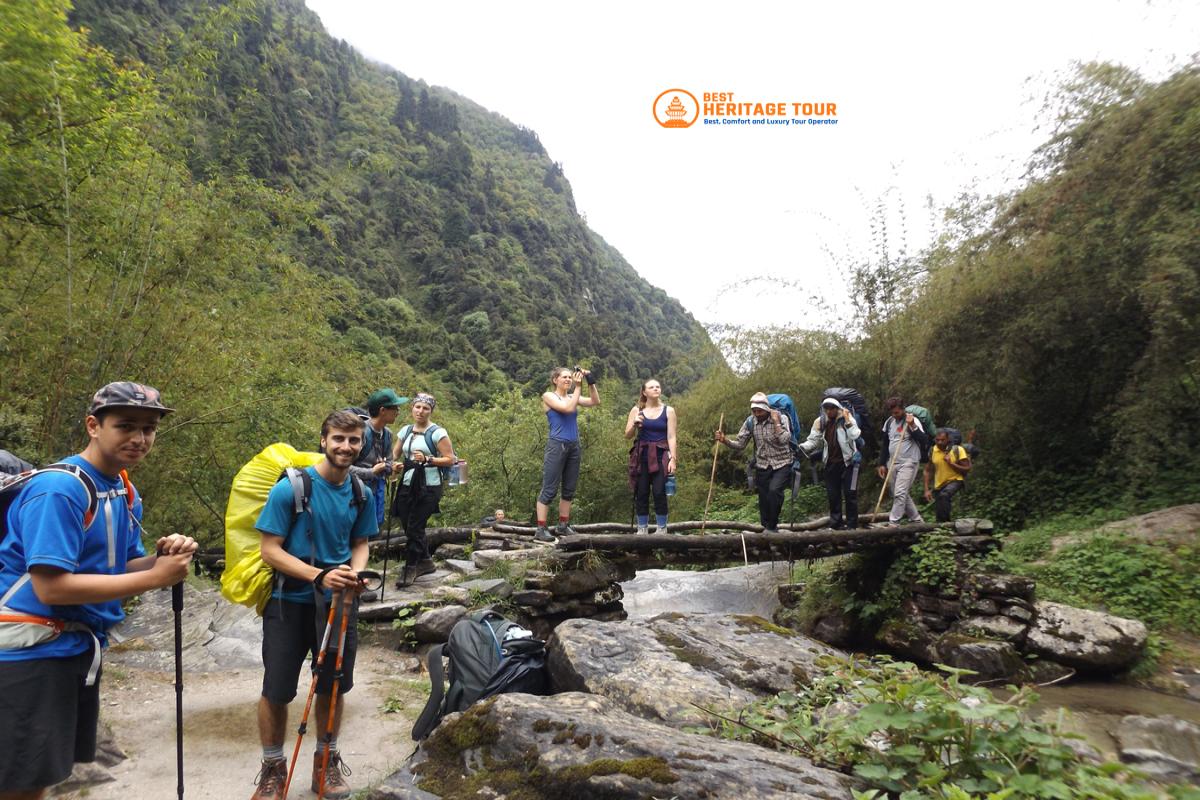
- Trek through diverse landscapes, including rhododendron forests, terraced valleys, alpine meadows, and glacial streams.
- Challenge yourself on adventure-filled trails that reward your effort with stunning viewpoints.
- Capture amazing photography opportunities, from sunrises to sweeping Himalayan panoramas along the trek.
Why Choose Best Heritage Tour for Your ABC Trek with Poon Hill & Mardi Himal?
- Free airport pick-up and drop-off service
- Online pre-trip briefing and booking confirmation for better preparation
- Multiple communication channels (Phone, Email, WhatsApp, Viber) for easy support
- 24/7 customer support available at +977-9851149197 / +977-9810043046
- Simple and secure payment options including Cash, Card & Bank Transfer
- Provide essential medical kit and oximeter to monitor oxygen levels at high altitude
- Complimentary duffle bag and sleeping bag (used one & to be returned after the trek)
- Free luggage storage facility at Best Heritage Tour store during the trek
- We plant a tree in the name of travelers (upon request), as a part of our commitment to sustainable tourism
ABC Trek with Poon Hill & Mardi Himal Route Overview
The Annapurna Base Camp Trek with Poon Hill & Mardi Himal is a perfect blend of iconic Himalayan highlights and off-the-beaten-path adventure. Starting with a scenic drive from Kathmandu to Pokhara, the journey quickly moves into terraced valleys, lush forests, and traditional Gurung and Magar villages. From the steep stairways of Ulleri to the charming village of Ghorepani, the trail gradually climbs through rhododendron and oak forests, offering glimpses of Machhapuchhre, Annapurna South, Hiunchuli, and Dhaulagiri along the way.
One of the trek’s early highlights is the sunrise at Poon Hill, a magical 360° panorama of the Annapurna and Dhaulagiri ranges that sets the tone for the adventure ahead. The trail continues through Tadapani, Sinuwa, and Doban, weaving together serene forests, alpine meadows, and sparkling streams. Reaching Annapurna Base Camp, trekkers are rewarded with the dramatic amphitheater of snow-capped peaks, a moment of awe and reflection.
The adventure doesn’t end there - Mardi Himal Base Camp offers a tranquil, less-crowded high-altitude destination with sweeping mountain vistas. Along the way, trekkers experience not only the natural beauty of the Himalayas but also the vibrant local culture, as they visit remote villages and interact with friendly locals.
Spanning 15 days, this trek balances challenging trails with proper acclimatization, scenic landscapes, and cultural experiences. Multiple sunrise viewpoints at Poon Hill, Annapurna Base Camp, and Mardi Himal Base Camp provide endless opportunities for photography. Whether you are an avid adventurer, nature lover, or photography enthusiast, this trek promises unforgettable Himalayan experiences, breathtaking panoramas, and a deep connection with Nepal’s natural and cultural treasures.
What to Expect ABC Trek with Poon Hill & Mardi Himal?
1. Spectacular Sunrises
Trek early to witness the breathtaking sunrise at Poon Hill, Annapurna Base Camp, and Mardi Himal Base Camp. The morning light illuminates Annapurna, Dhaulagiri, Machhapuchhre, and Hiunchuli, creating a 360° panorama that is truly unforgettable. These moments provide incredible photography opportunities and a serene start to your day. Experiencing these sunrises in the crisp mountain air adds a sense of peace and wonder to the trek.
2. Diverse Landscapes
The trail offers ever-changing scenery, from lush rhododendron and oak forests to terraced farmland, alpine meadows, glacial streams, and rocky high-altitude terrain. Each section provides a unique visual experience, making the trek constantly engaging and scenic. The variety of landscapes also introduces trekkers to different ecological zones, flora, and natural features of the Annapurna region. Every turn of the trail reveals new perspectives of the Himalayas, keeping the journey fresh and exciting.
3. Cultural Immersion
As you trek through Gurung and Magar villages, you’ll experience the rich Himalayan culture firsthand. Local stone houses, prayer flags, and friendly villagers offer insight into daily life, traditions, and customs. You may witness festivals, ceremonies, or local craftsmanship along the way, deepening your understanding of the region. This cultural immersion complements the natural beauty, creating a balanced trekking experience that is both educational and inspiring.
4. Challenging but Rewarding Trails
The trek involves moderate to strenuous hiking, including steep stairways, long ascents, and high-altitude trails. While physically demanding, each step rewards you with stunning mountain views, serene valleys, and the satisfaction of overcoming challenges. Proper pacing, hydration, and acclimatization help manage fatigue while allowing you to fully enjoy the journey. The combination of effort and reward makes the trek both memorable and fulfilling.
5. Serenity at High Camps
High-altitude camps like Annapurna Base Camp and Mardi Himal Base Camp offer peaceful retreats amid towering peaks. The crisp mountain air, quiet surroundings, and panoramic views provide moments of reflection and connection with nature. These camps are perfect for relaxation, journaling, or simply absorbing the grandeur of the Himalayas. Spending nights in these serene locations enhances the sense of adventure and the emotional impact of the trek.
6. Wildlife and Flora
The trail is rich in Himalayan flora and fauna, offering encounters with rhododendron blooms, alpine wildflowers, and native bird species. Occasionally, trekkers may spot monkeys or other local wildlife, adding excitement and variety to the journey. Observing the natural ecosystem in these remote areas creates a deeper appreciation for the Himalayan environment. It’s a trek where adventure and nature study go hand in hand.
7. Photography & Adventure
Every stage of the trek is a photographer’s paradise, with opportunities for sunrise shots, panoramic mountain views, and cultural scenes in local villages. The combination of adventure, nature, and culture ensures that every day offers new experiences worth capturing. Whether you are a professional photographer or an enthusiastic traveler, the trek provides countless moments for memorable photos. Beyond photography, the adventure itself - traversing forests, valleys, and high ridges - creates a profound sense of achievement.
Are You Ready for ABC Trek with Poon Hill & Mardi Himal?
If you’re seeking a comprehensive yet exhilarating Himalayan adventure - yes, you’re absolutely ready for this trek! The Annapurna Base Camp Trek with Poon Hill & Mardi Himal is designed for travelers who want to experience Nepal’s iconic mountains, cultural villages, and diverse landscapes in one unforgettable journey. It’s an excellent choice for avid trekkers, adventure enthusiasts, photographers, or anyone longing to immerse themselves in authentic Himalayan life.
Physically, the trek is moderate to challenging. You’ll be trekking 5-7 hours a day on well-defined trails that traverse forests, terraced fields, alpine meadows, and high ridges. A basic to good level of fitness, endurance for gradual ascents, and a love for the outdoors are all you need. With a little preparation - regular walks, hikes, or light workouts - you’ll be ready to enjoy the trails comfortably.
Mentally, this trek is about embracing the mountains and simplicity - early mornings, crisp Himalayan air, local food, and awe-inspiring landscapes at every turn. You’ll need an open heart for adventure and a willingness to engage with Gurung and Magar communities, absorbing the culture, traditions, and warmth of rural Nepal.
If you’ve ever dreamed of witnessing the sunrise from Poon Hill, standing among snow-capped peaks at Annapurna Base Camp, or discovering the serenity of Mardi Himal, then yes - you’re more than ready for this trek. Every step promises adventure, inspiration, and memories that will last a lifetime.
Itinerary
1Day 1: Drive from Kathmandu (1,400m) to Pokhara (827m)
The journey begins with a scenic drive or flight from Kathmandu, the bustling capital at 1,400m, to Pokhara, the gateway to the Annapurna region. Along the way, enjoy rolling hills, rivers, and rural Nepalese landscapes. Pokhara’s tranquil lakeside atmosphere is perfect for preparing your gear, relaxing after the journey, and soaking in the first Himalayan views.
2Day 2: Drive from Pokhara (820m) to Birethanti (1,038m) & Trek to Tikhedhunga (1,540m) /Ulleri (2,070m)
Today, you’ll start the trekking adventure with a short drive from Pokhara to Birethanti, the starting point of the trail. From here, the journey begins on well-defined paths that wind through lush forests, traditional villages, and terraced farmlands. Along the way, you’ll pass small streams and local settlements, gaining your first taste of Gurung culture and rural Himalayan life. Depending on your pace, you can choose to stay overnight at Tikhedhunga or continue to Ulleri, famous for its long stairway climb that prepares you for the ascent ahead.
3Day 3: Trek from Ulleri (2,070m) to Ghorepani (2,860m)
Today’s trek takes you through dense rhododendron and oak forests, gradually ascending from Ulleri to Ghorepani. The trail is lined with stone stairways, flowing streams, and terraced fields, giving you a real feel of rural Himalayan life. Along the way, you’ll pass small villages, where locals greet trekkers warmly and offer a glimpse of traditional Gurung culture. Ghorepani, perched at 2,860m, is a charming village and a hub for trekkers, surrounded by panoramic views of Annapurna South, Hiunchuli, and Machhapuchhre.
4Day 4: Early Morning Hike to Poon Hill (3,210m), Return to Ghorepani & Trek to Tadapani (2,630m)
Start the day before sunrise with a short hike to Poon Hill (3,210m), one of the most iconic viewpoints in the Annapurna region. Watching the sunrise illuminate Annapurna, Dhaulagiri, Machhapuchhre, and Hiunchuli is a breathtaking experience and a highlight of the trek. After soaking in the panoramic views and capturing memorable photographs, you’ll descend back to Ghorepani for breakfast before continuing the trek to Tadapani. Today’s trail passes through dense rhododendron forests, bamboo groves, and terraced hillsides, offering a peaceful and scenic trekking experience. Tadapani is a quiet village perched on the hillside, providing a perfect spot to rest and enjoy views of the surrounding mountains.
5Day 5: Trek from Tadapani (2,630m) to Sinuwa (2,340m)
Today, you’ll descend gently from Tadapani into a lush forested valley, passing through rhododendron and oak trees, streams, and small waterfalls. The trail meanders along traditional villages, offering glimpses of Gurung culture and rural Himalayan life. You may encounter terraced fields where locals tend crops, adding a serene cultural touch to the trek. Sinuwa is a quaint village nestled at the base of the mountains, providing a quiet and scenic spot for the night while you rest and prepare for the ascent toward the higher camps ahead.
6Day 6: Trek from Sinuwa (2,340m) to Doban (2,600m)/Himalayan (2,900m)
Today’s trek gradually ascends through a lush rhododendron and bamboo forest, following the contour of the valley and crossing small streams. The trail offers glimpses of local Gurung and Magar villages, showcasing traditional stone houses, prayer flags, and terraced fields. As you climb higher toward Doban and Himalayan, the vegetation becomes more alpine, and views of Machhapuchhre and Annapurna South start to emerge. Himalayan is a serene resting point surrounded by mountains, giving trekkers a peaceful spot to relax and enjoy the crisp mountain air before continuing toward the higher base camps.
7Day 7: Trek from Himalayan (2,900m) to Machhapuchhre Base Camp (3,700m) to Annapurna Base Camp (4,130m)
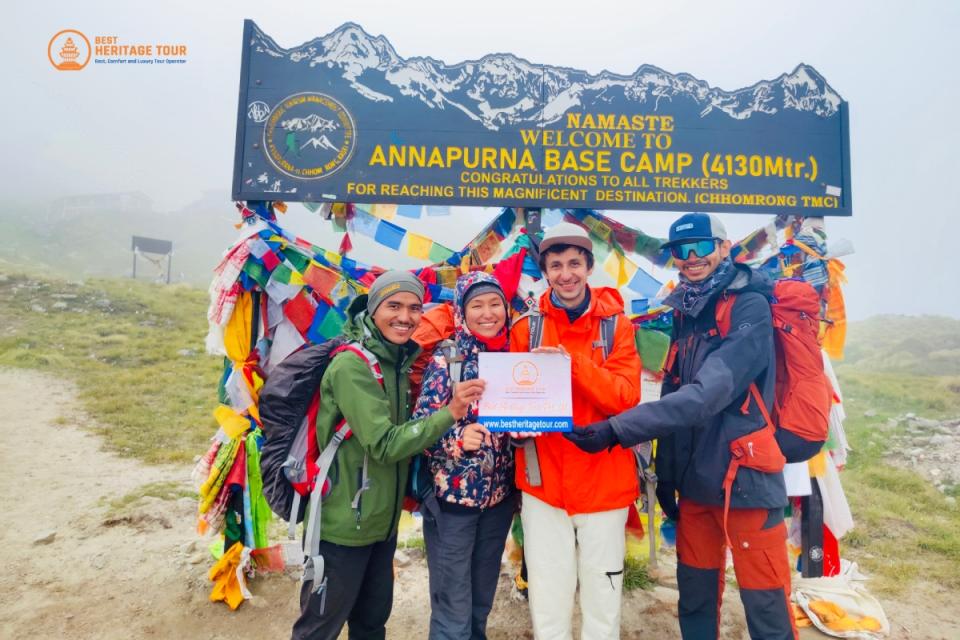
Today is one of the most rewarding days of the trek, as you climb through alpine meadows, rocky ridges, and glacial streams toward Machhapuchhre Base Camp for a scenic lunch stop. From here, the trail continues to Annapurna Base Camp, the heart of the Annapurna range. Surrounded by towering snow-capped peaks, the 360° Himalayan amphitheater offers breathtaking vistas of Annapurna South, Hiunchuli, Machhapuchhre, and Gangapurna. Trekking through moraines, boulders, and sparse alpine vegetation, you’ll feel a true sense of high-altitude adventure and accomplishment. ABC is a stunning and serene location to spend the night, soaking in the grandeur of the mountains.
8Day 8: Trek from Annapurna Base Camp (4,130m) to Deurali (3,230m)
After soaking in the breathtaking views at Annapurna Base Camp, today’s trek is a gradual descent toward Deurali. The trail passes through rocky paths, alpine meadows, and moraine fields, offering sweeping vistas of the surrounding peaks. Trekkers can enjoy a more relaxed pace while still taking in the dramatic scenery, spotting alpine flora, and listening to the gentle sounds of mountain streams. Deurali provides a quiet resting place, giving trekkers a chance to recover while still surrounded by the grandeur of the Himalayas.
9Day 9: Trek from Deurali (3,230m) to Sinuwa (2,340m)
Today, you will descend gradually from Deurali to Sinuwa, retracing some of the scenic trails you passed earlier. The route winds through lush forests, cascading streams, and terraced fields, offering peaceful moments and panoramic mountain views. Along the way, you’ll revisit traditional villages where locals continue their daily routines, giving you another chance to experience Himalayan culture and rural life. Sinuwa provides a comfortable stop for the night, surrounded by tranquil forests and the distant peaks of the Annapurna range.
10Day 10: Trek from Sinuwa (2,340m) to Landruk (1,565m)
Today’s trail leads you downhill from Sinuwa to the picturesque village of Landruk, passing through forests, terraced fields, and charming local settlements. The descent allows trekkers to enjoy a more relaxed pace while still taking in views of Machhapuchhre, Annapurna South, and Hiunchuli. Along the way, you’ll observe traditional Gurung houses, small farms, and stone pathways, experiencing the rich culture of rural Nepal. Landruk, with its tranquil environment and mountain backdrop, is an ideal place to rest before continuing the journey toward Mardi Himal.
11Day 11: Trek from Landruk (1,565m) to Forest Camp (2,000m)
Today, the trail ascends gently from Landruk into the lush forested slopes leading to Forest Camp. The path is lined with rhododendron and oak trees, offering cool shade and serene surroundings. Along the way, you may spot birdlife and small wildlife, while streams and waterfalls add charm to the journey. Forest Camp provides a quiet resting place amidst dense forest, giving trekkers a peaceful night in preparation for the higher-altitude adventure toward High Camp and Mardi Himal Base Camp.
12Day 12: Trek from Forest Camp (2,000m) to High Camp (2,960m)
Today’s trek is a steeper ascent from Forest Camp to High Camp, gradually climbing through dense forests, alpine meadows, and rocky ridges. The trail offers glimpses of Machhapuchhre and Annapurna South, growing more impressive as you gain altitude. High Camp is perched on a ridge, providing stunning panoramic views of the surrounding peaks and a peaceful spot to rest before the final ascent to Mardi Himal Base Camp. This section challenges your endurance while rewarding you with some of the most scenic mountain landscapes of the trek.
13Day 13: Trek from High Camp (2,960m) to Mardi Himal Base Camp (4,500m) & Return to Low Camp (3,700m)
Today is one of the highlight days of the trek as you ascend from High Camp to Mardi Himal Base Camp, a serene and off-the-beaten-path destination with panoramic views of Annapurna, Machhapuchhre, Hiunchuli, and the surrounding peaks. After soaking in the stunning vistas and capturing memorable photographs, you’ll descend to Low Camp, retracing part of the trail through alpine meadows, rocky paths, and forested slopes. This day combines the thrill of high-altitude trekking with the reward of spectacular scenery, leaving you with a deep sense of accomplishment.
14Day 14: Trek from Low Camp (3,700m) to Kalimati (1,700m) & Drive to Pokhara (827m)
Today, you begin the descent from Low Camp to Kalimati, enjoying a more relaxed pace as you pass through lush forests, terraced hillsides, and charming villages. The trail offers final panoramic views of Machhapuchhre and Annapurna South, making for a scenic farewell to the high mountains. Upon reaching Kalimati, you’ll take a short drive back to Pokhara, where you can relax, enjoy the lakeside atmosphere, and reflect on the unforgettable trekking experience.
15Day 15: Drive from Pokhara (827m) to Kathmandu (1,400m)
On the final day, you’ll take a scenic drive from Pokhara back to Kathmandu, retracing the picturesque valleys, rivers, and rural landscapes of Nepal. This journey allows time to reflect on the incredible trek, review photos, and enjoy the tranquil countryside one last time. Upon arrival in Kathmandu, you’ll be greeted by the vibrant city atmosphere, completing your 15-day Himalayan adventure filled with mountain vistas, cultural experiences, and unforgettable memories.
Cost Includes / Excludes
Included
- PRIVATE AIRPORT PICK-UP & DROP : Airport - Hotel transfer - Airport (Pick Up and Drop).
- MEMBER TRANSPORTATION : Transportation in standard tourist bus from Kathmandu to Pokhara and while returning from Pokhara to Kathmandu. Private vehicle transportation: Pokhara to Birethanti & Kalimati to Pokhara.
- ACCOMMODATION IN POKHARA : 2 nights in a 3-star hotel on a bed & breakfast basis.
- LODGING : Best available accommodation in mountain lodges and tea houses during the trek.
- FOOD : 3 meals a day (breakfast, lunch, and dinner; including tea/coffee) during the trek, with Ef-Chlor purification tablets provided for safe drinking water.
- GUIDE : One experienced government licensed trekking guide (English speaking) during the trek.
- STAFF SALARY AND ALLOWANCE : All trekking staff wages, salary, equipment, food & clothing.
- PERMITS : All necessary paper works: Annapurna Conservation Area permit, TIMS Card & conservation entry fee.
- STAFF INSURANCE : Insurance for all involved trekking staff during the trek.
- GEAR (IF NEEDED) : Sleeping bag, down jacket, and duffle bag (to be returned after the trek).
- MEDICAL KIT : A well equipped first aid kit, including an oximeter and emergency oxygen, carried by the guide for your safety.
- IN CASE OF EMERGENCY : Assistance in rescue operations in case of emergency covered by travel insurance.
- SOUVENIR : Best Heritage Tour’s Appreciation Certificate after the successful trek & Purse, an authentic Nepali product made from hemp.
- FAREWELL DINNER : A farewell dinner with an authentic cultural program after completion of the trek.
Excluded
- INTERNATIONAL AIRFARE : International flight airfare (from and to Kathmandu).
- NEPAL VISA FEES : You may issue the visa upon your arrival at Tribhuvan International Airport - Kathmandu or apply manually in your home country.
- ACCOMMODATION & MEALS : Accommodation and meals in Kathmandu before and after the trek. Lunch and dinner in Pokhara.
- INSURANCE POLICY : Travel insurance covering medical expenses and high-altitude evacuation is mandatory. If you do not have suitable coverage, we can also assist in arranging travel insurance for you upon your arrival in Nepal. Check Over Here
- PERSONAL EXPENSES : Clothing & gears, telephone, internet, toiletries, hot shower, laundry, soft drinks and any Alcoholic beverages.
- OPTIONAL PORTER SERVICE : USD 22 per day, including all taxes (each porter can carry up to 25 kg of luggage).
- TIPS : Tips for guide and porters.
- EXTRA : Any additional costs due to factors beyond our control, or for services not specifically mentioned in the Itinerary & Included section.
- TAXES & SERVICE CHARGE : All government taxes (13%) and service charge (10%).
Trip Info
Useful Information About the ABC Trek with Poon Hill & Mardi Himal
To ensure a smooth, safe, and enjoyable trekking experience, it is important to understand key trip details such as transportation, permits, accommodation, altitude, weather conditions, and daily trekking logistics. At Best Heritage Tour, we carefully organize every aspect of your journey so you can focus on enjoying the adventure.
Airport Pick-up and Trip Briefing for the ABC Trek with Poon Hill & Mardi Himal
Upon your arrival at Tribhuvan International Airport in Kathmandu, a representative from Best Heritage Tour will warmly welcome you and transfer you to your hotel in a private vehicle. To make your arrival even more special, our team will also welcome you with a traditional Nepali Khada (ceremonial scarf) as a gesture of hospitality and best wishes for a safe and memorable trekking experience.
If you have not yet arranged accommodation in Kathmandu, our team will be happy to help you find a hotel that matches your budget and preferences.
Trip Briefing Session in Thamel
During the briefing session, our team will ensure you are fully prepared for the ABC Trek with Poon Hill & Mardi Himal. The session includes:
-
A detailed explanation of the 15-day trekking itinerary.
-
Overview of the trekking route, trail conditions, and daily walking schedule.
-
Information about transportation and accommodation throughout the trip.
-
Guidance on essential trekking gear, clothing, and packing recommendations.
-
Introduction to your government-licensed trekking guide and porter (if applicable).
-
An opportunity to ask questions and clarify any last-minute concerns.
This comprehensive briefing ensures that you begin your ABC Trek with Poon Hill & Mardi Himal with confidence, knowing exactly what to expect while exploring three of the most spectacular trekking destinations in Nepal's Annapurna region.
What Type of Transportation is Used for the ABC Trek with Poon Hill & Mardi Himal?
At Best Heritage Tour, we arrange comfortable and reliable transportation to ensure a smooth and hassle-free travel experience throughout the ABC Trek with Poon Hill & Mardi Himal. This trekking package combines tourist bus travel with private vehicle transfers.
For travel between Kathmandu and Pokhara, we provide transportation by a standard tourist bus. And to maximize trekking time and provide greater flexibility, private vehicle transportation is arranged for the road sections between Pokhara and Birethanti at the beginning of the trek and Kalimati to Pokhara after completing the Mardi Himal Trek.
If you prefer additional comfort or faster travel, we can also arrange private transportation between Kathmandu and Pokhara upon request for an additional cost.
Route & Vehicle Used for ABC Trek with Poon Hill & Mardi Himal
|
Route |
Mode of Transport |
Approx. Distance |
Travel Time |
|---|---|---|---|
|
Kathmandu → Pokhara (Day 1) |
Standard Tourist Bus |
~200 km / 124 miles |
6-8 Hours |
|
Pokhara → Birethanti (Day 2) |
Private Vehicle |
~42 km / 26 miles |
1.5-2 Hours |
|
Kalimati → Pokhara (Day 14) |
Private Vehicle |
~48 km / 30 miles |
2-2.5 Hours |
|
Pokhara → Kathmandu (Day 15) |
Standard Tourist Bus |
~200 km / 124 miles |
6-8 Hours |
Note: The distance and travel time are approximate and totally depends upon the route taken, road condition, traffic etc.
What is the Maximum Altitude Reached on the ABC Trek with Poon Hill & Mardi Himal?
The ABC Trek with Poon Hill & Mardi Himal is one of the most rewarding trekking adventures in Annapurna Region. During this 15-day journey, trekkers visit three of the Annapurna region's most iconic viewpoints and destinations - Poon Hill, Annapurna Base Camp (ABC), and Mardi Himal Base Camp.
The highest point reached during the trek is Mardi Himal Base Camp at 4,500 meters (14,764 feet). Before reaching this point, trekkers also ascend to Annapurna Base Camp (4,130 meters / 13,550 feet) via Machhapuchhre Base Camp (3,700 meters / 12,139 feet) and enjoy the famous sunrise viewpoint at Poon Hill (3,210 meters / 10,531 feet).
What is the Altitude of Annapurna Base Camp?
Annapurna Base Camp (ABC) is situated at an altitude of 4,130 meters (13,550 feet) above sea level. Nestled within the spectacular Annapurna Sanctuary, ABC is surrounded by towering Himalayan peaks, including Annapurna I (8,091 m), Annapurna South, Hiunchuli, Gangapurna, and the iconic Machhapuchhre (Fishtail Mountain).
What is the Altitude of Machhapuchhre Base Camp?
Machhapuchhre Base Camp (MBC) lies at an elevation of 3,700 meters (12,139 feet) above sea level. Located approximately two hours below Annapurna Base Camp, MBC serves as an important acclimatization point and overnight stop for many trekkers.
From here, trekkers are rewarded with magnificent views of the sacred Machhapuchhre (Fishtail Mountain), along with Annapurna South, Hiunchuli, Gangapurna, and other surrounding Himalayan peaks.
What is the Altitude of Mardi Himal Base Camp?
Mardi Himal Base Camp stands at 4,500 meters (14,764 feet) above sea level, making it the highest elevation reached during this trek.
The early morning hike to Mardi Himal Base Camp rewards trekkers with one of the closest panoramic views of Machhapuchhre (Fishtail Mountain), as well as Annapurna South, Hiunchuli, Mardi Himal, and numerous snow-capped peaks of the Annapurna Range.
What is the Altitude of Poon Hill?
Poon Hill is located at an elevation of 3,210 meters (10,531 feet) above sea level. It is one of Nepal's most famous sunrise viewpoints and the first major high-altitude destination on this trekking route.
On a clear day, trekkers can witness spectacular sunrise colors illuminating peaks such as Annapurna I, Annapurna South, Machhapuchhre (Fishtail), Dhaulagiri, Nilgiri, and several other Himalayan giants.
Day-by-Day Elevation Breakdown During the ABC Trek with Poon Hill & Mardi Himal
The table below shows the highest elevation reached each day during our 15-day ABC Trek with Poon Hill & Mardi Himal itinerary.
|
Day |
Trail Section |
Maximum Altitude Reached |
|---|---|---|
|
Day 1 |
Kathmandu → Pokhara |
1,400 m / 4,593 ft |
|
Day 2 |
Pokhara → Birethanti → Tikhedhunga / Ulleri |
2,070 m / 6,791 ft |
|
Day 3 |
Ulleri → Ghorepani |
2,860 m / 9,383 ft |
|
Day 4 |
Ghorepani → Poon Hill → Tadapani |
3,210 m / 10,531 ft |
|
Day 5 |
Tadapani → Sinuwa |
2,630 m / 8,629 ft |
|
Day 6 |
Sinuwa → Doban / Himalayan |
2,900 m / 9,514 ft |
|
Day 7 |
Himalayan → Machhapuchhre Base Camp → Annapurna Base Camp |
4,130 m / 13,550 ft |
|
Day 8 |
Annapurna Base Camp → Deurali |
4,130 m / 13,550 ft |
|
Day 9 |
Deurali → Sinuwa |
3,230 m / 10,597 ft |
|
Day 10 |
Sinuwa → Landruk |
2,340 m / 7,677 ft |
|
Day 11 |
Landruk → Forest Camp |
2,000 m / 6,562 ft |
|
Day 12 |
Forest Camp → High Camp |
2,960 m / 9,711 ft |
|
Day 13 |
High Camp → Mardi Himal Base Camp → Low Camp |
4,500 m / 14,764 ft (Highest Point of the Trek) |
|
Day 14 |
Low Camp → Kalimati → Pokhara |
3,700 m / 12,139 ft |
|
Day 15 |
Pokhara → Kathmandu |
1,400 m / 4,593 ft |
What Is the Total Distance Covered on the ABC Trek with Poon Hill & Mardi Himal?
The ABC Trek with Poon Hill & Mardi Himal is one of the most comprehensive trekking adventures in Nepal's Annapurna region. This carefully designed 15-day itinerary offers an incredible mix of panoramic sunrise viewpoints, traditional mountain villages, lush rhododendron forests, and breathtaking Himalayan landscapes.
Following our 15-day ABC Trek with Poon Hill & Mardi Himal itinerary, the total distance covered is approximately 665 km (413 miles), including both road transportation and trekking.
What Is the Total Driving Distance on the ABC Trek with Poon Hill & Mardi Himal?
The total driving distance on this trek is approximately 490 km (305 miles). This includes all road transfers between Kathmandu and Pokhara, Pokhara and Birethanti, and Kalimati and Pokhara. Transportation is provided using a combination of a standard tourist bus for the Kathmandu-Pokhara route and private vehicles for the transfers to and from the trekking trailheads, ensuring a comfortable and efficient travel experience.
What Is the Total Trekking Distance Covered on the ABC Trek with Poon Hill & Mardi Himal?
The total trekking distance is approximately 175 km (109 miles). The trail combines three of the Annapurna region's most celebrated trekking routes into one unforgettable adventure.
The journey begins with the famous Poon Hill Trek, where trekkers enjoy one of Nepal's finest sunrise viewpoints before continuing toward the Annapurna Sanctuary and reaching Annapurna Base Camp (4,130 m). After descending through the Modi Khola Valley, the route connects with the scenic Mardi Himal Trek, leading through peaceful forests, alpine ridges, and spectacular viewpoints to Mardi Himal Base Camp (4,500 m), the highest point of the trek.
What Type of Accommodation is Available on the ABC Trek with Poon Hill & Mardi Himal?
Accommodation on the ABC Trek with Poon Hill & Mardi Himal is comfortable, authentic, and perfectly suited to the Himalayan trekking experience. Throughout the trek, Best Heritage Tour arranges accommodation in carefully selected local teahouses and mountain lodges that provide a warm atmosphere, freshly prepared meals, and the essential facilities needed for a comfortable stay in the Annapurna region.
Accommodation in Kathmandu
Our standard trekking package does not include accommodation in Kathmandu before or after the trek. However, we are happy to arrange hotel accommodation according to your budget and preferences. Whether you are looking for a budget guesthouse, a comfortable boutique hotel, or a luxury five-star property, our team can help you find the perfect stay in Kathmandu.
Accommodation During the ABC Trek with Poon Hill & Mardi Himal
During the trek, accommodation is provided in traditional teahouses and mountain lodges, with private twin-sharing rooms wherever available. Attached bathrooms are generally available at lower elevations, while shared bathrooms are common in the higher mountain villages.
-
2 Nights at Pokhara: In a 3 stars hotel with Private room & attached bathroom.
-
1 Night at Ulleri: Private room with attached bathroom.
-
1 Night at Ghorepani: Private room with attached bathroom.
-
1 Night at Tadapani: Private room with attached bathroom.
-
2 Nights at Sinuwa: Private room with attached bathroom.
-
1 Night at Himalayan: Private room with shared bathroom.
-
1 Night at Annapurna Base Camp: Private room with shared bathroom.
-
1 Night at Deurali: Private room with shared bathroom.
-
1 Night at Landruk: Private room with attached bathroom.
-
1 Night at Forest Camp: Private room with shared bathroom.
-
1 Night at High Camp: Private room with shared bathroom.
-
1 Night at Low Camp: Private room with shared bathroom.
Note: Hot shower, Wi-Fi, and charging services are generally available at most teahouses for an additional fee. Prices are approximate and may vary depending on the trekking season, altitude, and individual lodge policies. As you gain elevation, internet connectivity, electricity, and mobile network coverage become more limited due to the remote Himalayan environment.
Food and Drinks on the ABC Trek with Poon Hill & Mardi Himal
During the ABC Trek with Poon Hill & Mardi Himal, trekkers enjoy freshly prepared, home-cooked meals at traditional teahouses and mountain lodges along the trail. The meals are simple, hygienic, nutritious, and specially prepared to provide the energy needed for trekking through the diverse landscapes of the Annapurna region.
At Best Heritage Tour, our standard trekking package includes Breakfast, Lunch, and Dinner (BLD) throughout the trek, along with 2-3 cups of tea or coffee per day to keep you refreshed and energized during your Himalayan adventure.
Note: In Pokhara, Lunch & Dinner is not provided so that the trekkers can explore different foods as Pokhara has lots of options.
Meals are served as follows:
-
Breakfast: At the teahouse where you stay overnight.
-
Lunch: At a local teahouse along the trekking trail.
-
Dinner: At the teahouse where you spend the night.
Ordering and Meal Policy
Trekkers can generally choose one main dish per meal from the teahouse menu. Any additional food items, snacks, desserts, chocolates, bottled beverages, soft drinks, alcoholic drinks, or extra tea and coffee beyond the package inclusions are considered personal expenses.
Available Menu Options on the ABC Trek with Poon Hill & Mardi Himal
|
Meal |
Standard Teahouse Offerings |
|---|---|
|
Breakfast |
Tibetan bread, chapati, toast, pancakes, French toast, porridge, oatmeal, muesli, cornflakes, eggs (boiled, fried, scrambled, omelets), tea or coffee |
|
Lunch |
Dal Bhat, fried rice, chowmein, thukpa, pasta, spaghetti, momo, noodle dishes, pizza (at lower elevations), potatoes, sandwiches, and seasonal vegetable meals |
|
Dinner |
Dal Bhat sets, vegetable curries, soups, fried noodles, fried rice, pasta, garlic soup, potatoes, bread items, and local Nepalese dishes |
Drinks and Hydration Available on the Trail
A wide variety of hot and cold beverages are available throughout the trek, including:
-
Tea (Milk Tea, Black Tea, Lemon Tea, Green Tea)
-
Coffee
-
Hot Lemon with Honey & Hot Chocolate (at selected teahouses)
-
Garlic Soup and Other Soups
-
Boiled Drinking Water & Bottled Mineral Water
-
Soft Drinks and Energy Drinks (available at most villages)
To stay healthy at higher elevations, Best Heritage Tour strongly recommends drinking 3-4 liters of water per day.
Is Vegan and Vegetarian Food Available on the ABC Trek with Poon Hill & Mardi Himal?
Yes. Vegetarian and vegan meals are widely available throughout the Annapurna trekking region. Most teahouses serve a variety of plant-based dishes, including Dal Bhat, vegetable fried rice, noodles, pasta, potatoes, soups, chapati, Tibetan bread, and seasonal vegetable curries, making it easy for vegetarian and vegan trekkers to find suitable meal options.
If you have vegan preferences, food allergies, gluten intolerance, or other dietary requirements, please inform Best Heritage Tour before your trek. Our team will coordinate with our experienced guides and local teahouse operators to accommodate your dietary needs as much as possible.
How is the Drinking Water Facility on the ABC Trek with Poon Hill & Mardi Himal?
Safe drinking water is readily available throughout the ABC Trek with Poon Hill & Mardi Himal. Almost every teahouse and mountain lodge along the route provides several options for drinking water, including boiled (hot) drinking water, bottled mineral water, and filtered drinking water at selected locations.
At Best Heritage Tour, we strongly encourage trekkers to stay well-hydrated throughout the journey, especially as you gain altitude..
What is the Cost of Hot Drinking Water on the ABC Trek with Poon Hill & Mardi Himal?
Boiled (hot) drinking water is available at almost every teahouse along the trekking route. The price gradually increases with altitude because fuel and supplies become more difficult to transport to higher elevations.
The cost of hot drinking water typically ranges from:
-
NPR 50-80 per 250 ml cup at lower elevations
-
NPR 80-120 per 250 ml cup at mid-altitude villages
-
NPR 120-150 per 250 ml cup near Annapurna Base Camp and Mardi Himal High Camp
Many trekkers refill their reusable water bottles with boiled water, making it a safer and more environmentally responsible choice than purchasing multiple plastic bottles.
What is the Cost of Bottled Drinking Water on the ABC Trek with Poon Hill & Mardi Himal?
Bottled mineral water is available in most villages and teahouses throughout the trek. However, prices increase significantly at higher elevations due to transportation costs.
The cost of 1-liter bottled drinking water generally ranges from:
-
NPR 80-100 at lower elevations
-
NPR 100-200 at mid-altitude villages
-
NPR 200-250 near Annapurna Base Camp, High Camp, and other higher-altitude locations
While bottled water is convenient, we recommend minimizing the use of single-use plastic bottles by carrying a reusable bottle and using boiled or purified drinking water whenever possible. This helps protect the pristine environment of the Annapurna region while also reducing your overall trekking expenses.
Note: The prices mentioned above are approximate and may vary depending on the trekking season, the specific teahouse, and the altitude.
When is the Best Time for the ABC Trek with Poon Hill & Mardi Himal?
The ABC Trek with Poon Hill & Mardi Himal can be completed throughout the year, and each season offers a unique trekking experience. From vibrant rhododendron forests in spring and crystal-clear mountain views in autumn to lush green landscapes during the monsoon and snow-covered trails in winter, every season showcases a different side of the Annapurna region.
However, weather conditions, trail accessibility, mountain visibility, and trekking difficulty vary depending on the season. Choosing the right time to trek can significantly enhance your overall experience.
Spring Season (March to May)
Spring is one of the most popular seasons for the ABC Trek with Poon Hill & Mardi Himal. The weather is generally stable, temperatures are pleasant, and the hillsides come alive with blooming rhododendron forests, especially between Ulleri, Ghorepani, Tadapani, and the Mardi Himal trail. Clear skies provide spectacular views of Annapurna I, Machhapuchhre (Fishtail), Hiunchuli, Annapurna South, and Dhaulagiri.
Pros
-
Excellent mountain visibility.
-
Blooming rhododendron and wildflowers.
-
Comfortable daytime temperatures.
-
Ideal weather for reaching ABC, Poon Hill, and Mardi Himal Base Camp.
-
Longer daylight hours for trekking.
Cons
-
Popular season with more trekkers.
-
Teahouses may become busy during peak weeks.
-
Advance booking is recommended.
Summer/Monsoon Season (June to August)
Summer coincides with Nepal's monsoon season, bringing frequent rainfall, lush forests, and fewer trekkers on the trail. While lower elevations can be wet and slippery, the Annapurna region transforms into a vibrant green landscape with flowing waterfalls and fresh mountain scenery.
Mountain views may be limited during cloudy days, but clear mornings often reward trekkers with beautiful Himalayan panoramas.
Pros
-
Quiet trails with fewer crowds.
-
Beautiful green forests and waterfalls.
-
Fresh mountain landscapes.
-
Peaceful trekking experience.
Cons
-
Frequent rain and slippery trails.
-
Leeches may be present in forested sections.
-
Clouds can reduce mountain visibility.
-
Higher chance of transportation delays due to weather.
Autumn Season (September to November)
Autumn is widely regarded as the best trekking season in Nepal and is especially ideal for the ABC Trek with Poon Hill & Mardi Himal. After the monsoon, the skies become exceptionally clear, providing breathtaking panoramic views throughout the trek.
Comfortable temperatures, dry trails, and excellent visibility make this season perfect for visiting Poon Hill, Annapurna Base Camp, and Mardi Himal Base Camp.
Pros
-
Crystal-clear mountain views.
-
Stable weather and dry trails.
-
Pleasant temperatures for trekking.
-
Best photography conditions.
-
Festivals such as Dashain and Tihar add cultural experiences.
Cons
-
Peak trekking season with busy trails.
-
Popular teahouses may fill quickly.
-
Early reservations are highly recommended.
Winter Season (December to February)
Winter offers a peaceful and rewarding trekking experience for those who enjoy snow-covered landscapes and fewer crowds. Higher elevations such as Annapurna Base Camp and Mardi Himal Base Camp may receive snowfall, creating stunning Himalayan scenery.
Cold temperatures require proper winter clothing, and heavy snowfall can occasionally affect access to Mardi Himal Base Camp.
Pros
-
Quiet trails and peaceful teahouses.
-
Snow-covered mountain landscapes.
-
Exceptional mountain visibility on clear days.
-
Great opportunities for winter photography.
Cons
-
Cold mornings and nights.
-
Snow and ice on higher trails.
-
Some teahouses at higher elevations may operate with limited services.
-
Heavy snowfall can occasionally alter the itinerary.
What is the Recommended Season for the ABC Trek with Poon Hill & Mardi Himal?
At Best Heritage Tour, we highly recommend trekking during the Spring (March to May) and Autumn (September to November) seasons.
These months offer the best combination of stable weather, comfortable temperatures, excellent trail conditions, and outstanding Himalayan views. Spring is perfect for trekkers who want to experience colorful rhododendron forests and pleasant temperatures, while autumn provides the clearest skies and the most spectacular panoramic views of the Annapurna range.
Documents Required for the ABC Trek with Poon Hill & Mardi Himal
For the ABC Trek with Mardi Himal, trekkers are required to carry a few essential documents to ensure a smooth, legal, and hassle-free trekking experience in the Annapurna region. Our team at Best Heritage Tour assists in managing most of the permit process for a stress-free journey.
Nepal Visa for the ABC Trek with Poon Hill & Mardi Himal
All foreign nationals (except Indian citizens) must obtain a Nepal visa to enter the country. The visa is easily available on arrival at Tribhuvan International Airport in Kathmandu or at designated land entry points.
Key Information:
-
Duration: 15, 30, or 90 days (30 days is recommended for this trek)
-
Fees: 15 days - USD 30 | 30 days - USD 50 | 90 days - USD 125
-
Requirements: Valid passport (minimum 6 months validity), completed visa form, passport-size photo, and visa fee (cash in USD/EUR/GBP/NPR)
Some nationalities may be required to obtain a visa in advance through the Nepalese Embassy or Consulate in their home country.
Travel Insurance for the ABC Trek with Poon Hill & Mardi Himal
Travel insurance is strongly recommended and effectively mandatory for the ABC Trek with Mardi Himal due to its high-altitude nature and remote mountain conditions.
Your insurance policy should cover:
-
High-altitude trekking (up to 4,600 m)
-
Emergency helicopter evacuation
-
Medical treatment and hospitalization
-
Trip cancellation or interruption coverage
We may request a copy of your insurance policy before or during the booking process to ensure safety compliance.
What Permits Are Required for the ABC Trek with Poon Hill & Mardi Himal?
Two main permits are required for trekking in the Annapurna region:
-
ACAP Permit (Annapurna Conservation Area Permit)
-
TIMS Card (Trekkers’ Information Management System)
Both permits are mandatory as the route lies within the protected Annapurna Conservation Area. We arrange all necessary permits on behalf of our guests to ensure a smooth and worry-free trekking experience.
How Difficult is the ABC Trek with Poon Hill & Mardi Himal?
The ABC Trek with Poon Hill & Mardi Himal is considered a moderately challenging to challenging trek. It is more demanding than the classic Annapurna Base Camp Trek or the individual Poon Hill and Mardi Himal treks because it combines three of the Annapurna region's most popular trekking routes into one continuous 15-day adventure.
The trek does not require technical climbing or mountaineering experience, but it does require good physical fitness, stamina, and determination. Trekkers walk for 5 to 8 hours each day, covering varied terrain that includes stone staircases, forest trails, suspension bridges, alpine valleys, steep ascents, and high mountain ridges.
What Makes the ABC Trek with Poon Hill & Mardi Himal?
Several factors contribute to the overall difficulty of the ABC Trek with Poon Hill & Mardi Himal, including:
-
High Maximum Altitude: Reaches 4,500 m (14,764 ft) at Mardi Himal Base Camp.
-
Long Trek Duration: A continuous 15-day trekking itinerary.
-
Daily Walking Hours: Trek 5-8 hours each day.
-
Long Trekking Distance: Approximately 175 km (109 miles) on foot.
-
Steep Stone Staircases: Thousands of stone steps, especially between Birethanti, Ulleri, and Ghorepani.
-
Continuous Ascents & Descents: Frequent uphill and downhill sections throughout the trek.
-
Variable Weather: Mountain weather can change quickly, particularly at higher elevations.
With the guidance of Best Heritage Tour's experienced trekking team, most physically fit beginners and experienced trekkers can complete the trek safely and confidently.
Is the ABC Trek with Poon Hill & Mardi Himal Suitable for Beginners?
Yes, the ABC Trek with Poon Hill & Mardi Himal is suitable for physically fit beginners, but it is not recommended for those with little or no hiking experience and a sedentary lifestyle. Beginners can successfully complete this trek with proper preparation, a positive mindset, and the support of experienced guides.
If you can comfortably walk 5 to 8 hours a day on uneven terrain and prepare with regular exercise before your trip, this trek can become one of the most rewarding adventures of your life.
Is the ABC Trek with Poon Hill & Mardi Himal Suitable for You?
The ABC Trek with Poon Hill & Mardi Himal is an excellent choice if you:
-
Want to experience three iconic Annapurna destinations in one trek - Poon Hill, Annapurna Base Camp, and Mardi Himal Base Camp.
-
Are looking for a moderately challenging Himalayan adventure with diverse landscapes.
-
Have a good level of physical fitness and enjoy hiking or outdoor activities.
-
Can comfortably walk 5-8 hours per day for multiple consecutive days.
-
Enjoy trekking through traditional Gurung and Magar villages, rhododendron forests, alpine meadows, and high Himalayan landscapes.
-
Prefer a trekking experience that combines popular highlights with quieter trails.
-
Are seeking a longer and more immersive trekking adventure in the Annapurna region.
If these points match your interests and fitness level, the ABC Trek with Poon Hill & Mardi Himal is an outstanding choice that offers one of the most complete trekking experiences in Nepal.
Physical Fitness Required for the ABC Trek with Poon Hill & Mardi Himal
The ABC Trek with Poon Hill & Mardi Himal requires a good level of physical fitness due to its duration, altitude, and varied mountain terrain. Over the course of 15 days, trekkers cover approximately 175 km (109 miles) on foot, walking an average of 5 to 8 hours each day through forests, stone staircases, suspension bridges, alpine valleys, and high mountain ridges.
The trek demands strong stamina, endurance, and determination. The trail includes long ascents and descents, particularly around Ulleri, Poon Hill, Annapurna Base Camp, and Mardi Himal Base Camp, making physical preparation essential for an enjoyable trekking experience.
Trekkers should also be prepared for trekking at elevations above 4,000 meters, where the thinner air can make walking more physically demanding. Maintaining a steady pace, staying hydrated, and allowing your body to acclimatize naturally are key factors in completing the trek successfully.
How to Prepare Physically for the ABC Trek with Poon Hill & Mardi Himal?
Preparing a few weeks before your trek can significantly improve your comfort and endurance on the trail. We recommend the following:
-
Walk or hike 3-5 times per week for 1-2 hours.
-
Practice hiking on uphill and downhill trails whenever possible.
-
Train with a light backpack (5-8 kg) to simulate trekking conditions.
-
Strengthen your legs and core with squats, lunges, step-ups, and planks.
-
Improve cardiovascular fitness through jogging, cycling, swimming, or stair climbing.
-
Stretch regularly to improve flexibility and reduce muscle soreness.
-
Wear your trekking boots during training to break them in before the trek.
-
If possible, complete a short day hike carrying your trekking gear before arriving in Nepal.
Health and Safety on the ABC Trek with Poon Hill & Mardi Himal
At Best Heritage Tour, the health, safety, and well-being of our guests are our highest priorities. Our ABC Trek with Poon Hill & Mardi Himal is led by experienced, government-licensed trekking guides who are professionally trained in mountain safety, altitude awareness, and basic first aid.
Throughout the trek, our guides carry a comprehensive first aid kit and a portable pulse oximeter to regularly monitor oxygen saturation levels. They also closely observe every trekker for signs of fatigue, dehydration, or altitude-related illness and take appropriate action whenever necessary.
How Safe Is the ABC Trek with Poon Hill & Mardi Himal?
The ABC Trek with Poon Hill & Mardi Himal is considered a safe and well-established trekking route when undertaken with proper preparation and the guidance of experienced professionals. The trails are clearly marked, the teahouse network is well developed, and emergency communication is available in many villages along the route.
At Best Heritage Tour, our guides maintain a comfortable walking pace, schedule regular rest breaks, monitor weather conditions, and provide continuous support throughout the trek.
Is There Any Risk of Altitude Sickness (AMS) During the ABC Trek with Poon Hill & Mardi Himal?
Yes. Since this trek reaches elevations of 4,130 meters (13,550 ft) at Annapurna Base Camp and 4,500 meters (14,764 ft) at Mardi Himal Base Camp, there is a moderate risk of Acute Mountain Sickness (AMS).
Although most trekkers complete the trek without serious problems, everyone responds differently to high altitude. Our guides are trained to recognize these symptoms early and will take the necessary precautions to ensure your safety.
How to Prevent AMS on the ABC Trek with Poon Hill & Mardi Himal?
Following a few simple precautions can greatly reduce the risk of altitude sickness:
-
Walk at a slow and steady pace.
-
Drink 3-4 liters of water each day.
-
Avoid alcohol and smoking at higher elevations.
-
Eat nutritious meals and avoid skipping meals.
-
Take regular breaks without overexerting yourself.
-
Follow your guide's advice and trekking pace.
-
Inform your guide immediately if you feel unwell or notice AMS symptoms.
Porter and Luggage Management for the ABC Trek with Poon Hill & Mardi Himal
At Best Heritage Tour, we aim to make your ABC Trek with Poon Hill & Mardi Himal as comfortable and enjoyable as possible by offering flexible porter services and secure luggage management. Since this is a 15-day trekking adventure covering approximately 175 km (109 miles), hiring a porter can greatly enhance your trekking experience by allowing you to walk comfortably with only a light daypack.
Porter Service for the ABC Trek with Poon Hill & Mardi Himal
Our standard trekking package does not include porter service, but it can be arranged upon request at the time of booking or before the trek begins.
-
Porter service cost: USD 22 per day
-
Maximum carrying capacity: Up to 25 kg per porter
-
Sharing option: One porter can be shared between two trekkers
-
Complimentary duffle bag: Best Heritage Tour provides a free duffle bag for your trekking gear before the trek begins.
Luggage Storage
We offer free and secure luggage storage at our office in Thamel, Kathmandu, allowing you to safely leave any extra luggage or belongings that are not required during the trek.
If you are staying at a hotel in Kathmandu before or after your trek, most hotels also provide complimentary luggage storage for their guests. We recommend confirming this service directly with your hotel before departing for the trek.
ABC Trek with Poon Hill & Mardi Himal Cost for 2026 & 2027
The cost of the ABC Trek with Poon Hill & Mardi Himal for 2026 and 2027 depends on several factors, including group size, accommodation preferences, transportation options, itinerary customization, and additional services such as porter hire.
Our 15-day ABC Trek with Poon Hill & Mardi Himal package starts from USD 1,090 (+ taxes) per person. We also offer attractive group discounts, making this incredible Himalayan adventure more affordable for couples, families, friends, and organized trekking groups.
Group Size-Based Price - ABC Trek with Poon Hill & Mardi Himal (2026 & 2027)
|
Group Size |
Price per Person (USD) |
|---|---|
|
1 Pax |
USD 1,090 |
|
2-4 Pax |
USD 890 |
|
5-6 Pax |
USD 850 |
|
7-10 Pax |
USD 790 |
|
11-16 Pax |
USD 770 |
|
17-29 Pax |
USD 750 |
Note:
-
13% Nepal Government VAT and 10% service charge are not included in the above prices.
-
Porter service is not included and can be arranged upon request for an additional cost.
If you would like a detailed quotation or a complete cost breakdown, our team at Best Heritage Tour will be happy to prepare a personalized proposal based on your travel plans.
How Much Extra Money Should You Carry for Personal Expenses on the ABC Trek with Poon Hill & Mardi Himal?
Although the ABC Trek with Poon Hill & Mardi Himal package covers your essential trekking services, we recommend carrying some extra cash for personal expenses during the trek. On average, USD 15-25 per day is sufficient for most trekkers, depending on your spending habits and personal preferences.
Since this is a 15-day itinerary, we recommend budgeting approximately USD 225-375 per person for personal expenses. Carrying sufficient cash ensures you can comfortably pay for optional services and purchases at teahouses along the trail.
Most teahouses and small shops along the trekking route accept cash only, and ATM facilities are not available once you leave Pokhara. For this reason, we strongly recommend withdrawing or exchanging sufficient Nepalese Rupees (NPR) before the trek begins. It is advisable to carry your cash in smaller denominations, as many teahouses and local shops may have limited change for larger notes.
How Much Should You Tip the Guide and Porter During the ABC Trek with Poon Hill & Mardi Himal?
Tipping is a long-standing tradition in Nepal's trekking industry and is a thoughtful way to recognize the dedication and hard work of your trekking team. Although tipping is entirely voluntary, it is greatly appreciated by the guides and porters who work tirelessly to ensure your ABC Trek with Poon Hill & Mardi Himal is safe, comfortable, and memorable.
As a general guideline, many trekkers choose to set aside 10-15% of the total trekking cost for tips, depending on the quality of service, group size, and overall trekking experience.
How Much Should You Tip the Trekking Guide on the ABC Trek with Poon Hill & Mardi Himal?
Your trekking guide plays a vital role throughout the journey. They lead the trail, manage daily logistics, arrange accommodation and meals, monitor your health and acclimatization, provide first aid when necessary, and share valuable insights into the culture, history, flora, fauna, and mountains of the Annapurna region.
Suggested Guide Tip:
-
USD 10-15 per day per group
-
For a 15-day trek: USD 150-225 per group
How Much Should You Tip the Porter on the ABC Trek with Poon Hill & Mardi Himal?
If you hire a porter, they will carry your main trekking luggage throughout the journey, allowing you to trek comfortably with only a light daypack. Their support is especially valuable during the long ascents and descents, including the challenging sections around Ulleri, Annapurna Base Camp, and Mardi Himal Base Camp.
Suggested Porter Tip:
-
USD 5-10 per day per porter (from the group)
-
For a 15-day trek: USD 75-150 per porter
Group Tipping Practice
For group treks, it is common for all participants to contribute toward a single tip for the guide and porter(s). Tips are typically presented on the final day of the trek as a gesture of gratitude for their professionalism, friendly service, local expertise, and commitment to making your ABC Trek with Poon Hill & Mardi Himal a safe, enjoyable, and unforgettable Himalayan adventure.
While there is no fixed amount, the most important aspect of tipping is that it reflects your satisfaction with the service provided.
Booking & Payment for the ABC Trek with Poon Hill & Mardi Himal
Booking your ABC Trek with Poon Hill & Mardi Himal with Best Heritage Tour is simple and secure. To confirm your trip, a 20% deposit of the total trip cost is required at the time of booking, while the remaining balance must be cleared at least one day before departure. Payments can be made via cash, bank transfer, or card; bank transfer and card fees are the responsibility of the trekker, and incur a 4% transaction fee. All booking and cancellation terms are clearly explained by Best Heritage Tour staff during the booking process and can also be reviewed on our website.
Bank transfer:
-
Account Name: Best Heritage Tour And Treks Pvt. Ltd.
-
Account Number: 13201040254106
-
Bank Name: Nepal Investment Mega Bank Ltd.
-
Address: Thamel, Kathmandu, Nepal
-
SWIFT Code: NIBLNPKT
-
Bank Transfer Link: www.bestheritagetour.com/payment
Once we receive the deposit, we will issue the official invoice and booking conformation right away. If you need any clarification, we are happy to answer your questions or provide additional details you may require.
Last-Minute Booking for the ABC Trek with Poon Hill & Mardi Himal
For travelers planning on short notice, Best Heritage Tour accepts last-minute bookings up to 24 hours before departure. In such cases, full payment (100% of the trip cost) is required at the time of booking. Trekkers should be aware that accommodation, logistics, and services may be limited, and the company cannot be held responsible for any compromises arising from late arrangements.
Flexible Trip Extension
After successfully completing the ABC Trek with Poon Hill & Mardi Himal, Best Heritage Tour can help you extend your Nepal holiday with a variety of exciting day tours and cultural experiences. You can unwind with a Pokhara Full-Day City Tour, experience wildlife on a Chitwan National Park Jungle Safari Tour, discover the birthplace of Lord Buddha on a Lumbini Tour, or explore Nepal's UNESCO World Heritage Sites with a Kathmandu Valley Sightseeing Tour.
We are happy to customize your trip extension based on your interests, available time, travel style, and budget, ensuring a smooth and memorable travel experience from the Himalayas to Nepal's cultural and natural attractions.
Other Combined Trekking Packages in the Annapurna Region
Explore more of the Annapurna region with these popular trekking packages offered by Best Heritage Tour:
-
Poon Hill with Mardi Himal Trek: Combines the famous Poon Hill sunrise with the scenic Mardi Himal trail for stunning Himalayan views in a shorter itinerary.
-
Mardi Himal with Khopra Danda Trek: A quieter trekking route featuring panoramic mountain views, alpine landscapes, and the beautiful Khopra Danda viewpoint.
-
ABC Trek with Poon Hill: Experience the iconic sunrise from Poon Hill before trekking to the breathtaking Annapurna Base Camp.
-
ABC Trek with Mardi Himal: Combine Annapurna Base Camp and Mardi Himal Base Camp in one adventure for a diverse and unforgettable Himalayan trekking experience.
Sustainable and Responsible Tourism in the Annapurna Region
The ABC Trek with Poon Hill & Mardi Himal passes through the Annapurna Conservation Area (ACA), Nepal's largest protected area, which is renowned for its rich biodiversity, pristine forests, traditional Gurung and Magar villages, and spectacular Himalayan landscapes. Responsible tourism plays a vital role in preserving the region's natural environment, wildlife, and unique cultural heritage for future generations.
At Best Heritage Tour, we are committed to promoting sustainable and responsible tourism by following the "Leave No Trace" principles throughout every trek. As part of our ongoing commitment to environmental conservation, we plant a tree in the name of our travelers (upon request). This initiative helps offset environmental impacts and contributes to creating a greener, healthier, and more sustainable future for the Annapurna Conservation Area and the Himalayas.
Frequently Asked Questions
What size backpack is appropriate for the ABC with Poon Hill & Mardi Himal trek?
If you are using a porter, you will only need a daypack of about 25-30 liters for your essentials like water, snacks, camera, and an extra layer. For your main luggage, a 40-50 liter backpack is appropriate for the ABC with Poon Hill & Mardi Himal trek to carry your sleeping bag and clothing, which the porter will manage.
Does the ABC with Poon Hill & Mardi Himal trek itinerary include a visit to the natural hot springs?
While not always a guaranteed inclusion in every variant, the traditional ABC route of the ABC with Poon Hill & Mardi Himal trek often passes through Jhinu Danda, which is famous for its natural hot springs. A soak in the medicinal waters is a wonderful way to relax your muscles after the challenging days of descent. Check with Best Heritage Tour to confirm if this is in your specific itinerary.
Does the ABC with Poon Hill & Mardi Himal trek fully enter the Annapurna Sanctuary?
Yes, the Annapurna Base Camp portion of the ABC with Poon Hill & Mardi Himal trek takes you directly into the heart of the sacred Annapurna Sanctuary. This glacial basin is ringed by towering peaks like Annapurna I and Machhapuchhre. The sanctuary offers a unique, enclosed experience, distinct from the ridge-line views enjoyed on the Mardi Himal section of the trek.
Is Machhapuchhre Base Camp (MBC) a stop on the ABC with Poon Hill & Mardi Himal trek itinerary?
Yes, Machhapuchhre Base Camp (MBC) is a key stop and often an overnight point on the ABC with Poon Hill & Mardi Himal trek. Situated at 3,700 meters, it acts as a crucial acclimatization stop before the final ascent to Annapurna Base Camp. MBC offers stunning, unobstructed views of the sacred Fishtail Mountain itself.
What is the elevation of Poon Hill?
Poon Hill, a prominent feature on the ABC with Poon Hill & Mardi Himal trek, stands at an elevation of 3,210 meters (10,531 feet). This height offers incredible sunrise views of the Annapurna and Dhaulagiri mountain ranges without requiring an extended stay at high altitude. It serves as a great starting point for altitude testing before the main base camps.
What extra gear is needed if I attempt the ABC with Poon Hill & Mardi Himal trek in winter?
Trekking the ABC with Poon Hill & Mardi Himal in winter requires specific extra gear due to the extreme cold and snow. You will need a warmer, -20°C rated sleeping bag, thick thermals, and waterproof hiking boots with gaiters. Crucially, micro-spikes or crampons are often necessary for safe walking on icy trails, especially at higher camps.
What are the three essential layers of clothing for the ABC with Poon Hill & Mardi Himal trek?
The three essential clothing layers for the ABC with Poon Hill & Mardi Himal trek are the base layer, the mid-layer, and the outer layer. The base layer wicks moisture, the mid-layer (like fleece) provides insulation, and the outer layer is a waterproof, windproof shell to protect against the elements. Proper layering is the key to comfort.
Why is a reliable headlamp or flashlight a crucial item for the ABC with Poon Hill & Mardi Himal trek?
A reliable headlamp is crucial for the ABC with Poon Hill & Mardi Himal trek for several reasons. It is necessary for early morning hikes, such as the pre-dawn ascent to Poon Hill for the sunrise view. It is also essential for moving around the teahouse at night, as lighting can be minimal or unreliable in some remote areas.
Can I buy or rent necessary trekking gear in Kathmandu or Pokhara?
Yes, Kathmandu and Pokhara have numerous trekking shops where you can easily buy or rent almost all the necessary gear for the ABC with Poon Hill & Mardi Himal trek. Items like down jackets, sleeping bags, and trekking poles are widely available. However, for essential items like trekking boots, it is best to bring your own broken-in pair to avoid blisters.
What essential toiletries should I pack for the ABC with Poon Hill & Mardi Himal trek?
For the ABC with Poon Hill & Mardi Himal trek, essential toiletries include a small, quick-drying towel, biodegradable soap, shampoo, and a toothbrush. Hand sanitizer, toilet paper, sunscreen, and lip balm with high SPF are also crucial for maintaining hygiene and protecting against sun and wind at altitude.
Should I bring my own snacks for the ABC with Poon Hill & Mardi Himal trek?
While teahouses sell basic snacks, it is highly recommended to bring some of your favorite energy bars, trail mix, or protein snacks for the ABC with Poon Hill & Mardi Himal trek. Having familiar, high-energy food is great for quick bursts of energy during challenging ascents. Remember that prices for snacks increase significantly at higher elevations.
How many base camps are visited during the ABC with Poon Hill & Mardi Himal trek?
The ABC with Poon Hill & Mardi Himal trek is unique because it allows trekkers to visit three distinct base camps. The journey takes you to Machhapuchhre Base Camp (MBC), Annapurna Base Camp (ABC), and Mardi Himal Base Camp. This combination maximizes the high-altitude Himalayan experience in one comprehensive trip.
Why is carrying water purification an eco-friendly choice for the ABC with Poon Hill & Mardi Himal trek?
Carrying water purification tablets or a filter is an environmentally conscious choice for the ABC with Poon Hill & Mardi Himal trek. This practice allows you to refill your reusable water bottle from safe sources and teahouses, eliminating the need to constantly buy single-use plastic bottled water. It directly helps minimize plastic waste along the fragile Himalayan trails.
Are trekking poles necessary for the ABC with Poon Hill & Mardi Himal trek?
Yes, trekking poles are highly recommended and considered essential gear for the ABC with Poon Hill & Mardi Himal trek. They significantly reduce the strain on your knees during the frequent and often steep descents on the trail. Poles also provide essential stability and balance on the rocky, uneven, and sometimes slippery paths.
Why is a layering system of clothing recommended for the ABC with Poon Hill & Mardi Himal trek?
A layering system is essential for the ABC with Poon Hill & Mardi Himal trek because of the dramatic temperature changes from the low valleys to the high base camps. You will need moisture-wicking base layers, insulating fleece mid-layers, and a waterproof outer shell. This system allows you to add or remove clothing easily to regulate your body temperature and prevent overheating or chills.
What characteristics should I look for in trekking boots for the ABC with Poon Hill & Mardi Himal trek?
For the ABC with Poon Hill & Mardi Himal trek, you need sturdy, well-broken-in trekking boots with excellent ankle support and a strong grip. The trails involve slippery, uneven, and steep rocky sections, so good traction is vital for safety and stability. Waterproof boots are highly recommended, especially during shoulder seasons with potential rain or snow.
What temperature rating should my sleeping bag have for the ABC with Poon Hill & Mardi Himal trek?
Due to the high altitude and cold nights, especially at Annapurna Base Camp and Mardi Himal Base Camp, your sleeping bag for the ABC with Poon Hill & Mardi Himal trek should have a comfort rating of at least -15°C. Teahouses provide blankets, but your own warm bag ensures maximum comfort and insulation against the freezing temperatures at night.
What are the best pre-trek training methods for the ABC with Poon Hill & Mardi Himal trek?
The best pre-trek training for the ABC with Poon Hill & Mardi Himal trek focuses on building cardio and leg strength. Regular activities like running, jogging, and cycling will boost your stamina. Incorporate stair climbing or hill hiking while carrying a weighted backpack to prepare your muscles for the daily ascents and descents encountered on the Himalayan trails.
What specific fitness level is required to successfully complete the ABC with Poon Hill & Mardi Himal trek?
A moderate to good fitness level is essential to complete the ABC with Poon Hill & Mardi Himal trek successfully. You should be able to comfortably hike for 5-7 hours daily over challenging, uneven terrain, including many stone steps. Focus your pre-trip training on cardiovascular endurance, strengthening your legs, and simulating hiking while carrying a backpack.
What is special about the Gurung and Magar villages along the ABC with Poon Hill & Mardi Himal trek?
The Gurung and Magar villages along the ABC with Poon Hill & Mardi Himal trek are special because they offer a deep glimpse into the rich local culture. These are traditional settlements, known for their welcoming hospitality, unique architecture, and preserved customs. Villages like Ghandruk provide an excellent opportunity to experience the local lifestyle and traditions.
Is the ABC with Poon Hill & Mardi Himal trek a suitable itinerary for families with young children?
The ABC with Poon Hill & Mardi Himal trek is a long and challenging itinerary that reaches a high altitude, making it generally unsuitable for very young children. While lower parts like Poon Hill are accessible for fit families, the ascent to ABC and Mardi Himal Base Camp requires careful consideration of a child's ability to handle altitude and sustained physical effort. A shorter trek may be a better family option.
How does the ABC with Poon Hill & Mardi Himal trek support the local Nepalese economy?
The ABC with Poon Hill & Mardi Himal trek significantly supports the local Nepalese economy through various channels. By staying in local tea houses and employing local staff, including guides and porters, the revenue directly benefits the community. Furthermore, fees from permits like ACAP contribute to conservation and community development within the Annapurna region.
Is there an alternative descent route available for the ABC with Poon Hill & Mardi Himal trek?
Yes, the descent from the Annapurna Base Camp portion of the ABC with Poon Hill & Mardi Himal trek can sometimes be varied by taking a jeep ride from a lower point like Jhinu Danda back to Pokhara. This option is often utilized to save time or to ease knee strain. Best Heritage Tour can arrange this transportation based on the road conditions and your itinerary.
What are the pros of choosing a private vs. a fixed-departure group?
A private trip for the ABC with Poon Hill & Mardi Himal trek offers complete itinerary flexibility and personalized pacing, exclusively for your group. Fixed-departure groups, however, are more budget-friendly and offer a social environment to meet fellow adventurers from around the world. Both options provide the essential support of a local guide and porter crew for a safe journey.
Is tea and coffee readily available along the ABC with Poon Hill & Mardi Himal trek?
Yes, tea and coffee are readily available at every teahouse along the entire ABC with Poon Hill & Mardi Himal trek route. You can enjoy traditional milk tea, black tea, and simple coffee, though specialty espresso drinks are not available. Herbal and ginger-lemon-honey teas are also popular and great for keeping you warm and hydrated at altitude.
Do the remote teahouses on the ABC with Poon Hill & Mardi Himal trek use solar power?
Many remote teahouses along the ABC with Poon Hill & Mardi Himal trek, especially at higher elevations, rely on solar power for electricity. This power source is used for basic lighting and sometimes for charging devices in communal areas. Since solar power is dependent on the weather, it can be unreliable during cloudy days or heavy snow.
Can I hike alone during the ABC with Poon Hill & Mardi Himal trek?
While trekking independently in the Annapurna region is technically possible, a new regulation now often requires foreign trekkers to hire a registered guide. For the combined ABC with Poon Hill & Mardi Himal trek, having a professional guide is highly recommended for safety, navigation on less-trodden paths, and emergency support. Guides also enrich your experience with local cultural insights and knowledge.
How much weight can a porter carry during the ABC with Poon Hill & Mardi Himal trek?
A single porter hired for the ABC with Poon Hill & Mardi Himal trek is generally expected to carry between 15 kg and 20 kg of combined luggage. Best Heritage Tour adheres to ethical standards, ensuring our porters are not overloaded for their safety and well-being. Trekkers should limit their main bag to this weight and carry a small daypack themselves.
Are there any photography restrictions or guidelines to follow on the ABC with Poon Hill & Mardi Himal trek?
While there are no general photography restrictions on the ABC with Poon Hill & Mardi Himal trek, certain guidelines should be followed. Always ask for permission before taking photographs of local people or inside religious sites like monasteries. Respecting the Machhapuchhre mountain's sacred status by not attempting to climb it is also a cultural imperative.
Can I experience any traditional cultural festivals while on the ABC with Poon Hill & Mardi Himal trek?
Yes, if you schedule your ABC with Poon Hill & Mardi Himal trek during certain times, you might experience local cultural festivals. Trekking in Autumn often coincides with the major Nepali festivals of Dashain and Tihar. These festivals offer a vibrant glimpse into the local Gurung and Magar community life and cultural traditions.
Are there any restrictions on plastic bottles or single-use items on the ABC with Poon Hill & Mardi Himal trek?
Yes, parts of the Annapurna Conservation Area that the ABC with Poon Hill & Mardi Himal trek passes through have implemented policies to reduce plastic waste. It is highly encouraged to use a reusable water bottle and purification methods instead of buying plastic water bottles on the trail. Best Heritage Tour champions this effort to protect the environment.
What is the typical weather like for the ABC with Poon Hill & Mardi Himal trek in May?
May is late Spring, an excellent time for the ABC with Poon Hill & Mardi Himal trek, offering pleasant daytime temperatures (12°C-22°C) and clear mornings. The rhododendron bloom is still evident in the lower regions. However, late May can see an increase in humidity and occasional afternoon rain showers as the monsoon approaches, so be prepared with rain gear.
What is the main language spoken in the villages along the ABC with Poon Hill & Mardi Himal trek?
The main languages spoken in the villages along the ABC with Poon Hill & Mardi Himal trek are Nepali, which is the national language, and the local Gurung and Magar dialects. English is generally spoken by the teahouse owners and all of the guides. Learning a few simple Nepali phrases, like Namaste, is always appreciated by the locals.
What time is the sunrise typically from Poon Hill during the ABC with Poon Hill & Mardi Himal trek?
The precise sunrise time from Poon Hill during the ABC with Poon Hill & Mardi Himal trek varies significantly depending on the season. Generally, you will start the hike to the viewpoint very early, around 4:00 AM to 5:00 AM, to arrive just before dawn. Your guide will confirm the exact schedule the evening before to ensure you don't miss the iconic Himalayan spectacle.
Which part of the ABC with Poon Hill & Mardi Himal trek is the most physically demanding?
The most physically demanding section of the ABC with Poon Hill & Mardi Himal trek is generally the ascent from High Camp to Mardi Himal Base Camp and the final ascent to Annapurna Base Camp. These sections involve steep ascents at higher altitudes where the air is thinner, requiring maximum effort and a slow, steady pace.
Are there any major river crossings involved on the ABC with Poon Hill & Mardi Himal trek?
The ABC with Poon Hill & Mardi Himal trek involves crossing several rivers and streams, notably the Modi Khola, which you follow deep into the sanctuary. These crossings are primarily managed by sturdy suspension bridges, which are safe but require attention and balance. River crossings offer exciting photo opportunities and mark progress through the diverse landscapes.
What activities can I enjoy in Pokhara after the ABC with Poon Hill & Mardi Himal trek is complete?
After completing the challenging ABC with Poon Hill & Mardi Himal trek, Pokhara is the perfect place to relax and enjoy various activities. You can indulge in paragliding, go boating on Fewa Lake, or visit the World Peace Pagoda. Pokhara's lakeside area offers excellent restaurants, bars, and spas, providing a welcome luxury and recovery opportunity.
What unique benefits does Best Heritage Tour offer for the ABC with Poon Hill & Mardi Himal trek?
Best Heritage Tour offers the unique benefit of combining the three most famous routes - ABC, Poon Hill, and Mardi Himal - into one cohesive package. We ensure a simple booking process, professional local guides, quality logistics, and an achievement certificate upon successful completion of your memorable journey.
What is the customary tipping guideline for the trekking crew?
Tipping the guide and porter crew is customary and a highly recommended way to show appreciation for their hard work and support on the ABC with Poon Hill & Mardi Himal trek. While the exact amount is discretionary, a general guideline is usually provided at the end of the trip. Your generous tip is a direct recognition of their professional service.
What is the average walking speed or pace expected during the ABC with Poon Hill & Mardi Himal trek?
The expected pace on the ABC with Poon Hill & Mardi Himal trek is slow and steady, which is vital for both endurance and acclimatization. On average, you will cover 10-15 km in 5-7 hours of walking daily, averaging around 2-3 km per hour. Your guide will set a manageable rhythm, emphasizing resting frequently and not rushing the ascent to high camps.
Which mountain range is the focus of the ABC with Poon Hill & Mardi Himal trek?
The entire ABC with Poon Hill & Mardi Himal trek focuses exclusively on the spectacular Annapurna mountain range in north-central Nepal. This range is home to Annapurna I, one of the world's 14 highest peaks. The combined route allows you to appreciate the Annapurna South, Hiunchuli, and the famous Machhapuchhre from multiple, unique viewpoints.
How crowded are the trails during the peak season for the ABC with Poon Hill & Mardi Himal trek?
During the peak trekking seasons of Spring and Autumn, the Poon Hill and ABC sections of the ABC with Poon Hill & Mardi Himal trek can be quite crowded. However, the Mardi Himal section is significantly less crowded, offering a more tranquil and pristine wilderness experience. Choosing a combined trek allows you to enjoy both the popular and secluded parts of the region.
What kind of lush forests will I trek through on the ABC with Poon Hill & Mardi Himal trek?
The ABC with Poon Hill & Mardi Himal trek is famous for its passage through stunning, lush rhododendron and bamboo forests. In the spring, the rhododendron - Nepal's national flower - blooms in a spectacular array of colors, adding immense beauty to the lower sections of the trail. These temperate forests are a welcome change before the alpine zone.
Is the ABC with Poon Hill & Mardi Himal trek a part of the Annapurna Circuit Trek?
No, the ABC with Poon Hill & Mardi Himal trek is not a part of the longer, classic Annapurna Circuit Trek, although it is located within the same conservation area. The Circuit is a much longer route that circumnavigates the entire massif, whereas this package focuses on three specific, stunning out-and-back routes to base camps and a viewpoint.
Is a single supplement fee applicable for solo travelers on the ABC with Poon Hill & Mardi Himal trek?
Yes, a single supplement fee is typically applicable for solo travelers on the ABC with Poon Hill & Mardi Himal trek who wish to have their own room. This fee covers the cost of securing a private room in the teahouses, which are mostly based on twin-sharing. If you are willing to share a room with another trekker of the same gender, the supplement may often be avoided.
What kind of first aid support is provided by the guide during the ABC with Poon Hill & Mardi Himal trek?
Your professional guide on the ABC with Poon Hill & Mardi Himal trek is trained in basic wilderness first aid and altitude sickness recognition. They carry a comprehensive first aid kit equipped with basic medications, bandages, and supplies for minor injuries and altitude-related issues. However, you should also carry personal medications and a basic blister care kit.
How much water should I drink daily during the ABC with Poon Hill & Mardi Himal trek?
Proper hydration is crucial for preventing altitude sickness on the ABC with Poon Hill & Mardi Himal trek. It is strongly recommended to drink at least 3-4 liters of water or fluid (soup, tea) daily, especially at higher elevations. Your guide will continually remind you to hydrate; ensure you use purification methods to refill your water bottle safely.
What is the emergency evacuation protocol on the ABC with Poon Hill & Mardi Himal trek?
In a medical emergency during the ABC with Poon Hill & Mardi Himal trek, particularly for severe altitude sickness, the protocol involves immediate descent and, if necessary, helicopter evacuation. Your guide will manage the initial response and contact Best Heritage Tour for rescue coordination. This process requires mandatory travel insurance with helicopter rescue coverage, which is a crucial pre-trip requirement.
How does the itinerary for the ABC with Poon Hill & Mardi Himal trek manage acclimatization?
The itinerary for the ABC with Poon Hill & Mardi Himal trek is strategically planned to ensure proper acclimatization by following a gradual ascent profile. For example, trekking to Poon Hill early in the trip helps test your stamina and prepares your body for higher elevations later. Your guide will always monitor your well-being, strictly adhering to safe altitude gain rules, especially above 3,000 meters.
Is travel insurance mandatory for booking the ABC with Poon Hill & Mardi Himal trek package?
Yes, comprehensive travel insurance is mandatory for the ABC with Poon Hill & Mardi Himal trek. The policy must cover emergency medical services, high-altitude trekking, and most critically, helicopter evacuation up to the maximum altitude of the trek (4,500m). This is an essential safety precaution that provides peace of mind in remote regions.
What is the highest point reached on the ABC with Poon Hill & Mardi Himal trek, and what are the risks of altitude sickness?
The highest altitude reached on the ABC with Poon Hill & Mardi Himal trek is approximately 4,500 meters at the Mardi Himal Base Camp. Altitude sickness is a risk above 2,500 meters, so a gradual ascent and proper acclimatization are vital. Staying hydrated and recognizing early symptoms like headaches are the best prevention strategies.
How difficult is the ABC with Poon Hill & Mardi Himal trek overall, and is it suitable for beginners?
The ABC with Poon Hill & Mardi Himal trek is considered a moderately challenging trek, suitable for beginners with good physical fitness. It involves daily trekking of 5-7 hours over varied terrain, including steep stone steps and rugged paths. No technical climbing skills are required, but training focusing on endurance and strength is highly recommended for enjoyment.
Does Best Heritage Tour offer guaranteed departures for the ABC with Poon Hill & Mardi Himal trek?
Best Heritage Tour offers guaranteed departures for the ABC with Poon Hill & Mardi Himal trek on selected dates, meaning the trip will proceed regardless of the number of bookings. This ensures your travel plans are secure and reliable. For private tours, your departure is automatically guaranteed on your chosen date, offering you the ultimate flexibility and peace of mind.
What modes of transportation are used to reach the trailhead for the ABC with Poon Hill & Mardi Himal trek?
The journey to the trailhead for the ABC with Poon Hill & Mardi Himal trek typically involves a drive from Kathmandu to Pokhara, followed by a local jeep or bus ride to the actual starting point, such as Nayapul or Kande. Best Heritage Tour arranges all these comfortable, scenic transfers as part of your comprehensive trekking package.
What is the ideal group size to book the ABC with Poon Hill & Mardi Himal trek with Best Heritage Tour?
Best Heritage Tour is adept at managing both small and large groups for the ABC with Poon Hill & Mardi Himal trek. We typically recommend a group size that you are comfortable with, which often ranges from 2 to 12 trekkers for a shared experience. This size allows for camaraderie on the trail while still ensuring personal attention and safety from your guide team.
Why is hiring a local guide and porter beneficial for the ABC with Poon Hill & Mardi Himal trek?
Hiring a guide for the ABC with Poon Hill & Mardi Himal trek provides essential navigation, manages logistics like teahouse bookings, and is crucial for your safety. A porter lightens your load, carrying the main luggage and leaving you carrying just a daypack. This support is invaluable, allowing you to focus purely on the trekking experience and your physical well-being.
How flexible is the itinerary of the ABC with Poon Hill & Mardi Himal trek in case of delays or unforeseen circumstances?
Our itineraries for the ABC with Poon Hill & Mardi Himal trek are designed with some flexibility to accommodate minor delays or acclimatization needs. Your experienced guide will assess the situation and adjust the trekking schedule in coordination with the team. However, expenses incurred due to unexpected events, like early return from the trek, are generally personal expenses excluded from the package.
Do I need a visa to enter Nepal before starting the ABC with Poon Hill & Mardi Himal trek?
Yes, a visa is mandatory for entry into Nepal to commence the ABC with Poon Hill & Mardi Himal trek. Most nationalities can obtain a Visa on Arrival at the Tribhuvan International Airport in Kathmandu or at land border crossings. The current visa fee is typically excluded from your package price, so please budget and plan for this requirement.
Are there ATMs or banking facilities available along the route of the ABC with Poon Hill & Mardi Himal trek?
ATM and banking facilities are not available once you leave Pokhara to begin the ABC with Poon Hill & Mardi Himal trek. Therefore, trekkers must withdraw sufficient Nepali Rupees in Pokhara or Kathmandu before starting. You will need cash for purchasing personal expenses, hot showers, Wi-Fi charges, and tipping your trekking crew.
How simple is the booking process for the ABC with Poon Hill & Mardi Himal package with Best Heritage Tour?
Best Heritage Tour offers a simple and convenient booking process for the ABC with Poon Hill & Mardi Himal package, prioritizing your ease of planning. Our dedicated team assists you through every step, from customizing the itinerary to securing your necessary permits and accommodation. We strive to make the initial preparation as smooth as the trekking experience itself.
What currency should I carry for expenses during the ABC with Poon Hill & Mardi Himal trek
You should carry Nepali Rupees (NPR) for all transactions during the ABC with Poon Hill & Mardi Himal trek, as this is the local currency. US Dollars are often accepted for large package payments or visa fees, but small purchases on the trail require local currency. It is advisable to exchange currency in Kathmandu or Pokhara before starting the trek.
Does the ABC with Poon Hill & Mardi Himal trek start and end in Pokhara or Kathmandu?
While the journey begins and ends with international arrival in Kathmandu, the actual trekking portion of the ABC with Poon Hill & Mardi Himal usually starts and concludes near Pokhara. Pokhara is known as the gateway to the Annapurna region, where scenic drives take you to the trailhead. Best Heritage Tour includes all necessary transfers between Kathmandu, Pokhara, and the start of the trail.
Can the standard itinerary for the ABC with Poon Hill & Mardi Himal trek be customized to a shorter or longer duration?
Absolutely, the standard itinerary for the ABC with Poon Hill & Mardi Himal trek can be customized to suit your schedule and fitness level. We can modify the route to incorporate shorter trekking days for a more leisurely pace or slightly condense it if you have limited time. Discussing your preferences with our team will help create a personalized and unforgettable adventure.
What factors influence the total cost of the ABC with Poon Hill & Mardi Himal trek?
The total cost of the ABC with Poon Hill & Mardi Himal trek varies based on the services included in your package and your group size. Key factors are the number of days, inclusion of a guide and porter, accommodation standard, and the mode of transport used to/from Pokhara. Personal expenses for snacks, beverages, and tips are generally excluded from package prices.
What permits are required to complete the ABC with Poon Hill & Mardi Himal trek?
Trekkers on the ABC with Poon Hill & Mardi Himal journey require two main permits due to its location within the Annapurna Conservation Area. You must obtain the Annapurna Conservation Area Project (ACAP) Entry Permit and the Trekkers Information Management System (TIMS) Card. Booking with Best Heritage Tour means we handle the application process for these essential documents for you.
When is the best time to book the ABC with Poon Hill & Mardi Himal trek for optimal views?
The prime seasons for the ABC with Poon Hill & Mardi Himal trek are Autumn, from September to November, and Spring, from March to May. Autumn offers exceptionally clear, post-monsoon skies and stable weather, providing crisp mountain views. Spring delights trekkers with mild temperatures and the vibrant, colorful bloom of the rhododendron forests along the trails.
Which part of the ABC with Poon Hill & Mardi Himal trek offers the best photography opportunities?
Exceptional photography opportunities abound throughout the ABC with Poon Hill & Mardi Himal trek. The Poon Hill sunrise provides a panoramic, golden-hour spectacle. Annapurna Base Camp offers a stunning 360-degree amphitheater of peaks, while Mardi Himal Base Camp gives you dramatic, close-up shots of Machhapuchhre.
Are there good vegetarian or vegan food options available during the ABC with Poon Hill & Mardi Himal trek?
Yes, the teahouse menus along the ABC with Poon Hill & Mardi Himal trek are quite accommodating for vegetarians and even vegans. The staple Dal Bhat is entirely vegetarian and can be made vegan by requesting no ghee. Other options include vegetable curries, potato dishes, and noodles, ensuring a fulfilling and diverse plant-based diet throughout the journey.
How reliable are Wi-Fi and mobile connectivity on the ABC with Poon Hill & Mardi Himal trek?
Wi-Fi is often available at teahouses on the ABC with Poon Hill & Mardi Himal trek, sometimes for a small fee, but the connection speed can be slow and unreliable, particularly at higher elevations. Mobile connectivity is intermittent; while SIM cards can be purchased in Nepal, coverage drops significantly on the trail. Plan for limited communication and enjoy the digital detox.
Is the sunrise or sunset more impressive from Poon Hill on the ABC with Poon Hill & Mardi Himal trek?
The sunrise is overwhelmingly considered the most impressive spectacle from Poon Hill on the ABC with Poon Hill & Mardi Himal trek. The dawn light gradually reveals the entire Dhaulagiri and Annapurna ranges in stunning detail and vibrant color. While sunset is also beautiful, the clarity and famous panoramic view achieved at sunrise is what draws most trekkers to the viewpoint.
Will I have access to hot showers during the ABC with Poon Hill & Mardi Himal trek?
Hot showers are available at many teahouses along the ABC with Poon Hill & Mardi Himal trek route, especially at lower elevations. However, as you ascend, hot water becomes less reliable and is often available for a small fee. Wet wipes and hand sanitizer, as noted in the packing list, are good alternatives for staying fresh on colder nights.
What unique flora and fauna can be observed along the ABC with Poon Hill & Mardi Himal trek?
As the ABC with Poon Hill & Mardi Himal trek traverses diverse ecosystems, you can observe rich flora and fauna. The lower sections are famed for dense rhododendron forests, which explode in vibrant bloom during the spring season. Wildlife sightings may include the Himalayan Thar, various bird species like the Danphe pheasant, and perhaps langur monkeys.
Are teahouses pre-booked by Best Heritage Tour for the ABC with Poon Hill & Mardi Himal trek?
Yes, Best Heritage Tour pre-books all necessary teahouses for the ABC with Poon Hill & Mardi Himal trek, securing your accommodation for each night. This is especially important during the busy peak seasons when rooms can be scarce. Pre-booking ensures you receive the best available lodging and guarantees a safe place to rest after each day's hike.
Is it safe to drink the tap water on the ABC with Poon Hill & Mardi Himal trek?
It is not safe to drink untreated tap water on the ABC with Poon Hill & Mardi Himal trek. You must carry water purification tablets or a portable filter to treat local water sources or buy boiled water from the teahouses. Using reusable bottles and purification is encouraged by Best Heritage Tour to minimize environmental plastic waste.
Can I charge my electronic devices during the ABC with Poon Hill & Mardi Himal trek?
Yes, you can charge your electronic devices at the teahouses along the ABC with Poon Hill & Mardi Himal trek, but access is not always free. Charging points are usually available in communal areas for a small hourly fee, especially as you reach higher altitudes. Bringing a fully charged power bank is highly recommended to ensure you can use your camera or phone.
What type of accommodation is provided during the ABC with Poon Hill & Mardi Himal trek?
Accommodation during the ABC with Poon Hill & Mardi Himal trek is primarily in local tea houses or simple lodges. These provide basic, clean twin-share rooms, usually with communal dining areas and shared bathroom facilities. While the amenities are simple, the warmth and hospitality of the Nepali hosts more than compensate for the lack of luxury.
What kind of food should I expect to eat while on the ABC with Poon Hill & Mardi Himal trek?
The food on the ABC with Poon Hill & Mardi Himal trek is hearty and nutritious, mainly consisting of local Nepali and some international dishes. The staple is Dal Bhat, a delicious meal of rice, lentil soup, and seasonal vegetables, which provides the best energy for long trekking days. Vegetarian options are widely available, and food quality is generally good at the tea houses.
What is the typical duration for the ABC with Poon Hill & Mardi Himal trek package?
The standard itinerary for the ABC with Poon Hill & Mardi Himal package is approximately 15 days, allowing ample time for acclimatization and exploration. This combined trek ensures a comfortable pace to fully experience Annapurna Base Camp, Poon Hill, and Mardi Himal Base Camp. Planning for this time frame ensures a deeply rewarding Himalayan journey.
What cultural experiences will I encounter on the ABC with Poon Hill & Mardi Himal trek?
The ABC with Poon Hill & Mardi Himal trek offers rich cultural immersion as it passes through traditional Gurung and Magar villages. You will stay in local teahouses, allowing you to observe and learn about the local customs, warm hospitality, and daily mountain life. Respectful interaction with the friendly Gurung community is a cherished part of the journey.
What spectacular mountain views can I expect to see during the ABC with Poon Hill & Mardi Himal trek?
Trekkers on the ABC with Poon Hill & Mardi Himal trek are rewarded with spectacular views of numerous Himalayan giants. You will see Annapurna I (8,091m), Dhaulagiri (8,167m), Annapurna South, Hiunchuli, Machhapuchhre (Fishtail Mountain), and Mardi Himal itself. The iconic sunrise from Poon Hill over this range is a truly unforgettable photographic moment.
What are the three main highlights of the combined ABC with Poon Hill & Mardi Himal trek?
The ABC with Poon Hill & Mardi Himal trek uniquely combines three iconic experiences in a single journey. The highlights include the breathtaking sunrise from Poon Hill, the majestic amphitheater views at Annapurna Base Camp, and the secluded, pristine close-up views from Mardi Himal Base Camp. This trifecta offers an unparalleled and diverse perspective of the Annapurna massif.
What kind of mental preparation is needed for the multi-day ABC with Poon Hill & Mardi Himal trek?
Mental fortitude is as vital as physical fitness for the challenging ABC with Poon Hill & Mardi Himal trek. You should prepare to walk long hours daily and adapt to basic accommodation and food at higher altitudes. Maintaining a positive attitude, embracing the simple mountain life, and trusting your guide will ensure a successful and enjoyable experience.
Are leeches a problem during the ABC with Poon Hill & Mardi Himal trek, especially in the monsoon season?
Leeches can certainly be encountered on the lower, more forested sections of the ABC with Poon Hill & Mardi Himal trek during the summer monsoon season (June to August). They are less prevalent during the peak autumn and spring seasons when the trails are drier. Carrying salt, insect repellent, and wearing long pants can help deter these small creatures during the wet months.
How quickly can the weather change on the ABC with Poon Hill & Mardi Himal trek?
The weather in the Himalayas, particularly on the ABC with Poon Hill & Mardi Himal trek, can change very quickly and unpredictably, especially at higher altitudes. Sunny mornings can rapidly turn into snowy or foggy afternoons. For this reason, layering your clothing is essential for quick adjustments, and relying on your guide for daily weather updates is key to safety.
Can children or elderly individuals safely attempt the ABC with Poon Hill & Mardi Himal trek?
The ABC with Poon Hill & Mardi Himal trek is a moderate trek, but the high altitude of 4,500m at Mardi Himal Base Camp presents risks for children and the elderly. If they have good fitness and a positive medical consultation, it is possible. Best Heritage Tour can create a specialized, slower itinerary to maximize acclimatization and safety for all age groups.
What is the general safety record of the ABC with Poon Hill & Mardi Himal trek route?
The Annapurna region, including the ABC with Poon Hill & Mardi Himal route, has a generally safe track record as a major, well-established trekking area. The trail is well-defined, and teahouses are situated at convenient intervals for support. Safety is further ensured by hiring a reliable operator like Best Heritage Tour and following your guide's advice on altitude and weather.
Is snow a factor on the ABC with Poon Hill & Mardi Himal trek, and when can I expect it?
Yes, snow is a factor on the ABC with Poon Hill & Mardi Himal trek, particularly at Annapurna Base Camp and Mardi Himal Base Camp. You can expect significant snow cover primarily during the winter months, from December to February. Trekkers in winter must carry appropriate gear like micro-spikes, as snow can sometimes lead to temporary trail closures.
Should I consult a doctor before undertaking the ABC with Poon Hill & Mardi Himal trek?
Yes, it is highly recommended to consult your doctor before embarking on the ABC with Poon Hill & Mardi Himal trek. They can assess your overall health and fitness for high-altitude trekking and provide personalized advice. Your doctor can also prescribe necessary preventive or emergency medications, such as Diamox, for altitude sickness prevention.