Dhaulagiri Circuit Trek - 17 Days
Insight on the Dhaulagiri Circuit Trek
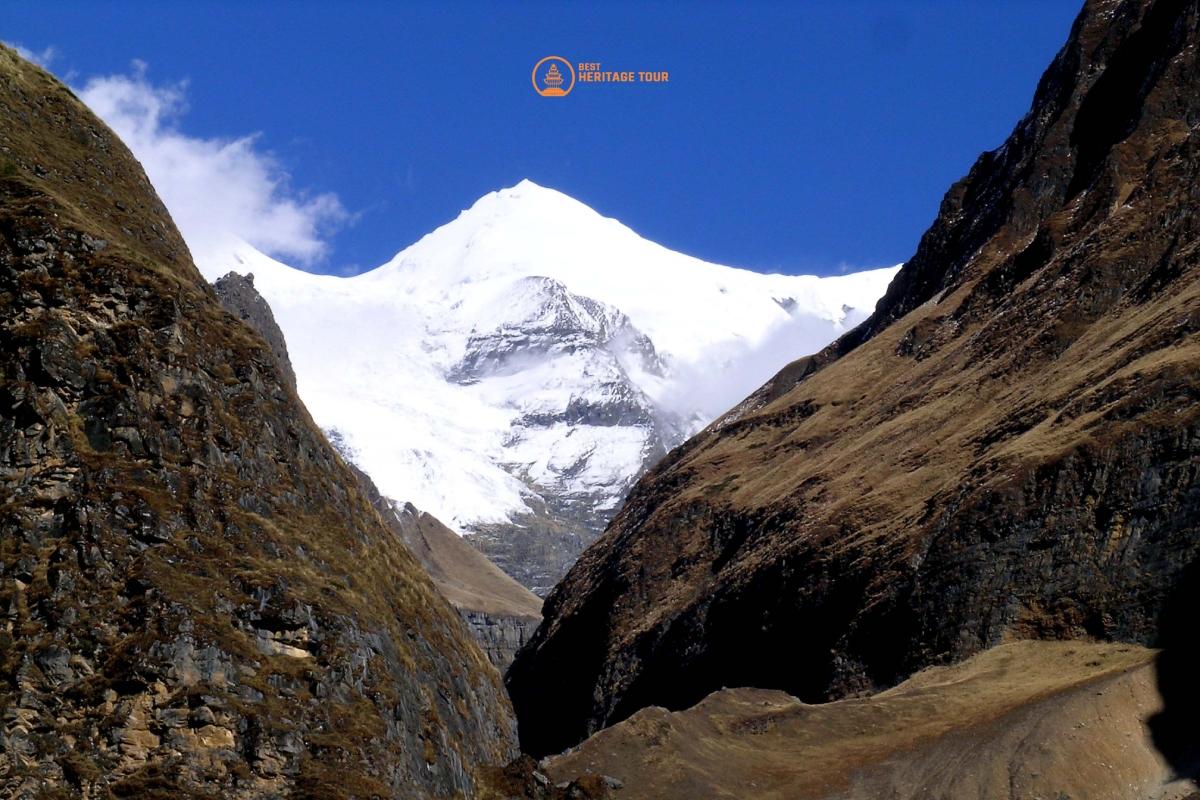
The Dhaulagiri Circuit Trek is a raw and thrilling Himalayan journey designed for true adventure seekers. Encircling the world’s seventh-highest mountain, this remote trek leads you through untouched villages, dramatic river gorges, massive glaciers, and High Mountain passes. From the lush Magar villages of the Myagdi valley to the wind-swept heights of the French Pass, every step is a masterclass in mountain grandeur. Far from crowded trails, it offers an authentic wilderness experience with breathtaking alpine scenery, challenging terrain, and deep cultural encounters - making it one of Nepal’s most rewarding and least-explored trekking adventures.
Trip at a Glance
-

Country: Nepal
-

Trip grade: Hard
-

Destination: Dhaulagiri Base Camp
-

Activities: Trekking
-

Accommodation: Teahouse & Camp
-

Meals: Breakfast, Lunch & Dinner
-
.png)
Transportation: Private/Shared Jeep/Bus
-

Maximum altitude: 5,360m / 17585ft
-

Group size: 1-10
-
Trip Start / End: Kathmandu - Kathmandu
-
.png)
Best Season: Mar-May & Sep-Nov
Key Highlights
- Complete circuit around Mt. Dhaulagiri (8,167m), the world’s 7th highest peak
- One of Nepal’s most remote and least-crowded trekking routes
- Crossing two high Himalayan passes: French Pass (5,360m) and Dhampus Pass (5,244m)
- Camping at three distinct and iconic sites: Italian Base Camp, Glacier Camp, and the main Dhaulagiri Base Camp.
- Explore Dhaulagiri Base Camp surrounded by glaciers and icefalls
- Walk across glacier moraines and alpine wilderness
- Experience Hidden Valley, a vast high-altitude Himalayan plateau
- Authentic encounters with Magar and Gurung villages
- Dramatic landscapes from lush valleys to high alpine terrain
- True expedition-style trekking with camping in remote sections
Benefits of Booking the Dhaulagiri Circuit with Best Heritage Tour
- Airport pick up and drop off services in a private vehicle are provided at no additional cost
- Convenient booking and reservation process
- Simple payment system
- Multiple communication channels (Email, WhatsApp, Facebook, WeChat, Viber, Skype, Zoom)
- 24/7 phone support at +977-9851149197/+9779810043046
- Provision of first aid kit along with oximeter for monitoring blood oxygen levels at high altitudes
- Provision of sleeping bags and trekking poles if needed
- Duffle bags provided for porters
- Free storage for excess luggage at Best Heritage Tour store during the trek
Trip Overview
The Dhaulagiri Circuit Trek is one of Nepal’s most demanding and rewarding trekking adventures, crafted for trekkers who seek raw wilderness, high-altitude challenges, and untouched Himalayan landscapes. Circling Mount Dhaulagiri (8,167m) - the world’s seventh-highest peak - this trek takes you deep into the heart of the remote Dhaulagiri massif, far away from crowded commercial routes.
The journey begins from in the lush, low-altitude valleys of the Myagdi Khola. Here, the experience is defined by vibrant Magar culture, terraced farmlands, and dense subtropical forests. However, as you ascend toward the Italian Base Camp, the greenery fades into a dramatic world of rock and ice. You will find yourself navigating the colossal Chhonbarban Glacier, walking alongside massive icefalls, and camping at the foot of vertical mountain walls that soar thousands of meters above. From Italian Base Camp and Glacier Camp to the spectacular Dhaulagiri Base Camp, trekkers are rewarded with close-up views of towering Himalayan giants, icefalls, and sweeping snowfields.
The heart of this trek lies in its high-altitude sections. Crossing the French Pass (5,360m) and Dhampus Pass (5,240m) requires significant physical stamina and mental resilience. Reaching the Hidden Valley - a desolate, wind-swept basin - is a surreal experience, offering a sense of detachment from the modern world that is rare to find elsewhere.
The Dhaulagiri Circuit is a camping-style trek through much of its high-altitude route, adding an authentic "expedition" feel to the trip. From the deepest gorges to the highest ridges, every day presents a new geographical marvel. Finishing the trek in the charming apple orchards of Marpha provides a stark and beautiful contrast to the icy heights you’ve just conquered. For the seasoned trekker, this is not just a holiday; it is a life-changing achievement that marks you as a true Himalayan adventurer.
What Can You Expect on the Dhaulagiri Circuit Trek?
1. Remote and Untouched Himalayan Trails
Unlike the busy trails of Everest or Annapurna, this trek offers profound solitude. Beyond the last village of Boghara, you leave permanent human settlements behind. Expect an authentic "expedition feel" where you are far from the reach of modern technology, surrounded only by the raw, untamed sounds of the high Himalayas.
2. A Dramatic Shift in Landscapes
Expect to witness a complete ecological transformation within days. You will start your journey walking through lush subtropical jungles and terraced rice fields in the Myagdi valley. As you ascend, the greenery vanishes, replaced by the stark, monochromatic beauty of massive glacial moraines and jagged 8,000-meter peaks that dominate the skyline.
3. Camping-Based Trekking Experience
While the lower sections offer basic teahouses, the heart of this trek is a full camping experience. You can expect to sleep in high-quality tents on the surface of glaciers or in high-altitude basins like the Hidden Valley. Waking up to a sunrise reflecting off the "White Mountain" from your tent is an unparalleled highlight.
4. High Passes Crossing Experience
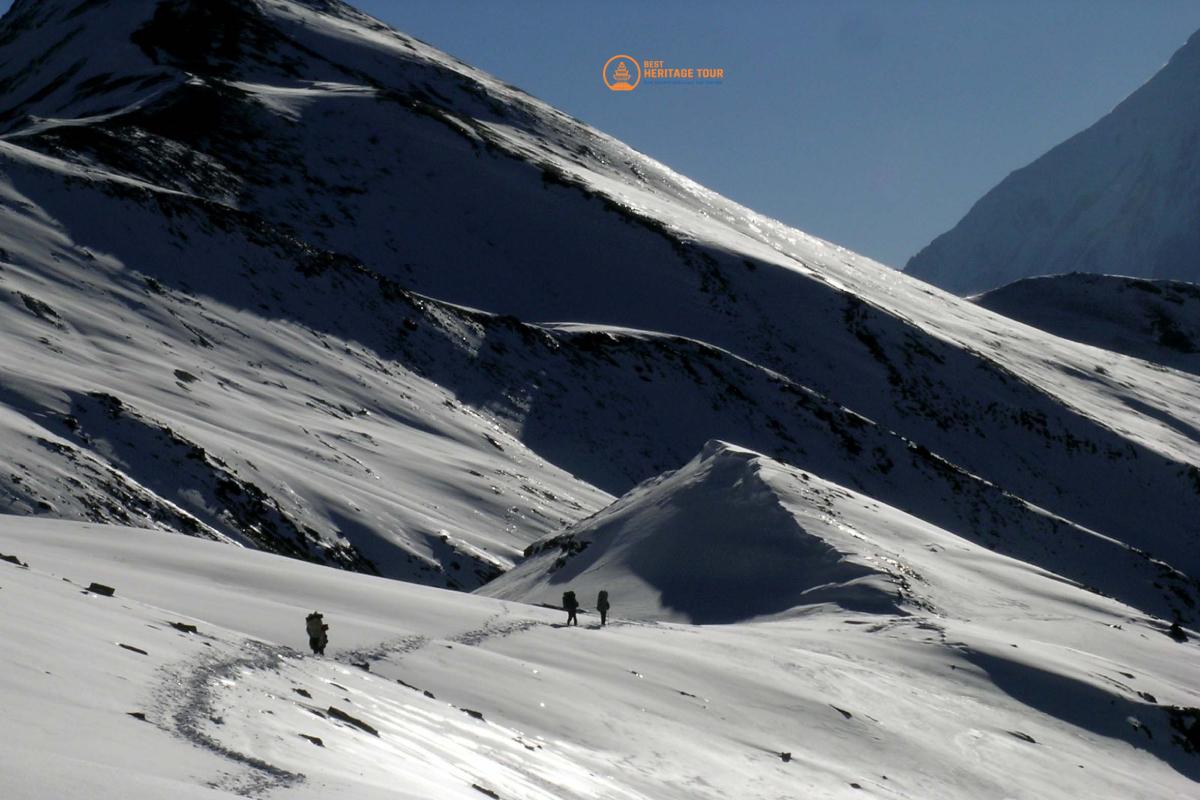
Crossing the high Himalayan passes is one of the most thrilling aspects of the Dhaulagiri Circuit Trek. Expect demanding ascents over French Pass (5,360m) and Dhampus Pass (5,244m), often on snow and rocky terrain. These crossings reward trekkers with breathtaking panoramic views and a powerful sense of achievement in a true expedition-style environment.
5. Spectacular Mountain and Glacier Views
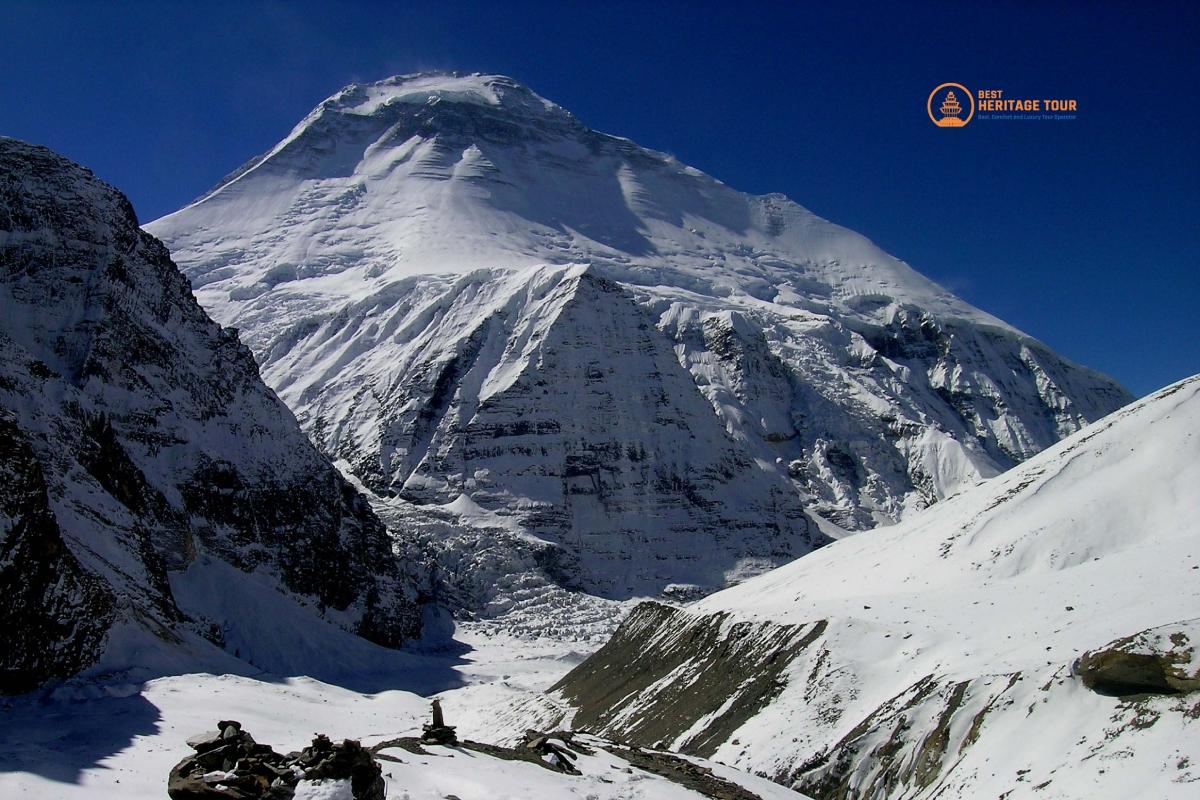
Throughout the trek, expect close-up views of massive Himalayan peaks, towering icefalls, and expansive glaciers. Dhaulagiri I dominates the skyline, accompanied by surrounding peaks that create dramatic backdrops, especially from Italian Base Camp, Dhaulagiri Base Camp, and the high passes.
6. Cultural Encounters in Traditional Villages
The early days of the trek provide a deep dive into the lives of the Magar and Gurung communities. You can expect to see traditional stone houses and experience the genuine hospitality of people whose lives have remained largely unchanged by the outside world, offering a beautiful contrast to the desolate heights ahead.
Are You Ready for the Dhaulagiri Circuit Trek?
Embarking on the Dhaulagiri Circuit Trek requires more than physical endurance; it calls for determination, mental strength, and a true spirit of adventure. Trekkers must be ready to face long days on rugged trails, steep ascents, and high-altitude terrain while staying patient and focused. The journey through remote landscapes and basic camping conditions demands adaptability and a willingness to step out of your comfort zone.
Equally important is the curiosity and appreciation for the Himalayas and its local cultures. A genuine love for raw, untouched landscapes, respect for Magar and Gurung villages, and the courage to cross High Mountain passes like French Pass and Dhampus Pass will allow you to fully immerse yourself in this epic trek. With the right mindset and preparation, the Dhaulagiri Circuit promises a life-changing Himalayan adventure.
Itinerary
Your journey begins with a long, scenic cross-country drive that transitions from the urban sprawl of Kathmandu to the rugged foothills of the Myagdi region. We leave early in the morning, following the winding Trishuli River, a major artery of Nepal famous for white-water rafting.
As we bypass the lakeside city of Pokhara and push further west, the terrain becomes more dramatic. We eventually arrive at Beni, a bustling district headquarters and a vital trade hub situated at the strategic confluence of the Kali Gandaki and Myagdi rivers.
The trek officially commences as we head west, following the north bank of the Myagdi Khola. Today’s walk is a gentle introduction to the trail, winding through a subtropical landscape of lush green rice paddies and orange groves. The path is relatively level and passes through several charming hamlets such as Beni Mangalghat and Singa.
Along the way, you’ll cross high suspension bridges draped in prayer flags, swaying gently over the turquoise river. You will witness the traditional agrarian lifestyle of the Brahmin and Chhetri communities. The air is warm and humid, filled with the scent of wildflowers and river mist. We end the day at Babiachaur, a peaceful village where the roar of the river provides a soothing soundtrack for the night.
As we continue upstream, the valley begins to narrow and the trail becomes more undulating. We pass through the village of Shahashradhara, where the sight of a thousand trickling waterfalls (as the name suggests) adds a magical element to the journey. After crossing the Duk River, the landscape shifts from flat riverbeds to steeper, forested ridges.
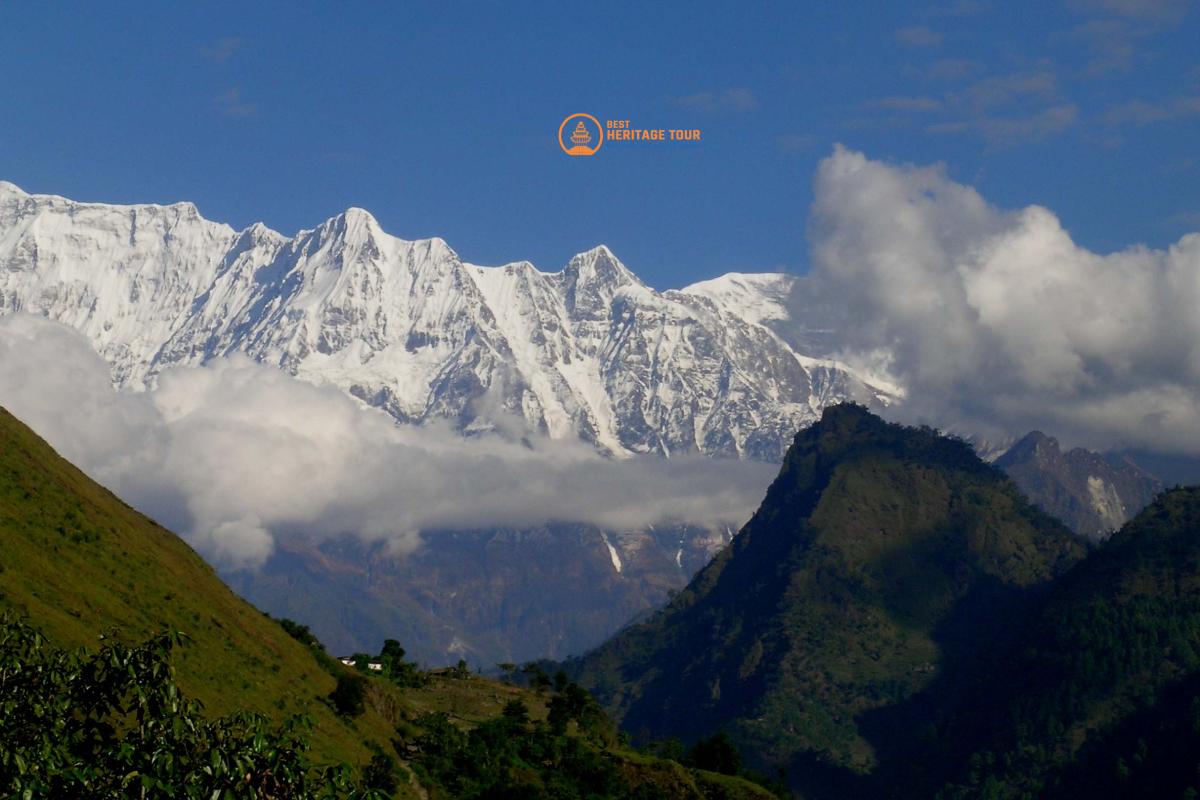
The climb toward Dharapani is steady but rewarding. Dharapani is one of the larger villages on the route and offers your first clear, intimate views of the Dhaulagiri massif and the Churen Himal. The sight of the massive white peaks appearing above the green hills is a profound reminder of the scale of the adventure you have just begun.
Today is a cultural highlight of the trek as we enter the traditional heartland of the Magar people, one of Nepal’s oldest ethnic groups. The trail climbs steeply out of Dharapani, leading us to a high ridge that overlooks the deep gorge of the Myagdi Khola. We pass through the scenic villages of Takam and Sibang, where the architecture shifts to traditional stone and mud houses with beautifully carved wooden windows.
The views today are expansive; you can see the white pyramid of Gurja Himal and the southern flanks of Dhaulagiri. After a sharp descent to the river and a final, grueling climb, we reach Muri. Perched high on a hillside, Muri is a vibrant village surrounded by massive fields of millet and maize. The local Magar culture is evident in the colorful dress and warm hospitality of the inhabitants, making this one of the most memorable social stops of the circuit.
We leave the sprawling terraces of Muri and descend steeply through a landscape that feels increasingly wild and remote. After crossing the Muri Khola via a suspension bridge, the trail climbs through dense, primeval forests where langur monkeys can often be spotted jumping through the canopy. The path becomes narrow and sometimes slippery, clinging to the sides of the cliffs high above the river.
Boghara is the last permanent settlement we will encounter for several days. It is a small, atmospheric village where the residents still lead a life of isolated subsistence. Beyond this point, the "teahouse" comfort ends, and the true "expedition" character of the Dhaulagiri Circuit begins to take hold.
Leaving Boghara, we officially leave the permanent villages behind. The trail today is a masterclass in Himalayan biodiversity as we traverse through an ancient, dense forest of oak, rhododendron, and towering pine. The path is rugged and often narrow, clinging to the side of the Myagdi Khola gorge. You’ll feel the air getting crisper as you ascend, and the greenery becomes mossier and more primeval.
Nature truly takes center stage today. Keep an eye out for the elusive Lophophorus (Nepal's national bird) or langur monkeys swinging through the canopy. The trail involves several steep climbs and descents, crossing wooden bridges over tributary streams. We eventually reach Dobang, a small clearing in the forest used by seasonal shepherds. It is a peaceful, secluded campsite where the only sound is the roar of the river below and the wind through the pines.
Today marks your transition into the sub-alpine zone. The climb from Dobang is steady as we follow the Myagdi Khola deeper toward its glacial source. As we gain altitude, the dense forest begins to thin, occasionally opening up to provide staggering "sneak peeks" of the massive Dhaulagiri I West Face. The sheer verticality of the mountains becomes apparent as the valley narrows into a dramatic canyon.
We cross several wooden bridges and navigate rocky sections of the trail that have been carved into the cliffs. Choriban Khola (literally "Forest of the Birds") is a scenic campsite located just before the greenery disappears entirely. It serves as a vital psychological boundary; looking back, you see the lush green valleys, and looking ahead, you see the stark, monochrome world of rock and ice that awaits you tomorrow.
This is the day the expedition truly feels like one. The trail leaves the last bushes behind as we reach the terminal moraine of the Chhonbarban Glacier. We begin walking on a mix of rocky debris and hard-packed earth, ascending into a spectacular natural amphitheater. As you climb, the giants reveal themselves: Dhaulagiri II (7,751m), III (7,715m), and V (7,618m) pierce the skyline to the west.
Italian Base Camp is one of the most iconic campsites in the Himalayas. It is nestled right at the base of the towering West Face of Dhaulagiri I - a 4,000-meter wall of vertical rock and ice. The camp is often lively with the energy of climbers and trekkers, all humbled by the surrounding peaks and the rolling rumble of distant ice falls.
Success on the Dhaulagiri Circuit depends heavily on today. At 3,660m, your body needs time to produce more red blood cells to handle the thinning oxygen. This is a day for "active rest." We recommend a short morning hike toward the glacier to gain a few hundred meters of altitude before descending back to camp to sleep - a classic mountaineering tactic.
The rest of the day is yours to soak in the environment. You can watch the light play across the ice faces, organize your gear for the upcoming glacier crossing, or simply enjoy the camaraderie of the camp. The silence of the high mountains is profound here, interrupted only by the occasional crack of the moving glacier or the whistle of a mountain bird.
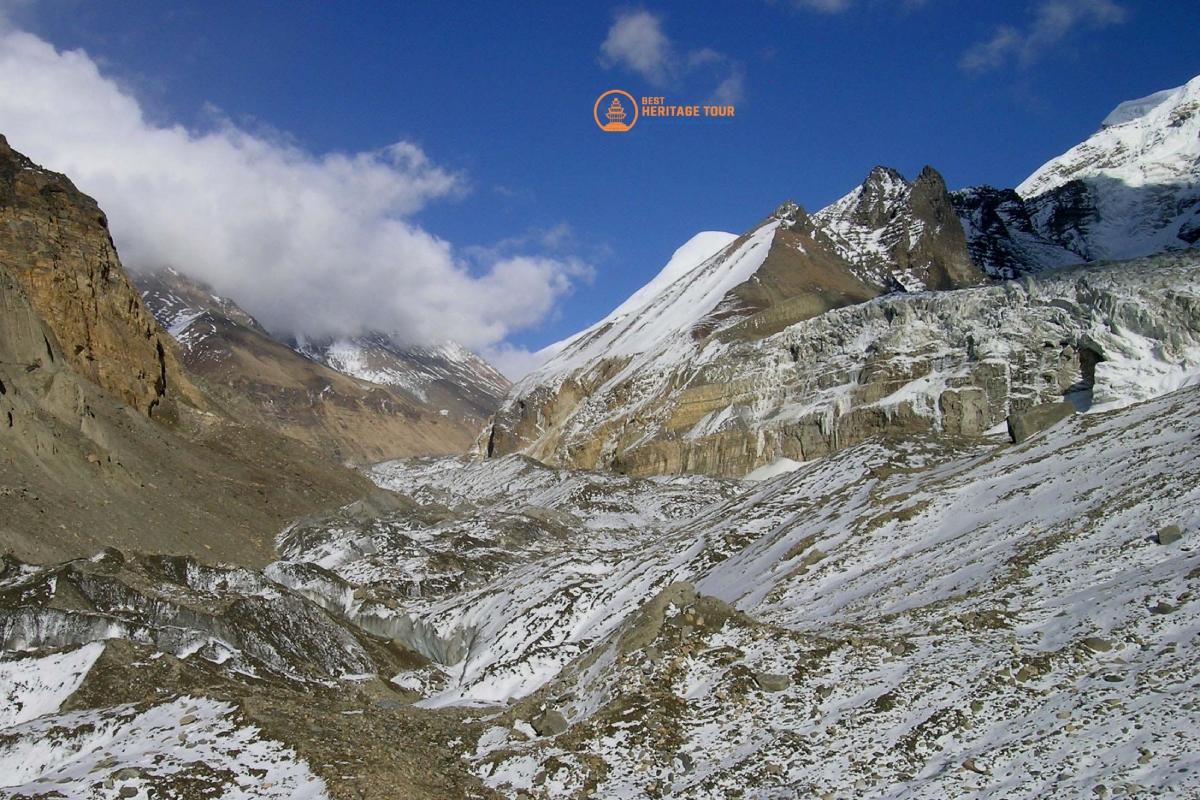
This is perhaps the most technical and adventurous day of the trek. We descend from the moraine onto the Chhonbarban Glacier itself. Navigating the glacier is a slow and careful process; the path winds through a maze of frozen waves, sideways moraines, and rocky debris. You will be walking directly over the ice that has carved these valleys over millennia.
The scenery is otherworldly - jagged ice pinnacles (seracs), deep blue meltwater pools, and the constant presence of the surrounding 7,000-meter peaks. Glacier Camp is a rugged site literally pitched on the rocks covering the glacier. It is a cold, stark, yet beautiful place where you are fully immersed in the arctic environment of the high Himalayas. This night, sleeping on the moving ice, is an experience few people on earth ever have.
The journey from Glacier Camp to Dhaulagiri Base Camp (DBC) is a masterclass in high-altitude glacial trekking. We continue our ascent along the white ribbon of the Chhonbarban Glacier, navigating the lateral moraines and rocky debris that cover the moving ice. The walk is slow and steady, as every meter gained brings us into thinner, colder air.
As you approach the Base Camp, the "White Mountain" - Dhaulagiri I (8,167m) dominates the entire horizon. Reaching DBC is a powerful experience; you are standing at the staging ground for world-class mountaineering expeditions. You are surrounded by a 360-degree theater of ice: the massive Dhaulagiri icefall to your left, the jagged Tukuche Peak to your right, and the rolling waves of the glacier behind you. The camp itself is a cluster of tents perched on the ice, offering a front-row seat to one of the most magnificent mountain faces on Earth.
At nearly 4,800 meters, a full day of rest is essential before tackling the high passes. This day is designed to let your body further adapt to the extreme altitude. You can spend the morning exploring the surrounding glacier, visiting the memorial sites dedicated to fallen climbers, or simply watching the light change on the massive ice walls above.
The atmosphere at Base Camp is unique; you may see climbing teams preparing their oxygen and gear, adding a sense of high-stakes adventure to the air. It’s a day to stay hydrated, eat well, and mentally prepare for the crossing of the French Pass tomorrow. As the sun sets, the temperature drops rapidly, turning the camp into a silent, frozen sanctuary under a blanket of stars.
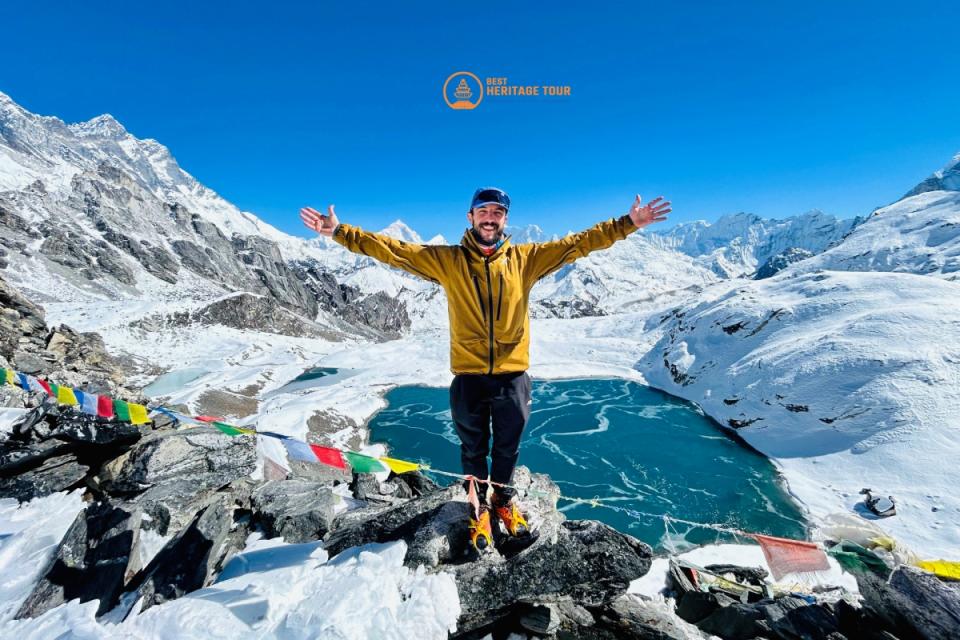
Today is the pinnacle of the Dhaulagiri Circuit. We begin with a challenging ascent over snowy slopes and rocky moraines to reach the top of the French Pass (5,360m). The climb is physically demanding, but as you reach the prayer-flag-strewn summit, the struggle is instantly forgotten. The view is arguably the best in the Himalayas: a panoramic sweep of the Dhaulagiri range, Mukut Himal, Tashi Kang, and Sita Chuchura.
Crossing the pass feels like entering another dimension. We descend into the Hidden Valley, a high-altitude basin that remains snow-covered for much of the year. This valley is a geological marvel - vast, desolate, and hauntingly beautiful. It feels like a piece of the Tibetan plateau has been dropped into the heart of Nepal. We set up camp in this silent, wind-scoured wilderness, truly far from any sign of human civilization.
We leave the sanctuary of the Hidden Valley and head toward our second high hurdle: the Dhampus Pass (also known as Thapa Pass). The climb is less steep than the French Pass but no less spectacular. From the top of Dhampus Pass, you are treated to a rare visual gift - you can see the massive Dhaulagiri massif behind you and the Annapurna range (including Annapurna I and Nilgiri) directly across the Kali Gandaki Valley.
The descent from the pass is long and steep. We drop down from the "dead zone" of rock and snow back into the world of life. As we lose elevation, the air becomes noticeably richer and warmer. We eventually reach the alpine pastures of Yak Kharka, where you’ll likely see semi-wild yaks grazing on the high-altitude shrubs. After weeks on glaciers and rock, the sight of green grass is a welcome relief for both your eyes and your feet.
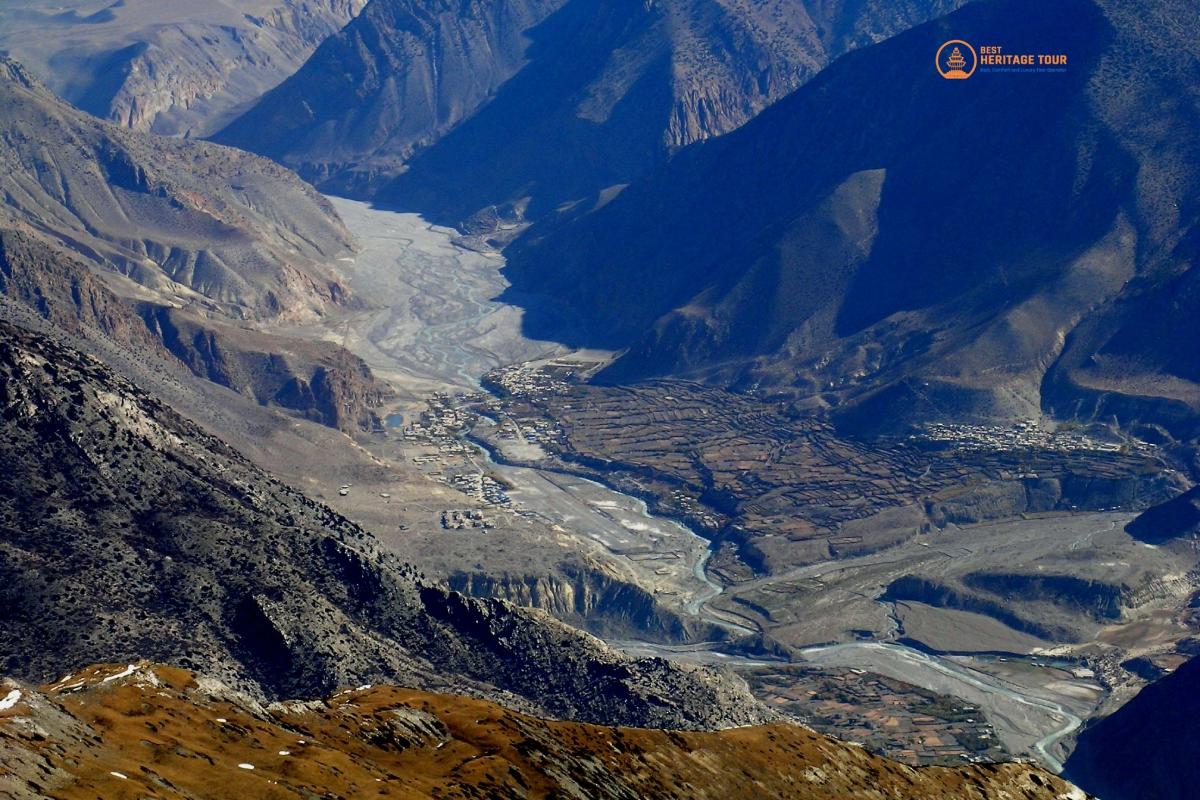
The final day of walking is a dramatic descent into the Kali Gandaki Valley. The trail drops nearly 1,500 meters, offering bird’s-eye views of the town of Jomsom and the deep river gorge below. The terrain shifts from alpine scrub to pine forests, eventually meeting the dusty floor of the valley.
We arrive in Marpha, a village that feels like a reward for your weeks of hardship. Marpha is famous for its narrow stone-paved streets, white-washed houses, and sprawling apple orchards. Walking into a warm teahouse, having a hot shower, and tasting the local apple cider or "Marpha Brandy" is the ultimate celebration. You have successfully completed one of the hardest circuits in the world, transitioning from the arctic high-altitude desert back into the heart of Thakali culture.
We trade our trekking boots for the comfort of a private vehicle as we begin the spectacular descent down the Kali Gandaki Gorge, the deepest in the world. The drive is a sensory journey through Nepal’s dramatic geography. We leave behind the arid, wind-swept landscapes of Mustang and the white-washed charm of Marpha, descending into the lush, humid greenery of the lower Myagdi and Kaski districts.
The road follows the turquoise river, passing through Tatopani (known for its natural hot springs) and several roaring waterfalls. Our final destination is Pokhara, the serene lakeside city that serves as the perfect sanctuary for weary trekkers. In the evening, you can relax by Phewa Lake, reflecting on the monumental journey you've just completed while watching the sunset paint the Annapurna range in shades of gold and purple.
The final leg of your expedition is the drive back to the capital city. We travel along the Prithvi Highway. As we climb back into the Kathmandu Valley, the quiet of the mountains is replaced by the familiar buzz of the city. To celebrate your incredible achievement of circling the world’s seventh-highest peak, Best Heritage Tour will host a farewell dinner. It is a night of celebration, sharing final stories and photographs with your guides and fellow adventurers before your departure the following day.
What is included?
- PRIVATE AIRPORT PICK-UP & DROP : Airport - Hotel transfer - Airport (Pick Up and Drop).
- MEMBER TRANSPORTATION : Transportation in standard tourist bus from Kathmandu to Beni and while returning from Pokhara to Kathmandu. Sharing Jeep for: Marpha Village to Pokhara.
- ACCOMMODATION IN KATHMANDU : 1 nights in a 3-star hotel on a bed & breakfast basis..
- LODGING : Best available accommodation in mountain lodges and Tents during the trek.
- FOOD : 3 meals a day (breakfast, lunch, and dinner; including tea/coffee) during the trek, with Ef-Chlor purification tablets provided for safe drinking water.
- GUIDE : One experienced government licensed trekking guide (English speaking) during the trek.
- STAFF SALARY AND ALLOWANCE : All trekking staff wages, salary, equipment, food & clothing.
- PERMITS : All necessary paper works : Dhaulagiri Region Restricted Area Permit & ACAP & other entry fee.
- STAFF INSURANCE : Insurance for all involved trekking staff during the trek.
- CAMPING ESSENTIALS : Necessary equipment including tents, kitchen tent, dining tent, toilet tent, table, chairs etc.
- GEAR (IF NEEDED) : Sleeping bag, down jacket, and duffle bag (to be returned after the trek).
- MEDICAL KIT : A well equipped first aid kit, including an oximeter and emergency oxygen, carried by the guide for your safety.
- IN CASE OF EMERGENCY : Assistance in rescue operations in case of emergency covered by travel insurance.
- SOUVENIR : Best Heritage Tour’s Appreciation Certificate after the successful trek & Purse, an authentic Nepali product made from hemp.
- FAREWELL DINNER : A farewell dinner with an authentic cultural program after completion of the trek.
What is not included?
- INTERNATIONAL AIRFARE : International flight airfare (from and to Kathmandu).
- NEPAL VISA FEES : You may issue the visa upon your arrival at Tribhuvan International Airport - Kathmandu or apply manually in your home country.
- TRASNPORTATION IN PRIVATE JEEP : Private Jeep transportation will be arranged on request.
- ACCOMMODATION & MEALS : Accommodation and meals in Kathmandu before and after the trek. Lunch & Dinner in Pokhara
- INSURANCE POLICY : Travel insurance covering medical expenses and high-altitude evacuation is mandatory. If you do not have suitable coverage, we can also assist in arranging travel insurance for you upon your arrival in Nepal. Check Over Here
- PERSONAL EXPENSES : Clothing & gears, telephone, internet, toiletries, hot shower, laundry, soft drinks and any Alcoholic beverages.
- OPTIONAL PORTER SERVICE : USD 22 per day, including all taxes (each porter can carry up to 25 kg of luggage).
- TIPS : Tips for guide and porters.
- EXTRA : Any additional costs due to factors beyond our control, or for services not specifically mentioned in the Itinerary & Included section.
- TAXES & SERVICE CHARGE : All government taxes (13%) and service charge (10%).
Route Map
Equipment
Clothing
Upper Body
-
Base Layers: 2-3 moisture-wicking t-shirts (Merino wool or synthetic)
-
Thermal Tops: 2 sets of expedition-weight thermals
-
Mid-Layer: 1 warm fleece jacket or pullover
-
Heavy Down Jacket (Rated for -20°C)
-
Hard Shell Jacket (GORE-TEX preferred)
Lower Body
-
Trekking Pants (2 pairs)
-
Thermal Leggings (1-2 pairs)
-
Waterproof Shell Pants
-
Hiking Shorts: 1 pair (optional, for lower altitude sections)
Head & Hands
-
Warm Beanie (Wool or fleece-lined)
-
Sun Hat / Wide-Brimmed Cap
-
Neck Gaiter (Buff)
-
Gloves
Footwear & Socks
-
Trekking Boots
-
Camp Shoes
-
Hiking Socks (3x pairs Heavy Wool, 4x pairs Liners)
-
Gaiters
Technical & Camping Gear
-
Sleeping Bag (4-season bag rated to -20°C)
-
Trekking Poles
-
Headlamp
-
Sunglasses
-
Backpack (30-35L daypack)
-
Micro-spikes (For icy sections)
Personal Care & Medical
-
Power Bank (10,000mAh+)
-
Water Purification (UV Filter or Chlorine Dioxide drops)
-
Personal First Aid & Blister Kit
-
Toiletry Kit (Biodegradable soap, quick-dry towel)
-
Sunscreen & Lip Balm (SPF 50+)
Trip Info
Best Time for the Dhaulagiri Circuit Trek
Spring (March-May)
Spring is one of the most popular times for the Dhaulagiri Circuit Trek. The weather is generally stable, with clear skies and mild daytime temperatures ideal for trekking. This season brings blooming rhododendron forests and alpine flowers, adding vibrant colors to the rugged Himalayan landscape. Snow is usually limited to higher elevations, making high passes like French Pass and Dhampus Pass safer to cross.
Autumn (September-November)
Autumn offers crisp, clear air and excellent visibility, allowing trekkers to enjoy breathtaking panoramic views of Dhaulagiri, Annapurna, and surrounding peaks. Trails are dry and stable after the monsoon, providing safer and more comfortable trekking conditions. This season is ideal for photographers and those seeking stunning mountain vistas throughout the trek.
The monsoon season (June-August) is not ideal due to heavy rainfall, slippery trails, leeches, and high risks of landslides and flooding, especially in lower regions like Beni and Marpha. Winter (December-February) is extremely cold, with snow blocking high passes such as French Pass and Dhampus Pass, making trekking hazardous.
The ideal trekking windows are spring and autumn, offering safe trails, comfortable weather, and uninterrupted, Spectacular Mountain views - perfect for an unforgettable Himalayan adventure.
Permits Required for the Dhaulagiri Circuit Trek
The Dhaulagiri region is environmentally sensitive. Trekking in the Dhaulagiri region requires several official permits to ensure legal access, safety, and support for local communities. Here’s what you need:
-
Annapurna Conservation Area Permit (ACAP): Required as we exit through the Annapurna region.
-
Restricted Area Permit (RAP): Since parts of this trek are near restricted zones, a special permit may needed, and you must be accompanied by a licensed guide.
Note: As of 2025, the TIMS card is no longer required, replaced by local municipality entry fees which are included in our package.
All the necessary permits will be arranged by Best Heritage Tour on your behalf. One just need to provide the passport photocopy, photographs and the insurance copy.
Accommodation and Meals
The Dhaulagiri Circuit Trek is a hybrid adventure that transitions from the warmth of mountain villages to the raw, icy heart of the Himalayas. At Best Heritage Tour, we ensure that despite the remote nature of the trail, your comfort and nutrition are never compromised.
Accommodation: From Village Charm to Glacial Base Camps
Since this route remains one of the least commercialized in Nepal, the accommodation is a unique blend of local hospitality and professional expedition camping.
-
Teahouse Stays (Lower Regions): In the early stages of the trek (Beni to Boghara) and upon descending into Marpha, we stay in authentic mountain teahouses. These are simple, family-run lodges providing twin-sharing rooms. While basic, they offer a cozy atmosphere and a chance to connect with the local Magar and Gurung communities.
-
Expedition Camping (High Altitude): From Dobang to Yak Kharka, the infrastructure disappears. During these critical 7-8 days, Best Heritage Tour provides a full-service campsite. You will sleep in high-quality, weather-resistant 4-season tents designed for extreme conditions. We also set up dedicated dining tents with tables and chairs, and toilet tents to ensure privacy and hygiene even at 5,000 meters.
Meals: Gourmet Nutrition in the Wilderness
We believe that high-quality food is the fuel for a successful expedition. All standard meals (Breakfast, Lunch, and Dinner) are included in your package from the moment we leave Kathmandu until we return.
-
Professional Kitchen Crew: For the camping portion, a dedicated cook accompanies us. They are experts at preparing fresh, hygienic, and high-energy meals in a portable kitchen.
-
Diverse Menu:
-
Breakfast: Porridge, eggs (any style), pancakes, Tibetan bread, muesli, and hot tea or coffee.
-
Lunch & Dinner: A mix of local and international dishes including the legendary Dal Bhat (the ultimate trekker’s fuel), pasta, noodles, stews, soups, and seasonal vegetable curries.
-
Whether you are vegetarian, vegan, or have specific gluten-free requirements, our cook are trained to cater to your needs - just let us know in advance! We prioritize your health by providing boiled or chemically treated purified water throughout the trek to ensure you stay hydrated without the environmental impact of plastic bottles.
Trip Difficulty and Fitness Requirements
The Dhaulagiri Circuit Trek is classified as a Strenuous (Grade 5) expedition. It is one of the most demanding "non-climbing" treks in Nepal, requiring a high level of physical conditioning and mental resilience. At Best Heritage Tour, we want our guests to be fully prepared for the challenges of this wild frontier.
Physical Challenges & Terrain
You will be walking for 6 to 8 hours daily across highly varied and often unstable terrain. The lower sections involve steep, humid climbs through forests, while the upper sections require navigating glacial moraine, loose scree, and permanent snow. Unlike the well-trodden paths of the Everest region, the trails here can be narrow and rugged, demanding a good sense of balance and steady footwork.
Altitude & Two High Passes
The primary challenge of this trek is the sustained time spent at high altitude. You will conquer:
-
French Pass (5,360m)
-
Dhampus Pass (5,240m)
For several days, you will be trekking and sleeping above 4,000 meters, where the air is significantly thinner. This requires excellent cardiovascular health and a body that can recover quickly in low-oxygen environments.
Previous Experience Required
This is not a trek for beginners. We strongly recommend that participants have prior experience with high-altitude trekking (above 4,000m), such as the Everest Base Camp or Manaslu Circuit. Familiarity with basic camping life and the ability to endure cold temperatures (reaching -15°C to -20°C at night) are essential.
Recommended Training Regimen
To fully enjoy the journey rather than just "enduring" it, we suggest starting a training program 3 to 4 months before departure:
-
Cardio: Long-distance running, cycling, or swimming (3–4 times a week) to build lung capacity.
-
Strength: Leg-focused weight training (squats, lunges) and core exercises to help carry a daypack on steep inclines.
-
Hiking: The best training is hiking. Spend your weekends on local trails, gradually increasing your pack weight and elevation gain.
Health & Safety
At Best Heritage Tour, safety is the foundation of every expedition. We blend rigorous medical protocols with expert local insight to ensure you navigate the Dhaulagiri Circuit with total peace of mind.
-
Expert Altitude Management: Our itinerary includes two mandatory acclimatization days. Our guides monitor your health twice daily using pulse oximeters to track oxygen saturation and heart rate, catching symptoms of AMS before they escalate.
-
WFA-Certified Leadership: Every trek is led by a senior guide certified in Wilderness First Aid. They carry a comprehensive medical kit, including supplemental oxygen and high-altitude medications (like Diamox), specifically tailored for remote environments.
-
24/7 Emergency Logistics: We maintain constant satellite or radio communication with our Kathmandu headquarters. In the rare event of an emergency, we coordinate immediate helicopter evacuation through our pre-established network of rescue providers.
-
Hygiene & Nutrition: To prevent waterborne illness, we provide unlimited boiled and purified water. Our kitchen crew follows strict sanitary standards, serving fresh, nutrient-dense meals designed to keep your immune system strong at 5,000 meters.
A Typical Day in the Mountains
Life on the Dhaulagiri Circuit follows the natural rhythm of the Himalayas. At Best Heritage Tour, we ensure every day is a balance of adventure and recovery.
1. Early Morning: The Wake-Up
Your day begins at sunrise with a warm cup of "bed tea" brought to your tent or room. After a quick pack-up, you’ll enjoy a hot, high-energy breakfast. This is when your guide provides the daily briefing on the route, weather, and safety.
2. Late Morning: The Main Trek
We hit the trail by 8:00 AM while the air is crisp. This is the most productive part of the day, focusing on steady ascent and steady breathing. Whether navigating lush forests or glacial moraine, we maintain a slow, consistent pace for optimal acclimatization.
3. Midday: The Trailside Lunch
Around noon, we pause for a substantial hot lunch prepared by our crew or served at a teahouse. This hour-long break is vital for resting your legs and hydrating before the final stretch of the day's journey.
4. Afternoon: Reaching Camp
The afternoon walk is typically shorter, arriving at our destination by 3:00 PM or 4:00 PM. This "active recovery" time allows you to explore the local surroundings, interact with the crew, or simply rest while watching the light change on the 8,000-meter peaks.
5. Evening: Dinner and Rest
As the temperature drops, we gather for a dinner. Afterward, your guide conducts a final health check - monitoring oxygen levels - and discusses the plan for the next morning. Most trekkers retire to their sleeping bags by 9:00 PM for a deep Himalayan rest.
Travel Insurance
For a strenuous expedition like the Dhaulagiri Circuit, standard travel insurance is simply not enough. At Best Heritage Tour, we require proof of a comprehensive insurance policy before you can begin the trek. Your policy must include the following specific coverages:
-
High-Altitude Coverage (Up to 6,000m)
-
Medical Emergency & Hospitalization: Including treatment for Altitude Sickness (AMS, HAPE, or HACE).
-
Emergency Helicopter Evacuation
-
Search and Rescue (SAR)
-
Trip Cancellation & Interruption
-
Cashless Claims & Direct Payment
Pro Tip: Always carry a physical print-out of your insurance policy and the 24-hour emergency contact number in your chest pocket. In an emergency, every second counts, and having your policy number ready allows Best Heritage Tour to launch a rescue immediately.
Visa for Nepal
All international travelers (except Indian) need a tourist visa to visit Nepal, which can be obtained on arrival at Kathmandu airport or online.
Key Details:
-
Duration: 15, 30, or 90 days (30 days recommended for this trek)
-
Fees: 15 days - USD 30 | 30 days - USD 50 | 90 days - USD 125
-
Requirements: Valid passport (6+ months), visa form, passport photo, and payment in cash (USD/EUR/GBP/NPR)
Tip: Keep a copy of your visa and passport during the trek and consider applying visa online (through Nepal Immigration Website) for a smoother arrival.
Booking & Payment
Booking your Dhaulagiri Circuit Trek with Best Heritage Tour is simple and secure. To confirm your trip, a 10% deposit of the total trip cost is required at the time of booking, while the remaining balance must be cleared at least one day before departure. Payments can be made via cash, bank transfer, or card; bank transfer and card fees are the responsibility of the trekker, and card payments incur a 4% transaction fee. All booking and cancellation terms are clearly explained by Best Heritage Tour staff during the booking process and can also be reviewed on our website.
Last-Minute Booking
For travelers planning on short notice, Best Heritage Tour accepts last-minute bookings up to 24 hours before departure. In such cases, full payment (100% of the trip cost) is required at the time of booking. Trekkers should be aware that accommodation, logistics, and services may be limited, and the company cannot be held responsible for any compromises arising from late arrangements.
FAQ's
The Dhaulagiri Circuit Trek is a strenuous, high-altitude expedition that circles Mt. Dhaulagiri (8,167m), the world's seventh-highest peak. This remote journey takes adventurers through lush valleys, massive glaciers, and two high Himalayan passes - French Pass and Dhampus Pass - offering a raw wilderness experience far from crowded trails.
The Dhaulagiri Circuit Trek is classified as a Grade 5 "Strenuous" expedition, making it one of the most demanding treks in Nepal. It requires navigating unstable glacial moraines, loose scree, and permanent snow. Best Heritage Tour recommends this trek only for experienced hikers with high physical fitness.
The ideal windows for the Dhaulagiri Circuit Trek are Spring (March to May) and Autumn (September to November). Spring offers blooming rhododendrons and stable weather, while Autumn provides crisp air and the best visibility for photographing the 8,000-meter peaks. Winter and Monsoon are generally avoided.
The standard itinerary for the Dhaulagiri Circuit Trek organized by Best Heritage Tour lasts 17 days. This duration includes essential acclimatization days at Italian Base Camp and Dhaulagiri Base Camp, ensuring trekkers can safely navigate the high-altitude passes while enjoying the diverse Himalayan landscapes.
The highest point reached during the Dhaulagiri Circuit Trek is the summit of French Pass, situated at an elevation of 5,360 meters (17,585ft). Shortly after, trekkers also cross Dhampus Pass at 5,240 meters, making this trek a sustained high-altitude adventure through the Hidden Valley.
Yes, several permits are mandatory for the Dhaulagiri Circuit Trek. You will need the Annapurna Conservation Area Permit (ACAP) and a Restricted Area Permit (RAP). Best Heritage Tour handles all permit arrangements on your behalf, requiring only your passport photos, photocopy, and insurance details.
No, the Dhaulagiri Circuit Trek is not recommended for beginners. Due to its technical terrain, extreme altitudes, and long days of walking on glaciers, Best Heritage Tour suggests that participants should have prior experience with high-altitude treks, such as Everest Base Camp or the Manaslu Circuit.
The Dhaulagiri Circuit Trek features hybrid accommodation. Lower regions like Beni and Marpha offer teahouses. However, the high-altitude sections from Dobang to Yak Kharka require expedition-style camping. Best Heritage Tour provides high-quality 4-season tents, dining tents, and toilet tents for these remote nights.
Essential gear for the Dhaulagiri Circuit Trek includes a -20°C rated down jacket and sleeping bag, moisture-wicking layers, sturdy trekking boots, and micro-spikes for icy sections. Best Heritage Tour can provide sleeping bags and trekking poles if you do not have your own.
The cost of the Dhaulagiri Circuit Trek varies based on group size and service levels. The package from Best Heritage Tour typically includes ground transportation, permits, meals, camping equipment, and the services of experienced guides and porters. Contact us directly for the most updated 2026/2027 pricing.
Yes, comprehensive travel insurance is mandatory for the Dhaulagiri Circuit Trek. Your policy must specifically cover high-altitude trekking up to 6,000 meters and include emergency helicopter evacuation and search and rescue. Best Heritage Tour requires proof of insurance before the trek begins.
The Hidden Valley is a high-altitude, wind-swept basin located at 5,100 meters, which trekkers enter after crossing French Pass during the Dhaulagiri Circuit Trek. It is a desolate, snow-covered plateau that offers a sense of total isolation, often compared to the landscapes of the Tibetan plateau.
Preparation for the Dhaulagiri Circuit Trek should begin 3-4 months in advance. Focus on cardiovascular training like running or cycling, and leg-focused strength exercises. Best Heritage Tour recommends practicing on local trails with a weighted daypack to build the stamina required for 6-8 hour hiking days.
During the Dhaulagiri Circuit Trek, you will enjoy a mix of local and international dishes. While camping, Best Heritage Tour sends a professional kitchen crew to prepare fresh, high-energy meals like Dal Bhat, pasta, and porridge. They also cater to vegetarian, vegan, and gluten-free diets.
Communication is very limited on the Dhaulagiri Circuit Trek once you move beyond the lower villages. While some teahouses may have Wi-Fi, the camping sections are remote. Best Heritage Tour maintains safety through satellite or radio communication with their Kathmandu headquarters for emergency coordination.
On the Dhaulagiri Circuit Trek, porters are provided to support luggage with a maximum weight limit of 25 kg. Best Heritage Tour ensures that porters are well-equipped with duffle bags and that their welfare, including meals, insurance, and salary, is fully covered by the agency.
Italian Base Camp (3,660m) is a vital stop on the Dhaulagiri Circuit Trek located at the base of the massive West Face of Dhaulagiri I. It serves as a primary acclimatization point where Best Heritage Tour schedules a rest day to help trekkers adapt to the altitude.
Yes, the Dhaulagiri Circuit Trek offers spectacular views of the Annapurna range. Specifically, after crossing Dhampus Pass, trekkers can look across the deep Kali Gandaki Valley to see Annapurna I and Nilgiri, providing a unique perspective of two 8,000-meter massifs in one glance.
To prevent waterborne illnesses and reduce plastic waste, Best Heritage Tour provides unlimited boiled or chemically purified water during the Dhaulagiri Circuit Trek. Trekkers are encouraged to bring their own reusable bottles and avoid buying plastic bottled water in the sensitive mountain environments.
The 17-day Dhaulagiri Circuit Trek itinerary starts with a drive from Kathmandu to Beni. It moves through villages like Muri and Boghara before entering the glacial zones of Italian Base Camp and Dhaulagiri Base Camp. It concludes with a descent to Marpha and Pokhara.
Yes, a licensed guide is mandatory for the Dhaulagiri Circuit Trek because it involves restricted areas and technical glacier travel. Best Heritage Tour provides government-certified English-speaking guides and assistant guides for larger groups to ensure safety, proper navigation, and cultural insights throughout the journey.
Altitude sickness (AMS) is a significant risk on the Dhaulagiri Circuit Trek as you spend several days above 4,000 meters. Best Heritage Tour manages this by including two acclimatization days and using pulse oximeters to monitor oxygen levels daily, ensuring trekkers stay healthy and safe.
The Dhaulagiri Circuit Trek is unique for its "expedition-style" feel and profound solitude. Unlike Everest, it remains largely untouched by commercialization. It offers a rare opportunity to camp on moving glaciers and cross two 5,000-meter passes in one of Nepal’s most remote regions.
The walking portion of the Dhaulagiri Circuit Trek officially ends in the charming village of Marpha, famous for its apple orchards and white-washed stone houses. From Marpha, trekkers are driven through the Kali Gandaki Gorge to Pokhara before returning to Kathmandu with Best Heritage Tour.
"Dhaulagiri" translates to "White Mountain," and it is the dominant peak throughout the Dhaulagiri Circuit Trek. Reaching Dhaulagiri Base Camp at 4,740 meters puts you directly at the foot of this 8,167-meter giant, surrounded by a 360-degree theater of ice and spectacular hanging glaciers.
Glacier Camp (4,210m) is a rugged campsite located directly on the rocks covering the Chhonbarban Glacier during the Dhaulagiri Circuit Trek. Sleeping on the moving ice is a highlight for many trekkers, offering an immersive arctic experience that is rare in standard Himalayan trekking.
Hot showers are available only in the lower teahouse sections of the Dhaulagiri Circuit Trek, such as Beni or Marpha, often for an extra fee. During the 7-8 days of expedition camping, showers are not available, though Best Heritage Tour provides warm water for basic hygiene.
You can book the Dhaulagiri Circuit Trek through Best Heritage Tour using multiple communication channels like WhatsApp, Email, or Zoom. A 10% deposit is required to confirm your spot, with the remaining balance due at least one day before the departure from Kathmandu.
In case of a medical emergency on the Dhaulagiri Circuit Trek, Best Heritage Tour coordinates immediate helicopter evacuation via their 24/7 rescue network. Their guides are certified in Wilderness First Aid and carry comprehensive medical kits, including supplemental oxygen and medications for altitude-related illnesses.
Charging facilities are available in lower-altitude teahouses for a small fee during the Dhaulagiri Circuit Trek. However, during the camping phase, there is no electricity. Best Heritage Tour recommends bringing a high-capacity power bank (10,000mAh+) to keep your cameras and phones charged for the journey.
While challenging, the Dhaulagiri Circuit Trek is safe when done with professional support. The main hazards include high altitude, rugged glacial terrain, and unpredictable weather. Best Heritage Tour mitigates these risks with expert guides, proper acclimatization schedules, and rigorous safety protocols.
Best Heritage Tour organizes the Dhaulagiri Circuit Trek for both small and large groups. For groups larger than 12 trekkers, an assistant guide is provided in addition to the lead trekking guide to ensure personalized attention and safety for every participant throughout the strenuous journey.
For the Dhaulagiri Circuit Trek, you need high-quality, broken-in trekking boots with good ankle support and waterproof membranes. You should also pack lightweight camp shoes for the evenings. Best Heritage Tour also recommends gaiters and micro-spikes for navigating the snowy and icy sections of the passes.
The Dhaulagiri Circuit Trek offers deep cultural encounters, especially in the early days. You will pass through traditional Magar and Gurung villages like Muri and Boghara, observing stone architecture and ancient agrarian lifestyles that have remained largely unchanged by the modern world.
The Myagdi Khola is the river that the Dhaulagiri Circuit Trek follows during its initial stages. Trekkers walk along its banks through subtropical forests and terraced fields, gradually ascending from the lush lowlands of Beni into the high-altitude glacial valleys where the river originates.
Solo trekking is not permitted on the Dhaulagiri Circuit Trek because it passes through restricted areas that require a licensed guide and a permit. Best Heritage Tour provides the necessary logistical support, including guides and porters, which are essential for navigating the remote, uninhabited sections of the glacier.
On a typical day during the Dhaulagiri Circuit Trek, you will walk for approximately 6 to 7 hours. Some days, especially those involving the crossing of French Pass or Dhampus Pass, can be longer and more physically demanding due to the steep terrain and high altitude.
If you are using the porter services provided by Best Heritage Tour during the Dhaulagiri Circuit Trek, your main duffle bag should not exceed 25 kg. You will also need a 30-35L daypack to carry your personal essentials like water, snacks, a camera, and extra layers.
Yes, the Dhaulagiri Circuit Trek is significantly more difficult than the Everest Base Camp trek. While EBC has well-maintained trails and teahouses, Dhaulagiri involves technical glacier walking, high-altitude camping, and crossing more challenging passes in a much more remote and isolated environment.
French Pass (5,360m) is the highest and most iconic crossing on the Dhaulagiri Circuit Trek. Reaching the top rewards trekkers with a 360-degree panorama of the Dhaulagiri massif and surrounding 7,000-meter peaks like Tukuche and Mukut Himal, marking the pinnacle of the expedition.
Dhampus Pass, also known as Thapa Pass (5,240m), is the second high-altitude pass on the Dhaulagiri Circuit Trek. It offers a dramatic vantage point where you can see the Dhaulagiri range on one side and the Annapurna range on the other as you descend toward Yak Kharka.
Laundry services are non-existent once you leave the main towns on the Dhaulagiri Circuit Trek. Best Heritage Tour recommends bringing enough changes of base layers and socks. Trekkers often use biodegradable soap to wash small items in teahouses during the first or last few days.
Porters are essential for the Dhaulagiri Circuit Trek, as they carry the heavy camping gear, food supplies, and trekkers' duffle bags. Best Heritage Tour provides porters for all expeditions, ensuring they are treated fairly with proper insurance, gear, and compensation for their incredibly hard work.
You can use your phone for photos throughout the Dhaulagiri Circuit Trek, but mobile network signals are very weak or absent in the high-altitude sections. Best Heritage Tour advises trekkers to inform their families about the lack of communication during the 7-8 days of wilderness camping.
The Magar people are one of the primary ethnic groups encountered during the Dhaulagiri Circuit Trek, particularly in villages like Muri. Their culture is characterized by traditional stone-and-mud architecture, unique dress, and a warm hospitality that provides a rich cultural layer to this adventurous trek.
Best Heritage Tour follows a "Leave No Trace" policy during the Dhaulagiri Circuit Trek. All waste generated during the camping phase is collected and carried out to be disposed of properly. Trekkers are encouraged to use biodegradable toiletries and minimize their environmental footprint in this sensitive region.
The "Dhaulagiri Round" trek is another name for the Dhaulagiri Circuit Trek. It refers to the fact that the route makes a complete circuit around the Dhaulagiri massif, starting in the Myagdi valley and ending in the Kali Gandaki valley via the high Himalayan passes.
Yes, Best Heritage Tour carries supplemental oxygen as part of their emergency medical kit for the Dhaulagiri Circuit Trek. This is reserved for life-threatening situations related to altitude sickness, ensuring that trekkers have the best possible support while navigating the high-altitude sections of the French and Dhampus passes.
The sunrise views on the Dhaulagiri Circuit Trek are legendary. Waking up at Dhaulagiri Base Camp or Italian Base Camp allows you to see the first light of day hit the "White Mountain," turning the massive ice walls into glowing shades of orange and gold right from your tent.
The initial terrain of the Myagdi Valley on the Dhaulagiri Circuit Trek is lush and subtropical. Trekkers walk through rice paddies, orange groves, and dense forests of oak and rhododendron, following the river through steep gorges before the landscape transforms into rock and ice.
There is no strict age limit for the Dhaulagiri Circuit Trek, but participants must be in excellent physical condition. Best Heritage Tour recommends that teenagers and older adults consult with a doctor before booking, as the extreme altitudes and strenuous daily walks are physically taxing.
Tukuche Peak (6,920m) is a prominent mountain that becomes visible during the later stages of the Dhaulagiri Circuit Trek. It stands near Dhaulagiri I and provides a stunning backdrop as you cross the French Pass and descend into the Hidden Valley, contributing to the trek's dramatic alpine scenery.
Beni is the starting point of the Dhaulagiri Circuit Trek, located at the confluence of the Kali Gandaki and Myagdi rivers. It is a bustling trade hub in the Myagdi region where trekkers spend their first night in a teahouse before hitting the trail the next morning.
No, the Dhaulagiri Circuit Trek is one of Nepal’s least-crowded routes. Unlike the busy trails of the Everest or Annapurna regions, you will experience profound solitude, often going days without seeing other trekking groups, which enhances the authentic "wilderness" feel of the journey.
For the high-altitude camping sections of the Dhaulagiri Circuit Trek, Best Heritage Tour uses professional 4-season, weather-resistant tents. These are specifically designed to withstand extreme mountain conditions, including high winds and temperatures that can drop to -20°C on the glacier.
Vegetation on the Dhaulagiri Circuit Trek changes dramatically with altitude. It starts with subtropical jungles and terraced farms, moves into temperate forests of pine and rhododendron, transitions to alpine shrubs and yak pastures, and finally ends in the high-altitude "dead zone" of rock and ice.
The Chhonbarban Glacier is the massive ice flow that trekkers must navigate during the middle section of the Dhaulagiri Circuit Trek. The trail involves walking on the glacier's surface and lateral moraines to reach Italian Base Camp, Glacier Camp, and Dhaulagiri Base Camp.
Wi-Fi is occasionally available for a fee in teahouses during the first few days and the final days of the Dhaulagiri Circuit Trek. However, there is no Wi-Fi or internet connectivity during the 7-8 days of camping in the high-altitude wilderness between Boghara and Marpha.
"Thapa Pass" is another name for the Dhampus Pass (5,240m) on the Dhaulagiri Circuit Trek. It is the final high hurdle of the journey, offering trekkers breathtaking panoramic views of the Annapurna and Dhaulagiri ranges before they begin the long descent to the village of Marpha.
Yes, you are likely to encounter semi-wild yaks grazing in the high alpine pastures of Yak Kharka during the later stages of the Dhaulagiri Circuit Trek. Seeing these iconic Himalayan animals against the backdrop of the high peaks is a highlight after spending days on the glacier.
Dhaulagiri I (8,167m) is the centerpiece of the Dhaulagiri Circuit Trek and the seventh-highest mountain in the world. The trek encircles this massive peak, providing ever-changing views of its different faces, most notably the towering 4,000-meter West Face from Italian Base Camp.
Guides from Best Heritage Tour are certified in Wilderness First Aid and monitor oxygen levels twice daily using pulse oximeters. If symptoms of Acute Mountain Sickness (AMS) appear, they follow strict protocols, which may include rest, medication, or immediate descent to ensure the trekker's safety.
Boghara (2,080m) is a small, atmospheric village that serves as the last permanent human settlement encountered on the Dhaulagiri Circuit Trek before entering the uninhabited wilderness. Beyond Boghara, teahouse comforts end, and the trek takes on its true expedition-style camping character for several days.
Marpha village is often called the "Apple Capital" of Nepal and is a key stop at the end of the Dhaulagiri Circuit Trek. Trekkers can celebrate their success by tasting local apple cider, brandy, and fresh apple pies in the cozy teahouses of this beautiful stone village.
The Dhaulagiri Circuit Trek is a hybrid trek, not a pure teahouse trek. While it starts and ends with teahouse stays in the lower regions, the core high-altitude section requires 7-8 days of full expedition camping. Best Heritage Tour provides all the necessary camping infrastructure for these sections.
During the Dhaulagiri Circuit Trek, you may spot the Danphe (Lophophorus), which is Nepal's national bird, especially in the forested sections around Dobang and Choriban Khola. The area is rich in biodiversity, offering glimpses of various Himalayan bird species against the dramatic mountain scenery.
While the total distance can vary slightly based on side trips, the Dhaulagiri Circuit Trek covers roughly 120-130 kilometers over 17 days. This includes daily hikes ranging from 7 to 14 kilometers through diverse and often challenging terrain.
The "expedition feel" of the Dhaulagiri Circuit Trek comes from the fact that you leave permanent settlements behind for over a week. Camping on glaciers, crossing high passes, and relying on a support crew for meals and shelter creates a sense of true mountain exploration rarely found elsewhere.
Yes, langur monkeys are frequently spotted in the dense primeval forests of the Myagdi valley during the early stages of the Dhaulagiri Circuit Trek. Watching them swing through the canopy of oak and rhododendron trees is a common wildlife highlight before you reach the high-altitude tree line.
The best training for the Dhaulagiri Circuit Trek is actual hiking. Best Heritage Tour recommends spending weekends on local trails, gradually increasing your elevation gain and the weight of your daypack. Complement this with cardio workouts like running or swimming to build lung capacity for high-altitude environments.
The French Pass is the highest point of the Dhaulagiri Circuit Trek, sitting at an altitude of 5,360 meters (17,585ft). Reaching this elevation requires significant physical stamina and mental resilience, but the panoramic views of the Dhaulagiri massif from the top are unparalleled in the Himalayas.
Yes, the Dhaulagiri Circuit Trek itinerary includes a stay in the lakeside city of Pokhara toward the end of the journey. After weeks of trekking, Pokhara serves as a relaxing sanctuary where you can enjoy the views of Phewa Lake and the Annapurna range from a comfortable hotel.
The Hidden Valley is a high-altitude basin located at approximately 5,100 meters (16,700ft) on the Dhaulagiri Circuit Trek. This desolate and hauntingly beautiful wilderness is where trekkers camp after crossing the French Pass, offering a profound sense of isolation and a unique geological landscape.
To reach the start of the Dhaulagiri Circuit Trek, Best Heritage Tour organizes a scenic 8-9 hour drive from Kathmandu to Beni in a private or shared vehicle. The journey takes you along the Trishuli River and past the city of Pokhara into the heart of the Myagdi region.
Yes, the Best Heritage Tour itinerary for the Dhaulagiri Circuit Trek includes two mandatory rest days for acclimatization: one at Italian Base Camp (3,660m) and another at Dhaulagiri Base Camp (4,740m). These days are crucial for helping your body adapt to the thinning air.