
EBC Trek with Island Peak & Mera Peak Expedition - 23 Days
Insight on the EBC Trek with Island Peak & Mera Peak Expedition
The EBC Trek with Island Peak & Mera Peak Expedition is a complete Himalayan adventure that combines world-famous trekking routes with thrilling peak climbing experiences in the Everest region of Nepal. This journey is ideal for experienced trekkers and aspiring mountaineers seeking both high-altitude trekking and technical climbing challenges. From reaching the legendary Everest Base Camp to summiting Island Peak and Mera Peak, every day offers breathtaking Himalayan scenery, Sherpa culture, glacier crossings, and unforgettable mountain panoramas. Crossing the challenging Amphu Lapcha Pass further adds excitement, making this expedition one of Nepal’s most rewarding mountaineering adventures.
Trip at a Glance
-

Country: Nepal
-

Trip grade: Strenuous
-

Destination: EBC, Island & Mera Peak
-

Activities: Trekking & Climbing
-

Accommodation: Teahouse / Camps
-

Meals: Breakfast, Lunch & Dinner
-
.png)
Transportation: Flight
-

Maximum altitude: 6,476 m / 21,246 ft
-

Group size: 1-7
-
Trip Start / End: Kathmandu - Kathmandu
-
.png)
Best Season: Mar-May & Sep-Nov
Key Highlights
- Experience the ultimate Himalayan adventure in the Everest region of Nepal
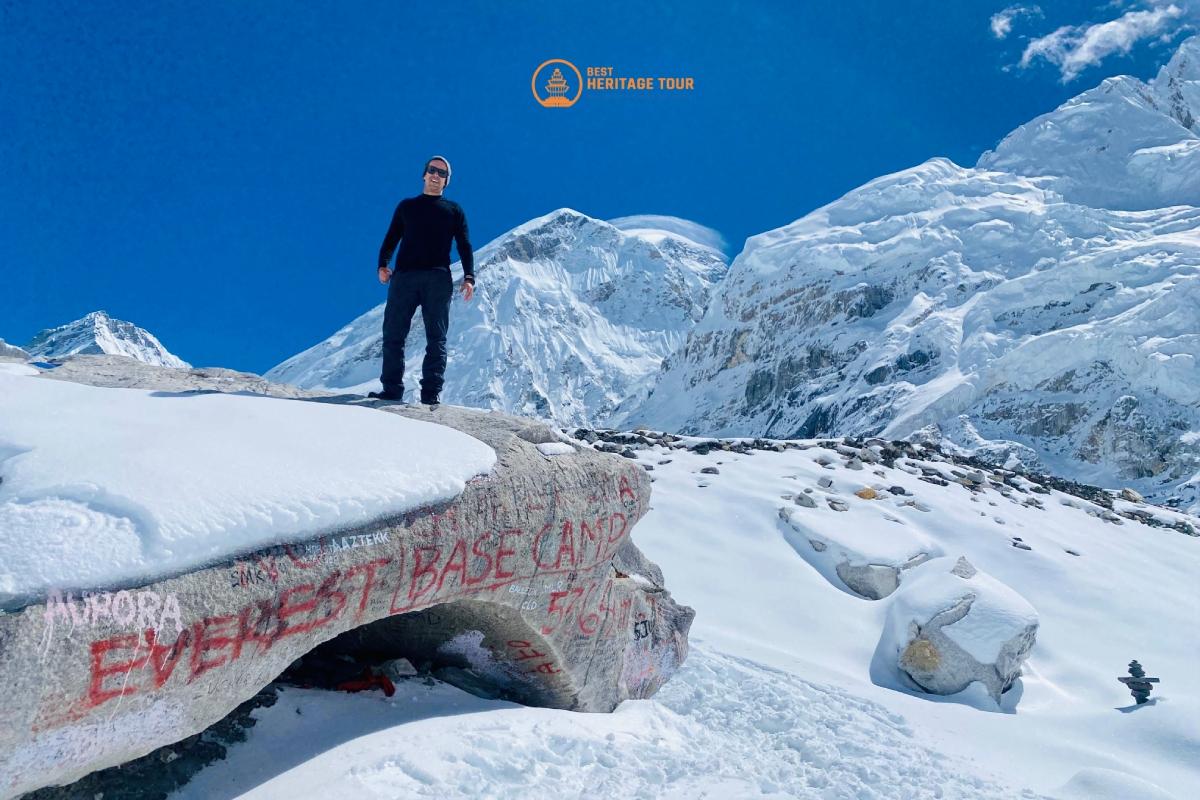
- Trek to the legendary Everest Base Camp at 5,364 meters
- Summit Island Peak (6,189 m), one of Nepal’s most popular trekking peaks
- Climb Mera Peak (6,476 m), the highest trekking peak in Nepal
- Cross the challenging and adventurous Amphu Lapcha Pass (5,845 m) & Kongma La Pass (5,535 m)
- Witness panoramic views of Mount Everest, Lhotse, Makalu, Cho Oyu, Ama Dablam, Nuptse, Baruntse, and Kanchenjunga
- Explore the vibrant Sherpa town of Namche Bazaar
- Visit the famous Tengboche Monastery, the spiritual center of the Khumbu region
- Hike to Kala Patthar for stunning sunrise views over Mount Everest
- Trek through the pristine landscapes of Sagarmatha National Park
- Experience authentic Sherpa culture, traditions, and mountain hospitality
- Perfect combination of trekking, mountaineering, and high-altitude adventure
- Stay in traditional Himalayan tea houses and remote mountain camps
- Experience sunrise and sunset views over the world’s highest mountain range
- A once-in-a-lifetime Everest trekking and climbing experience
Trip Overview
The EBC Trek with Island Peak & Mera Peak Expedition is one of the most adventurous and rewarding Himalayan journeys in Nepal, combining the classic Everest Base Camp trek with two iconic trekking peak climbs in the Everest region. This extraordinary expedition is specially designed for trekkers and mountaineering enthusiasts seeking a complete high-altitude adventure filled with breathtaking landscapes, technical climbing, and authentic Himalayan culture.
The journey begins with a scenic flight from Kathmandu to Lukla Airport, followed by trekking through beautiful Sherpa villages, dense rhododendron forests, suspension bridges, and glacial valleys inside Sagarmatha National Park. Along the route, trekkers explore famous destinations including Namche Bazaar, Tengboche, Dingboche, Lobuche, and the legendary Everest Base Camp before hiking to Kala Patthar for panoramic sunrise views of Mount Everest and surrounding Himalayan giants.
The expedition continues with the thrilling ascent of Island Peak (6,189 m), offering an excellent introduction to Himalayan mountaineering. Crossing the technical Amphu Lapcha Pass then leads trekkers into the remote Hinku Valley for the ultimate climb of Mera Peak (6,476 m), Nepal’s highest trekking peak.
With stunning mountain scenery, glacier crossings, rich Sherpa culture, and challenging alpine adventures, this Everest Base Camp with Island Peak and Mera Peak climbing package delivers a truly unforgettable Himalayan expedition experience in Nepal.
What Can You Expect During the EBC Trek with Island Peak & Mera Peak Expedition?
1. Scenic Himalayan Flight to Lukla
Your adventure begins with a thrilling mountain flight from Kathmandu to Lukla Airport. This short but spectacular flight offers breathtaking aerial views of snow-capped Himalayan peaks, deep valleys, and remote mountain landscapes. Landing at Lukla, known for its dramatic runway, adds excitement and marks the official start of your Everest trekking and climbing expedition in Nepal.
2. Authentic Sherpa Culture and Hospitality
Throughout the trek, you will pass through traditional Sherpa villages where you can experience warm mountain hospitality, Buddhist traditions, and local Himalayan lifestyles. Villages like Namche Bazaar and Tengboche offer cultural immersion with monasteries, prayer flags, mani walls, and friendly local communities. This cultural experience adds a meaningful dimension to the adventurous mountain journey.
3. Stunning Views of the World’s Highest Mountains
This expedition rewards trekkers with extraordinary panoramic views of Mount Everest, Lhotse, Makalu, Cho Oyu, Nuptse, Ama Dablam, Baruntse, and many other Himalayan giants. Every trekking day presents dramatic scenery including glaciers, alpine valleys, snow-covered ridges, and rugged mountain terrain. The views from Kala Patthar, Island Peak, and Mera Peak are especially breathtaking and unforgettable.
4. Trek to the Legendary Everest Base Camp
One of the major highlights of the journey is reaching Everest Base Camp at 5,364 meters. Standing at the base of the world’s highest mountain is an unforgettable experience for every adventure lover. During the trekking season, you may even witness international climbing expeditions preparing for Everest summit attempts while enjoying the incredible Khumbu Glacier surroundings.
5. Exciting Island Peak Climbing Adventure
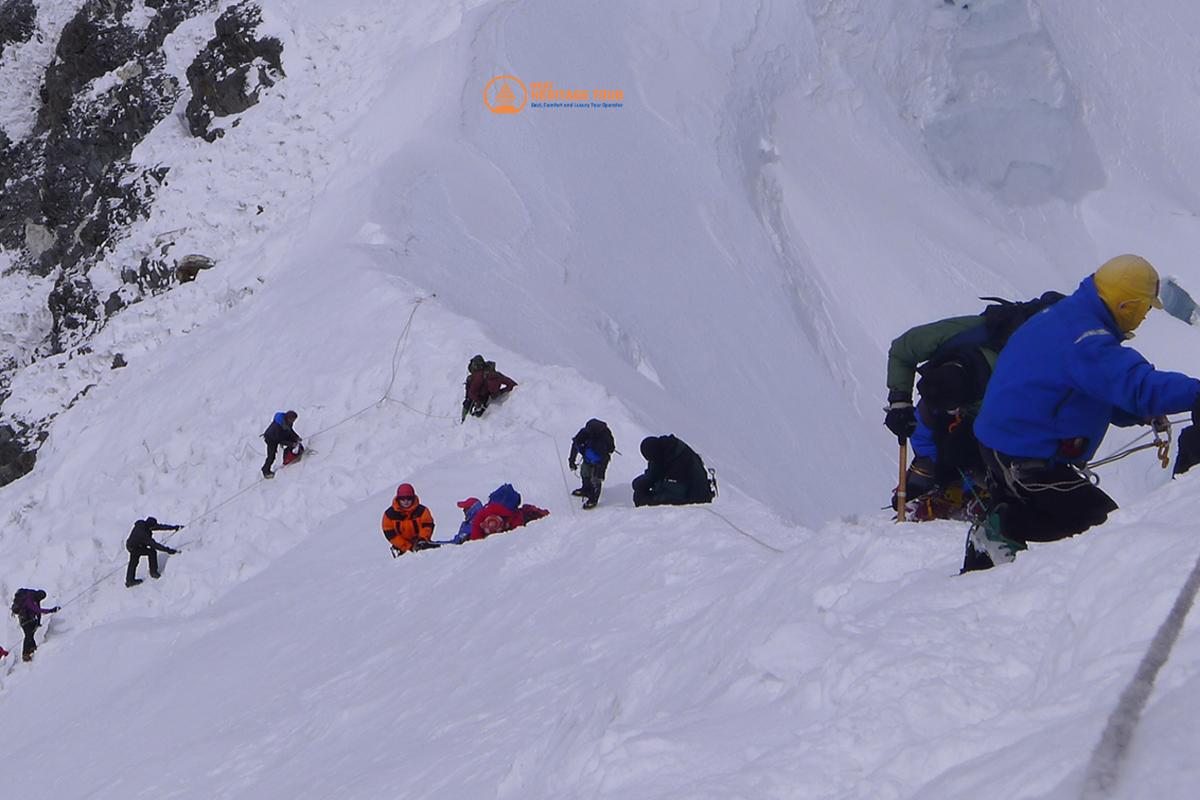
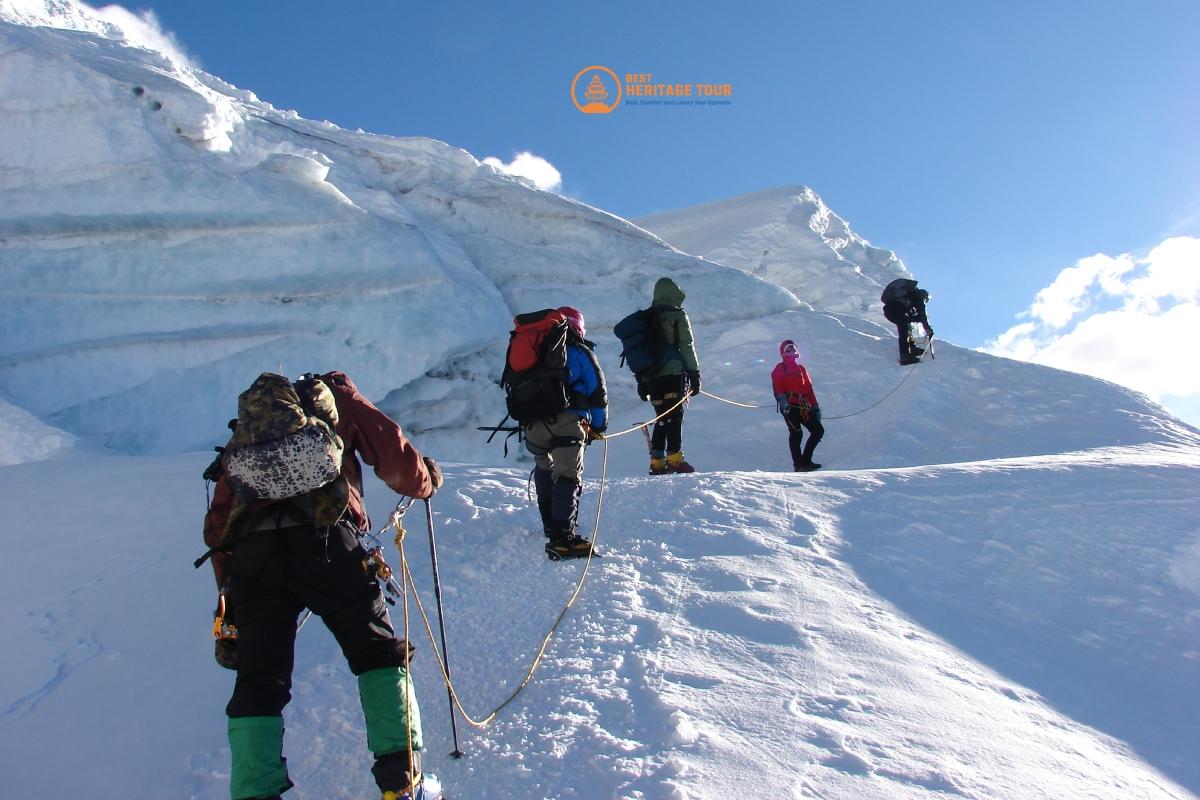
Climbing Island Peak offers an exciting introduction to Himalayan mountaineering. Before the summit attempt, guides provide basic climbing training and instructions on using ropes, crampons, harnesses, and ice axes. The climb includes glacier travel and steep icy sections, making it both challenging and rewarding for climbers aiming to gain mountaineering experience in Nepal.
6. Crossing the Technical Amphu Lapcha Pass
The Amphu Lapcha Pass crossing is one of the most adventurous sections of the expedition. This remote high mountain pass involves glacier crossings, steep ascents, and technical terrain requiring careful navigation and teamwork. The dramatic alpine scenery surrounding the pass creates a true wilderness experience and adds a thrilling mountaineering element to this Himalayan expedition.
7. Summit of Mera Peak - Nepal’s Highest Trekking Peak
Reaching the summit of Mera Peak at 6,476 meters is one of the greatest achievements of this adventure. From the summit, climbers enjoy one of the finest panoramic mountain views in Nepal, including Everest, Lhotse, Makalu, Cho Oyu, and Kanchenjunga. The climb is physically demanding but highly rewarding for determined trekkers and climbers.
8. Professional Technical Guidance
Safety is our non-negotiable priority. You will be accompanied by UIAGM-certified climbing guides who possess deep knowledge of the Khumbu and Hinku regions. During the technical sections of Island Peak and the Amphu Lapcha Pass, our experts provide hands-on training for fixed-rope climbing, rappelling, and glacier travel. They are equipped with oximeters and medical kits to monitor your health around the clock.
Are You Ready for the EBC Trek with Island Peak & Mera Peak Expedition?
The EBC Trek with Island Peak & Mera Peak Expedition is a challenging Himalayan adventure that requires good physical fitness, stamina, and determination. Trekkers should be prepared to walk for several hours daily through steep trails, rocky paths, glaciers, and high mountain passes above 5,000 meters. Previous trekking experience and regular physical preparation before the trip can make the journey safer, more comfortable, and far more enjoyable.
Mental strength is equally important during this expedition. The trek takes you into remote Himalayan regions where weather conditions can change quickly and facilities become more basic at higher elevations. A positive mindset, patience, adaptability, and the willingness to embrace mountain life will help you fully enjoy the experience and overcome the challenges of high-altitude trekking and climbing.
For the climbing sections of Island Peak and Mera Peak, advanced mountaineering experience is not mandatory, but confidence, determination, and willingness to learn are essential. With guidance from experienced climbing experts, you will use equipment such as crampons, ropes, harnesses, and ice axes. If you are passionate about adventure and ready to push beyond your limits, this expedition will reward you with one of the most unforgettable experiences in the Himalayas.
Itinerary
Your Himalayan expedition begins with an early morning scenic flight from Kathmandu to the Tenzing-Hillary Airport in Lukla one of the most thrilling mountain flights in the world. After landing at Lukla, we begin our descent through the vibrant landscape of the Chaurikharka village, passing stone-walled fields of barley and potatoes.
The trail winds along the Dudh Koshi River valley, characterized by lush green hills and the constant, rhythmic roar of the "Milk River" below. We cross our first suspension bridges adorned with colorful prayer flags that flutter in the breeze, sending mantras across the valley. The walk to Phakding is relatively gentle, serving as a perfect introduction to the Khumbu terrain as we pass mani stones - boulders intricately carved with Buddhist chants and small hamlets before reaching our lodge for the night.
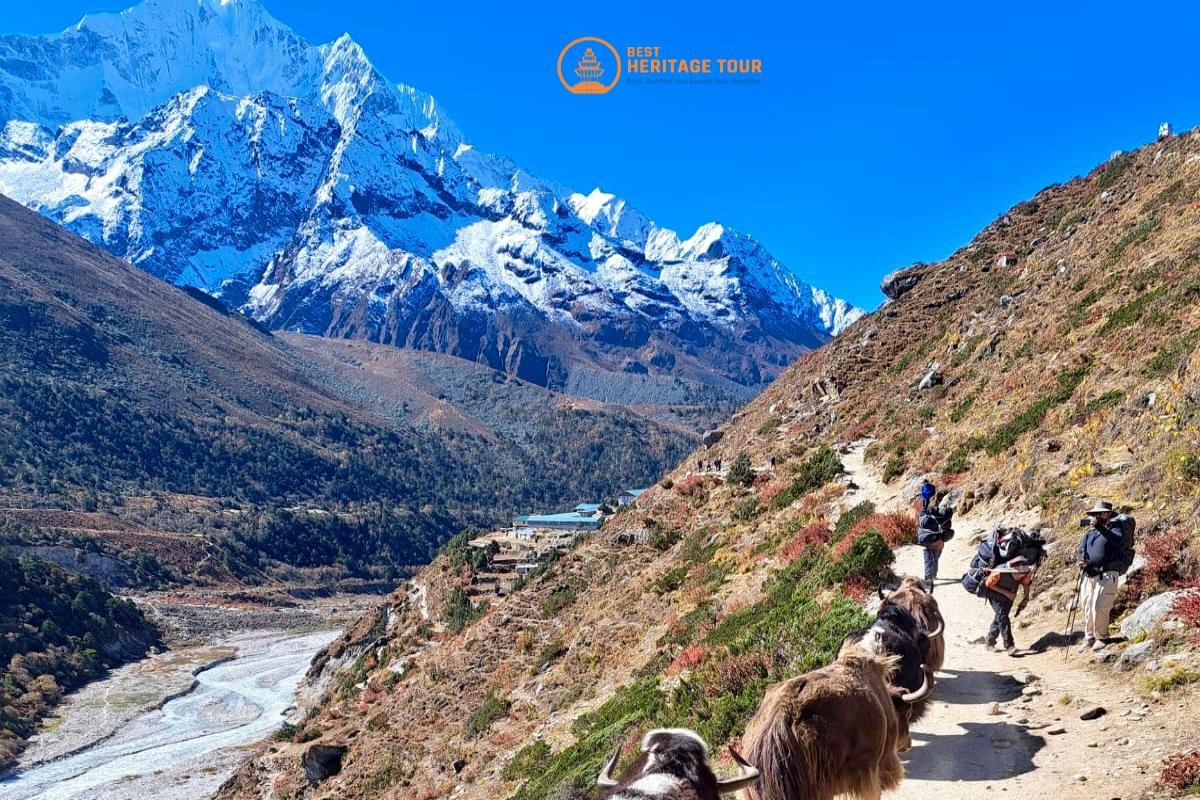
This day is a true test of your lungs as we enter the Sagarmatha National Park, a UNESCO World Heritage site. The trail leads us through dense forests of blue pine and rhododendron, following the river northward. We cross the iconic Hillary Suspension Bridge, which hangs precariously high above the confluence of the Bhote Koshi and Dudh Koshi. The views begin to open up, offering glimpses of Thamserku (6,608 m) towering above the valley floor.
Beyond the bridge, the "Namche Hill" begins - a long, zig-zagging ascent through the forest. This is where you might catch your first fleeting glimpse of Mount Everest peeking over the Lhotse-Nuptse ridge. Eventually, the trail levels out as you enter the horseshoe-shaped amphitheater of Namche Bazaar. This bustling Sherpa capital is the heartbeat of the region, filled with bakeries, gear shops, and monasteries, all tucked into a steep mountain slope.
Acclimatization is the golden rule of Himalayan mountaineering. Instead of staying idle, we follow the "climb high, sleep low" philosophy with a hike up to the Syangboche Airstrip and the Everest View Hotel. The steep climb rewards you with a panoramic skyline featuring Everest, Lhotse, Ama Dablam, and Taboche. The sight of Ama Dablam, often called the "Matterhorn of the Himalayas," is particularly striking from this vantage point.
After enjoying a hot cup of tea with a view, we may visit the Sherpa Culture Museum or the Everest Photo Gallery to learn about the history of Himalayan exploration. Returning to Namche for the afternoon, you can explore the narrow alleys, visit a local cafe for some famous Himalayan apple pie, or simply soak in the atmosphere.
The trail out of Namche is one of the most spectacular walks in the world, skirting the side of the mountain with a drop-off into the Dudh Koshi valley. The path is relatively flat at first, offering uninterrupted views of the peaks we are targeting. We descend through the forest to Phungi Thenga, a small riverside settlement where we stop for lunch before the final, arduous climb of the day through shaded pine forests.
As we reach the top of the ridge, the magnificent Tengboche Monastery comes into view. This spiritual epicenter is framed perfectly by Ama Dablam in the background. If we arrive in the late afternoon, we can witness the monks performing their evening prayers, with the deep thrum of horns and chanting echoing through the cold mountain air.
Leaving Tengboche, we descend through a "fairytale" forest of rhododendron and birch trees, draped in Spanish moss. We cross the Imja Khola via a small bridge and begin a gradual climb toward the village of Pangboche. Here, the landscape begins to shift dramatically; the lush forests vanish, replaced by the stark, arid, and rocky terrain of the high alpine zone where only hardy shrubs and grasses survive.
The trail continues into the Imja Valley, with the towering South Face of Lhotse dominating the horizon. As we approach Dingboche, you will notice the unique stone walls built by locals to protect crops like buckwheat and potatoes from the biting mountain winds. Dingboche is the only place in the region where such high-altitude farming exists, and it serves as a beautiful, sun-drenched outpost guarded by the peaks of Ama Dablam and Island Peak.
Our second scheduled acclimatization day is crucial as we are now well above 4,000 meters. We take a steep hike up the ridge of Nangkartshang Peak (5,083 m), located directly above the village. The ascent is taxing but offers one of the most comprehensive views of the entire trip. To the south, the valley drops away toward Pheriche, while to the north, the massive ice walls of Lhotse and Nuptse seem close enough to touch.
From this height, you get a clear look at our upcoming objectives: the sharp pyramid of Island Peak and the distant passes we will traverse. Looking down, the village of Dingboche looks like a tiny collection of dollhouses amidst the vastness of the Himalayas. We spend an hour at the high point to allow our bodies to adjust before descending to the village for a restful afternoon and hydration, preparing for the push toward Lobuche.
The trail leads us across a wide, windswept plateau toward Thukla, where the Imja Valley meets the Khumbu Glacier’s lateral moraine. After a quick break, we tackle the "Thukla Pass," a steep climb that leads to a poignant memorial site. Here, dozens of stone chortens stand in memory of climbers who have lost their lives on Everest.
Beyond the memorials, the trail levels out as we walk alongside the terminal moraine of the Khumbu Glacier. The terrain is now entirely lunar - just rock, ice, and thin air. You may feel the effects of the altitude more significantly here, requiring a slow and steady pace. Lobuche is a small cluster of lodges nestled in a narrow valley, offering a cold but exciting atmosphere as we are now just one day away from Everest Base Camp.
This is the day many have dreamed of for years. We trek across the rocky, undulating moraine of the Khumbu Glacier to reach Gorak Shep, the final outpost. After a quick lunch and dropping our heavy bags, we push onward to Everest Base Camp. The trail is a maze of rock and ice, shifting slightly every year as the glacier moves. The excitement builds as the iconic yellow tents of expedition teams come into view during the spring season.
Standing at Base Camp, you are surrounded by the frozen waves of the Khumbu Icefall and the massive walls of Nuptse and Lhotse. While you cannot see the summit of Everest from the camp itself, the energy of the place is palpable - it is the site of countless triumphs and tragedies. After taking photos and soaking in the achievement, we trek back to Gorak Shep. The night here is often the coldest and highest of the trek, but the sense of accomplishment provides plenty of warmth.
We wake long before dawn for the grueling climb up Kala Patthar. In the freezing dark, we move slowly upward, our headlamps illuminating the frosty path. As we reach the rocky summit, the sun begins to rise behind the Everest-Lhotse ridge, painting the world’s highest peak in hues of gold and pink. This is the definitive view of Mount Everest - a massive, wind-whipped pyramid towering over the surrounding giants.
After descending to Gorak Shep for breakfast, we retrace our steps back down the moraine to Lobuche. The descent feels significantly easier as the oxygen levels increase, though the terrain remains rugged. We spend the evening in Lobuche, resting and repacking our gear. The "trekking" phase is now transitioning into the "expedition" phase, as we prepare to leave the main trail and head toward the technical challenges of the high passes and peaks.
Today marks the first of the great technical challenges. Leaving the main Everest trail, we strike east across the vast Khumbu Glacier. Navigating the glacier is a surreal experience, walking over mounds of debris and past melt-water lakes. We then begin the steep, grueling ascent to the Kongma La Pass. This is the highest of the three passes and is often bypassed by standard trekkers due to its difficulty and isolation.
The summit of the pass provides a stunning, close-up view of the Nuptse and Lhotse walls. The descent into the Imja Valley is steep and involves navigating scree slopes, requiring careful footwork. As we emerge into the Chhukung Valley, the sharp spire of Island Peak dominates the view. Chhukung is a quiet settlement that serves as the staging ground for climbers, offering a more rugged and adventurous vibe than the busy teahouses of the main trail.
The trek to Island Peak Base Camp is relatively short but involves a steady gain in altitude. We follow the valley floor, walking alongside the Lhotse glacier moraine and the Imja Tsho (glacial lake). The landscape is a stark mix of sand, rock, and ice. Upon arriving at Base Camp, our crew will have the tents set up, and we transition from teahouse living to expedition camping.
In the afternoon, our lead climbing guide will conduct a "pre-climb briefing" and training session. You will practice using your harness, carabiners, ascenders (Jumar), and descenders. We will also practice walking in crampons on a nearby slope. This session is vital for refreshing your skills and ensuring everyone is comfortable with the gear before the midnight summit push. We turn in early, as the "morning" starts long before midnight.
Our summit bid begins around 1:00 AM. In the cold, silent dark, we navigate the "High Camp" area and scramble up a rocky gully. As we reach the "Crampon Point," we rope up and step onto the glacier. The sunrise finds us on the icy slopes, with the massive Lhotse South Face towering above. The final challenge is a steep 100-meter headwall of ice and snow, where we use fixed ropes and Jumars to reach the narrow summit ridge.
Standing on the summit of Island Peak (Imja Tse) is an overwhelming experience. You are in the heart of the Khumbu, surrounded by giants like Makalu and Ama Dablam. After taking in the glory, we carefully rappel down the headwall and trek back across the glacier. The return to Chhukung is long and exhausting, but the feeling of having summited a 6,000-meter Himalayan peak makes every step worth it.
This day is held in reserve in case of poor weather, high winds, or if someone in the group needs an extra day to recover or acclimatize before the summit bid. The Himalayas are unpredictable, and having this "buffer" day significantly increases our safety margin and summit success rate. If the summit was successful on Day 12, this day can be used as a rest day in Chhukung to regain strength for the next phase.
We leave the comforts of the Chhukung valley and head into the true wild. The trail leads us further east, deeper into the Imja Valley, toward the base of the formidable Amphu Lapcha Pass. This region is rarely visited by standard trekkers, and the sense of isolation is profound. We trek along the edge of the Imja Glacier and the massive turquoise waters of Imja Tsho, a lake formed by glacial melt.
North Base Camp is situated in a rugged, rocky amphitheater surrounded by towering walls of ice. The temperatures here drop sharply as soon as the sun disappears behind the peaks. Our kitchen crew will prepare a hot meal to keep our spirits and energy high. This is one of the most remote camps of the journey, where the only sounds are the occasional crack of a shifting glacier or the whistle of the wind.
This is arguably the most technical and physically demanding day of the entire expedition. The Amphu Lapcha Pass is a notched gap in a high ridge, guarded by steep ice and rock sections. We start early, using fixed ropes and ice axes to navigate the technical ascent. The climb is steep and requires total focus, especially as we traverse the icy crest of the pass. The views from the top are staggering, looking back toward the Khumbu and forward into the Hinku Valley.
The descent is even more technical. We must abseil (rappel) down a near-vertical ice and rock face on the south side. Our expert guides will manage the safety lines and assist every step of the way. Once off the technical sections, we navigate a complex glacier filled with crevasses before reaching the South Base Camp. You will finish the day exhausted but with a deep sense of pride for conquering one of Nepal’s most difficult alpine passes.
After the intensity of the pass, today offers a slight reprieve, though the terrain remains wild and trail-less. We descend from the rocky heights of the pass into the upper reaches of the Honku Valley. This is a pristine, high-altitude wilderness where we are unlikely to see any other trekking groups. The valley is dotted with frozen lakes and surrounded by unnamed peaks, offering a sense of exploration that is rare in the modern Himalayas.
We trek toward Khongma Dingma, a high summer pasture used by local herders in the warmer months. The trail is mostly downhill but involves navigating over uneven glacial moraine and alpine meadows. The environment here is incredibly peaceful, a stark contrast to the technical ice we navigated yesterday. We set up camp in a sheltered spot, enjoying the relative warmth of the lower altitude as we prepare for the approach to Mera Peak.
The journey continues through the spectacular Honku Valley. We trek southward, passing the beautiful Panch Pokhari (Five Lakes) region - a sacred area for both Buddhists and Hindus. The terrain is a mix of boulders and sandy flats, with the massive massif of Mera Peak growing larger in our field of vision. The air is cold, but the sun on the open valley floor provides a pleasant trekking environment.
Mera Peak Base Camp is located near the foot of the Mera Glacier. From here, the peak looks like a massive, gentle snow dome, but its height - nearly 6,500 meters - makes it a formidable challenge. We spend the afternoon checking our gear once more and resting. The guides will scout the route up to the High Camp, while we focus on hydration and calorie intake for our final summit push of the expedition.
The grand finale! We begin our summit attempt around 2:00 AM, moving up the Mera Glacier. The climb is mostly a non-technical "snow plod," but the extreme altitude makes every step feel like a marathon. As we reach the summit ridge, the final 30 meters involve a steep climb using an ascender on a fixed rope. Reaching the summit of Mera Peak is the ultimate reward: a panoramic view of Everest, Lhotse, Makalu, Cho Oyu, and Kanchanjunga.
After celebrating at the highest point of our journey, we begin the long descent. We bypass the High Camp and head straight down the glacier toward the village of Khare. The air becomes noticeably thicker as we descend, and the promise of a bed in a teahouse provides the motivation to keep moving. Reaching Khare marks the end of our technical mountaineering, and it’s time to celebrate a successful "Triple Crown" expedition.
Just like Island Peak, we keep a day in reserve for Mera Peak. If the weather on Day 18 was unfavorable, we use this day for our summit attempt. If we already summited, this day is a much-needed rest day in Khare. You can spend the day sleeping in, drying out your gear, and enjoying the relative luxury of a teahouse dining room.
Today is a day of rapid descent. We leave the high alpine zone behind and follow the Hinku River valley downstream. The trail takes us through beautiful forests of pine and rhododendron that we haven’t seen for weeks. The sound of birds and the smell of moist earth are a welcome change from the barren rock and ice of the high peaks. We pass through Thagnak, a summer grazing settlement, before continuing to Kothe.
Kothe is a charming village nestled in a dense forest. After weeks of camping and high-altitude teahouses, the warmer air and lush greenery of Kothe feel like a paradise. We can finally enjoy a warm shower (if available) and a celebratory meal.
The trail from Kothe involves several ups and downs as we traverse the ridges of the Hinku Valley. We climb through old-growth forests, occasionally catching views of the rear side of Mera Peak. The trail is rugged and can be muddy, requiring steady footwork through the rhododendron thickets. We are heading toward the Zatrwa La ridge, which separates the Hinku Valley from the Lukla valley.
Thuli Kharka is a high pasture located just below the Zatrwa La Pass. It is a lonely but beautiful spot, offering wide views of the surrounding hills. As this is our final night in the mountains before returning to Lukla.
On our final day of trekking, we cross the Zatrwa La Pass (4,600 m). It’s a steep climb to the top, but the reward is a final panoramic view of the mountains we’ve spent the last 20 days exploring. Once over the pass, it’s a long, steady descent toward Lukla. The trail winds down through rocky slopes and eventually back into the pine forests that surround the Lukla airstrip.
Arriving in Lukla feels like coming home. The town is full of energy, with trekkers arriving and leaving. We check into our lodge and have a final celebration with our Sherpa crew. For many, this is where we say goodbye to the porters who have carried our gear across some of the world’s toughest terrain.
We take an early morning flight from Lukla back to Kathmandu. As the small plane lifts off the short runway, you’ll have one last chance to look out the window at the snow-capped giants. The flight is a quick 35-minute hop that transports you from the raw wilderness of the Himalayas back to the bustling, colorful streets of the capital city.
Upon arrival in Kathmandu, our representative will transfer you to your hotel. The rest of the day is yours to enjoy - perhaps a long-awaited hot shower, a massage to soothe sore muscles, or some souvenir shopping in Thamel. In the evening, Best Heritage Tour will host a farewell dinner to celebrate your incredible achievement of trekking to EBC and summiting both Island and Mera Peaks!
What is included?
- PRIVATE AIRPORT PICK-UP & DROP : Airport - Hotel transfer - Airport (Pick Up and Drop).
- ROUND TRIP DOMESTIC FLIGHT FARE : Fly from Kathmandu - Lukla and while returning Lukla - Kathmandu, as per itinerary. (through manthali during peak trekking season).
- ACCOMMODATION :
- During Treks : Best available accommodation in mountain lodges and tea houses during the trek.
- At High Camp : Accommodation in a fully supported tented camps with complete camping arrangements.
- FOOD : 3 meals a day (breakfast, lunch and dinner; including tea/coffee) during the trek, with Ef-Chlor purification tablets provided for safe drinking water.
- GUIDE :
- During Trek : One experienced government licensed trekking guide (English speaking) during the trek.
- During Climb : One experienced government-licensed climbing Sherpa during the entire climb from Basecamp to the summit and back.
- CLIMBING PORTERS : Climbing Porters for carrying your gears from Basecamp to High camp.
- STAFF SALARY AND ALLOWANCE : All staff wages, salary, equipment, food & clothing.
- PERMITS : All necessary paperwork : Expedition Royalty and permits fee of Nepal Mountaineering Association, Sagarmatha National Park permit, Khumbu Pasang Lhamu Rural Municipality entry permit and fees.
- GARBAGE MANAGEMENT : Stool Shipment Transfer & Garbage Deposit fees.
- STAFF INSURANCE : Insurance for all staff involved during the trek & climb.
- CAMPING ESSENTIALS : Necessary equipment including high altitude tents, cooking utensils, and other equipment required during the climb.
- GEAR (IF NEEDED) : Sleeping bag, down jacket and duffle bag (to be returned after the trek).
- MEDICAL KIT : A well equipped first aid kit, including an oximeter, carried by the guide for your safety.
- OXYGEN BOTTLE & MASK: Oxygen cylinders and masks will be available at base camp for emergency use (additional charges apply).
- IN CASE OF EMERGENCY : Assistance in rescue operations in case of emergency covered by travel insurance.
- CERTIFICATE & SOUVENIR : NMA Certificate after successfully climbing Island Peak & Mera Peak and Best Heritage Tour Purse, an authentic Nepali product made from hemp.
- FAREWELL DINNER : A farewell dinner with an authentic cultural program after completion of the trip.
What is not included?
- INTERNATIONAL AIRFARE : International flight airfare (from and to Kathmandu).
- NEPAL VISA FEES : You may issue the visa upon your arrival at Tribhuvan International Airport - Kathmandu or apply manually in your home country).
- ACCOMMODATION IN KATHMANDU : Accommodation & Meals in Kathmandu.
- INSURANCE POLICY : Travel insurance covering medical expenses and high-altitude evacuation is mandatory. If you do not have suitable coverage, we can also assist in arranging travel insurance for you upon your arrival in Nepal. Check Over Here
- PERSONAL EXPENSES : Clothing & climbing gears, telephone, internet, toiletries, hot shower, laundry, soft drinks and any Alcoholic beverages.
- OPTIONAL PORTER SERVICE : USD 22 per day, including all taxes (each porter can carry up to 25 kg of luggage).
- TIPS : Tips for guide and porters.
- EXTRA : Any additional costs due to factors beyond our control, or for services not specifically mentioned in the Itinerary & Included section.
- TAXES & SERVICE CHARGE : All government taxes (13%) and service charge (10%).
Route Map
Equipment
Technical Climbing Kit
-
Boots: Modern Double Mountaineering Boots (plastic or insulated)
-
Crampons: 12-point steel crampons with anti-balling plates
-
Tools: Straight-shaft Ice Axe and one Ascender (Jumar)
-
Hardware: Climbing Harness, Figure-8 or ATC, 2 Locking + 2 Non-locking Carabiners
-
Safety: Climbing Helmet and two 2-meter Tape Slings
High-Altitude Clothing
-
Head: Warm Beanie, Sun Hat, and a Buff (Neck Gaiter)
-
Hands: Lightweight liner gloves + Heavy insulated Summit Mittens
-
Base: 2 sets of Merino Wool thermals (Top & Bottom)
-
Mid: Fleece jacket and softshell trekking pants
-
Outer: Waterproof Gore-Tex Shell (Jacket & Pants) + Expedition-weight Down Jacket (-20°C)
Footwear & Eye Protection
-
Boots: Sturdy, waterproof trekking boots (broken in)
-
Socks: 4 pairs of trekking socks + 2 pairs of thick wool summit socks
-
Eyes: Category 4 Glacier Glasses (Mandatory for snow blindness prevention)
Trekking Gear & Accessories
-
Sleeping: -15°C to -20°C rated Sleeping Bag
-
Day Pack: 35-45L Daypack
-
Lighting: LED Headlamp with spare lithium batteries
-
Hydration: 2 Liter Water bottle or Hydration Pack
-
Trekking Poles: Lightweight collapsible
Personal Items & First Aid
-
Skincare: SPF 50+ Sunscreen and Lip Balm
-
Hygiene: Wet wipes, 2 rolls of TP, and biodegradable soap
-
Medical: Personal First Aid Kit (Diamox, Ibuprofen, Blister Plasters)
-
Power: 20,000mAh Power Bank
Trip Info
Best Time for the EBC Trek with Island Peak & Mera Peak Expedition
The EBC Trek with Island Peak & Mera Peak Expedition is best undertaken during the two main trekking seasons in Nepal: spring (March to May) and autumn (September to November). These periods offer the most stable weather conditions, clear skies, and excellent visibility of the Himalayan peaks, making them ideal for both trekking and technical climbing in the Everest region.
Spring season (March-May) is one of the most popular times for this expedition. The weather is generally warm at lower elevations and stable at higher altitudes, while the trails come alive with blooming rhododendron forests and vibrant landscapes. This is also a prime climbing season, meaning you may encounter fellow climbers preparing for ascents of Island Peak and Mera Peak, creating an inspiring mountaineering atmosphere in the Everest region.
Autumn season (September-November) is considered the best overall time for this expedition. After the monsoon, the skies become crystal clear, offering the sharpest mountain views of Everest and surrounding peaks. Temperatures are moderate, trails are dry, and weather conditions are highly stable, making it ideal for reaching Everest Base Camp and completing challenging crossings like the Amphu Lapcha Pass.
The winter (December-February) season is extremely cold with heavy snowfall at higher elevations, making climbing difficult and risky, while the monsoon (June-August) brings heavy rain, slippery trails, and poor visibility. Therefore, these seasons are generally not recommended for this combined trekking and peak climbing expedition.
Choosing the right season is crucial for safety, comfort, and summit success. For the best overall experience, spring and autumn remain the top recommended windows for this once-in-a-lifetime Himalayan adventure.
Permits Required for the EBC Trek with Island Peak & Mera Peak Expedition
To enter the Everest region and complete high-altitude peak climbing in Nepal, several official permits are required. These permits are issued by government and local authorities to regulate tourism, protect the environment, and support sustainable development in the Himalayas. Since this expedition combines trekking and two climbing peaks, all permits are arranged in advance by Best Heritage Tour for a smooth and hassle-free experience.
-
Khumbu Pasang Lhamu Rural Municipality Permit: This is the local entry permit required for all trekkers and climbers entering the Everest (Khumbu) region.
-
Sagarmatha National Park Entry Permit: As the route passes through the protected UNESCO World Heritage site of Sagarmatha National Park, this permit is essential.
-
Island Peak Climbing Permit: Issued by the Nepal Mountaineering Association (NMA), this permit is required to legally climb Island Peak (Imja Tse). It authorizes trekkers to attempt the summit and is mandatory for all climbers on this peak.
-
Mera Peak Climbing Permit: A separate climbing permit is required for Mera Peak, the highest trekking peak in Nepal. This permit also comes under NMA regulations and varies depending on the season and climbing category.
Documents Required for Permits
At Best Heritage Tour, we manage all permit arrangements on your behalf so you can focus on preparation and training. However, we require a few essential documents from you in advance to process everything smoothly with Nepal’s tourism and mountaineering authorities:
-
Valid Passport Copy: A clear scanned copy of your passport’s main page. Your passport should have at least six months of validity remaining from your travel date.
-
Passport-Sized Photos: Recent digital photographs with a plain background, used for official permits, climbing licenses, and checkpoint registrations along the trekking route.
-
Travel & High-Altitude Insurance: A mandatory insurance document that clearly covers trekking, peak climbing, and emergency helicopter evacuation up to high altitudes (minimum 6,500 meters is strongly recommended).
Important Note
All original permits will be carried by your guide throughout the expedition, as they are checked at several official points along the route. You may be required to present them at entry stations such as Monjo and Namche Bazaar. Keeping soft copies on your phone is also highly recommended as a backup during the journey.
Accommodation & Meals
At Best Heritage Tour, we prioritize your comfort, recovery, and nutrition throughout this demanding Himalayan expedition. In high-altitude environments like the Everest region, proper accommodation and balanced meals are essential for energy, acclimatization, and overall trekking performance. Every lodging and dining arrangement is carefully managed so you can focus entirely on the adventure ahead.
Cozy Teahouse Living
During the trekking portion of the journey, you will stay in traditional Himalayan teahouses along the route, including villages around Namche Bazaar, Dingboche, Lobuche, and the Everest region trail. These are simple, locally run mountain lodges that offer an authentic Sherpa hospitality experience and a warm resting place after long trekking days.
-
The Rooms: Rooms are usually twin-sharing with basic bedding facilities such as mattresses, pillows, and blankets. As temperatures drop significantly at higher altitudes, especially near Everest Base Camp, we strongly recommend bringing a high-quality sleeping bag rated for -15°C to -20°C for added warmth and comfort during cold nights.
-
The Common Area: The dining area in each teahouse serves as the main social hub where trekkers gather around a central stove for warmth. It is here that you can relax, interact with fellow trekkers, and enjoy the peaceful mountain atmosphere after a challenging day on the trail.
Professional Base Camp Camping
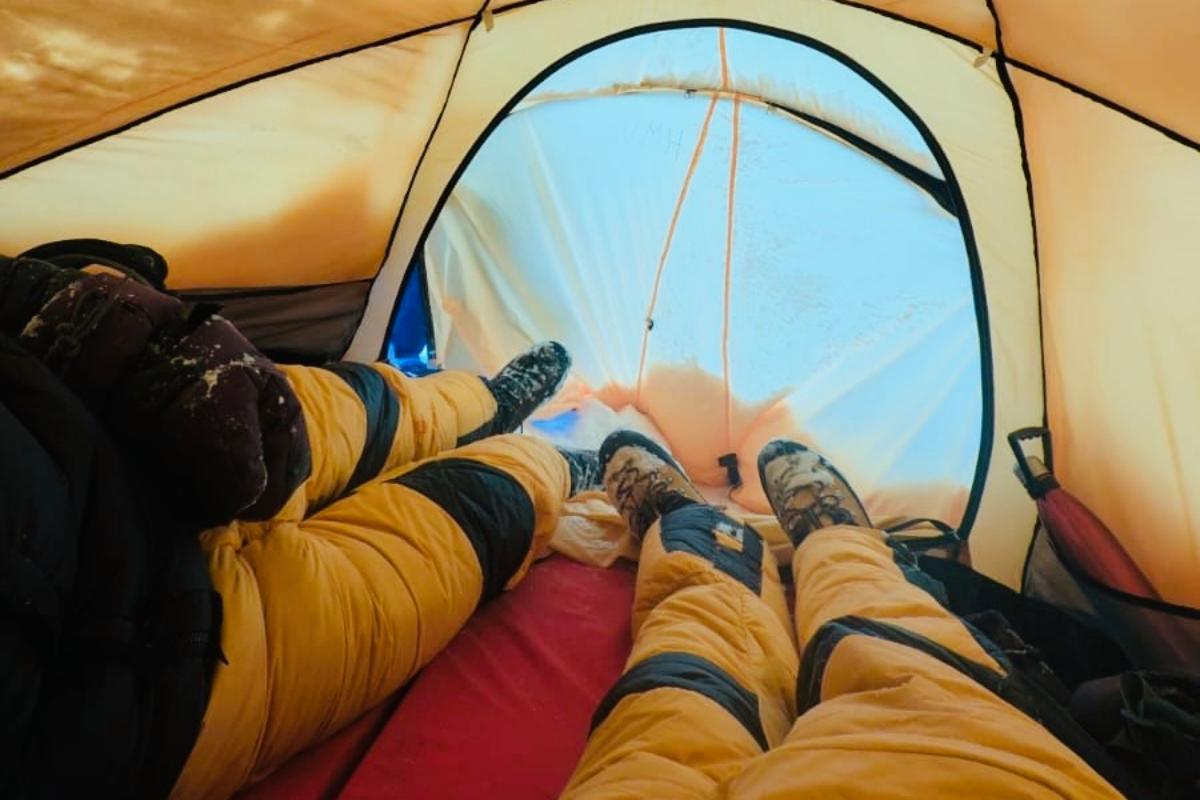
For the climbing sections, especially during the ascent of Island Peak and the remote Amphu Lapcha route toward Mera Peak, accommodation shifts from teahouses to fully organized expedition-style camping.
-
The Setup: At higher camps and base camps, we provide strong four-season tents on a shared basis, designed to withstand extreme Himalayan weather conditions. Separate tents are arranged for sleeping, dining, and kitchen use, ensuring both safety and comfort in remote alpine environments. Our support crew handles setup, maintenance, and meal preparation throughout this phase of the expedition.
Hearty Meals: Fueling Your Ambition
Food plays a vital role in your performance during this demanding trek and climb. All meals (breakfast, lunch, and dinner) are included and carefully planned to provide high energy, easy digestion, and proper nutrition for long trekking and climbing days in the mountains.
-
The Iconic Dal Bhat: Known as the "Fuel of the Himalayas," this traditional platter of steamed rice, lentil soup, and vegetable curry is our go-to recommendation. It is rich in nutrients and provides long-lasting energy, making it the preferred choice for trekkers in the Himalayas.
-
Sherpa Specialties: We encourage you to try local "Superfoods" like Syakpa (Sherpa Stew) - a dense, warming soup made of handmade noodles and vegetables - and Momos, the famous Nepali dumplings that are a favorite celebration meal.
Staying hydrated is your first line of defense against Altitude Sickness. We provide a wide selection of hot beverages, including ginger-lemon-honey tea, masala chai, and hot chocolate. Whether you are Vegetarian, Vegan, or Gluten-Free, we’ve got you covered. Most Himalayan dishes are naturally vegetarian-friendly. Simply inform Best Heritage Tour during your booking, and our guides will coordinate with the kitchens to ensure your specific dietary requirements are met without compromising on taste or nutrition.
Trip Difficulty and Fitness Requirements
The EBC Trek with Island Peak & Mera Peak Expedition is a strenuous and high-altitude adventure, combining long-distance trekking with technical peak climbing in the Everest region. This expedition is classified as “Challenging to Very Challenging”, as it goes beyond a normal trekking experience.
Understanding the Terrain and Technicality
The initial part of the journey to Everest Base Camp follows established trekking trails, but the difficulty increases as you move toward high passes and climbing zones. Expect steep ascents, rocky paths, glacier crossings, and uneven terrain, especially during approaches to Kongma La and Amphu Lapcha Pass.
The climbing sections on Island Peak and Mera Peak involve glacier travel and basic mountaineering techniques using ropes, crampons, and ice axes under professional guidance.
The Challenge of High Altitude
Altitude is the biggest challenge of this expedition. You will spend several days above 4,000 meters, with summit climbs exceeding 6,000 meters. Lower oxygen levels can cause fatigue and slower movement, so proper acclimatization and a steady pace are essential for safety and success.
Fitness and Preparation Requirements
A good level of physical fitness is required to complete this expedition comfortably. At least 2-3 months of preparation is recommended, focusing on cardio exercises like running, cycling, or stair climbing to build stamina.
Strength training for legs and core is also important, along with practice hikes on uneven terrain while carrying a backpack. This preparation will help your body adjust better to long trekking days and high-altitude conditions in the Himalayas.
Health & Safety
Safety isn't just a buzzword for us; it’s our operational backbone. High Altitude Pulmonary/Cerebral Edema (HAPE/HACE) are real risks that we mitigate through science and experience.
-
Scientific Monitoring: Our lead guides carry pulse oximeters to check your blood oxygen levels every morning and evening. We track your trends - if your oxygen drops too low while resting, we make the professional call to rest or descend.
-
Expert Crew: Our Sherpas are born and raised at altitude. They are trained in Wilderness First Aid and carry high-altitude medical kits, including Diamox and emergency steroids. We maintain a 24/7 link with Kathmandu-based helicopter rescue coordinators to ensure that if an evacuation is needed, it happens within the hour (weather permitting).
Travel Insurance
For this trip, standard travel insurance is simply not enough. At Best Heritage Tour, we require proof of a comprehensive insurance policy before you can begin the trek. Your policy must include the following specific coverages:
-
Mountain Expedition Coverage (Up to 6,500m)
-
Medical Emergency & Hospitalization: Including treatment for Altitude Sickness (AMS, HAPE, or HACE).
-
Emergency Helicopter Evacuation
-
Search and Rescue (SAR)
-
Trip Cancellation & Interruption
-
Cashless Claims & Direct Payment
Pro Tip: Always carry a physical print-out of your insurance policy and the 24-hour emergency contact number in your chest pocket. In an emergency, every second counts, and having your policy number ready allows Best Heritage Tour to launch a rescue immediately.
Visa for Nepal
All international travelers (except Indian) need a tourist visa to visit Nepal, which can be obtained on arrival at Kathmandu airport or online.
Key Details:
-
Duration: 15, 30, or 90 days (90 days recommended for this trek)
-
Fees: 15 days - USD 30 | 30 days - USD 50 | 90 days - USD 125
-
Requirements: Valid passport (6+ months), visa form, passport photo, and payment in cash (USD/EUR/GBP/NPR)
Tip: Keep a copy of your visa and passport during the trek and consider applying visa online (through Nepal Immigration Website) for a smoother arrival. Also register to Foreign Nationals Management Information System (FNMIS) as this is now mandatory for any Tourists entering Nepal from 2026.
Booking & Payment
Booking your EBC Trek with Island Peak & Mera Peak Expedition Climbing with Best Heritage Tour is simple and secure. To confirm your trip, a 10% deposit of the total trip cost is required at the time of booking, while the remaining balance must be cleared at least one day before departure. Payments can be made via cash, bank transfer, or card; bank transfer and card fees are the responsibility of the trekker, and incur a 4% transaction fee. All booking and cancellation terms are clearly explained by Best Heritage Tour staff during the booking process and can also be reviewed on our website.
Bank transfer:
-
Account Name: Best Heritage Tour And Treks Pvt. Ltd.
-
Account Number: 13201040254106
-
Bank Name: Nepal Investment Mega Bank Ltd.
-
Address: Thamel, Kathmandu, Nepal
-
SWIFT Code: NIBLNPKT
-
Bank Transfer Link: www.bestheritagetour.com/payment
Once we receive the deposit, we will issue the official invoice and booking conformation right away. If you need any clarification, we are happy to answer your questions or provide additional details you may require.
FAQ's
The entire EBC Trek with Island Peak & Mera Peak Expedition lasts for 23 days from your arrival to departure. This carefully designed itinerary ensures enough time for high-altitude trekking, technical climbs, and necessary acclimatization across the Khumbu and Hinku valleys.
While advanced mountaineering experience isn't mandatory for the EBC Trek with Island Peak & Mera Peak Expedition, high physical fitness is essential. Best Heritage Tour provides basic technical training during the trip, covering how to handle crampons, harnesses, Jumars, and safety ropes.
During the EBC Trek with Island Peak & Mera Peak Expedition, you will summit two iconic trekking peaks. First, you climb Island Peak at 6,189 meters , followed later by Nepal's highest trekking peak, Mera Peak, standing tall at 6,476 meters.
The absolute highest point on the EBC Trek with Island Peak & Mera Peak Expedition is the summit of Mera Peak at 6,476 meters. You will also cross high passes like Amphu Lapcha at 5,845 meters and summit Island Peak at 6,189 meters.
The EBC Trek with Island Peak & Mera Peak Expedition is classified as a strenuous, challenging to very challenging adventure. It demands excellent cardiovascular fitness, mental stamina, and the ability to walk 6-12 hours daily over glaciated, steep, and rock-strewn alpine terrain.
The ideal windows for the EBC Trek with Island Peak & Mera Peak Expedition are spring (March to May) and autumn (September to November). These months offer stable weather, warm lower elevations, clear skies, and optimum climbing conditions for the summits.
Yes, the EBC Trek with Island Peak & Mera Peak Expedition includes private airport pick-up and drop-off services. Upon arrival at Tribhuvan International Airport in Kathmandu, representatives from Best Heritage Tour will welcome you and safely transfer you to your hotel.
The EBC Trek with Island Peak & Mera Peak Expedition requires multiple permits: the Khumbu Pasang Lhamu local permit, Sagarmatha National Park permit, Island Peak climbing permit, and Mera Peak climbing permit. Best Heritage Tour arranges all paperwork in advance.
The EBC Trek with Island Peak & Mera Peak Expedition begins with a scenic 35-minute domestic flight from Kathmandu or Manthali to Lukla Airport. This flight offers spectacular aerial views of the snow-capped Himalayan ranges before landing on Lukla's dramatic runway.
Accommodation during the EBC Trek with Island Peak & Mera Peak Expedition splits between cozy mountain teahouses along the main trails and fully supported, high-quality four-season tented camps at high bases and remote passes.
The EBC Trek with Island Peak & Mera Peak Expedition includes three nutritious meals daily: breakfast, lunch, and dinner. Best Heritage Tour prioritizes energy-dense meals like traditional Dal Bhat, local Sherpa stews, and hot fluids to keep you fueled and properly hydrated.
Absolutely. For safety on the EBC Trek with Island Peak & Mera Peak Expedition, you are accompanied by professional, government-licensed, and UIAGM-certified climbing Sherpas. They possess extensive high-altitude experience and deep technical expertise in alpine rescue.
During the climbing phases of the EBC Trek with Island Peak & Mera Peak Expedition, dedicated climbing porters transport heavy group gear, tents, and safety hardware between base camps and high camps , ensuring you carry only your essential daypack.
Yes, comprehensive travel insurance is mandatory for the EBC Trek with Island Peak & Mera Peak Expedition. Your policy must specifically cover high-altitude mountain expeditions up to 6,500 meters, emergency helicopter evacuation, search and rescue, and unexpected medical expenses.
Yes. If you lack personal equipment for the EBC Trek with Island Peak & Mera Peak Expedition, Best Heritage Tour can provide essential items like high-quality sleeping bags, down jackets, and durable duffle bags, which must be returned post-trip.
Daily hiking durations on the EBC Trek with Island Peak & Mera Peak Expedition average between 5 to 8 hours. However, the intense summit days for Island Peak and Mera Peak demand 9 to 12 hours of strenuous high-altitude movement.
Yes, a prime highlight of the EBC Trek with Island Peak & Mera Peak Expedition is trekking directly to the legendary Everest Base Camp at 5,364 meters. You get to stand close to the iconic Khumbu Icefall.
Hiking to Kala Patthar (5,545 m) during the EBC Trek with Island Peak & Mera Peak Expedition awards you the ultimate panoramic sunrise views over Mount Everest, Nuptse, and Lhotse. It provides the most celebrated photographic vantage point in Khumbu.
Your technical kit for the EBC Trek with Island Peak & Mera Peak Expedition must include modern double mountaineering boots, 12-point crampons, an ice axe, a Jumar ascender, a climbing harness, locking carabiners, a descender, and a certified climbing helmet.
Temperatures drop drastically above 4,000 meters during the EBC Trek with Island Peak & Mera Peak Expedition. Nights can plummet below -15°C to -20°C. Best Heritage Tour mandates bringing an expedition-weight down jacket and heavy thermal layers.
To mitigate risks on the EBC Trek with Island Peak & Mera Peak Expedition, lead guides carry pulse oximeters to check your blood oxygen levels and heart rate every morning and evening to scientifically track your physical adaptation.
Yes, emergency oxygen cylinders and masks are explicitly maintained at the high bases during the EBC Trek with Island Peak & Mera Peak Expedition. Prepared by Best Heritage Tour, these safety assets are deployable instantly if a climber experiences severe altitude complications.
The EBC Trek with Island Peak & Mera Peak Expedition challenges adventurers with two monumental high alpine passes : Kongma La Pass standing at 5,535 meters , and the highly technical, glaciated Amphu Lapcha Pass at 5,845 meters.
Best Heritage Tour organizes the EBC Trek with Island Peak & Mera Peak Expedition in small, cohesive groups to ensure personalized safety, top-tier guiding attention, proper team coordination, and seamless logistical execution across remote wilderness campsites.
For the EBC Trek with Island Peak & Mera Peak Expedition, Category 4 glacier glasses are strictly mandatory. These highly specialized lenses block intense UV rays and blinding snow reflections, protecting climbers from debilitating snow blindness on glaciers.
While teahouses offer local internet for a fee, cellular networks vanish in remote sections of the EBC Trek with Island Peak & Mera Peak Expedition. Best Heritage Tour ensures guides maintain reliable emergency communication links with our Kathmandu rescue base.
Guides on the EBC Trek with Island Peak & Mera Peak Expedition carry comprehensive wilderness first aid kits containing essential high-altitude medications like Diamox, emergency steroids, ibuprofen, blister plasters, and essential trauma bandages.
Best Heritage Tour recommends starting training 2-3 months prior to the EBC Trek with Island Peak & Mera Peak Expedition. Focus heavily on rigorous cardiovascular workouts, stair climbing, leg endurance, strength training, and regular weighted practice hikes.
Electronic charging is accessible at teahouses for a small personal fee during the EBC Trek with Island Peak & Mera Peak Expedition. However, since remote tented camps lack power, bringing a high-capacity 20,000mAh power bank is essential.
Technical training for the EBC Trek with Island Peak & Mera Peak Expedition takes place at Island Peak Base Camp on Day 11. Certified climbing guides demonstrate fixed-rope ascending, knots, and crampon movement on nearby frozen slopes.
The EBC Trek with Island Peak & Mera Peak Expedition offers immersive experiences in authentic Sherpa culture. You will explore vibrant monasteries like Tengboche, pass intricate mani walls, interact with friendly local communities, and experience legendary mountain hospitality.
The base package for the EBC Trek with Island Peak & Mera Peak Expedition includes climbing porters for heavy group camp gear. Optional personal porters to carry your individual luggage are available through Best Heritage Tour for USD 22 per day.
If you display symptoms of severe AMS, HAPE, or HACE during the EBC Trek with Island Peak & Mera Peak Expedition, guides prioritize safety and initiate immediate descent. If necessary, Best Heritage Tour coordinates helicopter evacuation.
Yes! Upon successful completion of the EBC Trek with Island Peak & Mera Peak Expedition, you will be awarded an official climbing certificate from the Nepal Mountaineering Association (NMA) recognizing your summits.
The Amphu Lapcha Pass on the EBC Trek with Island Peak & Mera Peak Expedition is highly technical, involving vertical ice walls, deep crevasses, and avalanche-prone zones. It requires mandatory fixed-rope rappelling and experienced teamwork.
Winter (December to February) is not recommended for the EBC Trek with Island Peak & Mera Peak Expedition. Extreme sub-zero cold, heavy mountain snow, frozen trails, and high pass closures make climbing exceptionally risky and dangerous.
Safety during the Amphu Lapcha Pass crossing on the EBC Trek with Island Peak & Mera Peak Expedition is maintained by using heavy-duty static fixed lines, helmets, ice axes, and direct, hands-on assistance from our expert climbing Sherpas.
If you opt for an additional personal porter through Best Heritage Tour on the EBC Trek with Island Peak & Mera Peak Expedition, the strict maximum weight allowance is 25 kg per porter to protect staff well-being.
For the remote camping phases of the EBC Trek with Island Peak & Mera Peak Expedition, we utilize premium, wind-resistant, four-season expedition tents. Separate dining, kitchen, and toilet tents are erected for proper camp hygiene.
Yes, hydration packs are useful during the EBC Trek with Island Peak & Mera Peak Expedition. However, in extreme sub-zero summit zones, exposed bladder tubes freeze instantly; hence, insulated wide-mouth water bottles are highly recommended.
Yes, while trekking through the pristine Honku Valley during the EBC Trek with Island Peak & Mera Peak Expedition, you will pass near the beautiful Panch Pokhari (Five Lakes) region, a highly revered pilgrimage site.
There is no rigid age limit for the EBC Trek with Island Peak & Mera Peak Expedition, but participants must be in peak physical condition. Best Heritage Tour evaluates minors and elderly adventurers based on their high-altitude history.
No, personal tips for your dedicated trekking guides, climbing Sherpas, and camp porters are not included in the baseline cost of the EBC Trek with Island Peak & Mera Peak Expedition and are entirely at your discretion.
Due to extreme UV radiation intensified by glacial snow reflection on the EBC Trek with Island Peak & Mera Peak Expedition, bringing high-factor SPF 50+ sunscreen, deep nourishing lip balms, and wide-brimmed sun hats is mandatory.
If severe mountain weather blocks your summit attempt on the scheduled day during the EBC Trek with Island Peak & Mera Peak Expedition, your guide utilizes the built-in contingency buffer days to re-attempt the peak safely.
The technical nature of the Amphu Lapcha Pass and peaks makes a solo attempt unsafe. Best Heritage Tour operates the EBC Trek with Island Peak & Mera Peak Expedition as a fully guided, supported team journey for maximum safety.
Yes. Best Heritage Tour maintains a permanent 24/7 communication link with professional Kathmandu helicopter rescue coordinators to ensure rapid medical evacuation during the EBC Trek with Island Peak & Mera Peak Expedition if weather conditions permit.
Many teahouses along the developed trails of the EBC Trek with Island Peak & Mera Peak Expedition provide gas or solar-heated showers for an extra fee. However, hot running water is unavailable at high wilderness tented camps.
While alcohol is sold in teahouses, Best Heritage Tour strongly advises against consuming alcoholic drinks during the EBC Trek with Island Peak & Mera Peak Expedition, as alcohol causes rapid dehydration and severely impairs natural altitude acclimatization.
For the freezing, dark midnight summit starts on the EBC Trek with Island Peak & Mera Peak Expedition, you require a high-intensity LED headlamp. It is crucial to pack extra lithium batteries, as extreme cold drains power rapidly.
During the EBC Trek with Island Peak & Mera Peak Expedition, we highly recommend trying Syakpa (Sherpa Stew). This traditional, warming soup filled with handmade mountain noodles and fresh vegetables is perfect for heat and recovery.
Yes, lightweight collapsible trekking poles are highly recommended for the EBC Trek with Island Peak & Mera Peak Expedition. They significantly reduce joint strain on steep descents and provide essential balance on loose alpine moraines and scree slopes.
The Hinku Valley section of the EBC Trek with Island Peak & Mera Peak Expedition offers a pristine, remote wilderness. It features lush pine and rhododendron forests at lower zones and dramatic, isolated glacial views higher up.
Many climbers safely use Diamox to assist with acclimatization during the EBC Trek with Island Peak & Mera Peak Expedition. We advise consulting your personal physician before departure; our guides carry it in emergency kits.
Yes, Namche Bazaar is filled with well-stocked mountaineering gear shops. If you discover missing gear layers early in the EBC Trek with Island Peak & Mera Peak Expedition, you can easily purchase or rent equipment locally.
The ascent of Mera Peak during the EBC Trek with Island Peak & Mera Peak Expedition is primarily a non-technical "snow plod" over open glaciers. However, the final 30 meters require using a Jumar on fixed ropes.
After celebrating your summit of Mera Peak on Day 18 of the EBC Trek with Island Peak & Mera Peak Expedition, you make a long descent down the glacier to the teahouse comfort of Khare village.
Yes, during the return leg of the EBC Trek with Island Peak & Mera Peak Expedition, you trek from Kothe village up to the high pasture of Thuli Kharka (4,300 m) located below the Zatrwa La Pass.
The Zatrwa La Pass, crossed on Day 22 of the EBC Trek with Island Peak & Mera Peak Expedition as you transition back into the Lukla Valley, sits at an altitude of 4,600 meters.
To protect the environment, the EBC Trek with Island Peak & Mera Peak Expedition includes mandatory garbage management. Best Heritage Tour complies with all local rules, covering stool shipment transfer and official NMA garbage deposit fees.
Yes, our lead guides conduct routine medical checks every single morning and evening during the EBC Trek with Island Peak & Mera Peak Expedition, checking your oxygen saturation levels and tracking acclimatization health trends.
Yes, you will visit the famous Tengboche Monastery during the EBC Trek with Island Peak & Mera Peak Expedition. This beautiful site serves as the main spiritual heartbeat of the entire Khumbu Sherpa community.
Choosing Best Heritage Tour for your EBC Trek with Island Peak & Mera Peak Expedition guarantees UIAGM-certified guides, scientific oxygen safety monitoring, fully supported camping logistics, all permits pre-arranged, and a deeply authentic, safe Himalayan adventure.