For those who have already stood at the base of Everest or followed the winding trails of the Annapurna Circuit, a question eventually arises: Where is the soul of the Himalayas still truly wild? The answer lies in Dolpo. Tucked away in the mid-western region of Nepal, Dolpo is a land of turquoise lakes, ancient Bon monasteries, and jagged peaks that feel like the edge of the world.
At Best Heritage Tour, we often find our guests torn between two distinct paths: the Upper Dolpo Circuit Trek and the Lower Dolpo Trek. While they share a name and a general geography, they offer vastly different experiences, challenges, and cultural encounters.
In this comprehensive guide, we break down the Upper Dolpo vs. Lower Dolpo comparison to help you decide which journey aligns with your spirit of adventure.
The Gateway to the West: Understanding Dolpo
Dolpo is part of the Shey Phoksundo National Park, the largest national park in Nepal. It remained closed to foreigners until 1989, and even today, it remains one of the least visited regions in the country. This isn't just a trek; it’s a voyage into "Hidden Land" (Beyul).
Lower Dolpo: The Cultural Cradle
Lower Dolpo is characterized by lush forests, deep river gorges, and the iconic Phoksundo Lake. It provides a perfect blend of Hindu and Buddhist cultures, transitioning from the green hills of the lower altitudes to the arid, Tibetan-like landscapes as you climb.
Upper Dolpo: The High Plateau
Upper Dolpo is the land of the "Snow Leopard." It is geographically and culturally an extension of Western Tibet. Here, the landscape is stark, rain-shadowed, and high-altitude. It is home to the legendary Shey Gompa and the Crystal Mountain, making it a pilgrimage for both the body and the soul.
Landscape and Scenery: A Visual Contrast
When comparing Lower Dolpo vs. Upper Dolpo, the visual shift is dramatic.
-
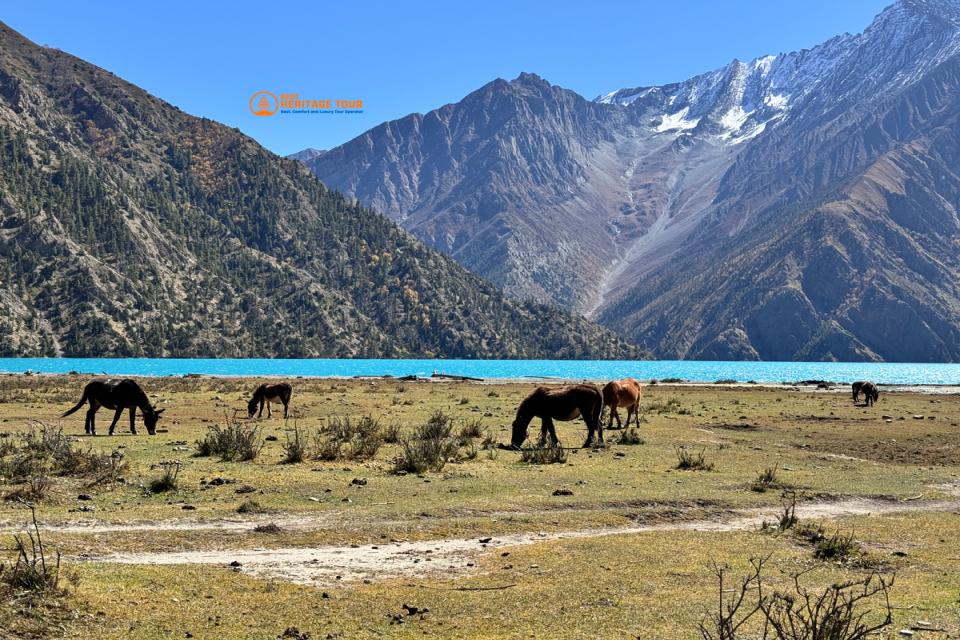
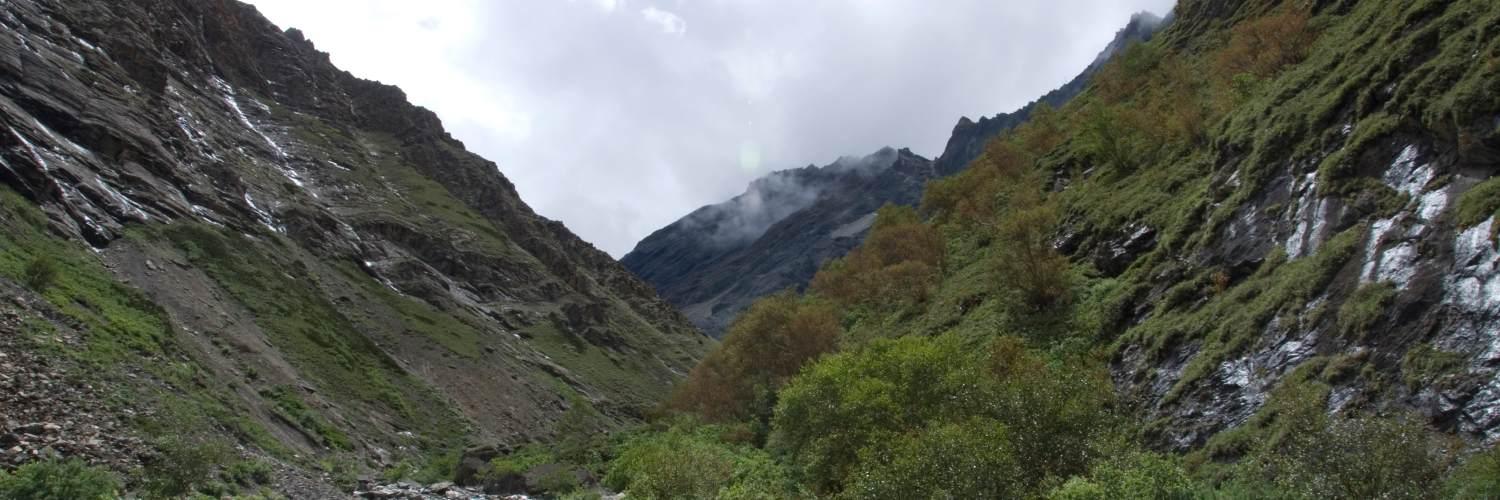
Lower Dolpo Scenery: You begin in the sub-tropical forests of Juphal. The trail follows the Bheri River through cedar and pine forests. The "crown jewel" here is Phoksundo Lake - a deep blue, alpine lake that is famously turquoise and contains no aquatic life.
-
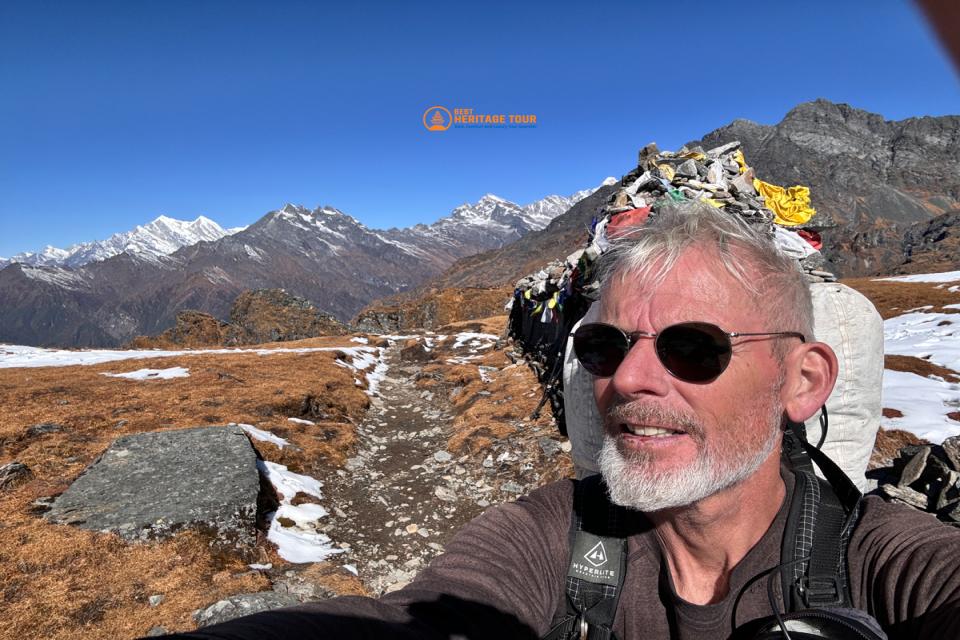
Upper Dolpo Scenery: Once you cross the high passes leaving Phoksundo, the greenery vanishes. You enter a world of ochre cliffs, wind-eroded canyons, and massive, barren mountains. It is a high-altitude desert that rivals the beauty of Mustang but with far fewer crowds.
Upper Dolpo vs. Lower Dolpo Difficulty Comparison
This is perhaps the most crucial factor for our trekkers at Best Heritage Tour.
Lower Dolpo Trek Difficulty:
-
Duration: Typically 14 to 18 days.
-
Maximum Altitude: Numa La Pass (5,309m) and Baga La Pass (5,169m).
-
Physical Demand: Moderate to Strenuous. While the passes are high, the ascent is relatively gradual, and there are more opportunities for "easier" days in the lower valleys.
Upper Dolpo Circuit Trek Difficulty:
-
Duration: 24 to 28 days.
-
Maximum Altitude: Kang La Pass (5,350m), Saldang La (5,200m), and others.
-
Physical Demand: Extreme. This is one of the most challenging treks in Nepal. You spend a significant amount of time above 4,000 meters. The trails are rugged, often narrow, and involve long days of steep climbing and descending.
Our Expert Guide Tip: Do not underestimate the "ruggedness" of Dolpo. Unlike the Everest region, the trails here are not "paved" by heavy traffic. They are raw, rocky, and require a high level of cardiovascular fitness.
Cultural Immersion: Bon Po and Tibetan Traditions
For the "Heritage" enthusiast, Dolpo is a living museum.
In Lower Dolpo, you will encounter a mix of ethnic groups including Khas and Magar peoples in the lower reaches, transitioning to the Dolpo-pa (people of Dolpo) as you go higher.
In Upper Dolpo, you step back in time. This is one of the few places on Earth where the Bon Po religion - an ancient, pre-Buddhist shamanistic tradition - is still practiced in its purest form. You will see "Chortens" and "Mani walls" where people walk counter-clockwise (unlike traditional Tibetan Buddhism). The monasteries, like Shey Gompa, are centuries old and hold secrets of a civilization that has remained unchanged for a millennium.
Logistics: Permits, Flights, and Food
Because Dolpo is a restricted area, you cannot trek here solo. You must be part of an organized group through a registered agency like Best Heritage Tour.
-
Permits:
-
Lower Dolpo: RAP (Restricted Area Permit) costs 20 USD per week.
-
Upper Dolpo: Considerably more expensive at 500 USD for the first 10 days and 50 USD per day thereafter. This high cost is why Upper Dolpo remains so exclusive.
-
-
Accommodation: Both treks are primarily camping treks. While some tea houses are popping up in Lower Dolpo, the true experience requires a full kitchen crew, tents, and porters. At Best Heritage Tour, we pride ourselves on providing high-quality mountain meals even at 5,000 meters.
-
Access: Both start with a flight from Nepalgunj to Juphal. These flights are weather-dependent, so always build "buffer days" into your itinerary.
Which One to Choose? The Deciding Factors
Still wondering which one to choose? Ask yourself these three questions:
1. How much time do you have?
If you have less than three weeks, Lower Dolpo is your best bet. It captures the essence of Phoksundo Lake and the high passes without the month-long commitment required for the Upper Circuit.
2. What is your budget?
Due to the permit costs and the extended duration involving more staff and supplies, the Upper Dolpo Circuit Trek is significantly more expensive. Lower Dolpo offers a "budget-friendly" alternative to the same remote wilderness.
3. What is your "Trekker Identity"?
-
If you love alpine beauty, waterfalls, and diverse flora, choose Lower Dolpo.
-
If you are a hardcore adventurer seeking total isolation, high-altitude desert landscapes, and deep spiritual history, Upper Dolpo is the ultimate bucket-list item.
The Best Time to Visit Dolpo Region
Unlike much of Nepal, parts of Dolpo fall within the rain shadow of the Himalayas. This means Dolpo is a fantastic monsoon trekking destination (June to August). While the rest of Nepal is under heavy clouds and rain, Dolpo remains relatively dry.
However, the "Sweet Spots" are:
-
Spring (April - May): Ideal for wildflowers and seeing the locals prepare for the season.
-
Autumn (September - October): The clearest skies and most stable weather for crossing high passes.
Conclusion
Whether you choose the mystical heights of the Upper Dolpo Circuit Trek or the mesmerizing blue waters of the Lower Dolpo Trek, you are choosing a path less traveled. You are choosing to see Nepal as it was decades ago - quiet, majestic, and profoundly moving.
Lower Dolpo vs. Upper Dolpo is not a contest of "which is better," but rather "which is right for you right now." Lower Dolpo is a poem of water and forest; Upper Dolpo is an epic of rock and spirit.
Ready to Explore the Hidden Kingdom?
Don't let the complexity of permits and logistics stop you from experiencing the magic of Dolpo. Let the experts at Best Heritage Tour handle the details while you focus on the horizon.
Phone / WhatsApp / Viber: +977-9851149197 / +977-9810043046
Email: [email protected] / [email protected]
Website: www.bestheritagetour.com
Office: Thamel Marg, Kathmandu, Nepal
Author: Best Heritage Tour
Date: 12th April, 2026