Nepal is world-renowned for its towering Himalayan peaks, but beneath those icy summits lies another world entirely - a maze of roaring, glacier-fed rivers carving their way through deep gorges and lush valleys. For adventure seekers, river expeditions offer some of the most exhilarating experiences on the planet. If you are planning a trip and looking to experience the raw power of Himalayan waters, you have likely narrowed your choices down to two iconic titans: the Trishuli River and the Bhotekoshi River.
Both rivers offer world-class rafting in Nepal, but they cater to entirely different styles of adventurers. Whether you are looking for a relaxed family-friendly float with stunning canyon scenery or a heart-pounding, continuous adrenaline rush down steep technical drops, understanding the unique personality of each river is essential.
Drawing from over years of guiding travelers through Nepal's roaring canyons, let's dive deep into a comprehensive comparison of the Trishuli River and the Bhotekoshi River to help you decide which one deserves a spot on your itinerary.
The Landscape of Adventure: Why Nepal is a Whitewater Haven
Nepal’s topography is a gift to whitewater enthusiasts. The steep gradient from the high Himalayas down to the Gangetic plains creates high-velocity rivers fed by monsoon rains and melting snowpacks. Over the years, we have seen travelers arrive with mild curiosity and leave with a profound, lifelong love for Nepal's aquatic landscapes.
When searching for the best river for rafting in Nepal, visitors are often overwhelmed by options like the Sun Koshi, Karnali, or Marshyangdi. However, for travelers working within a tight vacation schedule or seeking accessible day-to-day thrills near Kathmandu, Trishuli River rafting and Bhotekoshi River rafting stand out as the undisputed champions.
Trishuli River: The Accessible Classic
Named after the holy trident (Trisula) of Lord Shiva, the Trishuli River originates from the high Himalayas and cuts through the middle hills of Nepal. It is easily the most popular and accessible waterway for water sports in the country.
Location and Accessibility
One of the greatest advantages of the Trishuli River is its location. Flowing right alongside the Prithvi Highway - the main arterial road connecting Kathmandu to Pokhara and Chitwan - it requires very little travel time. You can pack your bags in Kathmandu in the morning, be on the river by midday, and continue onward to Pokhara or Chitwan by evening.
River Characteristics and Difficulty
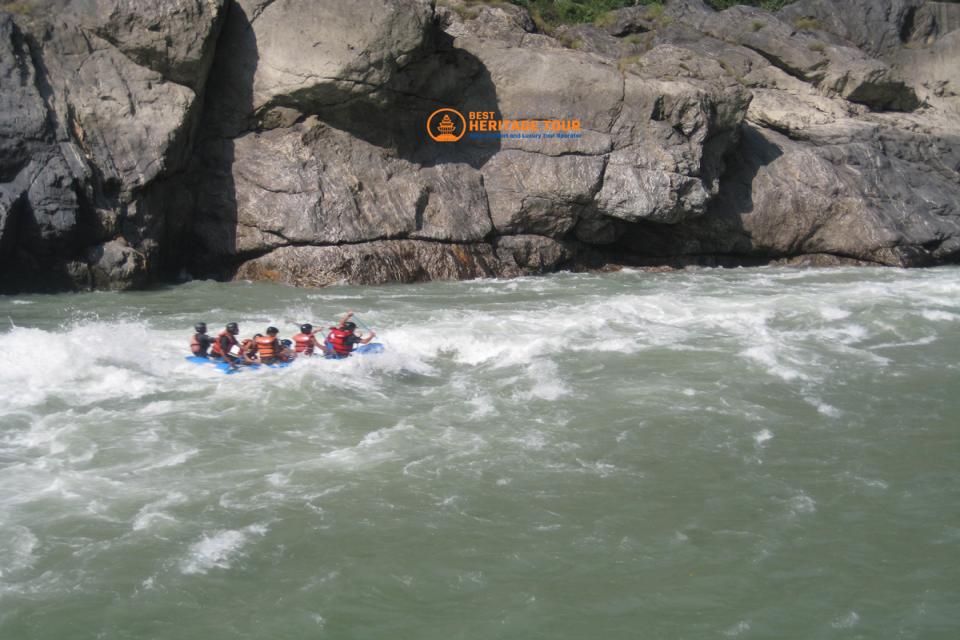
Trishuli is predominantly a Class III to III+ River (on the International Scale of River Difficulty). During the autumn and spring seasons, it offers a fantastic mix of bouncy, fun rapids interspersed with calm, scenic float sections where you can catch your breath and take in the scenery.
However, during the peak monsoon season (July to August), the Trishuli transforms completely. Massive volume surges turn it into a raging torrent with huge roller-coaster waves and powerful hydraulics, elevating the difficulty and excitement level significantly.
Scenery and Cultural Vibe
As you navigate the Trishuli, the canyon opens up to reveal terraced rice paddies, suspension bridges swaying high above the water, local villages, and deep gorges. Because the highway runs parallel for parts of the journey, you will occasionally see local life unfolding along the banks, giving you a wonderful cultural snapshot of rural Nepal.
Who is Trishuli River Rafting Best For?
-
First-time rafters looking for an approachable introduction to whitewater.
-
Families and casual groups who want fun rapids without extreme physical intensity.
-
Travelers on tight schedules wanting a seamless transit-linked adventure between Kathmandu and Pokhara/Chitwan.
-
Relaxation seekers who want to balance thrills with scenic canyon drifting and riverside camping.
Bhotekoshi River: The Ultimate Adrenaline Thrill
If the Trishuli is a scenic, friendly introduction to Himalayan waters, the Bhotekoshi is an unbridled, vertical beast. If you are asking, "Which is the adventurous river in Nepal for rafting?" - look no further. The Bhotekoshi is widely celebrated as the steepest, most relentless commercially rafted river in the country.
Location and Accessibility
Located about 70 to 80 kilometers northeast of Kathmandu along the Araniko Highway (the route toward the Tibet border), the Bhotekoshi requires a journey through dramatic mountain switchbacks. It takes roughly 3 to 4 hours to reach the put-in point from the capital, plunging deeper into rugged Himalayan terrain.
River Characteristics and Difficulty
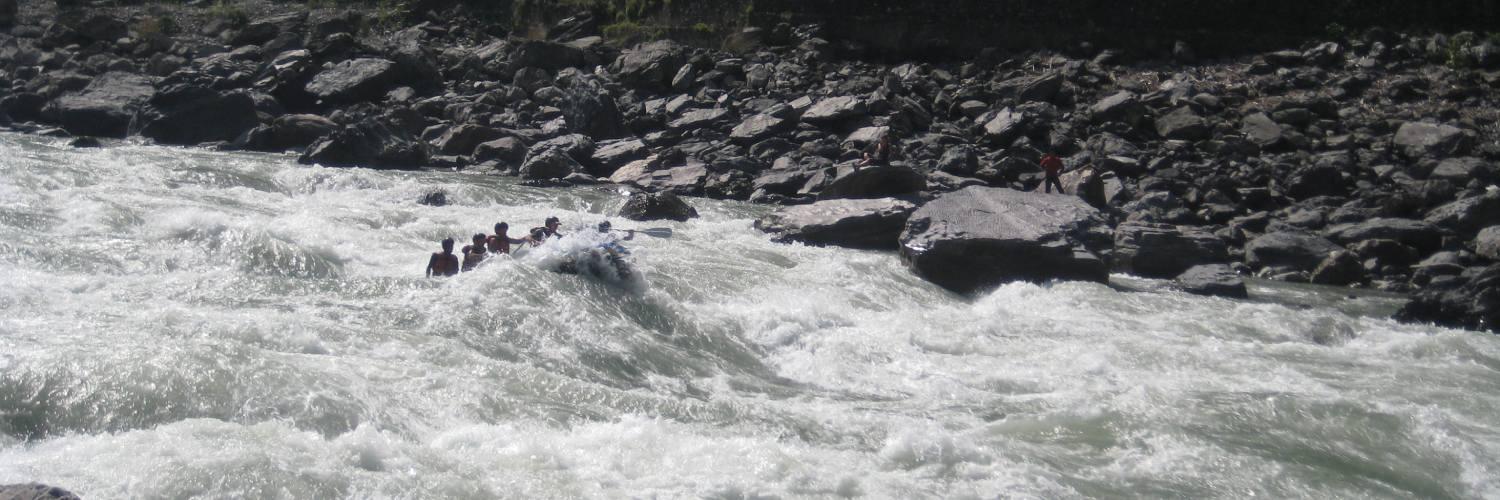
The Bhotekoshi is a continuous Class IV to IV+ (and occasionally V at high water) whitewater experience. The word Bhotekoshi translates literally to "River from Tibet," and its waters rush down steep mountain gradients with relentless momentum.
Unlike rivers that offer long, flat pools between rapids, the Bhotekoshi is a non-stop sequence of steep drops, massive boulders, narrow chutes, and churning holes. There is virtually no time to rest once you push off the bank. Every rapid demands absolute focus, precise paddling, and seamless teamwork with your guide.
Scenery and Cultural Vibe
The canyon of the Bhotekoshi is steep, narrow, and dramatic. Towering cliff walls, hanging waterfalls, and dense pine forests envelop the river corridor. The proximity to the Tibetan border infuses the local settlements with distinct Himalayan and Tibetan cultural influences, visible in local stone architecture and prayer flags fluttering across suspension bridges.
Who is Bhotekoshi River Rafting Best For?
-
Adrenaline seekers and thrill junkies craving high-intensity, technical whitewater action.
-
Experienced rafters and kayakers looking to test their limits against continuous class IV rapids.
-
Physical fitness enthusiasts who enjoy a rigorous, heart-pumping challenge.
-
Day-trippers from Kathmandu seeking an intense, action-packed weekend escape.
Head-to-Head Comparison: Trishuli vs. Bhotekoshi River Rafting
To help you crystallize your decision, let's break down how these two legendary rivers compare across key practical metrics:
|
Feature |
Trishuli River |
Bhotekoshi River |
|---|---|---|
|
Difficulty Level |
Class III to III+ (Moderate) |
Class IV to IV+ (Extreme / Technical) |
|
Pace & Flow |
Alternating rapids and calm pools |
Relentless, continuous whitewater |
|
Travel Time from Kathmandu |
~2.5 to 3 hours |
~3 to 4 hours |
|
Primary Vibe |
Scenic, fun, family-friendly, accessible |
Intense, technical, adrenaline-fueled |
|
Best For |
Beginners, transit-friendly travelers, families |
Adventure junkies, experienced paddlers |
|
Duration Options |
1-day to 3-day multi-day trips |
Primarily 1-day or 2-day intensive trips |
Safety, Seasonality, and Gear: What Every Traveler Needs to Know
No matter which river you choose, safety on Himalayan waters is paramount.
Best Seasons to Go
-
Autumn (September to November): This is the post-monsoon golden season. Skies are crystal clear, weather is warm, and river flows are high yet stable, offering sparkling emerald waters and fantastic conditions on both rivers.
-
Spring (March to May): As winter snows melt in the high mountains, river volumes rise steadily. Temperatures are warm during the day, making it a prime time for both Trishuli and Bhotekoshi runs.
-
Monsoon (June to August): The Trishuli remains runnable (and wildly intense) for experienced thrill-seekers, but the Bhotekoshi is often closed during peak monsoon due to extreme, unmanageable flood levels and flash-flood risks.
Essential Packing List
-
Quick-dry clothing (rash guards, board shorts, or synthetic layers - avoid cotton).
-
Secure river sandals or water shoes with good grip (no flip-flops).
-
Sunscreen (biodegradable is preferred) and sunglasses with a retention strap.
-
A complete change of dry clothes and a towel for after the trip.
Making Your Final Choice
Deciding between Trishuli and Bhotekoshi ultimately boils down to one simple question: What kind of adventure are you looking for?
If your goal is to experience the beauty of Nepal's middle hills, share a fun, laughter-filled day on the water with friends or family, and effortlessly transition between Kathmandu and Pokhara, Trishuli River rafting is your ideal match.
If, however, your pulse quickens at the thought of dropping into roaring, wall-to-wall continuous rapids, battling technical hydraulics, and earning bragging rights as a true adrenaline seeker, the Bhotekoshi River will deliver an unforgettable, high-octane rush that few rivers on earth can rival.
Whichever current you choose to conquer, Nepal’s rivers will reward you with memories, camaraderie, and a perspective of the Himalayas that few tourists ever get to witness.
Conclusion
Nepal's river systems offer an unmatched portal into the untamed heart of the Himalayas. Whether you opt for the classic, scenic stretches of the Trishuli or the heart-stopping, technical fury of the Bhotekoshi, stepping into a raft is one of the most rewarding decisions you can make on your journey.
Ready to plan your ultimate Himalayan water expedition or pair your river adventure with an incredible cultural journey? Get in touch with our expert team at Best Heritage Tour to customize your itinerary today.
Best Heritage Tour Contact Details
Phone / WhatsApp / Viber: +977-9851149197 / +977-9810043046
Email: info@bestheritagetour.com / bestheritagetour@gmail.com
Website: www.bestheritagetour.com
Office: Thamel Marg, Kathmandu, Nepal
Frequently Asked Questions (FAQs)
Which river is better for beginners in Nepal, the Trishuli or the Bhotekoshi?
The Trishuli River is the ideal choice for beginners, families, and casual travelers. It features manageable Class III to III+ rapids mixed with calm floating sections, allowing first-time rafters to build confidence safely.
How far are the Trishuli and Bhotekoshi rivers from Kathmandu?
Both rivers are conveniently located near Kathmandu, making them great options for day trips or short excursions. The Trishuli River put-in points are roughly a 2.5 to 3-hour drive and the Bhotekoshi River is located about 3 to 4 hours.
What is the best time of year for rafting on these rivers?
The peak seasons for whitewater rafting in Nepal are the autumn months (September to November) and the spring months (March to May). During these windows, the weather is warm, skies are clear, and river flows are stable and exhilarating.
Which is the most adventurous river for rafting in Nepal?
While Nepal hosts several extreme multi-day expeditions like the Sun Koshi and Karnali, the Bhotekoshi River is widely recognized as the most intense and adventurous day-trip river in the country.
Author: Best Heritage Tour
Date: 12th August, 2026