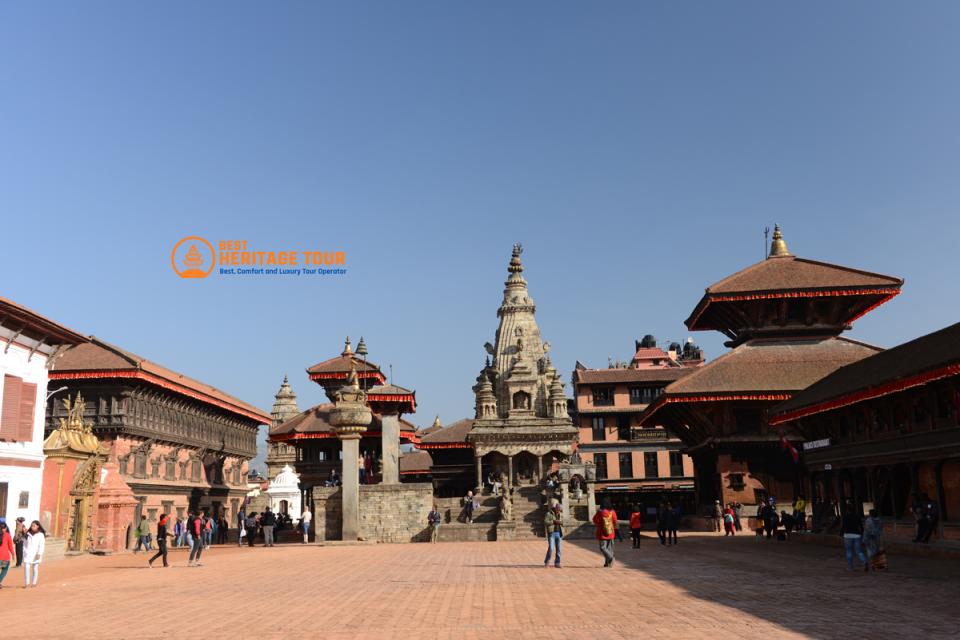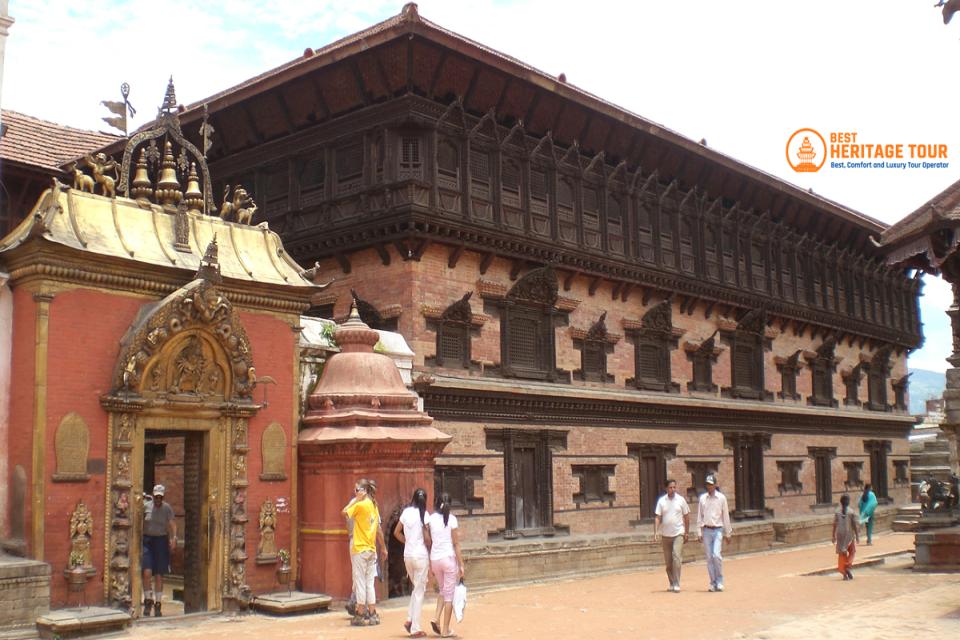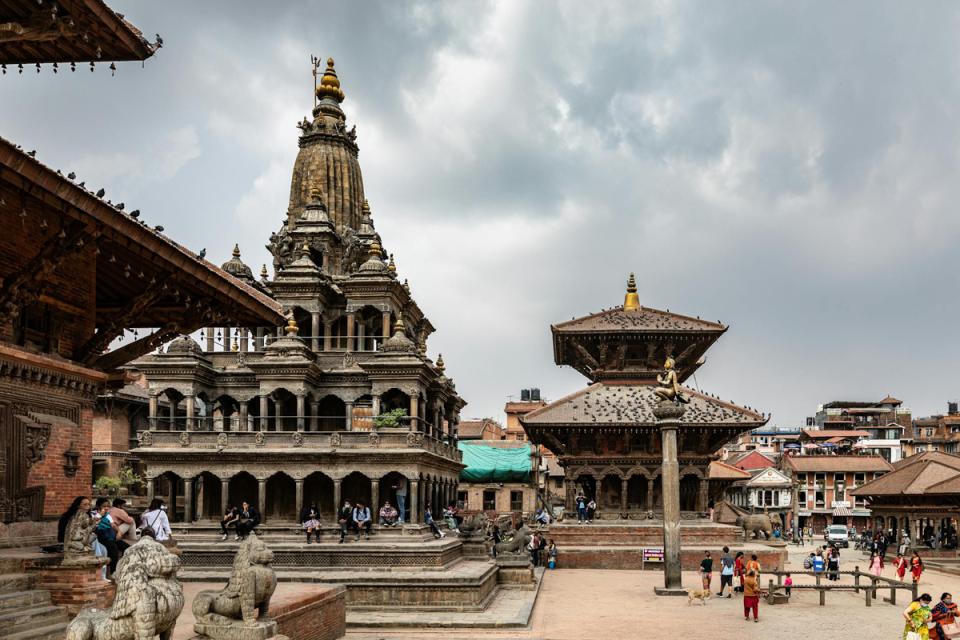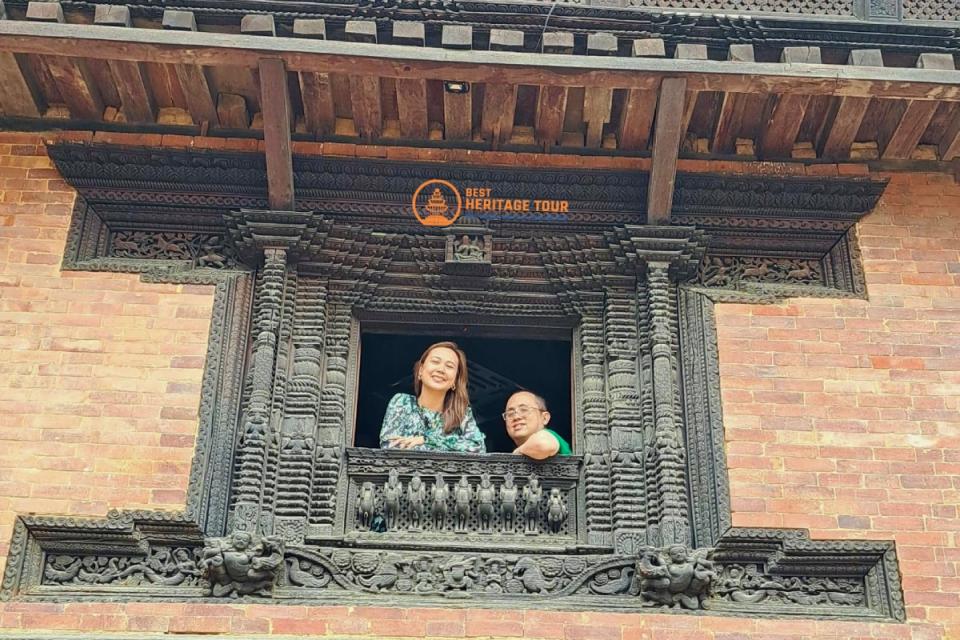

Patan Durbar Square is one of the most fascinating cultural destinations in the Kathmandu Valley, offering visitors an opportunity to discover Nepal's traditional architecture, religious heritage, royal history, and living Newari culture. Located in the historic city of Lalitpur, the square is particularly known for its intricately carved temples, ancient palace courtyards, stone sculptures, traditional water structures, and remarkable craftsmanship.
For travelers exploring Kathmandu, Patan Durbar Square provides an enriching cultural experience beyond the usual sightseeing route. The historic complex brings together Hindu and Buddhist traditions, with shrines, monuments, and sacred spaces that continue to play an important role in local religious and community life. Many of its most interesting features are tucked inside courtyards or positioned along smaller pathways, making careful exploration especially rewarding.
At Best Heritage Tour, we help travelers discover the cultural richness of Patan through thoughtfully organized heritage sightseeing experiences. Whether you are a trekker taking a break from the mountains, a traveler interested in Nepal's history, a photographer seeking traditional architecture, or a religious visitor exploring sacred places, the Patan Durbar Square area offers plenty to discover.
This guide introduces the principal courtyards, temples, monuments, water structures, gardens, and museum attractions to explore inside the historic complex, including lesser-known shrines that visitors may otherwise overlook.
1. Historic Courtyards and Royal Palaces
The palace courtyards, locally known as chowks, are among the most distinctive attractions of Patan Durbar Square. These enclosed spaces reveal how the royal palace was organized and how architecture, religious practice, and royal life were connected.
1.1 Keshab Narayan Chowk
Keshab Narayan Chowk is the northernmost major courtyard of the historic palace complex and the present home of Patan Museum. The courtyard takes its name from the shrine dedicated to Keshab Narayan, a form of Lord Vishnu, located at its center.
The palace section was historically known as Chaukot Durbar, referring to its four-cornered palace arrangement. Today, visitors can appreciate its traditional architecture while exploring the museum's collections of Nepalese religious art and craftsmanship.
What to explore:
-
The traditional palace courtyard and its architectural details.
-
The Keshab Narayan shrine.
-
Patan Museum's collection of religious art, sculptures, and traditional metalwork.
-
The surrounding palace buildings and carved architectural features.
1.2 Sundari Chowk
Sundari Chowk is another remarkable palace courtyard, particularly known for its artistic stonework and the historic royal bathing structure called Tusha Hiti.
The courtyard reflects the sophistication of traditional Newari architecture, combining carefully arranged palace buildings with elaborate carvings and decorative elements. Its sunken bathing area is an important feature for understanding the ceremonial and artistic traditions of the royal palace.
What to explore:
-
Tusha Hiti, the historic stone bathing structure.
-
Intricate stone and wood carvings.
-
Traditional palace architecture.
-
Sculptural details surrounding the courtyard.
1.3 Mul Chowk
Mul Chowk, meaning the main courtyard, is one of the central spaces of the historic palace. It was established during the reign of Srinivasa Malla in the seventeenth century and has long been associated with royal and ritual activities.
Its broad courtyard, traditional paving, and surrounding palace structures make it an important place to appreciate the organization of the royal complex. Restoration work has also helped preserve its historic architectural character.
What to explore:
-
The spacious central courtyard.
-
Historic palace facades and entrances.
-
Traditional paving and architectural details.
-
Religious and ceremonial features associated with the palace.
Together, Keshab Narayan Chowk, Sundari Chowk, and Mul Chowk provide a valuable introduction to the history and architecture of Patan's royal palace.
2. Primary Temples and Hidden Shrines Inside Patan Durbar Square
The temples of Patan Durbar Square reflect the religious diversity and artistic traditions of the Kathmandu Valley. While the larger temples attract most visitors, several smaller shrines and lesser-known monuments also deserve attention.
The following temples are arranged as a practical sightseeing guide. Some are prominent landmarks, while others are smaller sacred structures that visitors may notice while walking through the complex.
2.1 Krishna Mandir (Krishna Temple)
Krishna Mandir is one of the most recognizable landmarks in Patan Durbar Square. Dedicated to Lord Krishna, the temple stands out for its stone construction and Shikhara-style architecture.
Built during the seventeenth century under King Siddhi Narsingh Malla, the temple is celebrated for its elaborate stone carvings and religious significance. Its sculptural panels portray episodes associated with the Hindu epics, making the monument particularly interesting for visitors who appreciate both mythology and traditional craftsmanship.
What to notice:
-
The temple's distinctive stone construction.
-
Its tiered arrangement and sculptural details.
-
Carvings illustrating scenes from Hindu religious stories.
-
Its importance during Krishna-related festivals and worship.
2.2 Radha Krishna Mandir (Chhasi Dega)
Chhasi Dega, also known as Radha Krishna Mandir, is another Krishna-related shrine included in the historic square's collection of religious monuments.
Its presence adds to the area's connection with Vaishnavite traditions and devotional worship. Visitors exploring the surrounding temples can look for this shrine while appreciating the variety of architectural forms found within the complex.
The name Chhasi Dega is also associated with the octagonal Krishna temple described in heritage references. Visitors should confirm the local identification of individual shrines with their guide, as traditional names and commonly used descriptions can vary.
2.3 Bishwonath Temple
Bishwonath Temple, also known as Vishwanath Temple, is dedicated to Lord Shiva. It is a significant religious landmark within the square and is recognized for its traditional pagoda-style structure.
The temple dates to the seventeenth century and is associated with the reign of Siddhi Narsingh Malla. Its entrance is marked by stone elephant sculptures, while a stone bull representing Nandi, the vehicle of Lord Shiva, is another important feature to look for.
Why visit: The temple provides an opportunity to observe traditional Newari temple architecture and the continuing importance of Shiva worship in Lalitpur.
2.4 Bhimsen Temple
Bhimsen Temple is particularly significant to local merchants and business communities. Bhimsen, a figure from the Mahabharata, is worshipped by many Newars as a deity associated with trade, commerce, and prosperity.
The temple is known for its traditional multi-tiered roof and decorative golden windows. Its location within the square also makes it an interesting stop for visitors studying the relationship between religion and traditional economic life.
Visitors should respect restrictions on entering the shrine and taking photographs, as access rules may differ between the exterior and interior spaces.
2.5 Char Narayan Temple
Char Narayan Temple is dedicated to Lord Vishnu and is known for its traditional architecture and finely worked wooden elements.
It is one of the religious monuments that contribute to the distinctive appearance of Patan Durbar Square. The temple's carved details are particularly interesting for visitors who want to understand the skill of traditional Newari woodworkers.
Take time to observe the exterior structure and decorative features rather than focusing only on the larger temples.
2.6 Hari Shankar Temple
Hari Shankar Temple is another important religious structure within the historic square. The name Hari Shankar brings together associations with Vishnu and Shiva, reflecting the interconnected traditions found in Hindu religious practice.
Its traditional design and location among other temples make it a worthwhile stop during a guided heritage walk.
Visitors interested in Nepalese religious culture can ask their guide about the shrine's local traditions, its architectural details, and its place within the wider sacred landscape of Patan.
2.7 Degu Taleju
Degu Taleju is associated with Taleju Bhawani, a goddess traditionally connected with the royal families of the Kathmandu Valley.
The Taleju tradition holds particular historical importance in the old palace complexes, where royal authority and religious devotion were closely connected.
Visitors should understand that some Taleju-related shrines are restricted sacred spaces. Their accessibility may depend on religious customs, ceremonies, and local rules.
2.8 Taleju Temple
Taleju Temple is associated with the royal goddess Taleju Bhawani, who held an important place in the religious life of the Malla kings.
The temple's traditional architecture and religious significance make it an important part of Patan's heritage landscape. Its history also helps explain how royal ceremonies and religious practices were connected during the Malla period.
Because access to Taleju shrines can be restricted, visitors should follow their guide's instructions and avoid entering areas that are closed to the public.
2.9 Jwala Narsingh Degal
Jwala Narsingh Degal is a lesser-known religious structure included among the sacred monuments of the Patan Durbar Square area.
The name connects the shrine with Narsingh, the lion-man incarnation of Lord Vishnu. It offers an opportunity to explore the less prominent religious features of the square rather than visiting only its famous landmarks.
Visitors can appreciate its traditional setting and ask a local guide about its religious associations and the customs followed by worshippers.
2.10 Bhaiya Degal Mandir (Bhaiya Dega)
Bhaiya Degal, also called Bhaiya Dega, is among the smaller religious structures associated with the historic square.
Although it may receive less attention than Krishna Mandir or Bhimsen Temple, it contributes to the architectural and religious character of the complex.
For travelers interested in hidden temples inside the Patan Durbar Square complex, smaller shrines like this are worth identifying during a guided walk.
2.11 Mani Kumar Ganesh Temple and Ganesh Temple
Ganesh-related shrines are an important part of Nepalese Hindu religious life. Lord Ganesh is widely worshipped as the remover of obstacles and is traditionally invoked before beginning important activities.
The names Mani Kumar Ganesh Temple and Ganesh Temple (Mani Kumar Ganesh) appear in the site list for this tour. As the names may refer to the same shrine or closely associated features, visitors should confirm the exact local identification during the visit rather than assuming they are separate monuments.
When exploring the shrine, observe the offerings and devotional practices respectfully, without interrupting worshippers.
2.12 Vidhya Mandir (Bidhya Mandir)
Vidhya Mandir, also written as Bidhya Mandir, is another religious structure included in the Patan Durbar Square area.
Its name is associated with knowledge and learning, making it relevant to visitors interested in the spiritual and cultural traditions of Nepal.
As with other smaller shrines, its architectural details and local significance are best understood through on-site interpretation.
2.13 Bishnu Temple
Bishnu Temple is associated with Lord Vishnu, one of the principal deities in Hinduism.
The shrine contributes to the religious diversity of Patan Durbar Square, where temples dedicated to different deities stand close together.
Visitors can use this stop to learn about Vishnu worship and its relationship with other Hindu traditions represented throughout the palace complex.
3. Gates, Monuments, and Statues
Patan Durbar Square is not only a collection of temples and palace buildings. Its gates, statues, bells, and decorative architectural features also tell stories about royal authority, religious devotion, and traditional craftsmanship.
3.1 Golden Gate (Subarna Dwar / Sunko Dhoka)
The Golden Gate, also known as Subarna Dwar or Sunko Dhoka, is a decorative entrance associated with the historic palace complex.
Its detailed metalwork and traditional design reflect the artistic skills that made Patan famous for its craftsmanship.
Visitors should take time to appreciate the ornamentation and the relationship between the gate and the surrounding palace architecture.
3.2 Golden Window (Lu:jyo)
The Golden Window, locally identified as Lu:jyo, is an important decorative feature of the historic palace area.
Traditional windows in Patan are admired for their intricate designs and the craftsmanship involved in working with wood and metal.
This feature offers an opportunity to observe the artistic details that distinguish Newari palace architecture from more ordinary buildings.
3.3 Statue of King Yog Narendra Malla
The statue of King Yog Narendra Malla is one of the square's notable royal monuments.
The statue connects visitors with the political history of the Malla period and the rulers who contributed to the development of Patan's historic architecture.
It is also a popular place to pause while exploring the square and observe the surrounding monuments.
3.4 Garud Statue
Garud is traditionally associated with Lord Vishnu and is regarded as his divine vehicle.
The Garud statue represents an important element of Hindu iconography. Visitors interested in religious symbolism can learn how Garud is depicted in traditional Nepalese sculpture.
3.5 Taleju Bell
The Taleju Bell is among the historic features associated with the palace's religious and ceremonial traditions.
Bells have long played an important role in Hindu worship, where their sound is used during rituals and devotional activities.
Visitors should avoid ringing historic bells unless local rules and religious customs permit it.
3.6 Ganesh Statue
The Ganesh statue represents Lord Ganesh, a widely worshipped deity associated with wisdom, good fortune, and the removal of obstacles.
Such statues are important features of Nepalese religious architecture and are often placed near entrances or other significant locations.
3.7 Narsingh Statue
The Narsingh statue represents the lion-man incarnation of Lord Vishnu.
Narsingh is associated with protection and the triumph of righteousness in Hindu religious tradition.
The statue provides an opportunity to learn about the stories and symbolism that appear in Nepalese temple art.
3.8 Hanuman Statue
Hanuman is a revered figure in the Ramayana and is associated with devotion, courage, and strength.
The Hanuman statue adds another important element to the religious landscape of Patan Durbar Square.
Visitors can observe its traditional representation while learning about Hanuman's place in Hindu devotional culture.
4. Water Structures, Rest Houses, and Gardens
The historic square also contains water features, resting places, and landscaped spaces that reveal how traditional urban life was organized around palaces and temples.
4.1 Mani Hiti (Manga Hiti)
Mani Hiti, also known as Manga Hiti, is a traditional stone water structure within the historic palace area.
Traditional hiti systems were important sources of water in the Kathmandu Valley. Their design combined practical water access with artistic and religious elements.
Manga Hiti is one of the features visitors can explore while walking through the palace complex.
4.2 Mani Mandap (Sorha Khutte Pati)
Mani Mandap, also known as Sorha Khutte Pati, is a traditional resting structure included among the attractions of the historic square.
Traditional pati structures served as sheltered spaces where people could rest, meet, or gather during religious and community activities.
This type of architecture illustrates how public spaces in traditional Nepalese towns supported everyday social life alongside religious ceremonies.
4.3 Krishna Garden (Krishna Udyan / Tha Tha Chhe Batika)
Krishna Garden, also identified as Krishna Udyan or Tha Tha Chhe Batika, is a green space within the historic area.
Gardens and open spaces provide a different perspective on the heritage complex, offering visitors a quieter place to pause between architectural and religious attractions.
The garden can be included as a short stop during a walking tour, depending on access and local conditions.
4.4 Bhandarkhal Pond (Kamal Pokhari) and Garden
Bhandarkhal Pond and its surrounding garden form another interesting part of the historic palace landscape.
The pond and garden area provide insight into the traditional relationship between water, architecture, and open space in the Kathmandu Valley.
Visitors can appreciate the setting, observe the surrounding structures, and enjoy a quieter part of the heritage complex.
Access to individual sections may vary, so it is advisable to follow local instructions during the visit.
4.5 Patan Museum
Patan Museum is one of the major cultural attractions within Patan Durbar Square. Located in Keshab Narayan Chowk, the museum occupies part of the historic palace complex and presents Nepalese religious art and traditional craftsmanship.
Its collections help visitors understand the artistic traditions of the Kathmandu Valley, including the use of metal, stone, and other materials in religious sculpture.
The museum's development was connected with restoration work in the palace complex, including a conservation initiative that began in 1982. It subsequently became an important institution for presenting Nepalese art and cultural heritage.
What to explore inside Patan Museum:
-
Traditional Nepalese religious sculptures.
-
Metalwork and artistic objects.
-
Cultural and architectural interpretation.
-
The historic palace courtyard itself.
-
Exhibitions explaining Nepal's artistic traditions.
Travelers interested in Nepalese culture should allow additional time for the museum rather than treating it as a quick photo stop. Opening hours, ticket arrangements, and access to particular areas should be confirmed before visiting.
Conclusion
Patan Durbar Square offers far more than a collection of historic temples. Its royal courtyards, traditional shrines, carved monuments, water structures, gardens, and museum reveal the artistic achievements and living traditions of Lalitpur.
From the remarkable Krishna Mandir and the historic palace courtyards to smaller religious structures and traditional public spaces, the area provides an enriching experience for travelers interested in Nepal's cultural heritage.
At Best Heritage Tour, we organize heritage sightseeing experiences that help visitors explore Nepal's cultural destinations with local insight, comfortable transportation, and thoughtful planning. Our team can help you discover the major landmarks and lesser-known attractions of Patan Durbar Square while respecting local customs and heritage conservation practices.
Plan your Patan Durbar Square heritage tour with Best Heritage Tour.
Phone / WhatsApp / Viber: +977-9851149197 / +977-9810043046
Email: info@bestheritagetour.com / bestheritagetour@gmail.com
Website: www.bestheritagetour.com
Office: Thamel Marg, Kathmandu, Nepal
Author: Best Heritage Tour
Date: 28th September, 2026