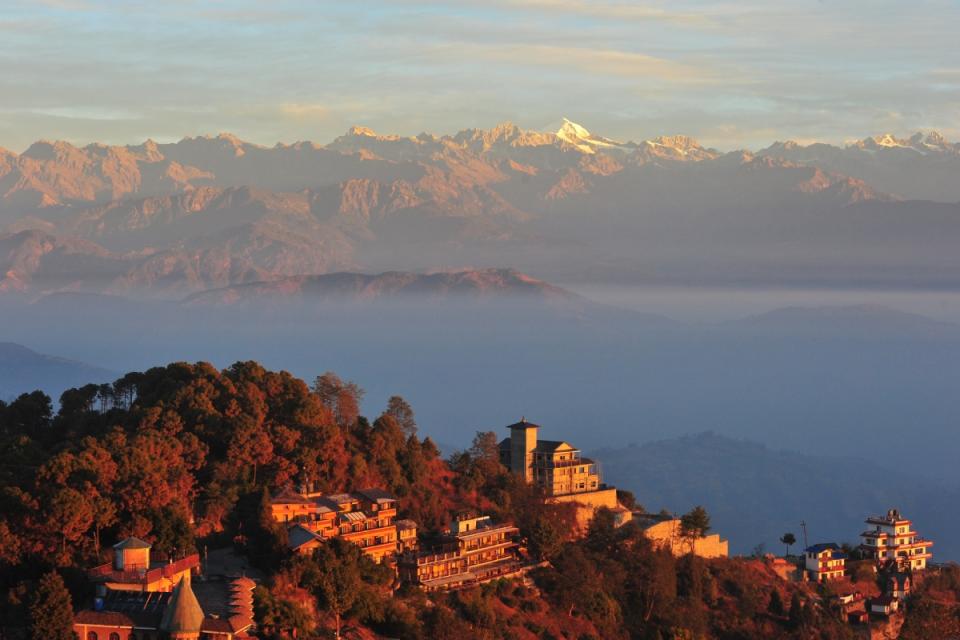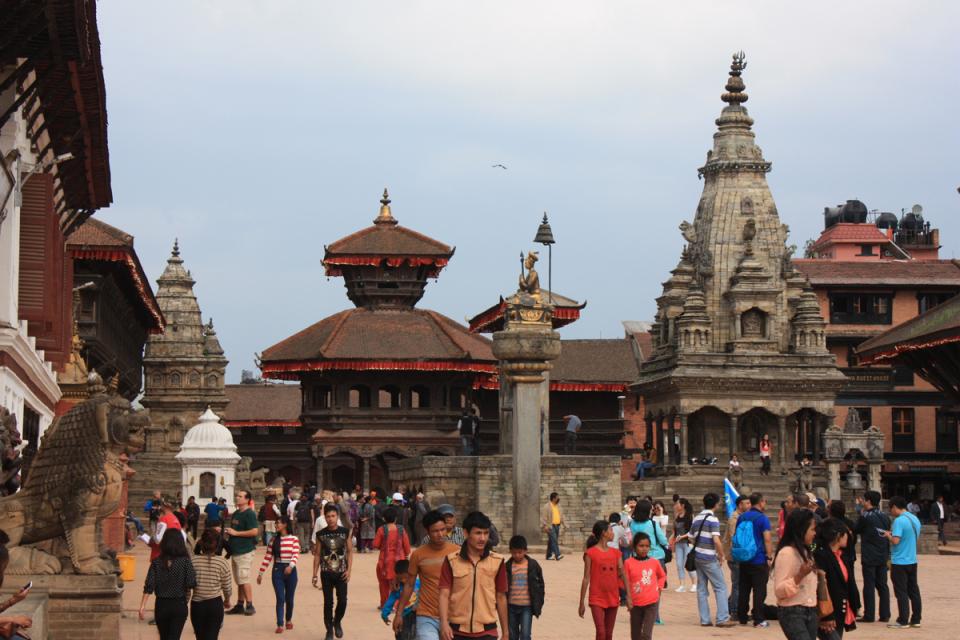
Perched on a hilltop in Bhaktapur, Changunarayan Temple is much more than a single historic shrine. The temple complex is filled with ancient stone sculptures, religious shrines, carved pillars, guardian figures, inscriptions, and examples of traditional Newari craftsmanship. For travelers interested in Nepal’s history and culture, exploring the courtyard carefully can reveal details that are easy to miss during a quick visit.
Changunarayan is dedicated primarily to Lord Vishnu, one of the principal deities of Hinduism, and the surrounding monuments reflect centuries of devotion to Vishnu, Shiva, Krishna, and other Hindu deities. The complex is part of the Kathmandu Valley UNESCO World Heritage property, which recognizes Changunarayan as one of the valley's important historic religious ensembles.
For trekkers and tourists visiting Bhaktapur, Changunarayan is particularly interesting because the experience combines heritage sightseeing with a short hill journey. The surrounding area also offers views of the Kathmandu Valley and traditional settlements, making it possible to experience both Nepal's cultural heritage and its quieter countryside atmosphere in one visit. This guide from Best Heritage Tour explains the major places and features worth looking for during your visit.
What are the places to explore inside Changunarayan Temple?
1. Changunarayan Temple
The first and most important monument to explore is the Changunarayan Temple itself, the principal shrine of the complex.
Dedicated to Lord Vishnu in his Narayan form, the temple is an important example of Nepal's traditional religious architecture. The present structure incorporates elements from different periods of restoration, while the history of the sacred site reaches much further back.
Non-Hindu visitors should also be aware that access to the innermost sanctum may be restricted. The exterior architecture and surrounding courtyard, however, provide extensive opportunities for cultural and historical exploration.
2. Laxmi Narayan Temple
The Laxmi Narayan Temple is another important shrine within the Changunarayan temple area.
Laxmi and Narayan represent an important divine pairing in Hindu tradition, with Laxmi associated with prosperity and Narayan representing Vishnu. A visit to this shrine adds another layer to understanding how different forms and manifestations of Vishnu are represented throughout the complex.
Because Changunarayan contains several shrines within a relatively compact heritage area, travelers can easily overlook smaller temples while focusing on the main shrine. Taking a slower walk through the complex makes it easier to notice these additional structures and understand that Changunarayan is a complete sacred landscape rather than a single isolated temple.
3. Kileshwor Mahadev Temple
The Kileshwor Mahadev Temple introduces another important Hindu tradition into the Changunarayan complex.
Dedicated to Lord Shiva, Kileshwor Mahadev is associated with a local religious tradition explaining Shiva's protective presence in the area. According to local heritage documentation, the shrine is connected with the belief that Shiva established himself in the form of a Shivalinga to protect the hill and sacred surroundings.
4. Mahadev Temple
Another feature to look for during your exploration is the Mahadev Temple, associated with Lord Shiva.
Small Shiva shrines and Shivalingas are common throughout Nepal's historic Hindu temple complexes, and their presence at Changunarayan illustrates the religious diversity of the site.
5. Chinnamasta Temple
The Chinnamasta Temple, sometimes spelled Chhinnamasta, is another distinctive shrine within the broader Changunarayan sacred area.
Chinnamasta is a powerful Hindu goddess associated with the Shakta and Tantric traditions. Her representation is visually different from the more familiar images of Vishnu and Krishna found elsewhere in the complex.
The presence of Chinnamasta demonstrates the variety of religious traditions preserved around Changunarayan. Visitors interested in Nepalese culture should approach this shrine with cultural sensitivity because it remains part of a living religious environment rather than simply being an archaeological monument.
6. Krishna Temple
The Krishna Temple is another small but meaningful place to explore within the complex.
Krishna is traditionally regarded as an incarnation of Vishnu, making this shrine particularly relevant to the wider religious identity of Changunarayan. The presence of Krishna alongside other forms of Vishnu allows visitors to see how different manifestations of the deity are represented across Nepal's Hindu heritage.
Key Sculptures, Statues and Avatars to See
One of the biggest reasons to spend time inside Changunarayan is its remarkable collection of stone and metal sculptures. There are several important Vishnu-related sculptures at the site, including Vishwaroop, Vishnu Vikranta, Vishnu mounted on Garuda, and Narasimha Vishnu.
These works allow visitors to understand how Nepalese artists represented Hindu mythology in stone.
7. Statue of Garuda
One of the most recognizable sculptures at Changunarayan is the statue of Garuda, the traditional vehicle or vahana of Lord Vishnu.
Garuda is usually represented as a powerful bird-like or human-bird figure. At Changunarayan, the kneeling Garuda faces the principal temple, symbolically expressing devotion toward Vishnu.
8. Garuda Narayan
The Garuda Narayan sculpture is another highlight for anyone interested in ancient Nepalese art.
This representation shows Vishnu associated with his divine mount Garuda. The Vishnu-on-Garuda sculpture is one of the important artistic treasures of Changunarayan. The sculpture is particularly valuable because it combines religious symbolism with the sophisticated stone-carving traditions of historic Nepal.
9. Vishnu Vikranta
Vishnu Vikranta, also known as Trivikrama in broader Hindu tradition, represents Vishnu in a powerful form associated with his cosmic stride.
The sculpture depicts Vishnu extending his leg dramatically as he measures the universe. The Nepal Tourism Board dates the important stone bas-relief to around the 8th century AD. This is one of the sculptures that makes Changunarayan especially interesting to travelers who appreciate ancient mythology expressed through visual art.
10. Bishworup
The Bishworup, or Vishwaroop, represents Vishnu in his universal or cosmic form.
Rather than showing the deity in a simple human-like representation, Vishwaroop expresses the vastness and universality of the divine. For travelers interested in Hindu mythology, this sculpture offers an opportunity to connect the physical artwork with the larger religious stories associated with Vishnu.
11. Shreedhar Narayan
The Shreedhar Narayan representation is another form of Vishnu that visitors can look for within the complex.
Different names and manifestations of Narayan appear throughout Nepalese Hindu art, reflecting the many ways devotees understand and worship Vishnu.
12. Madhav Narayan
Madhav Narayan is another Vishnu-related representation associated with the temple complex.
The name Madhav is traditionally connected with Vishnu or Krishna, and the presence of different Narayan forms is part of the broader religious character of Changunarayan.
13. Maha Bishnu
The Maha Bishnu representation reflects Vishnu's importance as a major Hindu deity and protector.
Visitors may notice that many sculptures around Changunarayan emphasize Vishnu's different forms, stories, and divine attributes. This is not accidental: Changunarayan is fundamentally a Vishnu-centered sacred complex.
The collection becomes easier to appreciate when travelers understand the recurring symbols associated with Vishnu, including the chakra, shankha or conch, lotus, and other traditional attributes.
14. Narsingh
The Narsingh, or Narasimha, sculpture depicts Vishnu in his half-man and half-lion incarnation.
According to Hindu tradition, Narasimha appeared to defeat the demon king Hiranyakashipu and protect his devotee Prahlada. The sculpture at Changunarayan is one of the important Vishnu representations highlighted by tourism authorities.
15. Bhairab
The Bhairab figure adds another dimension to the religious art found within the temple area. Bhairab is a fierce manifestation associated with Shiva and is widely worshipped throughout the Kathmandu Valley.
16. Nateshwor
The Nateshwor representation is associated with Shiva in his role as the cosmic dancer. This type of imagery is important in South Asian religious art because dance can symbolize cosmic movement, creation, preservation, and transformation.
17. Shiva Lingam
The Shiva Lingam is another sacred feature to look for around the temple complex. At Changunarayan, its presence reinforces the connection between Vishnu-centered worship and Shiva traditions within the wider sacred landscape.
18. Statue of the Malla King and Queen
The statues of the Malla King and Queen offer an interesting connection between religious heritage and Nepal's royal history.
The Malla period made an enormous contribution to the architecture, sculpture, festivals, and urban culture of the Kathmandu Valley. Looking at royal representations within the temple complex provides a glimpse into the historic relationship between rulers, religious institutions, and artistic patronage.
Structures, Pillars and Guardian Figures to Explore
The sculptures inside Changunarayan are not limited to religious statues. The temple's architecture itself contains important historical and artistic details.
19. Bhairab Falcha
Bhairab Falcha is one of the traditional architectural features associated with the Changunarayan area.
A falcha generally refers to a traditional resting platform or public shelter found in the Kathmandu Valley. These structures were important elements of Newari community life, providing places where people could sit, rest, gather, and interact.
20. Pillar with Conch Shell Symbol
One of the important visual details near the main temple is the pillar associated with the conch shell symbol.
The conch, or shankha, is one of the traditional attributes of Lord Vishnu. Its presence immediately connects the architectural decoration with the identity of the temple. Take time to look closely at the carved symbols rather than walking past the pillar quickly.
21. Pillar with Chakra
Another notable pillar features the chakra, the discus traditionally associated with Vishnu.
Together, the chakra and conch provide an important visual connection to Vishnu worship. Historic descriptions of Changunarayan also mention the chakra, conch, lotus, and other Vishnu-associated symbols around the main entrance.
These symbols are particularly useful for first-time visitors because they provide clues for identifying Vishnu-related imagery throughout the complex.
22. Stone Inscriptions and the Bijay Stambha
Perhaps the most historically important object to look for is the stone inscription pillar associated with King Mandeva.
The inscription dates to 464 AD and is written in Sanskrit. UNESCO specifically identifies Changunarayan as containing one of the earliest inscriptions in the Kathmandu Valley.
The inscription provides valuable information about the political and religious history of early Nepal. It is more than an old stone: it is a written record connecting the temple site with the Licchavi period.
23. Stone Lions
The stone lions are among the guardian figures positioned around the temple entrances.
In traditional South Asian and Nepalese architecture, guardian animals are commonly placed at entrances to sacred and important structures. Their purpose is both symbolic and protective. At Changunarayan, pairs of life-sized animal figures guard the entrances, including lions and other mythical creatures.
24. Winged Lions
The winged lions add a more mythical quality to the temple's guardian sculptures.
Unlike ordinary animals, these figures combine recognizable creatures with supernatural features. They form part of the visual language used to protect and define the sacred space.
25. Griffins
The griffins are among the most distinctive mythical guardian figures at Changunarayan.
These creatures are neither ordinary animals nor conventional religious statues. Their unusual forms reflect the imaginative tradition of Nepalese temple art.
Together with lions and elephants, the griffins create a powerful protective boundary around the main shrine. Historic descriptions of Changunarayan consistently identify these mythical and animal guardians as important features of its four entrances.
26. Elephants
The stone elephants are another major group of guardian sculptures.
Elephants have long been associated with strength, stability, protection, and royal symbolism in South Asian culture. Their placement around temple entrances therefore carries both visual and symbolic significance.
When exploring Changunarayan, visitors should look beyond the central shrine and examine the complete sequence of guardians surrounding it.
27. Parijat Tree and Its Platform
The Parijat tree and its platform are another feature to notice during a detailed walk around the complex.
Sacred trees have an important place in Nepalese religious culture. They can become gathering points for worship, offerings, and local traditions.
The tree therefore contributes to Changunarayan's character as a living religious site. It is not simply an architectural monument preserved for tourists; people continue to interact with the sacred landscape through everyday religious practices.
Why You Should Take Time to Explore the Entire Changunarayan Temple Complex
A common mistake among first-time visitors is to arrive at Changunarayan, photograph the main temple, and leave without exploring the surrounding courtyard.
That approach misses much of what makes the site special.
The real attraction of Changunarayan lies in the combination of temple architecture, ancient inscriptions, religious sculptures, guardian figures, smaller shrines, traditional structures, and living cultural practices.
The complex also provides a rare opportunity to see different layers of Nepalese history in one relatively compact location. The Licchavi period is represented through ancient inscriptions and sculptures, while later periods are visible through temple renovations, Malla-era connections, traditional Newari architecture, and continuing religious practices.
Conclusion
Exploring the places inside Changunarayan Temple is an opportunity to discover far more than one historic shrine. From the main Changunarayan Temple and smaller shrines to the remarkable sculptures of Garuda Narayan, Vishnu Vikranta, Vishwaroop, Narasimha, and other forms of Vishnu, the complex preserves an extraordinary range of Nepalese religious art.
For travelers visiting Bhaktapur, Kathmandu, and the Kathmandu Valley, Changunarayan is a destination where history, religion, architecture, sculpture, and living culture come together. Exploring it with patience - and, where possible, with a knowledgeable local guide - allows visitors to understand the stories behind the monuments rather than simply seeing them.
Best Heritage Tour can help travelers discover Changunarayan and other important cultural destinations in Nepal through thoughtfully arranged heritage tours, local transportation, and knowledgeable guiding services.
For tour arrangements, customized itineraries, and further information, contact Best Heritage Tour:
Phone / WhatsApp / Viber: +977-9851149197 / +977-9810043046
Email: info@bestheritagetour.com / bestheritagetour@gmail.com
Website: www.bestheritagetour.com
Office: Thamel Marg, Kathmandu, Nepal
Author: Best Heritage Tour
Date: 1st October, 2026