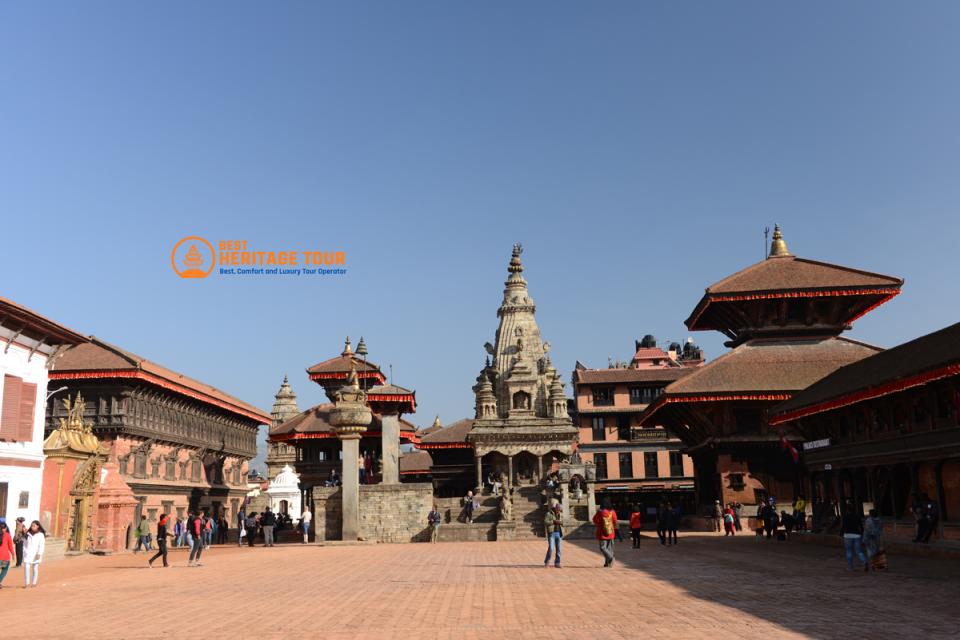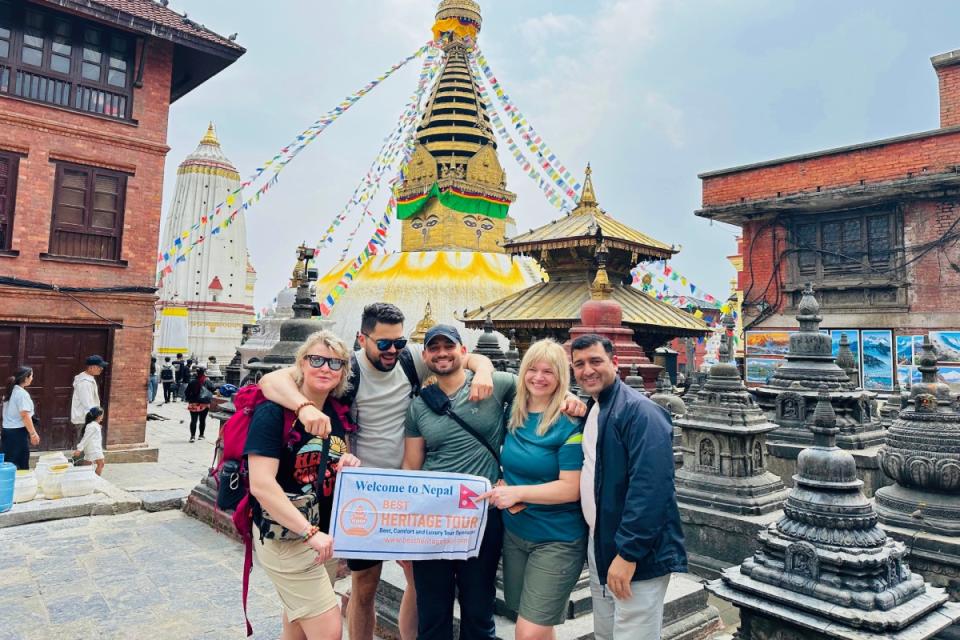
Kathmandu Durbar Square is one of the most remarkable cultural destinations in Nepal, bringing together royal history, Newar architecture, Hindu and Buddhist traditions, ancient courtyards, religious shrines, sculptures, inscriptions, and living cultural practices within a relatively compact historic area. For trekkers, travelers, and tourists visiting Kathmandu, exploring the square offers an opportunity to experience a side of Nepal that goes far beyond the mountains.
Located in the historic heart of Kathmandu, Kathmandu Durbar Square was once the center of royal power and ceremonial life. Today, it forms part of the Kathmandu Valley UNESCO World Heritage Site and remains an important cultural and religious space for local communities.
There are numerous temples, courtyards, statues, palaces, museums, bells, traditional rest houses, and hidden architectural details to discover. This guide from Best Heritage Tour introduces the major places to explore inside Kathmandu Durbar Square. Whether the visit is part of a short Kathmandu sightseeing itinerary, a pre- or post-trek stay, or a dedicated cultural tour, this guide can help visitors understand what they are looking at rather than simply walking from one monument to another.
Why Visit Kathmandu Durbar Square?
Kathmandu Durbar Square is much more than a collection of old temples.
It represents centuries of Nepal's political, religious, artistic, and architectural development. The square and its surrounding historic area contain structures associated with the Malla and Shah periods, traditional Newar craftsmanship, royal ceremonies, religious festivals, and Kathmandu's continuing urban culture.
Visitors can expect to encounter:
-
Historic royal palaces and courtyards
-
Traditional Newari pagoda and shikhara architecture
-
Hindu temples dedicated to different deities
-
Buddhist and Hindu cultural influences
-
Intricately carved wooden windows, doors, and struts
-
Ancient statues and stone inscriptions
-
Kumari, the Living Goddess of Kathmandu
-
Museums containing royal artifacts
For trekkers arriving in Kathmandu before or after a Himalayan adventure, Kathmandu Durbar Square also provides a valuable introduction to Nepal's cultural heritage.
Major Palaces and Courtyards Inside Kathmandu Durbar Square
The historic palace complex is one of the most important parts of Kathmandu Durbar Square. Several courtyards, traditionally known as chowks, form the heart of the former royal complex.
1. Hanumandhoka Palace
Hanumandhoka Palace is the historic royal palace complex that gives the area its well-known name. The name combines Hanuman, the Hindu monkey deity, with Dhoka, meaning door or entrance.
The palace complex developed over different historical periods and served as a royal residence and administrative center. Its buildings, courtyards, shrines, and ceremonial spaces reflect the architectural evolution of Kathmandu over centuries.
The entrance is traditionally associated with a statue of Hanuman, who was believed to protect the palace.
For visitors interested in Nepal's royal history, Hanumandhoka is one of the essential places to explore inside Kathmandu Durbar Square.
2. Basantapur Palace / Nine-Storied Palace
The Basantapur Palace, commonly associated with the Nine-Storied Palace, is among the most recognizable structures in Kathmandu Durbar Square.
Its distinctive multi-level design reflects the grandeur of the historic royal complex. The palace is particularly interesting for visitors who want to understand how Kathmandu's rulers used architecture to express royal authority.
The palace area also provides excellent opportunities to observe traditional architectural details, including carved woodwork, brick construction, windows, balconies, and decorative elements.
3. Nasal Chowk
Nasal Chowk is one of the important courtyards within the Hanumandhoka palace complex.
Historically, courtyards such as Nasal Chowk were not simply open spaces. They were used for royal ceremonies, cultural activities, religious events, and important gatherings.
The courtyard's surrounding buildings and architectural details provide a glimpse into the organization of the former royal palace.
4. Mul Chowk
Mul Chowk is another significant courtyard within the palace complex.
It is particularly associated with royal and religious ceremonies and is surrounded by historic buildings and architectural features.
Visitors should take time to look beyond the central open space. The carved windows, doors, brickwork, and temple structures around the courtyard reveal the craftsmanship for which Kathmandu's traditional architecture is famous.
5. Mohankali Chowk
Mohankali Chowk forms another important part of the historic palace complex.
The courtyard contains architectural and religious features that demonstrate the close connection between Nepal's royal traditions and religious practices.
The area is also associated with traditional water features and golden taps, making it worthwhile for visitors interested in historic infrastructure and everyday life in the old palace environment.
6. Sundari Chowk
The name Sundari Chowk refers to another historic courtyard within Hanumandhoka.
Like the other palace courtyards, it provides an opportunity to understand how the royal complex was arranged around interconnected spaces rather than being a single monumental building.
Visitors interested in architecture should pay attention to the proportions of the courtyards, the surrounding buildings, carved elements, and traditional water facilities.
Temples and Shrines to Explore in Kathmandu Durbar Square
Religious architecture is one of the defining characteristics of Kathmandu Durbar Square. The area contains numerous Hindu temples and shrines, each with its own history, deity, architectural form, and role in local religious life.
Some are large and immediately recognizable, while others are smaller shrines that can easily be overlooked.
1. Mahendreswor Mahadev Temple
Dedicated to Lord Shiva, Mahendreswor Mahadev Temple reflects the longstanding importance of Shaivism in the Kathmandu Valley.
The temple is an interesting stop for visitors exploring the religious diversity of the square.
2. Taleju Bhawani Temple
Taleju Bhawani Temple is one of the most significant religious monuments within the former royal complex.
Taleju was closely associated with Nepal's royal traditions, particularly during the Malla period. The temple is surrounded by smaller pagoda-style temples and forms an important part of the palace's ceremonial landscape.
The main temple is not freely accessible to visitors throughout the year, so travelers should follow local rules regarding access, photography, and religious practices.
3. Indrapur Temple
The Indrapur Temple, associated with Indreshwor Mahadev, is another important religious structure in the square.
Its presence illustrates the complex mixture of Hindu traditions represented throughout Kathmandu Durbar Square.
4. Bhagwati Temple
The Bhagwati Temple is dedicated to the goddess Bhagwati and contributes to the rich network of goddess worship found throughout the historic city.
Visitors may notice how religious activities continue around these monuments even though the area is also a major tourist attraction.
5. Kakeshwor Temple
Kakeshwor Temple is another historic shrine within the Kathmandu Durbar Square area.
Its traditional architectural form and religious importance make it worth including during a detailed heritage walk.
6. Kotilingeswor Mahadev Temple
Dedicated to Lord Shiva, Kotilingeswor Mahadev Temple represents the deep-rooted Shaivite traditions of the Kathmandu Valley.
The temple is another example of how numerous religious traditions coexist within the historic palace area.
7. Degutale Temple
Also known as Degu Taleju, this temple is associated with the royal religious traditions of Kathmandu.
Its architectural and cultural relationship with the palace complex makes it particularly relevant for travelers interested in the connection between monarchy and religion.
8. Krishna Temple - Chaysi Dega
The Krishna Temple, also known as Chaysi Dega or Chyasin Dega, is another notable religious monument.
Its distinctive form adds architectural variety to Kathmandu Durbar Square, where visitors can compare different temple designs within a relatively small area.
9. Panchmukhi Hanuman Temple
The Panchmukhi Hanuman Temple is associated with Hanuman in his five-faced form.
The shrine is connected with the protective and devotional traditions surrounding the palace and its royal environment.
10. Jagannath Temple
The Jagannath Temple is one of the well-known temples in Kathmandu Durbar Square.
The temple is particularly famous for its intricate wooden carvings. Some of the erotic carvings associated with the temple have attracted considerable attention from visitors, making it popularly known among tourists as the Kamasutra Temple.
However, its importance extends beyond these carvings. It is a significant example of traditional Newar temple architecture and craftsmanship.
11. Shiva-Parbati Temple
The Shiva-Parbati Temple is dedicated to the Hindu divine couple Shiva and Parbati.
One of its most recognizable features is the representation of Shiva and Parbati looking out from an upper window of the temple. It is one of the architectural details visitors should not miss while walking through the square.
12. Trilokya Mohan Narayan Temple
The Trilokya Mohan Narayan Temple is another important temple in the historic square.
The temple's traditional architecture and religious associations contribute to the remarkable variety of sacred structures found throughout the area.
13. Kasthamandap
Kasthamandap, also known as Maru Satal or Maru Dhoka, is among the most historically significant structures in Kathmandu.
The name Kathmandu itself is traditionally connected with Kasthamandap, often interpreted as a pavilion made from wood.
The building has played an important role in the history of the city and is an essential stop for anyone interested in Kathmandu's architectural heritage.
14. Maju Degal
Maju Degal is a prominent multi-level temple located in the heart of the historic square.
The temple is also associated with a small Kamdev temple on its staircase. Its elevated structure provides an interesting architectural perspective of the surrounding square and is closely connected with the social life of the area.
15. Ashok Binayak Temple
Also known as Maru Ganesh, the Ashok Binayak Temple is dedicated to Lord Ganesh.
Ganesh is widely worshipped throughout Nepal as a remover of obstacles, and this shrine remains an important place of worship for local devotees.
16. Dhansa - Kabindrapur / Nasa Deyo / Nateshwor Temple
Known by several names, Dhansa is associated with the cultural and religious traditions of the historic Kathmandu area.
Its connection with Nasa Deyo and Nateshwor also reflects the importance of music, dance, and performing arts within traditional Newar culture.
17. Kumari House / Kumari Temple
One of the most famous attractions in Kathmandu Durbar Square is the Kumari House, also called Kumari Bahal or Kumari Chowk.
The building is home to the Kumari, traditionally regarded as the Living Goddess of Kathmandu.
The Kumari tradition is deeply connected with Newar religious culture and combines Hindu and Buddhist elements. Visitors may be able to see the Kumari from a designated area when she appears at the window, but photography and other visitor behavior are subject to local rules.
A respectful approach is essential because this remains a living religious tradition, not simply a tourist attraction.
18. Saraswati Temple
Dedicated to Saraswati, the Hindu goddess associated with knowledge, learning, music, and the arts, this temple adds another dimension to the religious landscape of Kathmandu Durbar Square.
19. Mahavishnu Temple
The Mahavishnu Temple is dedicated to Lord Vishnu and represents another important Vaishnavite tradition within the historic square.
20. Nil Barahi Temple
The Nil Barahi Temple is associated with the Barahi tradition and adds to the diversity of goddess and protective deity worship found in Kathmandu.
21. Bishnu Temple
This shrine is dedicated to Lord Vishnu, one of the principal deities in Hinduism.
Its presence demonstrates the variety of Vishnu-related shrines distributed throughout the historic palace area.
22. Narayan Temple
The Narayan Temple is another temple dedicated to a form of Vishnu.
For travelers exploring Kathmandu Durbar Square, these smaller temples demonstrate that the site's heritage extends well beyond the most famous monuments.
23. Laxmi Narayan Temple
Dedicated to Laxmi and Narayan, this temple represents the combined worship of prosperity and Vishnu within Hindu tradition.
24. Biseshwor Mahadev Temple
The Biseshwor Mahadev Temple is another Shiva shrine within the historic complex.
It forms part of the extensive network of Shaivite temples found throughout Kathmandu.
25. Gaa Kuti Mahadev Temple
This lesser-known Shiva shrine is one of the smaller religious sites that visitors can discover while exploring the square beyond its principal monuments.
26. Bimaleshwor Temple
The Bimaleshwor Temple adds another layer to Kathmandu Durbar Square's religious and architectural heritage.
27. Tarani Devi Temple
The Tarani Devi Temple is another goddess shrine within the historic area and contributes to the remarkable variety of sacred spaces surrounding the old royal complex.
Statues, Idols, Relics and Inscriptions to Look For
Kathmandu Durbar Square is filled with smaller details that are easy to miss when visitors focus only on the major temples.
1. Hanuman Statue
The Hanuman statue at the palace entrance is one of the most recognizable features of the area.
The deity is traditionally associated with protection, strength, devotion, and loyalty. The statue also helps explain the name Hanumandhoka.
2. Kal Bhairav
The imposing Kal Bhairav statue represents a fierce manifestation of Lord Shiva.
It has long been an important religious landmark in Kathmandu and is one of the most visually striking sculptures in the square.
3. Swet Bhairav
Swet Bhairav, or White Bhairav, is another important religious image.
During particular festivals, especially Indra Jatra, the statue becomes an important focal point of local celebrations.
4. 15-Language Stone Inscription
The 15-language stone inscription is particularly interesting for visitors fascinated by historical communication and languages.
It demonstrates the multicultural and multilingual dimensions of Kathmandu's historical society.
5. Statue of King Pratap Malla
A famous monument associated with King Pratap Malla depicts the king with members of his family.
The pillar and its figures provide a visual connection to the Malla royal period and offer an opportunity to observe how rulers represented themselves and their families in public monuments.
6. Winged Garuda
The Winged Garuda statue represents Garuda, the divine mount of Lord Vishnu.
Garuda imagery is common in South Asian religious architecture and is an important feature to notice while exploring the square.
7. Narsingh Statue
The Narsingh statue represents the man-lion incarnation of Vishnu.
It reflects the strong Vaishnavite influence found within Kathmandu's religious heritage.
8. Golden Taps
The golden taps found in Sundari Chowk and Mohankali Chowk are examples of historic water infrastructure.
Traditional water systems were an important part of life in the Kathmandu Valley, and these features demonstrate how architecture, public utility, and religious symbolism were often interconnected.
Halls, Monuments and Historic Rest Houses
Kathmandu Durbar Square is not limited to temples and palaces. Several structures reveal how people lived, governed, gathered, and conducted ceremonies in the historic city.
1. Gaddi Baithak - The Throne Hall
Gaddi Baithak is one of the most distinctive buildings within Kathmandu Durbar Square.
Its architecture reflects a different visual influence from the traditional Newar structures surrounding it, making it an interesting building for architectural comparison.
The hall was associated with royal ceremonies and official functions.
2. Hanumandhoka Museum
The Hanumandhoka Museum provides additional context for understanding Nepal's royal history.
Visitors can encounter artifacts, historical objects, and portraits associated with Nepal's former monarchy, including figures such as King Tribhuvan, King Mahendra, and King Birendra.
For travelers who want to understand Kathmandu's political history alongside its religious heritage, the museum can add useful context.
3. Tago Gan - The Big Bell
Tago Gan, or the Big Bell, is another historic feature of the square.
Large ceremonial bells played important roles in traditional religious and public life. The bell is an example of how sound and ritual formed part of the historic urban environment.
4. Sil Satal / Silyan Sattal
Sil Satal, also called Silyan Sattal, is a traditional rest house associated with Kathmandu's historic public architecture.
Rest houses were important in traditional Newar settlements, providing places for travelers, pilgrims, and local residents to rest.
5. Great Drums
The Great Drums represent another element of the ceremonial traditions associated with the former royal complex.
Large drums were historically used during important events and religious occasions.
6. Coronation Platform - Dabali
The Coronation Platform, or Dabali, is associated with ceremonial royal traditions.
A dabali generally refers to an open public platform used for cultural, religious, and community activities. In Kathmandu's historic urban setting, such spaces continue to demonstrate the relationship between architecture and public life.
Jholsen Tol - Old Freak Street
Just a short walk from Kathmandu Durbar Square, Jholsen Tol, popularly known as Old Freak Street, is a historic street worth adding to your Kathmandu heritage exploration. Once a famous gathering place for international travelers during the 1960s and 1970s, Freak Street became closely associated with Kathmandu's early backpacker culture.
Today, visitors can stroll through the narrow street, observe its old-town atmosphere, traditional buildings, small shops, cafes, and local everyday life. For travelers interested in Kathmandu's cultural and social history, Old Freak Street offers a different perspective from the royal monuments of Kathmandu Durbar Square and can easily be included as a short extension to a heritage walk.
How Long Should You Spend Exploring Kathmandu Durbar Square?
A quick visit can cover the principal landmarks in around 1.5 to 2 hours, but a more meaningful heritage exploration generally requires additional time.
Visitors who want to see the courtyards, temples, museums, statues, architectural details, and religious sites without rushing should consider approximately 2 to 3 hours.
A knowledgeable local guide can also make a significant difference because many of the most interesting stories are not immediately visible from the outside.
The square rewards slow exploration.
Instead of simply photographing the largest temples, travelers should look at the wooden carvings, small shrines, inscriptions, traditional windows, water features, and courtyards surrounding the main monuments.
Conclusion
Kathmandu Durbar Square is best appreciated when its monuments are understood in their historical and cultural context. The difference between simply seeing a temple and understanding why it was built, how it was used, and why it remains important today can transform a sightseeing stop into a memorable cultural experience.
At Best Heritage Tour, our Kathmandu heritage experiences are designed to help travelers explore Nepal's historic landmarks with practical guidance, cultural context, and respect for local traditions. With years of experience organizing heritage and cultural experiences in Nepal, our team can help travelers discover both the celebrated monuments and the lesser-known details that are easy to miss during an independent visit.
Contact Best Heritage Tour
Phone / WhatsApp / Viber: +977-9851149197 / +977-9810043046
Email: info@bestheritagetour.com / bestheritagetour@gmail.com
Website: www.bestheritagetour.com
Office: Thamel Marg, Kathmandu, Nepal
Author: Best Heritage Tour
Date: 2nd October, 2026