
When wandering through the bustling courtyards of Kathmandu or trekking along the steep trails of the Annapurna and Everest regions, you will likely encounter jars of amber nectar displayed in local markets. Honey has been an integral part of Himalayan culture, traditional medicine, and gastronomy for millennia. However, not all honey harvested in the high mountains of Nepal is created equal.
Among the most intrigued queries we receive at Best Heritage Tour from international travelers, cultural enthusiasts, and adventurous trekkers is: What is the actual difference between mad honey and regular honey?
In this comprehensive guide, we break down everything you need to know about Mad Honey versus regular honey - from their origins and molecular composition to taste profiles, health effects, and safety guidelines for travelers.
What Is Regular Honey?
Regular honey is the sweet, viscous fluid produced by various species of honeybees - most commonly Apis mellifera - from the floral nectar of cultivated crops, wildflowers, trees, and gardens.
Sourcing and Harvest
Regular honey is produced globally in diverse environments, ranging from commercial apiaries to backyard bee hives. Bees collect nectar from non-toxic blossoms, mix it with salivary enzymes in their honey sacs, and deposit it into honeycombs, where evaporation reduces its moisture content.
Primary Characteristics
-
Flavor Profile: Generally sweet, mild, and pleasant, with subtle floral, woody, or fruity notes depending on the floral source.
-
Usage: Primarily consumed as a natural sweetener, culinary ingredient, or mild home remedy for sore throats and skin wounds.
-
Availability: Widely available year-round across global markets.
What Is Himalayan Mad Honey?
Himalayan Mad Honey - known locally as Rato Maha (Red Honey) or Khabre Maha - is a special, intoxicating variety of wild honey produced exclusively by the Himalayan Giant Honeybee (Apis laboriosa), the largest bee species in the world.
Sourcing and Harvest
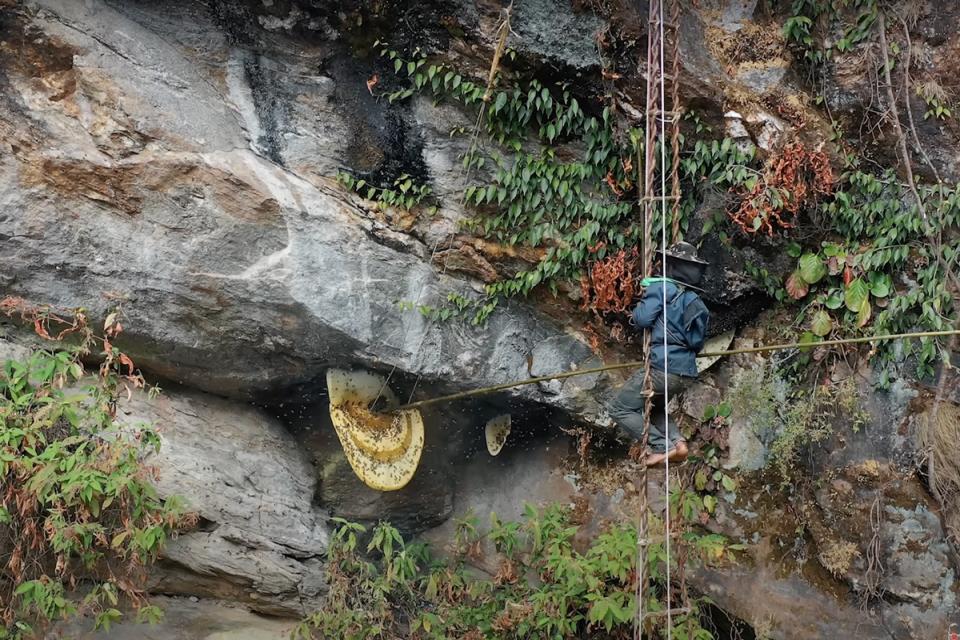
Unlike farm-raised honeybees, Apis laboriosa builds massive, single-comb nests on sheer, vertical granite cliffs high in the Himalayan foothills (typically between 2,500 and 4,000 meters / 8,200-13,100 feet).
During the spring flowering season, these giant bees forage on the nectar of wild Rhododendron species. These specific blooms contain naturally occurring neurotoxins called grayanotoxins. The resulting nectar carries these compounds into the raw honey, granting it distinct medicinal and mind-altering properties.
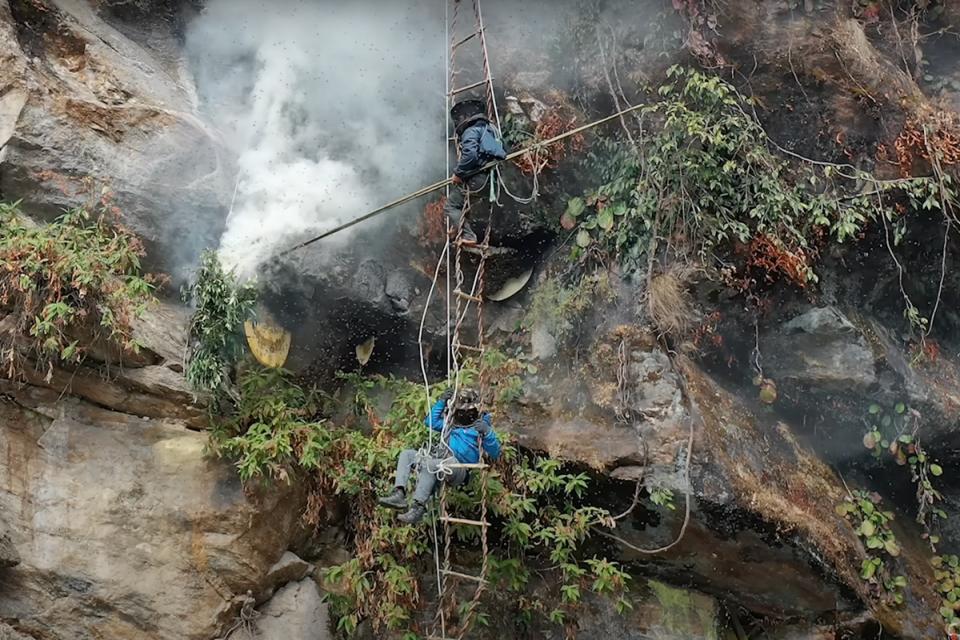
Traditional honey hunting is a daring ritual practiced by indigenous communities, such as the Gurung and Kulung people of Nepal, who scale bamboo rope ladders down breathtaking cliff faces to harvest these combs twice a year.
Mad Honey vs Regular Honey: Core Comparison
To help you understand how these two unique nectars differ, here is an overview of their key attributes:
|
Feature |
Regular Honey |
Himalayan Mad Honey |
|---|---|---|
|
Bee Species |
Standard Honeybee (Apis mellifera) |
Himalayan Giant Honeybee (Apis laboriosa) |
|
Floral Origin |
Clovers, wildflowers, fruit trees, crops |
High-altitude Rhododendron species |
|
Active Compound |
Fructose, glucose, trace minerals |
Grayanotoxin (I & III), fructose, antioxidants |
|
Color & Viscosity |
Light gold to dark brown; clear or opaque |
Distinct reddish-auburn; thick, raw texture |
|
Taste & Aftertaste |
Pure sweet, floral, smooth finish |
Sweet initially, followed by a spicy, bitter, or throat-warming sensation |
|
Primary Effect |
Nutritional energy, natural sweetener |
Mild relaxation, euphoria, sensory warmth (in micro-doses) |
|
Availability |
Abundant worldwide |
Rare, seasonal, harvested by hand from remote Himalayan cliffs |
In-Depth Analysis: Taste, Composition, Color & Effects
1. Color and Appearance
-
Regular Honey: Ranges from almost clear/pale yellow (like acacia honey) to deep amber or dark brown (like buckwheat honey). It is typically strained or filtered to maintain clarity.
-
Mad Honey: Features a prominent reddish-brown to auburn hue. Because it is harvested raw from cliff faces without heavy industrial filtration, it often retains micro-particles of pollen, propolis, and beeswax, giving it a rich, dense texture.
2. Flavor and Sensory Experience
-
Regular Honey: Offers a clean, soothing sweetness. The flavor profile vanishes smoothly after swallowing.
-
Mad Honey: Begins with an initial wave of floral sweetness, quickly followed by a signature sharp, bitter, or peppery sensation in the back of the throat. This subtle "burn" or tingling feeling is the primary indicator of active grayanotoxins.
3. Chemical Composition
-
Regular Honey: Composed of approximately 80% simple carbohydrates (fructose and glucose), 17% water, along with trace amino acids, vitamins (B-complex, C), minerals (calcium, iron, potassium), and enzymes like glucose oxidase.
-
Mad Honey: Shares the base sugar and antioxidant profile of raw honey but is distinguished by Grayanotoxins (specifically Grayanotoxin I and III). Grayanotoxins bind to voltage-gated sodium channels in human cell membranes, keeping them open and preventing rapid inactivation. In small quantities, this produces therapeutic, relaxing, and mild hypotensive (blood-pressure-lowering) effects.
4. Physiological Effects: What Happens When Consumed?
Regular Honey Effects
-
Supplies quick, natural calorie-dense energy.
-
Acts as a mild antimicrobial and cough suppressant.
-
Supports gut health via prebiotics.
Mad Honey Effects (By Dosage)
-
Micro-Dose (1/2 to 1 teaspoon): Promotes deep physical relaxation, a pleasant warming sensation throughout the limbs, mild euphoria, stress relief, and reduced joint stiffness. Traditional Himalayan healers (Dhami/Jhankri) have used micro-doses for centuries to treat hypertension, digestive issues, and low libido.
-
Excessive Intake (2+ tablespoons): Consuming too much grayanotoxin leads to "Mad Honey Intoxication" (grayanotoxin poisoning). Symptoms include dizziness, lightheadedness, excessive sweating, nausea, blurred vision, numbness around the mouth, and a noticeable drop in blood pressure and heart rate (bradycardia).
Safety Precaution for Travelers: Mad Honey is a powerful natural substance, not a snack. Never treat it like regular table honey. Always start with a tiny amount (under 1 teaspoon) if you choose to sample it while traveling in Nepal.
Why Is Himalayan Mad Honey So Rare and Valued?
-
Extreme Harvesting Conditions: Honey hunters must negotiate treacherous 300-foot rope ladders hanging over rocky ravines, enduring thousands of aggressive giant bees without modern protective gear.
-
Limited Annual Yield: Harvests occur only during specific spring weeks when rhododendrons bloom at high altitudes.
-
Cultural Significance: For Himalayan communities, honey hunting is a sacred tradition involving spiritual offerings to cliff spirits before every expedition.
Conclusion
Understanding the distinct world of Himalayan Mad Honey offers a fascinating window into Nepal's ecological diversity and ancient cultural traditions. From the sheer granite cliffs of the Himalayas to the golden nectar in your jar, every drop tells a story of heritage, courage, and nature's raw power.
Ready to explore the authentic heart of Nepal with local experts who know every trail, story, and tradition? Contact Best Heritage Tour today to plan your personalized Himalayan adventure.
Phone / WhatsApp / Viber: +977-9851149197 / +977-9810043046
Email: info@bestheritagetour.com / bestheritagetour@gmail.com
Website: www.bestheritagetour.com
Office: Thamel Marg, Kathmandu, Nepal
Frequently Asked Questions (FAQ)
Is Mad Honey legal to buy and consume in Nepal?
Yes. Mad Honey is completely legal to harvest, buy, and consume in Nepal. It has been an established part of indigenous culture and traditional Ayurvedic medicine for centuries.
Is Mad Honey safe to eat?
Yes, when consumed responsibly in small amounts (under 1 teaspoon per day). However, consuming large quantities can cause temporary grayanotoxin toxicity, leading to dizziness, low blood pressure, and nausea. Individuals with heart conditions or low blood pressure should consult a physician beforehand.
How can I tell if Mad Honey is real or fake?
Authentic Himalayan Mad Honey exhibits a distinct reddish-auburn color, a thicker raw texture containing micro-particles of propolis, and a signature bitter or spicy aftertaste that causes a warm tingling sensation in the throat.
Can I bring Mad Honey home as a souvenir?
Yes, most international travelers can carry factory-sealed jars of Mad Honey in their checked baggage. Be sure to double-check the specific customs regulations of your destination country before traveling.
Author: Best Heritage Tour
Date: 3rd August, 2026