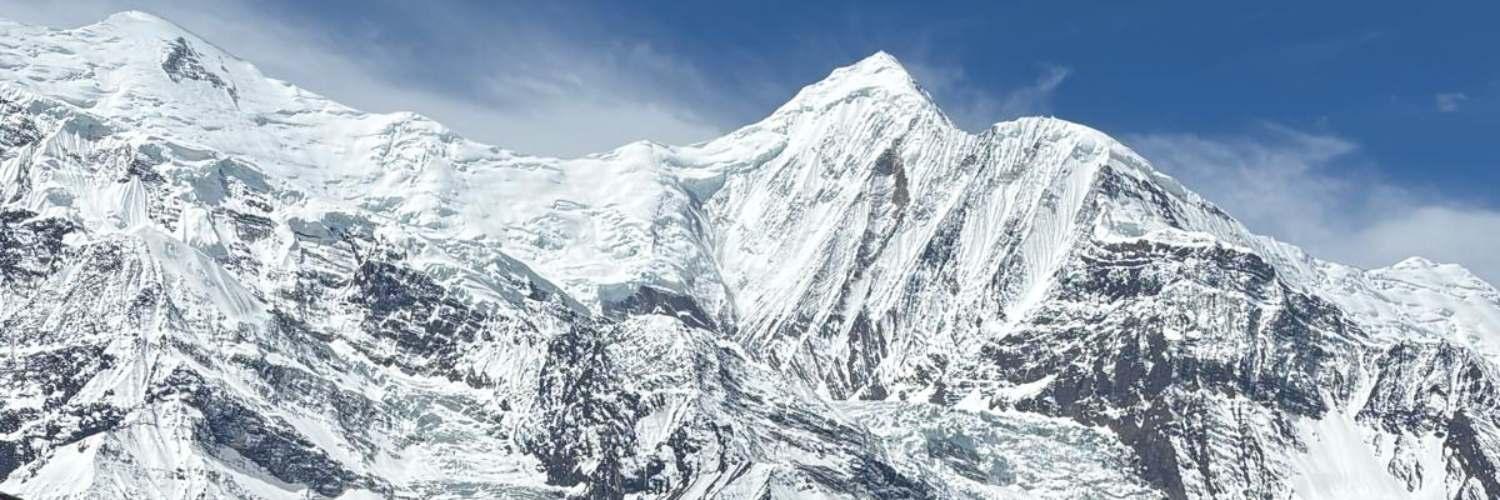
Crossing Larkya La Pass (also known as Larke Pass) at an altitude of 5,106 meters (16,752 feet) is widely celebrated as the crowning achievement of the Manaslu Circuit Trek. Stretching across the high alpine ridge connecting the Budhi Gandaki River Valley to the Marshyangdi Corridor, this historic pass rewards adventurous travelers with sweeping panoramas of Mount Manaslu (8,163m), Himlung Himal, Cheo Himal, and the Annapurna Massif.
At Best Heritage Tour, with over two decades of leading international trekkers across the sacred and restricted valleys of Nepal, we are frequently asked one crucial question before departure: How difficult is it to cross Larkya La Pass?
The short answer: Crossing Larkya La Pass is physically demanding and rated as moderate to challenging, but it requires no technical mountaineering skills.
However, "non-technical" should never be confused with "easy". The combination of high altitude, sub-zero alpine mornings, an 8-to-10-hour walking day, and steep descents across glacial moraines makes pass-crossing day the single most strenuous stretch of the entire Manaslu region.
In this definitive Larkya La Pass Crossing Guide, our team breaks down the true difficulty level of Larkya La Pass, what you can expect on summit day, key factors influencing your trek, and how our local expert ensure a safe, exhilarating Himalayan journey.
Quick Facts: Larkya La Pass at a Glance
|
Parameter |
Specification & Details |
|---|---|
|
Maximum Pass Elevation |
5,106 meters / 16,752 feet |
|
Pass Day Distance |
~24 kilometers (14.9 miles) |
|
Average Time Required |
8 to 10 hours of continuous trekking |
|
Starting Elevation (Dharmasala) |
4,460 meters / 14,632 feet |
|
Ending Elevation (Bimthang) |
3,590 meters / 11,778 feet |
|
Net Elevation Gain / Loss |
+646m ascent / -1,516m descent |
|
Technical Difficulty |
Non-technical (Trekking trail; no ropes or ice axes required) |
|
Physical Difficulty Rating |
Challenging / Demanding |
|
Best Seasons |
Spring (March to May) & Autumn (September to November) |
Understanding the Difficulty Level of Larkya La Pass
To accurately evaluate the difficulty level of Larkya La Pass, we must look beyond standard trail maps and evaluate four primary physical and environmental stress factors:
1. High Altitude and Decreased Oxygen
At 5,106 meters, atmospheric pressure drops, meaning each breath contains roughly 50% less oxygen than at sea level. Even seasoned endurance athletes will notice a dramatic drop in stamina. Simple tasks - such as tying your boots or stepping over boulders - require deliberate effort. Acute Mountain Sickness (AMS) is the single greatest factor determining pass success. Without proper acclimatization built into your itinerary, altitude symptoms like throbbing headaches, nausea, and fatigue can turn an achievable hike into a medical emergency.
2. Physical Endurance and Duration
Summit day is long and relentless. Leaving the high camp at Dharmasala (Larke Phedi) around 3:30 AM to 4:00 AM, you will walk for 4 to 5 hours uphill across loose scree, snow, and moraine to reach the prayer flags at the top.
Reaching the pass, however, is only the half-way mark. What follows is a steep, knees-punishing 1,500-meter descent down to Bimthang. Navigating a massive elevation loss on fatigued legs after 6 hours of high-altitude exertion demands genuine physical stamina.
3. Freezing Temperatures and Alpine Winds
Due to the extreme elevation and open exposure, temperatures on summit morning routinely drop to -10°C to -15°C (14°F to 5°F), even during peak trekking seasons like October and April. As daylight breaks, strong high-mountain winds sweep across the pass. Proper windproof and thermal layering is not optional - it is a critical safety requirement.
4. Remote Trail Architecture
Unlike heavily developed trekking routes in Nepal, the Manaslu region remains a restricted, off-the-beaten-path sanctuary. Between Dharmasala and Bimthang, there are no teahouses, emergency shelters, or food stops. Once you leave Dharmasala in the pre-dawn darkness, you are fully self-reliant until you reach the valley floor hours later.
Is Larkya La Pass Technical?
A frequent concern among first-time Himalayan trekkers is whether alpine gear like crampons, ice axes, or fixed ropes are required.
The straightforward answer: No, Larkya La Pass is not a technical mountaineering climb.
In standard conditions during Spring and Autumn, the route follows an established trekking path consisting of dirt paths, glacial moraines, rocky fields, and packed snow. You do not need prior mountaineering experience or technical climbing gear.
However, microspikes (light trail spikes) are highly recommended if late-season snow or early-morning ice is present on the higher passes. The primary demand of Larkya La is pure aerobic and muscular endurance, coupled with mental resilience.
Step-by-Step Larkya La Pass Crossing Guide
To help you visualize pass-crossing day, here is how our experienced guides structure the expedition from high camp to the valley below:
Larkya La Pass Day Timeline Map
-
03:00 AM: Wakeup, Hot Tea & Calorie-Dense Breakfast at Dharmasala
-
03:30 AM: Headlamps On: Pre-dawn departure into cold alpine air
-
06:30 AM: Dawn breaks over Larke Glacier & surrounding peaks
-
08:30 AM: Summit Reached! Prayer flags at Larkya La Pass (5,106m)
-
09:15 AM: Begin 1,500m steep descent across loose scree & moraine
-
01:30 PM: Arrival at Bimthang (3,590m) for hot food & well-earned rest
Phase 1: The Pre-Dawn Departure from Dharmasala (4,460m)
Your day begins at 3:00 AM in the basic teahouse at Dharmasala. After a quick, calorie-dense breakfast of porridge, eggs, and hot tea, you gear up in full arctic layering. With headlamps illuminating the dark trail, we step out into the freezing night air by 3:30 AM.
Starting early is crucial. High-altitude mountain passes in the Himalayas develop strong, freezing windstorms by mid-day. Crossing early ensures clear views and safe weather windows.
Phase 2: The Ascent Across Moraines and Glacial Valleys
The trail ascends gradually along the side of the Larke Glacier. The terrain alternates between rocky ridges, frozen moraine streams, and gentle snow slopes. At this altitude, oxygen levels are thin.
Our Best Heritage Tour guides employ the proven “Bistarai, Bistarai” (Slowly, Slowly) pacing strategy. By keeping your heart rate stable and taking measured, rhythmic steps, you conserve critical muscle glycogen needed for the summit push.
Phase 3: Reaching the Summit of Larkya La Pass (5,106m)
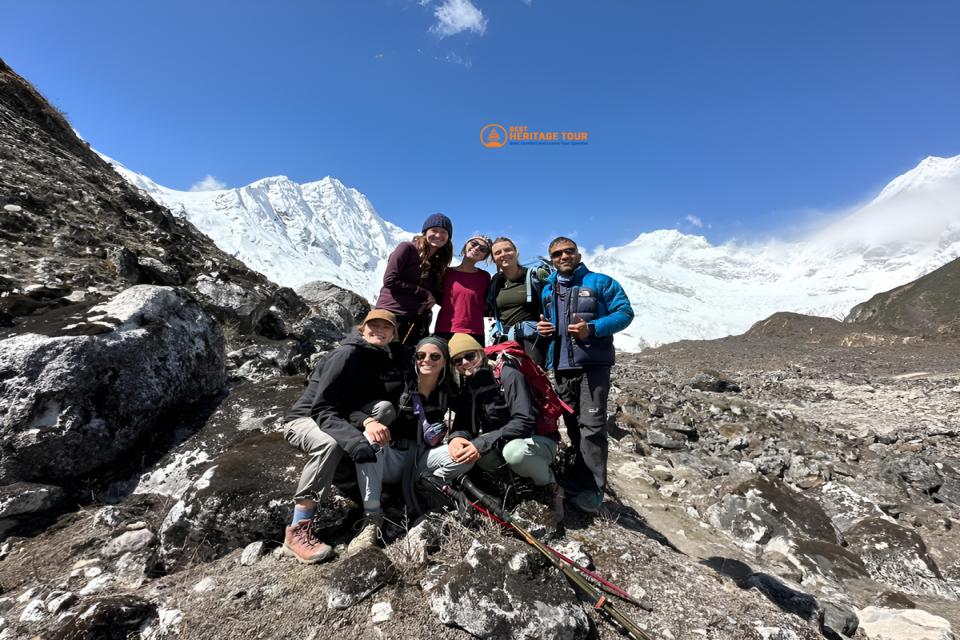
After roughly 4 to 5 hours of steady climbing, colorful Tibetan prayer flags flutter into view. Standing atop Larkya La Pass at 5,106 meters is a transformative moment.
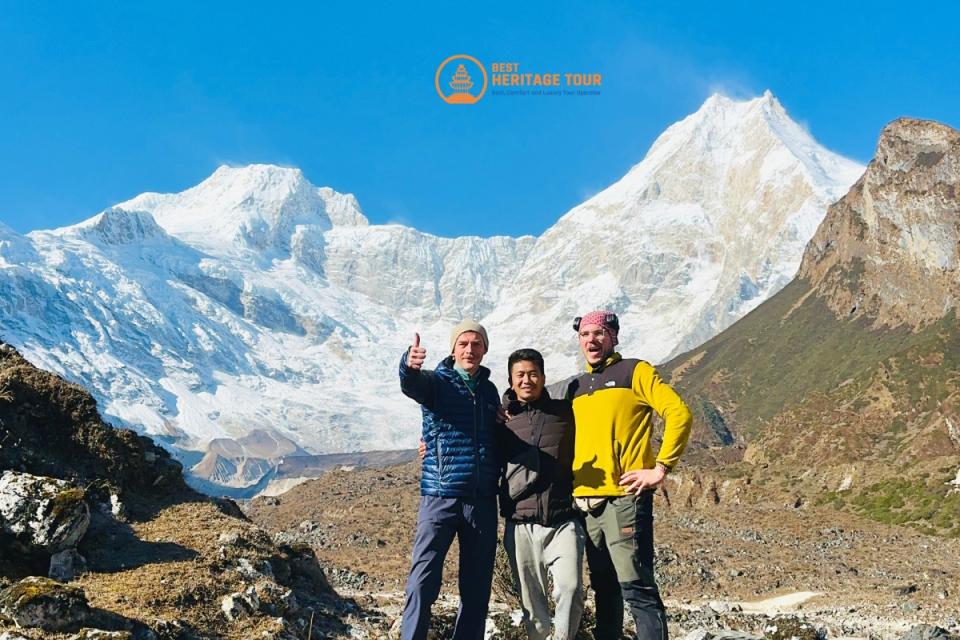
To your south and west, the mountain vistas open up dramatically: Mount Manaslu (8,163m), Himlung Himal (7,126m) and Cheo Himal (6,820m) bordering Tibet and the frozen cirque of Larkya Peak and Annapurna II.
After capturing photos, celebrating with your crew, and enjoying hot tea from a vacuum flask, we limit summit time to 20-30 minutes to prevent cold exposure and altitude fatigue.
Phase 4: The Knees-Testing Descent to Bimthang (3,590m)
The descent from Larkya La Pass to Bimthang drops over 1,500 vertical meters in a single afternoon. This section is widely considered the most physically punishing part of the day on joints and knees.
The upper trail traverses steep, loose scree and rocky pathways before entering grassy alpine meadows. Trekking poles are essential here to relieve weight stress from your knees and maintain balance. By early afternoon, you arrive in the stunning, pine-forested valley of Bimthang (3,590m), where warm tea, hot showers, and comfortable teahouse beds await.
Conclusion
So, how difficult is it to cross Larkya La Pass?
It is a true Himalayan test - one that demands physical preparation, mental fortitude, and deep respect for high altitude. But with its raw, unspoiled scenery, authentic Tibetan-Buddhist culture, and breathtaking summit views, it stands as one of the most rewarding high-pass adventures on Earth.
At Best Heritage Tour, our years of operational experience in Nepal ensure that your trip is structured around safety, comfort, and authentic local cultural immersion. From seasoned Sherpa guides and customized acclimatization schedules to premium high-altitude safety equipment, we handle every detail so you can focus on the journey of a lifetime.
Ready to conquer Larkya La Pass and experience the wild beauty of the Manaslu Circuit?
Plan Your Manaslu Expedition with Best Heritage Tour
Phone / WhatsApp / Viber: +977-9851149197 / +977-9810043046
Email: info@bestheritagetour.com / bestheritagetour@gmail.com
Website: www.bestheritagetour.com
Office: Thamel Marg, Kathmandu, Nepal
Frequently Asked Questions (FAQ)
Can a beginner trek across Larkya La Pass?
Yes! Fit beginners with no prior high-altitude experience can successfully cross Larkya La Pass. However, beginners must commit to 2-3 months of pre-trek cardio training, select a slow-paced itinerary with ample acclimatization, and trek alongside an experienced licensed guide.
How long does it take to walk on pass crossing day?
On average, crossing from Dharmasala to Bimthang takes 8 to 10 hours. Fast, highly acclimatized trekkers may complete it in 7 hours, while slower groups taking regular rest breaks may take 10 to 11 hours.
Is altitude sickness guaranteed at Larkya La Pass?
No. While mild symptoms like slight breathlessness or light fatigue are normal above 4,000m, severe Altitude Sickness (AMS) is preventable. By ascending gradually, staying hydrated, avoiding alcohol, and following your guide’s pacing, most trekkers cross without major issues.
Why is a licensed guide required for the Manaslu Circuit?
The Manaslu region is a designated Restricted Area by the Government of Nepal. Independent solo trekking without a licensed guide is illegal. A professional guide manages restricted permits, monitors your health at high altitude, navigates complex glacier trails, and coordinates emergency logistics if needed.
Author: Best Heritage Tour
Date: 14th August, 2026