Tucked away in the rain-shadow region of the Himalayas, Mustang is world-renowned for its dramatic wind-carved canyons, centuries-old Buddhist monasteries, and high-altitude desert landscapes. While most travelers hurry through Jomsom toward the pilgrimage site of Muktinath or the walled kingdom of Lo Manthang, a short detour leads to one of Lower Mustang’s best-kept secrets: Dhumba Lake.
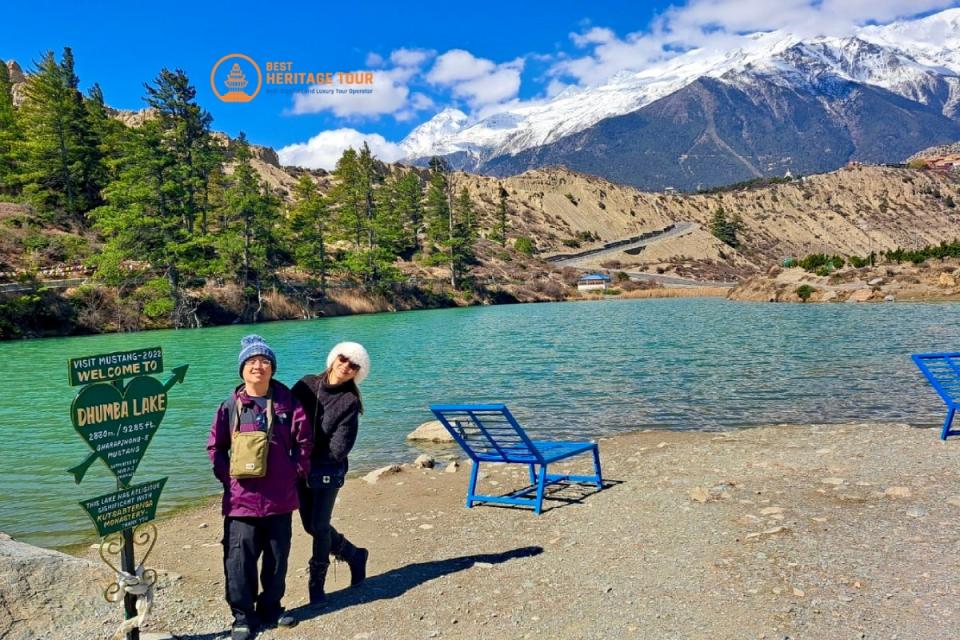
Known locally as the "Emerald Lake" of Mustang, Dhumba Lake is a serene, high-altitude body of water sitting directly beneath the towering wall of Mount Nilgiri. At Best Heritage Tour, our team of local guides and travel strategists has spent years navigating the ancient trails of the Kali Gandaki Valley. We created this comprehensive guide to help trekkers, pilgrims, and road-trippers plan an unforgettable visit to Dhumba Lake.
Quick Essential Facts About Dhumba Lake
-
Location: Mustang District, Gandaki Province, Western Nepal
-
Altitude: 2,830 meters (9,284 feet) above sea level
-
Dimensions: Approximately 150 meters long by 100 meters wide
-
Primary Water Source: Glacier and snow melt from Mount Nilgiri
-
Distance from Jomsom: ~5.5 km southwest (1.5 to 2 hours on foot; 20–30 minutes by vehicle)
-
Nearby Heritage Village: Thini (the oldest Thakali settlement in Mustang)
-
Religious Significance: Sacred to both Tibetan Buddhists and local Hindus
-
Entry Fee: NPR 30-50 for visitors (managed by local community conservation funds)
The Sacred Legend Behind Dhumba Lake
To fully appreciate Dhumba Lake, one must look beyond its brilliant turquoise reflection. In Mustang’s high Himalayan culture, landscape and spirituality are inextricably linked.
According to local folklore passed down through generations in Thini village, the waters of Dhumba Lake suddenly turned a deep blood-red color centuries ago. Believing an ill omen or spiritual disturbance had come over the lake, the community sought the help of a revered Buddhist monk. Through days of intense prayer, sacred mantras, and tantric rituals, the monk cleansed the waters, returning the lake to its natural, crystal-clear green color.
Because of this spiritual event, the lake is treated as a sacred shrine. Local residents and Buddhist pilgrims conduct prayer ceremonies along its banks, leaving colorful prayer flags (lungta) fluttering in the Mustang wind.
Cultural Insight: Due to the lake's sacred status, swimming, boating, and fishing are strictly forbidden. The resident fish are regarded as sacred guardians of the water and are never caught or consumed by locals.
Why Visit Dhumba Lake? Key Highlights & Attractions
1. The Mesmerizing Emerald Waters
The most striking feature of Dhumba Lake is its distinct emerald green color. Fed directly by subterranean glacial runoff from Mount Nilgiri, the mineral composition and light conditions create a brilliant contrast against the dry, reddish-brown mountain cliffs of Mustang. On clear mornings, the white peaks of Nilgiri mirror perfectly across the quiet surface.
2. Exploring Thini Village: The Cradle of Thakali Culture
Before reaching the lake, your route passes through Thini (also known as Thin), one of the oldest settlements in the Kali Gandaki corridor. Unlike modern commercial stops, Thini offers an authentic window into traditional Thakali lifestyle, stone-and-mud architecture, and centuries-old agricultural practices.
3. Kuchumterba Gompa
Perched on a ridge overlooking both Thini village and Dhumba Lake sits Kuchumterba Gompa, an ancient monastery belonging to the Nyingma sector of Tibetan Buddhism. Visiting the monastery provides panoramic views of the entire Jomsom valley, the Kali Gandaki riverbed, and Mount Dhaulagiri in the distance.
How to Get to Dhumba Lake
Dhumba Lake is located in Lower Mustang, easily accessible from Jomsom - the administrative hub of the district.
|
Transport Method |
Route Details |
Duration |
Best Suited For |
|---|---|---|---|
|
Day Hike / Trekking |
Jomsom → Suspension Bridge →Thini Village → Dhumba Lake |
1.5 to 2.5 hours (one way) |
Trekkers, slow travelers, photography enthusiasts |
|
4WD Jeep / Vehicle |
Off-road track from Jomsom via Thini dirt road |
20 to 30 minutes |
Families, senior travelers, tight schedules |
|
Mountain Biking |
Dirt trail along the Kali Gandaki basin and up to Thini |
45 to 60 minutes |
Active adventure travelers |
Walking Route Breakdown (The Jomsom - Thini Circuit)
-
Start from Jomsom Bazaar: Cross the suspension bridge over the Kali Gandaki River heading east toward the old village of Jomsom.
-
Ascend to Thini Village: Follow the gradual uphill trail through apple orchards and stone-walled alleys (~45 minutes).
-
Continue to Dhumba Lake: From Thini, follow the signposted dirt path heading south. A gentle 30-minute walk brings you right to the wooden fencing surrounding the lake.
Best Time to Visit Dhumba Lake
Mustang lies in the rain-shadow of the Annapurna and Dhaulagiri mountain ranges, making it an exceptional year-round destination compared to the rest of Nepal. However, weather conditions vary across seasons:
Autumn (September to November) - Peak Season
-
Weather: Clear blue skies, crisp mountain air, mild daytime temperatures (10℃ to 18℃).
-
Highlights: Perfect mountain reflections on the water, ideal condition for trekking and photography.
Spring (March to May) - Vibrant & Mild
-
Weather: Warming temperatures, blooming wildflowers in the lower valleys, pleasant hiking conditions.
-
Highlights: Snow melting off Mount Nilgiri feeds the lake, keeping the water levels full and rich in color.
Winter (December to February) - Cold & Quiet
-
Weather: Cold daytime temperatures (0℃ to 8℃), dropping below freezing at night.
-
Highlights: During heavy cold snaps, the lake surface partially freezes over. While road conditions can occasionally be dusty or frosty, the winter tranquility is unmatched.
Summer / Monsoon (June to August) - Rain-Shadow Escape
-
Weather: While overland driving from Pokhara to Jomsom can be muddy due to highway rains, Mustang itself receives very little rain.
-
Highlights: Lush green terraced fields around Thini village against dry Himalayan landscapes.
Recommended Itineraries Including Dhumba Lake
Option A: The Half-Day Excursion from Jomsom (Cultural Trail)
-
07:30 AM - Breakfast in Jomsom Bazaar
-
08:30 AM - Morning walk through traditional Thini Village
-
10:00 AM - Arrive at Dhumba Lake & explore sacred periphery
-
11:30 AM - Hike up to Kuchumterba Gompa for valley views
-
01:00 PM - Traditional Thakali Lunch in Thini or return to Jomsom
Option B: 4-Day Lower Mustang Heritage & Pilgrimage Tour
-
Day 1: Drive or fly from Pokhara to Jomsom.
Afternoon acclimatization walk around Jomsom Bazaar. -
Day 2: Morning trek/drive to Dhumba Lake and Thini Village.
Afternoon visit to the traditional apple-farming village of Marpha. -
Day 3: Drive to Muktinath Temple.
Visit the 108 water spouts and eternal flame. Return via Kagbeni village. -
Day 4: Return flight/drive from Jomsom to Pokhara.
Essential Travel Tips & Cultural Etiquette
At Best Heritage Tour, responsible tourism and cultural respect are at the heart of our operations. Please keep the following guidelines in mind:
-
Dress Respectfully: As Dhumba Lake is a sacred Buddhist site, dress conservatively (covered shoulders and knees).
-
Observe Local Rules: Do not attempt to touch or wash hands in the water, throw coins, or step past sacred perimeter fences. Swimming is prohibited.
-
Carry Cash: Bring small Nepalese Rupees (NPR) for local entry fees (NPR 30-50) and snacks in Thini village.
-
Prepare for High Mountain Wind: The Kali Gandaki valley experiences strong daily afternoon winds starting around 11:00 AM. Carry a windproof jacket, sunglasses, and lip balm.
-
Pack Out Your Trash: Mustang is an ecologically fragile high-altitude environment. Ensure all plastic bottles and wrappers are carried back to your hotel.
Conclusion
Exploring the hidden treasures of Nepal requires local expertise, seamless logistics, and deep respect for cultural heritage. With years of experience guiding international travelers, pilgrims, and adventure seekers across the Himalayas, our team at Best Heritage Tour designs crafted, hassle-free itineraries across Mustang and beyond.
Whether you are looking for a tailored overland 4WD expedition, a private heritage walking tour, or a combined Annapurna circuit journey, we handle every detail-from permits and private transport to expert local guides.
Ready to Experience the Emerald Beauty of Dhumba Lake?
Phone / WhatsApp / Viber: +977-9851149197 / +977-9810043046
Email: info@bestheritagetour.com / bestheritagetour@gmail.com
Website: www.bestheritagetour.com
Office: Thamel Marg, Kathmandu, Nepal
Frequently Asked Questions (FAQs)
Is a special permit required to visit Dhumba Lake?
Dhumba Lake is located in Lower Mustang. Foreign travelers require an ACAP (Annapurna Conservation Area Project) Permit and a TIMS (Trekkers' Information Management System) Card. A Restricted Area Permit (RAP) is only required if you venture past Kagbeni into Upper Mustang.
Can I travel to Dhumba Lake with family or senior citizens?
Yes! Unlike high-altitude trekking destinations that require strenuous multi-day walking, Dhumba Lake can be reached by a short, 20-minute jeep drive from Jomsom, followed by a flat 5-minute walk from the parking area.
What else should I see near Dhumba Lake?
In addition to Thini village and Kuchumterba Gompa, you can easily combine your visit with Marpha Village (famous for Thakali architecture and apple brandy), Kagbeni, and Muktinath Temple.
Author: Best Heritage Tour
Date: 8th October, 2026