Planning a journey to the Everest region always begins with a single, pivotal question: how do you intend to reach Tenzing-Hillary Airport in Lukla? As the gateway to the Khumbu Valley and Everest Base Camp, this high-altitude mountain airstrip sets the tone for your entire Himalayan expedition.
For decades, standard fixed-wing flights were the default choice for travelers. However, shifting regional flight operations, unpredictable weather windows, and a growing demand for travel efficiency have turned the spotlight toward helicopter transfers.
At Best Heritage Tour, we have seen how a travel decision at the start of a trek can ripple through an entire itinerary. To help you choose the option that best fits your schedule, budget, and travel style, here is a complete comparison between flying by fixed-wing plane and taking a helicopter to Lukla.
Understanding the Lukla Gateway: Planes vs. Helicopters
Reaching Lukla is an experience in itself. Nestled on a steep shelf at 2,845 meters (9,334 feet), the airport features a short, angled runway bounded by a cliff face on one side and a mountain wall on the other. Because visual flight rules (VFR) govern all traffic in and out of the Khumbu, weather stability determines whether aircraft can land.
While fixed-wing planes and helicopters both navigate these mountain conditions, they operate under very different technical and logistical models.
|
Feature |
Plane |
Helicopter |
|---|---|---|
|
Primary Departure Hub |
Ramechhap / Manthali (during peak seasons) |
Kathmandu (Tribhuvan International Airport) |
|
Average Travel Time |
4-5 hrs drive to Ramechhap |
45-50 minutes direct from Kathmandu |
|
Weather Flexibility |
Low (requires clear visibility at departure & arrival) |
High (can fly lower under cloud layers) |
|
Passenger Capacity |
14 to 18 passengers per flight |
Up to 5 passengers (altitude dependent) |
|
Luggage Allowance |
10 kg checked + 5 kg carry-on (15 kg total) |
10 kg to 15 kg per person (strictly enforced) |
|
Typical Cost (One Way) |
USD 250 - 270 per person |
USD 450 - 550 per person (group sharing) |
Cost Breakdown: Budgeting Your Journey
Budget considerations are often the deciding factor when choosing between fixed-wing planes and helicopter transfers.
Fixed-Wing Flight Costs
A fixed-wing plane ticket to Lukla generally costs around USD 250 to 270 per person, one way (depending on the season, airline, and fuel surcharges). A round-trip flight package sits between USD 500 and 540.
While this is the more affordable upfront ticket price, it is important to factor in hidden ground logistics. During peak trekking seasons, flights are often redirected through Manthali Airport in Ramechhap. Reaching Ramechhap requires a 4- to 5-hour overland drive from Kathmandu, which may add private vehicle rental costs or shared transport fares to your total spend.
Helicopter Transfer Costs
A charter or shared helicopter ride from Kathmandu to Lukla generally costs USD 450 to 550 per person, one way on a group-sharing basis during the main trekking seasons. If you choose to charter an entire helicopter privately, rates typically range from USD 2,200 to 2,800 per craft, depending on payload weights and fuel dynamics.
While the upfront cost is higher, helicopters depart directly from Kathmandu's domestic terminal, bypassing the overland drive to Ramechhap. They also offer an added layer of schedule security by operating in narrower weather windows where fixed-wing planes cannot fly.
The Ramechhap Factor: Flight Rerouting Explained
To understand modern flight logistics to Lukla, travelers need to know about the Civil Aviation Authority of Nepal’s (CAAN) seasonal rerouting policy.
To manage air traffic congestion at Kathmandu’s Tribhuvan International Airport during peak spring (March to May) and autumn (September to November) trekking months, standard commercial flights to Lukla are moved to Manthali Airport in Ramechhap.
Peak Season Routing (Fixed-Wing):
Kathmandu → (4-5 Hr Drive) → Ramechhap (Manthali) → (20-Min Flight) → Lukla
Year-Round Routing (Helicopter):
Kathmandu Domestic Airport → (45-Min Direct Flight) → Lukla
-
What this means for fixed-wing travelers: You will need to leave Kathmandu around 1:30 AM or 2:00 AM via private overland vehicle to reach Ramechhap in time for early morning flights, or travel to Ramechhap the afternoon before and stay overnight in basic local accommodations.
-
What this means for helicopter travelers: Helicopters retain landing rights at Kathmandu Airport year-round. Choosing a helicopter allows you to wake up at your hotel in Kathmandu, take a short drive to the domestic terminal, and fly directly to Lukla in about 45 minutes.
Weather Delays and Safety
Mountain weather in the Khumbu region changes rapidly. Wind, mid-morning cloud cover, and sudden fog can ground aircraft for hours or even days.
Fixed-Wing Aircraft Performance
Airlines such as Tara Air, Sita Air, and Summit Air operate twin-engine turboprop aircraft (like the Twin Otter or Dornier 228). These planes require clear visual visibility along the entire flight path, from takeoff to landing. If fog settles over the runway at Lukla or cloud cover blankets the mountain passes, fixed-wing planes remain on the tarmac.
Helicopter Performance
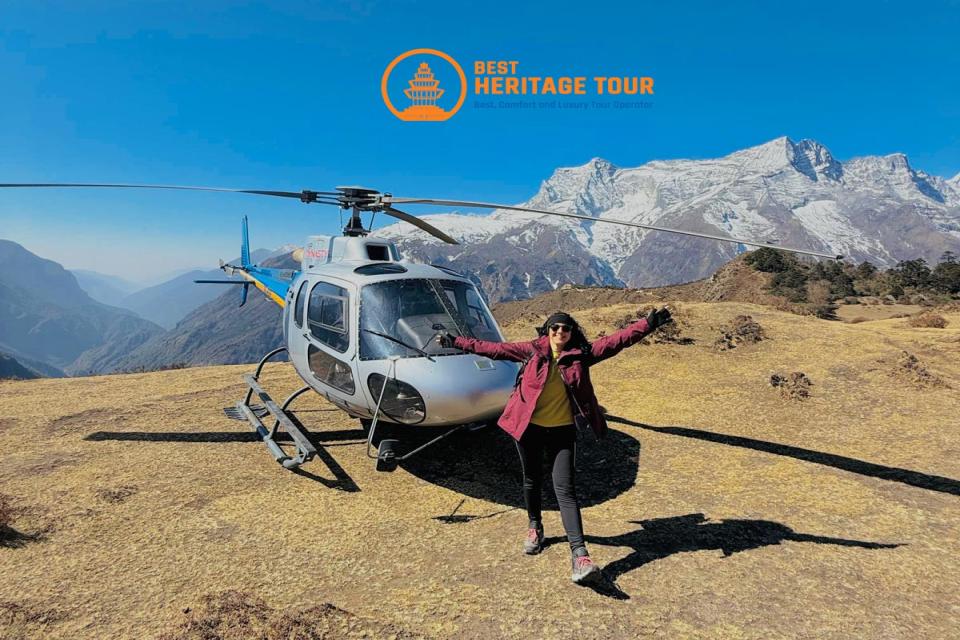
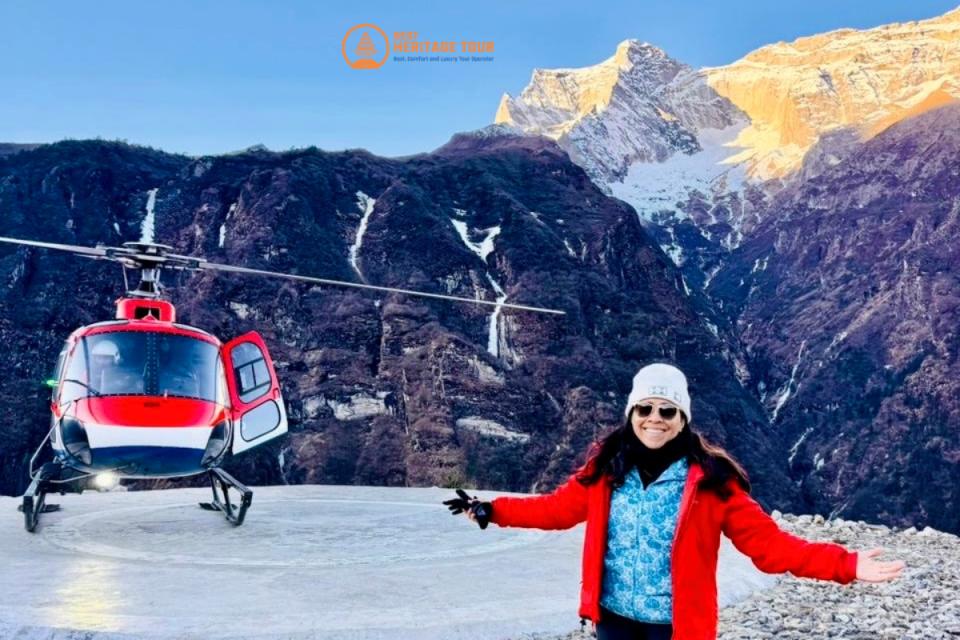
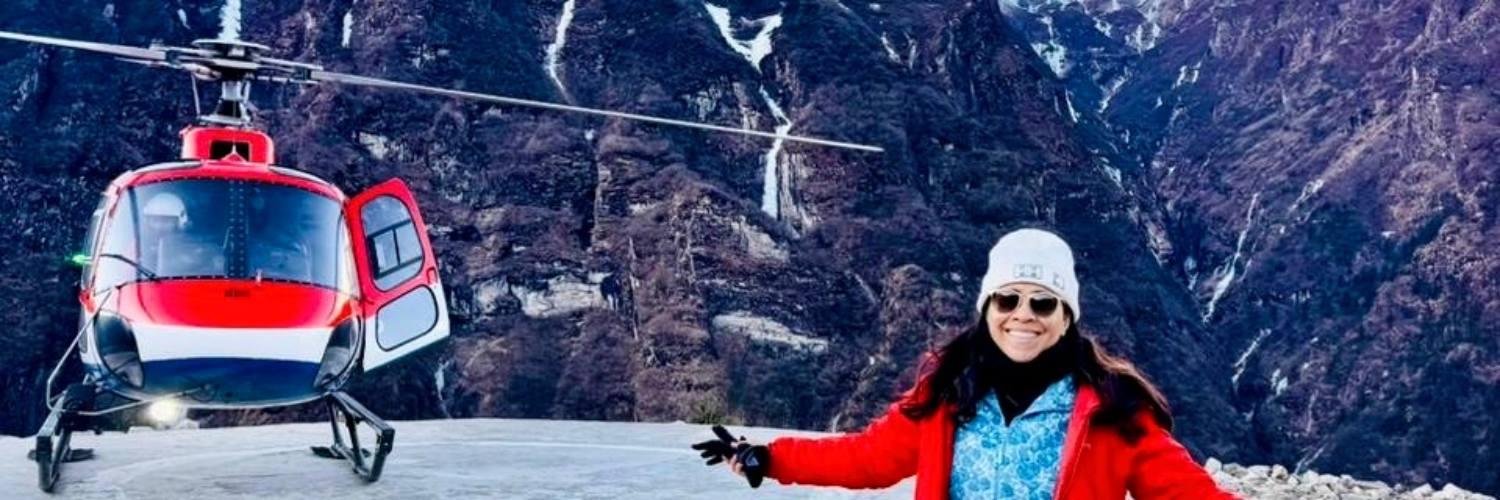
Helicopters (primarily Airbus AS350 B3e models, built for high-altitude operations) offer greater maneuverability. They can fly at lower altitudes, navigate around localized cloud pockets, and land in smaller drop zones if conditions at the main airport deteriorate. While helicopters cannot fly in severe storms or dense fog, their ability to operate in marginal weather gives them a clear advantage when weather delays build up.
Weighing the Pros and Cons
Fixed-Wing Flights
Pros:
-
Budget-Friendly: Saves $200-$300 per person compared to a helicopter transfer.
-
Higher Capacity: Comfortably accommodates larger groups flying together on the same flight.
-
Classic Trekking Experience: The traditional gateway route used by generations of trekkers.
Cons:
-
Ramechhap Rerouting: Requires a early-morning 4- to 5-hour drive during peak seasons.
-
Higher Risk of Cancellation: Susceptible to cancellations during minor weather changes.
-
Baggage Strictness: Standard total baggage weight is strictly capped at 15 kg per passenger.
Helicopter Transfers
Pros:
-
Direct Convenience: Departs directly from Kathmandu, avoiding the overland road journey to Ramechhap.
-
Time Savings: Takes under an hour from departure to arrival in Lukla.
-
Better Weather Reliability: Higher chances of flying on days with marginal weather windows.
-
Scenic Aerial Views: Offers panoramic, window-seat views of the Himalayan range.
Cons:
-
Higher Cost: Roughly double the price of a standard plane ticket.
-
Weight Sensitivity: Strict payload limits mean groups of 5 passengers may need to distribute heavy gear.
The Final Verdict: Which Should You Choose?
-
Choose a Fixed-Wing Flight if: You are on a strict travel budget, traveling in a large group, or have extra buffer days built into your itinerary to accommodate potential weather delays or road travel to Ramechhap.
-
Choose a Helicopter Transfer if: You have a tight travel schedule, want to avoid early morning road travel to Ramechhap, or are returning from your trek and need to guarantee your international connection out of Kathmandu.
The Hybrid Solution (Best of Both Worlds)
A popular option among our clients at Best Heritage Tour is combining both modes of transport:
-
Fly by fixed-wing plane from Ramechhap/Kathmandu to Lukla at the start of the trek when your schedule is flexible.
-
Book a helicopter return from Lukla to Kathmandu at the end of the trek to avoid ground transfers and ensure you connect smoothly to your international flight home.
Plan Your Everest Journey with Best Heritage Tour
Organizing travel in the Himalayas requires local expertise, up-to-date schedule tracking, and reliable logistics partners on the ground. With years of experience coordinating heritage tours, trekking expeditions, and mountain flights across Nepal, Best Heritage Tour handles all the details so you can focus on the journey ahead.
Whether you need flight bookings, private helicopter charters, customized Everest Base Camp itineraries, or airport transfers, our team in Kathmandu is here to help.
Contact Best Heritage Tour:
Phone / WhatsApp / Viber: +977-9851149197 / +977-9810043046
Email: info@bestheritagetour.com / bestheritagetour@gmail.com
Website: www.bestheritagetour.com
Office: Thamel Marg, Kathmandu, Nepal
Frequently Asked Questions (FAQs)
1. How much does a helicopter flight from Kathmandu to Lukla cost?
A group-sharing helicopter flight typically costs USD 450 to 550 per person one-way. If you prefer to charter a full private helicopter (up to 5 passengers), the cost generally ranges from USD 2,200 to 2,800 total per flight, depending on seasonal demand and aircraft payload.
2. How much does Lukal flight ticket cost?
A regular plane ticket costs around USD 250 to 270 per person one-way (approx. USD 500 to 540 round-trip). Keep in mind that during peak trekking seasons, these flights operate out of Ramechhap/Manthali Airport instead of Kathmandu, requiring an additional 4-to-5-hour overland transfer.
3. What is the baggage allowance for flights and helicopters to Lukla?
Both fixed-wing planes and shared helicopters strictly enforce a total baggage limit of 15 kg (33 lbs) per passenger. This is typically split as 10 kg for your main checked duffel bag and 5 kg for your hand-carry daypack. Any excess weight is charged per kilogram at the airport check-in counter.
Author: Best Heritage Tour
Date: 20th August, 2026