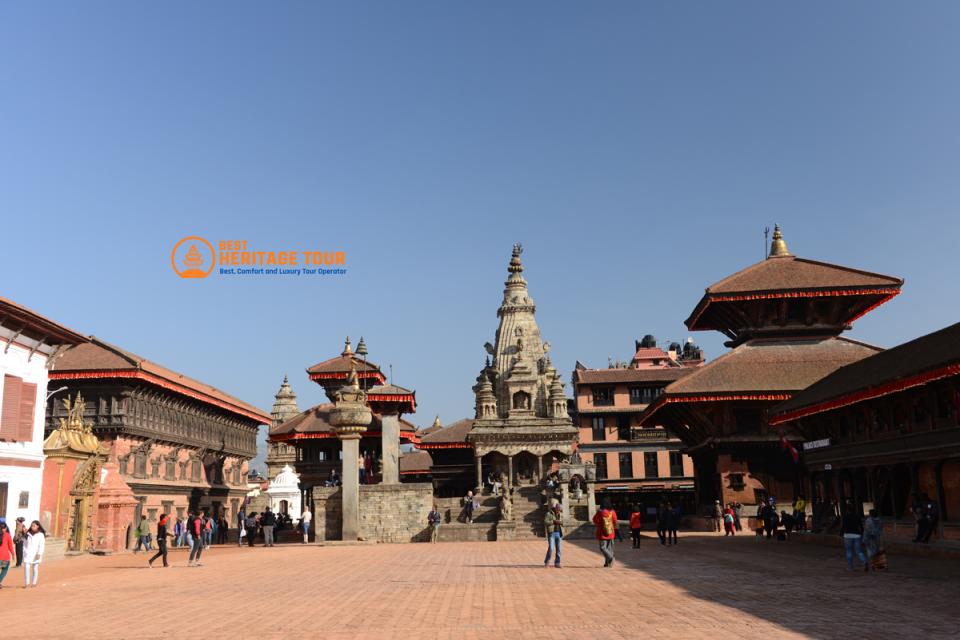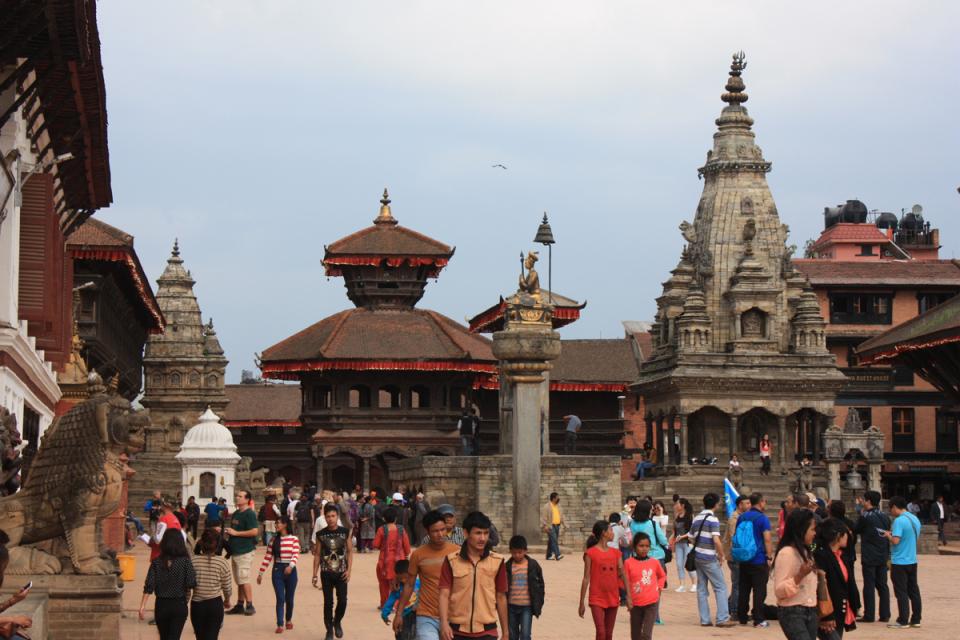
If you are planning a cultural visit to Nepal, Bhaktapur Durbar Square deserves more than a quick stop for a few photographs. This historic square is one of the most fascinating places to explore in the Kathmandu Valley, with temples, royal courtyards, stone sculptures, traditional water spouts, palace buildings, bells, museums, and intricately carved Newari architecture gathered within and around an old royal city.
Bhaktapur is part of the Kathmandu Valley UNESCO World Heritage property, which includes seven monument zones representing the valley's exceptional cultural and architectural heritage. The Bhaktapur monument zone includes the historic palace square together with Taumadhi Square and Dattatraya Square and their important temples, shrines, and heritage structures.
With years of experience arranging cultural tours in Nepal, Best Heritage Tour recommends allowing enough time to explore Bhaktapur rather than treating the Durbar Square as a single attraction. Many of the most interesting details are easy to miss if you only visit the famous Golden Gate or photograph the statue of King Bhupatindra Malla.
This guide introduces the major places to visit inside Bhaktapur Durbar Square and the nearby historic squares and attractions that can naturally be included in the same walking tour.
Why Visit Bhaktapur Durbar Square?
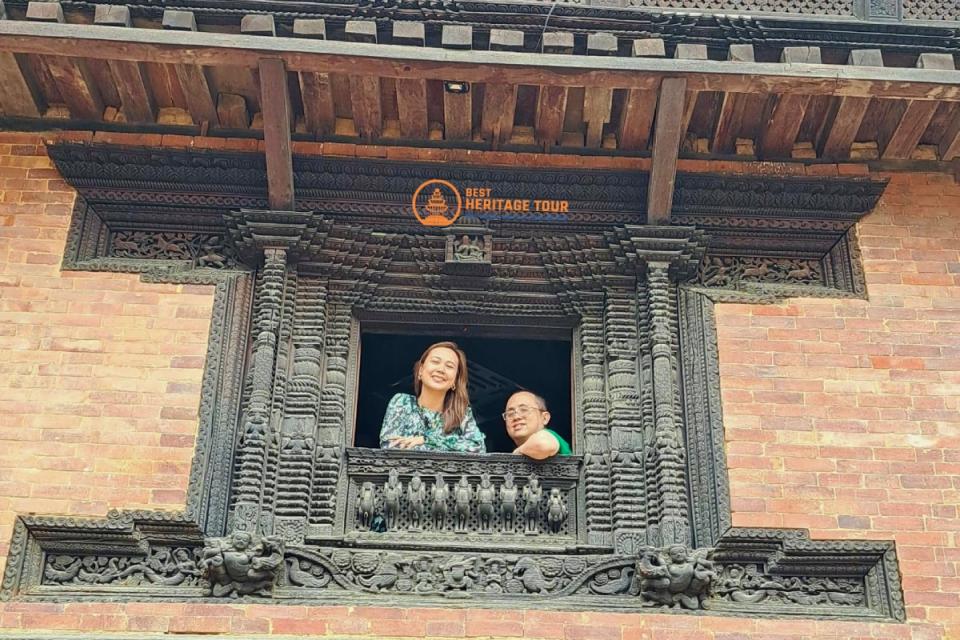
Bhaktapur, historically known as Bhadgaon, is one of the best places in Nepal to experience traditional Newari architecture and culture. The city has retained much of its historic character, with red-brick buildings, narrow lanes, carved wooden windows, temples, courtyards, and traditional public spaces.
The main Durbar Square developed around the royal palace and religious monuments associated with the Malla period. The buildings visible today represent different stages of construction and restoration, with many monuments dating from the medieval period.
What makes Bhaktapur especially interesting is the concentration of heritage sites. A traveler can stand in one square and see a royal palace, a temple, a monumental bell, stone lions, carved windows, a water spout, and traditional houses within a short walking distance.
I. Temples and Sacred Shrines Inside Bhaktapur Durbar Square
Religion is deeply connected with the history of Bhaktapur. Temples and shrines were not built simply as isolated monuments; they were part of the city's daily religious and social life.
While walking through the square, visitors will encounter temples dedicated to different Hindu deities, along with sacred images and shrines incorporated into the surrounding architecture.
1. Shiva Temple
The Shiva Temple is one of the smaller sacred structures within the historic Durbar Square area. Dedicated to Lord Shiva, one of the principal deities of Hinduism, the temple contributes to the religious character of the palace complex.
Visitors should look beyond the main structure and observe the surrounding carvings and traditional architectural details. Small shrines such as this help explain why Bhaktapur is often experienced as a living heritage city rather than simply an open-air museum.
2. Erotic Elephants Temple
One of the more unusual attractions for visitors is the temple popularly associated with erotic carvings and elephant imagery.
Erotic carvings can be found in different historic temples across the Kathmandu Valley, and they form part of the broader artistic vocabulary of traditional Nepalese temple architecture. Rather than viewing these carvings only as curiosities, visitors can consider them within the cultural and symbolic traditions of medieval Newar art.
This is also an excellent reminder that the religious architecture of the Kathmandu Valley contains many layers of symbolism and artistic expression.
3. Shiva Parvati Temple
The Shiva Parvati Temple represents the Hindu tradition of worshipping Shiva and Parvati together.
As you explore Bhaktapur, it is worth paying attention to the relationship between temple structures, courtyards, palace buildings, and surrounding streets. The temples were integrated into the urban environment, allowing religious activities to become part of everyday life.
4. Rameshwor Temple
Rameshwor Temple is another sacred monument associated with Shiva worship.
Its presence adds to the remarkable concentration of Hindu shrines within the Durbar Square area. For travelers interested in religious architecture, the temple provides another opportunity to observe traditional forms, stonework, and the relationship between sacred structures and public space.
5. Badri Nath Temple
Badri Nath Temple is associated with Lord Vishnu and adds another dimension to the religious landscape of Bhaktapur Durbar Square.
Visitors exploring the square should take time to understand that different temples often represent different traditions within Hinduism. Together, they create a religious network that reflects the spiritual life of the historic city.
6. Dwarika Temple
The Dwarika Temple is another lesser-known sacred structure that can easily be overlooked by visitors focused only on the major monuments.
A guided walk is particularly useful here because a guide can point out smaller shrines and explain their significance rather than allowing travelers to pass them without understanding their place within Bhaktapur's heritage.
7. Kedarnath Temple
Dedicated to Lord Shiva, Kedarnath Temple is another example of the strong Shaivite tradition found throughout the Kathmandu Valley.
For visitors who have already traveled through other parts of Nepal, the temple also provides an opportunity to compare local architectural styles and religious practices with those encountered elsewhere in the country.
8. Pashupati Temple - Yaksheswor Mahadev
The Pashupati Temple, also known as Yaksheswor Mahadev in the Bhaktapur context, is another important Shiva shrine.
The name may remind visitors of the famous Pashupatinath Temple in Kathmandu, but the Bhaktapur shrine has its own historical and architectural context.
Travelers interested in Nepal's Hindu heritage should take time to observe how different manifestations of Shiva are represented across the Kathmandu Valley.
9. Vatsala Mandir
Vatsala Mandir is one of the recognizable stone temples in Bhaktapur Durbar Square.
Its shikhara-style architecture stands apart from the more familiar multi-tiered pagoda temples seen elsewhere in the square. The temple is also associated with the famous bell commonly known as the Bell of Barking Dogs.
This is an excellent place for photography because the temple, bell, surrounding square, and palace architecture create a classic Bhaktapur Durbar Square scene.
10. Siddhi Laxmi Temple - Loh Dega
The Siddhi Laxmi Temple, locally associated with Loh Dega, is known for its distinctive stone construction and detailed sculptural elements.
The staircase and guardian figures make the temple particularly interesting to observe closely. As with many monuments in Bhaktapur, the architectural details become more rewarding when visitors slow down rather than simply taking a photograph and moving on.
11. Fasi Dega
Fasi Dega is another historic temple structure in the Durbar Square area.
Although it may not attract the same immediate attention as the Golden Gate or 55-Window Palace, smaller monuments such as this are important parts of the overall historic landscape.
12. Mahadev Temple
The Mahadev Temple is dedicated to Lord Shiva and forms another part of Bhaktapur's network of sacred spaces.
Bhaktapur's numerous Shiva shrines demonstrate how religious architecture was woven into the city's urban design.
13. Balakhu Ganesh
Ganesh is one of the most widely worshipped deities in Nepal, particularly as a remover of obstacles and a deity associated with auspicious beginnings.
Small Ganesh shrines can often be found along traditional routes and near entrances, courtyards, and neighborhoods. Balakhu Ganesh is therefore an interesting stop for travelers interested in understanding the everyday religious landscape of Bhaktapur.
II. Gates, Monuments, Bells and Water Spouts
Not every important attraction in Bhaktapur is a temple. Some of the most fascinating features are gateways, sculptures, traditional water systems, bells, and public monuments.
14. Entrance Gate
The entrance into Bhaktapur Durbar Square immediately introduces visitors to the historic character of the city.
Traditional gateways were more than functional entrances. They marked transitions between different spaces and helped establish the royal and sacred character of the area.
As you enter, take a moment to look around rather than walking directly toward the most famous monuments.
15. Hiti
Traditional hiti, or stone water spouts, are important examples of the sophisticated water-management traditions of the Kathmandu Valley.
These public water systems historically provided water for local communities and remain important reminders of how medieval urban settlements managed everyday necessities.
For travelers interested in sustainable traditional practices, a hiti is worth more attention than its modest appearance might suggest.
16. Ugrachandi and Ugrabhairab Idols
The powerful figures of Ugrachandi and Ugrabhairab represent fierce divine forms associated with protection.
Their dramatic appearance reflects the importance of guardian figures in traditional Newari architecture. These sculptures are particularly interesting for visitors who want to understand the symbolic role of art in temple architecture.
17. Hanuman and Narasingh Statues
The statues of Hanuman and Narasingh add further layers of Hindu symbolism to the palace complex.
Hanuman is associated with devotion, strength, and protection, while Narasingh represents a fierce incarnation of Vishnu.
The statues demonstrate how mythological figures were incorporated directly into the architecture and movement patterns of the historic city.
18. Lu-Hiti / Sundhara
Lu-Hiti, also referred to as Sundhara, is another traditional water feature.
These water spouts illustrate the practical side of historic Bhaktapur. Heritage is not limited to palaces and temples; infrastructure such as water systems also reveals how communities organized daily life.
19. Golden Gate - Subrana Dhor
The Golden Gate is one of the most famous landmarks of Bhaktapur Durbar Square.
Created as an elaborate entrance to the palace complex, the gate is celebrated for its repoussé metalwork and intricate religious imagery. It provides a striking example of the artistic craftsmanship developed under the Malla rulers.
For first-time visitors, this is one of the monuments that should not be rushed. Look closely at the details rather than photographing the gate from a distance.
20. Statue of King Bhupatindra Malla
The statue of King Bhupatindra Malla is one of the most recognizable monuments in the square.
The king is represented kneeling in a devotional posture, mounted on a tall stone pillar. The monument reflects the close connection between kingship, religion, and artistic patronage during the Malla period.
It is also one of the most photographed views in Bhaktapur.
21. Dog Barking Bell - Khicha Kho Gan
The bell near Vatsala Temple is popularly known as the Dog Barking Bell.
According to the Nepal Tourism Board, it was erected during the reign of King Ranjit Malla in 1737 and was associated with the city's daily curfew. Its popular name comes from the traditional belief that dogs would bark when the bell was sounded.
The bell provides an interesting example of how public monuments could have both practical and cultural roles in historic cities.
22. Taleju Bell
Another bell associated with the royal and religious complex is the Taleju Bell.
Bells in Nepalese temples often have religious and social significance. Their sound can mark rituals, ceremonies, or important moments in community life.
23. Ga-Hiti
Ga-Hiti is another traditional water feature worth including in a detailed heritage walk.
Together, the hiti systems throughout Bhaktapur help visitors understand the engineering and community planning behind historic Newari settlements.
24. Chyasilin Mandap
Chyasilin Mandap is a notable pavilion within the Durbar Square landscape.
Mandaps served important social and public purposes in traditional Newari cities. Their open architectural form provided space for gathering, resting, ceremonies, and community activities.
25. Stone Lions
Stone lions appear as guardians around important monuments and temples.
These sculptures are not merely decorative. Guardian figures are an important part of South Asian religious architecture, symbolically protecting sacred and royal spaces.
III. Royal Palaces, Courtyards and Ponds
Bhaktapur Durbar Square was once the center of royal power. The palace buildings and courtyards provide a glimpse into the organization of the Malla royal complex.
26. Indrayani Deo-Chhen
Indrayani Deo-Chhen is among the historic structures connected with Bhaktapur's traditional religious and residential architecture.
The term Deo-Chhen is associated with sacred or deity-related residential spaces in Newari culture. Exploring such structures gives visitors a broader understanding of how religious and residential functions overlapped in the old city.
27. Sundari Chowk
Sundari Chowk is one of the historic courtyards within the palace complex.
Traditional Newari courtyards were designed around shared open spaces and often served multiple social, residential, and ceremonial functions.
Rather than viewing a courtyard as an empty space between buildings, travelers should consider it part of the architectural design.
28. Dumapokhari
Dumapokhari is a historic pond associated with the palace environment.
Ponds were important features of traditional settlements in the Kathmandu Valley and were connected with water management, ritual practices, and urban planning.
29. National Art Gallery - Sinha Dhoka Palace
The National Art Gallery is one of the most useful stops for travelers who want to understand the artistic heritage behind the monuments they have just seen.
Located within the old palace complex, the gallery preserves traditional Nepali art, including paubha paintings, manuscripts, and sculptures. The Nepal Tourism Board notes that the collection includes stone sculptures as well as bronze, brass, and wooden images.
Visiting the gallery can therefore add context to the architecture outside.
30. Malati Chowk
Malati Chowk is another historic courtyard within the palace complex.
These enclosed spaces help visitors appreciate the scale and organization of the former royal residence. Look closely at the brickwork, timber details, doorways, and carved elements surrounding the courtyard.
31. Kumari Chowk
Kumari Chowk forms part of the palace-area network of courtyards and traditional spaces.
For visitors, the value of such courtyards lies in understanding how the royal complex was divided into interconnected spaces rather than imagining it as a single palace building.
32. Mul Chowk / Taleju Chowk
Mul Chowk and Taleju Chowk are among the historically significant courtyards associated with the palace complex.
The Taleju tradition is particularly important in the royal religious history of the Kathmandu Valley. Access to certain sacred areas can be restricted during particular times, so visitors should always follow local instructions and respect religious boundaries.
33. Bahal
A bahal is a traditional courtyard-based residential or monastic complex found throughout Newari settlements.
These spaces are especially valuable for understanding the living architectural traditions of the Kathmandu Valley. They demonstrate that Bhaktapur's heritage extends beyond grand temples and royal monuments into community spaces and traditional urban neighborhoods.
IV. Key Surrounding Squares and Attractions
One important point for travelers is that Bhaktapur Durbar Square should not be treated as only one open plaza.
The historic monument zone extends into a wider network of squares and traditional streets. Taumadhi Square and Dattatraya Square are especially important, while Pottery Square and areas such as Wakupati Narayan provide additional cultural experiences.
These places can be explored on foot during the same Bhaktapur heritage visit.
34. Taumadhi Square
Taumadhi Square is one of the most impressive historic squares in Bhaktapur.
The square is particularly famous for the towering Nyatapola Temple and the Bhairavnath Temple. The Nepal Tourism Board describes Nyatapola as a five-storied temple and one of Bhaktapur's defining landmarks.
Nyatapola Temple
Nyatapola means "five-storied" and refers to the temple's distinctive five-level pagoda structure.
The temple rises dramatically above Taumadhi Square, making it one of the most recognizable examples of traditional Nepalese pagoda architecture.
The staircase is lined with guardian figures, each traditionally understood as increasing in power as visitors move upward.
For photographers, Nyatapola offers excellent perspectives from different parts of Taumadhi Square.
Bhairavnath Temple
The Bhairavnath Temple is dedicated to Bhairava, a fierce manifestation of Shiva.
The temple is particularly important during Bisket Jatra, one of Bhaktapur's major annual festivals. During the festival period, the area becomes an important center of traditional processions and chariot activities.
The temple's tall pagoda structure creates a dramatic contrast with Nyatapola across the square.
Til Madhav Narayan Temple
Til Madhav Narayan Temple adds a Vishnu-centered religious dimension to Taumadhi Square.
The temple is another reminder that the square is not simply an architectural attraction but a functioning religious environment.
35. Dattatraya Square - Taspal
Dattatraya Square is another major heritage area and is approximately a short walk from the main Durbar Square.
UNESCO documentation identifies Dattatraya Square as part of the Bhaktapur monument zone, while the Nepal Tourism Board highlights its important temples, traditional math buildings, and museums.
Dattatraya Temple
Dattatraya Temple is dedicated to Dattatraya, a deity traditionally associated with the combined forms of Brahma, Vishnu, and Shiva.
The temple is one of the oldest and most important monuments in the square and is closely connected with Bhaktapur's religious traditions.
Pujari Math
Pujari Math is particularly important for travelers interested in traditional woodcarving.
The old priestly residence now houses the Woodcarving Museum, where visitors can see examples of traditional Newari craftsmanship.
Peacock Window
The famous Peacock Window is one of Bhaktapur's most celebrated examples of traditional woodcarving.
Its intricate design demonstrates the remarkable skill of Newar craftsmen and is one of the details travelers should not miss when visiting Dattatraya Square.
Bhimsen Temple
Bhimsen Temple is dedicated to Bhimsen, a figure from the Mahabharata traditionally associated with strength and protection.
Historically, Bhimsen was also connected with trade and commercial communities, making this temple an interesting example of the relationship between religion and traditional economic life.
Salla Ganesh Temple
The Salla Ganesh Temple provides another opportunity to see the smaller shrines that form an important part of Bhaktapur's religious landscape.
36. Pottery Square
For travelers who want to see a living craft tradition rather than only historic monuments, Pottery Square is an essential addition to a Bhaktapur walking tour.
Here, traditional pottery continues to be associated with the daily life and cultural identity of the city.
Open-Air Pottery Workspaces
The open-air pottery workspaces allow visitors to observe local artisans shaping clay into traditional forms.
The experience is especially interesting because it connects the historic city with a craft tradition that continues beyond the walls of museums.
Traditional Clay Kilns
Traditional clay kilns are another highlight of the area.
Depending on the season and working schedule, travelers may be able to see different stages of pottery production. Visitors should photograph artisans respectfully and avoid interfering with their work.
For photographers and cultural travelers, Pottery Square often provides some of the most natural glimpses of everyday Bhaktapur.
37. Wakupati Narayan Area
The Wakupati Narayan area is another worthwhile extension for visitors who have additional time.
Wakupati Narayan Temple
The Wakupati Narayan Temple adds another Vishnu-related sacred site to the Bhaktapur heritage route.
Navadurga Shrine
The Navadurga tradition is deeply connected with Bhaktapur's religious and festival culture.
The Navadurga deities and associated rituals form an important part of the city's living heritage, particularly during traditional festivals.
Bangalamukhi Shrine
Bangalamukhi Shrine is another sacred destination within the wider historic area.
Although it may not be as famous internationally as Nyatapola or the Golden Gate, places such as this allow visitors to discover a less tourist-focused side of Bhaktapur.
How Much Time Do You Need to Explore Bhaktapur Durbar Square?
A quick visit to the main square can take around one to two hours, but travelers who want to explore the surrounding squares, museums, temples, pottery area, and traditional streets should allow significantly more time.
For a more meaningful cultural experience, we recommend planning at least half a day for Bhaktapur.
A full-day visit is even more suitable for travelers who enjoy photography, architecture, museums, local food, traditional crafts, and cultural exploration.
The exact duration depends on your interests and walking pace.
Trekkers with limited time in Kathmandu can still include Bhaktapur as a half-day cultural excursion, while travelers with more time can combine it with other attractions in the Kathmandu Valley.
Conclusion
Bhaktapur Durbar Square rewards travelers who take their time. From the intricate Golden Gate and royal palace courtyards to the towering Nyatapola Temple, historic bells, sacred shrines, traditional water spouts, carved windows, pottery workshops, and living Newari neighborhoods, the destination offers far more than a collection of old buildings.
With years of experience organizing cultural experiences in Nepal, Best Heritage Tour can help you explore Bhaktapur through a practical and culturally meaningful itinerary. Whether you have a few hours or a full day, our team can help arrange transportation, a knowledgeable local guide, and a sightseeing route suited to your interests.
Ready to explore the historic treasures of Bhaktapur?
Phone / WhatsApp / Viber: +977-9851149197 / +977-9810043046
Email: info@bestheritagetour.com / bestheritagetour@gmail.com
Website: www.bestheritagetour.com
Office: Thamel Marg, Kathmandu, Nepal
Author: Best Heritage Tour
Date: 1st October, 2026