Hidden among the dramatic cliffs, deep gorges, and high-desert landscapes of northern Nepal, the Ancient Caves of Upper Mustang are among the most intriguing archaeological and cultural features of the Himalayas. Carved into towering sandstone and mud cliffs, these caves appear as dark openings scattered across seemingly inaccessible rock faces. Some are only a few meters above the valley floor, while others are positioned high above the ground and can be extremely difficult to reach.
For trekkers and travelers, the caves are much more than unusual rock formations. They provide a glimpse into the long and complex history of Upper Mustang, a region once known as the Kingdom of Lo. Chhoser and Jhong caves, Luri Cave Monastery, Tashi Kabum, and the archaeological caves around Samdzong are among the places that attract travelers interested in history, archaeology, Tibetan Buddhist culture, and Himalayan heritage.
At Best Heritage Tour, we consider Upper Mustang a destination where the journey itself is part of the experience. The landscape, villages, monasteries, ancient trade routes, and caves all contribute to a deeper understanding of this remarkable corner of Nepal.
What Are the Ancient Caves of Upper Mustang?
The caves of Upper Mustang are a large collection of human-made and modified cave spaces carved into the cliffs and rock formations of the region. They are commonly called the Mustang Sky Caves because many appear to hang above the valleys, sometimes in locations that seem almost impossible to reach.
The exact number varies between sources, but the wider Mustang cave landscape is commonly described as containing thousands of human-made caves, with some estimates reaching around 10,000. Their original purpose was not the same everywhere. Archaeological investigations indicate that different caves were used at different periods for purposes including burial, habitation, storage, refuge, religious retreat, and other activities.
This changing use is one of the reasons the caves remain so fascinating.
Some cave systems resemble multi-level homes, with interconnected rooms and passages. Others are small chambers associated with religious practice. Archaeological sites have also produced human remains and artifacts that provide evidence of communities living in the region thousands of years ago.
The caves should therefore not be viewed as a single archaeological monument created at one particular time. Rather, they represent layers of human activity across a very long period.
Why Are the Caves Called “Sky Caves”?
The name Sky Caves of Mustang comes from their extraordinary locations.
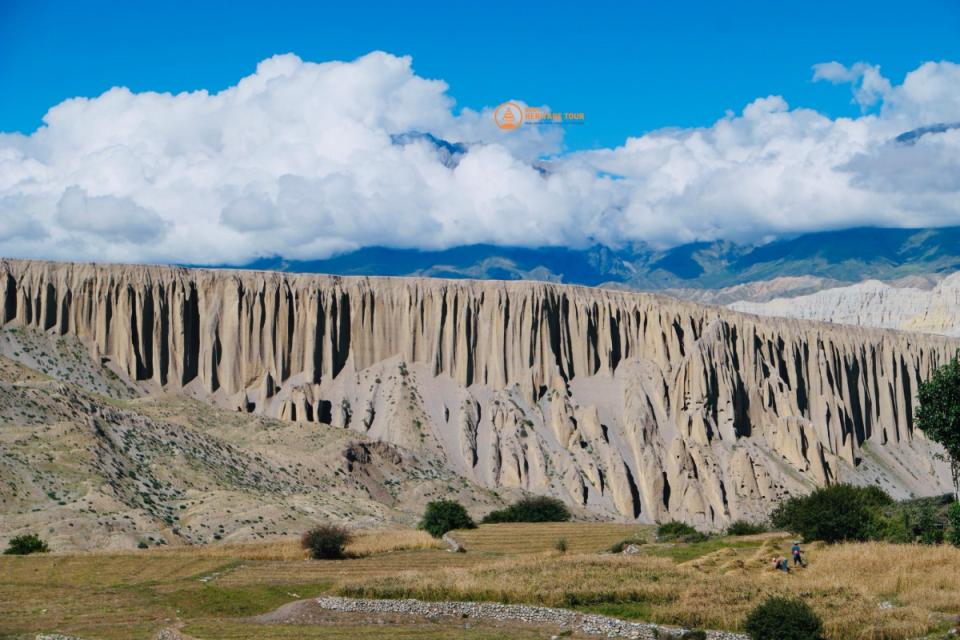
Many caves are carved into vertical or near-vertical cliff faces. When viewed from the valley below, their entrances look like small windows suspended high above the ground. Some cave complexes are several levels high, while individual chambers may be reached through narrow passages, ladders, or steep paths.
For visitors, the visual experience is remarkable: a seemingly empty desert-like valley suddenly reveals hundreds of openings in a cliff face.
Yet the impressive appearance is only the beginning. Behind those openings are traces of the people who lived, worshipped, stored belongings, and buried their dead in this landscape.
List of Ancient Caves of Upper Mustang
There are numerous cave sites across Upper Mustang, and not all are suitable or permitted for ordinary visitors. The following are some of the better-known places associated with the region's ancient cave heritage.
1. Chhoser Caves and Jhong Cave
The Chhoser Cave complex, particularly the structure commonly known as Jhong Cave or Shija Jhong Cave, is one of the most recognizable cave attractions near Lo Manthang.
The complex contains multiple levels and numerous interconnected rooms carved into the cliff. Chhoser Cave is a multi-storey structure with dozens of rooms, narrow corridors, ladders, and small openings overlooking the Chhoser landscape.
For travelers, Chhoser is particularly interesting because it combines archaeology with the living cultural landscape of Upper Mustang. The surrounding village, cliffs, farmland, monasteries, and dry valleys make the journey to the caves an important part of the experience.
What to see:
-
Multi-level cliff cave architecture
-
Narrow passages and interconnected chambers
-
Views across the Chhoser valley
-
Traditional village surroundings
-
Evidence of historical habitation
2. Luri Cave Monastery
Luri Cave Monastery is another important cave-related destination in Upper Mustang, particularly for travelers interested in Tibetan Buddhist heritage.
Unlike a cave complex primarily associated with residential spaces, Luri is closely connected with religious practice. The monastery and cave setting demonstrate how the dramatic cliffs of Mustang were incorporated into the spiritual landscape.
The journey to Luri is also part of its appeal. It is located away from the main settlement areas, requiring travelers to walk through the distinctive dry valleys and rock formations of Upper Mustang.
The combination of a remote cave setting, Buddhist religious heritage, and striking Himalayan scenery makes Luri a memorable stop for travelers who want to go beyond the most obvious attractions.
Visitors should remember that cave monasteries are religious and cultural sites rather than ordinary tourist attractions. Respectful behavior, appropriate clothing, and care around religious objects are important.
3. Tashi Kabum Caves
Tashi Kabum, also spelled Tashi Kabum or Kabum in different travel references, is associated with the cave and religious heritage of Upper Mustang.
The site is particularly interesting because it illustrates the connection between caves and Buddhist spiritual practices. Some cave locations in Mustang were used as secluded spaces for meditation and retreat, taking advantage of the isolation provided by the surrounding cliffs.
For trekkers, reaching sites such as Tashi Kabum can provide a different perspective on Upper Mustang. Rather than simply passing through villages on the principal trail, travelers get an opportunity to explore the quieter side valleys and understand how the landscape itself influenced religious life.
Because access conditions and local arrangements can vary, it is advisable to visit such sites with a knowledgeable local guide and through a properly organized itinerary.
4. Samdzong Cave and Archaeological Sites
The caves around Samdzong are particularly important from an archaeological perspective.
In 2010, researchers working in cave tombs near Samdzong discovered the remains of 27 people. Further research into Samdzong has also revealed objects such as textiles and funerary materials.
These discoveries make Samdzong significant for understanding ancient Himalayan societies, trade connections, and funerary customs.
However, travelers should not expect Samdzong to function like a conventional tourist cave attraction. Some archaeological caves are fragile, difficult to access, and not appropriate for independent exploration.
5. Cave Sites Around Lo Manthang
The area around Lo Manthang contains numerous cliff caves and cave-related cultural sites.
Lo Manthang itself is one of the most important cultural destinations in Upper Mustang. The medieval walled city was constructed in the 15th century and contains important monasteries, traditional houses, chortens, and other historic structures. The caves around the wider Lo Manthang landscape add another archaeological layer to the visit.
While exploring the region, travelers can see how settlements were positioned among cliffs, valleys, agricultural fields, monasteries, and historic routes. The caves should therefore be understood as part of a much larger cultural landscape rather than isolated attractions.
6. Cave and Cliff Sites Around Tsarang and Other Upper Mustang Valleys
The cliffs surrounding villages such as Tsarang also contribute to the distinctive cave landscape of Upper Mustang.
Not every visible opening is a designated tourist site, and many caves have little documented information available to visitors. Some are located in unstable cliffs or areas that require specialized climbing skills.
This is an important distinction when creating a List of Ancient Caves of Upper Mustang. Seeing a cave from a trekking trail does not necessarily mean it is safe or appropriate to enter.
For this reason, Best Heritage Tour recommends treating the caves as protected cultural heritage and exploring only sites that are suitable for visitors and included in the approved itinerary.
How Can You Visit the Ancient Caves of Upper Mustang?
Exploring the Ancient Caves of Upper Mustang requires more planning than visiting an ordinary tourist attraction in Nepal.
Upper Mustang remains a restricted trekking area. Trekkers visiting Upper Mustang require a special permit and must be accompanied by a government-appointed official. The Department of Immigration currently lists the Upper Mustang restricted-area permit at USD 50 per person per day.
The route is generally accessed from the Mustang side through Jomsom and onward toward the settlements of Upper Mustang.
A properly organized journey can combine:
-
Jomsom and the Kali Gandaki Valley
-
Kagbeni & Chele
-
Ghami & Tsarang
-
Lo Manthang
-
Chhoser
-
Jhong Cave
-
Luri and other cave monasteries
-
Selected archaeological sites where access is appropriate
Not every cave can or should be entered. Some are fragile, difficult to reach, or archaeologically sensitive.
For this reason, having an experienced local guide is particularly useful. A guide can help travelers understand the historical context, communicate with local communities, identify appropriate access routes, and ensure that cultural sites are treated respectfully.
What Should You Expect When Visiting the Caves?
A visit to the caves is not simply about entering a dark chamber and taking photographs.
Travelers should expect a combination of walking, cultural exploration, dramatic landscapes, historical interpretation, and altitude.
Some sites may involve steep paths or uneven ground. The dry climate can also make the walking conditions dusty, while strong winds are common in Mustang.
Inside cave structures, ceilings and passages can be low and narrow. Travelers should follow their guide's instructions and avoid touching paintings, sculptures, manuscripts, walls, or other historical materials.
The most rewarding experience comes from taking time to understand what the caves represent.
Conclusion
The Ancient Caves of Upper Mustang are among Nepal's most remarkable archaeological and cultural treasures. A journey through Upper Mustang allows travelers to see much more than the famous walled city of Lo Manthang. The cave complexes of Chhoser and Jhong, the archaeological landscape around Samdzong, cave monasteries such as Luri, and other cliffside sites reveal another layer of Mustang's extraordinary history.
For those planning to explore this region, careful preparation, the required restricted-area permits, respectful cultural behavior, and an experienced local travel team are essential. At Best Heritage Tour, we can help organize a well-planned Upper Mustang journey that combines the region's ancient heritage, dramatic landscapes, traditional villages, monasteries, and cave sites while keeping the experience comfortable and culturally respectful.
Ready to explore the mysterious caves and ancient heritage of Upper Mustang?
Phone / WhatsApp / Viber: +977-9851149197 / +977-9810043046
Email: info@bestheritagetour.com / bestheritagetour@gmail.com
Website: www.bestheritagetour.com
Office: Thamel Marg, Kathmandu, Nepal
Frequently Asked Questions
How old are the Ancient Caves of Upper Mustang?
The caves do not all have the same age. Archaeological evidence indicates that some cave sites were associated with activities dating back more than 2,000 years, while other caves and their contents belong to later historical periods.
Why are the caves called Sky Caves?
They are called Sky Caves because many were carved high into steep cliff faces and appear to be suspended above the valleys. Their unusual positions are one of the defining visual features of Upper Mustang.
What is the most famous cave in Upper Mustang?
Chhoser and Jhong Cave are among the most recognizable cave attractions for visitors because of their multi-level architecture and dramatic cliffside setting. Samdzong is particularly significant from an archaeological research perspective.
Can tourists enter all the caves?
No. Some caves are difficult, unstable, privately or culturally sensitive, or unsuitable for general tourism. Visitors should only enter caves that are accessible and appropriate for visitation, preferably with a knowledgeable local guide.
Is Upper Mustang suitable for first-time trekkers?
Upper Mustang can be approached by travelers with different levels of trekking experience, but altitude, dry conditions, long walking days, and limited infrastructure should not be underestimated. A properly paced itinerary with experienced guides makes the journey more manageable.
Can the Ancient Caves of Upper Mustang be visited during monsoon?
Yes, Upper Mustang is one of the Himalayan regions that can be visited during the monsoon because it lies in a rain-shadow area. However, weather and road conditions can still change, so travelers should plan accordingly.
Author: Best Heritage Tour
Date: 23rd September, 2026