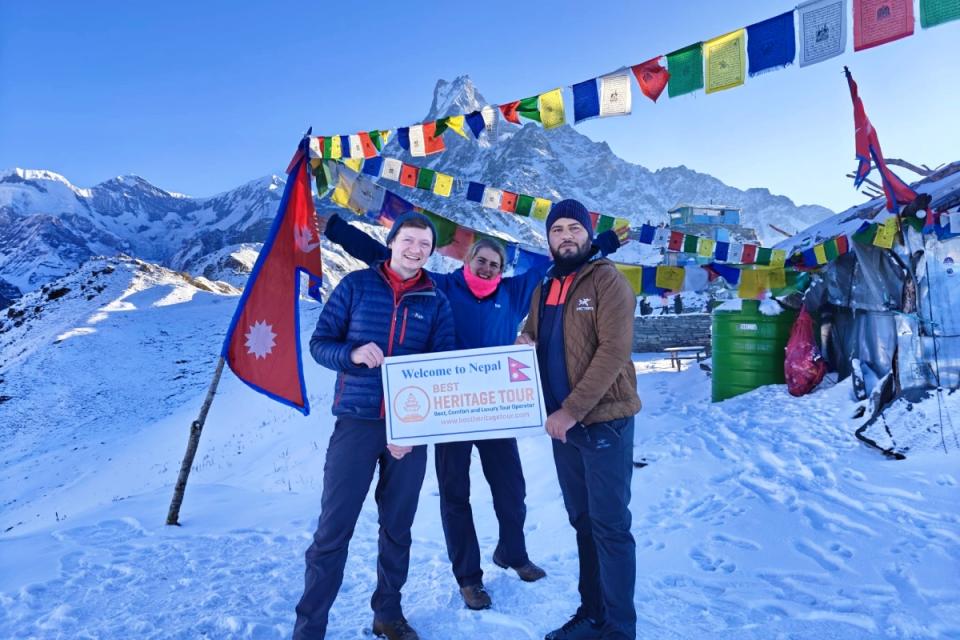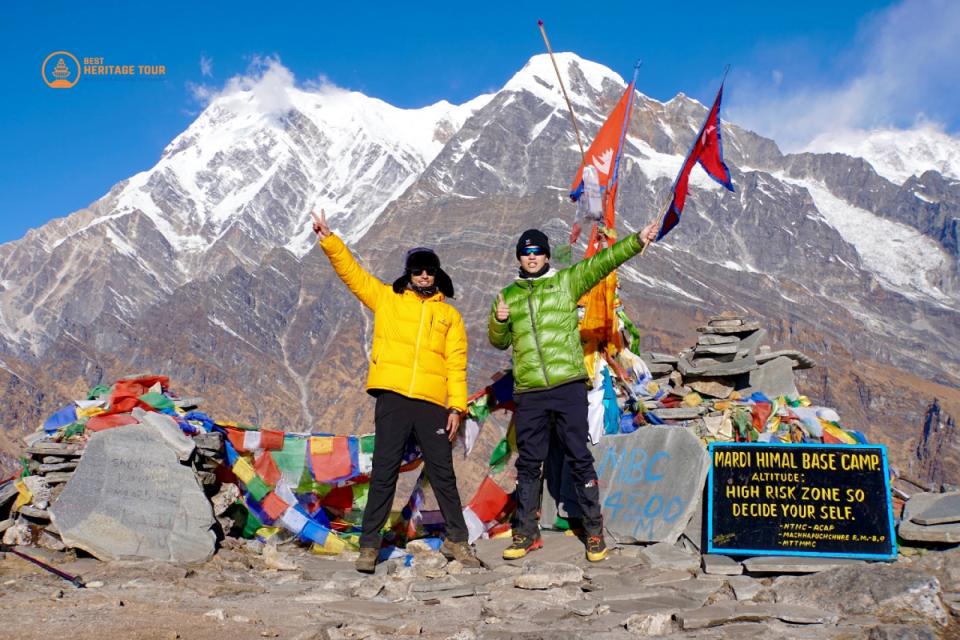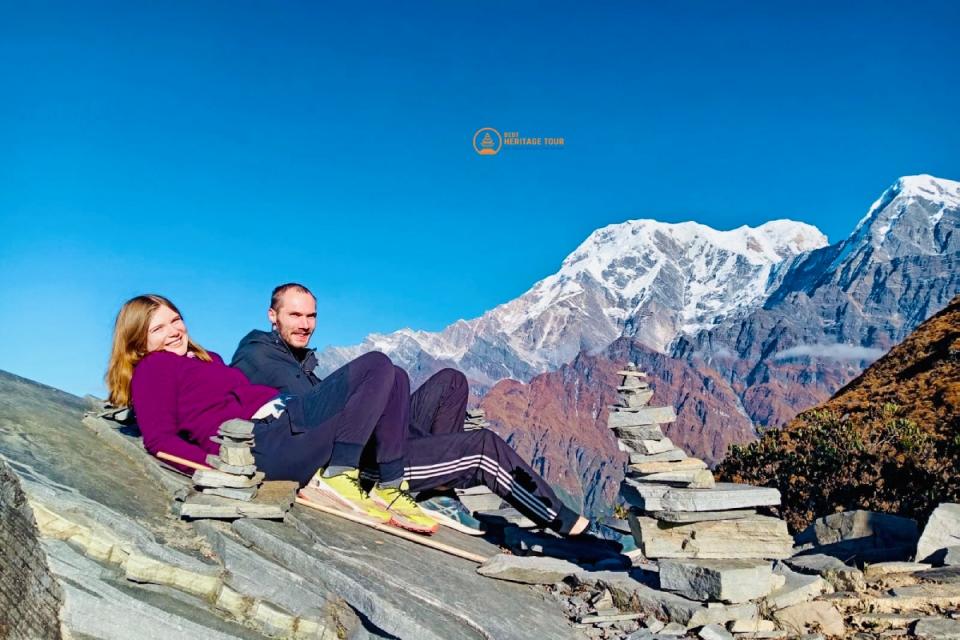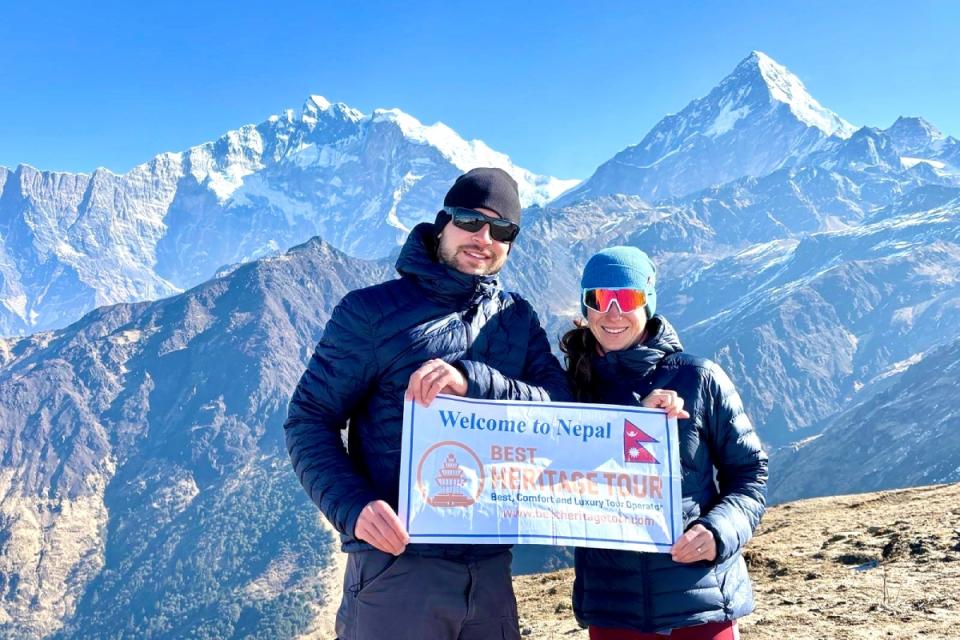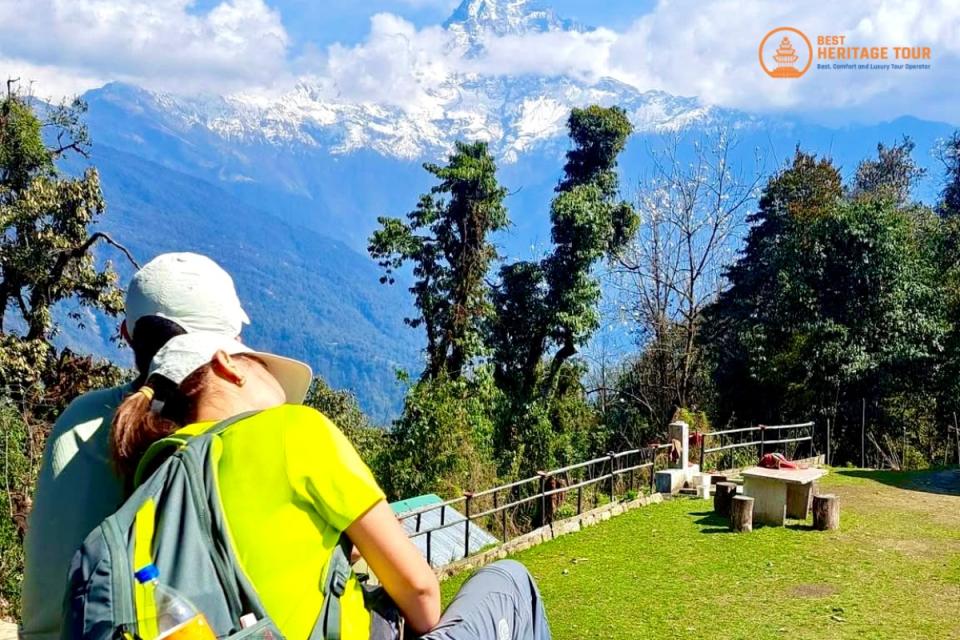
For travelers seeking the raw, towering grandeur of the Himalayas without committing to a multi-week expedition, the Annapurna region of Nepal stands as an unrivaled sanctuary. However, iconic routes like the full Annapurna Circuit or the journey to Annapurna Base Camp (ABC) require significant time, intense physical endurance, and deep-wilderness acclimatization schedules.
What if you have less than a week but still want to stand face-to-face with 7,000-meter peaks, sleep above the clouds on a knife-edge alpine ridge, and experience genuine Himalayan hospitality?
At Best Heritage Tour, we have guided thousands of global adventurers through Nepal's sacred landscapes. Based on decades of on-the-ground experience, our verdict is definitive: the Mardi Himal Trek is the absolute best short trek in the Annapurna Region.
Opened officially to commercial teahouse trekking only in 2012, this hidden gem has rapidly become the premier choice for beginners, busy travelers, and seasoned trekkers alike. Here is our comprehensive insider guide exploring exactly why Mardi Himal deserves the top spot on your adventure bucket list.
1. Radical High-Altitude Landscapes in Record Time
The primary reason we recommend the Mardi Himal itinerary over other short excursions - such as the classic Ghorepani Poon Hill trek - is its extraordinary architectural profile.
Most short treks in Nepal keep you confined to the lower foothills, looking up at distant massifs from valleys or minor viewpoints. Mardi Himal breaks this mold completely. Over the course of just 4 to 5 days of actual walking, you transition violently and beautifully through three distinct ecological zones:
-
The Subtropical Foothills: Starting from Kande or Phedi, you ascend hand-carved stone steps through terraced fields and vibrant Gurung settlements like Dhampus.
-
The Cloud Forest: Between Forest Camp (2,520m) and Low Camp (2,970m), you are enveloped in a prehistoric canopy of oak, maple, and ancient rhododendron trees dripping with mosses and wild orchids.
-
The Alpine Ridges: Above Badal Danda (3,230m), the treeline abruptly vanishes. You emerge onto a sweeping, grassy ridge that cuts directly toward the high peaks.
By the time you reach Mardi Himal High Camp (3,560m) and push forward to the Upper Viewpoint (4,200m) or Mardi Himal Base Camp (4,500m), you are standing in a high-alpine wilderness typically reserved for 12-to-14-day expeditions.
2. Unmatched Proximity to the Sacred "Fishtail" Mountain
In the trekking world, proximity is everything. While many viewpoints offer panoramas, the Mardi Himal ridge trail positions you directly on the physical spine of the Annapurna massif.
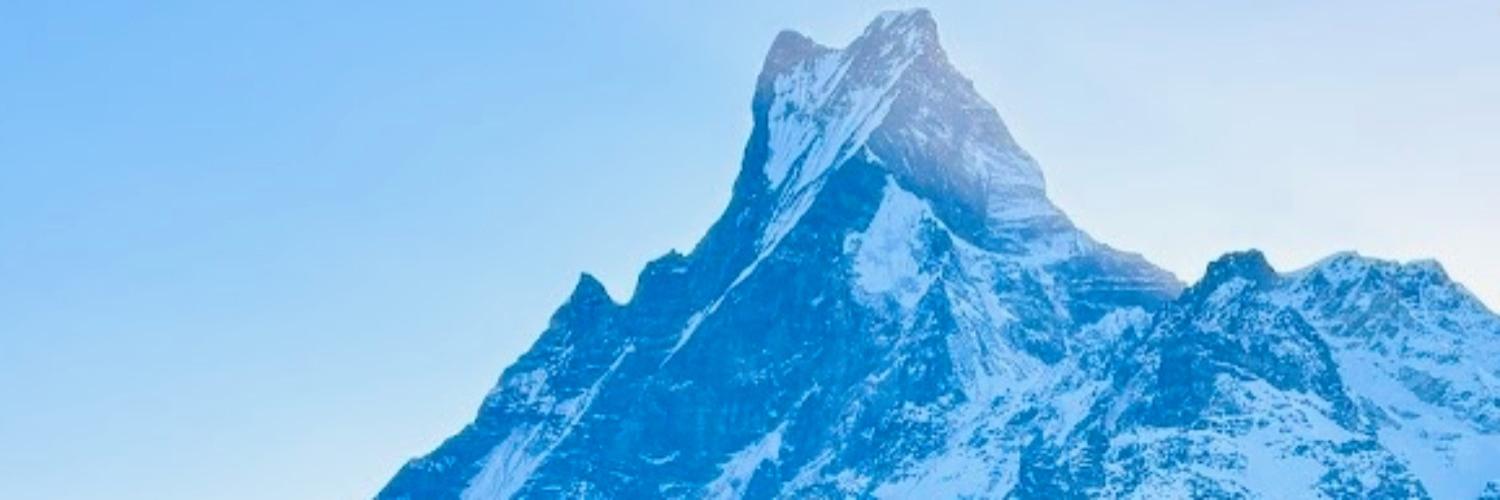
The geographic feature of Mardi Himal itself is a southwest ridge dropping directly from the summit of Mount Machhapuchhre (Fishtail Mountain, 6,993m). Because Machhapuchhre is a holy peak, strictly forbidden from climbing, its true shape remains a mystery to those on standard routes. From Pokhara's Phewa Lake, it shows its iconic singular peak.
However, as we guide you along the narrow ridgeline from High Camp to the Upper Viewpoint, the mountain turns to reveal its magnificent double peak - the true "Fishtail" configuration. From this jaw-dropping vantage point, the Himalayan giants aren't just shapes on the horizon - they completely dominate your field of vision. You stand less than a few kilometers away from:
-
Mardi Himal (5,587m)
-
Annapurna South (7,219m)
-
Hiunchuli (6,441m)
-
Annapurna I (8,091m - the world’s 10th highest mountain)
3. The Perfect Compromise: Moderate Difficulty & Low AMS Risk
When booking a trek in Nepal, balancing physical exertion with health and safety is crucial. At Best Heritage Tour, client safety is our foundational priority, and this is where the Mardi Himal route truly shines.
We classify this trail as Moderate. It is steep in sections - particularly the stone-stair ascents on day one and the final, rock-strewn ridge push to Base Camp - but it requires no technical climbing skills or specialized mountaineering gear. If you have a baseline level of cardiovascular fitness (can comfortably walk uphill for 5 to 6 hours with a light daypack), you can conquer this trek.
Furthermore, its altitude profile makes it an exceptionally safe introductory route regarding Acute Mountain Sickness (AMS).
|
Trek Location |
Elevation (Meters) |
Elevation (Feet) |
Acclimatization |
|---|---|---|---|
|
Pokhara (Start/End) |
822m |
2,696 ft |
Dense air, warm valley |
|
Deurali |
2,100m |
6,889 ft |
Safe entry zone |
|
Forest Camp |
2,600m |
8,530 ft |
Well below the AMS threshold |
|
Low Camp |
2,970m |
9,744 ft |
Crisp alpine air |
|
High Camp (Sleep) |
3,560m |
11,679 ft |
Maximum sleeping altitude |
|
Mardi Himal Base Camp |
4,500m |
14,763 ft |
Highest point (day excursion) |
Because our itineraries ensure you sleep no higher than 3,560 meters at High Camp, your risk of developing severe altitude complications is dramatically lower than on the Everest Base Camp trek (where you sleep at 5,164m in Gorak Shep). You hike up to the 4,500m Base Camp during the daytime and immediately descend to lower, oxygen-rich air to sleep, following the timeless mountaineering golden rule: "Climb high, sleep low."
4. Off-the-Beaten-Path Serenity Meets Teahouse Comfort
For years, travelers had to choose between the overcrowded "tea-house highways" of Ghorepani or the punishing logistics of fully serviced camping treks in remote wilderness zones. Mardi Himal provides a perfect modern compromise.
Because the trail bypasses the heavy vehicle roads and major valleys, there is zero noise or air pollution from jeeps or motorbikes once you enter the forest corridor. The paths are narrower, quieter, and deeply immersed in the pristine environment of the Annapurna Conservation Area (ACA).
Yet, you do not have to sleep in cold tents or eat freeze-dried food. The route features a well-developed network of locally run mountain lodges. These teahouses provide:
-
Cozy, twin-sharing wooden rooms.
-
Warm communal dining areas centered around traditional wood-stoves.
-
Substantial, locally sourced meals ranging from traditional Dal Bhat (lentil soup, rice, vegetable curry - the ultimate fuel for trekking) to garlic soups, momos, pancakes, and ginger teas.
-
Access to hot showers and charging stations for your camera batteries.
By choosing this trek, your tourist spending directly supports the indigenous Gurung and Magar communities who manage these high-altitude eco-lodges, promoting sustainable heritage tourism.
Conclusion
The spectacular alpine ridge, the intimate proximity to the sacred peaks, the vibrant rhododendron trails, and the accessibility for modern travelers make the Mardi Himal Trek an unrivaled masterpiece of short-duration Himalayan exploration. It delivers the complete, legendary Nepal trekking experience in a compact, manageable timeframe.
Are you ready to trade the hum of city life for the crisp, thin air of the Annapurna ridges? Let Best Heritage Tour guide you to the roof of the world safely and authentically.
Plan Your Journey Today
Phone / WhatsApp / Viber: +977-9851149197 / +977-9810043046
Email: info@bestheritagetour.com / bestheritagetour@gmail.com
Website: www.bestheritagetour.com
Office: Thamel Marg, Kathmandu, Nepal
Author: Best Heritage Tour
Date: 24th June, 2026