In the vast, sprawling expanse of the Nepal Himalayas, there exists a place so remote, so culturally preserved, and so physically demanding that only a handful of truly committed trekkers ever experience it. This is Upper Dolpo Nepal, the legendary Beyul (Hidden Valley), a land frozen in time, nestled within the formidable rain shadow of the Dhaulagiri and Kanjirowa massifs.
The Upper Dolpo Trek is not merely a hike; it is a 24-to-28-day high-altitude expedition that demands respect, preparation, and an unshakeable spirit of adventure. It is the gold standard for Pro Trekkers Nepal, those who have already conquered Everest Base Camp or the Annapurna Circuit and are seeking the next, unvarnished challenge.
For 2026, Best Heritage Tour invites you to step across the boundary into this ancient, restricted kingdom - a land of turquoise alpine lakes, wind-swept Tibetan villages, and the last remaining practitioners of the pre-Buddhist Ancient Bon Religion Nepal. If you are looking for genuine solitude, profound spiritual discovery, and a supreme test of endurance, this is your journey.
Dolpo Defined: The Last Great Wilderness of the Himalayas
Dolpo, situated in the mid-western part of Nepal, is unique in its geography and climate. It shares a border with Tibet to the north, granting it a Trans-Himalayan Treks landscape - a cold, arid, high-desert environment starkly different from the lush, green trails of the central Himalayas.
The Land of Contrasts
-
The Rain Shadow Effect: Dolpo lies entirely north of the Dhaulagiri range. This means it receives almost no rain during the monsoon season (June–August), making it one of the few places in Nepal where high-altitude trekking is possible, though remote, during the summer months. The landscape is characterized by rust-colored hills, sculpted canyons, and immense, open skies.
-
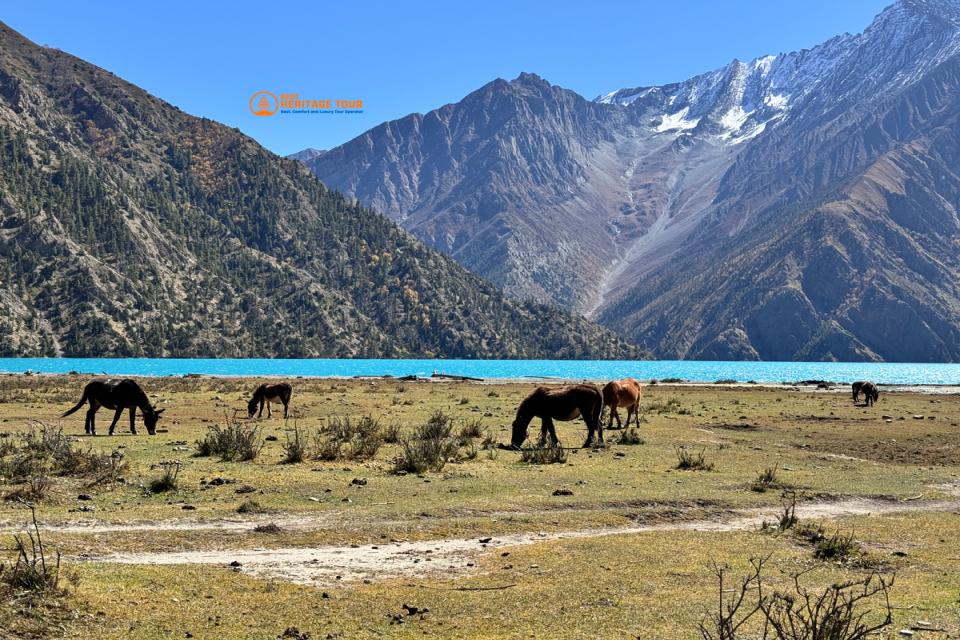
Shey Phoksundo Lake: The centerpiece of the Lower Dolpo region and the gateway to the Upper, this lake is an impossible shade of turquoise. Located within the Shey Phoksundo National Park, it is the deepest lake in Nepal and one of the most stunning sights in the Himalayas. For many, its discovery alone is worth the two-week effort.
-
Untainted Culture: Due to its isolation and status as a restricted area, Dolpo was largely sealed off from the outside world until 1990. The inhabitants, the Dolpo-pa, practice a distinct form of Tibetan Buddhism mixed with the ancient Bon faith, a religion predating the arrival of the Buddha. Their villages, their architecture, and their way of life remain profoundly traditional.
The High-Altitude Crucible: Why Dolpo is for Pro Trekkers
The difficulty of the Upper Dolpo Trek is not just measured in distance; it is measured in the remoteness, the altitude, and the required self-sufficiency. This is a commitment to a full Nepal Camping Trek experience, far beyond the comforts of teahouses.
1. The Altitude Gauntlet
The standard 24-to-28-day itinerary requires crossing multiple high-altitude passes, three of which routinely exceed 5,000 meters:
-
Kang La Pass: Approximately 5,309 meters.
-
Saldang La Pass: Approximately 5,100 meters.
-
Jeng La Pass: Approximately 5,100 meters.
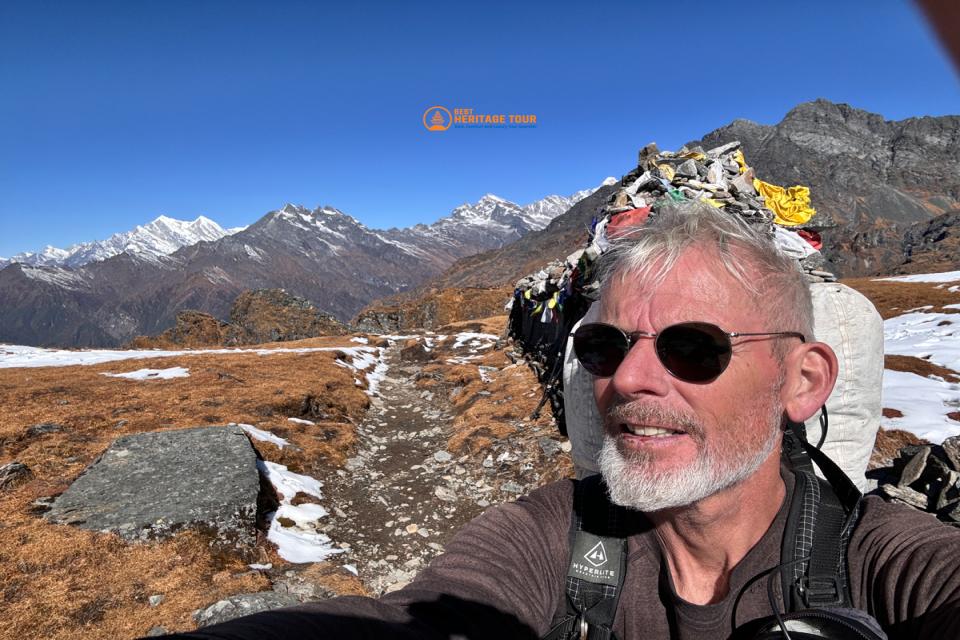
These crossings demand expert acclimatization. The itinerary must be meticulously paced, which is why Best Heritage Tour includes multiple designated rest days in places like Ringmo/Phoksundo Lake and the sacred Shey Gompa.
Pro Trekker Insight: The daily elevation gain and loss is significant, often involving steep, rocky ascents and tricky descents. Your physical conditioning must be peak - this is a true mountaineer’s hike, not a moderate walk.
2. The Logistics: Full Camping Expedition
Unlike the tea house routes, Upper Dolpo Trek requires a fully self-supported expedition for the majority of the journey. There are no lodges in the high, remote settlements.
Your Best Heritage Tour package includes:
-
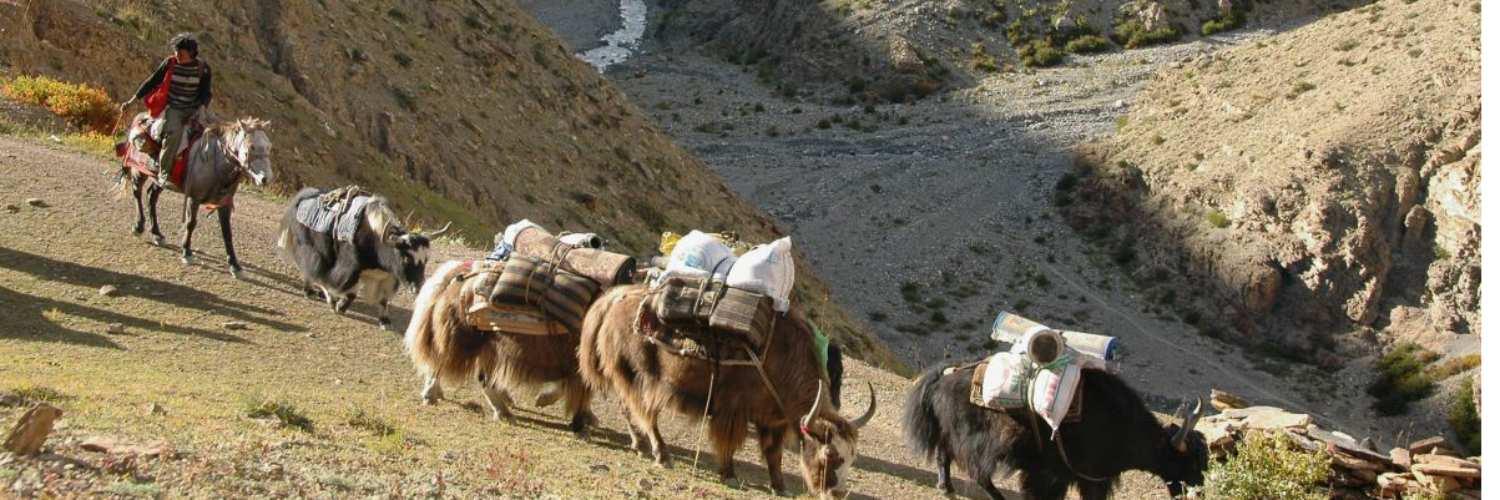
A Full Crew: Licensed, experienced guides (who are experts in high-altitude safety), cooks, kitchen staff, and porters/yaks to carry equipment.
-
Mobile Infrastructure: Full-service dining tents, sleeping tents, kitchen tents, and all essential supplies (food, fuel, gas, and first-aid equipment) for three weeks in the wilderness.
-
Safety Backup: Satellite communication devices are mandatory and carried by our lead guide for emergency use.
For the Pro Trekker, this means less reliance on scarce local resources and a safer, healthier experience with guaranteed fresh, hot, and healthy meals, which is vital for sustained performance at high altitude.
3. The Restricted Area Permit Challenge
Dolpo is a Government Restricted Area, a status maintained to protect the region's delicate environment and unique culture. This means trekking here is impossible without a licensed agency and a specific, expensive permit.
-
Permit Cost: The Upper Dolpo Trekking Permit is expensive: $500 per person for the first 10 days, and $50 per person per day thereafter.
-
Group Rule: You must trek with a minimum of two foreign trekkers in your group.
Best Heritage Tour handles the entire complex permit process, ensuring full compliance with the Department of Immigration, which is a significant logistical hurdle that must be cleared well in advance of your 2026 expedition.
The Cultural Treasure: Inside the Hidden Kingdom
The primary reward for undertaking this monumental journey is the opportunity to witness a vibrant, ancient culture that has survived almost unchanged for centuries.
1. The Azure Gem: Shey Phoksundo Lake
Your journey culminates in the stunning sight of Shey Phoksundo Lake, a magnificent body of water sacred to the local Bon and Buddhist communities. The village of Ringmo sits at its edge, marked by traditional prayer walls (Mani walls) and the deep silence of the mountains.
2. The Spiritual Heart: Shey Gompa (The Crystal Monastery)
Often called the spiritual heart of Upper Dolpo, Shey Gompa is perched beneath the majestic Crystal Mountain (Shey Shikar). Built in the 11th century, it is a key site for Bon and Buddhist pilgrimages. Trekkers traditionally perform a kora (circumambulation) around Crystal Mountain, a highly revered route that provides spectacular views and deep cultural insight.
3. The Bon Legacy: Ancient Bon Religion Nepal
Unlike most of Nepal, where Tibetan Buddhism is dominant, Dolpo is one of the last bastions of the Bon religion. You will notice differences immediately:
-
Counter-Clockwise Kora: Bon followers circumambulate stupas and monasteries in a counter-clockwise direction, the opposite of the Buddhist practice.
-
Unique Art: The ancient Bon monasteries, such as the Thasung Tsoling Monastery near Phoksundo, feature unique iconography, rituals, and practices that distinguish them from the more widely known Buddhist tradition.
Villages like Dho Tarap - one of the highest inhabited settlements in the world - offer a chance to interact with these communities and witness a cultural tapestry woven from centuries of high-altitude isolation. This is an experience truly reserved for those seeking immersion over mere sightseeing.
The Upper Dolpo Itinerary 2026: A 25-Day Commitment
The classic Upper Dolpo Trek is a commitment of nearly four weeks, beginning and ending in Kathmandu. The Best Heritage Tour itinerary is carefully crafted to balance challenging trekking days with essential acclimatization, maximizing safety and enjoyment.
|
Day Range |
Major Section |
Key Highlights & Altitude |
Acclimatization Note |
|---|---|---|---|
|
Days 1-4 |
Inception & Phoksundo Gateway |
Flight to Nepalgunj, then the vital flight to Juphal (the starting point). Trek to Dunai and then up the gorge to Ringmo village, located at Shey Phoksundo Lake (approx. 3,640m). |
Day 4 involves the final ascent to the lake, marking the beginning of the high-altitude zone. |
|
Days 5-8 |
Acclimatization & Ascent |
Essential rest day at Phoksundo Lake. Trek toward the north of the lake, entering the true wilderness. Trek to Phoksundo Bhanjyang (approx. 3,910m). |
Acclimatization Day at Phoksundo is non-negotiable for safety before tackling the passes. |
|
Days 9-14 |
Crossing the Passes to Shey |
Cross the monumental Kang La Pass (approx. 5,309m). Descent to the sacred Shey Gompa (approx. 4,500m). Exploration and rest day at Shey Gompa. Trek over the Saldang La Pass (approx. 5,100m) to Namgung and the remote village of Saldang. |
Two major pass crossings and a dedicated rest day at Shey ensure the body adjusts to the extreme altitude. |
|
Days 15-20 |
The Inner Dolpo Valley |
Trek through the core of Upper Dolpo, visiting remote villages like Sibu, Tokyu, and the ancient settlement of Dho Tarap (approx. 4,040m). This is the heart of the Bon and Buddhist culture. |
This section remains at high elevation, requiring sustained fitness and careful monitoring. |
|
Days 21-25 |
The Return Trek to Juphal |
Begin the long descent, following the Tarap Khola river valley through Chharka, Tarakot, and back to Dunai. The final short trek to Juphal for the early morning flight back. |
The descent is long but allows the body to recover fully from the high passes. |
|
Days 26-28 |
Departure |
Flight from Juphal to Nepalgunj, then connecting flight to Kathmandu. Final farewell and departure from Nepal. |
|
Essential Preparation for Dolpo Trekking for Experienced Hikers
This is not a trek that can be undertaken on a whim. The high-altitude, cold conditions, and demanding terrain require meticulous preparation from any Pro Trekker:
-
Fitness: Spend at least 3-6 months on intensive training, focusing on cardiovascular endurance, leg strength, and long-distance pack hiking (if possible).
-
Gear: Invest in high-quality, four-season sleeping bags, down jackets, and excellent, broken-in mountaineering boots. Layering is crucial.
-
Mindset: Be prepared for three weeks away from phone signal, Wi-Fi, and modern comforts. This is a true mental and physical test that rewards patience, resilience, and a deep appreciation for isolation.
The Best Time to Go
Due to the extreme cold and heavy snow that closes the high passes, the trek is only truly viable during two windows:
-
Spring (Mid-April to End of May): Cooler temperatures, clear skies, and rhododendron blooms in the lower sections. The passes can have challenging snow until late April, making mid-May the sweet spot.
-
Autumn (Late September to End of October): The most popular season. Stable weather, dry trails, and crystal-clear mountain views after the monsoon dust has settled. Early November can be excellent but brings increased cold.
Your Trusted Guide to the Hidden Kingdom
The Upper Dolpo Trek is a serious, once-in-a-lifetime expedition. It demands local knowledge, extensive high-altitude logistics, and flawless safety protocols - elements that only a deeply experienced local agency can guarantee.
Best Heritage Tour uses only its most seasoned, licensed, and highly trained senior guides for this route. They are not merely navigators; they are cultural ambassadors, medical responders, and the key to unlocking the true, hidden beauty of Dolpo. We handle the entire bureaucratic process, the full camping logistics, and the intricate flight schedule to and from Juphal, allowing you to focus purely on the adventure ahead.
The call of the Tibetan plateau is ringing. Are you ready to answer it?
Book Your Upper Dolpo Trekking Package for 2026 Today!
Contact Best Heritage Tour to discuss custom dates, acclimatization options, and reserve your place on the ultimate high-altitude journey.
Phone / WhatsApp / Viber: +977-9851149197 | +977-9810043046
Email: info@bestheritagetour.com | bestheritagetour@gmail.com
Info & Booking: www.bestheritagetour.com
Office: Thamel Marg, Kathmandu, Nepal
Author: Best Heritage Tour
Date: 28th November, 2025