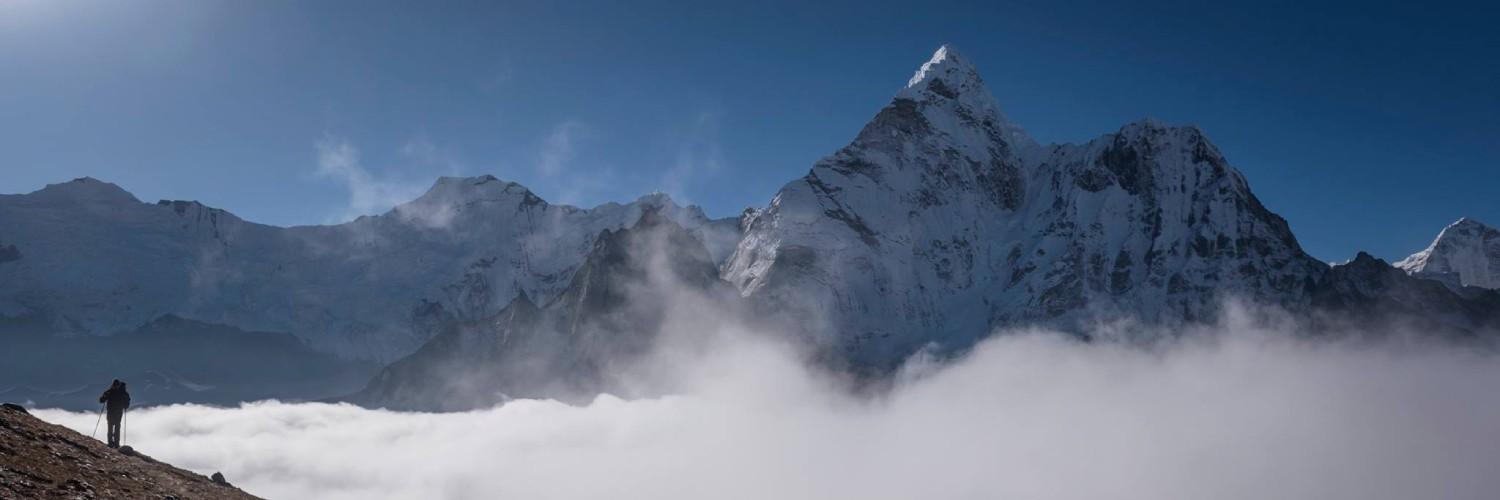
Dominating the southwestern skyline above the bustling Sherpa capital of Namche Bazaar, a towering wall of ice and black rock acts as a natural guardian to the sacred Khumbu Valley. This is the majestic Kongde Ri, an imposing multi-summit massif that commands the ultimate panorama of the Everest region. While thousands of international travelers push past its shadow every year on the mainstream highway to Everest Base Camp, only a selective few turn their gaze - and their boots - toward this pristine, untamed wilderness.
Whether you are an aspiring mountaineer looking to test your technical skills on a challenging Himalayan peak, a trekker seeking an ultra-luxury lodge experience with front-row views of four 8,000-meter giants, or a cultural traveler hungry for local Sherpa history, discovering all about the Kongde Ri will redefine your concept of Nepalese adventure.
At Best Heritage Tour, we have spent decades guiding expeditions through these valleys. In this definitive guide, our local team breaks down the location, altitude, history, and climbing logistics of this incredible mountain fortress.
Where is Kongde Ri Located?
For those wondering exactly where is Kongde Ri, this spectacular mountain sits tucked away in the eastern part of Nepal within the legendary Khumbu (Everest) region. Geographically, it forms a massive, rugged barrier between the bustling Khumbu Valley to the north and the wild, largely uninhabited Lumding Valley to the south.
The peak rests approximately 4 kilometers west of Namche Bazaar and lies inside the protected boundaries of the Sagarmatha National Park, a UNESCO World Heritage Site. Because it is positioned directly opposite the main trekking trails, it feeds the cascading waters of the Bhote Koshi River to its west and the Dudh Koshi River to its east. When you stand at the famous Everest View Hotel or hike up to Syangboche, the dramatic, icy ridge structure stretching out to your left is the iconic Kongde range.
The Altitude of Kongde Ri: Understanding the Multi-Summit Massif
When planning an expedition or a high-altitude trek, understanding the precise altitude of Kongde Ri is vital for safety, gear preparation, and acclimatization strategy. Kongde Ri is not a single, isolated spike; it is an extensive, multi-peaked ridge line.
Depending on the specific peak you aim to reach or the high-altitude viewpoints you visit, the elevations vary:
-
Kongde Ri Main (Kwangde Peak): 6,187 meters (20,299 feet) above sea level. This is the highest point on the massif and is listed as a Group "B" Trekking Peak by the Nepal Mountaineering Association (NMA).
-
Kongde Lho (Kwangde East): 6,011 meters (19,721 feet). This is often the primary objective for alpine climbing teams targeting the northern ice lines.
-
Kongde Base Camp: 4,700 meters (15,420 feet) to 4,910 meters (16,110 feet), depending on whether you approach via the northern route from Thame or the southern route from Lumding Kharka.
-
Kongde Yeti Mountain Home: 4,250 meters (13,944 feet). For luxury trekkers, this is home to one of the highest premium tea houses in the world, positioned spectacularly on the mountain's northern shelf.
To put this in perspective, standing on the main summit puts you more than 800 meters higher than Everest Base Camp (5,364 m) and well above the cruising altitude of many domestic mountain flights. The thin air at this height means proper acclimatization schedules are non-negotiable.
The Rich History of Kongde Ri
Long before Western maps labeled it as Kwangde or Kongde Ri, the mountain held profound spiritual significance for the local population. To the Sherpa community, it is regarded as a deeply holy mountain. Its imposing walls provided a physical and spiritual shield for the old trade routes connecting Nepal to Tibet via the Nangpa La pass.
The mountaineering history of Kongde Ri is filled with stories of classic alpine adventure:
-
1973 (The First Foothold): A corporate German alpine expedition made the first successful ascent of the East Peak (6,011 m), exploring the technical ridge configurations from the northern side.
-
1975 (The True Summit): The main summit (6,187 m) was finally claimed by a Nepalese expedition led by Kumar Khagdar and Bikram Shah, demonstrating local expertise on highly challenging, glaciated topography.
-
1978 (The Official International Records): A Japanese team established an alternative route up the mountain on November 11, 1978, solidifying its reputation in the international climbing community as a premier test piece.
Unlike commercial mountains like Mera Peak or Island Peak, Kongde Ri has never succumbed to mass tourism. Its history is preserved by elite alpinists who value solitude, complex route-finding, and pristine mountain conditions over crowded base camps.
Trekking vs. Climbing of Kongde Ri: Choosing Your Adventure
The climbing of Kongde Ri presents a thrilling paradox: while labeled a "trekking peak" by local authorities, it is widely universally acknowledged by guides as one of the most technical, strenuous, and challenging peak climbs in the entire Khumbu.
At Best Heritage Tour, we categorize travel to Kongde into two distinct styles of adventure, depending on your physical conditioning and prior high-altitude experience.
Option A: The Everest Kongde View Trek (For Trekkers and Travelers)
If your goal is to experience the raw beauty of this peak without dangling from an ice anchor, the 11-to-13-day Kongde View Trek is a world-class choice.
-
The Route: You fly from Kathmandu to Lukla, trek through Phakding, and climb up to Namche Bazaar. From Namche, instead of following the crowds to Tengboche, you head west toward the traditional village of Thame before making an incredible ascent up the northern ridges to the premium lodges at 4,250 m.
-
The Reward: Zero crowds, dense rhododendron and pine forests, and a panoramic sweep from the lodge terrace that includes Mt. Everest (8,848.86 m), Lhotse (8,516 m), Makalu (8,485 m), and Cho Oyu (8,188 m).
Option B: The Technical Peak Expedition (For Climbers and Mountaineers)
For experienced mountaineers who have used crampons, ice axes, and fixed ropes on peaks like Lobuche or Mera, the direct summit push is an unforgettable mountaineering milestone.
|
Expedition Phase |
Target Altitude |
Key Terrain & Challenges |
|---|---|---|
|
Approach Trek |
2,800 m to 3,800 m |
Lukla to Namche and Thame; focusing on cardiovascular pacing. |
|
Base Camp Setup |
4,700 m to 4,910 m |
Moving off-trail into rough, rocky moraines and alpine wilderness. |
|
High Camp Ascent |
5,400 m to 5,464 m |
Carrying technical gear up steep, uncleaned rock ridges. |
|
Summit Push |
6,187 m |
Navigating hanging glaciers, complex couloirs, and vertical blue ice. |
Local Guide Warning: The northern face consists of steep, technical rock walls and active couloirs vulnerable to changing wind patterns. The southern terrain from Lumding is incredibly remote and completely wild. Prior experience with alpine rope management and high-altitude mixed climbing is absolute mandatory.
Preparing for the Journey: Essential Logistics
Because Kongde Ri is situated off the standard commercial circuits, an expedition here requires meticulous logistical planning. You cannot simply show up with a backpack and find a tea house every 2 hours.
1. Best Climbing and Trekking Seasons
-
Spring (March to May): Excellent for climbers. The snowpack is stable, the weather is warming up, and the blooming rhododendrons in the lower valleys create an incredible visual contrast against the white peaks.
-
Autumn (September to mid-November): Ideal for both trekkers and climbers. The monsoon rains leave the atmosphere crystal clear, offering the sharpest, most breathtaking photography conditions of the major peaks.
2. Permits and Regulations
Because Kongde Ri is tightly regulated to preserve its fragile alpine ecosystem, you will need several permits, which our team at Best Heritage Tour manages completely on your behalf:
-
Sagarmatha National Park Entry Permit
-
Khumbu Pasang Lhamu Rural Municipality Permit
-
NMA Peak Climbing Permit (with costs scaling depending on spring, autumn, or winter seasons).
Frequently Asked Questions (FAQ)
How difficult is it to climb Kongde Ri compared to Island Peak?
Kongde Ri is significantly more technical and physically demanding than Island Peak. While Island Peak features a clear, highly trafficked track with a single headwall, Kongde Ri involves complex route-finding across exposed rock ridges, loose moraine, and steep, sustained ice sections that require proven alpine climbing skills.
Do I need a climbing guide for the Kongde View Trek?
If you are doing the standard trekking route to the Kongde Viewpoints (4,250 m), a standard trekking guide is highly recommended due to the steep, less-traveled nature of the trail. However, if you are attempting to cross the 4,700 m marker toward the base camp or summit, a licensed, professional NMA climbing guide is legally mandatory and vital for safety.
Is altitude sickness common on this specific route?
Because the climb out of Phakding or Namche toward the Kongde ridges is remarkably steep, the risk of Acute Mountain Sickness (AMS) is high if the itinerary is rushed. We design our itineraries with dedicated acclimatization days in Namche Bazaar and Thame to ensure your body adapts safely to the rapid gain in altitude.
Conclusion
Kongde Ri remains one of the ultimate hidden gems of the Himalayas. It is a place where luxury meets wild isolation, and where technical mountaineering challenges yield some of the most profound rewards on earth. Whether you want to conquer its icy 6,187 m summit or sit back with a cup of warm Himalayan tea at 4,250 m watching the sunset illuminate the face of Mt. Everest, planning your journey with a trusted, deeply experienced local partner makes all the difference.
Let Best Heritage Tour handle the permits, the technical logistics, and the safety parameters, leaving you free to experience the magic of Nepal.
Contact Best Heritage Tour
Phone / WhatsApp / Viber: +977-9851149197 / +977-9810043046
Email: info@bestheritagetour.com / bestheritagetour@gmail.com
Website: www.bestheritagetour.com
Office: Thamel Marg, Kathmandu, Nepal
Author: Best Heritage Tour
Date: 28th June, 2026