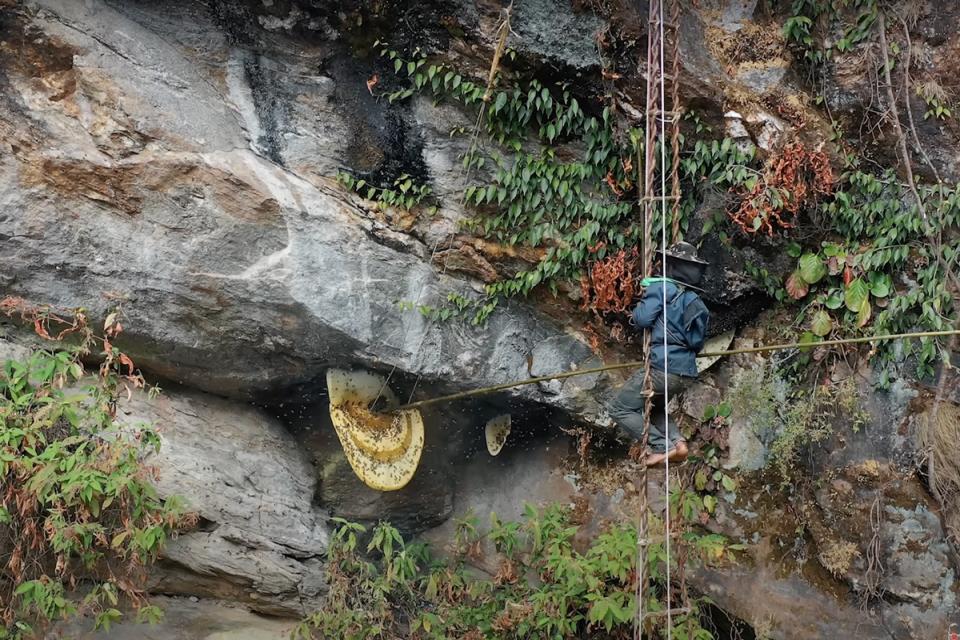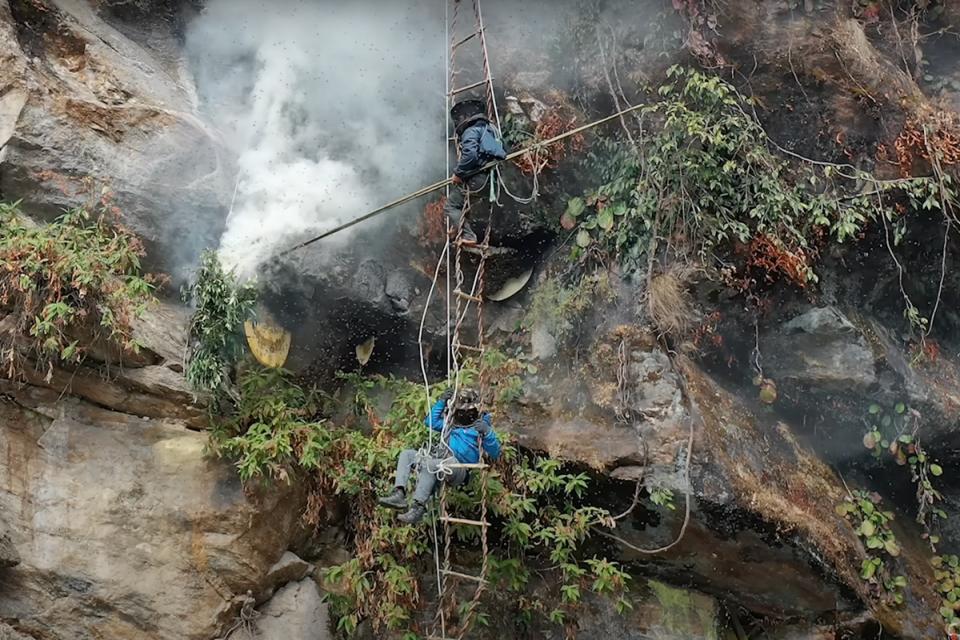
High above the roaring rivers of the Annapurna and Manang regions, dangling from a hand-woven ladder hundreds of feet in the air, a lone man braves a swarm of millions of angry bees. He wears no modern protective gear, holds no mechanical safety ropes, and relies entirely on ancestral wisdom. This is the heart-stopping reality of Mad Honey Hunting in Nepal, an ancient tradition where spiritual devotion, raw human bravery, and specialized handmade tools converge on the sheer faces of the Himalayas.
For trekkers, cultural explorers, and videographers, witnessing a wild honey harvest is the ultimate bucket list experience. It is a living window into a bygone era. At Best Heritage Tour, we believe that understanding the intricate material culture behind this tradition elevates it from a mere spectacle to a profound lesson in human resourcefulness.
In this comprehensive guide, we will unpack the ancient engineering behind this death-defying practice, exploring the dedicated hunters, the geography of the harvest, and the exact answers to a question that fascinates travelers worldwide: What are the Traditional Tools used for Mad Honey Hunting?
Who are the Mad Honey Hunters?
Before diving into the complex toolkit of the harvest, we must understand the masters of this craft. The wild cliffs of central and western Nepal are home to Apis laboriosa, the Himalayan giant honey bee. This is the largest honey bee on Earth, growing up to 1.2 inches in length, and nesting exclusively on sheer, south-facing overhanging cliffs at altitudes between 1,200 and 4,100 meters.
Historically, the people who harvest this volatile nectar are the indigenous Gurung (Tamu) and Magar communities.
Honey hunting is never an individual pursuit; it is a highly coordinated, communal ritual. Within the hunting team, roles are strictly divided:
-
The Lead Hunter (The "Toor" or Cutter): The most experienced, physically resilient, and spiritually grounded member of the village. He is the one who scales the ladder, speaks directly to the cliff spirits, and physically severs the honeycomb.
-
The Anchor Team: Stationed safely at the top of the cliff, these men hold the main ladder anchors and adjust the guide ropes based on shouted signals from below.
-
The Ground Crew: Positioned at the rocky base of the cliff, they maintain the smoky fires and pull down the filled honey baskets using long guide lines.
This practice is deeply tied to shamanistic beliefs. The cliffs are considered the sacred domains of Bhume (the earth deity) and Akash Devi (the sky goddess). A single harvest cannot begin without a complex ceremony involving prayers, food offerings, and the sacrificial offering of a rooster to appease the spirits and ask for safe passage along the vertical rock face.
What are the Traditional Tools used for Mad Honey Hunting?
To the untrained eye, the equipment used by Himalayan honey hunters looks deceptively primitive. However, these tools represent hundreds of years of trial, error, and refined forest engineering. Every single item is crafted entirely from locally sourced, organic forest materials like wild bamboo (Choya), hemp, and jungle vines. No metal carabiners, nylon ropes, or modern climbing harnesses are used.
Here is an analytical breakdown of the essential traditional tools that make Mad Honey Hunting in Nepal possible:
1. The Chhang (The Hand-Woven Rope Ladder)
The ultimate lifeline of the honey hunter is the Chhang. Suspended from the very top of the cliff, this ladder can stretch anywhere from 50 to over 300 feet down the vertical rock face.
The side rails of the ladder are braided from tough forest vines or wild hemp fibers, while the rungs are carved out of split mountain bamboo. Making a Chhang is a community affair that takes days of intense manual labor. The ladder must be incredibly strong yet remarkably flexible, allowing the hunter to twist, swing, and reposition his body relative to the overhanging cliff face.
2. The Choko or Toor (The Bamboo Guide Ropes)
While the ladder provides vertical access, the hunter needs a way to control his distance from the cliff. The Choko is a system of auxiliary guide ropes made of twisted bamboo fibers or wild vines.
These ropes are managed by the anchor team on the cliff top. By pulling or releasing the Choko, they can swing the dangling hunter closer to the honeycomb or pull him away from a sudden swarm of defensive bees.
3. The Tangos (The Long Bamboo Cutting Poles)
The lead hunter cannot always reach the honeycomb directly with his bare hands while balancing on a swinging ladder. To solve this, he utilizes a pair of massive, lightweight bamboo poles known as Tangos. These poles can be up to 20 or 30 feet long.
-
The Piercing Pole: Features a sharp wooden or iron tip used to spear the honeycomb, stabilizing it before it is cut.
-
The Sickle Pole: Has a curved blade (Khukuri or sickle) lashed securely to the end, which the hunter maneuvers with incredible precision to slice the comb away from the rock.
4. The Kohra or Tokari (The Bamboo Harvesting Basket)
Once the honeycomb is cut away from the cliff, it must be caught before it falls to the rocky ground below. The hunter uses a specialized basket called a Kohra.
Woven tightly from split bamboo, the inside of the basket is meticulously lined with broad forest leaves or a hand-woven leather skin to make it entirely leak-proof. The basket is suspended on an independent rope line controlled by the ground crew, who lower it carefully once it is filled with heavy, golden comb.
5. The Whra (The Smoke Bundle or Torch)
Smoke is the hunter's only shield against millions of stinging giant bees. The crew at the base of the cliff sets fire to a specific mixture of green wood, wet leaves, and resinous leaves to create a thick, dense column of billowing smoke.
Additionally, the hunter often carries a Whra - a localized, handheld torch made of tightly bundled green foliage and twigs - up the ladder with him. The smoke does not harm the bees; rather, it disrupts their chemical communication, disorients them, and coaxes them to temporarily leave the hive, creating a brief window for the harvest.
Where to See the Traditional Mad Honey Hunting in Nepal?
Because this tradition is inextricably linked to the nesting habits of Apis laboriosa, wild honey harvesting only occurs in very specific geographic pockets of Nepal. The hunts happen twice a year: the Spring Harvest (May to June) and the Autumn Harvest (October to November). The spring honey is the true "Mad Honey," infused with grayanotoxins from blooming rhododendron forests.
If you are a traveler, filmmaker, or cultural explorer looking to witness this spectacle firsthand, these are the primary regions:
|
Region / District |
Key Villages & Extraction Points |
|---|---|
|
Lamjung District |
Ghalegaun, Chamche, Bhujung |
|
Kaski District |
Landruk, Sikles, Tangting |
|
Manang District |
Tal, Dharapani, Chamje |
|
Myagdi District |
Bhurung Tatopani, Dana |
A Note for Videographers & Cultural Explorers: Wild honey hunting is not a tourist performance. It is a highly variable agricultural and spiritual event. Dates change based on local lunar calendars, weather conditions, and bee migrations. Booking a specialized itinerary with an experienced operator like Best Heritage Tour ensures you are in the right village at the exact right time, with proper community permissions.
Where to Taste the Authentic Mad Honey in Nepal?
For many travelers, a trek to the steep cliffs of Lamjung or Myagdi simply doesn't fit into a tight travel schedule. Furthermore, purchasing wild honey from street vendors or unauthorized shops carries a massive risk of buying diluted, low-quality syrup, or conversely, highly toxic batches that haven't been properly verified.
This is where Best Heritage Tour bridges the gap between the wild Himalayas and your travel experience.
We maintain direct, decades-long relationships with the tribal elders and traditional honey hunters of the Annapurna and Manang regions. Through these sustainable, fair-trade partnerships, we secure small, pristine batches of verified, seasonal mad honey directly from the cliffside harvests.
If you are staying in or passing through Nepal's historic capital, you do not have to trek for days to experience this ancient elixir. Best Heritage Tour can give you the taste of authentic Mad Honey in Kathmandu.
Frequently Asked Questions about Mad Honey Hunting
Is Mad Honey legal in Nepal?
Yes, mad honey is completely legal in Nepal. It is a deeply rooted cultural food and traditional medicine. However, exporting it in large quantities requires specific clearing certificates, which is why sourcing through certified agencies is highly recommended.
What happens if you eat too much Mad Honey?
Consuming excessive amounts can lead to grayanotoxin poisoning. Symptoms include blurred vision, sweating, low blood pressure, muscle weakness, and an irregular heartbeat. Symptoms usually subside naturally within 24 hours, but severe cases require immediate medical attention to stabilize heart rates.
Can I try honey hunting myself?
No. For safety, insurance, and spiritual reasons, tourists are strictly prohibited from climbing the traditional ladders or participating in the direct cutting process. However, we can position you at completely safe, highly strategic vantage points with professional binoculars and camera setups to document the entire process safely.
Conclusion
The traditional tools of the Nepalese honey hunters are far more than historical artifacts; they are a testament to sustainable human survival. They showcase a beautiful balance where nothing is taken from the forest that cannot be naturally replenished, and where the human spirit tests its limits against the raw walls of the earth. As modern development reaches deep into the valleys, these ancient practices face the threat of extinction. By traveling consciously and supporting community-led tourism, we help keep this invaluable heritage alive.
Are you ready to witness the death-defying cliffs of the Annapurna range yourself, or would you prefer to experience the mystical taste of the mountains from the comfort of the capital?
Whether you are looking to design a customized photography trek to capture the spring harvest or wish to experience an authentic Mad Honey tasting session in Kathmandu, our team of expert regional guides is here to craft your perfect journey.
Contact Best Heritage Tour today to begin your Himalayan adventure:
Phone / WhatsApp / Viber: +977-9851149197 / +977-9810043046
Email: info@bestheritagetour.com / bestheritagetour@gmail.com
Website: www.bestheritagetour.com
Office: Thamel Marg, Kathmandu, Nepal
Author: Best Heritage Tour
Date: 26th June, 2026