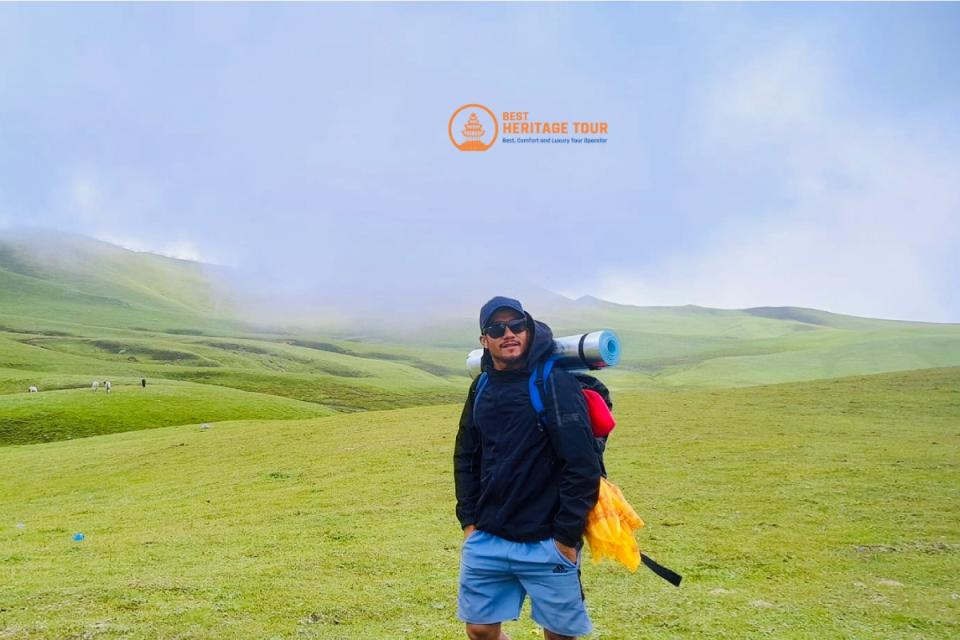
The golden age of Himalayan exploration wasn't defined by heated dining rooms, Wi-Fi passwords, or extensive menus at 4,000 meters. It was forged in the crisp mountain air, beside the crackle of a campfire, looking up at an ocean of stars from the zipper of a canvas tent.
As commercial trekking corridors like Everest, Annapurna, and Manaslu evolved into highly developed network trails lined with modern lodges, a common question started echoing among purists, off-the-beaten-path lovers, and true Himalayan explorers: Can I still find the camping treks in Nepal instead of a teahouse trek?
At Best Heritage Tour, our answer is an enthusiastic, unconditional yes.
While tea house trekking offers undeniable comfort, it inadvertently buffers you from the raw, silent majesty of the wilderness. True isolation, untouched cultural encounters, and the profound humility of sleeping on the earth still exist - if you know exactly where to look. To help you trade the hum of lodge generators for the pure stillness of the wild, we have curated the ultimate guide to the top 6 true camping treks in Nepal. These are not just hikes; they are full-scale expeditions into the last wild frontiers of the Himalayas.
What Are the Camping Treks in Nepal?
Before diving into our top expeditions, it is essential to understand what separates a true camping trek from a standard tea house lodge experience.
When you embark on a wilderness camping trek with our expedition crew, you travel with a completely self-sustaining mobile village. Because these routes pass through areas with zero commercial tourist infrastructure, our team carries every ounce of equipment and sustenance: personal sleeping tents, dining tents with tables and chairs, a dedicated kitchen tent, toilet tents, a comprehensive medical array, fresh ingredients, and kerosene fuel.
Led by an expert mountain guide, an elite camp chef, kitchen assistants, and a dedicated team of porters or pack mules, a true camping trek allows you to penetrate restricted borders, cross uncharted mountain passes, and camp in pristine high-altitude meadows completely detached from the modern world.
The Top 6 True Camping Treks in Nepal
1. The Upper Dolpo Trek: The Ultimate Trans-Himalayan Frontier
For travelers seeking the absolute pinnacle of isolation, the Upper Dolpo Trek stands as the undisputed king of true camping treks in Nepal. Tucked away behind the giant rain-shadow walls of the Dhaulagiri massif, Upper Dolpo is a mesmerizing landscape of barren, wind-sculpted valleys, deep gorges, and ancient Bon-Buddhist villages that feel entirely frozen in time.
Kathmandu ➔ Juphal (Flight) ➔ Dunai ➔ Phoksundo Lake ➔ Shey Gompa (via Kang La Pass) ➔ Saldang ➔ Chharka Bhot ➔ Juphal ➔ Kathmandu
-
Maximum Altitude: $5,350\text{ m}$ (Kang La Pass)
-
Duration: 21 to 25 Days
-
Best Season: Spring (April-May), Monsoon (June-August) and Autumn (September-November)
Why It Requires True Camping
Upper Dolpo is completely devoid of commercial lodges or standard teahouses. The local Tibetan-style stone houses are built for harsh winter survival, not tourism. To explore deep into this restricted region, our team establishes self-contained camps on the shores of the otherworldly, deep-blue Phoksundo Lake and in the mystical valleys surrounding the 800-year-old Shey Gompa (The Crystal Monastery).
Trekking here means crossing demanding high passes like the Kang La (5,350 m) and Saldang La (5,200 m), where the nearest human settlement is often days away. Camping out under Dolpo’s remarkably clear, light-pollution-free night skies offers an unmatched sense of absolute cosmic solitude.
2. The Dhaulagiri Circuit Trek: The Toughest Alpine Expedition
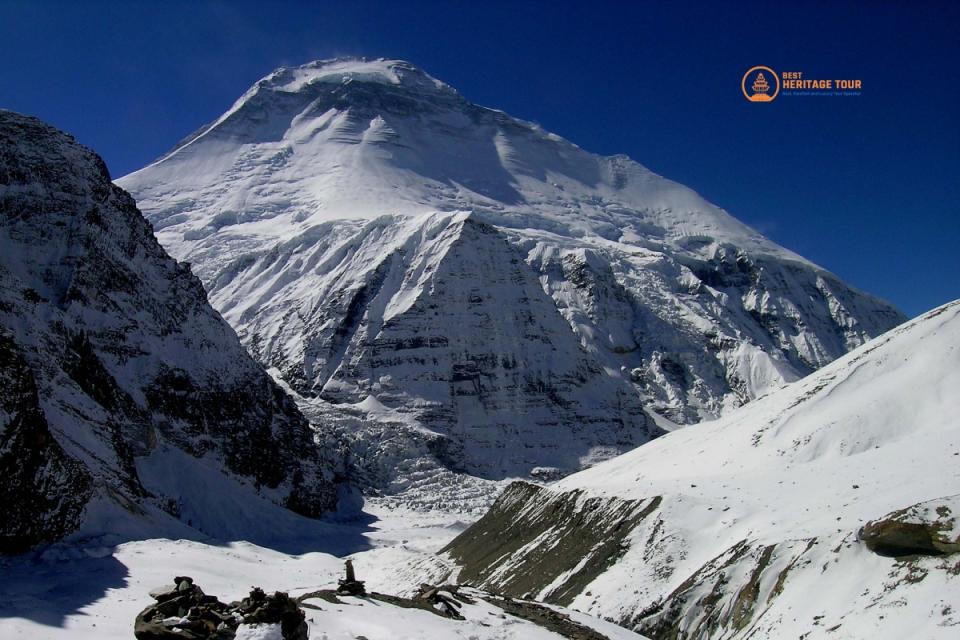
If you are an experienced mountaineer or an alpine purist looking to challenge your physical limits, the Dhaulagiri Circuit Trek is widely considered one of the wildest and most physically demanding best camping treks in Nepal. This route completely circumnavigates Mt. Dhaulagiri (8,167 m), the seventh-highest peak on Earth, taking you directly into a world of raw rock, ice, and massive glacial moraines.
Kathmandu ➔ Pokhara ➔ Darbang ➔ Muri ➔ Italian Base Camp ➔ Dhaulagiri Base Camp ➔ French Pass ➔ Hidden Valley ➔ Marpha ➔ Pokhara
-
Maximum Altitude: 5,360 m (French Pass)
-
Duration: 16 to 18 Days
-
Best Season: Spring (April-May) and Autumn (October-November)
Why It Requires True Camping
Once you push past the final traditional Magar village of Muri, civilization vanishes entirely. For nearly a full week, our expedition lives on glacial ice and rocky moraines. We set up specialized high-altitude tents at Italian Base Camp (3,660 m), Dhaulagiri Base Camp (4,740 m), and within the eerie, desolate expanse of the Hidden Valley (5,050 m).
Crossing the treacherous, snow-packed French Pass (5,360 m) and Dhampus Pass (5,240 m) demands absolute self-reliance. There are no warm dining rooms here; your hot meals are freshly prepared inside our heavy-duty kitchen tents by our chef, fueling your body to face the extreme sub-zero alpine conditions.
3. Jugal Himal Base Camp Trek: The Hidden Sanctuary Near Kathmandu
It surprises many Himalayan explorers to learn that one of the most pristine wilderness camping routes is located surprisingly close to the bustling capital city. The Jugal Himal Base Camp Trek also the Nearest Base Camp from Kathmandu offers a swift escape into an untouched sanctuary of sacred alpine lakes, massive glaciers, and sweeping views of the Central Himalayas.
Kathmandu ➔ Chautara ➔ Syaule Village ➔ Kami Kharka ➔ Nosyampati ➔ Panch Pokhari ➔ Jugal Himal Base Camp ➔ Temathang ➔ Melamchi ➔ Kathmandu
-
Maximum Altitude: 4,500 m (Jugal Base Camp) / 4,010 m (Panch Pokhari)
-
Duration: 12 to 15 Days
-
Best Season: Spring (March-May) and Autumn (September-November)
Why It Requires True Camping
While parts of the lower Langtang region are heavily commercialized, the Jugal Himal range remains highly secluded and free from commercial tourism. The trail climbs rapidly through thick, moss-draped oak and rhododendron forests into wide-open highland pastures.
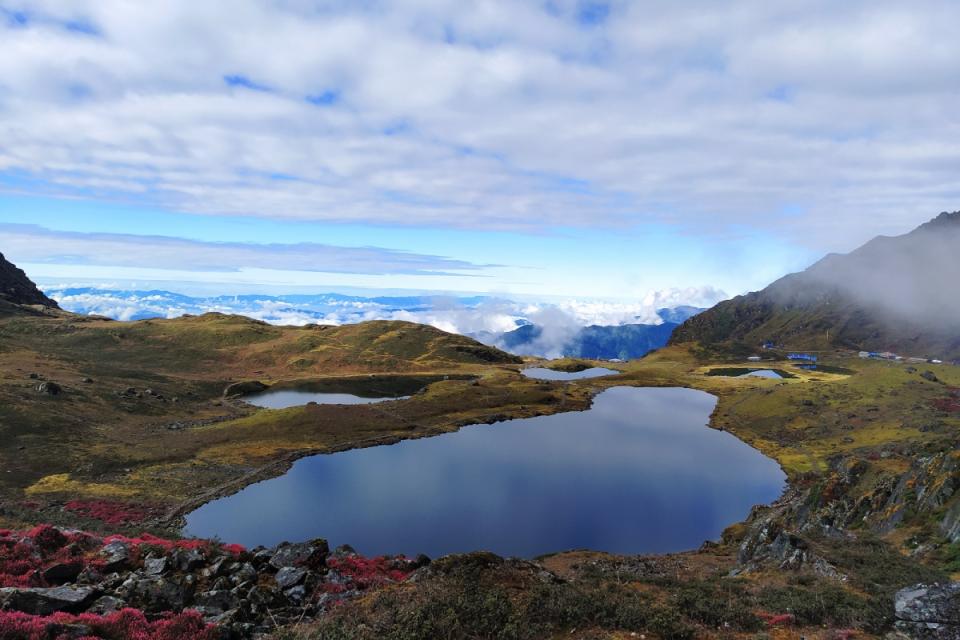
Our team sets up camps at Nosyampati and beside the emerald waters of Panch Pokhari (The Five Holy Lakes) - a deeply sacred Hindu and Buddhist pilgrimage site sitting at 4,010 m. Pushing north toward the raw glacial tongue of Jugal Base Camp (4,500 m) requires a fully independent camp setup. This trek provides a pure, unadulterated wilderness camping experience without the need for long domestic flights.
4. Mesokanto La Pass Trek: The Wilderness Alternative to Thorong La Pass
The classic Annapurna Circuit is legendary, but its modern roads have driven off-the-beaten-path lovers to seek wilder alternatives. The Mesokanto La Pass Trek cuts straight out of the standard loop, taking you away from the crowds to cross a high, wild, and wind-scourged pass that drops directly down into the Kali Gandaki Valley.
Kathmandu ➔ Besisahar ➔ Chame ➔ Manang ➔ Tilicho Lake ➔ Mesokanto La Pass ➔ Kaisang Kharka ➔ Jomsom ➔ Pokhara ➔ Kathmandu
-
Maximum Altitude: 5,121 m (Mesokanto La Pass)
-
Duration: 12 to 14 Days
-
Best Season: Spring (April-May) and Autumn (October-November)
Why It Requires True Camping
While the first half of this journey utilizes the standard teahouses of Manang, the trek shifts into a true wilderness expedition once you branch off toward the famous Tilicho Lake (4,919 m). Instead of turning back or taking the commercial Thorong La route, we push across the demanding Mesokanto La Pass (5,121 m).
The western side of the pass is entirely wild. Our crew pitches tents at Kaisang Kharka, an isolated, rocky pasture used only by seasonal herders. Camping out in these high valleys gives you front-row seats to the sheer rock walls of the Tilicho Peak and the Nilgiri massif, completely insulated from the heavy tourist traffic of the main Annapurna highway.
5. Ganja La Pass Trek: The Wild Backdoor of Langtang
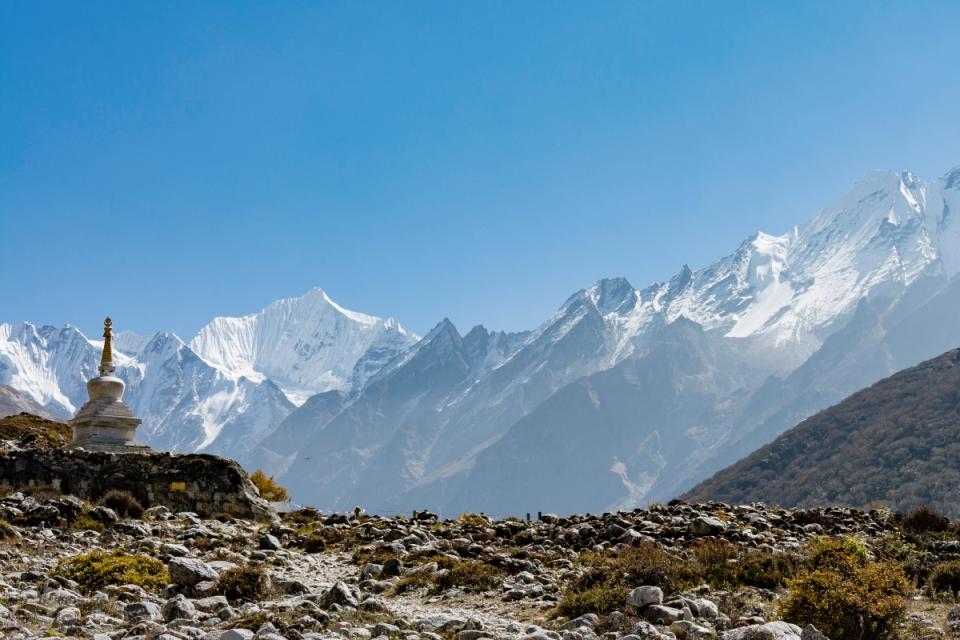
For trekkers who want to experience the classic beauty of the Langtang Valley but demand an adventurous, non-commercial exit, the Ganja La Pass Trek delivers an incredible challenge. It links the Langtang alpine valley with the rural Helambu region via a formidable, snow-choked pass.
Kathmandu ➔ Syabrubesi ➔ Lama Hotel ➔ Langtang Village ➔ Kyanjin Gompa ➔ Ganja La Phedi ➔ Ganja La Pass ➔ Keldang ➔ Tarkeghyang ➔ Kathmandu
-
Maximum Altitude: 5,122 m (Ganja La Pass)
-
Duration: 12 to 14 Days
-
Best Season: Spring (April-May) and Autumn (October-November)
Why It Requires True Camping
While you can sleep in cozy lodges up to Kyanjin Gompa, the moment you cross the Langtang Khola river to tackle the southern ridges, infrastructure completely disappears. The approach to Ganja La Phedi requires a high-altitude wilderness camp on rugged, snow-covered terrain.
The crossing of Ganja La Pass (5,122 m) is highly technical, frequently requiring fixed ropes across steep ice and rock fields. Once over the pass, the descent into the remote northern ridges of Helambu has no lodges. Our team sets up wilderness camps at Keldang (4,270 m) and Dukin Kharka, offering an authentic, self-sufficient survival experience right on the doorstep of the central valley.
6. Badimalika Trek: The Spiritual Holy Grail of the Far West
For true Himalayan explorers seeking the ultimate off-the-beaten-path destination, the Badimalika Trek in the remote far-western Bajura district is a breathtaking treasure. Blending deep spiritual pilgrimage with pristine wilderness, this route leads to a sacred hilltop shrine surrounded by some of the most expansive, emerald-green alpine meadows in the world.
Kathmandu ➔ Dhangadhi (Flight) ➔ Martadi ➔ Budha Krodh ➔ Triveni Dham ➔ Badimalika Temple ➔ Dhawalpur Lake ➔ Lamagadh ➔ Dhangadhi ➔ Kathmandu
-
Maximum Altitude: 4,220 m (Badimalika Temple)
-
Duration: 10 to 14 Days
-
Best Season: April to September (including the spectacular Janai Purnima festival in August)
Why It Requires True Camping
Far-western Nepal remains beautifully untouched by commercial tourism development. There are absolutely no hotels, lodges, or tourist teahouses along this route. The trail winds through remote hamlets like Budha Krodh before ascending into massive, rolling grasslands that feel entirely endless.
Our team establishes camps at Triveni Dham (3,870 m) - a sacred confluence of three alpine rivers where pilgrims bathe - and directly on the high ridges near the Badimalika Temple (4,220 m). Standing by your tent at dawn, you can watch the sunrise illuminate the distant, untouched peaks of Api and Saipal, looking out over rolling hills that stretch into the horizon without a single building in sight.
Comparative Matrix: True Camping Treks at a Glance
To help you choose the wilderness expedition that matches your travel goals, we have outlined the core logistics of these top six camping routes below:
|
Expedition Name |
Physical Difficulty |
Key Visual Landmark |
Unique Cultural Experience |
|---|---|---|---|
|
Upper Dolpo Trek |
Strenuous / Extreme |
Deep-blue Phoksundo Lake |
Pre-Buddhist Bon-Po Culture |
|
Dhaulagiri Circuit |
Expedition Level |
Mt. Dhaulagiri Glacial Ice |
Raw High-Alpine Survival |
|
Jugal Himal Base Camp |
Moderate / Strenuous |
Five Holy Lakes (Panch Pokhari) |
Remote Tamang & Sherpa Heritage |
|
Mesokanto La Pass |
Strenuous |
Tilicho Lake (4,919 m) |
Off-beat Annapurna Wilderness |
|
Ganja La Pass Trek |
Technical / Strenuous |
Langtang Lirung Icefalls |
True Isolated Ridge Camping |
|
Badimalika Trek |
Moderate / Remote |
Vast rolling emerald meadows |
Far-West Shamanistic & Hindu Myths |
Why Choose a True Camping Trek Over a Teahouse Lodge?
Choosing a camping trek is an investment in an entirely different style of travel. Here is why true wilderness explorers consistently choose canvas over concrete:
-
Undisturbed Footsteps: While major lodge trails can see hundreds of hikers daily, on routes like Upper Dolpo or Badimalika, you may trek for days without encountering another foreign traveler.
-
Unmatched Cultural Authenticity: In teahouse regions, local communities have naturally adapted to commercial tourism. On a camping trek, the interactions are completely genuine. You meet yak herders, high-altitude nomads, and monks in secluded monasteries who welcome you out of pure hospitality, offering a rare window into unaltered mountain life.
-
Flawless Acclimatization Control: Teahouse itineraries are completely restricted by where the buildings are located. On a camping trek, our guide can modify the itinerary on the fly, stopping to pitch camp at intermediate altitudes to ensure safe, gradual acclimatization for our guests.
-
True Connection with the Wild: There is a profound psychological shift that occurs when you spend weeks away from modern screens, dining halls, and electrical grids. You quickly learn to tune in to the natural rhythms of the mountains - waking up with the first light on the canvas and drifting off to sleep to the soothing sound of glacial rivers.
Conclusion
The trails of Nepal are evolving rapidly, but the timeless, wild spirit of the Himalayas remains fully intact. You do not have to settle for crowded trails, commercialized dining halls, or standard lodge itineraries. By choosing a true camping expedition over a conventional teahouse trek, you choose to witness the mountains in their purest, most unadulterated form.
Whether you seek the extreme alpine challenge of the Dhaulagiri Circuit, the ancient, restricted solitude of Upper Dolpo, or the vast, green spiritual sanctuary of Badimalika, these six routes promise an experience that stays with you long after the tents are packed away. They remind us why we explore: to find boundaries, to cross them, and to reconnect with the quiet majesty of the natural world.
At Best Heritage Tour, we handle every detail - from complex restricted area permits and satellite safety systems to premium gear and expert field crews - leaving you completely free to live out your ultimate Himalayan dream.
Start Planning Your Expedition with Best Heritage Tour
Phone / WhatsApp / Viber: +977-9851149197 / +977-9810043046
Email: info@bestheritagetour.com / bestheritagetour@gmail.com
Website: www.bestheritagetour.com
Office: Thamel Marg, Kathmandu, Nepal
Author: Best Heritage Tour
Date: 24th May, 2026