For centuries, the colossal, snow-capped massifs of the Himalayas have captured the human imagination. As local travel company - Best Heritage Tour, we have had the privilege of walking these trails, breathing the crisp high-altitude air, and witnessing the transformative power these peaks hold over those who visit. Nepal is home to eight of the fourteen independent peaks on Earth that soar above the mythical 8,000-meter threshold, making it the ultimate destination for trekkers, pilgrims, and adventure seekers alike.
Whether you are planning your first Himalayan trek or are an experienced mountaineer mapping out your next high-altitude challenge, understanding the geography, cultural history, and accessibility of these giants is essential.
This comprehensive guide breaks down the top 10 highest mountains in Nepal, their exact elevations, their deep-rooted local history, and - most importantly - the corresponding base camp treks that allow you to stand in their majestic shadows.
The Definitive List of Nepal's 10 Highest Peaks
|
Rank |
Mountain Name |
Elevation (Meters) |
Elevation (Feet) |
Mountain Range / Massif |
Associated Base Camp Trek |
|---|---|---|---|---|---|
|
1 |
Mount Everest (Sagarmatha) |
8,848.86 m |
29,031.7 ft |
Mahalangur Himal |
|
|
2 |
Mount Kanchenjunga |
8,586 m |
28,169 ft |
Kanchenjunga Himal |
|
|
3 |
Mount Lhotse |
8,516 m |
27,940 ft |
Mahalangur Himal |
|
|
4 |
Mount Makalu |
8,485 m |
27,838 ft |
Makalu Mahalangur |
|
|
5 |
Mount Cho Oyu |
8,188 m |
26,864 ft |
Mahalangur Himal |
|
|
6 |
Mount Dhaulagiri I |
8,167 m |
26,795 ft |
Dhaulagiri Himal |
|
|
7 |
Mount Manaslu |
8,163 m |
26,781 ft |
Mansiri Himal |
|
|
8 |
Mount Annapurna I |
8,091 m |
26,545 ft |
Annapurna Himal |
|
|
9 |
Mount Gyachung Kang |
7,952 m |
26,089 ft |
Mahalangur Himal |
|
|
10 |
Mount Annapurna II |
7,937 m |
26,040 ft |
Annapurna Himal |
Deep Dive into Nepal's 10 Highest Peaks
1. Mount Everest (Sagarmatha) - 8,848.86 m
Known locally in Nepal as Sagarmatha ("Goddess of the Sky") and in Tibet as Chomolungma ("Mother Goddess of the World"), Mount Everest is the undisputed crown jewel of global mountaineering. Straddling the border between Nepal and Tibet, its official height was jointly re-measured and updated by the Nepalese and Chinese governments to 8,848.86 meters.
First climbed successfully by Sir Edmund Hillary and Tenzing Norgay Sherpa on May 29, 1953, Everest is more than a mountain; it is a living symbol of human endurance and spiritual reverence for the local Sherpa community.
-
The Associated Adventure: Everest Base Camp (EBC) Trek
-
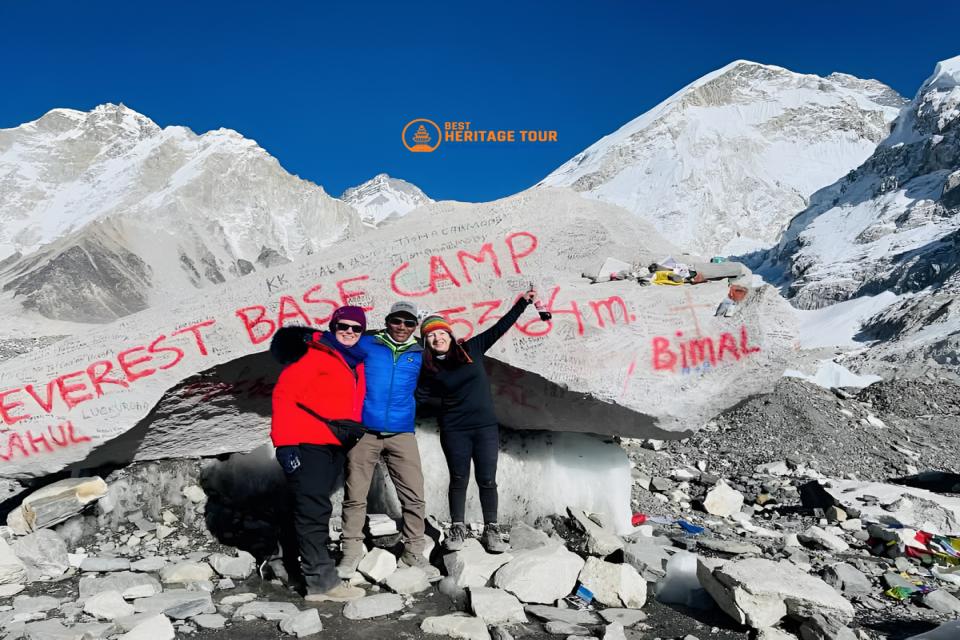
Trek Highlights: Flying into the thrilling airstrip of Lukla, hiking through the bustling alpine hub of Namche Bazaar, visiting the spiritual Tengboche Monastery, and standing at the standard base camp footprint at 5,364 meters or climbing Kala Patthar (5,545 m) for an unobstructed sunrise view over the Everest massif.
2. Mount Kanchenjunga - 8,586 m
Positioned in the far eastern corner of Nepal on the border with Sikkim, India, Mount Kanchenjunga is the third-highest mountain in the world and the second-highest in Nepal. Its name translates beautifully to "The Five Treasures of the Snows," referencing its five distinct, towering peaks that represent the five repositories of God: gold, silver, gems, grain, and holy books.
Because of its remote location, the region surrounding Kanchenjunga has remained remarkably pristine, preserved under strict conservation regulations that shelter rare wildlife, including the elusive snow leopard and red panda.
-
The Associated Adventure: Kanchenjunga Base Camp Trek
-
Trek Highlights: This is an off-the-beaten-path, restricted-area trek that requires special permits and a registered guide. It takes you through lush sub-tropical lowlands up to the North Base Camp (Pangpema) and South Base Camp (Ramche), showcasing an incredible cross-section of Rai, Limbu, and Sherpa cultural heritage.
3. Mount Lhotse - 8,516 m
Mount Lhotse is inextricably linked to Mount Everest, connected via the razor-sharp, high-altitude ridge known as the South Col. Ranking as the fourth-highest peak globally, Lhotse's massive South Face is famous in mountaineering lore as one of the steepest and most dangerous rock walls on Earth, rising over 3.2 kilometers in a vertical precipice.
-
The Associated Adventure: Everest Base Camp (EBC) Trek
-
Trek Highlights: Because Lhotse stands directly adjacent to Everest, you do not need a separate itinerary to see it. Trekkers on our classic EBC route get spectacular, close-up views of Lhotse's dramatic peaks from Dingboche, Chhukung, and the approach to Gorak Shep.
4. Mount Makalu - 8,485 m
Located roughly 19 kilometers southeast of Everest in the Mahalangur Himalayas, Mount Makalu is the fifth-highest mountain on Earth. It is instantly recognizable by its striking, isolated four-sided pyramid structure. Makalu is notorious among professional mountaineers for its extreme technical difficulty, brutal pitches, and high vulnerability to wind and ice.
-
The Associated Adventure: Makalu Base Camp Trek
-
Trek Highlights: This is a demanding, high-altitude wilderness trek that traverses the pristine Makalu Barun National Park. You pass through the deep, dramatic Barun Valley, crossing remote alpine pastures and glacial moraines to reach the quiet, isolated base camp at 4,870 meters, offering unmatched views of Makalu’s sheer granite faces.
5. Mount Cho Oyu - 8,188 m
Meaning "Turquoise Goddess" in Tibetan, Mount Cho Oyu stands as the sixth-highest mountain in the world, positioned 20 kilometers west of Everest. Historically, Cho Oyu served as a vital high-altitude trading route via the Nangpa La pass, where Tibetan and Nepali traders guided yak caravans loaded with textiles and spices across the border. Due to its gentler northern slopes, it is widely considered the most logistically accessible of all the world’s 8,000-meter peaks for climbers.
-
The Associated Adventure: Gokyo Lakes & Cho Oyu Border Trails
-
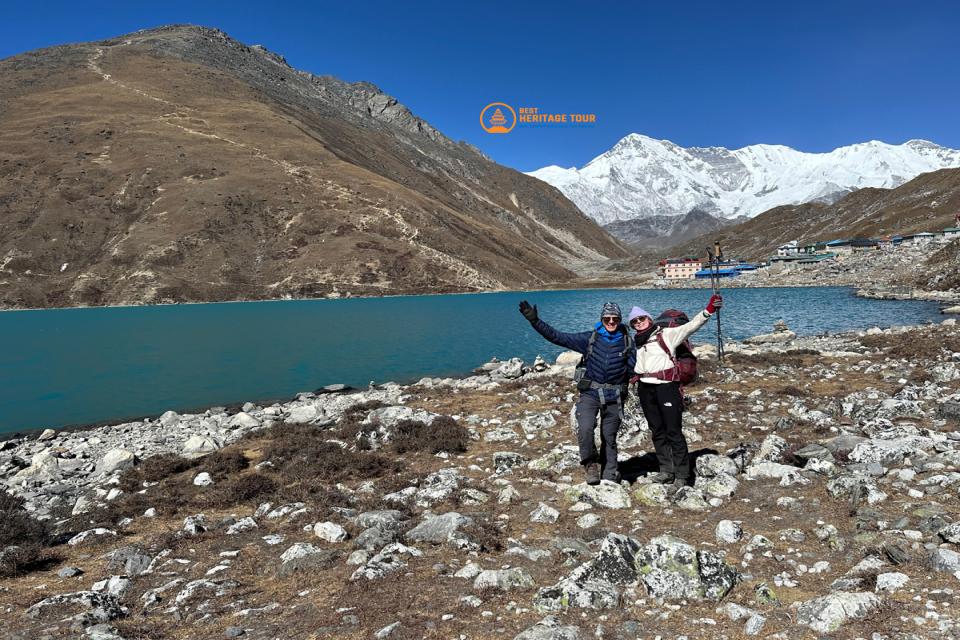
Trek Highlights: While there isn't a traditional commercial teahouse trek explicitly named "Cho Oyu Base Camp," our popular Gokyo Lakes Trek brings you face-to-face with this turquoise giant. Climbing Gokyo Ri (5,357 m) or hiking up to the fifth and sixth Gokyo lakes offers a jaw-dropping panorama where Cho Oyu dominates the northern skyline.
6. Mount Dhaulagiri I - 8,167 m
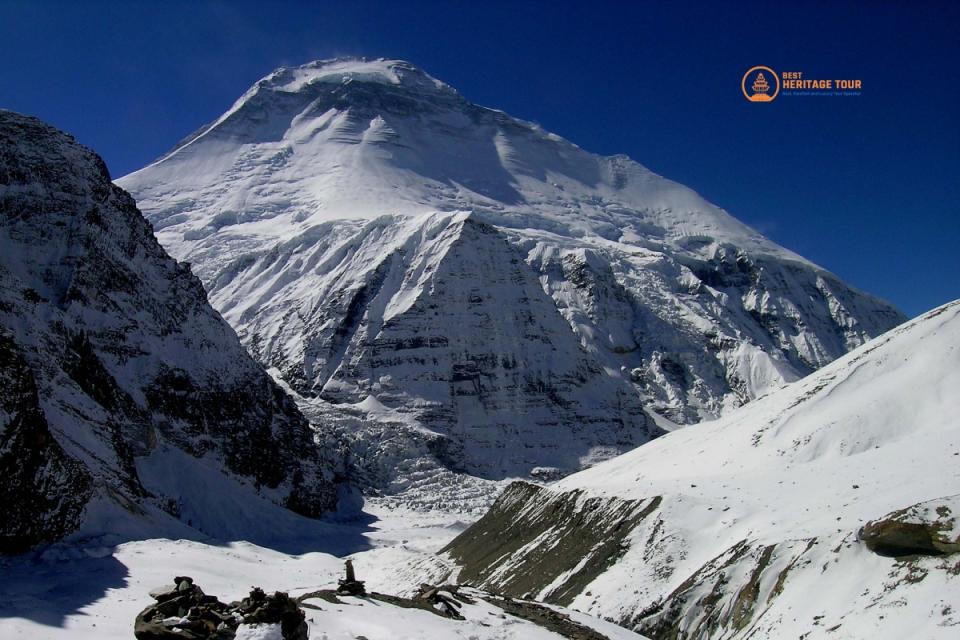
Rising dramatically above the deep gorge of the Kali Gandaki River in western Nepal, Mount Dhaulagiri I is the seventh-highest mountain in the world. Derived from the Sanskrit words Dhavala (dazzling, white) and Giri (mountain), the "White Mountain" lives up to its name with brilliant, sheer glaciers. Until the mid-19th century, before modern surveying techniques mapped Everest, Dhaulagiri was widely believed by western geographers to be the tallest mountain on Earth.
-
The Associated Adventure: Dhaulagiri Circuit / Base Camp Trek
-
Trek Highlights: This is a highly challenging, strenuous trek meant for seasoned trekkers. The route circumvents the entire massif, crossing two formidable high-altitude passes: French Pass (5,360 m) and Dhampus Pass (5,244 m). Accommodations involve fully serviced camping as you venture deep into the rugged inner sanctuary of the Dhaulagiri range.
7. Mount Manaslu - 8,163 m
Known as the "Mountain of the Spirit" (from the Sanskrit word Manasa, meaning intellect or soul), Mount Manaslu is the world’s eighth-highest peak. Tucked away in the Gorkha District of central Nepal, Manaslu was first summited in 1956 by a Japanese expedition team alongside Nepalese climber Gyalzen Norbu Sherpa. To this day, the peak holds a deeply special cultural connection for Japanese climbers.
-
The Associated Adventure: Manaslu Circuit Trek
-
Trek Highlights: Widely regarded as the ultimate alternative to the busy Annapurna Circuit, the Manaslu Circuit offers a rich blend of raw wilderness and ancient Tibetan-Buddhist culture. The trek winds along the Budhi Gandaki River, passes through ancient stone-walled villages, and peaks at the challenging Larkya La Pass (5,106 m), where you are rewarded with sweeping views of the entire Manaslu massif.
8. Mount Annapurna I - 8,091 m
Though it ranks tenth globally and eighth in Nepal by elevation, Mount Annapurna I occupies a monumental place in exploration history. On June 3, 1950, French climbers Maurice Herzog and Louis Lachenal successfully reached its summit, making Annapurna I the very first 8,000-meter peak ever conquered by humanity-three years before the successful ascent of Everest. The name Annapurna is derived from Sanskrit, translating to "Goddess of the Harvests" or "Provider of Nourishment."
-
The Associated Adventure: Annapurna Base Camp (ABC) Trek
-
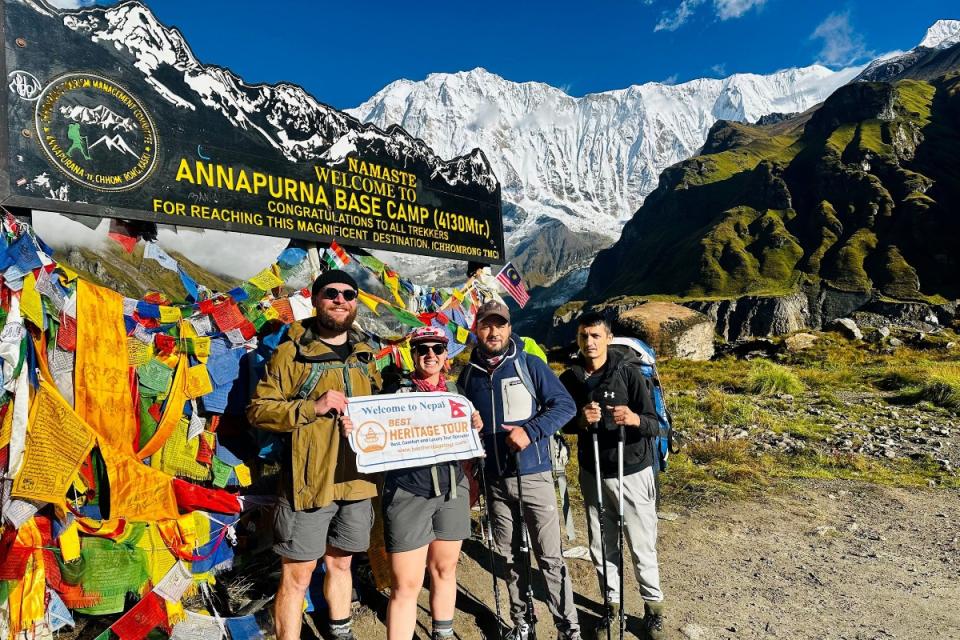
Trek Highlights: The ABC trek is one of the most accessible and visually spectacular lodge-to-lodge journeys in Nepal. It leads you directly into the "Annapurna Sanctuary," a natural alpine amphitheater completely enclosed by a ring of towering peaks, including Annapurna I, Annapurna South, and the sacred Machhapuchhre (Fishtail Mountain).
9. Mount Gyachung Kang - 7,952 m
Often missing from casual travel blogs, Mount Gyachung Kang is the highest peak in the world that does not reach the 8,000-meter mark, making it the ninth-highest mountain in Nepal and the fifteenth-highest on Earth. Located in the Mahalangur range between Everest and Cho Oyu, this massive, ice-clad peak is frequently overlooked because it falls just short of the coveted 8,000-meter title, keeping its trails exceptionally quiet and pristine.
-
The Associated Adventure: Gokyo Lakes / Extended Khumbu Wilderness Trek
-
Trek Highlights: Because Gyachung Kang sits quietly on the border ridge, it is best viewed by exploring the upper stretches of the Gokyo Valley or opting for extended wilderness routes that branch off the main Everest trails toward the Ngozumpa Glacier, the longest glacier in the Himalayas.
10. Mount Annapurna II - 7,937 m
Rounding out our list is Mount Annapurna II, the tenth-highest mountain in Nepal and the sixteenth-highest peak in the world. While it is technically an independent peak within the broader Annapurna Massif, it stands as a massive eastern anchor to the range. It features an incredibly long, snow-swept summit ridge that presents major technical challenges to any mountaineer attempting its slopes.
-
The Associated Adventure: Annapurna Circuit Trek
-
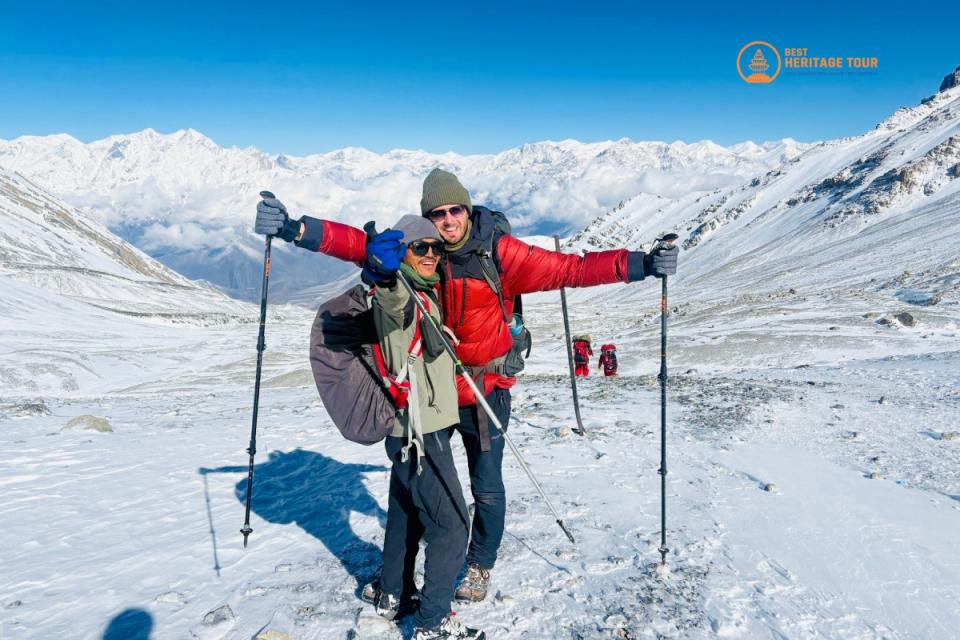
Trek Highlights: Unlike the base camp trek, Mount Annapurna II is a constant companion on the world-famous Annapurna Circuit Trek. As you hike from the lush sub-tropical valley of Lamjung up through Manang, the towering north face of Annapurna II dominates the horizon, providing a dramatic backdrop as you prepare to cross Thorong La Pass (5,416 m).
Conclusion
Turn Your Himalayan Dreams into Reality
Standing at the foot of the world's highest mountains is a humbling, life-changing experience that stays with you forever. Crafting these journeys requires meticulous safety protocols, deep local relationships, and a genuine passion for sharing the heritage of the Himalayas.
At Best Heritage Tour, our team of expert guides, native to these valleys, is dedicated to curating seamless, secure, and culturally immersive trekking experiences tailored to your personal fitness level and travel style. Let us handle the permits, logistical details, and safety frameworks while you focus on the journey of a lifetime.
Plan Your Journey with Best Heritage Tour
Phone / WhatsApp / Viber: +977-9851149197 / +977-9810043046
Email: info@bestheritagetour.com / bestheritagetour@gmail.com
Website: www.bestheritagetour.com
Office: Thamel Marg, Kathmandu, Nepal
Frequently Asked Questions
Which mountain is the highest in Nepal?
Mount Everest is the highest mountain in Nepal and the world, standing at an officially measured height of 8,848.86 meters (29,031.7 feet) above sea level.
How many mountains above 8,000 meters are located in Nepal?
Out of the fourteen independent peaks on Earth that rise above 8,000 meters, eight are located within the borders of Nepal. These include Everest, Kanchenjunga, Lhotse, Makalu, Cho Oyu, Dhaulagiri I, Manaslu, and Annapurna I.
What is the easiest base camp trek in Nepal for beginners?
The Annapurna Base Camp (ABC) Trek is widely considered the most accessible base camp trek for beginners and families. It tops out at a manageable 4,130 meters, features well-developed teahouse infrastructure, and has a shorter duration (typically 7 to 11 days) compared to the longer, steeper trails of the Everest region.
Are permits required to view or trek near these mountains?
Yes, all trekking regions in Nepal require specific entry permits. Most require a combination of a Trekkers' Information Management System (TIMS) card and local National Park or Conservation Area permits (such as ACAP for Annapurna or Sagarmatha National Park permits for Everest). Certain restricted border regions, like Manaslu and Kanchenjunga, require special government-issued restricted area permits and must be arranged through a licensed local trekking agency.
Author: Best Heritage Tour
Date: 7th July, 2026