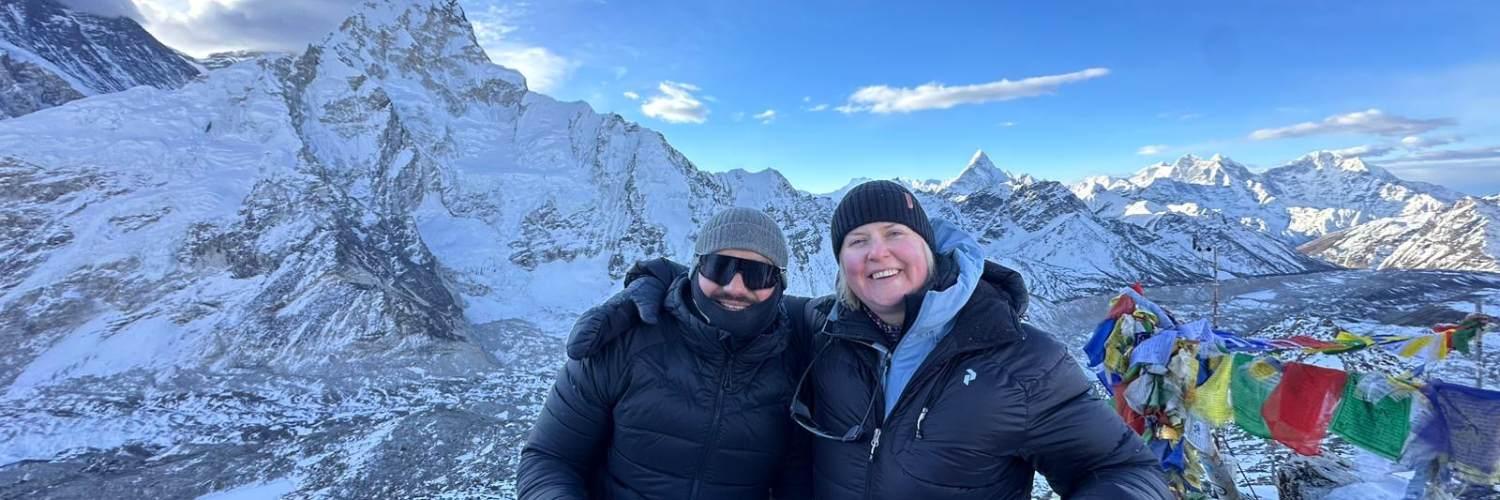
For decades, the word "Sherpa" has been universally synonymous with mountaineering excellence, high-altitude endurance, and the legendary figures who pave the way to the top of the world. However, here at Best Heritage Tour, we believe that reducing this vibrant community to just their climbing prowess misses the most profound part of their identity. The Sherpas are not just guides; they are the indigenous custodians of a deeply spiritual, culturally rich, and resilient civilization forged in the extreme altitudes of the eastern Himalayas.
If you are a trekker, traveler, or cultural tourist planning your next transformative journey, understanding the profound depth of Sherpa Culture and Tradition in Nepal will completely elevate your travel experience. When you walk past a mani stone or sit by a yak-dung fire in a high-altitude teahouse, you aren't just traversing an adventure trail - you are walking through a living museum.
In this definitive guide, we will unpack the origins, spiritual frameworks, daily rituals, and festivals of the Sherpa people. More importantly, we provide strategic, boots-on-the-ground navigation on the Best Place to see Sherpa Culture and Tradition in Nepal and how you can ethically experience these timeless customs firsthand.
The True Identity: Who Are the Sherpa People?
To understand the Sherpa people, we must look at their roots. In the native Sherpa language, Shar translates to "East" and Wa translates to "People." Originally migrating from the Kham region of eastern Tibet in the late 15th and early 16th centuries, these resilient nomads crossed the treacherous, glaciated Nangpa La pass (5,806 m) to settle in the fertile, secluded valleys of the Khumbu and Solu regions of Nepal.
Driven by a search for a spiritual sanctuary (Beyul), they brought with them ancient traditions, a distinct language branch of the Tibeto-Burman family, and a foundational worldview rooted in the oldest sect of Tibetan Buddhism.
Over the centuries, the harsh alpine environment transformed them. Living at altitudes ranging from 2,500 m to over 4,000 m, the Sherpa community adapted agriculturally, economically, and physiologically. Long before the first Western mountaineers arrived in the 20th century, the Sherpa people were successful trans-Himalayan traders, exchanging salt, wool, and livestock between Tibet and the lower lowlands of Nepal.
The Spiritual Pillars: Tibetan Buddhism and Sacred Landscapes
You cannot separate Sherpa culture from their spiritual landscape. The geography of the Khumbu region is mapped out not just by peaks and rivers, but by sacred coordinates. The Sherpa people practice the Nyingma school of Tibetan Buddhism, which blends monastic discipline with ancient, pre-Buddhist shamanistic traditions (Bon).
The Concept of Sacred Peaks
To a traditional Sherpa, the massive peaks of the Himalayas are not objects to be conquered or tamed. They are the literal palaces of the gods.
-
Mount Everest is revered as Chomolungma, the "Goddess Mother of the World," and is believed to be the home of Miyolangsangma, the goddess of incalculable generosity who provides nourishment.
-
Mount Ama Dablam is viewed as a protective mother figure, its prominent ridges mimicking the outstretched arms of a mother wrapping around her children.
Because the mountains are sacred, traditional custom dictates that climbers must always seek permission from the deities before stepping foot on the slopes. This manifests in the Puja Ceremony, a mandatory, deeply moving ritual conducted at Base Camp by a Buddhist Lama. Offerings of barley flour, fried dough (tshog), juniper incense, and alcohol are made to appease the mountain gods, asking for safe passage and forgiveness for bruising the sacred earth.
The Landscape of Devotion
As you trek through Sherpa territory, you will constantly encounter physical manifestations of daily devotion. Understanding the etiquette of these spaces is crucial for any respectful traveler:
-
Mani Walls and Chortens: These are stone structures engraved with sacred Buddhist mantras, most notably Om Mani Padme Hum (Hail to the Jewel in the Lotus). Traditional custom dictates that you must always pass these structures on their left side (keeping them to your right) as a sign of respect, mirroring the clockwise rotation of the universe.
-
Prayer Flags (Lung ta): Meaning "Wind Horses," these vibrant five-colored flags symbolize the five elements: blue for sky, white for air, red for fire, green for water, and yellow for earth. As the fierce mountain wind tears at the cotton, it prints the prayers onto the cosmos, spreading compassion and goodwill to all sentient beings.
Daily Life, Architecture, and Himalayan Gastronomy
The daily lifestyle of the Sherpa people is a beautiful masterclass in sustainable, high-altitude adaptation. Traditional houses are architectural marvels built entirely from local stone and timber, constructed without nails.
Traditional Home Anatomy
A classic Sherpa home features a dual-level design perfectly tailored to the climate:
-
The Ground Floor: Historically used as a stable for livestock (yaks and dzopkyos) and storage for firewood and dried yak dung, which acts as the primary fuel source for heating.
-
The First Floor: The main living area. This space is intentionally wide open, centered around a massive iron stove (Thap). The walls are lined with meticulously polished copper, brass, and silver pots. A dedicated corner of this floor is always reserved for the Chosam - the private family chapel filled with Buddha statues, sacred texts, and butter lamps.
The Sherpa Kitchen: Fueling High-Altitude Life
Forget generic western menus; eating traditional Sherpa food is an integral piece of cultural exploration. Because crop cultivation is limited to hearty cold-weather varieties at high elevations, the traditional diet relies heavily on potatoes, barley, and buckwheat.
|
Traditional Dish / Drink |
Description & Main Ingredients |
Cultural Context |
|---|---|---|
|
Sherpa Stew (Syakpa) |
A rich, warming soup made with hand-pulled noodles, mountain potatoes, radishes, and dried yak meat (Sukum). |
The ultimate comfort food after a long, cold day of trekking. |
|
Tsampa |
Roasted barley flour kneaded with butter tea or water into a dense, nutrient-rich dough. |
The historic staple fuel for trans-Himalayan traders and modern high-altitude porters. |
|
Riki Kur |
Crispy, savory pancakes made from finely grated mountain potatoes, served with a dollop of fresh yak butter and a spicy serkam (fermented cheese) sauce. |
A classic breakfast or afternoon snack found in traditional family kitchens. |
|
Su Chya (Butter Tea) |
A churning mix of black tea leaves, salt, and fresh yak butter. |
Essential for hydration and preventing chapped lips in the dry, freezing high-altitude air. |
|
Chang |
A milky, mildly alcoholic home-brewed beer fermented from millet, barley, or rice. |
Served generously during social gatherings, weddings, and major festivals. |
Vibrant Celebrations: Festivals of the High Valleys
If you want to witness the absolute peak of Sherpa cultural expression, timing your visit around their traditional festivals is an absolute must. These events are not staged tourist spectacles; they are profound communal celebrations of survival, faith, and cosmic alignment.
Dumji: A Celebration of Community and Faith
Celebrated over seven days in June or July, the Dumji festival commemorates the birth anniversary of Guru Rinpoche (Padmasambhava), who introduced Buddhism to Tibet and the Himalayas. Originally initiated by the revered Lama Sangwa Dorje in the 17th century, responsibility for funding and hosting the festival rotates among village families each year.
During Dumji, monasteries come alive with vibrant colors. Monks perform sacred Cham Dances - highly synchronized, ritualistic masked dances that narrate the triumph of Dharma over demonic forces. It is a time for dramatic rituals, heavy feasting, and deep community bonding.
Mani Rimdu: The Ultimate Monastic Spectacle
Taking place in the autumn (usually October or November) at Tengboche, Thame, and Chiwong monasteries, Mani Rimdu is a 19-day festival culminated by a 3-day public celebration.
The festival consists of intricate sand mandala creations, public blessings, and a series of powerful masked dances performed by the monks. The final day concludes with the Fire Puja, a symbolic burning of all planetary obstacles and negative energies. For travelers, witnessing Mani Rimdu set against the jaw-dropping backdrop of Everest and Ama Dablam is a profound spiritual highlight.
Lhosar: The Tibetan New Year
Falling in February or March, Gyalpo Lhosar marks the Sherpa New Year. The celebrations begin with thorough spring cleaning of homes, the burning of juniper branches to purify the air, and the preparation of Guthuk - a special nine-ingredient soup containing dough balls stuffed with hidden symbolic items (like coal or wool) that playfully predict a person's character traits for the coming year.
Navigational Guide: Best Place to see Sherpa Culture and Tradition in Nepal
For travelers seeking genuine, unfiltered cultural immersion, you must look beyond the standard, commercial trekking highways. While many modern teahouses along the direct Everest Base Camp trail have adapted heavily to western tastes, there are specific, historic epicenters where Sherpa culture remains beautifully preserved.
Key Cultural Epicenters of the Khumbu
1. Namche Bazaar (3,440 m)
The historic crossroads of the Khumbu. Beyond the Irish pubs and gear shops lies a deeply traditional core.
-
The Cultural Must-Do: Walk twenty minutes up the hill to Chhorkung to visit the Sherpa Culture Museum. Run by local photographer Lhakpa Sonam Sherpa, this beautifully preserved traditional home showcases authentic, disappearing artifacts, historical photographs of early climbing families, and an ancient family chapel.
2. Khumjung and Khunde Valleys (3,780 m)
Located in a stunning green valley just above Namche, these twin villages offer a deeply tranquil escape from the main trail. Khumjung features traditional green-roofed houses and is home to the historic Khumjung Monastery, famous for housing what is said to be a Yeti Scalp. It is also the site of the first Hillary School, built in 1961 by Sir Edmund Hillary to bring sustainable education to Sherpa children.
3. Thame Village (3,800 m)
Situated off the busy base camp grid toward the Nangpa La pass, Thame is the historic birthplace of legendary mountaineers like Tenzing Norgay and Apa Sherpa. Because it receives far fewer tourists, it retains an incredibly pure, old-world agricultural atmosphere. The 600-year-old Thame Monastery, perched dramatically on a cliffside above the village, is one of the oldest spiritual hubs in the region.
4. Tengboche Monastery (3,867 m)
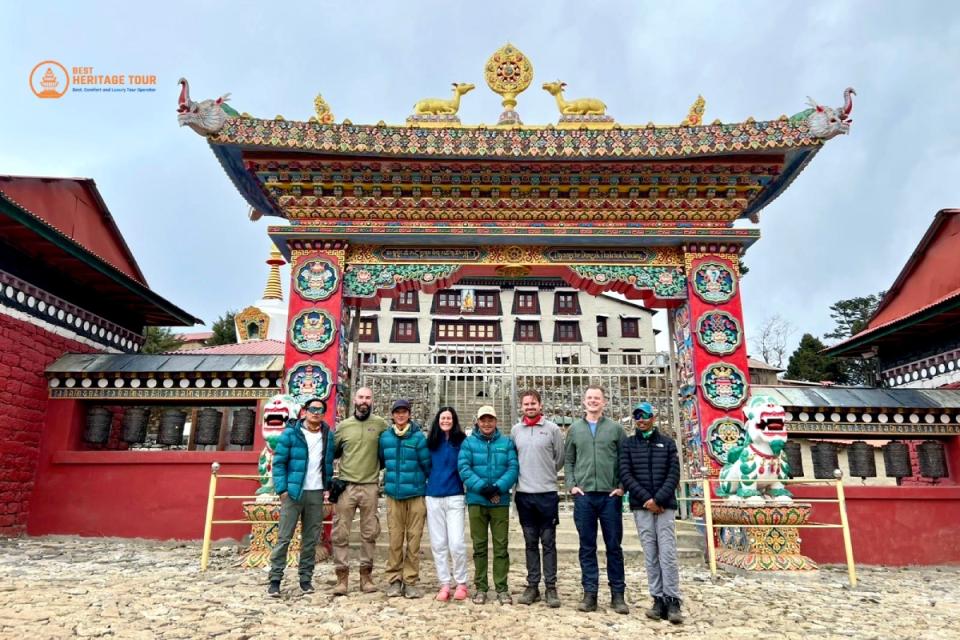
Surrounded by pristine rhododendron and pine forests, Tengboche is the spiritual beating heart of the entire Khumbu region. All high-altitude expeditions stop here to receive blessings from the Rinpoche. Attending the late-afternoon or early-morning monk chants inside the main prayer hall, wrapped in the heavy aroma of burning juniper, is an unforgettable cultural experience.
Conclusion
The true magic of the Himalayas lies not just in the height of its peaks, but in the profound spiritual depth of the people who call them home. Navigating the breathtaking terrain of the Khumbu while unraveling the layers of Sherpa Culture and Tradition in Nepal is a journey that changes how you view the world.
At Best Heritage Tour, we build deeply immersive, ethically grounded, and culturally authentic heritage journeys led by elite, locally rooted Sherpa guides who are eager to welcome you into their homes, share their stories, and bridge the gap between traveler and community.
Whether you want to witness the vibrant masked dances of Mani Rimdu, explore the ancient cliffside monasteries of Thame, or embark on a sustainable cultural immersion trail across the high valleys, we are here to design your ultimate Himalayan pilgrimage.
Start Planning Your Journey Today
Phone / WhatsApp / Viber: +977-9851149197 / +977-9810043046
Email: info@bestheritagetour.com / bestheritagetour@gmail.com
Website: www.bestheritagetour.com
Office: Thamel Marg, Kathmandu, Nepal
Author: Best Heritage Tour
Date: 25th May, 2026