Tucked away in the rain shadow of the massive Annapurna and Manaslu ranges lies a realm that time completely forgot. For decades, the medieval stone hamlets of the Nar Phu valley remained entirely sealed off from the outside world. Even today, stepping into Phu Village (Phu Gaon) feels less like a standard Himalayan trek and more like crossing an invisible portal into an ancient, unchanged way of Tibetan life.
At Best Heritage Tour, we have guided fearless travelers through Nepal’s most sacred and culturally rich landscapes for years. We know that today’s discerning trekker isn't just looking for physical trails; they seek authentic human connection, profound history, and raw, pristine wilderness.
This comprehensive guide delivers absolute clarity on everything you need to know about journeying to Phu Village: from mandatory 2026 permit protocols and exact transit routes to weather patterns and cultural highlights.
Where is Phu Village?
To map this hidden enclave, look north of the classic Annapurna Circuit trail in the Manang District of Gandaki Province, Western Nepal.
Perched at a dizzying elevation of 4,080 meters (13,385 feet), Phu Village sits on a dramatic, wind-swept cliff overlooking the roaring Phu Khola. Geographically, it is incredibly close to the Tibetan border. The surrounding terrain transitions abruptly from the subtropical forests of the lower canyons to a stark, raw, high-altitude desert reminiscent of the Tibetan Plateau.
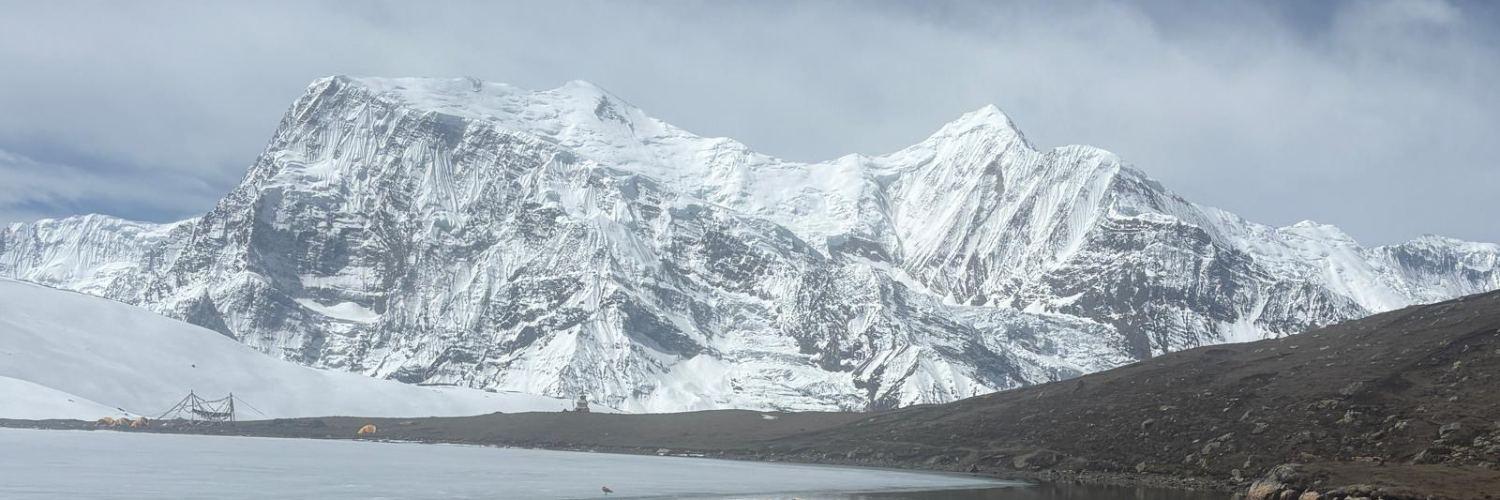
Because it is cradled deep within the mountain rain shadow, the village receives a fraction of the rainfall that drenches the southern slopes of the Himalayas. This unique geography shields it dynamically, giving birth to a bleakly beautiful landscape dominated by rocky ridges, ancient glacial moraines, and soaring snow-capped walls like Himlung Himal (7,126m).
The Cultural Significance of Nar Phu Valley
The people of Phu are ethnically Bhotia, tracing their lineage directly back to Tibet. For centuries, their survival has depended on a delicate balance of high-altitude farming (barley, buckwheat, and potatoes), seasonal trade, and herding majestic yaks across communal pastures.
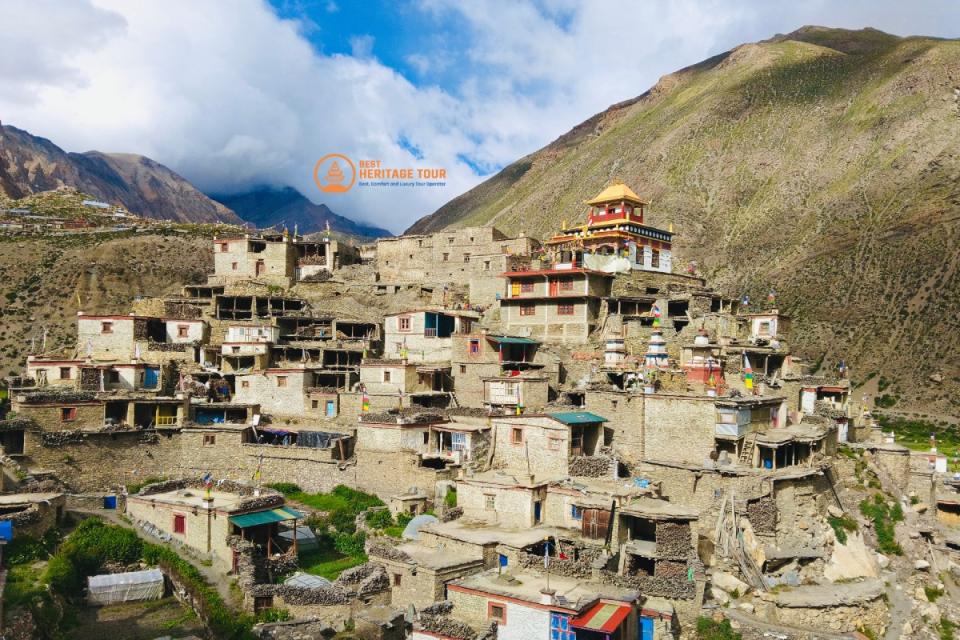
Walking through the village entrance gate - the ancient stone Kaani known as Pupigyal Kwe - is a humbling experience. The architecture consists of flat-roofed mud and stone houses stacked tightly against the cliffside like a fortress. Wood is meticulously piled on the roofs, serving as a traditional display of wealth and a vital survival reserve for the brutal winter months.
The spiritual heartbeat of the community resides just above the village at the Tashi Lhakhang Gompa. This historic monastery is one of the oldest active Buddhist shrines in the entire Annapurna region. Inside, the air is thick with the scent of burning juniper and yak butter lamps. If you are fortunate, the resident Lama will offer you a cup of hot butter tea and a traditional blessing for your journey forward into the high passes.
Essential Permits Required to Visit Phu Village (2026 Updated)
Because of its fragile ecosystem, proximity to international borders, and distinct cultural heritage, the Government of Nepal classifies the Nar Phu region as a Special Restricted Area. You cannot simply show up with a standard trekking card.
To ensure complete compliance with the latest Department of Immigration regulatory updates, we handle the entire application process on your behalf. The specific permits required include:
1. Special Restricted Area Permit (RAP)
This is the primary document required to bypass the police checkpoint at Koto. The fee structure varies strictly by the season of your visit:
-
Autumn (September to November): USD 100 per person for the first 7 days, plus USD 15 per person for each additional day.
-
Spring, Winter, & Summer (December to August): USD 75 per person for the first 7 days, plus USD 15 per person for each additional day.
2. Annapurna Conservation Area Project (ACAP) Permit
Since the entire valley sits within the borders of the world-famous Annapurna Conservation Area, this permit is non-negotiable. It funds local environmental conservation and sustainable infrastructure.
-
Cost: NPR 3,000 (approximately USD 23-25) per person. It is valid for a single entry with an unlimited number of days inside the conservation boundary.
Important 2026 Permit Update: The government of Nepal recently updated its restricted area protocols. Independent, solo travelers can now obtain restricted area permits for Nar and Phu, provided they book through an authorized trekking agency like us and are accompanied by a licensed guide. The historical requirement for a minimum of two foreign travelers per group has been lifted, making this pristine valley fully accessible to solo adventurers.
How to Reach Phu Village: Route and Logistics
Reaching this remote outpost requires a blend of rugged road travel and focused, multi-day foot trekking. There is absolutely no vehicular access to Phu Village; the only way in or out is on foot along trails carved directly out of solid rock walls.
The Transit: Kathmandu to Koto
Your journey begins with a long, scenic drive from Kathmandu to Besisahar via the Prithvi Highway, transitioning to a rugged, four-wheel-drive mountain road that snakes along the Marshyangdi River. You will pass through iconic Annapurna Circuit villages like Jagat and Dharapani before offloading your gear at Koto (2,600m). Koto serves as the official gateway where our team registers your restricted area permits.
The Trekking Framework
Once you step off the main Annapurna trail at Koto, the modern world instantly fades away. The classic path winds north through a dramatic, heavily forested canyon that slowly opens up into a spectacular high-alpine landscape.
|
Day |
Trail Segment |
Target Altitude |
Trekking Duration |
Landscape & Key Milestones |
|---|---|---|---|---|
|
Day 1 |
Drive Kathmandu to Koto |
2,600 m / 8,530 ft |
10-11 Hours Drive |
Moving from low valleys to lush alpine foothills |
|
Day 2 |
Trek Koto to Meta |
3,560 m / 11,679 ft |
7-8 Hours |
Rocky canyon trails, waterfall crossings, steady ascent |
|
Day 3 |
Trek Meta to Phu |
4,080 m / 13,385 ft |
6-7 Hours |
High desert plateau, abandoned Khampa settlements |
|
Day 4 |
Rest & Exploration Day |
4,080 m / 13,385 ft |
Acclimatization |
Visit Tashi Lhakhang Gompa or Himlung Base Camp |
The Nar Phu Valley Trek Experience
The iconic Nar Phu Valley Trek is widely regarded by mountain experts as one of the finest off-the-beaten-path experiences in the entire world. It offers a pristine alternative to busier routes, combining raw adventure with deep cultural immersion.
Abandoned Khampa Settlements
Between Meta and Phu, the trail passes through historical ghost villages like Chyaku and Kyang. In the 1960s and 1970s, these remote outposts served as secret operational bases for the Tibetan Khampa guerrillas. Walking among these silent, crumbling stone structures adds a powerful layer of modern historical intrigue to your wilderness trek.
Merging with the Annapurna Circuit
After spending an immersive couple of days exploring the timeless alleys of Phu, the trail swings southwest to its sister village, Nar (4,110m). Nar is slightly larger, highly agricultural, and equally spectacular.
From Nar, the adventure culminates in an exhilarating climb over the high and challenging Kang La Pass (5,240m / 17,191ft). Standing on the crest of Kang La offers an unforgettable, eye-level panoramic view of the massive Annapurna massif, Tilicho Peak, and Gangapurna. From the pass, a long, knee-testing descent delivers you directly into Ngawal and Manang, where you seamlessly reconnect with the main Annapurna Circuit trail.
Exploring the Phu Village Monsoon Trek Option
When people think of trekking in Nepal, they typically focus exclusively on Spring (March to May) and Autumn (September to November). However, the Phu Village Monsoon Trek presents an extraordinary, highly specialized window for experienced travelers.
The Rain Shadow Phenomelon
Because the Nar Phu Valley lies deeply sheltered north of the giant Annapurna barrier, it functions as a geographical rain shadow. While lower towns like Pokhara or Kathmandu experience heavy downpours throughout June, July, and August, the upper reaches of Nar Phu remain remarkably dry, clear, and stable.
The Summer Landscape
Trekking here during the monsoon months reveals a side of the Himalayas that very few Westerners ever see:
-
Vibrant Alpine Flora: The high-altitude desert plateaus burst to life with rare mountain wildflowers and resilient greenery.
-
Active Pasture Life: This is the prime grazing season. You will encounter local herders actively moving large caravans of yaks and sheep across the vibrant alpine valleys.
-
Solitude: The trails - already incredibly quiet - become entirely your own, free from any other trekking groups.
Practical Tips for Your Journey to Phu Village
To ensure your high-altitude expedition is both safe and deeply rewarding, our expert heritage guides recommend focusing on three core preparation pillars:
1. High-Altitude Acclimatization
With Phu sitting well above the 4,000-meter mark and the Kang La Pass crossing 5,240 meters, Acute Mountain Sickness (AMS) is a real variable. We intentionally design our itineraries with short, conservative elevation jumps and mandatory rest days. Stay hydrated by drinking at least four liters of water daily, avoid alcohol entirely while ascending, and listen closely to your body.
2. Teahouse Accommodation and Amenities
The guesthouses in the Nar Phu Valley are charmingly basic, offering a true, raw homestay feel.
-
Rooms: Standard twin-sharing arrangements with simple wooden beds. Heavy blankets are usually provided, but a high-quality four-season sleeping bag is absolutely essential.
-
Electricity & Connectivity: Power is drawn primarily from local solar grids, meaning it is often reserved exclusively for evening lighting. Charging your camera gear or phones usually requires a small fee. There is virtually no reliable mobile network coverage or Wi-Fi past Koto, making it the perfect destination to fully unplug.
-
Toilets: Facilities are mostly traditional, clean squat-style setups located outside the main building.
Conclusion
The journey to Phu Village is far more than a mountain trek - it is an authentic pilgrimage into a living museum of Tibetan Buddhist culture and untouched Himalayan beauty. Navigating the complex permit paperwork, strict safety regulations, and remote logistics requires a team with deep roots in the region.
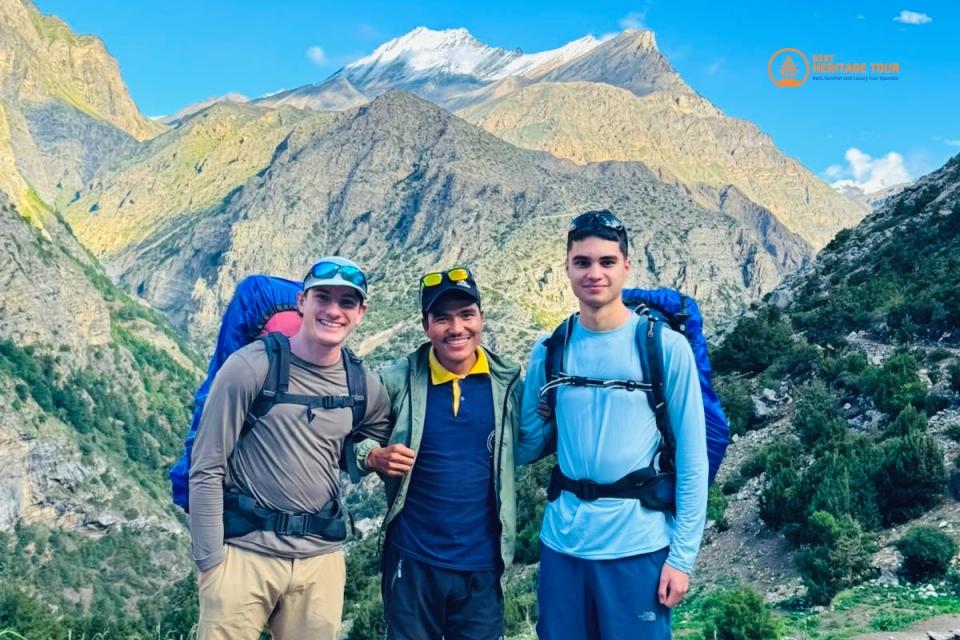
At Best Heritage Tour, we combine peerless local expertise with a deep commitment to sustainable, ethical tourism. Our veteran, English-speaking guides know every stone, monastery, and family along the Nar Phu trail, ensuring your journey is completely seamless, safe, and profoundly unforgettable.
Ready to step back in time?
Phone / WhatsApp / Viber: +977-9851149197 / +977-9810043046
Email: info@bestheritagetour.com / bestheritagetour@gmail.com
Website: www.bestheritagetour.com
Office: Thamel Marg, Kathmandu, Nepal
Frequently Asked Questions (FAQ)
What is the best month to trek to Phu Village?
The absolute peak windows are Autumn (October to November) and Spring (April to May) for perfectly crisp skies and crystal-clear mountain views. However, if you want to avoid crowds and see the high valleys full of life and yaks, the monsoon window (July to August) is an incredible alternative due to the valley's rain shadow climate.
Can I do the Nar Phu Valley trek without a guide?
No. The Government of Nepal strictly mandates that all foreign nationals exploring restricted areas must be accompanied by a licensed, certified guide and booked through a registered, tax-paying Nepalese trekking agency.
Is there any mobile network or internet in Phu Village?
Do not count on it. Once you leave the main Annapurna Circuit loop at Koto, cellular reception drops entirely. Phu Village has a communal satellite phone for emergencies, but you will be completely off the digital grid for about 5 to 7 days.
Author: Best Heritage Tour
Date: 13th July, 2026