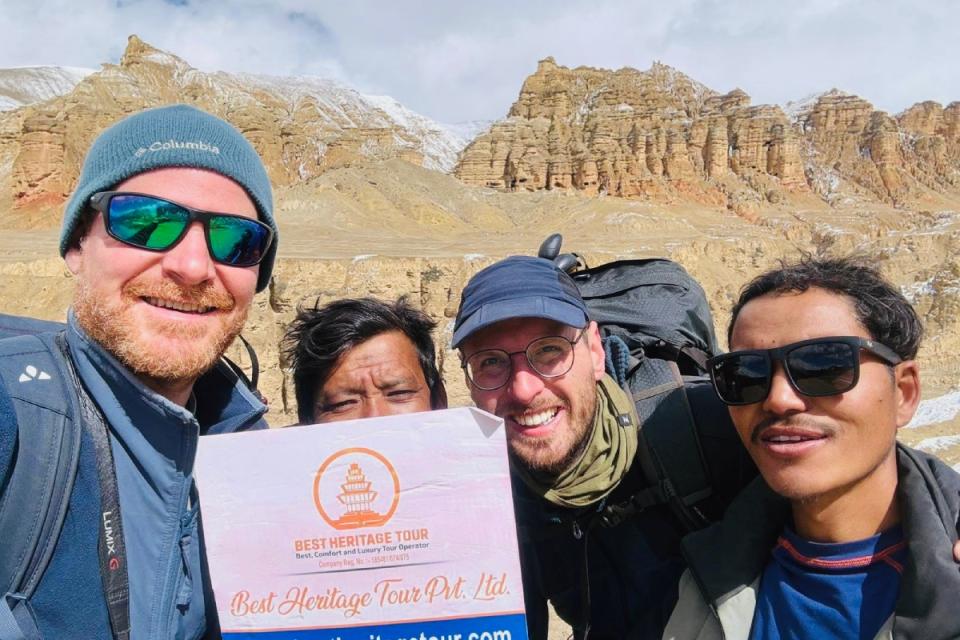
When people speak of the Upper Mustang Trek, they often envision the walled city of Lo Manthang or the scarlet cliffs of Dhakmar. But for those seeking the true "forbidden" essence of this ancient kingdom, the real adventure lies on the rugged return loop via the Paa Pass (4,183m).
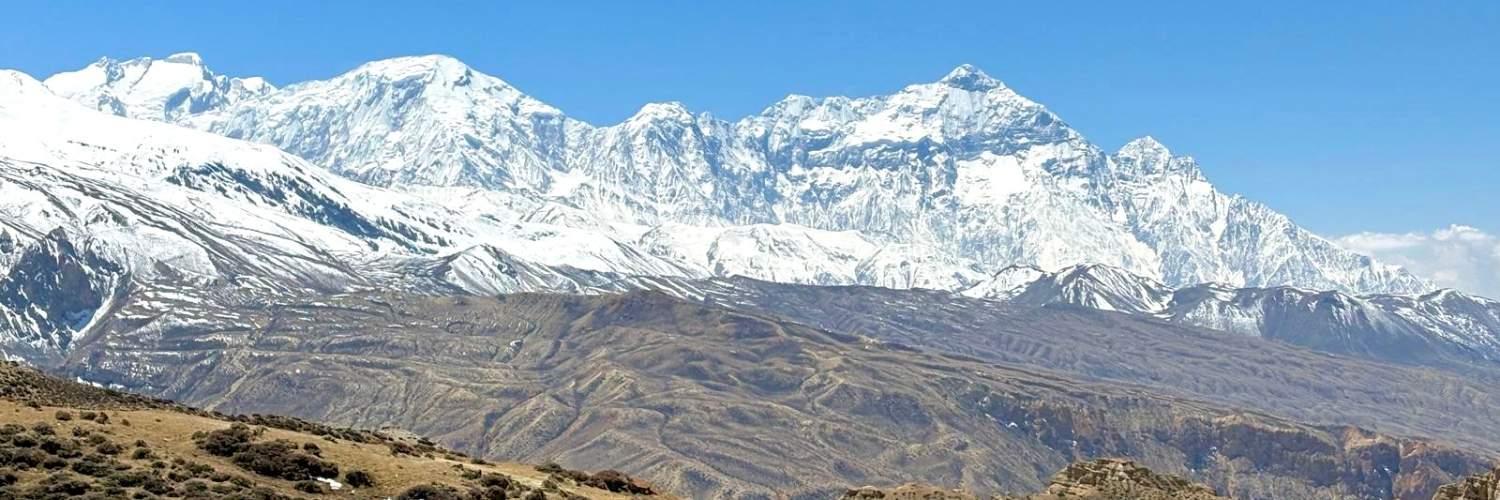
At Best Heritage Tour, we specialize in taking travelers beyond the standard jeep tracks. The Paa Pass is the crown jewel of our "Mustang Circuit" itineraries - a high-altitude challenge that rewards the intrepid with views of the Dhaulagiri and Annapurna massifs that few ever witness.
Paa Pass At A Glance
|
Feature |
Details |
|---|---|
|
Altitude |
4,183 meters (13,723 feet) |
|
Region |
Upper Mustang (Rain Shadow of the Himalayas) |
|
Difficulty |
Moderate to Strenuous (Due to long descent/ascent) |
|
Permits |
Restricted Area Permit (RAP) + ACAP |
|
Best Season |
March to November (Including Monsoon) |
|
Key Highlights |
Tangge Village, Himalayan panoramas, and "Sky Caves" |
The Geography of Paa Pass: A Bridge Between Worlds
The Paa Pass serves as a strategic transition point in the eastern part of Upper Mustang. Located between the remote village of Tangge and the river-side settlement of Chhusang, it is often the highest and most physically demanding point of the trek.
Unlike the lush green passes of central Nepal, Paa Pass is a desert high point. You are standing in the trans-Himalayan rain shadow, where the landscape resembles the Tibetan Plateau - vast, arid, and sculpted by centuries of wind. From the summit, the view of the Kali Gandaki Valley stretching out below is nothing short of cinematic.
Why We Recommend the Paa Pass Route
At Best Heritage Tour, we believe in the "Loop Experience." While many tourists drive back from Lo Manthang, our trekkers head east toward Yara and Tangge to cross the Paa Pass for three reasons:
-
Escape the Road: The western side of Mustang now has road access. The eastern trail via Paa Pass remains a pure, vehicle-free trekking wilderness.
-
The Tangge Connection: Tangge is arguably the most beautiful village in Mustang, with its massive line of chortens. Crossing the Paa Pass is the only way to reach it from the south on foot.
-
Monsoon Trekking: Because Mustang is shielded by the Himalayas, the Paa Pass is one of the few high-altitude passes in the world that is perfect for trekking in July and August.
Trekking Logistics: The Longest Day
Crossing the Paa Pass is famously known among our guides as the "Long Day." Here is what you need to know:
The Ascent from Tangge
Leaving the village of Tangge, the trail climbs steadily through a moon-like landscape. There are no teahouses between Tangge and Chhusang, so our guides at Best Heritage Tour ensure we carry plenty of water and a packed lunch. The climb is a test of endurance, but the air is crisp and the silence is absolute.
The Summit (4,183m)
Reaching the top, you are greeted by the fluttering of thousands of prayer flags. To the south, the peaks of Nilgiri, Tilicho, and Annapurna rise like white giants against the deep blue sky. It is a moment of profound spiritual and physical clarity.
The Infamous Descent
The descent from Paa Pass toward Chhusang is legendary. It is a long, knee-taxing drop through various rock formations and colorful canyons. We recommend using trekking poles here to navigate the loose scree and save your joints.
2026 Permit Regulations for Upper Mustang
Upper Mustang remains a protected frontier. To cross the Paa Pass, you must adhere to the following:
-
Restricted Area Permit (RAP): As of 2026, the permit cost is USD 50 per day.
-
Mandatory Guide: You cannot trek the Paa Pass solo. Government regulations require at least two trekkers and a licensed Nepalese guide.
-
ACAP Permit: An Annapurna Conservation Area Project permit is also required.
Note: At Best Heritage Tour, we handle the entire permit application process in Kathmandu or Pokhara so you can focus on your training.
Best Time to Cross the Paa Pass
-
Spring (March - May): Ideal temperatures and clear mornings. The wind in Mustang can be strong in the afternoons, so we aim to cross the pass by 10:00 AM.
-
The "Summer Escape" (June - August): While the rest of Nepal is in the grip of the monsoon, the Paa Pass is dry. This is the best time for those who want to trek in shorts and T-shirts under a bright sun.
-
Autumn (September - November): The most popular time. The visibility is 100%, and the local harvest festivals in Tangge and Chhusang add a rich cultural layer to your journey.
What to Pack: The Mustang Essentials
The desert environment of the Paa Pass requires a specific kit:
-
Buff or Face Mask: The "Mustang Wind" can be dusty. A buff is essential to protect your lungs and skin.
-
High-SPF Sunscreen: At 4,183m in a rain shadow, the UV rays are incredibly intense.
-
Hydration System: There are very few water sources on the crossing day. We recommend a 3-liter capacity.
-
Windbreaker: Even if it’s sunny, the wind at the pass can be biting.
Conclusion
The Paa Pass (4,183m) is the ultimate test for the Upper Mustang trekker. It represents the transition from the high, hidden kingdom back to the "lower" world of the Kali Gandaki. By choosing this route with Best Heritage Tour, you aren't just taking a trek - you are preserving the tradition of foot travel in one of the most culturally significant regions on Earth.
Book Your Upper Mustang Adventure Today
Are you ready to stand atop the Paa Pass and look out over the "Forbidden Kingdom"? Let our experienced guides lead you through the sky caves, ancient monasteries, and high passes of Mustang.
Phone / WhatsApp / Viber: +977-9851149197 / +977-9810043046
Email: info@bestheritagetour.com / bestheritagetour@gmail.com
Website: www.bestheritagetour.com
Office: Thamel Marg, Kathmandu, Nepal
Author: Best Heritage Tour
Date: 15th April, 2026