Few places on earth remain completely untouched by the modern world. As roads expand and popular trails grow busier, adventurous travelers are constantly searching for authentic, quiet, and culturally pristine destinations. Nestled deep within the rugged mountains of the Manang district lies Nar Village, a spectacular, medieval Tibetan settlement frozen beautifully in time.
At Best Heritage Tour, we have guided hundreds of international travelers, families, and solo seekers through the Himalayan corridors. We know that the journey to Nar is not just a standard mountain hike; it is an intimate voyage into an ancient way of life. This guide provides comprehensive, up-to-date insights to help you plan the ultimate expedition to this hidden paradise.
Where is Nar Village?
If you are wondering where is Nar Village, it is situated in the remote, northern section of the Manang District within the Gandaki Province of Nepal. Perched at an impressive altitude of 4,110 meters (13,484 feet), Nar sits in a hidden valley tucked safely between the giant massifs of the Annapurna and Manaslu mountain ranges.
Geographically, Nar is located northeast of the famous Annapurna Circuit trail. The landscape here transitions from the lush, subtropical forests of the lower Marsyangdi River valley into a stark, windswept, high-altitude alpine desert that strongly mirrors the Tibetan plateau. It is structurally isolated, flanked by towering vertical cliffs and glacial valleys that kept it completely closed to foreign travelers until 2003.
The Cultural Essence of a Living Medieval Outpost
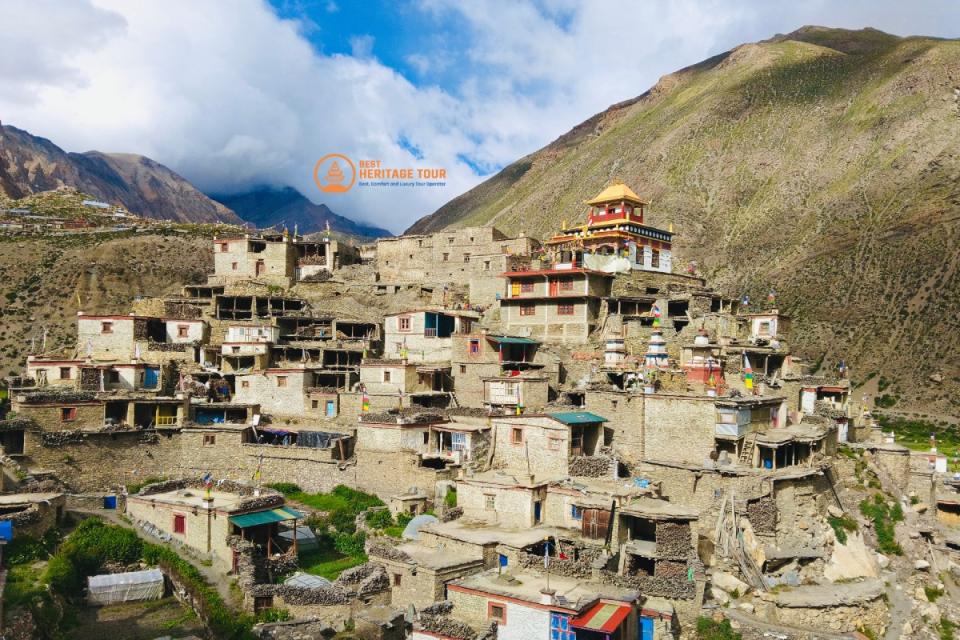
Stepping into Nar Village feels like walking directly into a living museum. Unlike the heavily developed teahouse hubs along the main trekking highways, Nar has fiercely preserved its centuries-old Tibetan Buddhist heritage. The village architecture is distinct: stone-and-mud houses are built tightly together, featuring flat roofs utilized for drying wood and storing barley, all interconnected by narrow, cobbled alleyways.
The local inhabitants, known as the Narpas, are predominantly of Tibetan descent. Their daily lives revolve around high-altitude agriculture - primarily harvesting barley, potatoes, and buckwheat - and herding yaks and blue sheep. As you wander through the village, you will encounter spinning prayer wheels, beautifully carved mani walls, and vibrant chortens that safeguard the valley. The spiritual heart of the community resonates from its ancient monasteries, where the sounds of spinning drums and chanting monks echo softly against the mountain walls.
Essential Permits Required to Visit Nar Village
Because of its close proximity to the international border with Tibet and its fragile cultural ecosystem, the government of Nepal classifies this region as a strictly regulated zone. To ensure a hassle-free journey, you must obtain specific permits required to visit Nar Village before leaving Kathmandu.
Important 2026 Regulation Update: The government of Nepal recently updated its restricted area protocols. Independent, solo travelers can now obtain restricted area permits for Nar and Phu, provided they book through an authorized trekking agency like us and are accompanied by a licensed guide. The historical requirement for a minimum of two foreign travelers per group has been lifted, making this pristine valley fully accessible to solo adventurers.
The three mandatory permits required for this route are detailed below:
|
Permit Type |
Cost / Details |
Purpose |
|---|---|---|
|
Nar Phu Restricted Area Permit (RAP) |
September-November: USD 100 per person for the first 7 days. December-August: USD 75 per person for the first 7 days. An additional USD 15 per day applies from the 8th day onward. |
Strictly required to pass the immigration border checkpoint located at Koto. |
|
Annapurna Conservation Area Permit (ACAP) |
NPR 3,000 (Approx. USD 22-25) per person. |
Covers entry into the protected conservation zone; valid for unlimited days. |
Note: All restricted area permits must be processed and issued electronically through a legally registered Nepalese trekking agency. They cannot be purchased individually or at trail counters.
How to Reach Nar Village: Route and Itinerary
Understanding how to reach Nar Village requires a solid grasp of mountain logistics. The adventure involves a combination of long overland drives and structured alpine trekking.
Phase 1: The Overland Journey
The journey begins with a scenic, 8-to-10-hour drive from Kathmandu to Besisahar via the Prithvi Highway. From Besisahar, we transition into a rugged, four-wheel-drive mountain jeep, bumping along the dramatic Marsyangdi River gorge past Jagat and Dharapani until we arrive at the small mountain settlement of Koto (2,600 meters). Koto serves as our gateway, where your permits are officially verified at the police checkpoint.
Phase 2: Leaving the Grid Behind
From Koto, we leave the crowded Annapurna Circuit trail entirely and plunge north into the steep, narrow canyon of the Phu Khola. The classic route unfolds across a carefully paced timeline designed to ensure safe acclimatization:
-
Day 1: Koto to Meta (3,560m): A long, exhilarating 7-to-8-hour hike through dense pine forests, passing under cascading waterfalls and through rocky caves before the valley dramatically opens up to the windswept pastures of Meta.
-
Day 2: Meta to Phu Village (4,080m): Trekking past ancient, abandoned Khampa settlements and striking, eroded canyon walls. Arriving at Phu, we spend an additional day exploring the historic Tashi Lhakhang Monastery to let our bodies adapt to the thinning air.
-
Day 3: Phu Village to Nar Village (4,110m): Retracing our steps slightly before splitting westward across a suspended canyon bridge, ascending smoothly into the sweeping amphitheater that cradles Nar Village.
The Iconic Nar Phu Valley Trek Experience
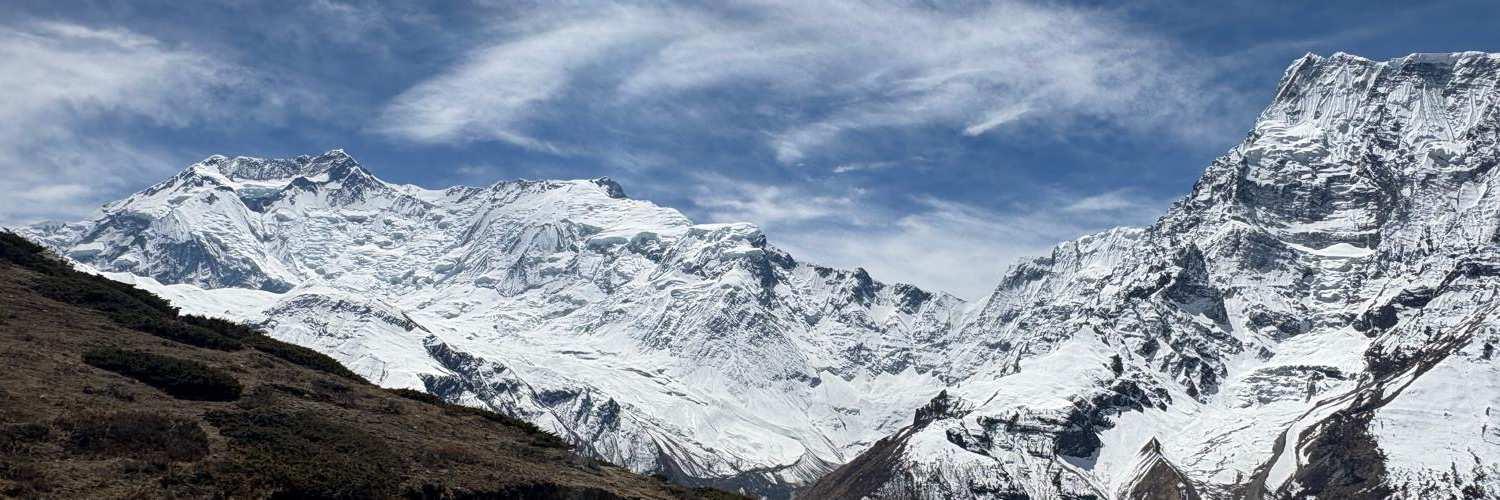
Choosing the full Nar Phu Valley Trek is widely recognized by mountain enthusiasts as one of the ultimate off-the-beaten-path journeys in the entire world. By seamlessly combining the twin settlements of Nar and Phu, travelers get to experience two distinct valleys that offer panoramic, front-row views of Himlung Himal, Kang Guru, Tilicho Peak, and the majestic Annapurna massifs.
The definitive climax of this circuit occurs right after leaving Nar Village: the crossing of the formidable Kang La Pass at 5,320 meters (17,454 feet).
The ascent from Nar starts in the freezing, starlit pre-dawn hours, climbing steadily up steep, demanding gravel and scree slopes. Reaching the top reveals an unparalleled, 360-degree theater of snow-capped peaks, with the massive wall of Annapurna II sitting directly at eye level. From the pass, a long, careful descent drops you into the village of Ngawal, where the route blends effortlessly back into the classic infrastructure of the Annapurna Circuit.
Nar Village Monsoon Trek: A Rain-Shadow Sanctuary
Many travelers assume that trekking anywhere in Nepal during the summer monsoon season (June to August) is impossible due to heavy rainfall and muddy trails. However, the unique geography of the Nar Village Monsoon Trek tells a completely different story.
Because Nar lies north of the primary Annapurna giant wall, the highest peaks block the dense, moisture-laden clouds rolling in from the Bay of Bengal. This creates a brilliant geographical phenomenon known as a rain-shadow zone.
While the lower valleys below Besisahar experience heavy rains, the upper Nar Phu territory remains remarkably dry, clear, and arid. Trekking here during the summer months reveals unique advantages:
-
Vibrant Alpine Pastures: The dry valley floor springs to life with tiny wildflowers, and local yaks graze across lush, green highlands.
-
Active Cultural Life: Summer is the peak period for agricultural activity, allowing you to watch the community work their traditional fields.
-
Complete Solitude: Since most international travelers avoid Nepal during the monsoon, you will have the entire medieval valley, the teahouses, and the monasteries completely to yourself.
Note: While the valley itself is dry, the initial overland jeep roads through the lower Marsyangdi gorge can experience seasonal monsoon delays. Our experienced logistics team uses heavy-duty, high-clearance 4x4 vehicles and monitors road updates daily to ensure safety.
Practical Preparation: Fitness, Altitude, and Teahouse Realities
The Nar Phu region is categorized as a challenging, high-altitude wilderness trek. It does not require technical mountaineering skills, but it demands respect and careful preparation.
Physical Fitness
You should be capable of hiking for 6 to 8 hours a day over rocky, uneven, and sometimes exposed trails with a light daypack. Cardiovascular training, regular stair-climbing, and leg-strengthening exercises should begin at least two to three months before your departure date.
Altitude Safety and Hydration
Since you will spend multiple consecutive days above 4,000 meters and cross a pass exceeding 5,300 meters, Acute Mountain Sickness (AMS) is a real consideration. Our itineraries build in mandatory rest and acclimatization days. We maintain a strict ascent profile and ensure our guides carry oximeters and comprehensive medical kits. Remember to drink 4 liters of clean water daily and communicate any symptoms immediately to your guide.
Accommodation Realities
The teahouses in Nar Village are simple, authentic, and cozy, run directly by local families. Rooms are generally twin-sharing with comfortable foam mattresses, though toilets are often shared and located down the hall. Hot showers, device charging, and Wi-Fi are available in the village for a small local fee, though services can become intermittent during cold snaps. The food is fresh, nourishing, and energetic - featuring traditional Dal Bhat, Tibetan bread, garlic soups, and hearty noodle dishes.
Conlusion
The medieval paths of Nar Village offer a rare glimpse into an unhurried, ancient world surrounded by the grandest peaks on earth. Navigating the unique permit systems, seasonal logistics, and high-altitude trails requires expert planning and genuine local insight.
At Best Heritage Tour, we handle every element of your journey - from secure permit acquisition and reliable 4x4 transportation to providing experienced, first-aid-certified local guides who call these mountains home. Let us guide you safely into the heart of Nepal’s hidden valley.
Contact Best Heritage Tour today to customize your custom Nar Phu itinerary:
Phone / WhatsApp / Viber: +977-9851149197 / +977-9810043046
Email: info@bestheritagetour.com / bestheritagetour@gmail.com
Website: www.bestheritagetour.com
Office: Thamel Marg, Kathmandu, Nepal
Frequently Asked Questions (FAQ)
Can I trek to Nar Village without a guide?
No. Because Nar Village is situated inside a government-regulated restricted zone, foreign travelers are strictly prohibited from trekking solo without a licensed professional. You must hire a licensed guide through an authorized agency to clear the checkpoints.
What is the best season to visit Nar Village?
The premier windows are Autumn (October to November) for crisp, perfectly clear skies and Spring (March to May) for pleasant weather and blooming wild flora. Additionally, due to the rain-shadow effect, the summer monsoon months (June to August) offer an excellent alternative window.
Is electricity and Wi-Fi available in Nar Village?
Yes, Nar Village has access to local micro-hydro electricity, allowing you to charge electronic devices at the teahouses for a small fee. Basic satellite Wi-Fi is available, though connectivity can be slow and weather-dependent.
What gear is essential for the Kang La Pass?
Layering is vital. You will need high-quality thermal base layers, a thick down jacket, windproof outer shells, sturdy broken-in trekking boots, UV-protection sunglasses to prevent snow blindness, and reliable trekking poles to navigate the steep scree descents.
Author: Best Heritage Tour
Date: 14th July, 2026