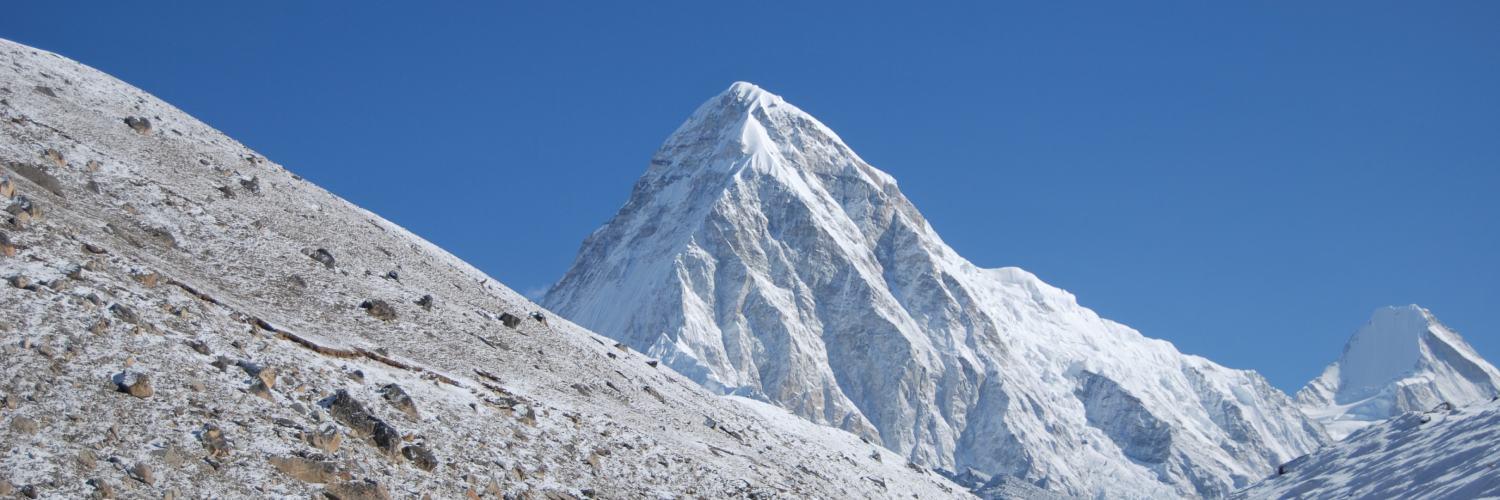
Rising like a flawless, glittering crystal pyramid on the rugged border between Nepal and Tibet, Mount Pumori (7,161 m / 23,494 feet) stands as one of the most majestic and technically demanding peaks in the Mahalangur Himalayan range. Located just 8 kilometers west of Mount Everest, this colossal giant dominates the upper Khumbu skyline, standing guard directly behind the famous vantage point of Kala Patthar.
Known affectionately across the globe as the "Daughter of Everest," Mount Pumori is a dream destination for high-altitude trekkers seeking raw Himalayan views, and a legendary proving ground for elite mountaineers preparing for 8,000-meter peaks. At Best Heritage Tour, we have guided hundreds of adventurers through the historic valleys of the Khumbu.
Whether you are an ambitious trekker wanting to look out at its massive south face from Gorakshep, or an experienced climber aiming for its technical ridges, this comprehensive guide provides the authoritative data, historical context, and practical insights you need for your next great Himalayan endeavor.
Where is Mount Pumori? Geography and Location
For anyone planning a journey into the Sagarmatha National Park, understanding the exact geographical layout of the upper Khumbu region is essential.
Absolute and Relative Coordinates
Mount Pumori sits at latitude 28°01'47" N and longitude 86°82'80" E. It forms a natural, ice-locked international boundary between northeastern Nepal (Sagarmatha Zone, Solukhumbu District) and the Tibet Autonomous Region of China.
Proximity to Everest and the Khumbu Glacier
Pumori rises directly at the head of the Khumbu Valley, towering over the massive, slow-moving Khumbu Glacier. Because it is positioned northwest of Mount Everest Base Camp, the mountain offers an uninterrupted, bird's-eye view into the Western Cwm and the notorious Khumbu Icefall.
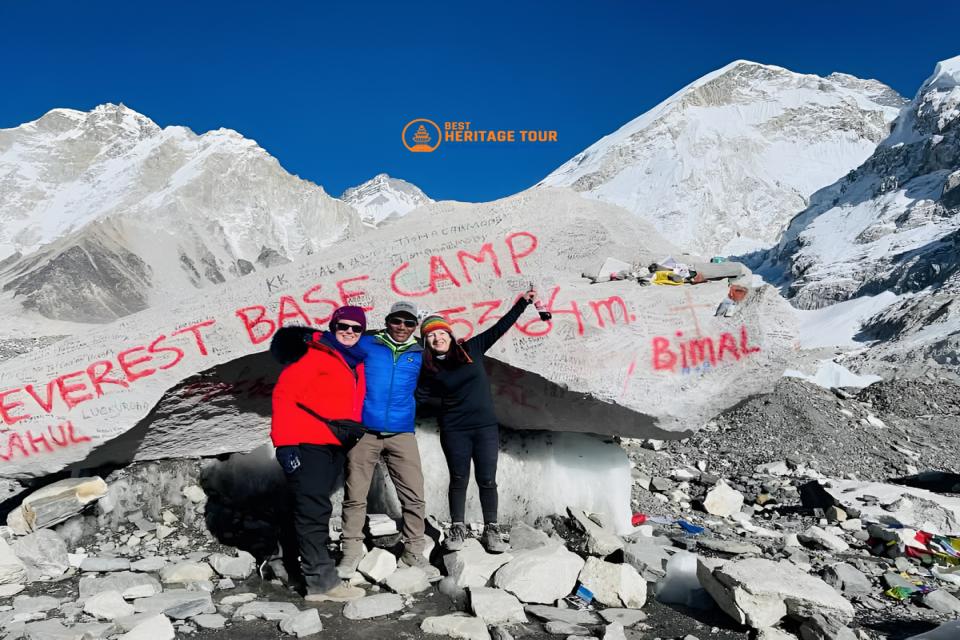
When you stand at Gorakshep (5,170 m) or ascend the trekking peak of Kala Patthar (5,643 m) - which is actually an old, dark structural ridge or "outlier" extending directly from Pumori’s southern flank - Pumori looms so close and massive that it feels entirely within arm's reach.
The History of Mount Pumori: How It Got Its Name
The story of Mount Pumori is deeply intertwined with the early golden era of British Himalayan exploration and the timeless traditions of the indigenous Sherpa people.
The Etymology: "The Unmarried Daughter"
The mountain owes its name to the legendary British mountaineer George Mallory, who mapped the region during the historic 1921 British Everest Reconnaissance Expedition. Struck by its solitary, elegant, and towering beauty right next to the Everest massif, Mallory named it "Pumo Ri" in the local Sherpa language.
Language Insight: In Sherpa, "Pumo" translates directly to a young, unmarried woman or daughter, and "Ri" means mountain. Therefore, Pumori stands eternally as "The Daughter of Everest," an elegant, white-crowned sentinel beside her parent peak.
Who Climbed Mount Pumori First?
While early explorers marveled at its geometric perfection, the summit remained untouched for decades due to its steep, ice-plastered walls and complex avalanche paths.
-
The First Ascent (1962): The historic breakthrough occurred on May 17, 1962. A highly skilled German-Swiss expedition led by German alpinist Gerhard Lenser successfully reached the apex via the demanding Southeast Ridge. Lenser’s triumph proved that despite its lower altitude relative to Everest, Pumori demanded world-class technical ice-climbing competency.
-
The Evolution of Routes (1996): Over the decades, pioneering climbers sought more direct, high-risk alternatives to Lenser's route. In the spring of 1996, Czech alpinists Leopold Sulovsky and Zdenek Michalec made mountaineering history by forging a brand-new, nearly vertical route up the sheer South Face of Pumori, a feat later chronicled in classic alpine literature.
Mount Pumori Essential Mountain Facts
To help you visualize the physical and logistical scale of this Himalayan giant, we have compiled the definitive specifications below:
|
Technical Attribute |
Detail / Specification |
|---|---|
|
Official Elevation |
7,161 m / 23,494 feet (Some historical charts note 7,256 m) |
|
Mountain Range |
Mahalangur Himal, Central Himalayas |
|
Climbing Grade |
Alpine PD+ to AD (Technical Snow, Ice, and Mixed Rock) |
|
Primary Climbing Route |
Southeast Ridge (Standard Route) |
|
Average Expedition Length |
30 to 35 Days (Kathmandu to Kathmandu) |
|
Required Permits |
NMA Climbing Permit, Sagarmatha National Park Permit, Khumbu Rural Municipality Permit |
|
Best Seasons |
Spring (March-May) and Autumn (September-November) |
The Ultimate Mount Pumori Trekking Guide
You do not need to be an extreme mountaineer to experience the magic of the Daughter of Everest. For trekkers, our custom Khumbu itineraries bring you face-to-face with this iconic peak while walking the world's most famous high-altitude highway.
Lukla → Namche Bazaar → Tengboche → Dingboche → Lobuche → Gorakshep / Kala Patthar
The Trekking Approach (Step-by-Step)
Our journeys begin with a thrilling, scenic mountain flight from Kathmandu to the Tenzing-Hillary Airport in Lukla (2,845 m). From there, we follow the classic Everest Base Camp trail, entering the pristine gates of the Sagarmatha National Park.
We wind through the vibrant trading capital of Namche Bazaar (3,440 m), past the spiritual, prayer-flag-lined Tengboche Monastery (3,867 m), and across the wide, wind-swept alpine valleys of Dingboche (4,410 m). As we push past Lobuche (5,018 m), the terrain shifts into a raw, monochromatic wilderness of rock, ice, and glacial moraine.
The Ultimate Vantage Points
As we approach the final outpost of Gorakshep, Mount Pumori suddenly unveils its full, breathtaking profile. To experience it fully, we guide our guests on two essential excursions:
-
The Kala Patthar Ascent (5,643 m): This is the ultimate viewpoint in the Himalayas. As you stand on this dark, rocky ridge, the sheer south face of Mount Pumori rises directly above you like a vertical wall of ice, while the entire Everest, Lhotse, and Nuptse chain stretches out across the horizon.
-
Pumori Base Camp Hike (5,300 m): For trekkers wanting an off-the-beaten-path experience, a short side-trip from Gorakshep takes you directly to the quiet, rock-strewn edge of Pumori Base Camp, well away from the crowded paths of the main Everest trail.
The Elite Mount Pumori Climbing Guide
For alpine climbers, a Mount Pumori expedition represents a massive step up from standard "trekking peaks" like Island Peak (6,189 m) or Mera Peak (6,476 m). Pumori is an authentic, unforgiving 7,000-meter peak that requires seasoned crampon technique, rope management, and deep psychological resilience.
Why It Is the Ultimate Proving Ground for Everest
Many elite alpinists choose Pumori as their final preparation ground before attempting 8,000-meter giants like Mount Everest, Lhotse, or Makalu. The mountain exposes you to intense vertical exposure, complex high-camp logistics, and thin air, allowing you to master high-altitude safety protocols without the massive crowds or astronomical expenses of an 8,000-meter campaign.
High-Camp Strategy on the Southeast Ridge
Our climbing teams establish a highly systematic, four-tier camp structure above Base Camp to ensure flawless acclimatization and safety:
1. Pumori Base Camp: Elevation: 5,300 m.
Set up on stable, rocky terrain near the edge of the Khumbu Glacier. This serves as our tactical headquarters for gear checks, puja ceremonies, and basic high-altitude training.
2. Camp I: Elevation: 5,700 m.
Reached after a demanding 4-hour navigation across open glaciers, loose shale, and initial snowfields. This phase requires constant awareness of shifting ice and minor crevasse systems.
3. Camp II: Elevation: 6,200 m.
The most technical phase of the entire expedition. Climbers must scale a sustained, grueling snow and ice wall angled between 40 and 60 degrees. Flawless front-pointing and fixed-rope transitions are mandatory here.
4. Camp III: Elevation: 6,480 m.
Positioned on a narrow, exposed snow platform along the windy Southeast Ridge. This camp serves as our launchpad, offering jaw-dropping views of the Tibetan Plateau before our midnight summit push.
Required Permits and Regulations for Mount Pumori
To visit or climb Mount Pumori, you cannot simply show up; the government of Nepal strictly regulates access to preserve the delicate alpine ecology. Trekkers and climbers must secure:
-
Khumbu Pasang Lhamu Rural Municipality Entrance Permit: NPR 3,000
-
Sagarmatha National Park Entry Permit: NPR 3,000
-
NMA Peak Climbing Permit: Rates vary significantly by season (Spring costs around USD 500, while Autumn drops to USD 250).
Best Season for Mount Pumori Expedition
The weather windows in the upper Khumbu are incredibly narrow. We highly recommend planning your trip during two specific parts of the year:
-
The Spring Window (March to May): This is the gold standard for mountaineers. The weather is highly stable, daylight hours are longer, and the snow conditions are firm and predictable.
-
The Autumn Window (September to November): Ideal for both trekkers and climbers. The post-monsoon air is incredibly crisp and clear, providing the sharpest photographic conditions and deep, dark blue mountain skies.
Frequently Asked Questions About Mount Pumori
Is Mount Pumori safe to climb?
Pumori is a highly technical peak with real objective dangers, including avalanches and steep ice walls. It is not recommended for beginners. However, with an experienced guiding agency, professional Sherpa support, proper gear, and careful acclimatization, the risks are heavily managed.
How hard is the trek to Pumori Base Camp compared to Everest Base Camp?
The trek to Pumori Base Camp follows the exact same route as the classic Everest Base Camp trek until you reach Gorakshep. The final branch from Gorakshep to Pumori Base Camp is slightly steeper and rockier, but easily manageable for any trekker with a decent level of physical fitness.
Can you see Mount Everest from the summit of Pumori?
Yes! The summit panorama from Mount Pumori (7,161 m) offers one of the rarest views in the world: an direct, unobstructed view across the entire Western Cwm, the Khumbu Icefall, and the immense Southwest Face of Mount Everest.
Conclusion
Mount Pumori is far more than just a magnificent backdrop for photos on the way to Everest; it is a legendary mountain rich in history, geographical importance, and elite alpine challenge. From its poetic naming by George Mallory to its modern status as the ultimate proving ground for high-altitude explorers, the "Daughter of Everest" continues to call out to adventurers who want to experience the very limits of the natural world.
Whether your dream is to stand on the rocky top of Kala Patthar watching the sunset paint Pumori's snow slopes in deep gold, or to step onto its technical ridges as a climber, you do not have to plan this massive journey alone.
At Best Heritage Tour, we bring decades of local logistics expertise, deep cultural connections with the Sherpa communities, and an uncompromising commitment to safety to every single expedition we lead. Let us turn your Himalayan dream into a safe, unforgettable reality.
Phone / WhatsApp / Viber: +977-9851149197 / +977-9810043046
Email: info@bestheritagetour.com / bestheritagetour@gmail.com
Website: www.bestheritagetour.com
Office: Thamel Marg, Kathmandu, Nepal
Author: Best Heritage Tour
Date: 29th June, 2026