Planning a trek to the roof of the world is an exhilarating experience, but it also demands meticulous preparation. While you might have already meticulously selected your down jacket, broken in your trekking boots, and mapped out your acclimatization days, there is one critical question that catches many trekkers off guard: How much cash do you actually need to carry in your pocket for the Everest Base Camp (EBC) trek?
The Khumbu region is a high-altitude wilderness. Once you board your twin-otter flight to Lukla, you step into a rugged geography where the digital world fades, and a cash-based economy rules the trails. ATMs are notoriously unreliable, credit card machines are virtually non-existent past Namche Bazaar, and electricity itself is a premium commodity.
At Best Heritage Tour, we believe that financial clarity is key to a stress-free Himalayan adventure. Whether you are booking an all-inclusive package with us or managing your own personal trail expenses, this definitive guide provides an exact, transparent breakdown of the cash requirements for the Everest Base Camp trek.
The Golden Rule: Why Cash is King in the Khumbu
Many first-time visitors assume that modern digital wallets, credit cards, or international banking apps will suffice on the trail. In reality, the high-altitude trails of Nepal rely almost exclusively on hard currency: Nepalese Rupees (NPR).
While a couple of ATMs exist in Namche Bazaar (3,440m), they frequently run out of cash, lose power during storms, or fail to accept international debit cards during peak trekking seasons. Beyond Namche, there are absolutely no banking facilities. Every single Snickers bar, pot of ginger tea, and hot shower must be paid for using physical paper notes.
Furthermore, everything you consume past Lukla must be transported up the mountains via human porters, zopkyos (a yak-cow hybrid), or helicopters. This intense physical supply chain means that prices scale drastically alongside altitude. A bottle of water that costs NPR 50 in Kathmandu can cost up to NPR 400 or 500 at Gorak Shep (5,164m). To navigate this economy safely, you must budget properly and carry the correct amount of physical currency.
Package vs. Independent: Calculating Your Daily Cash Needs
The amount of physical cash you need to carry depends entirely on your trekking style and what is already included in your booking arrangement.
1. If You Book an All-Inclusive Package (The Guided Trekker)
When you choose an all-inclusive journey with an agency like us, your heavy expenses - such as standard teahouse accommodation, three main meals a day, domestic flights (Kathmandu/Manthali to Lukla), licensed guide and porter services, and mandatory trekking permits - are completely covered beforehand.
-
Recommended Daily Cash: USD 20 to USD 25 (approx. NPR 2,700 to NPR 3,500) per day.
-
What this covers: This pocket money is strictly for personal expenditures, luxury snacks, boiled drinking water, device charging, Wi-Fi connectivity, hot showers, and alcoholic beverages.
2. If You Trek Independently (The Pay-As-You-Go Trekker)
If you choose to trek without a pre-paid agency package, you must carry enough physical paper currency to pay for your lodging, food, permits, and every minor service out of pocket.
-
Recommended Daily Cash: USD 55 to USD 75 (approx. NPR 7,000 to NPR 10,000) per day.
-
What this covers: This must cover your full three meals, daily teahouse room nights, mandatory guide fees (as independent trekking without a licensed guide is restricted), porter salaries, and all miscellaneous trail amenities.
Detailed Breakdown of Daily Trail Expenses
To help you visualize exactly where your cash goes on the trail, we have compiled a realistic breakdown of typical out-of-pocket costs at mid-to-high elevations.
|
Amenity / Service |
Estimated Cost in Nepalese Rupees (NPR) |
Estimated Cost in USD Equivalent |
|---|---|---|
|
Standard Teahouse Room |
NPR 500 - NPR 1,500 / night |
$4 - $12 |
|
Standard Plate of Dal Bhat |
NPR 700 - NPR 1,300 / plate |
$5 - $10 |
|
Boiled Water (1 Liter) |
NPR 150 - NPR 450 |
$1.20 - $3.50 |
|
Hot Gas/Solar Shower |
NPR 500 - NPR 1,000 / use |
$4 - $8 |
|
Device Charging (Phone/Camera) |
NPR 300 - NPR 800 / charge |
$2.50 - $6 |
|
Satellite Wi-Fi (Everest Link) |
NPR 700 - NPR 1,000 / day |
$5 - $8 |
|
Can of Beer / Soft Drink |
NPR 500 - NPR 1,000 |
$4 - $8 |
The Hidden Costs of the Everest Trail
When budgeting your cash, it is easy to forget the small variables that add up rapidly over a 12-to-14-day itinerary. These are the classic "hidden fees" that can deplete your cash reserves if you don't plan ahead:
1. The Cost of Staying Connected
While local mobile networks like Ncell and Nepal Telecom work in patches up to Namche, the upper villages rely entirely on Everest Link, a specialized satellite Wi-Fi network. You can purchase data cards on the trail, but they cost physical cash. Expect to spend roughly $20 to $30 total on internet data cards if you intend to stay connected throughout the journey.
2. Device Charging Fees
As you ascend, teahouses switch from main grid electricity to solar power. Because electricity is limited, charging your phone, power bank, or DSLR camera battery carries a fee per hour or per device. A great strategy to minimize this expense is carrying a high-capacity, cold-resistant power bank (20,000mAh+), keeping it warm inside your sleeping bag at night, and charging the power bank itself at lower elevations.
3. Hot Showers and Hygiene
Brushing your teeth and washing up becomes a luxury at high altitudes. Most teahouses charge extra for a hot shower running on gas cylinders or solar energy. Above 4,000 meters, many trekkers opt out of showering altogether due to freezing temperatures and to avoid catching a cold, relying instead on wet wipes. However, if you prefer regular hot showers, allocate cash for them.
Mandatory Permits and Tipping Guidelines
Beyond your daily snacks and amenities, there are structural cash costs that every traveler must anticipate.
Trekking Permits
To stand at the base of Mount Everest, you require two distinct regional permits. If you trek with an established agency, these are normally integrated into your total package. If not, you must pay for them in cash (Nepalese Rupees) at the respective trail checkpoints:
-
Khumbu Pasang Lhamu Rural Municipality Permit: NPR 3,000 (approx. $23 USD), payable in Lukla.
-
Sagarmatha National Park Entry Permit: NPR 3,000 plus 13% VAT (approx. $26 USD), payable in Monjo.
Tipping Your Mountain Crew
Tipping is a deeply ingrained cultural practice in the Nepalese trekking industry. It is a direct way to show appreciation to the hardworking local guides and porters who keep you safe, carry your gear, and share their heritage with you.
While tipping is entirely discretionary and based on performance, the standard industry baseline is budgeting roughly 10% to 15% of your total trek cost for the crew tip pool. For a standard 12-day trek, this translates to roughly:
-
Lead Guide: USD 10 to USD 15 per day (shared across your group).
-
Porter: USD 5 to USD 8 per day (shared across your group).
Always ensure you hand tips directly to your guide and porter in cash on the final evening of your trek in Lukla.
Essential Money Tips for a Flawless EBC Trek
To ensure you never run out of currency while deep in the Himalayas, follow these strategic guidelines used by seasoned local travel guides:
-
Exchange Currency in Kathmandu: Exchange your foreign currency (USD, EUR, GBP, AUD) into Nepalese Rupees in Kathmandu before leaving for Lukla. Thamel has hundreds of authorized money exchange booths offering competitive market rates.
-
Request Small Denominations: When exchanging money, explicitly ask for a large mix of NPR 100, NPR 500, and lower bills. If you try to pay a teahouse owner at 4,800 meters for a small cup of tea with a crisp NPR 1,000 note, they will frequently struggle to provide you with change.
-
Keep a Safe Emergency Buffer: Always carry an isolated stash of NPR 20,000 to NPR 30,000 (approx. USD 150 - 220) tucked away safely in a waterproof money belt. This emergency reserve should remain completely untouched during your daily spending. It serves as your financial safety net in case of severe weather flight delays in Lukla, unexpected medical needs, or minor gear replacements.
-
Secure High-Altitude Travel Insurance: No amount of pocket cash can replace comprehensive travel insurance. Ensure your policy explicitly covers trekking up to 6,000 meters and includes unconditional emergency helicopter evacuation. In the event of acute mountain sickness (AMS), coordinating a rescue chopper requires verified insurance documentation rather than out-of-pocket cash.
Conclusion
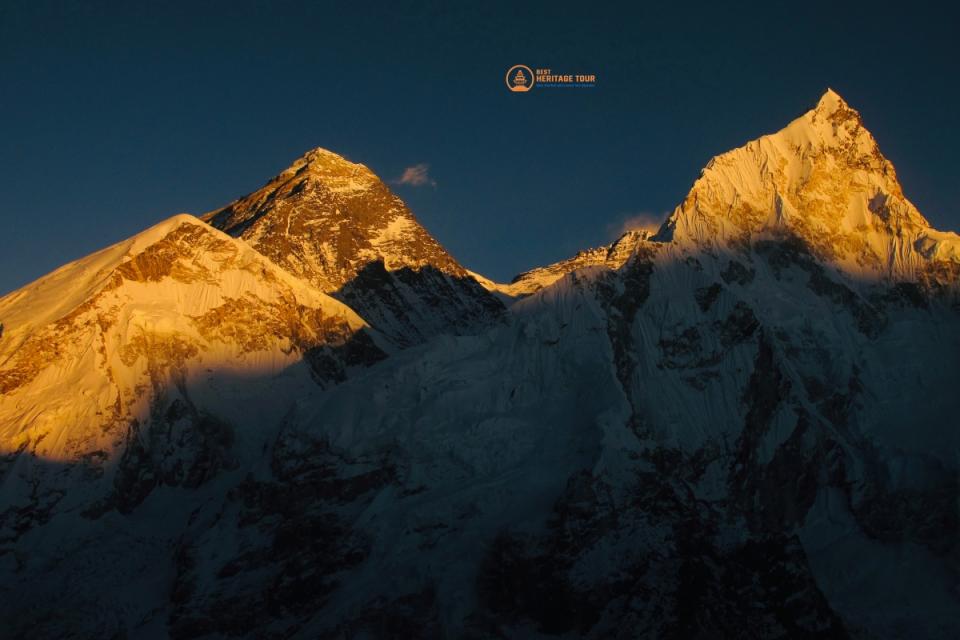
The majestic peaks of Nuptse, Lhotse, Ama Dablam, and Mount Everest are waiting for you. By understanding the financial realities of the trail, you can bypass the stress of empty wallets and focus entirely on the awe-inspiring landscape and rich Sherpa culture around you.
At Best Heritage Tour, we meticulously manage all the heavy lifting - from arranging your scenic Lukla flights and securing your environmental permits to pairing you with expert local guides and providing exceptional logistics. With our transparent, all-inclusive EBC trekking packages, your daily cash needs are kept to a bare minimum, ensuring a seamless, safe, and profoundly moving Himalayan journey.
Contact Best Heritage Tour to Plan Your Everest Adventure:
Phone / WhatsApp / Viber: +977-9851149197 / +977-9810043046
Email: info@bestheritagetour.com / bestheritagetour@gmail.com
Website: www.bestheritagetour.com
Office: Thamel Marg, Kathmandu, Nepal
Frequently Asked Questions (FAQ)
Can I use US Dollars directly on the Everest Base Camp trail?
While a few high-end luxury lodges or souvenir shops in Namche Bazaar may occasionally accept US Dollars, the vast majority of local teahouses, lunch stops, and small shops along the trail accept only Nepalese Rupees (NPR). Always convert your foreign currency before flying out of Kathmandu.
Are there working ATMs along the EBC trekking route?
There are a couple of ATMs located in Namche Bazaar (3,440m). However, they are frequently out of cash due to high demand, or out of service due to power and internet disruptions. Do not rely on them as a primary source of funding. Treat them strictly as an absolute last resort.
What happens if my flight out of Lukla is delayed due to weather?
Weather delays are common at Lukla Airport. If you are stuck in Lukla for extra days, you will need to cover your additional food and accommodation costs out of pocket. This is exactly why we recommend keeping an emergency cash buffer of at least NPR 20,000 to 30,000 separate from your main trekking budget.
Author: Best Heritage Tour
Date: 16th July, 2026