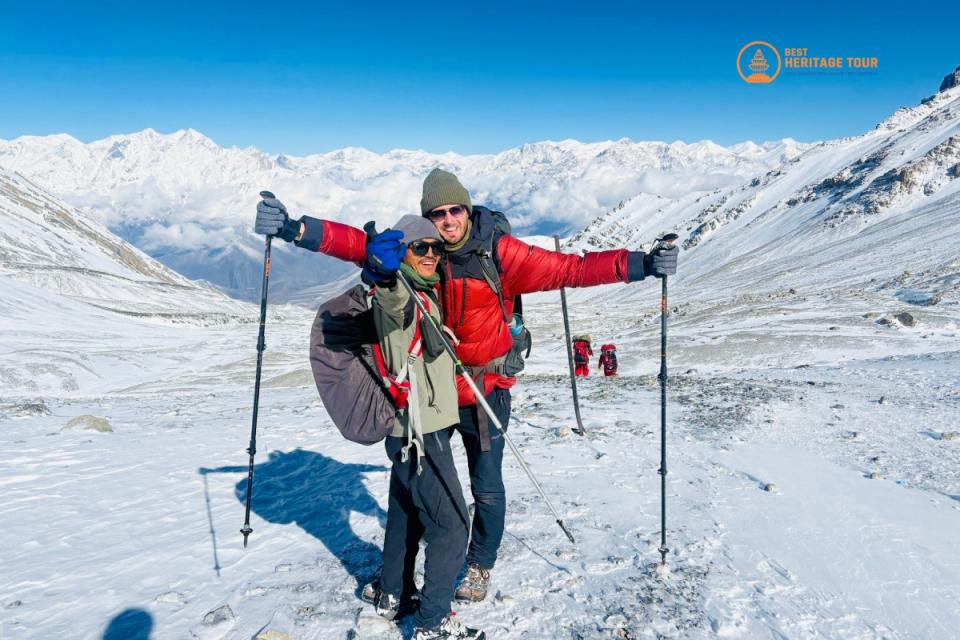
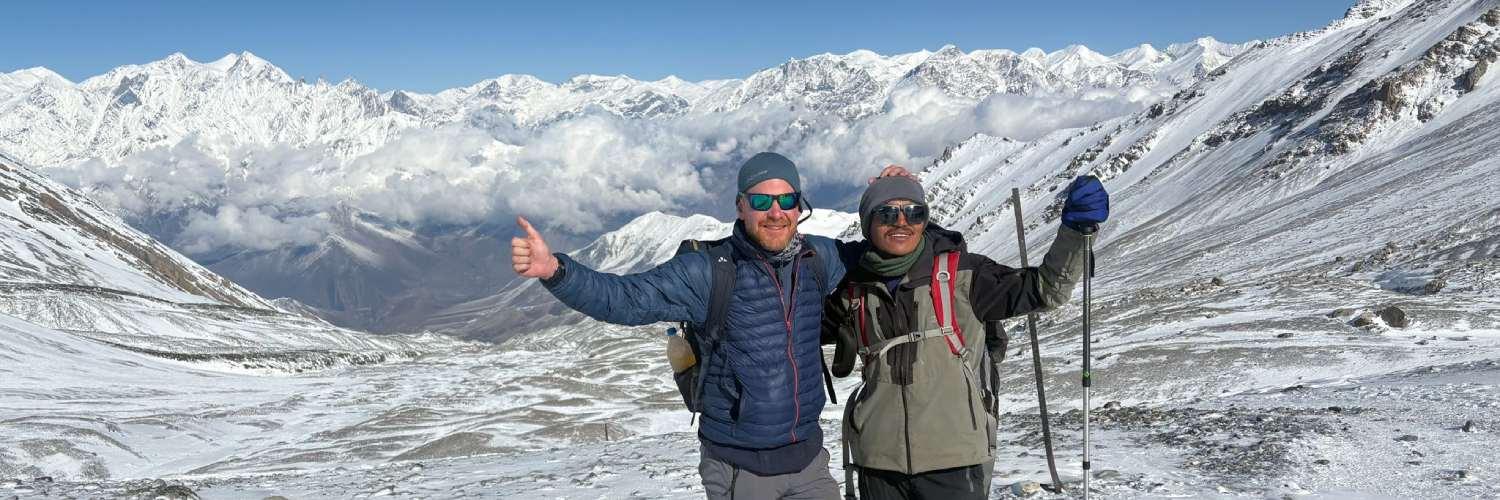
For decades, the legendary Annapurna Circuit Trek has been celebrated for its dramatic transitions - from the lush, subtropical valleys of Lamjung to the high-altitude, windswept landscapes of Manang and Mustang. While the staggering mountain vistas remain timeless, the digital infrastructure along this route has undergone a massive transformation.
At Best Heritage Tour, we understand that today’s modern trekker wants to immerse themselves in nature without completely losing touch with reality. Whether you need to check weather updates for crossing a high pass, stay in touch with loved ones, or share a snapshot of a lifetime achievement on social media, understanding the communication landscape is essential.
One of the most frequent questions our clients ask before setting off from Kathmandu is: "Does the mobile network work well on the Annapurna Circuit Trek?"
To give you the most accurate, reliable, and up-to-date answer, we sat down with our veteran senior trekking guides. This comprehensive guide details the exact, ground-level reality of Mobile Network Coverage on the Annapurna Circuit Trek, ensuring you stay safely connected while exploring the roof of the world.
The Core Verdict: Does the Mobile Network Work Well on the Annapurna Circuit Trek?
The short answer is yes, remarkably well - provided you choose the right network provider.
Gone are the days when embarking on a Himalayan trek meant complete digital isolation for weeks. Today, cellular towers span a significant portion of the Annapurna conservation area. However, signal strength, data speeds, and network reliability fluctuate wildly depending on your altitude, the surrounding topography, and your choice of cellular provider.
To help you plan efficiently, our guides have mapped out the entire circuit to highlight where you can expect crisp 4G connectivity and where the mountains will force you off the grid.
NTC vs. Ncell: The Battle of the Networks in High Altitudes
Nepal's telecommunications landscape is dominated by two primary giants: Nepal Telecom (NTC), the state-owned provider, and Ncell, a private telecommunications corporation. While both function exceptionally well in urban centers like Kathmandu and Pokhara, their performance diverged sharply once you pass the trailhead at Besisahar.
1. Nepal Telecom (NTC): The Undisputed Mountain King
Our field data confirms that the NTC mobile network works way much better than Ncell on the Annapurna Circuit.
Because NTC is government-backed, its infrastructure mandate prioritizes rural and remote geographic coverage over immediate commercial profitability. Consequently, NTC has systematically installed cellular towers in deep valleys and high-altitude ridges throughout the Annapurna region.
-
The High-Altitude Advantage: As you climb past 3,500 meters into the alpine zones of Manang, Ncell signals begin to fade rapidly or vanish entirely. NTC, by contrast, maintains a surprisingly resilient signal, often providing stable 3G or 4G data connections in places where other networks drop out.
-
Our Recommendation: For the Annapurna Circuit, an NTC SIM card is an absolute necessity.
2. Ncell: Fast in the Valleys, Absent in the Clouds
Ncell is widely praised for its blazing-fast 4G data speeds in low-altitude towns and major valleys. If you are staying in Pokhara or walking the lower stretches of the trail, Ncell performs beautifully for video calls and heavy data streaming.
-
The High-Altitude Drop-off: Once the trail climbs deep into the mountain shadows past Chame, Ncell’s footprint becomes highly inconsistent. By the time you reach the upper villages of Yak Kharka or look toward the high passes, an Ncell phone will largely serve as nothing more than a camera.
Blackout Zones: The Only 2 Places with Zero Network Coverage
Many travelers worry about being cut off from emergency communications for days on end. Fortunately, our team’s latest trail assessments reveal that true cellular dead zones have shrunk significantly.
In fact, there are only two specific locations on the entire standard route where you will experience a total lack of mobile network coverage:
1. Thorong Phedi (4,525m) / High Camp (4,850m)
Nestled at the foot of the massive Thorong La Pass, Thorong Phedi is a steep, rocky canyon enveloped by towering walls of stone. This dramatic geography creates a natural shield that completely blocks incoming cellular signals. Whether you are using NTC or Ncell, your phone will show "No Service" here.
The same applies to Thorong High Camp, perched a bit higher up the slope.
2. The Thorong La Pass (5,416m)
The absolute climax of the trek, the Thorong La Pass, is the highest point of the circuit. Due to the extreme altitude, severe weather conditions, and sheer remoteness, there is no active mobile network coverage on the pass itself.
What This Means for Your Itinerary:
Because these two vital milestones are back-to-back on the itinerary, you will experience roughly a 15 to 20 hour digital blackout.
At Best Heritage Tour, we advise all our trekkers to send a quick message to their families from Manang or Yak Kharka, informing them that they will be off the grid for a day and a half while crossing the pass. Once you safely descend the western side of the pass to the sacred temples of Muktinath (3,760m), a strong, reliable NTC signal will immediately return to your phone.
The Tilicho Lake Side Trip: A Surprising Connectivity Triumph
One of the most popular and breathtaking side excursions on the Annapurna Circuit is the detour to Tilicho Lake, one of the highest lakes in the world, sitting at an astonishing 4,919 meters.
Historically, taking this detour meant stepping into a communications vacuum for three days. However, recent infrastructure upgrades have changed the game completely.
Except for Thorong Phedi and Thorong La Pass, there is good mobile network coverage in all other places along the circuit - including the Tilicho Base Camp (4,150m).
Village-by-Village Mobile Coverage Breakdown
To help you visualize exactly what to expect on the trail, here is a detailed, village-by-village connectivity matrix compiled directly by our field guides.
|
Village / Stop |
Altitude (Meters) |
NTC Network Status |
Ncell Network Status |
Internet / Practical Use |
|---|---|---|---|---|
|
Besisahar |
760m |
Strong 4G |
Strong 4G |
Excellent for heavy downloads, streaming, and video calls. |
|
Chame |
2,710m |
Good 4G |
Moderate/Patchy |
Reliable for messaging and sending photos. Last major administrative town. |
|
Pisang (Upper/Lower) |
3,200m |
Good 3G/4G |
Weak/Absent |
Perfect for text-based communication; Ncell starts dropping out. |
|
Manang |
3,519m |
Solid 4G |
Mild/Patchy |
Excellent hub. Best spot to make acclimatization updates before heading higher. |
|
Tilicho Base Camp |
4,150m |
Functional 3G/4G |
No Service |
Great for text messaging and basic weather checks via NTC. |
|
Yak Kharka |
4,018m |
Moderate |
No Service |
Text messaging works via NTC. Power conservation recommended. |
|
Thorong Phedi |
4,525m |
No Service |
No Service |
Complete Blackout. Inform family of your status beforehand. |
|
Thorong La Pass |
5,416m |
No Service |
No Service |
Complete Blackout. Turn phone to airplane mode to save battery. |
|
Muktinath |
3,760m |
Strong 4G |
Good 3G |
Network fully restores. Perfect for celebrating a successful pass crossing. |
|
Jomsom |
2,720m |
Strong 4G |
Strong 4G |
Full high-speed connectivity restored for both major networks. |
Tea House Wi-Fi vs. Mobile Data: A Quick Reality Check
Many trekkers wonder if they can simply rely on the Wi-Fi provided by local tea houses instead of buying a local SIM card. While most modern lodges along the lower and mid-sections of the Annapurna Circuit advertise Wi-Fi access (sometimes for free, sometimes for a fee of 200 to 500 Nepali Rupees), relying solely on it is a common mistake.
Why Tea House Wi-Fi is Unreliable:
-
Shared Bandwidth: Tea house routers are often powered by basic long-range wireless or satellite connections. When thirty trekkers return from a hike at 4:00 PM and simultaneously log in to upload photos, the bandwidth collapses entirely.
-
Weather Dependent: Mountain internet relies heavily on clear lines of sight. Heavy cloud cover, snowfall, or rain can easily knock out a tea house’s satellite link for days at a time.
-
Power Outages: High-altitude villages often run on localized micro-hydro or solar power grids. If a solar battery drains overnight or a generator runs out of fuel, the Wi-Fi goes down with it.
By contrast, having a local NTC SIM card with a dedicated mobile data package gives you complete independence. You do not have to compete for bandwidth in the dining hall, and you will often have internet access while walking between villages on the trail, a luxury that static tea house Wi-Fi simply cannot offer.
Pro Tips from Best Heritage Tour Guides for Staying Connected
To maximize your mobile network performance and keep your devices operational throughout your Himalayan adventure, keep these expert tips in mind:
1. Secure Your SIM Card in Kathmandu
Do not wait until you reach Besisahar or Chame to purchase your SIM card. Buying and registering a SIM card in remote mountain towns can be frustrating due to limited stock and bureaucratic delays.
When you travel with us, our airport representatives or city guides can help you secure an NTC tourist SIM card right in Kathmandu. You will need:
-
A physical copy of your passport.
-
One passport-sized photograph.
-
A few hundred Nepali Rupees for the SIM card and pre-paid data packages.
2. Purchase All-Inclusive Data Packs
Instead of loading your phone with standard pay-as-you-go balance, buy specific, multi-gigabyte data packs (e.g., 10GB to 20GB valid for 30 days). Data volume packages are incredibly inexpensive in Nepal and offer significantly cheaper rates per megabyte than standard cellular credit.
3. Use Airplane Mode Intensely
In the mountains, your phone uses immense amounts of battery power searching for signals behind thick ridges of rock. When walking through deep gorges or when staying in known dead zones like Thorong Phedi, turn your phone on Airplane Mode. This simple trick preserves your battery for taking photos and videos.
4. Keep Batteries Warm
Cold alpine air drains lithium-ion smartphone and power bank batteries rapidly. At night, keep your phone and power bank inside your sleeping bag with you. Using your body heat to keep your devices warm can easily preserve 30% to 40% of your total battery life.
5. Invest in a Quality Power Bank
While lower villages offer free or cheap device charging, high-altitude lodges charge a premium for power socket usage because they run on limited solar grids. We highly recommend carrying a high-capacity, heavy-duty power bank (at least 20,000 mAh) to keep your phone charged independently across the highest legs of the trek.
Conclusion
Ultimately, the evolution of Mobile Network Coverage on the Annapurna Circuit Trek has made high-altitude trekking safer, more accessible, and highly manageable for the modern traveler. Knowing that a robust NTC signal can keep you connected through the vast majority of the circuit - even all the way up to Tilicho Base Camp - provides immense peace of mind. You can easily coordinate with loved ones, share your milestones, and stay informed on weather patterns.
At Best Heritage Tour, our guides are fully equipped with dedicated communication backups and comprehensive safety protocols, ensuring you are supported through every single step of your journey - whether you are on or off the grid.
Ready to Conquer the Annapurna Circuit?
Phone / WhatsApp / Viber: +977-9851149197 / +977-9810043046
Email: info@bestheritagetour.com / bestheritagetour@gmail.com
Website: www.bestheritagetour.com
Office: Thamel Marg, Kathmandu, Nepal
Author: Best Heritage Tour
Date: 8th June, 2026