Medical Facilities in Annapurna Circuit Trek
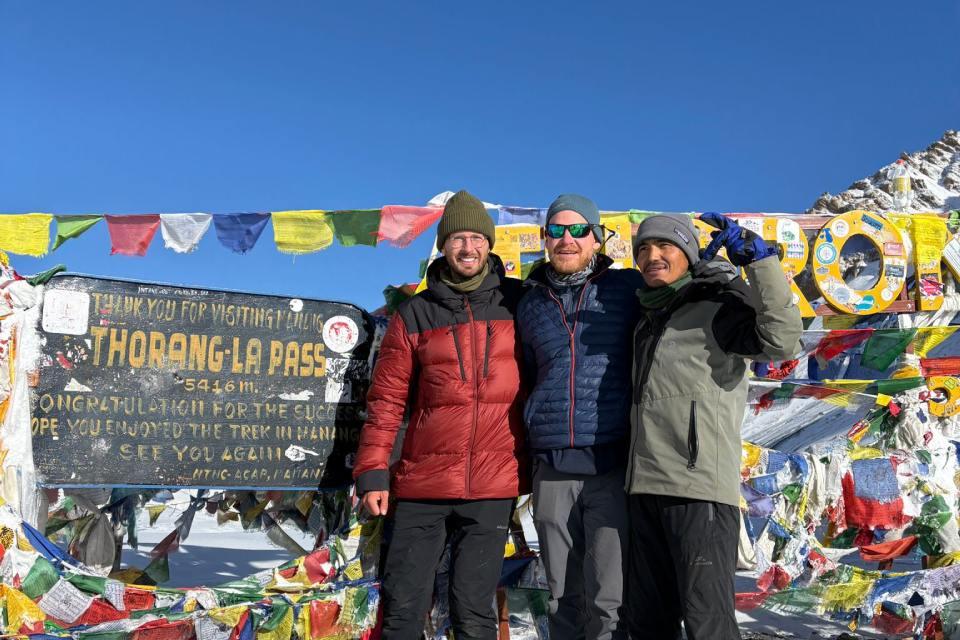
The Annapurna Circuit remains one of the world's premier classic treks, taking you from lush sub-tropical terraced fields at under 1,000 meters up into the fierce, barren, and jaw-dropping alpine terrain of Thorong La Pass at a staggering 5,416 meters (17,769 ft).
While the sweeping vistas of Annapurna I, Dhaulagiri, and Nilgiri pull thousands of travelers to our country every year, venturing into the high-altitude wilderness requires absolute preparation. As a professional travel company - Best Heritage Tour, our number one priority isn't just showing you the beauty of Nepal - it is ensuring you make it back down safely to share your stories.
A question our team gets asked almost daily by cautious hikers is: "How are the medical facilities in Annapurna Circuit Trek?"
Understandably, nobody wants to be caught thousands of meters above sea level without knowing where to find help. In this highly comprehensive guide, we break down every single aspect of the health infrastructure on the trail. From rustic village health posts to world-class rescue clinics and emergency helicopter evacuations, here is exactly what you can expect when navigating the medical landscape of the Annapurna Circuit.
The Reality of Healthcare in the Himalayas: Can I Find Hospitals During Annapurna Circuit Trek?
Let’s address the most urgent question first: Can I find hospitals during Annapurna Circuit Trek?
To set realistic expectations, no, you will not find large, fully equipped, multi-specialty hospitals once you leave the major gateway cities.
The Annapurna Circuit passes through remote, rugged terrain across the Lamjung, Manang, and Mustang districts. Building and maintaining a modern hospital infrastructure in vertical, road-isolated terrains is virtually impossible. Instead, Nepal relies on a tiered system of medical support tailored for the mountains:
-
District Hospitals: Found only at the absolute entry and exit points of the trek (Besisahar and Jomsom). These can handle moderate emergencies, X-rays, simple surgeries, and basic stabilizations.
-
Government Health Posts: Scattered throughout major hub villages (like Chame and Muktinath). These are staffed by local paramedics or nurses who focus on primary care, basic medications, and wound care for the local community and passing tourists.
-
Specialized High-Altitude Aid Posts: The crown jewel of mountain medicine on this route is the Himalayan Rescue Association (HRA) clinic in Manang village. Staffed by volunteer international doctors during peak seasons, it is specifically designed to manage altitude emergencies.
If you experience a critical, life-threatening medical emergency or severe trauma anywhere on the upper reaches of the circuit, you will not be treated in a local hospital. Instead, you will be stabilized on-site and urgently evacuated via a charter helicopter directly to internationally accredited tertiary care hospitals in Pokhara or Kathmandu,.
How Good is the Medical Facilities in Annapurna Circuit Trek? A Segment-by-Segment Breakdown
To help you visualize the medical landscape as you walk, we have broken down the trail into its natural geographic phases. This will give you a clear map of exactly how good is the medical facilities in Annapurna Circuit Trek at any given point along your journey.
Phase 1: The Trailhead and Lower Elevation (Besisahar to Chame)
-
Elevation Range: 760m to 2,670 m (2,493 ft to 8,759 ft)
-
Available Facilities: Besisahar District Hospital, Dharapani Health Post, Chame Health Post, and small local pharmacies.
Your journey begins in Besisahar, the bustling district headquarters of Lamjung. Here, you will find the Besisahar District Hospital. It is a functional facility capable of treating standard illnesses, minor fractures, and gastrointestinal infections.
As you drive or trek upward through villages like Bhulbhule, Jagat, and Dharapani, the medical footprint shrinks. However, because a rough jeep road now connects Besisahar all the way up to Manang, these lower villages have steady access to medical supplies. Chame, the administrative headquarters of the Manang district, features a reliable government health post.
Phase 2: The Critical Altitude Zone (Manang and Surrounding Villages)
-
Elevation Range: 3,519 m to 4,000 m (11,545 ft to 13,123 ft)
-
Available Facilities: The Himalayan Rescue Association (HRA) Aid Post, Manang Government Health Post.
Once you walk past Upper Pisang and step into the wide, windy valley of Manang (3,519m), you enter the high-altitude zone. This is where proper medical planning becomes life or death. Because the body undergoes intense physiological changes to adapt to the lower atmospheric pressure, Manang acts as the ultimate safety buffer before anyone attempts the high pass.
Fortunately, Manang is the best-equipped medical stop on the entire Annapurna Circuit.
Besisahar Hospital (Lower Valley Care) → Chame Health Post (Basic First Aid) → MANANG HRA AID POST (Altitude Specialists) → Thorong High Camp (No Medical Facilities) →Thorong La Pass (5,416 meters)
The HRA Manang Aid Post has been operating since 1981. It is active during the peak trekking seasons: Spring (March to May) and Autumn (September to November).
What makes the HRA Manang Clinic so unique?
-
Expert Volunteer Doctors: The clinic is staffed by western-trained doctors who volunteer their time and are world experts in wilderness and high-altitude medicine.
-
Specialized Equipment: They carry advanced diagnostics, oxygen cylinders, hyperbaric chambers (Gamow bags used to simulate lower altitudes), and specialized medications like Diamox (Acetazolamide), Dexamethasone, and Nifedipine.
-
Daily Altitude Lectures: Every single afternoon at 3:00 PM, the HRA doctors host a public awareness lecture. They teach trekkers how to spot the early symptoms of Acute Mountain Sickness (AMS). At Best Heritage Tour, we make attending this lecture a mandatory part of our itineraries.
Alongside the HRA clinic, the Manang Health Post offers basic consultations, pulse oximeter checks (to test your blood oxygen saturation levels), and standard medications at highly subsidized rates.
Phase 3: The Danger Zone (Yak Kharka, Thorong Phedi, and Thorong High Camp)
-
Elevation Range: 4,000 m to 5,416 m (13,123 ft to 17,769 ft)
-
Available Facilities: Absolutely none.
This is the most critical stretch of the trek. As you move from Manang to Yak Kharka (4,110 m), Thorong Phedi (4,450 m), and ultimately stay overnight at Thorong High Camp (4,950m), there are no professional medical facilities, clinics, or doctors.
You are entirely dependent on your guiding team and the contents of your first aid kit. The local teahouse owners are incredibly resilient and keep basic first-aid supplies, and some keep emergency oxygen cylinders on hand. However, they are not medical professionals. If a trekker develops severe altitude sickness here, the only cure is immediate descent, often in the dark, back down toward Manang.
Phase 4: The Descent and Lower Mustang (Muktinath to Jomsom)
-
Elevation Range: 3,710 m down to 2,720 m (12,171 ft to 8,923 ft)
-
Available Facilities: Muktinath Health Post, Jomsom District Hospital, Jomsom Airport (Evacuation Hub).
Once you successfully cross the Thorong La Pass, you drop rapidly into the holy valley of Muktinath (3,710m). Muktinath has a small local health post that handles immediate post-pass fatigue, knee injuries, and minor ailments.
An hour's drive down the valley brings you to Jomsom (2,720m), the windy capital of the Mustang district. Jomsom boasts a fully functional District Hospital capable of providing excellent medical care, minor diagnostics, and emergency stabilization. More importantly, Jomsom has a commercial airport with daily morning flights to Pokhara, making it the primary evacuation hub for anyone falling ill on the western side of the circuit.
Emergency Medical Evacuations: How Helicopter Rescues Work
When local clinics cannot handle a medical situation, emergency evacuation is triggered. Because the Annapurna Circuit is bordered by deep river gorges and massive mountain walls, a road evacuation via jeep from places like Yak Kharka or Thorong Phedi to a city hospital can take a grueling 12 to 15 hours - time an emergency patient simply does not have.
Therefore, helicopter evacuation is the definitive lifeline of the Annapurna Circuit.
If you or your guide calls for an emergency helicopter evacuation, here is how the process plays out:
-
Coordinates and Landing: Clear helipads or flat clearing zones exist near almost every major village, including Chame, Pisang, Manang, Yak Kharka, Thorong Phedi, Muktinath, and Jomsom.
-
Weather Permitting: Helicopters in Nepal fly via Visual Flight Rules (VFR). This means they need clear visibility to fly safely through mountain passes. If a blizzard or heavy fog rolls in, a helicopter cannot fly, and the patient must be carried down on a horse or stretcher to a lower elevation.
-
The Destination: The helicopter will fly you directly to the closest major city hospital. Depending on the severity, you will land at a hospital in Pokhara (a 25-minute flight from Jomsom) or a specialized international travel hospital in Kathmandu (a 45-to-60-minute flight from Manang).
The Absolute Necessity of Travel Insurance
Let us be completely transparent: A helicopter rescue in the Himalayas is incredibly expensive.
A single rescue flight typically costs between USD 3,000 to USD 5,000, depending on your exact location, altitude, and weather conditions. If you do not have specialized international travel insurance that explicitly covers high-altitude trekking up to 6,000 meters including emergency heli-evacuation, rescue companies will refuse to spin up their rotors until a cash deposit or a verified wire transfer is confirmed.
Before leaving your home country, ensure your policy covers medical repatriation, hospital stays in Kathmandu, and high-altitude emergency aviation. Keep a physical copy of your insurance policy and your company's 24/7 emergency contact number in your daypack at all times.
Conclusion
The medical facilities in the Annapurna Circuit Trek have come an incredibly long way over the last few decades. While you won't find modern hospitals perched on the ridges of Thorong La, the combination of local government health posts, the exceptional volunteer doctors at the HRA Manang Aid Post, and a highly responsive helicopter rescue network means that the Annapurna Circuit is one of the safest high-altitude routes in the world - provided you trek smart.
By choosing a reputable, licensed travel agency, you aren't just buying an itinerary; you are securing a safety net. At Best Heritage Tour, all of our guides are fully certified in mountain first aid, altitude sickness identification, and wilderness safety protocols. We handle the logistics, monitor your health daily, carry the necessary tracking gear, and coordinate directly with rescue operators and helicopter companies so you can focus entirely on absorbing the magical culture and timeless landscapes of Nepal.
Contact Best Heritage Tour Today
Phone / WhatsApp / Viber: +977-9851149197 / +977-9810043046
Email: [email protected] / [email protected]
Website: www.bestheritagetour.com
Office: Thamel Marg, Kathmandu, Nepal