Mardi Himal Base Camp Trek in December
For travelers seeking a pristine Himalayan sanctuary away from peak-season crowds, the Mardi Himal Trek in December is an absolute revelation. While popular routes like the Annapurna Circuit or Everest Base Camp remain heavily trafficked deep into autumn, this hidden ridge trail transforms into a quiet, snow-dusted paradise come winter.
As a local travel operator in Nepal, we at Best Heritage Tour have guided hundreds of adventurers up this dramatic ridge line. Many international trekkers ask us: "Is it actually safe or worth it to trek Mardi Himal during the first month of winter?"
The answer is a resounding yes. If you are prepared for crisp winter temperatures, December offers the absolute sharpest, most uninterrupted panoramic views of Mount Machapuchare (Fishtail) and the Annapurna massif. Below, our local guides break down everything you need to know about weather, trail conditions, snow levels, and expert safety protocols for a successful December trek.
The Reality of December Weather on Mardi Himal
December marks the official arrival of winter in Nepal. However, it is fundamentally characterized by dry, stable weather systems. Unlike the monsoon months or late winter (February), December boasts an average of 90% clear sky days. This means your mornings are almost guaranteed to feature striking, unobstructed views of the snow-capped giants.
The climate varies dramatically depending on your altitude. The rule of thumb in the Annapurna region is that the temperature drops by roughly 5°C (41°F) for every 1,000 meters of elevation gain.
Altitude and Temperature Breakdown
To help you plan your layers efficiently, we categorize the trek into three thermal zones during December:
|
Altitude Zone |
Key Settlements |
Avg. Day Temperature |
Avg. Night/Morning Temp |
|---|---|---|---|
|
Lower Foothills (Under 2,500m) |
Kande, Pothana, Deurali |
12°C to 16°C (54°F - 61°F) |
3°C to 7°C |
|
The Mid-Forest Ridge (2,500m - 3,300m) |
Forest Camp, Low Camp, Badal Danda |
5°C to 10°C |
-2°C to 3°C |
|
The Alpine Ridge (3,500m - 4,500m) |
High Camp, Viewpoint, Base Camp |
-5°C to 5°C |
-10°C to -15°C |
Early December vs. Late December
-
Early to Mid-December: This is a highly recommended transitional window. The lingering stability of autumn keeps the lower trails dry, and heavy accumulation of snow at High Camp is rare.
-
Late December: As January approaches, the true winter freeze sets in. Nighttime temperatures drop to their absolute lowest, and the probability of sudden alpine snow showers increases.
Snow Accumulation and Trail Conditions
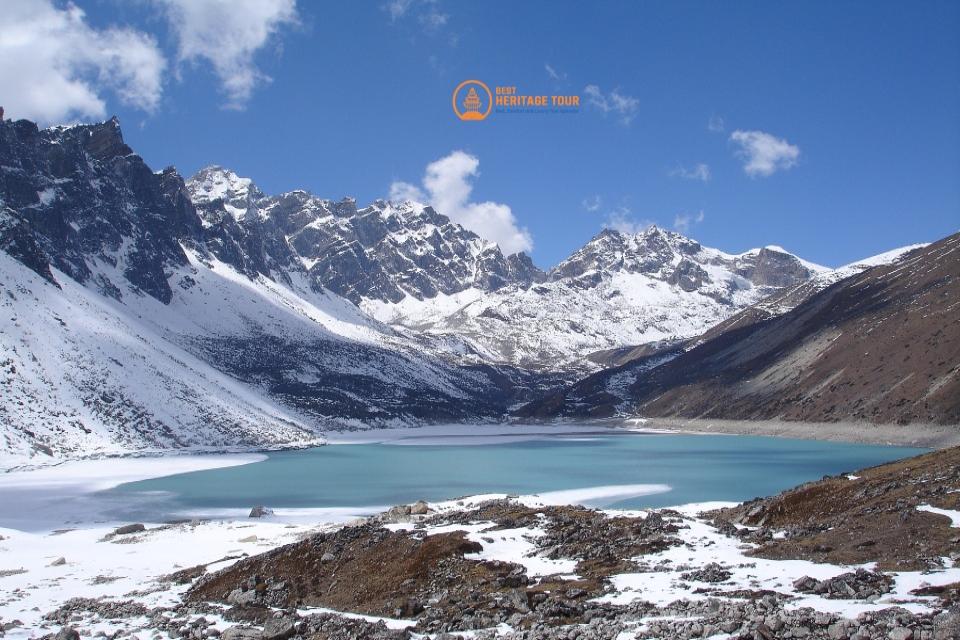
One of the most magical aspects of hiking Mardi Himal in December is seeing the high-altitude ridges transformed by a fresh layer of pristine white snow.
What to Expect on the Trail
The trail conditions change distinctly as you climb:
-
The Forest Zone (Kande to Low Camp): The paths passing through the dense oak and rhododendron forests remain completely dry and intact. The canopy blocks the morning frost, making for very comfortable hiking in lightweight trekking pants and a fleece layer.
-
Badal Danda to High Camp (3,300m - 3,580m): As you break above the tree line onto the exposed ridge, you will notice frost-tipped alpine grasses and patches of black ice in shaded sections of the trail.
-
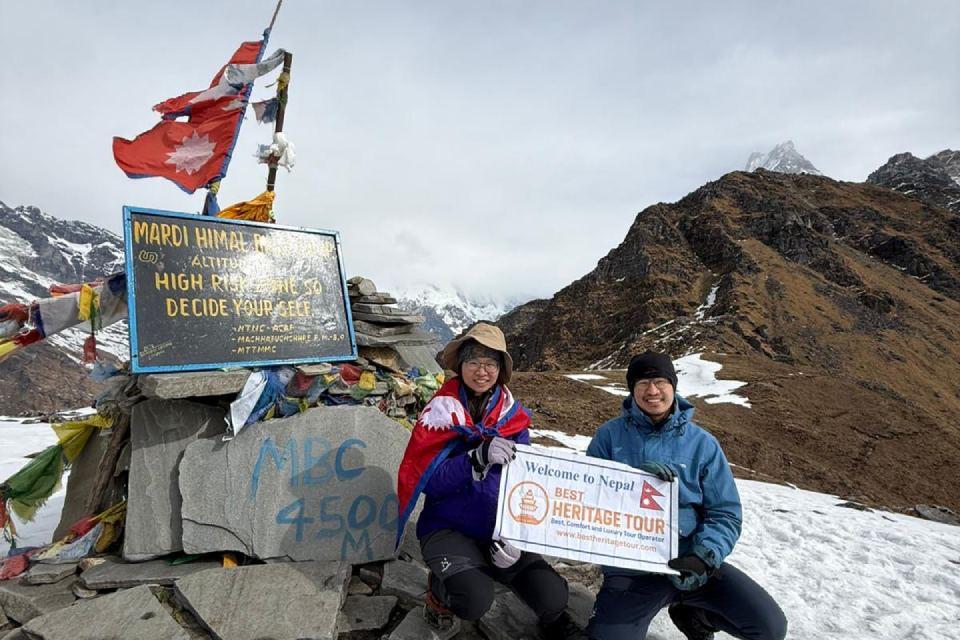
High Camp to Mardi Himal Base Camp (3,580m - 4,500m): This is where December demands absolute caution. Snow frequently blankets the final ridgeline path up to the upper Viewpoint and Base Camp. While it is rarely deep enough to block access entirely in early December, the narrow paths can become incredibly slick and icy.
Vital Packing List for Winter Trekking
Because the teahouses on the Mardi Himal route are built for summer and autumn ventilation, they do not have central heating. The communal dining rooms are kept warm with central wood or charcoal stoves, but your private bedroom will be unheated. Packing a precise sleep and clothing layer system is critical.
1. The Sleep System
-
Four-Season Sleeping Bag: Do not rely solely on the blankets provided by teahouses. We provide all our guests with a professional down sleeping bag rated to comfortably withstand -15°C (5°F).
-
Thermal Liner: An extra silk or fleece inner liner adds significant warmth.
2. Technical Apparel (The Three-Layer System)
-
Base Layer: Moisture-wicking merino wool thermals (bring at least two sets). Avoid cotton completely, as it retains sweat and can cause hypothermia when you stop moving.
-
Insulating Layer: A high-loft fleece jacket or a lightweight down sweater for hiking on chilly afternoons.
-
Outer Shell: A windproof, waterproof jacket and pants to protect you from the cutting ridge winds above Badal Danda.
3. Safety Gear and Footwear
-
Microspikes / Yak-Tracks: Non-negotiable for the push from High Camp to Base Camp. These slip easily over standard hiking boots to provide immediate traction on packed ice and snow.
-
Trekking Poles: Essential for maintaining balance on slippery descents.
-
Headlamp with Spare Batteries: Cold weather drains lithium batteries rapidly. Keep your batteries stored inside your inner pocket close to your body heat.
Expert Practical Advice for Your December Trek to Mardi Himal
To ensure you maximize enjoyment while mitigating the inherent risks of winter high-altitude trekking, our guiding team emphasizes these three local strategies:
1. Beat the Short Daylight Hours
In December, the sun sets behind the towering Himalayan peaks surprisingly early - often by 5:00 PM. This causes temperatures to drop off a cliff within minutes. We design our itineraries so that you are safely settled into your next teahouse by 2:00 PM or 3:00 PM, allowing you to avoid navigating icy ridge trails in the freezing twilight.
2. Hydration and High-Calorie Nutrition
Cold alpine air masks dehydration because you do not feel yourself sweating as heavily. Force yourself to drink 3 to 4 liters of water daily. We recommend using insulated flasks, as standard plastic water bottles will freeze solid overnight at High Camp. Fuel your body with traditional, calorie-dense mountain food like Dal Bhat (lentil soup, rice, and vegetable curry) and hot garlic soup, which naturally aids blood circulation.
3. Monitor for Altitude and Cold Injuries
Acute Mountain Sickness (AMS) can strike at any time of year above 3,000 meters, but cold exposure accelerates physical fatigue. Our guides are fully certified in wilderness first aid and monitor every trekker’s oxygen levels daily using pulse oximeters.
Conclusion
The Mardi Himal Trek in December is one of the most rewarding insider secrets of the Nepalese Himalayas. If you are eager to experience the profound silence of the mountains, crisp blue winter skies, and completely uncrowded viewpoints, we are here to handle every logistical detail.
From providing premium cold-weather gear to securing highly experienced local guides who know every inch of the snowy ridge trails, Best Heritage Tour guarantees a safe, profoundly moving journey.
Connect with us to customize your December Mardi Himal Trek
Phone / WhatsApp / Viber: +977-9851149197 / +977-9810043046
Email: [email protected] / [email protected]
Website: www.bestheritagetour.com
Office: Thamel Marg, Kathmandu, Nepal
Frequently Asked Questions (FAQ)
Do I need crampons for the Mardi Himal Trek in December?
You do not need full mountaineering crampons, but lightweight microspikes are absolutely essential. The final stretch from High Camp to the Viewpoint involves steep steps that can easily glaze over with slick ice.
Are teahouses open on the Mardi Himal route during December?
Yes, a selection of reliable teahouses remains open throughout December. Because it is the off-season, you will not have to worry about rooms being fully booked, allowing for a far more relaxed, authentic interaction with the local families.
How long does the Mardi Himal Trek take?
The core trek typically takes 5 to 6 days starting and ending in Pokhara. We can adapt the itinerary to match your physical fitness level and the prevailing snow conditions on the mountain.
Is acute mountain sickness common on the Mardi Himal route?
Because the Mardi Himal trail climbs relatively quickly - ascending from roughly 1,700 meters at Kande to 3,580 meters at High Camp in just two to three days - proper acclimatization is vital. We build pacing stops into our itineraries to ensure your body adjusts safely.