The high-altitude trails of Nepal undergo a profound transformation as late autumn fades. For adventurers seeking raw wilderness, the Manaslu Circuit Trek in December presents an extraordinary journey into a frozen frontier. As the peak crowds of October and November dissipate, the eighth-highest mountain in the world stands cloaked in winter stillness.
Choosing to trek around Mount Manaslu (8,163m) in December means trading the buzzing teahouses for absolute solitude, crisp blue skies, and unparalleled crystal-clear mountain views. However, winter in the Himalayas demands unwavering respect, precise preparation, and deep local expertise.
At Best Heritage Tour, we believe that with the right preparation, specialized gear, and an experienced local guide, navigating the high-altitude terrain of the Chumnubri region during the winter months can be one of the most rewarding wilderness experiences of your life. This comprehensive guide breaks down everything you need to know about the winter conditions, trail accessibility, and logistical realities of conquering the Manaslu Circuit this December.
Is it Possible to Do the Manaslu Circuit Trek in December?
The direct answer is yes, it is entirely possible to do the Manaslu Circuit Trek in December, but with a critical caveat: it depends heavily on when in December you go and how well-equipped you are for sub-zero conditions.
The month is generally split into two distinct windows:
-
Early to Mid-December (The Sweet Spot): The weather is incredibly stable. The post-monsoon moisture is completely gone, resulting in some of the highest visibility of the entire year. While the mornings and nights are freezing, the daytime weather remains dry and sunny, making trekking highly manageable.
-
Late December (The High-Winter Shift): As January approaches, true arctic conditions settle over the high-altitude zones above 4,000 meters. The risk of heavy snowstorms increases, and the formidable Larkya La Pass (5,106m) can become temporarily or permanently blocked by deep winter snow drifts.
The Legal Framework: Group and Guide Mandatory Rules
Under the updated regulations governing Nepal's restricted areas, independent or solo trekking without professional guide is strictly prohibited in this region. To obtain the mandatory Manaslu Restricted Area Permit (RAP), the Department of Immigration requires a minimum group size of two trekkers accompanied by a government-licensed guide registered through an authorized agency like us.
Manaslu Circuit Trek Weather in December: Temperature Breakdown
The Manaslu region spans six distinct climatic zones, starting from the subtropical lowlands of Gorkha and ascending to the arctic conditions of the high passes. In December, this atmospheric contrast becomes starkly apparent.
|
Location & Altitude |
Avg. Daytime Temp |
Avg. Nighttime Temp |
Trail Conditions & Environment |
|
Lower Valleys (Machha Khola to Jagat) |
10°C to 15°C |
0°C to 5°C |
Dry, sunny trails; crisp mornings with light valley frost. |
|
Mid-Alpine Villages (Namrung to Lho) |
4°C to 8°C |
-5°C to -10°C |
Frozen water sources; patches of black ice in shaded forest trails. |
|
High-Altitude Settlements (Samagaun to Samdo) |
0°C to -4°C |
-10°C to -15°C |
Compacted snow on village paths; strong, freezing alpine winds. |
|
High Camp & Pass (Dharmashala & Larkya La) |
-5°C to -10°C |
-20°C to -25°C |
Deep snow accumulations; extreme wind chill; high avalanche risk. |
The Role of Wind Chill and Dry Air
While the sun provides radiant warmth during the middle of the day, temperatures plummet the exact second the sun drops behind the towering peaks of the Mansiri Himal. The dry winter air increases the rate of dehydration and intensifies the impact of the wind chill. At Dharmashala and across the Larkya La Pass, sub-zero temperatures combined with gusts off the glaciers can make a daytime temperature of -5°C feel closer to -15°C on exposed skin.
Is There Snow During December on the Manaslu Circuit Trek?
A frequent question from our clients is: is there snow during December on the Manaslu Circuit Trek? The presence of snow varies dramatically by altitude and seasonal shifts.
Lower vs. Higher Altitudes
Below 3,000 meters (from Soti Khola through Jagat and Deng), you will rarely encounter snow on the trail. The forests remain clear, though you will see frost blanketing the riverbanks of the Budhi Gandaki in the early mornings.
Once you cross the threshold of 3,500 meters into Samagaun, the landscape transitions. Shaded sections of the trail, rocky steps, and high-altitude scree slopes accumulate snow and structural ice that does not melt during the short winter days.
Navigating the Larkya La Pass (5,106m)
The ultimate crux of the trek is the Larkya La Pass. In December, the pass is almost permanently snow-bound. Early in the month, this snow is typically dry, stable, and well-trodden by the remaining late-season trekkers and local herders.
However, late December introduces the threat of sudden winter depressions coming from the Mediterranean, which can dump deep, powdery snow over the pass within hours. When this occurs, whiteout conditions can obliterate the trail markers, and the steep descent down the western moraine toward Bhimtang becomes highly vulnerable to sheet ice and localized avalanches.
Local Expert Safety Insight: Crossing Larkya La in December is not a race against time; it is a calculation of trail conditions. Our Best Heritage Tour guides carry satellite communication devices and coordinate directly with local lodge owners in Samdo and Dharmashala to evaluate the safety of the pass before our teams ascend. If the snow is too deep or the pass is closed by local authorities, we pivot safely to lower cultural exploration routes.
Logistical Realities: Teahouses and Seasonal Migrations
Trekking the Manaslu Circuit in the winter months introduces unique logistical factors that do not exist during the chaotic spring and autumn seasons.
The Winter Migration (Seasonal Closures)
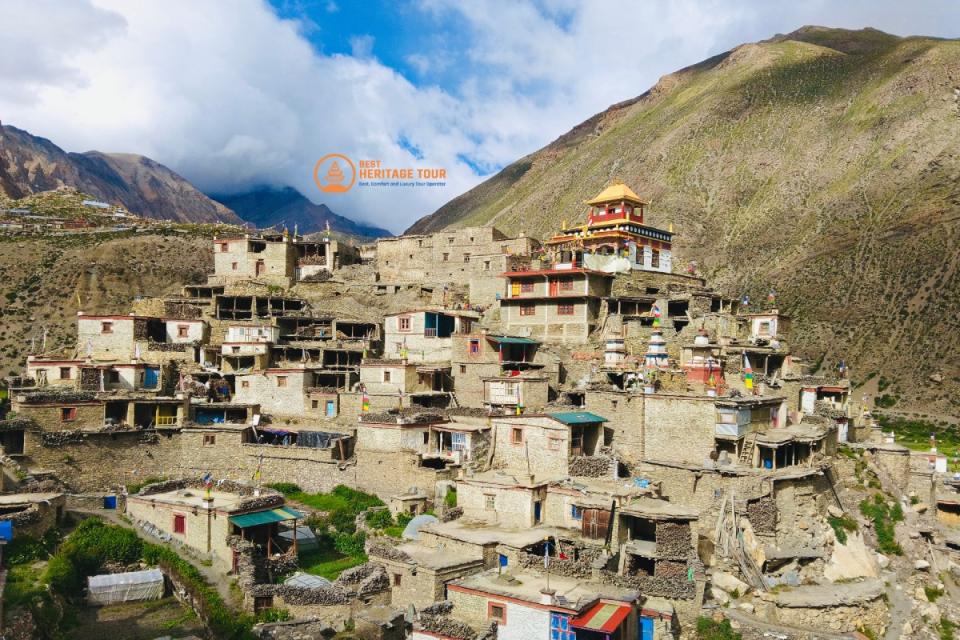
The local communities of the upper Chumnubri valley - predominantly ethnic Tibetans known as the Nupri people - practice seasonal migration. By mid-to-late December, many families lock up their homes and teahouses in Samdo, Pungyen Gompa, and Dharmashala to move down to the warmer climates of Kathmandu or lower Gorkha villages.
As a result, more than half of the teahouses along the upper loop close for the season. The basic stone shelters at Dharmashala (Larkya Phedi) operate on a minimal skeleton crew, or close entirely if early blizzards strike.
What This Means for Your Comfort?
-
Limited Accommodation Options: You cannot simply arrive at a village and choose a lodge. Stays must be coordinated in advance through an agency that knows exactly which properties remain open.
-
Frozen Plumbing: Running water is virtually non-existent above Namrung in December. Pipes freeze solid, meaning flush toilets are unavailable, and water for drinking and washing must be manually boiled from melted snow or ice blockages.
-
Common Room Heating: Teahouse dining rooms are heated exclusively by central wood or yak-dung burning stoves. These stoves are only lit for a few hours during dinner, meaning your bedroom will remain at ambient sub-zero temperatures throughout the night.
Mandatory Permits and Technical Preparation for 2026
Because the Manaslu Circuit runs along the geopolitical border with Tibet, the government regulates access through strict documentation. In December 2026, you will require four distinct permits, all of which must be processed by a registered agency:
-
Manaslu Restricted Area Permit (RAP): The fee is seasonally adjusted to encourage winter travel. While the peak autumn fee is USD 100 for the first seven days, the winter rate (December to August) drops to USD 75 for the first seven days, and USD 10 per day thereafter.
-
Manaslu Conservation Area Permit (MCAP): A fixed rate of NPR 3,000 (approx. USD 23) to fund environmental preservation within the protected zone.
-
Annapurna Conservation Area Permit (ACAP): Because the trek crosses the Larkya La and exits through the classic Annapurna Circuit route via Tilije and Dharapani, this permit is required at a fixed cost of NPR 3,000 (approx. USD 23).
-
Chumnubri Rural Municipality Local Fee: A mandatory local infrastructure tax of NPR 1,000 (approx. USD 8) collected directly on the trail.
Physical Conditioning for Winter Challenges
The physical strain of the Manaslu Circuit increases significantly in sub-zero conditions. Cold air requires your respiratory system to work harder, which can accelerate the onset of Acute Mountain Sickness (AMS).
Trekkers should focus on cardiovascular endurance and leg strength training for at least two months prior to departure. Furthermore, you must be mentally prepared for the discomfort of cold nights, basic amenities, and the demanding endurance required to trek 6 to 8 hours daily over snow-dusted paths.
Essential Winter Gear and Packing List
Standard trekking gear will fail you when temperatures drop to -20°C at high camp. To complete the circuit safely, your packing list must include specialized winter equipment:
-
The Footwear System: Sturdy, waterproof, broken-in trekking boots with deep tread. You must pack high-quality microspikes (crampons) with hardened steel chains and teeth to provide traction over the icy steps of Namrung, Lho, and the steep slopes of Larkya La.
-
The Layering System: Avoid cotton entirely. Your base layers must be high-grade Merino wool (200gsm or higher) to wick sweat away from the skin. Your insulation layer should feature a heavy-duty, high-loft down jacket (minimum 800 fill power) with a windproof GORE-TEX outer shell.
-
The Sleeping System: Do not rely on teahouse blankets. You must bring a certified winter sleeping bag with a comfort rating of -20°C (-4°F) or lower, along with a thermal fleece inner liner.
-
Alpine Protection: Polarized, UV-rated mountaineering sunglasses are non-negotiable to prevent snow blindness caused by intense solar radiation reflecting off the snowfields. Include heavy-duty insulated gloves, windproof beanies, and a thermal flask to keep your drinking water from freezing solid on the trail.
The Rewards of December Trekking: Why It Is Worth It
Despite the drop in temperature, choosing the Manaslu Circuit in December offers profound structural advantages that peak-season travelers never get to experience.
-
Absolute Serenity: The chaotic crowds that fill the trails in October are entirely gone. You will experience the pristine forests, traditional Mani stone walls, and ancient monasteries of Lho and Samagaun in complete peace.
-
Flawless Photography: Winter air holds significantly less moisture and dust than spring or autumn air. This lack of atmospheric haze creates deep blue skies and high-definition clarity for photographing the iconic twin peaks of Mount Manaslu, Naike Peak, and Cheo Himal.
-
Authentic Local Interaction: Because the teahouses are uncrowded, you have the unique opportunity to sit directly by the hearth fire with the remaining local families, sharing warm cups of Tibetan butter tea and learning about their ancient mountain heritage without the rush of commercial tourism.
Conclusion
Trekking the Manaslu Circuit in December is a magnificent, demanding, and unforgettable mountain adventure. It strips away the commercial noise of modern tourism, revealing the raw, untamed essence of the Nepalese Himalayas. While the sub-zero temperatures and snow-bound passes test your endurance, the reward of witnessing Mount Manaslu in its true winter glory is unmatched.
At Best Heritage Tour, your safety, comfort, and cultural immersion are our highest priorities. Our veteran local guides possess decades of winter mountaineering experience, ensuring that every step you take across the frozen landscape is backed by flawless logistics, precise weather monitoring, and deep respect for the mountains.
Are you ready to experience the untouched winter wilderness of Manaslu?
Phone / WhatsApp / Viber: +977-9851149197 / +977-9810043046
Email: info@bestheritagetour.com / bestheritagetour@gmail.com
Website: www.bestheritagetour.com
Office: Thamel Marg, Kathmandu, Nepal
Frequently Asked Questions (FAQs)
Can I complete the Manaslu Circuit Trek solo in December?
No. Independent trekking is illegal in the Manaslu restricted zone. The Nepal Department of Immigration requires all foreign nationals to travel in a group of at least two people, accompanied by a government-licensed guide from an authorized agency.
What happens if the Larkya La Pass is blocked by snow?
If our guides evaluate that heavy snow or high avalanche risks have rendered the Larkya La Pass impassable, safety takes immediate priority. We will adapt the itinerary to focus on deeper cultural exploration in Samagaun, day hikes to Birendra Tal and Manaslu Base Camp, and safely retrace our steps back down the valley.
Is electricity and internet available on the trail in December?
Yes, but it is highly limited. Many solar-powered charging systems struggle due to the shorter winter days and freezing temperatures that drain lithium batteries rapidly. Wi-Fi networks (like Everest Link) may experience outages if local infrastructure freezes. We recommend bringing two high-capacity power banks and keeping them inside your inner jacket layers to retain charge.
Author: Best Heritage Tour
Date: 15th July, 2026