If you are planning an Everest Base Camp trek, you have likely heard the name Gorakshep (or Gorak Shep) whispered with a mix of reverence and caution.
At Best Heritage Tour, we have guided thousands of adventurers through the Khumbu region. We know that Gorakshep is more than just a place to sleep; it is the final frontier. Situated at a staggering 5,164 meters (16,942 feet), this small settlement is the highest permanent "village" you will encounter and serves as the strategic launchpad for your final push to Everest Base Camp and the famous Kala Patthar viewpoint.
In this comprehensive Gorakshep Trek Guide, we draw upon our decades of experience as local Sherpa-led experts to prepare you for the thin air, the frozen landscapes, and the sheer triumph of standing at the foot of the world’s tallest peak.
What is Gorakshep? Understanding the "Dead Raven"
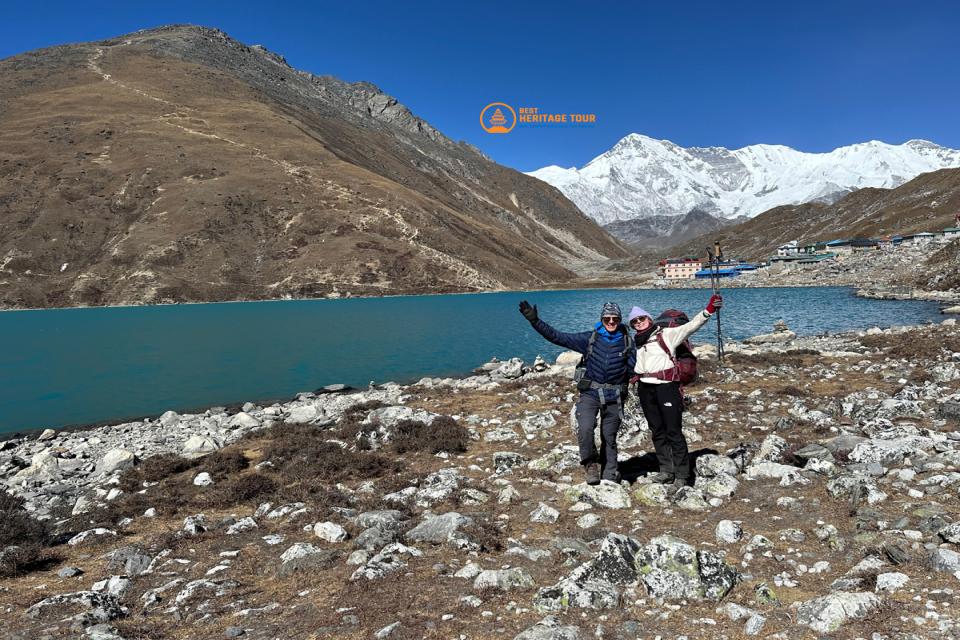
The name "Gorak Shep" translates from the Sherpa language to "Dead Raven." While that might sound ominous, it historically refers to the harsh, frozen lakebed where even the hardy ravens of the Himalayas struggle to find sustenance.
Historically, Gorakshep was the original Everest Base Camp used by the 1953 Swiss expedition and the legendary Sir Edmund Hillary and Tenzing Norgay. Today, the "official" base camp has shifted further onto the Khumbu Glacier, but Gorakshep remains the final outpost of civilization (if you can call a few stone teahouses civilization!) before the wilderness takes over completely.
Quick Facts: Gorakshep at a Glance
|
Feature |
Detail |
|---|---|
|
Altitude |
5,164 Meters / 16,942 Feet |
|
Location |
Solukhumbu District, Sagarmatha National Park |
|
Distance from EBC |
Approx. 3.5 km (2-3 hours walk) |
|
Distance from Kala Patthar |
Approx. 1.5 km (1.5-2 hours steep climb) |
|
Oxygen Levels |
Approximately 50% of sea level |
|
Accommodation |
Basic Teahouses / Mountain Lodges |
The Journey to Gorakshep: The Final Approach
The trek to Gorakshep is the climax of your Nepal trekking adventure. Typically, trekkers reach this point on Day 8 or 9 of their itinerary.
The Trail from Lobuche
The most common route is the leg from Lobuche (4,940m) to Gorakshep. This stretch is a test of endurance. While the distance is only about 4.5 kilometers, the altitude makes every step feel like a marathon. You will traverse the lateral moraine of the Khumbu Glacier, walking over jagged rocks and loose scree.
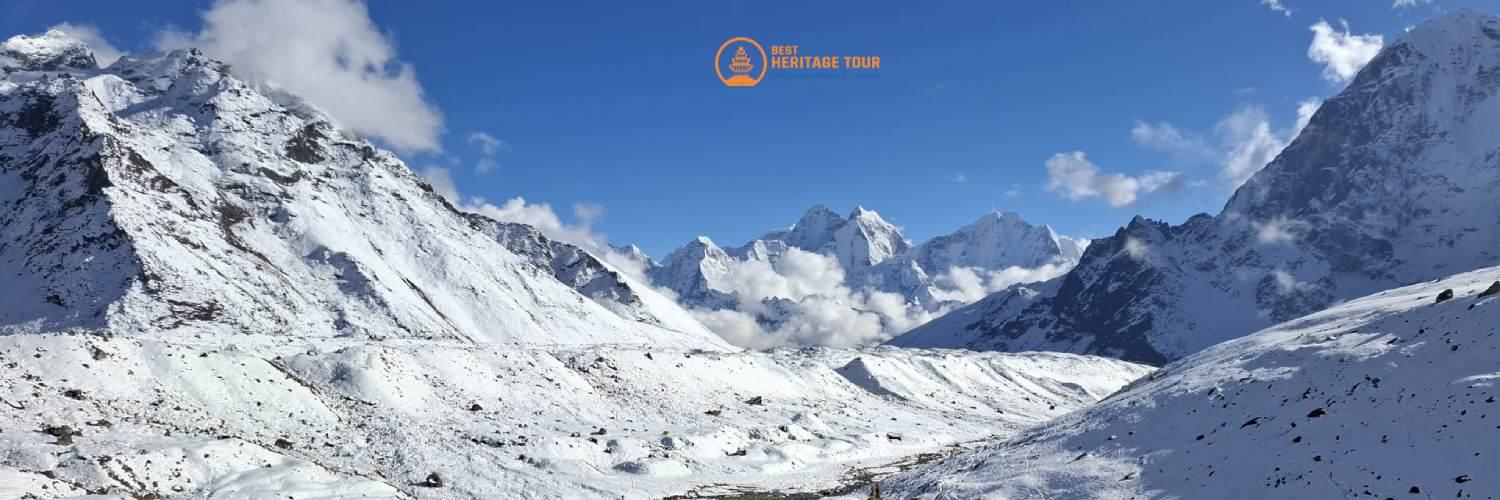
As a Himalayan trekking guide team, we always remind our guests: “Bistari, bistari” (Slowly, slowly). The views here are otherworldly - you are surrounded by giants like Pumori (7,161m), Nuptse (7,861m), and the pyramid of Everest peeking over the Lhotse-Nuptse ridge.
Accommodations and Life at 5,164 Meters
Let’s be honest: Gorakshep is not a luxury resort. It is a cluster of roughly 5 to 6 teahouses designed for survival and rest. At Best Heritage Tour, we prioritize booking the most reliable lodges for our clients to ensure a bit more comfort in these extreme conditions.
What to Expect in the Teahouses:
-
The Rooms: Small, twin-sharing rooms with thin plywood walls. You will need a -20°C rated sleeping bag even inside the room.
-
The Toilets: Mostly common squat toilets. At this altitude, running water often freezes, so be prepared for "bucket flushes."
-
Dining: The communal dining hall is the only heated room, usually warmed by a central stove fueled by dried yak dung. It’s the best place to share stories with fellow trekkers.
-
Charging and Wi-Fi: Both are available but come at a high cost ($5-$10). We recommend bringing a high-capacity power bank.
Food and Hydration
Your body burns calories at an incredible rate at high altitudes just to stay warm.
-
The Menu: Dal Bhat (lentil soup and rice) is the "fuel of the Himalayas." You can also find pasta, soups, and porridge.
-
Water: Never drink tap water. Use water purification tablets or filters. We recommend drinking 4 liters of water daily to combat Acute Mountain Sickness (AMS).
The Two Jewels: Everest Base Camp and Kala Patthar
Gorakshep is the "T-junction" of the Everest region. From here, you have two primary objectives.
1. The Trek to Everest Base Camp (EBC)
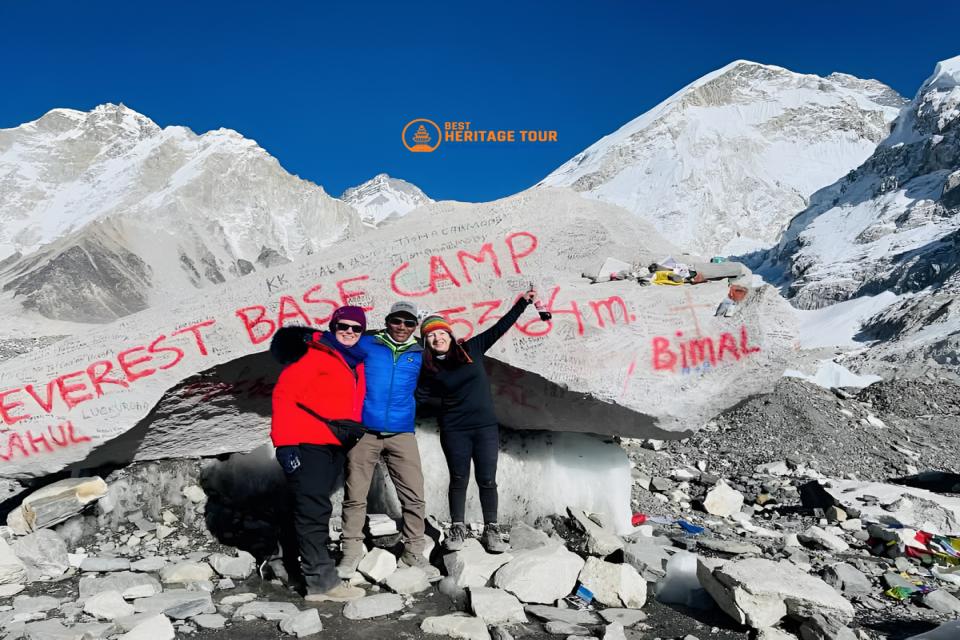
From Gorakshep, the trail to EBC (5,364m) takes about 2 to 3 hours one way. You will walk along the edge of the Khumbu Glacier, the highest glacier in the world.
-
The Experience: Reaching the "EBC Rock" covered in prayer flags is an emotional milestone. While you don’t actually see the summit of Everest from the Base Camp (it’s hidden by the West Ridge and Nuptse), you are standing in the very spot where history is made every spring.
-
Timing: Most trekkers arrive in Gorakshep around noon, have a quick lunch, and head to EBC in the afternoon, returning to Gorakshep for the night.
2. The Sunrise at Kala Patthar
If you want the "Postcard View" of Mount Everest, Kala Patthar (5,545m) is the place.
-
The Climb: It is a steep, grueling ascent that usually starts at 4:00 AM. The temperature can be as low as -20°C.
-
The Reward: As the sun rises, the South Face of Everest turns a brilliant gold. It is, without a doubt, the most spectacular viewpoint in the entire Himalayan trekking world.
Staying Safe: Altitude Sickness (AMS) Awareness
At Best Heritage Tour, your safety is our non-negotiable priority. Gorakshep is where most trekkers feel the effects of the altitude.
Symptoms to Watch For:
-
Persistent, throbbing headache
-
Loss of appetite and nausea
-
Dizziness or lightheadedness
-
Shortness of breath even while resting
-
Difficulty sleeping
The Golden Rule: If symptoms are mild, stay and rest. If they worsen, you must descend. Our guides are trained to monitor your oxygen saturation levels using oximeters every evening in Gorakshep.
Packing Essentials for Gorakshep
When you reach the "Upper Khumbu," your gear becomes your lifeline. Here is what we recommend:
-
Headlamp: Essential for the pre-dawn climb to Kala Patthar.
-
Down Jacket: A high-quality, heavy-duty down jacket is mandatory.
-
Polarized Sunglasses: To prevent snow blindness from the high-UV rays.
-
Personal Medical Kit: Including Diamox (after consulting your doctor), ibuprofen, and throat lozenges (for the famous "Khumbu Cough").
-
Extra Layers: Merino wool base layers are best for moisture-wicking and warmth.
Best Time for the Gorakshep Trek
To get the most out of your Nepal trekking experience, timing is everything.
-
Spring (March to May): The most popular time. The weather is stable, and you will see the Base Camp buzzing with colorful tents of Everest summit expeditions.
-
Autumn (September to November): Offers the clearest skies and the sharpest mountain views. The air is crisp, though it is colder than spring.
-
Winter (December to February): Only for the very experienced. It is extremely cold, and many teahouses in Gorakshep may close.
Why Choose Best Heritage Tour for Your Everest Adventure?
Trekking to the roof of the world is a life-changing event, but it requires meticulous planning. At Best Heritage Tour, we don't just provide a guide; we provide a family.
We ensure:
-
Personalized Pace: We design itineraries with extra acclimatization days to ensure you reach Gorakshep feeling strong.
-
Local Expertise: Our guides are locals who know every rock, peak, and legend of the Khumbu.
-
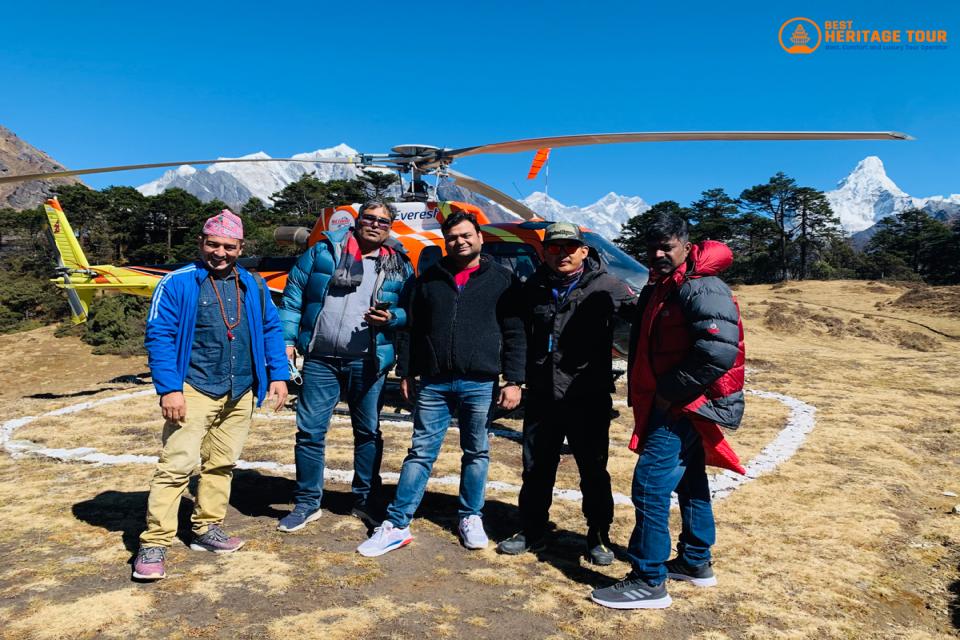
Safety First: We carry emergency oxygen and have 24/7 helicopter evacuation support if needed.
-
Cultural Immersion: We take you beyond the trails to experience the authentic heart of Sherpa culture.
Conclusion
The Gorakshep trek is a journey of the spirit as much as the body. Standing in that high-altitude desert, surrounded by the silent, snow-capped sentinels of the Earth, you realize how small - and how capable - we truly are.
Are you ready to stand at the doorstep of Everest? Let us take you there.
Plan Your Adventure Today!
For more information on our Everest Base Camp Trek packages or to customize your Himalayan journey, contact the experts at Best Heritage Tour.
Phone / WhatsApp / Viber: +977-9851149197 / +977-9810043046
Email: info@bestheritagetour.com / bestheritagetour@gmail.com
Website: www.bestheritagetour.com
Office: Thamel Marg, Kathmandu, Nepal
Author: Best Heritage Tour
Date: 2nd January, 2026