If the standard Everest Base Camp (EBC) trek is a pilgrimage, and the EBC-Gokyo Circuit is a comprehensive tour, then the Everest Three Passes Trek is the true, grand expedition. It is the ultimate challenge for seasoned trekkers, a strenuous 18-20 day trek that traverses three formidable high-altitude mountain passes, linking the remote corners of the Khumbu region into a single, magnificent loop.
This isn't just a trek; it’s a rigorous test of endurance, spirit, and preparedness.
At Best Heritage Tour, we view the Three Passes Trek not merely as a route, but as a commitment to experiencing the Himalayas in their rawest, most glorious form. This journey delivers unmatched panoramic views, profound cultural immersion, and an overwhelming sense of mountaineering achievement. It is for those who crave maximum solitude, geographical diversity, and the satisfaction of earning every single view.
This extensive guide will walk you through the preparation, the itinerary's daunting challenges, the incredible rewards, and why this journey stands as the pinnacle adventure in the Everest region.
Why the Three Passes Trek Stands Alone
The classic EBC trek focuses on a single destination. The Three Passes Trek, conversely, is a dynamic, high-altitude circuit that demands respect and offers unparalleled scenic and physical rewards.
1. The Trinity of Passes: The Challenge Defined
The trek is named for the three major mountain passes that must be crossed, each one higher, more demanding, and more visually rewarding than the last:
-
Kongma La Pass (5,535m): The highest and often considered the most technically challenging due to rocky terrain and potential ice/snow patches. It connects Lobuche/Dingboche with the Khumbu Valley's upper reaches.
-
Cho La Pass (5,420m): The connector between the Khumbu Valley and the Gokyo Valley, renowned for its dramatic ascent and views of the Ngozumpa Glacier.
-
Renjo La Pass (5,360m): The northernmost pass, offering spectacular, wide-open views of the Gokyo Lakes system and a unique perspective on the entire Everest massif upon descent toward Thame/Lumde.
Crossing all three provides trekkers with a complete immersion into the rugged, high-alpine environments surrounding Everest.
2. Maximum Views, Minimal Crowds
By definition, a route this challenging naturally filters the trekking population. While the main trail to EBC sees steady traffic, the high passes sections of this trek offer significant solitude.
-
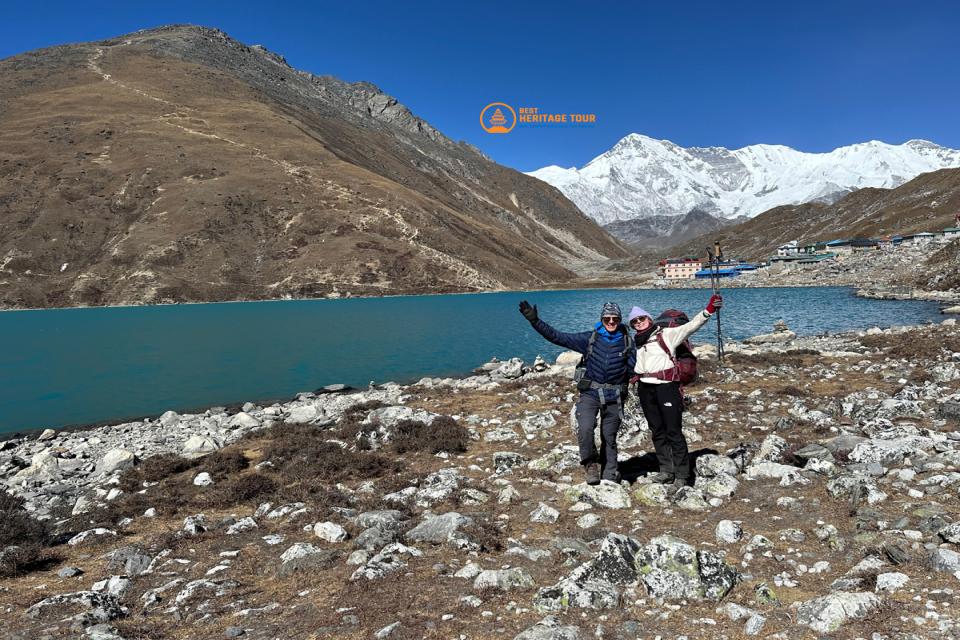
Diverse Landscapes: The route takes you through everything: lush rhododendron forests, serene Sherpa villages like Thame, the vast glacier systems of the Khumbu and Ngozumpa, the tranquil Gokyo Lakes, and the stark, high-altitude moraine fields.
-
Four 8,000-meter Peaks: You will have unparalleled views of Mount Everest, Lhotse, Makalu, and Cho Oyu, often simultaneously from the high vantage points of the passes and the subsidiary climbs like Gokyo Ri and Kala Patthar.
3. Comprehensive Achievement
The Three Passes Trek seamlessly integrates all the highlights of the region into one continuous loop:
-
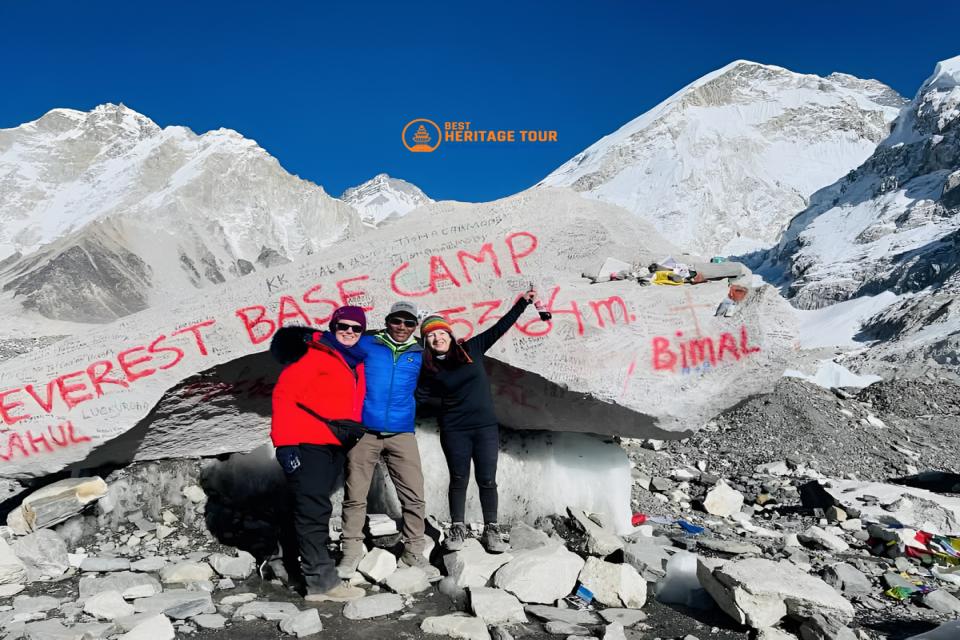
Iconic Landmarks: You visit Everest Base Camp (EBC) and summit the legendary viewpoints of both Kala Patthar and Gokyo Ri.
-
Ultimate Altitude Test: You consistently trek above 5,000m for several days, testing your physical and mental limits - a true mountaineering achievement, not just a hike.
The Grand Itinerary: A Step-by-Step Breakdown (18 Days)
The Everest Three Passes Trek is typically a 16 to 20 day commitment, depending on acclimatization requirements and flight logistics. Here is the classic route we recommend at Best Heritage Tour:
|
Stage |
Days |
Key Villages / Points |
Altitude Range |
Highlights / Achievements |
|---|---|---|---|---|
|
I. Acclimatization |
Day 1-4 |
Lukla, Phakding, Namche Bazaar (3,440m) |
2,860m - 3,440m |
Hike to Everest View Hotel, visit the Sherpa capital, primary acclimatization. |
|
II. Pass 1: Kongma La |
Day 5-8 |
Tengboche, Dingboche, Chhukhung (4,730m) |
3,860m - 4,730m |
Visit the ancient Tengboche Monastery, second major acclimatization in Dingboche, preparing for the first pass. |
|
III. EBC & Kongma La Crossing |
Day 9-11 |
Kongma La Pass (5,535m), Lobuche, Gorak Shep (5,164m) |
5,164m - 5,545m |
Pass 1 crossing (Kongma La). Visit EBC. Summit Kala Patthar (5,545m) for Everest view. |
|
IV. Pass 2: Cho La |
Day 12-14 |
Dzongla, Cho La Pass (5,420m), Thangnak, Gokyo (4,790m) |
4,790m - 5,420m |
Pass 2 crossing (Cho La). Arrive at the sublime Gokyo Lakes. |
|
V. Pass 3: Renjo La |
Day 15-17 |
Gokyo Ri (5,357m), Renjo La Pass (5,360m), Thame |
3,800m - 5,360m |
Summit Gokyo Ri for the 4-peak panorama. Pass 3 crossing (Renjo La). Descend into the tranquil Thame Valley. |
|
VI. Departure |
Day 18-19 |
Namche Bazaar, Lukla |
2,860m - 3,440m |
Final trek back to Lukla for the flight back to Kathmandu. |
The Unrivaled Rewards of the Three Passes
The sheer effort required for this trek is matched only by the magnificence of the rewards you will receive.
1. The Panoramic Trio: From Gokyo Ri to Renjo La
You will stand on three different high points - Gokyo Ri, Kala Patthar, and Renjo La - each offering a unique, non-overlapping perspective:
-
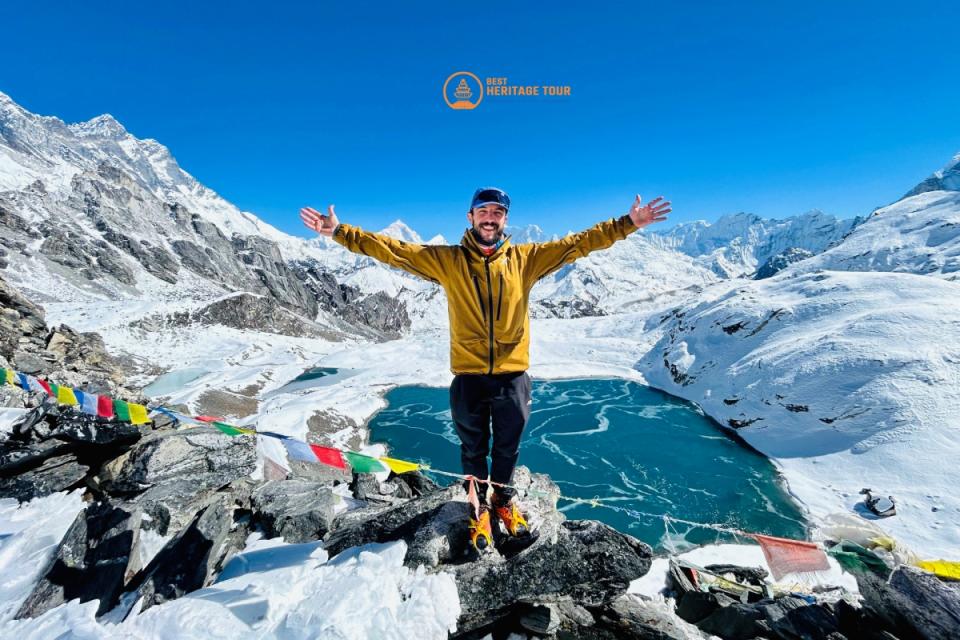
The Renjo La View (The Hidden Gem): The descent from Renjo La, or the view from the summit, is often cited by our guides as the most spectacular. From here, you look back over the entire chain of the turquoise Gokyo Lakes with the massive Everest and its companions perfectly framing the horizon - it is arguably the best single photograph opportunity of the entire trek.
-
The Khumbu Icefall: You see the colossal Khumbu Glacier and the constantly shifting icefall from a close vantage point near Gorak Shep, a geological wonder.
2. Cultural Depth in Remote Villages
Because the circuit takes you deep into the western and northern valleys, you encounter Sherpa culture away from the highly commercialized main EBC route.
-
Thame Village: Trekking through Thame, the birthplace of famous mountaineers like Tenzing Norgay, offers a quieter, more traditional experience. You get a glimpse into authentic high-altitude life, monastic traditions, and the powerful local history of mountaineering.
-
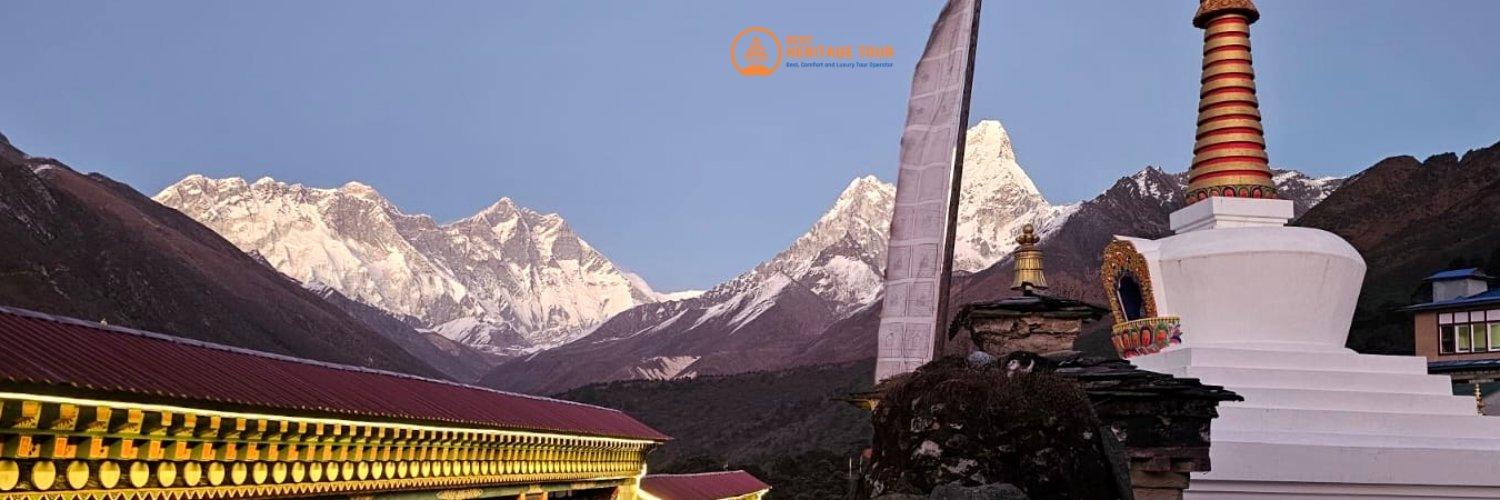
Tengboche Monastery: Located strategically on a ridge overlooking the valley, the centuries-old Tengboche Monastery (3,860m) is the spiritual heart of the Khumbu. Your visit here offers a powerful moment of reflection and cultural immersion.
Preparation: This Is Not a Beginner's Trek
The Everest Three Passes Trek is challenging. It requires excellent physical conditioning, mental fortitude, and a deep respect for the mountain environment.
1. Physical Fitness Requirements
You should be prepared for multiple days of consecutive 6-10 hour trekking, often carrying a daypack and covering large distances over uneven, rocky, high-altitude terrain.
-
Cardiovascular Fitness: Essential. Focus on activities like running, cycling, and hiking (with elevation gain) for at least 3-6 months before your trip.
-
Strength and Endurance: Practice hiking with a weighted pack to prepare your back and legs for the continuous load.
-
Prior Experience: This trek is best suited for individuals who have successfully completed multi-day high-altitude treks (like Annapurna Circuit or even a standard EBC) previously.
2. High Altitude Acclimatization is Key
With multiple days spent above 5,000m and three passes over 5,360m, Acute Mountain Sickness (AMS) is a real risk. Our meticulously designed itinerary prioritizes safety:
-
Slow, Steady Ascent: Our route incorporates strategic acclimatization days (high-and-sleep-low) in Namche, Dingboche, and sometimes Chhukhung.
-
Hydration: Guides enforce strict hydration requirements, as the dry, cold, thin air can lead to severe dehydration.
-
No Compromise: Unlike self-guided trips, Best Heritage Tour guides are trained to recognize the earliest signs of AMS and will enforce rest or descent if necessary - your life is our priority.
3. Essential Gear for the Passes
Trekking gear needs to be robust enough to handle high winds, sub-zero temperatures, and ice:
-
Technical Footwear: High-quality, waterproof, well-broken-in trekking boots are non-negotiable for navigating the passes.
-
Layering System: Bring high-grade thermal base layers, a fleece mid-layer, and a waterproof/windproof down jacket and shell for the extreme cold, especially at night and during the pre-dawn starts.
-
Traction: Depending on the season, our guides may recommend or carry micro-spikes for traction on the icy patches of the Cho La and Kongma La Passes.
-
Sun Protection: Sunglasses (Category 3 or 4 are recommended) and broad-spectrum sunscreen are vital, as the UV exposure at this altitude is extreme.
Timing Your Ultimate Khumbu Expedition
Choosing the right time to tackle the Everest Three Passes Trek can make the difference between a once-in-a-lifetime adventure and a miserable, weather-limited experience.
-
Peak Seasons (Best):
-
Autumn (Late September to Mid-November): Clear skies, moderate temperatures, and dry trails. This is universally considered the best time for the passes.
-
Spring (March to May): Warmer weather, and the lower sections are filled with blooming rhododendrons. The pass crossings may have more snow than in autumn.
-
-
Avoid:
-
Monsoon (June to August): Poor visibility, heavy rainfall at lower altitudes, and slippery, challenging conditions on the passes.
-
Winter (Late December to February): Extreme cold (often dropping to -20⁰C at night), and the passes are typically covered in heavy, deep snow, making the crossing dangerous and often impossible without technical mountaineering equipment.
-
Conclusion: Earn Your View
The Everest Three Passes Trek is the ultimate expression of the Himalayan adventure spirit. It is designed for experienced trekkers who wish to see every facet of the Sagarmatha National Park, who relish a challenge, and who seek the immense satisfaction of linking three high-altitude passes into a single, seamless, and profoundly rewarding circuit.
This journey demands respect, preparation, and expert guidance. As a local Nepali operator, Best Heritage Tour provides meticulously planned itineraries, highly trained Sherpa guides, and an absolute commitment to safety and cultural authenticity. When you book the Three Passes with us, you are not just getting a guide; you are gaining a partner dedicated to helping you achieve the pinnacle of your trekking ambitions.
If you are ready for the challenge, we are ready to lead the way.
Contact Best Heritage Tour to Plan Your Three Passes Expedition
Phone / WhatsApp / Viber: +977-9851149197 / +977-9810043046
Email: info@bestheritagetour.com / bestheritagetour@gmail.com
Website: www.bestheritagetour.com
Location: Thamel Marg, Kathmandu, Nepal
Author: Best Heritage Tour
Date: 2nd December, 2025