For many adventurers, the dream of standing at the foot of the world’s tallest peak is often shadowed by a single, heart-racing obstacle: the flight to Lukla. Known as one of the most dangerous airports in the world, Lukla’s short, uphill runway and the unpredictable Himalayan weather are enough to make even the bravest trekkers reconsider their plans.
But what if we told you that you could skip the small planes, bypass the flight cancellations, and reach the Khumbu region while keeping your feet firmly on the ground?
At Best Heritage Tour, we believe that the journey should be as enriching as the destination. That is why we have prepared the Everest Base Camp Trek by Bus or Jeep Package. This overland route is more than just a "backup plan" - it is a deep dive into the heart of Nepal, offering a slower, safer, and more authentic way to witness the majesty of Everest.
Why Choose the Everest Base Camp Trek by Road?
The traditional way to reach Everest involves a 35-minute flight from Kathmandu to Lukla. While quick, it comes with significant downsides: high costs, frequent weather delays that can strand you for days, and a sudden jump in altitude to 2,860m.
Choosing the EBC Trek by road changes the narrative entirely. Here is why more travelers are opting for the "drive-in" method:
1. Conquer Your Fear of Flying
If the thought of a tiny Twin Otter plane navigating mountain passes keeps you up at night, the road route is your sanctuary. By taking a Jeep to Everest Base Camp (or at least as far as the road goes), you swap the turbulence of the air for the winding, scenic roads of the Nepalese hills.
2. Superior Acclimatization
Altitude sickness is the biggest threat to any EBC trekker. When you fly to Lukla, you instantly land at nearly 3,000 meters. By contrast, the Everest Base Camp Trek by Jeep starts at lower elevations. The gradual climb through the Solu region allows your red blood cells to multiply naturally, significantly reducing the risk of Acute Mountain Sickness (AMS).
3. Budget-Friendly Adventure
Let’s be honest: domestic flights in Nepal are expensive. A round-trip ticket to Lukla can eat a massive chunk of your travel budget. The Everest Base Camp Trek by Bus is significantly more affordable, allowing you to spend those savings on better gear, extra acclimatization days, or perhaps a well-deserved celebration dinner in Kathmandu after your trek.
4. The "Hidden" Heritage of Nepal
When you fly over the hills, you miss the heartbeat of the country. Driving through the districts of Okhaldhunga and Solukhumbu reveals terraced farms, rhododendron forests, and traditional Rai and Tamang villages that most tourists never see. This is the "Heritage" in Best Heritage Tour.
The Route: Kathmandu to the Gateway of Everest
The road network in Nepal is evolving rapidly. While you cannot drive all the way to the base camp (thankfully, as the trails remain pristine!), you can now get remarkably close.
The Drive: Kathmandu to Salleri and Thamdanda
Your journey begins with an early morning departure from Kathmandu. We use rugged, 4WD Jeeps for this leg because the terrain demands power and stability.
-
Kathmandu to Salleri: A 8-10 hour drive through lush valleys and over high ridges. Salleri is the administrative hub of the Solukhumbu district and offers a glimpse into local life far removed from the tourist hubs.
-
Salleri to Thamdanda/Surke: From Salleri, the road becomes more adventurous. We navigate the "winding road to the sky" for another 5-6 hours until we reach Thamdanda. Currently the road is developing and we can further drive to Surke (Village just below the Lukla) from Thamdanda.
The Transition: Thamdanda to Phakding
Once the Jeep drops you off, the real trekking begins. You will trek through Paiya and eventually join the classic Everest trail at Phakding. By the time you reach the "Main Street" of the Everest trail, you will already have "mountain legs" and a body that is well-adjusted to the thinning air.
What to Expect on the EBC Trek by Jeep Itinerary
A typical overland journey with Best Heritage Tour takes about 14 to 16 days. This extra time is what makes the experience so rewarding.
|
Day |
Destination |
Elevation |
Highlights |
|---|---|---|---|
|
1 |
Drive to Salleri and to Thamdanda |
2,360m |
Scenic views of the Sunkoshi River |
|
2 |
Trek to Phakding |
2,610m |
Joining the classic EBC trail |
|
3 |
Trek to Namche Bazaar |
3,440m |
The first glimpse of Mt. Everest |
|
4 |
Acclimatization Day |
3,440m |
Exploring the Sherpa Culture Museum |
|
5-8 |
The High Himalaya Trek |
Up to 5,364m |
Tengboche, Dingboche, and Lobuche |
|
9 |
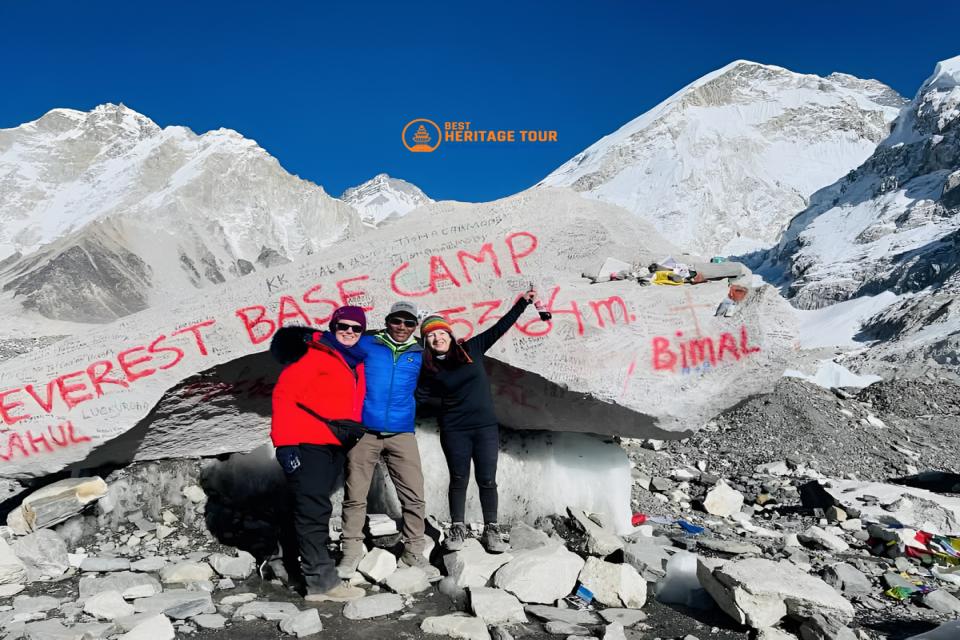
Everest Base Camp |
5,364m |
The Achievement of a Lifetime |
|
10 |
Kala Patthar & Pheriche |
5,545m |
The best sunrise view on Earth |
|
11 |
Trek to Namche Bazaar |
3,440m |
Return to Sherpa Cultural Hub |
|
12 |
Trek to Lukla |
2,860m |
World Dangerous Airport |
|
13 |
Trek to Thamdanda |
2,360m |
End of Trekking Portion |
|
14 |
Drive to Kathmandu |
1,400m |
Jeep Drive along the bank of Bhotekoshi and Sunkoshi River |
Is the EBC Trek Road Route Difficult?
We want to be intellectually honest with our travelers: the EBC Trek by Road is a different kind of challenge.
-
The Drive: The roads in Nepal are often "bumpy" (what we locals call a "Himalayan Massage"). You will need a bit of patience for the 10-hour drive.
-
The Duration: Because you are walking more and driving longer, you need a few extra days compared to the flight-based itinerary.
-
The Reward: However, the physical effort is offset by the fact that you aren't fighting the "Lukla Jitters" or worrying about whether your flight will be canceled.
Essential Tips for Everest Base Camp Trek by Road
As your professional heritage guides, we recommend the following for a smooth journey:
-
Travel in the Right Season: The best time for the Everest Base Camp Trek by Jeep is Spring (March to May) and Autumn (September to November). During the monsoon, the dirt roads past Salleri can become muddy and challenging.
-
Invest in a Private Jeep: While shared buses are an option for the ultra-budget traveler, we highly recommend a private 4WD Jeep. It allows you to stop for photos, enjoy a meal at a local "Bhatti" (teahouse), and ensures a much higher level of comfort.
-
Pack for "Dust and Chill": The road journey can be dusty. Keep a buff or scarf handy. Once you start trekking, the temperature drops rapidly, so layering is key.
-
Embrace the Culture: In the lower regions like Kharikhola and Bupsa, the culture is incredibly raw. Take the time to talk to your local hosts - they have stories of the mountains that go back generations.
Conclusion
Reaching Everest is a pilgrimage. For those who want to honor the history of the mountain - following in the footsteps of the early explorers who walked from the Jiri valley long before the Lukla airport existed - the Everest Base Camp Trek by Road is the ultimate choice.
By choosing this route, you aren't just taking a detour; you are choosing a more sustainable, safer, and deeply personal connection with the Himalayas. At Best Heritage Tour, we provide the most experienced drivers, the sturdiest 4WD vehicles, and guides who know every stone on the path from Salleri to the Base Camp.
Stop worrying about the flight. Start dreaming about the mountain.
Phone / WhatsApp / Viber: +977-9851149197 / +977-9810043046
Email: info@bestheritagetour.com / bestheritagetour@gmail.com
Website: www.bestheritagetour.com
Office: Thamel Marg, Kathmandu, Nepal
Author: Best Heritage Tour
Date: 6th January, 2026