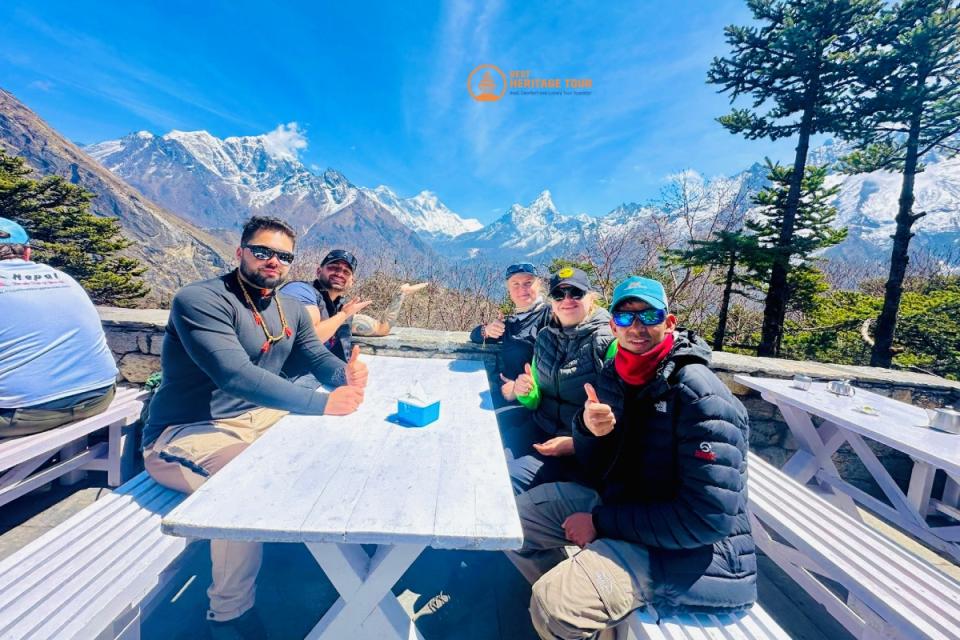
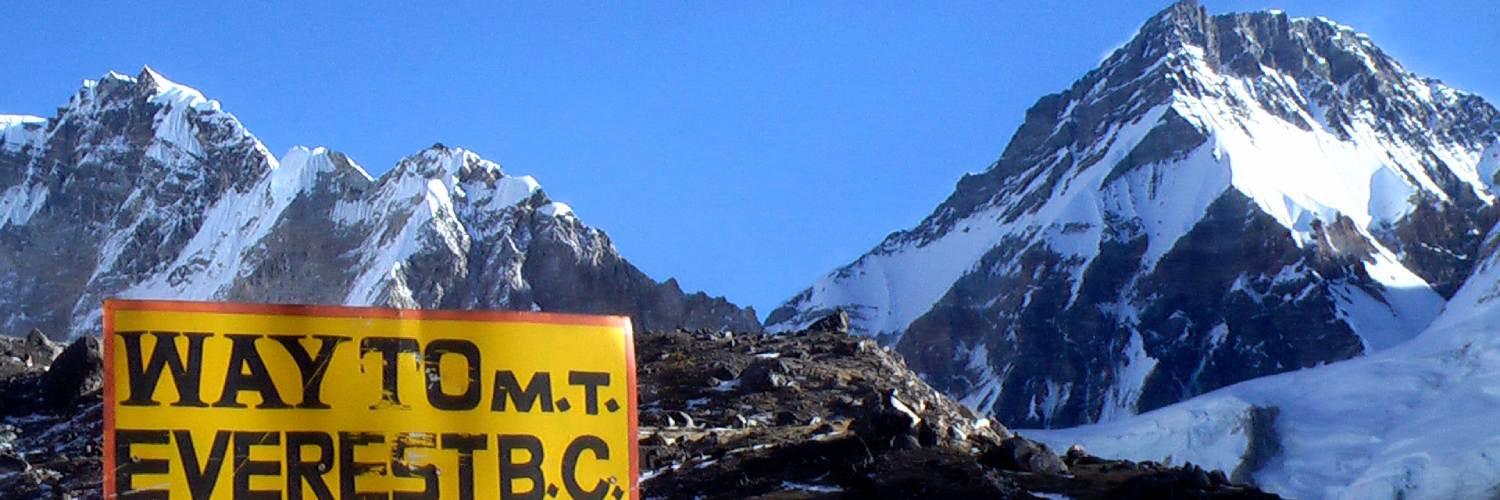
Standing at the foot of the world’s highest peak is not just a travel goal; it is a life-altering pilgrimage. As we step into 2026, the Everest Base Camp (EBC) Trek remains the gold standard for adventure. However, the landscape of trekking in Nepal is evolving. From updated permit regulations and new road access options to the shift in flight logistics, planning your journey requires a modern touch.
At Best Heritage Tour, we believe that a successful trek isn't just about reaching the destination - it’s about the stories you collect along the trail. Whether you are a seasoned mountaineer or a first-time high-altitude hiker, this guide covers everything you need to know for your Everest Base Camp Trek in 2026.
Why 2026 is the Year for Everest?
For years, the Khumbu region has been the heart of Himalayan trekking. In 2026, there is a renewed focus on sustainable tourism and enhanced safety protocols. The local government and trekking agencies have worked together to improve trail maintenance and lodge facilities, making the "teahouse experience" more comfortable than ever.
Moreover, 2026 marks a year where connectivity and infrastructure have reached a balance. You can enjoy high-speed satellite Wi-Fi in Namche Bazaar to share your journey with the world, while still finding the serene, untouched silence of the high Himalayas just a few miles further.
Navigating the New Regulations: Permits and Guides
If you are planning an EBC Trek in 2026, you must stay updated on the latest logistical changes.
1. Mandatory Licensed Guides
As of late 2025 and moving into 2026, the Nepal Tourism Board has reinforced the rule that solo trekking is no longer permitted in most high-altitude regions. To ensure safety and support the local economy, every trekker must be accompanied by a licensed guide. At Best Heritage Tour, our guides are not just navigators; they are cultural ambassadors who bridge the gap between you and the Sherpa communities.
2. Essential Permits for 2026
You no longer need the old TIMS card for the Everest region. Instead, you will require:
-
Khumbu Pasang Lhamu Rural Municipality Permit: This is the local entry fee (approx. $20-$25 USD) collected in Lukla or Monjo.
-
Sagarmatha National Park Entry Permit: This is essential for entering the UNESCO World Heritage site (approx. $30 USD).
Pro Tip: Keep these permits in a waterproof sleeve in your daypack. There are multiple checkpoints in Monjo and Namche Bazaar where they will be verified. Also, all tourists and trekkers visiting Nepal form January 1, 2026 must register themselves to FNMIS through DOI.
The Ultimate Everest Base Camp Trek Itinerary for 2026
A 14-day itinerary remains the "Golden Standard" to ensure proper acclimatization. Rushing the ascent is the most common reason for not reaching the base camp. Here is how we structure the perfect journey:
|
Day |
Destination |
Elevation |
Highlights |
|---|---|---|---|
|
1 |
Arrival in Kathmandu |
1,400m |
Briefing & Gear Check |
|
2 |
Fly to Lukla / Trek to Phakding |
2,610m |
The iconic "World's Most Dangerous Airport" |
|
3 |
Trek to Namche Bazaar |
3,440m |
First view of Everest at Top Danda |
|
4 |
Acclimatization Day |
3,440m |
Hike to Everest View Hotel |
|
5 |
Trek to Tengboche |
3,860m |
Visit the famous Tengboche Monastery |
|
6 |
Trek to Dingboche |
4,410m |
Walking into the high-alpine tundra |
|
7 |
Second Acclimatization |
4,410m |
Hike to Nangkartshang Peak (5,080m) |
|
8 |
Trek to Lobuche |
4,910m |
The Thukla Pass & Climbers' Memorial |
|
9 |
Everest Base Camp |
5,364m |
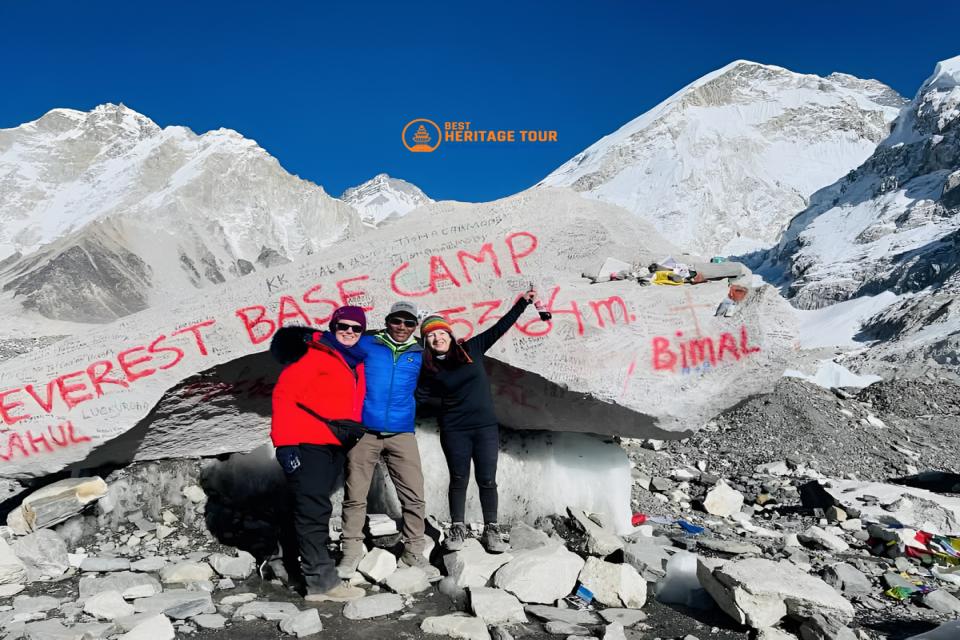
Reaching the goal! Overnight in Gorak Shep |
|
10 |
Kala Patthar Viewpoint |
5,545m |
Sunrise view of the Everest Summit |
|
11 |
Descend to Pheriche |
4,240m |
Rapid descent into oxygen-rich air |
|
12 |
Descend to Namche |
3,440m |
Celebrating with a "Danphe" beer |
|
13 |
Trek to Lukla |
2,860m |
Final night with your trekking crew |
|
14 |
Fly to Kathmandu |
1,400m |
Farewell dinner and souvenir shopping |
Standing on the Edge: Kala Patthar Viewpoint
While reaching Everest Base Camp is the emotional goal, the Kala Patthar Viewpoint is where the magic truly happens. Ironically, from Base Camp itself, the summit of Everest is hidden behind the massive shoulder of Nuptse.
To see the "Roof of the World" in all its glory, we take our trekkers up to Kala Patthar (5,545m) at dawn. As the sun rises behind the Everest-Lhotse massif, the peaks turn from a ghostly gray to a burning gold. It is the highest point of the trek and offers a 360-degree panorama that no photograph can ever fully capture.
Logistics Update: The Lukla Flight vs. Ramechhap
In 2026, the "Lukla Flight" continues to be a topic of discussion. Due to air traffic congestion in Kathmandu, most flights during the peak seasons (Spring and Autumn) operate from Manthali Airport in Ramechhap.
-
What this means for you: You will likely need to leave Kathmandu around 2:00 AM for a 4-hour drive to Ramechhap to catch your 20-minute flight to Lukla.
-
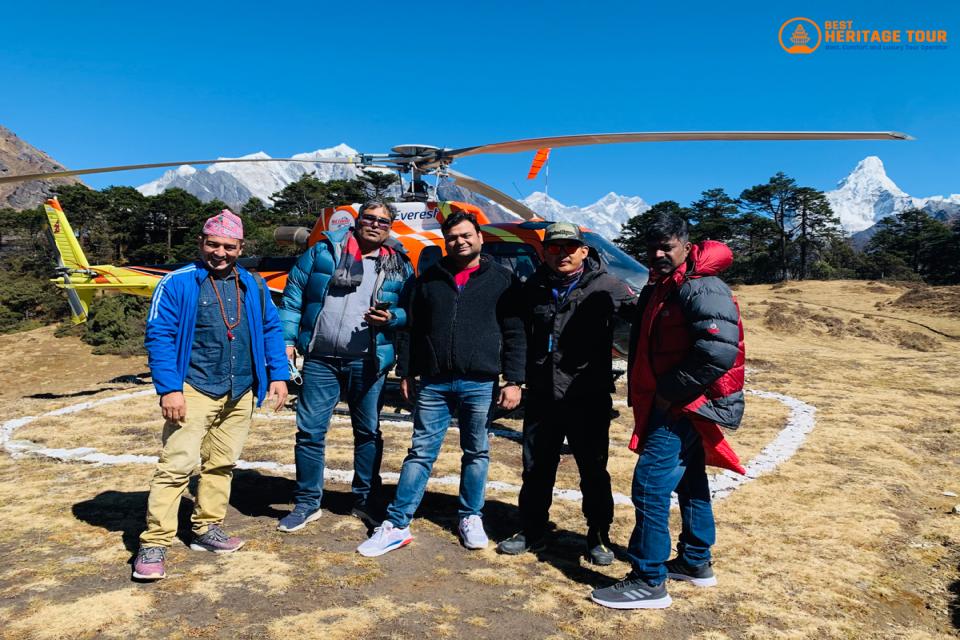
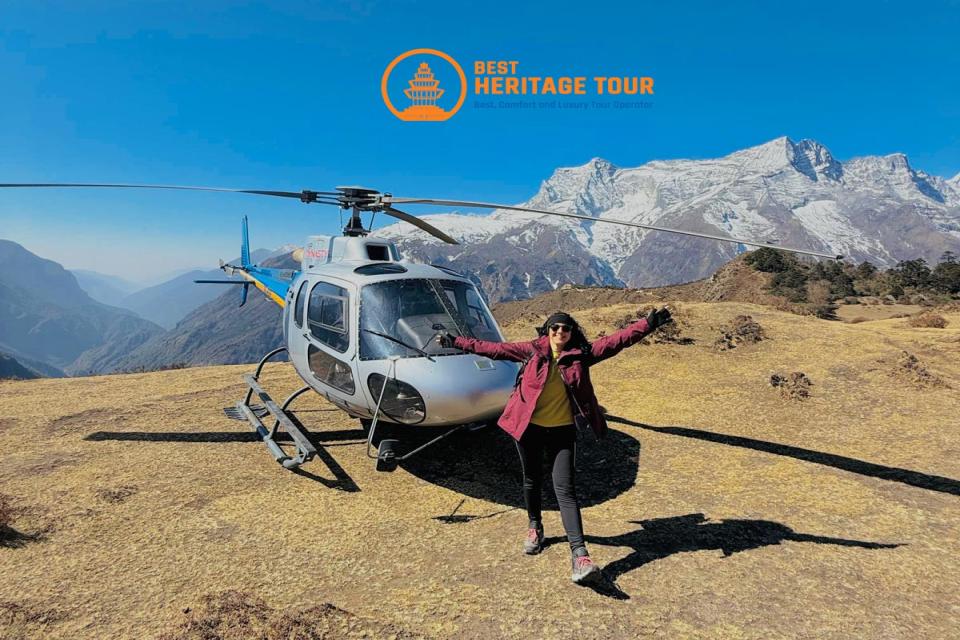
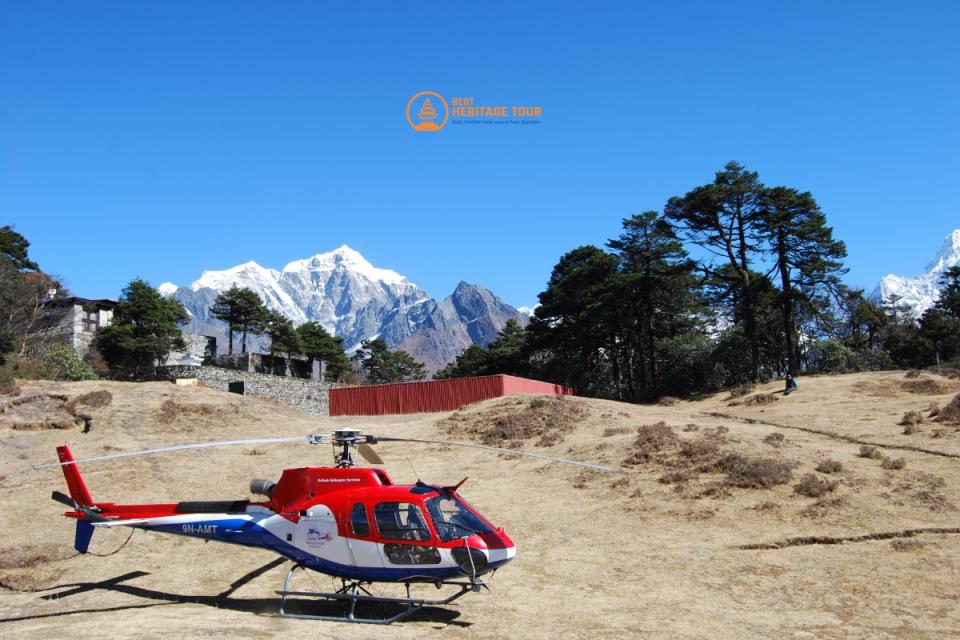
The Alternative: Many of our clients are now opting for a Helicopter flight directly from Kathmandu or choosing the overland route via Salleri, which adds 2-3 days of beautiful, low-altitude trekking through the lower Solu region.
Training and Preparation: How to Get "Everest Base Camp Trek Ready" in 2026?
You don’t need to be an Olympic athlete, but the EBC Trek in 2026 demands respect. The air at Base Camp contains roughly 50% less oxygen than at sea level.
1. Cardiovascular Endurance
Focus on "Zone 2" training. Long, slow rucks with a weighted backpack, cycling, or swimming for 45-60 minutes 4 times a week will build the aerobic base you need.
2. Strength and Conditioning
Your knees and glutes will take a beating on the descent. Incorporate lunges, step-ups, and core work into your routine at least three months before your departure.
3. Mental Fortitude
Trekking is 70% physical and 30% mental. There will be days when it’s cold, you’re tired, and the "Dal Bhat" starts to taste the same. Staying positive and trusting the process (and your guide) is key.
Packing Essentials for EBC Trek for 2026
The weather in the Himalayas is notoriously fickle. In 2026, we recommend a high-quality "layering system."
-
The Base Layer: Synthetic or Merino wool (avoid cotton at all costs).
-
The Mid Layer: A heavy fleece or a "puffy" down vest.
-
The Outer Shell: A GORE-TEX waterproof jacket to block the biting Khumbu wind.
-
Feet: Well-broken-in trekking boots. Do not show up in Kathmandu with brand-new boots!
-
Tech: A high-capacity power bank. While teahouses offer charging, it is often expensive and slow at higher altitudes.
Conclusion
The Everest Base Camp Trek in 2026 is more than just a hike; it’s a profound journey into the heart of the Himalayas and a testament to your own resilience. From the vibrant, prayer-flag-strewn streets of Namche Bazaar to the silent, awe-inspiring glacial moraines of the high Khumbu, every step on this trail is a story waiting to be told.
At Best Heritage Tour, we don’t just guide you to the base of the world's highest peak - we invite you to become part of the mountain's living history. With our deep-rooted local expertise, commitment to sustainable trekking, and a team that treats every traveler like family, we ensure that your 2026 expedition is as seamless as it is life-changing.
Standing at the Kala Patthar Viewpoint as the sun hits the summit of Everest is a moment that stays with you forever. Let us be the ones to take you there.
Plan your Everest Base Camp Trek in 2026 with Best Heritage Tour
Phone / WhatsApp / Viber: +977-9851149197 / +977-9810043046
Email: info@bestheritagetour.com / bestheritagetour@gmail.com
Website: www.bestheritagetour.com
Office: Thamel Marg, Kathmandu, Nepal
Author: Best Heritage Tour
Date: 6th January, 2026