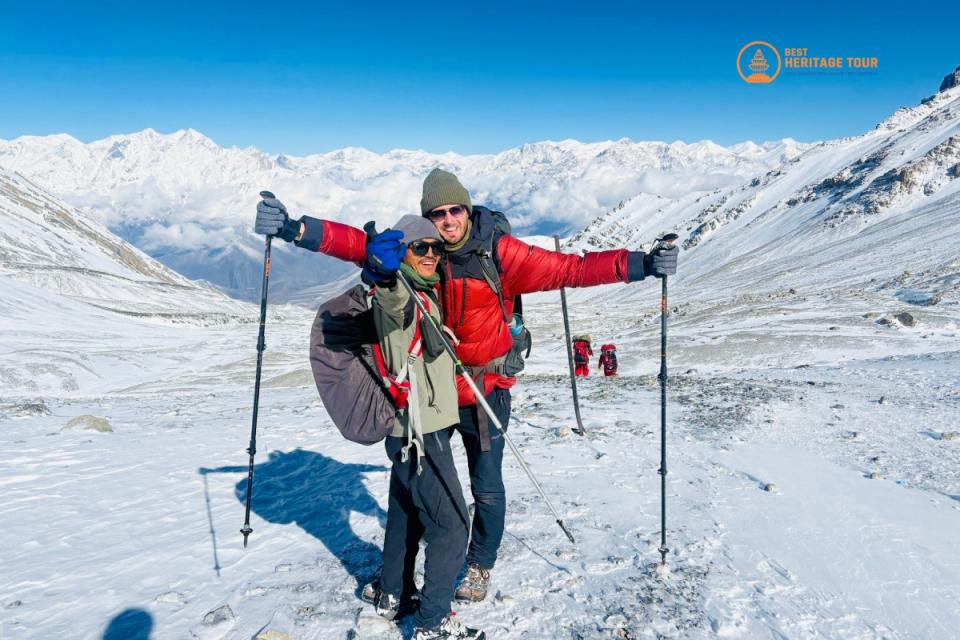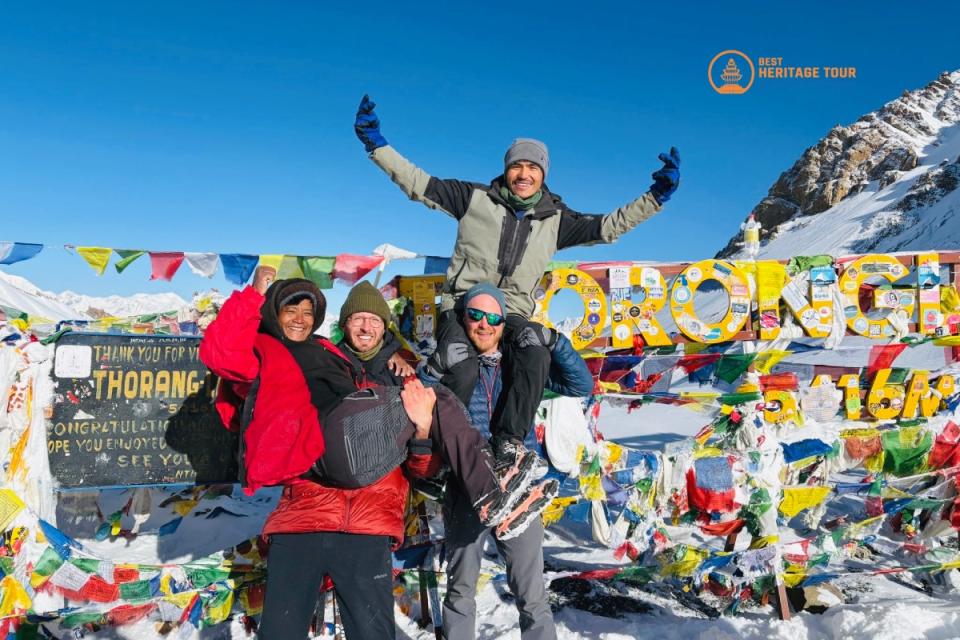
Planning a journey along one of the world's most spectacular long-distance trekking routes is an exhilarating experience. The towering peaks of the Annapurna massif, the dramatic crossing of Thorong La Pass, and the pristine, high-altitude waters of Tilicho Lake await you. However, behind the grand landscapes lie the practical, day-to-day logistics that can make or break your trekking experience - and your budget.
At Best Heritage Tour, we pride ourselves on delivering unfiltered transparency and deep local expertise to the global trekking community. One of the most frequent, yet overlooked, questions our team receives from travelers planning their Nepalese adventure is: What is the Cost of Boiled Hot Drinking Water on Annapurna Circuit Trek?
To help you plan your finances accurately, our trekking guides have compiled the most recent, field-tested financial breakdown from our team's latest expedition. Here is everything you need to know about how much you will spend to keep your water bottles filled with safe, steaming water in the mountains.
Why Does the Cost of Hot Water Matter in the Himalayas?
When planning a budget for Nepal, many independent travelers look closely at the price of room and board. They assume that water is a nominal expense. On the trail, however, you must consume between 4 to 5 liters of fluid per day to help your body acclimatize to the thinning air.
While cold tap water is available in many villages, it is never safe for direct consumption due to waterborne pathogens. Trekkers must rely on purification tablets, filtration systems, or - the safest and most soothing option for your respiratory system in the cold air - boiled water provided by local teahouses.
Because teahouses rely heavily on hauled kerosene, gas cylinders, or scarce firewood to boil water at high elevations, hot drinking water is treated as a premium service. Understanding how much does it cost for Hot Drinking Water on Annapurna Circuit Trek allows you to carry the correct amount of cash (Nepalese Rupees), as ATMs are entirely absent once you leave the lower trailheads.
Can I Find Hot Drinking Water in Every Village on the Annapurna Circuit Trek?
Before diving into the exact pricing, let us address a critical navigational concern for solo travelers and groups alike: Can I find Hot drinking water in every villages on Annapurna Circuit Trek?
The short answer is yes. The Annapurna Circuit is a highly developed teahouse trekking route. Every established village along the standard trail features lodges and small restaurants equipped to boil water for guests. Whether you are resting in a bustling hub like Manang or stopping for a quick lunch break in a tiny settlement like Yak Kharka, you can easily purchase hot water.
However, the method used to heat that water, the availability, and the cost fluctuate drastically based on altitude, remoteness, and the season. In lower regions, eco-friendly solar heaters or electric kettles are common. As you cross the tree line into extreme altitudes, teahouses must burn expensive LPG (Liquefied Petroleum Gas) cylinders that are portered up the mountains on the backs of mules or humans. This logistical reality is reflected directly in the price per cup.
Cost of Hot Drinking Water on Annapurna Circuit Trek: The Complete Breakdown
To give you the most accurate financial map possible, the table below reflects the exact data collected by our senior Best Heritage Tour guide. This data was updated directly from the trail to ensure complete accuracy for your upcoming trek.
Prices are listed per 250 ml cup, which is the standard baseline measurement used by teahouse menus across the Annapurna Conservation Area (ACAP).
|
Village |
Elevation (Approx.) |
Cost of Hot Water (Per 250 ml Cup) |
Expected Cost Per Liter (4 Cups) |
|---|---|---|---|
|
Besisahar |
760 m / 2,493 ft |
Rs. 50 |
Rs. 200 |
|
Jagat |
1,300 m / 4,265 ft |
Rs. 50 |
Rs. 200 |
|
Dharapani |
1,860 m / 6,102 ft |
Rs. 50 |
Rs. 200 |
|
Chame |
2,670 m / 8,759 ft |
Rs. 100 |
Rs. 400 |
|
Upper Pisang |
3,300 m / 10,826 ft |
Rs. 100 |
Rs. 400 |
|
Manang |
3,540 m / 11,614 ft |
Rs. 150 |
Rs. 600 |
|
Siri Kharka |
4,060 m / 13,320 ft |
Rs. 200 |
Rs. 800 |
|
Tilicho Base Camp |
4,150 m / 13,615 ft |
Rs. 200 |
Rs. 800 |
|
Yak Kharka |
4,050 m / 13,287 ft |
Rs. 200 |
Rs. 800 |
|
Thorong Phedi |
4,450 m / 14,599 ft |
Rs. 250 |
Rs. 1,000 |
|
Muktinath |
3,760 m / 12,335 ft |
Rs. 50 |
Rs. 200 |
|
Tatopani |
1,190 m / 3,904 ft |
Rs. 200 |
Rs. 800 |
Note: 1 USD fluctuates around Rs. 150 to Rs. 152 Nepalese Rupees based on current exchange rates. Carrying small, clean denominations of local currency is mandatory on the trail.
Deep-Dive Analysis: Understanding the Altitude Price Hike
Looking closely at the numbers reveals a clear economic narrative written into the topography of the Himalayas. Let’s break down how the Cost of Hot Drinking Water on Annapurna Circuit Trek behaves across different sectors of the journey.
1. The Lower Foothills (Besisahar to Dharapani)
At the start of your trek, infrastructure is relatively modern. Besisahar, Jagat, and Dharapani are accessible by rugged off-road vehicles. These villages have consistent electricity supplies and access to cheaper cooking fuels. Consequently, a cup of hot water remains fixed at a modest Rs. 50. If you fill a standard 1-liter Nalgene bottle here, it will run you about Rs. 200.
2. The Mid-Alpine Transition (Chame to Upper Pisang)
As you pass the 2,500-meter mark and enter the pine forests of Chame and Upper Pisang, the mountain geography tightens. Transportation costs rise, and electricity becomes more reliant on local micro-hydropower plants, which can be inconsistent. The price jumps to Rs. 100 per cup (Rs. 400 per liter). This is where trekkers first notice water expenses creeping up to match the cost of light snacks.
3. The Acclimatization Zone (Manang)
Manang is a major trading hub and the vital staging ground where our Best Heritage Tour guides lead mandatory acclimatization hikes. Because it is a large village, you might expect prices to drop due to competition, but the sheer volume of trekkers and the altitude (3,540 m) keep prices at Rs. 150 per cup (Rs. 600 per liter).
4. The High-Altitude Wilderness (Siri Kharka, Tilicho, and Yak Kharka)
If you opt for the breathtaking side trip to Tilicho Lake - the highest lake of its size in the world - you will stay at Siri Kharka and Tilicho Base Camp. Here, you are firmly in the wild alpine zone. Everything must be brought up via mule trains. Fuel is incredibly precious. The price reaches Rs. 200 per cup (Rs. 800 per liter). The same price applies to Yak Kharka on the main route.
5. The Peak Bottleneck: Thorong Phedi
Sitting at a stark 4,450 meters, Thorong Phedi (and the High Camp just above it) is the last stop before tackling the formidable Thorong La Pass. Water takes much longer to boil at this altitude due to decreased atmospheric pressure, meaning stoves must burn longer and consume more fuel to reach a safe temperature. At Rs. 250 per cup, filling a single 1-liter bottle costs Rs. 1,000. If you and a partner need 4 liters each for the grueling pass day, water alone can cost several thousand rupees overnight.
6. The Mustang Descent (Muktinath to Tatopani)
Once you cross the pass and descend into the rain shadow of the Mustang district, you reach Muktinath. Because Muktinath is connected to a major, well-traveled road network coming up from Jomsom and Pokhara, logistics become easy again. The price plummets back down to Rs. 50 per cup.
Conclusion
Navigating the logistical nuances of the Himalayas requires accurate information, a deep respect for local communities, and meticulous planning. Knowing the real-world Cost of Hot Drinking Water on Annapurna Circuit Trek ensures you hit the trail with a fully prepared wallet, an eco-conscious mindset, and a clear understanding of the mountain economy.
At Best Heritage Tour, we do not believe in hidden costs or unexpected surprises. We believe in providing immersive, safe, and culturally rich trekking experiences led by native experts who live and breathe these trails every single day. Let us handle the permits, the safety protocols, the premium teahouse bookings, and the complex trail logistics while you focus on taking in the journey of a lifetime.
Are you ready to step onto the trails of the Annapurna Circuit?
Phone / WhatsApp / Viber: +977-9851149197 / +977-9810043046
Email: info@bestheritagetour.com / bestheritagetour@gmail.com
Website: www.bestheritagetour.com
Office: Thamel Marg, Kathmandu, Nepal
Author: Best Heritage Tour
Date: 7th June, 2026