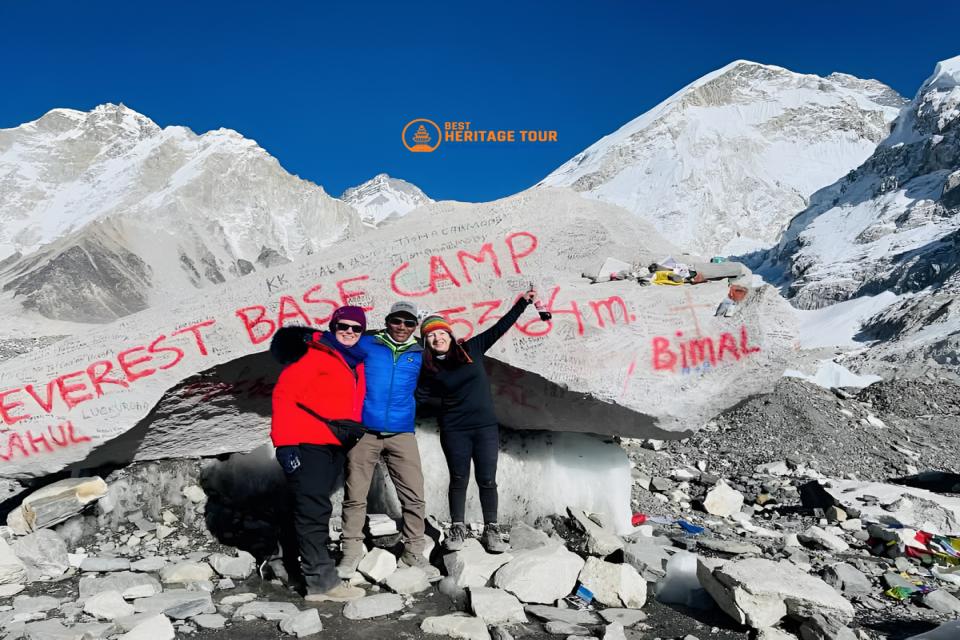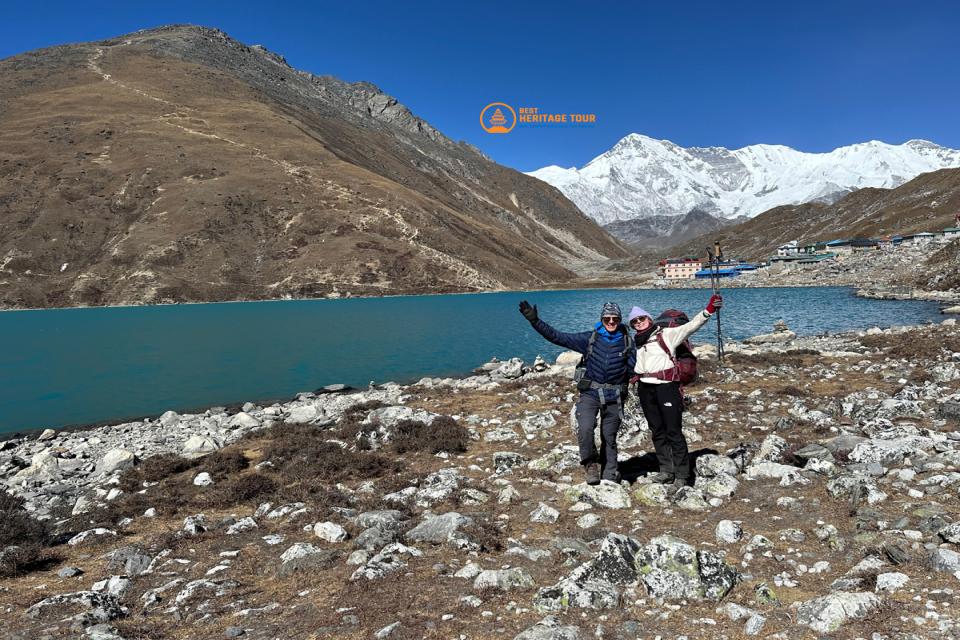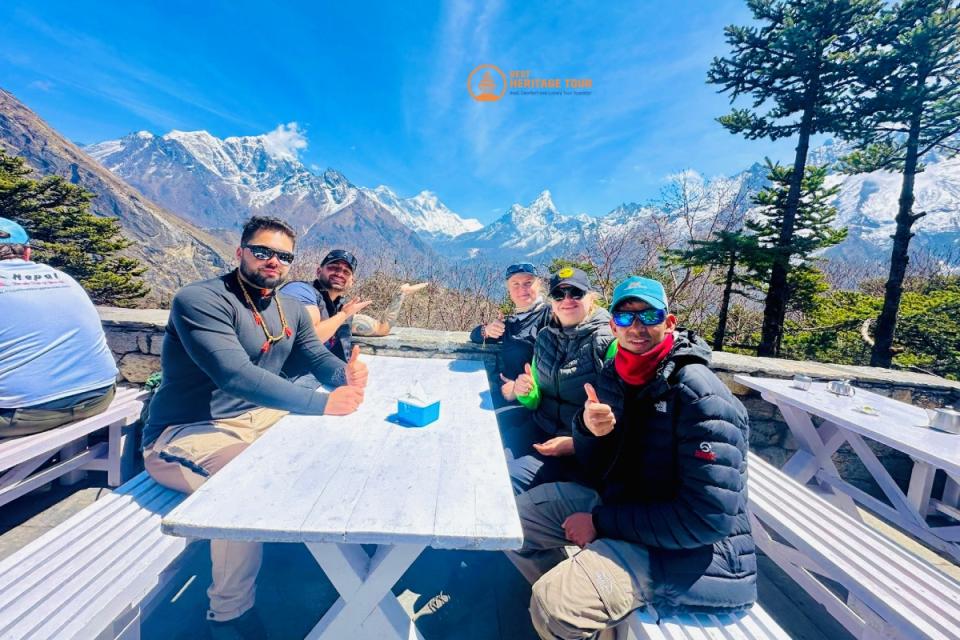
For trekkers, adventurers, and travelers worldwide, the Everest Base Camp (EBC) is more than just a place on a map - it is the ultimate pilgrimage. To stand at the foot of Mount Sagarmatha (the Nepali name for Everest) is a testament to endurance, a profound moment of reflection, and the fulfillment of a lifelong dream.
But when planning this epic journey, a critical question arises: Do I follow the classic path and descend the long, winding trail, or do I embrace the modern innovation of the EBC Helicopter Return?
This decision hinges on three key factors: time, physical condition (especially knee health), and budget.
Here at Best Heritage Tour, we specialize in guiding both the time-honored Classic Everest Base Camp Trek and the increasingly popular EBC Trek with Helicopter Return from Pheriche (or Gorekshep). Our local expertise allows us to provide an honest, detailed comparison, ensuring you choose the adventure that perfectly aligns with your personal goals.
This ultimate guide will break down the two Everest journeys, helping you gain a crystal-clear vision of which trek - the immersive classic or the efficient hybrid - is your right path to 5,364 meters.
I. Tale of the Trail: The Classic Everest Base Camp Trek (The Full Immersion)
The Classic EBC Trek is the definitive Himalayan adventure. It is the route taken by Sir Edmund Hillary and Tenzing Norgay Sherpa, and it remains the gold standard for high-altitude trekking.
The Experience: Earning Every View
The classic route involves a round-trip walk from Lukla (2,860m / 9,383ft) to Everest Base Camp (5,364m / 17,598ft), and then walking all the way back down to Lukla for the flight back to Kathmandu.
This journey is characterized by a slow, deliberate ascent - essential for proper acclimatization - followed by a rugged descent that tests both stamina and willpower. It is an experience of full immersion, where every day is spent amongst the Sherpa people, surrounded by mani walls, chortens, and the ringing of yak bells.
Key Statistics of the Classic EBC Trek
|
Metric |
Detail |
Impact on Traveler |
|---|---|---|
|
Duration |
14-16 days (Kathmandu to Kathmandu) |
Requires 3-4 more vacation days than the heli-return. |
|
Trekking Distance |
Approx. 130 km (Round trip from Lukla) |
High physical demand, especially on the descent. |
|
Acclimatization |
Excellent (typically 2 dedicated rest days) |
Gradual ascent is the safest way to tackle the altitude. |
|
Cost |
Typically lower (The baseline budget option) |
Eliminates the cost of a helicopter charter. |
Pros: Why Choose the Classic Route?
-
The Ultimate Sense of Achievement: There is an unparalleled satisfaction in knowing you walked every kilometer of the journey. The sense of accomplishment upon returning to Lukla is immense.
-
Maximum Cultural Immersion: More days on the trail mean more time spent in the heart of Sherpa culture - more chai sessions with teahouse owners, more time visiting ancient monasteries like Tengboche, and deeper interaction with local life.
-
Superior Acclimatization Window: The longer itinerary builds in extra buffer time. While the ascent remains the same, having an additional 3-4 days on the trail allows your body a more gradual readjustment as you descend.
-
Lower Overall Cost: By removing the expensive helicopter flight, the Classic EBC Trek is naturally the more budget-conscious choice, making the Everest dream accessible to a wider range of adventurers.
Cons: The Trade-Offs
The major drawback, and the reason many trekkers consider the alternative, is the necessity of the long descent.
-
The Physical Toll of Descent: Walking downhill, especially on rocky, uneven mountain terrain, places tremendous strain on the knees, ankles, and quadriceps. For older trekkers or those with pre-existing joint issues, this is often the most painful and least enjoyable part of the trek.
-
The Repetitive Trail: The final three to four days involve simply walking back down the exact same route you ascended. While beautiful, this can feel mentally repetitive after the excitement of reaching EBC.
II. The Best of Both Worlds: EBC Trek with Helicopter Return (The Hybrid Efficiency)
The EBC Trek with Helicopter Return is the modern solution for the ambitious traveler who values time, comfort, and wants to mitigate the physical strain of the descent without sacrificing the goal of reaching Base Camp.
The Experience: Trek Up, Fly Out
This option provides the best of both worlds: you spend 8-9 days trekking the iconic ascent route from Lukla, hitting all the key cultural and acclimatization stops (Namche Bazaar, Tengboche, Dingboche, Lobuche, Gorakshep, Kala Patthar, and EBC).
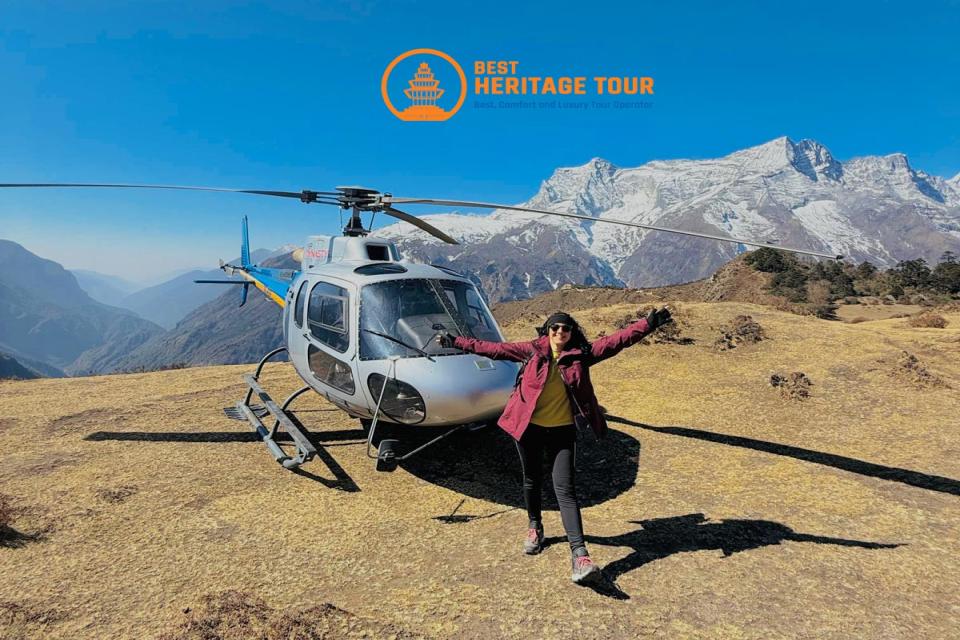
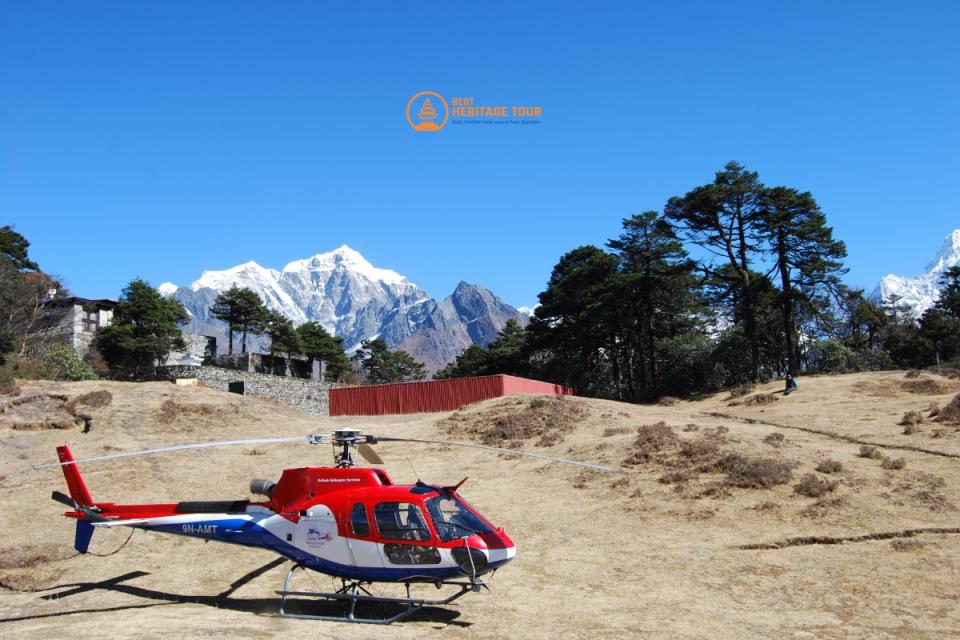
However, after reaching Everest Base Camp and hiking to the Kala Patthar viewpoint (5,555m / 18,225ft) for sunrise photos, your journey takes a dramatic turn. Instead of starting the four-day walk back down, you are picked up by a chartered helicopter from a designated location (usually a safe helipad near Pheriche or Gorakshep) and flown directly back to Lukla or, in some cases, directly to Kathmandu.
Key Statistics of the Heli-Return Trek
|
Metric |
Detail |
Impact on Traveler |
|---|---|---|
|
Duration |
9-12 days (Kathmandu to Kathmandu) |
Time Saver: Cuts the total trip by 3-4 valuable days. |
|
Trekking Distance |
Approx. 65 km (One-way ascent) |
Significantly less physical strain and reduced risk of injury. |
|
Unique Experience |
Aerial views of the Khumbu region and all 8,000m peaks. |
Adds a luxurious, once-in-a-lifetime perspective. |
|
Cost |
Higher premium due to helicopter charter. |
Requires a larger budget. |
Pros: Why Choose the Heli-Return?
-
Eliminating Downhill Strain: This is the single biggest benefit for many trekkers. By flying from Pheriche or Gorakshep, you eliminate 3 to 4 days of grueling downhill impact, which is a game-changer for anyone with knee, hip, or ankle issues, making it an excellent EBC trek for older people.
-
Saving Time and Vacation Days: For those working professionals who cannot commit two full weeks to a single trek, the ability to successfully complete the Everest Base Camp portion in 9-12 days is invaluable.
-
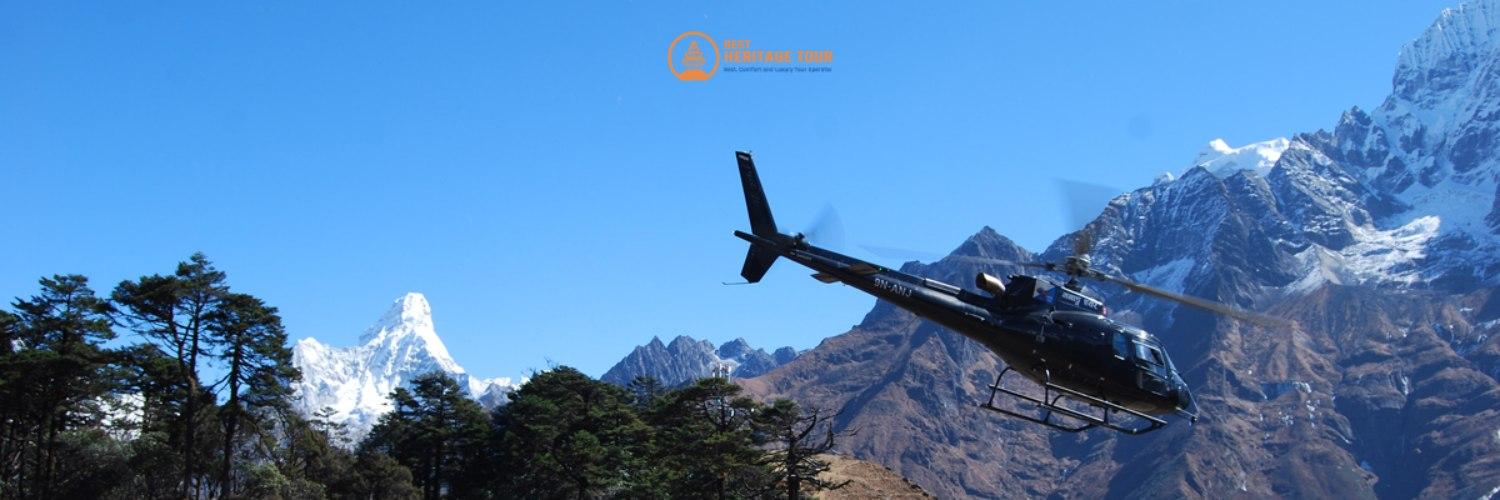
Unforgettable Aerial Views: The helicopter flight offers stunning, unparalleled Khumbu aerial views. Seeing the entire trekking route - the icefall, the high peaks, the teahouses - from above provides an incredible new perspective and an exciting finale to your journey.
-
Faster Emergency Response: While rare, being able to quickly utilize the helicopter option for a rapid descent is an added safety buffer in the event of severe altitude sickness (AMS).
Cons: The Trade-Offs
The main challenges are financial and logistical.
-
Higher Budget: The charter costs for the helicopter are significant, increasing the overall price of the trip.
-
Weather Dependency: Helicopters are highly dependent on good flying weather and clear visibility. Delays, while rare, can happen, which requires some patience and flexibility in the schedule.
-
Reduced Ground Immersion: You miss the final days of walking back through the lower villages and the last interactions on the trail.
III. The Head-to-Head Comparison: Finding Your Perfect Match
To truly decide between the Classic EBC Trek vs helicopter return, we must look at the key factors side-by-side.
A. Physicality and Joint Health
|
Feature |
Classic EBC Trek |
EBC Trek with Helicopter Return |
|---|---|---|
|
Ascent (Challenge) |
Challenging (Requires 7-8 days of uphill climbing). |
Challenging (Same initial ascent; necessary for acclimatization). |
|
Descent (Strain) |
High Risk: 3-4 days of high-impact downhill walking. |
Minimal Risk: Downhill walk avoided by helicopter flight. |
|
Ideal for |
Experienced trekkers, those with very healthy joints, purists. |
Older trekkers, those with chronic knee issues, and first-timers wanting safety. |
For trekkers seeking to avoid EBC descent due to joint pain, the heli-return is the clear, medically advisable choice. While the initial training for the ascent remains the same, eliminating the downward load bearing dramatically reduces the chance of injury or debilitating pain.
B. Time Commitment and Efficiency
The biggest factor for the time-pressed adventurer is the ability to cover the 65 km return distance almost instantly.
|
Trek Aspect |
Classic EBC Trek (Example 14-day itinerary) |
Heli-Return Trek (Example 10-day itinerary) |
|---|---|---|
|
Total Days |
14 days |
10 days |
|
Saving |
0 |
4 days saved |
|
Logistics |
Rely on fixed-wing flights (Lukla to Kathmandu). |
Rely on fixed-wing (KTM to Lukla) plus helicopter charter (Pheriche to Lukla/Kathmandu). |
The heli-return is the definitive fastest way to see Everest Base Camp safely, as it cuts the trip duration without compromising the crucial acclimatization schedule during the ascent.
C. Cost and Budget Breakdown
The cost differential between the two packages is essentially the price of the helicopter charter. While local agency pricing varies, the Everest Base Camp trek with helicopter return cost typically carries a premium of US$800-$1,500 over the classic trek price, depending on group size and the specific pickup location.
-
Classic Trek: Lower initial outlay; budget is primarily allocated to guide/porter fees, permits, food, and lodging for 14 days.
-
Heli-Return Trek: Higher initial outlay; however, you save money on 3-4 days of food and teahouse lodging that you would have paid for on the descent. The core difference is the helicopter premium.
Ultimately, the choice of the higher-priced heli-return is an investment in your time and physical comfort.
IV. The Verdict: Who Should Choose Which Trek?
To simplify your decision, consider your profile and priorities:
The Classic EBC Trek is Perfect for You If:
-
You are a Purist: You want the traditional, full Himalayan experience and the satisfaction of walking every step.
-
You are Budget-Conscious: You want to reach EBC at the most competitive price point possible.
-
You Have Time: You have a generous two weeks (14-16 days) or more set aside for the entire trip and are comfortable with the chance of minor weather delays.
-
Your Joints are Strong: You have no history of knee or ankle issues that would make descending thousands of meters a serious physical barrier.
The Heli-Return is Ideal for You If:
-
You are Time-Pressed: You need to complete the adventure in 10-12 days to manage your work or vacation schedule.
-
You are an Older Trekker or Have Joint Concerns: You want to minimize the risk of pain or injury from the strenuous downhill walk.
-
You Seek Luxury and Efficiency: You view the helicopter flight as an exciting, added element of the adventure, providing stunning aerial footage and a touch of comfort.
-
You Want The Best Views: You want the ground-level perspective of the trek and the unparalleled bird's-eye panorama of the highest mountains on Earth.
V. Best Heritage Tour: Your Trusted Partner for the Everest Adventure
Regardless of which path you choose, the safety, expertise, and local support of your trekking agency are non-negotiable. At Best Heritage Tour, we do not outsource this responsibility - we manage every detail from our office right here in Kathmandu.
Our Dual Commitment to Everest Trekkers
We pride ourselves on offering meticulously planned itineraries for both options, prioritizing acclimatization and safety above all else.
Option 1: The Full, Classic Experience
Our Classic Everest Base Camp Trek is a 14-day package that provides the essential experience with carefully scheduled acclimatization days in Namche Bazaar and Dingboche, ensuring the highest chance of success and well-being. This is the bedrock of Himalayan trekking, refined by decades of local experience.
View the full itinerary and secure your spot here:
Classic Everest Base Camp Trek
Option 2: The Efficient Hybrid Experience
Our EBC Trek with Helicopter Return from Pheriche is designed to maximize the adventure while minimizing the downside. By trekking up and flying out, we cater directly to those who require speed and joint protection. Our itineraries are meticulously timed for helicopter pick-up near Pheriche or Gorakshep, ensuring a smooth, dramatic, and unforgettable finale to your trek.
Explore the EBC Trek Helicopter Return package details here:
Crucial Note for Older Trekkers: We highly recommend the helicopter return option if you are over 60 or have known knee/joint concerns. When you book with Best Heritage Tour, we can tailor the itinerary with even more gradual acclimatization days to ensure you safely reach EBC.
Conclusion: Your Everest Adventure Awaits
The dream of Everest Base Camp is within your reach. The question is no longer if you will go, but how you will go.
Do you commit to the rugged purity of the Classic EBC Trek, earning the view over 14 days? Or do you opt for the smart, efficient hybrid of the EBC Helicopter Return, valuing your time and protecting your joints on the descent?
Both paths lead to the same profound moment at the foot of the world’s highest peak. Let the local experts at Best Heritage Tour guide you to the correct choice based on your specific needs, physical profile, and available time.
Take the next step and let us help you plan the Everest journey of a lifetime.
Phone / WhatsApp / Viber: +977-9851149197 / +977-9810043046
Email: info@bestheritagetour.com / bestheritagetour@gmail.com
Website: www.bestheritagetour.com
Office: Thamel Marg, Kathmandu, Nepal
We are ready to discuss your Everest goals, compare itineraries, and start planning your perfect trek.
Author: Best Heritage Tour
Date: 26th November, 2025