Education is not confined to the four walls of a traditional classroom. The most profound lessons - those that shape perspective, ignite critical thinking, and build lifelong character - are learned when textbooks come alive. For educational institutions seeking an unmatched mix of historical depth, scientific diversity, anthropological richness, and geographical wonder, one destination stands far above the rest: Nepal.
At Best Heritage Tour, we have spent years designing and executing immersive, curriculum-aligned, and deeply engaging student travel experiences. We know that a successful youth expedition requires a delicate balance of academic substance, flawless safety logistics, group-friendly infrastructure, and, of course, unforgettable adventure.
Whether you are designing a high school experiential learning trip, a university research field project, or an institutional cultural exchange, this comprehensive guide outlines the best tour in Nepal for student groups, highlighting the top regions that turn travel into the ultimate teacher.
Why Nepal is the Ultimate Living Classroom
Nepal occupies a unique global position. Geographically, it scales from the tropical plains of the Terai (just 60 meters above sea level) to the highest point on Earth, Mt. Everest (8848.86 m), within a horizontal distance of less than 200 kilometers. This radical topographical variation creates a spectacular natural laboratory for environmental science, geology, and climate study.
Culturally, Nepal is a mosaic of more than 140 distinct ethnic groups, major world religions living in absolute synchronicity, and beautifully preserved medieval city-states. For educational coordinators, a well-structured journey across this terrain addresses multiple academic faculties simultaneously:
-
Anthropology & Sociology: Observing living heritage, indigenous lifestyle adaptations, and the seamless harmony between Hinduism and Buddhism.
-
Environmental & Biological Sciences: Tracking endangered mega-fauna in pristine sub-tropical ecosystems and analyzing the direct impacts of climate change on mountain communities.
-
History & Fine Arts: Studying centuries-old Newari architecture, medieval urban planning, and UNESCO World Heritage conservation strategies.
-
Earth Sciences & Geology: Experiencing the living mechanics of the Himalayan orogeny, deep river gorges, and alpine glaciology.
The Core Academic Route: Kathmandu, Pokhara, Chitwan & Muktinath
When determining the best places for student to visit in Nepal, our experiential learning experts at Best Heritage Tour recommend a multi-ecological circuit that bridges four distinct zones: Kathmandu, Pokhara, Chitwan, and Muktinath.
This specific loop provides a comprehensive overview of Nepal’s geographical, spiritual, and social landscapes, moving seamlessly from urban heritage to deep wilderness, and up into the trans-Himalayan rain shadow.
1. Kathmandu Valley: The Epitome of Living History and Art
As the primary gateway to the country, the capital city is undoubtedly the best city in Nepal to visit for an immersion into history, archaeology, and sociopolitical evolution. The valley functions as an open-air archive containing seven distinct clusters of UNESCO World Heritage Sites.
The Durbar Squares: Lessons in Medieval Urban Planning
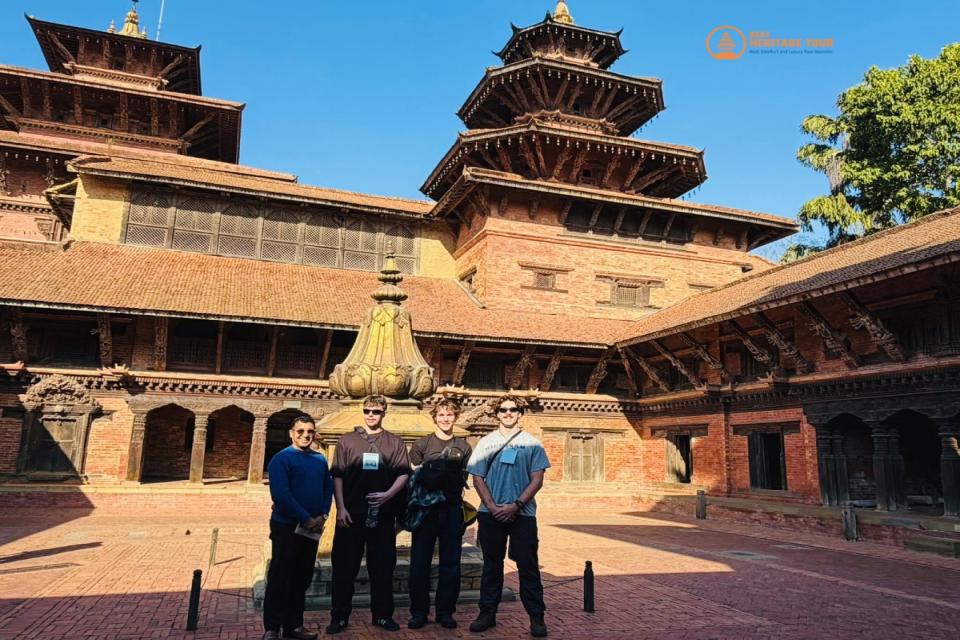
Visiting the ancient royal palaces of Kathmandu, Patan, and Bhaktapur introduces students to the peak of Newari craftsmanship.
Walking through Bhaktapur Durbar Square, academic groups can analyze medieval water management systems (the Hitis), defensive town layouts, and structural engineering techniques that allowed monuments like the five-tiered Nyatapola Temple to withstand catastrophic seismic events.
Sacred Architecture and Religious Syncretism
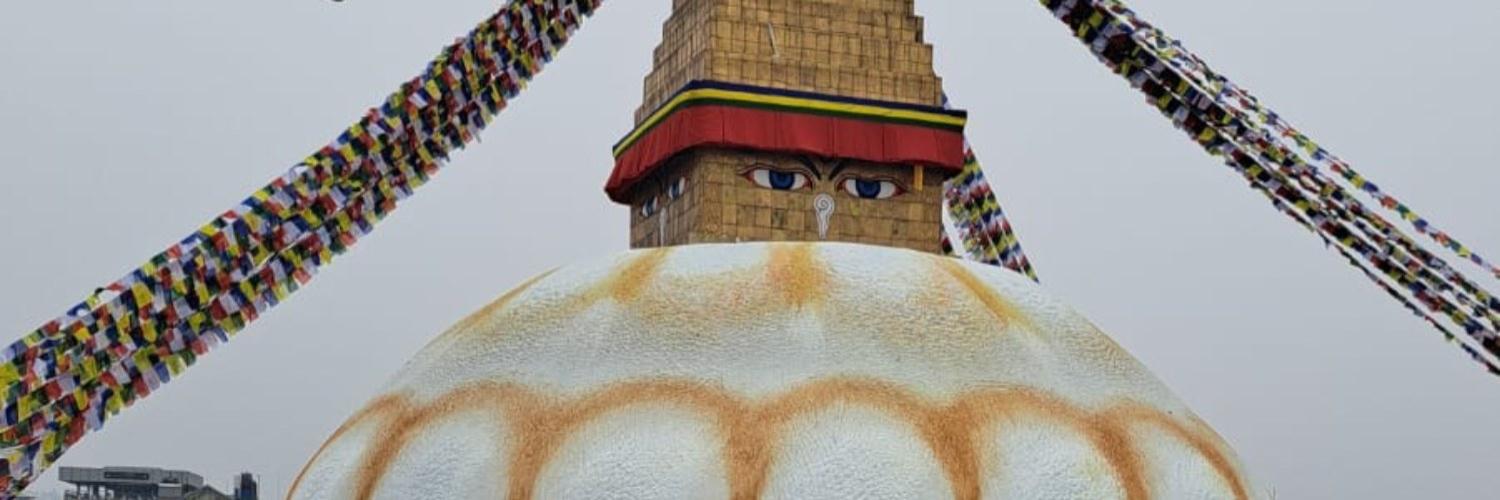
At Swayambhunath Stupa (The Monkey Temple) and Boudhanath Stupa, student groups are introduced to Tibetan and Himalayan Buddhist philosophy, iconography, and sacred geometry (Mandalas).
Conversely, a visit to Pashupatinath Temple along the sacred Bagmati River provides a profound window into Vedic traditions, life-cycle rituals, and classic Hindu temple design. Witnessing these spaces allows students to understand how two major world religions have intertwined and enriched each other for millennia.
2. Pokhara: The Hub of Geography, Earth Science, and Adventure
Moving west from the capital brings groups to Pokhara, widely recognized as the best city in Nepal to visit for natural geography, outdoor education, and leadership development. Nestled under the massive shadow of the Annapurna Range, Pokhara is built around active geological phenomena.
Hydrology and Geomorphology in Action
Pokhara’s natural features serve as immediate textbooks. Students can explore Davis Falls (Patale Chhango) to observe a surface river collapsing into an underground cavern, and then enter the Gupteshwor Mahadev Cave to study limestone formations, stalactites, and stalagmites firsthand.
The Seti River Gorge, which carves silently through the middle of the city, offers a striking visual example of how river systems cut deep, narrow channels through soft quaternary deposits over thousands of years.
The International Mountain Museum (IMM)
A cornerstone of any structural student tour, the IMM offers an invaluable academic archive. Here, groups study:
-
The socio-economic history of mountain tribes (Sherpa, Gurung, Thakali).
-
The evolution of alpine mountaineering gear and high-altitude research.
-
Exhibits on global mountain ecology, glacial retreat, and climate shifts.
3. Chitwan National Park: A Masterclass in Biodiversity and Conservation
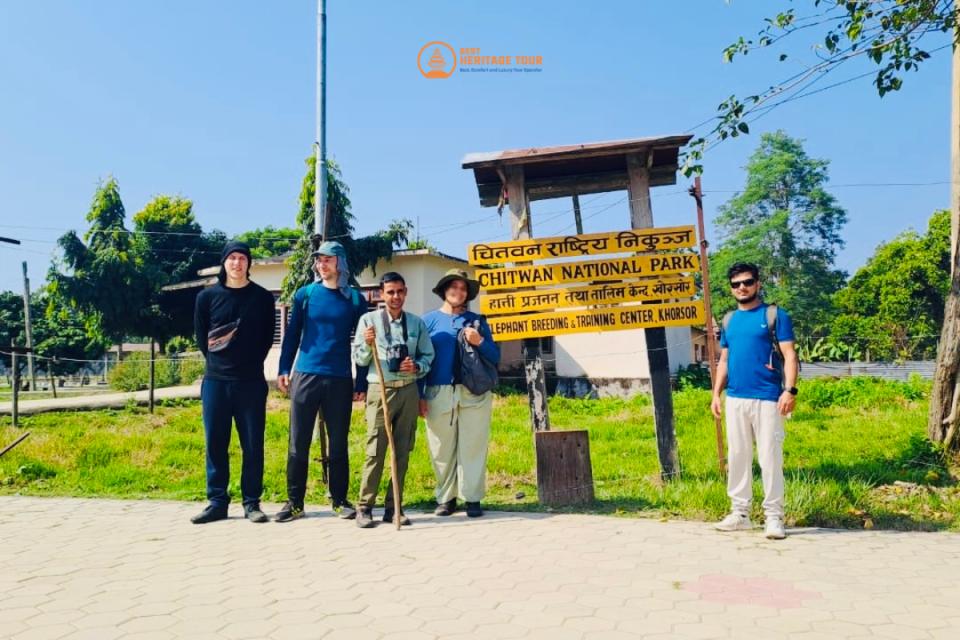
For students focused on ecology, botany, environmental science, or veterinary studies, the subtropical inner Terai of Chitwan is one of the best places for student to visit in Nepal.
Once a royal hunting reserve, Chitwan National Park is now celebrated as one of Asia's greatest conservation success stories, providing a secure sanctuary for vulnerable wildlife populations.
Wildlife Protection and Resource Management
Guided by expert naturalists, student groups venture out on jeep safaris and river canoe excursions to observe species dynamic stability. Tracking the Greater One-Horned Rhinoceros and the elusive Royal Bengal Tiger sparks discussions on real-world anti-poaching policies, habitat fragmentation, and human-wildlife conflict mitigation.
Targeted Breeding Programs
A visit to the Gharial Crocodile Breeding Center within the park introduces students to specialized herpetological conservation. They witness how fragile eggs are collected from wild riverbanks, incubated safely, raised to adulthood, and systematically reintroduced into the Narayani and Rapti river systems to revive near-extinct wild populations.
Indigenous Anthropology: The Tharu Community
Beyond the ecology, students interface with the indigenous Tharu people. Over generations, the Tharu built up a remarkable, natural genetic resistance to malaria and engineered architecture out of local clay, reed, and elephant grass.
An educational interactive session here focuses on sustainable farming practices, indigenous ethno-medicine, and the preservation of folklore in a rapidly globalizing world.
4. Muktinath and the Lower Mustang: The Trans-Himalayan Adventure
For older student groups, universities, and schools seeking a higher degree of physical challenge combined with advanced earth science, extending the itinerary into the high-altitude trans-Himalayan realm of Muktinath (3710 m) is truly profound.
This region transitions out of lush green forests into a stark, rain-shadow desert that resembles the Tibetan Plateau.
Deep Earth Geology and Marine Fossils
Traveling along the valley floor of the Kali Gandaki River puts students at the bottom of the deepest gorge in the world, flanked by the towering massifs of Annapurna I (8091 m) and Dhaulagiri (8167 m).
Here, students can hunt for Shaligrams - ancient marine fossils of ammonites dating back to the Jurassic period (approximately 140 to 165 million years ago). Finding marine fossils at 3000 m above sea level provides undeniable, tangible proof of tectonic plate collisions and continental uplift.
The Confluence of Faith at Muktinath
The sacred site of Muktinath Temple (known as Mukti Kshetra to Hindus and Chumig Gyatsa to Buddhists) is a fascinating case study in comparative religion.
Students can observe how a single sacred space is shared, managed, and revered by both faiths. The complex features 108 water sprouts flowing from cold mountain springs alongside natural gas fires burning directly out of rock faces next to flowing water - an elemental phenomenon that has inspired pilgrims for over two millennia.
Comparative Matrix: Student Learning Zones in Nepal
To help academic coordinators choose the right balance for their institution's curriculum, this breakdown maps out the primary educational focus across our core regional destinations:
|
Destination Zone |
Primary Academic Discipline |
Key Field Activities & Fieldwork |
Physical Demand Level |
|---|---|---|---|
|
Kathmandu Valley |
History, Architecture, Sociology, Fine Arts |
Exploring ancient palaces, mapping out Newari woodcarvings, interviewing restoration teams. |
Easy (Urban-based walks) |
|
Pokhara Valley |
Hydrology, Glaciology, Environmental Science |
Mapping out cavern networks, studying mountain history databases at the IMM, boat-based water quality sampling. |
Easy to Moderate (Short scenic day hikes) |
|
Chitwan Plain |
Ecology, Zoology, Botany, Indigenous Studies |
Naturalist-guided jungle tracking, observing crocodile breeding centers, attending Tharu community forums. |
Easy (Flat-terrain safari walks) |
|
Muktinath (Mustang) |
High-Altitude Geology, Paleontology, Anthropology |
Identifying Jurassic fossils along riverbeds, tracking trans-Himalayan rain-shadow adaptations. |
Moderate to Strenuous (High-altitude mountain terrain) |
Conclusion
A well-planned educational tour is a powerful investment in a student's personal development. By stepping outside their comfort zones, navigating new landscapes, and engaging with deep living history, young minds learn adaptiveness, empathy, and environmental stewardship. Nepal provides the ideal canvas for these lessons, and our team is ready to bring them to life.
As Best Heritage Tour, we pride ourselves on building bespoke, curriculum-specific packages that perfectly match your institution's timeline, budget, and academic goals. Let us handle the complex logistics while your educators focus on teaching.
Plan Your Next Institutional Journey With Us
Ready to design an unforgettable field learning program for your students? Connect with our dedicated educational travel planning desk to receive custom itineraries, group safety portfolios, and detailed cost breakdowns.
Phone / WhatsApp / Viber: +977-9851149197 / +977-9810043046
Email: info@bestheritagetour.com / bestheritagetour@gmail.com
Website: www.bestheritagetour.com
Office: Thamel Marg, Kathmandu, Nepal
Author: Best Heritage Tour
Date: 25th May, 2026