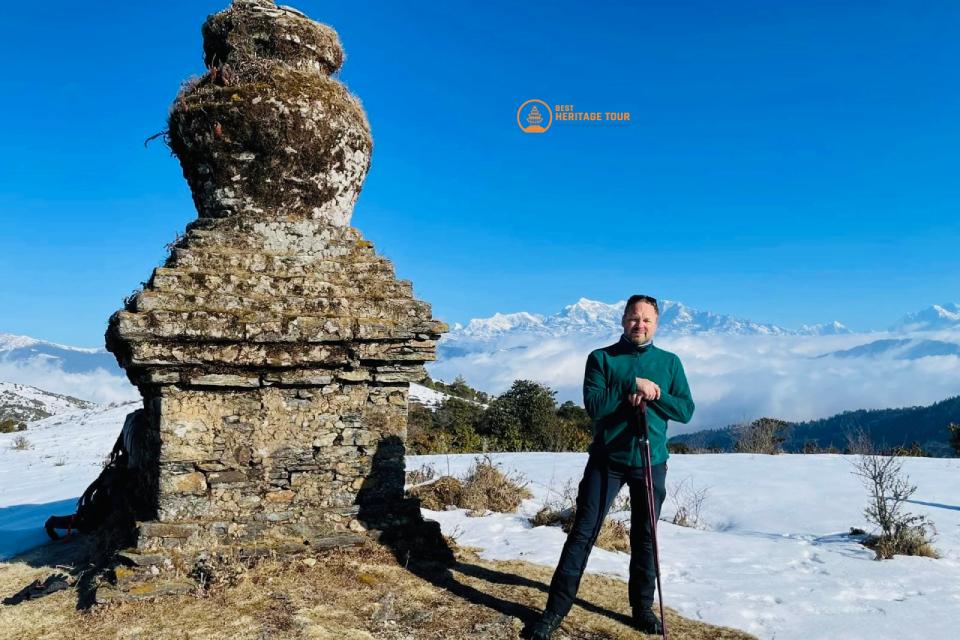
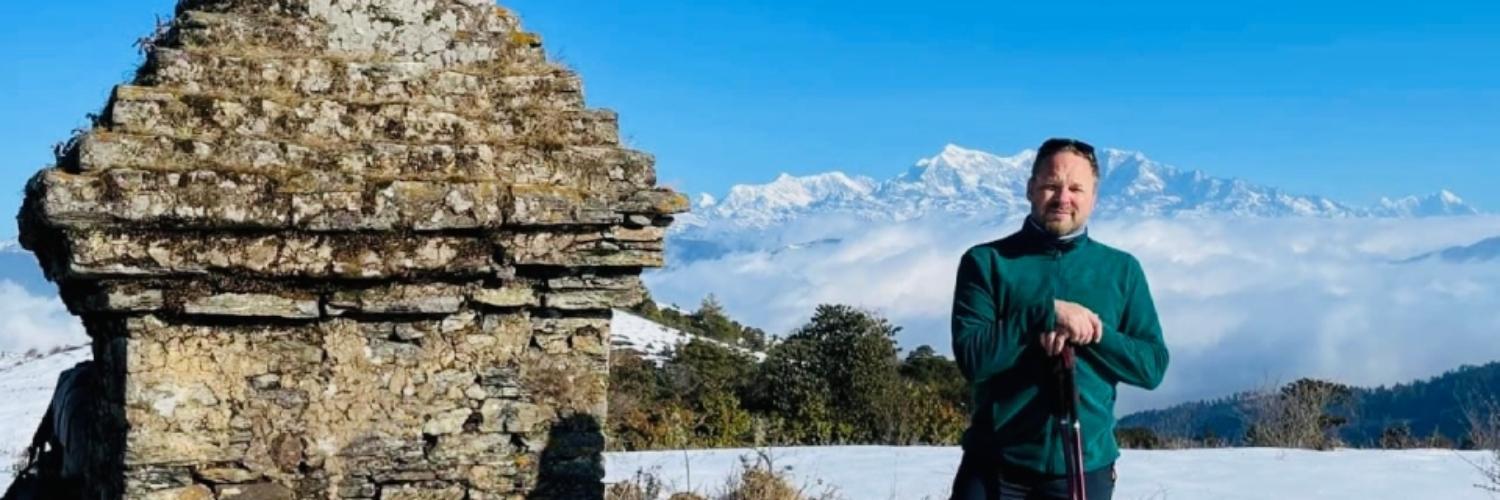
There is a reason why Sir Edmund Hillary - the first man to stand on the roof of the world - famously declared that the view from Pikey Peak was his absolute favorite in all of Nepal. Rising gracefully to an altitude of 4,065 meters (13,336 feet) in the lower Solukhumbu region, Pikey Peak offers a rare, unobstructed 360-degree panorama of the grandest giants on Earth. From its prayer-flag-draped summit, your eyes can feast on a sweeping horizon that contains Mount Everest, Lhotse, Makalu, Kanchenjunga, Cho Oyu, and the jagged silhouettes of Gaurishankar and Langtang.
Yet, unlike the heavily commercialized paths of the classic Everest Base Camp route, the Pikey Peak trail remains a hidden gem - a quiet, spiritually rich, and culturally intact alternative.
At Best Heritage Tour, we have spent decades guiding travelers through these high-altitude landscapes. One of the questions we receive most frequently from enthusiastic adventurers planning their journey is: When is the best time for Pikey peak Trek?
In this ultimate insider guide, we will break down the seasonal weather patterns, analyze the trail conditions month-by-month, and explain why the Pikey Peak Trek in November 2026 is shaping up to be one of the most magical off-the-beaten-path journeys you can take.
At a Glance: Understanding the Pikey Peak Microclimates
Before diving into the detailed seasonal profiles, it is helpful to look at the baseline weather conditions across the year. The table below outlines the average daytime and nighttime temperatures at varying elevations along the route, alongside their average visibility success rates.
Pikey Peak Seasonal Weather & Visibility Index
|
Season / |
Avg. Lower Elevation Temp (Day/Night) |
Avg. Summit Temp |
Mountain Visibility Success Rate |
Trail Highlights & Key Characteristics |
|---|---|---|---|---|
|
Spring |
12℃ to 18℃ / -1℃ to 6℃ |
2℃ to 8℃ |
75% - 80% |
Deep rhododendron blooms, vibrant green valleys, moderate climbing temperatures. |
|
Monsoon (Jun - Aug) |
18℃ to 23℃ / 8℃ to 14℃ |
5℃ to 12℃ |
20% - 30% |
Lush green pastures, rushing waterfalls, high cloud cover and regular rain. |
|
Autumn (Sep - Nov) |
14℃ to 20℃ / 0℃ to 8℃ |
-2℃ to 6℃ |
85% - 95% |
Peak Season. Razor-sharp clarity, crisp air, dry trails, major cultural festivals. |
|
Winter (Dec - Feb) |
4℃ to 12℃ / -5℃ to 1℃ |
-15℃to -2℃ |
90% |
Pristine snowscapes, absolute peace, biting cold winds, empty trails. |
The Prime Windows: When is the Best Time for Pikey Peak Trek?
To experience this trek in all its glory, your planning should ideally target the two gold-standard windows in the Himalayas: Autumn (September to November) and Spring (March to May). These two seasons balance structural safety, comfortable day-hiking conditions, and reliable open skies.
1. Autumn (September to November) - The Golden Peak
Ask any native Sherpa guide from our team, and they will tell you without hesitation that autumn is the absolute best time for the Pikey Peak Trek.
During June, July, and August, the summer monsoon lashes the sub-Himalayan hills, acting as a massive natural broom that washes away all dust, pollution, and atmospheric haze. When September arrives, the rain breaks, leaving behind air that is incredibly pure and skies of a deep, brilliant indigo blue.
-
Unrivaled Sightseeing: This season offers a staggering 85% to 95% mountain visibility success rate. The morning sun striking the white walls of Everest looks incredibly clean, sharp, and detailed, turning the summit into a paradise for photographers.
-
Optimal Trekking Conditions: Daytime temperatures hover comfortably around 14℃ to 18℃ at lower altitudes like Dhap, Jhapre, and Junbesi. It is cool enough to avoid heavy sweating while hiking 5 to 6 hours a day, yet warm enough that heavy down gear isn't needed during active sunlight hours.
-
Cultural Festivities: Autumn is also the beating heart of Nepal’s spiritual calendar. Trekkers traveling with us during these months get a chance to witness major festivals like Dashain and Tihar, or experience the mesmerizing mask dances of the Mani Rimdu Festival at the nearby Chiwong Monastery.
2. Spring (March to May) - The Floral Explosion
If autumn is defined by its crisp lines and sharp peaks, spring is defined by its vibrant life and color. As winter's heavy frost melts off the high ridges, the lower Solukhumbu hills undergo a breathtaking transformation.
-
Rhododendron Heavens: The trails twisting up through Lamjura La and towards Pikey Base Camp are blanketed in dense, ancient forests. From late March through April, these forests burst into a sea of brilliant red, pale pink, and pure white blooms - the national flower of Nepal.
-
Rising Thermometers: Spring sees a steady warming trend. Days are balmy and filled with bright sunshine. While afternoon clouds can occasionally gather around the peaks as the pre-monsoon heat builds up in May, the early morning mountain views remain remarkably reliable and crisp.
Why a Pikey Peak Trek in November 2026 is Your Perfect Sweet Spot
If you are an off-the-beaten-path lover who values isolation, quiet landscapes, and immaculate photography conditions, we highly recommend planning a Pikey Peak Trek in November 2026.
While October is widely publicized as the ultimate trekking month across Nepal, it also draws the highest volume of global travelers. By the time November rolls around, the main waves of tourism begin to recede, leaving the quieter corners of the Solukhumbu beautifully serene.
Here is what makes November a majestic time to explore:
Peak Atmospheric Purity
As the season transitions toward winter, the moisture content in the air drops to near zero. This creates high atmospheric stability. The mountain views in November are often even sharper and more brilliant than those in October. The snow-draped profiles of Lhotse and Kanchenjunga appear so vivid against the sky that they almost seem within arm's reach.
Authentic Tea House Experiences
The Pikey Peak route relies on charming, locally run community tea houses. In peak crowded months, these humble lodges can fill up quickly. In November, however, you will easily secure the finest rooms, enjoy long, unhurried evenings sharing stories around the central firewood stove with local Sherpa hosts, and experience authentic mountain hospitality at a relaxed pace.
Comfortable, Crisp Adventure
Yes, the temperature drops significantly at night - often touching freezing (0℃ to -5℃) at Pikey Base Camp (3,640 m). But with the right layers, a warm sleeping bag provided by our team, and hot bowls of organic Dal Bhat, these crisp nights only enhance the rustic charm of a true Himalayan expedition. The days remain perfectly sunny, dry, and ideal for continuous movement.
Exploring the Off-Peak: Winter and Monsoon Realities
For the truly adventurous traveler, the shoulder and off-peak months present entirely different ways to experience the Solukhumbu landscape.
Winter (December to February): The Frozen Wilderness
Winter in the Himalayas brings biting cold winds and freezing temperatures that can plunge to -15℃ at the summit of Pikey Peak. However, if you are properly equipped, winter offers a distinct advantage: a near 90% chance of completely cloudless skies combined with absolute silence.
The entire trail wraps itself in a quiet, snowy coat. You won't find crowds here - just you, your trusted guide, and the raw, frozen power of the highest peaks on Earth. It is a highly demanding but deeply meditative trekking experience.
Monsoon (June to August): The Emerald Green Season
The summer monsoon brings heavy rains, low-hanging clouds, and slippery, muddy trails. Mountain visibility drops significantly, often hiding the grand peaks behind thick curtains of mist.
Yet, for nature enthusiasts who don't mind trekking in wet conditions, this is the "Green Season." The farmlands around Jhapre and the valleys of Junbesi turn into vibrant, emerald-green landscapes. Waterfalls roar to life, wildflowers bloom in alpine pastures, and the region feels entirely untouched by the outside world.
Essential Packing Strategy for Every Season
To ensure your trek is safe, comfortable, and thoroughly enjoyable, your gear choices should match the seasonal demands of the trail.
-
For the Autumn & Winter Trekkers: Layering is your ultimate shield. You will want high-quality moisture-wicking base layers, an insulating fleece mid-layer, a windproof outer shell, and a heavy down jacket rated for sub-zero nights. A four-season sleeping bag is highly recommended for November and winter departures.
-
For the Spring Trekkers: Pack lightweight, breathable trekking pants and shirts for sunny daytime hours, but keep a warm fleece jacket and a light down jacket ready for late afternoons and evenings.
-
Footwear & Extras: Regardless of when you travel, sturdy, broken-in trekking boots with deep ankle support are non-negotiable. Don't forget high-UV sunglasses and a wide-brimmed sun hat, as solar radiation intensifies significantly at 4,000 meters.
Conclusion
The lower Solukhumbu region is far more than just a vantage point for viewing the high peaks - it is a living cultural tapestry woven with centuries of Sherpa heritage, monastic traditions, and pristine natural beauty. Navigating these remote trails, supporting local communities, and unlocking the profound stories behind every ancient Mani wall requires deep local expertise.
No matter which season calls to you - be it the blooming floral valleys of spring or the crisp, quiet clarity of a Pikey Peak Trek in November 2026 - taking this path less traveled promises an unforgettable adventure.
Contact Best Heritage Tour to Plan Your Journey
Ready to turn your Himalayan dreams into reality? Reach out to our travel experts today to receive a detailed itinerary, get custom pricing options, or ask questions about trail preparation.
Phone / WhatsApp / Viber: +977-9851149197 / +977-9810043046
Email: info@bestheritagetour.com / bestheritagetour@gmail.com
Website: www.bestheritagetour.com
Office: Thamel Marg, Kathmandu, Nepal
Author: Best Heritage Tour
Date: 21st June, 2026