Stepping foot at the base of Mount Everest (8,848 m) is a bucket-list dream for travelers, adventurers, and spiritual seekers alike. However, when planning a trek through Nepal’s iconic Khumbu region, the most critical decision you will make isn't what gear to buy, but how many days you spend on the trail.
At Best Heritage Tour, we have guided thousands of international trekkers through the Sagarmatha National Park. Based on decades of on-the-ground experience, we confidently advise that the 12-Day Everest Base Camp (EBC) Trek Itinerary is the absolute gold standard. It strikes the perfect equilibrium between time efficiency, physical safety, and cultural immersion.
Unlike rushed 10-day variants or overly drawn-out packages, the 12-day route is strategically engineered around human physiology and mountain logistics.
The Core Blueprint: The Standard 12-Day EBC Trek Itinerary
To understand why this specific duration is unmatched, let us look at the precise day-by-day structural breakdown used by our expert guides:
-
Day 1: Flight from Kathmandu/Manthali to Lukla (2,850 m) & Trek to Phakding (2,650 m)
-
Day 2: Trek from Phakding to Namche Bazaar (3,440 m)
-
Day 3: Rest and Acclimatization Day in Namche Bazaar (3,440 m)
-
Day 4: Trek from Namche to Tengboche (3,855 m)
-
Day 5: Trek from Tengboche to Dingboche (4,360 m)
-
Day 6: Rest and Acclimatization Day in Dingboche (4,360 m)
-
Day 7: Trek from Dingboche to Lobuche (4,930 m)
-
Day 8: Trek from Lobuche to Everest Base Camp (5,364 m) and return to Gorak Shep (5,185 m)
-
Day 9: Trek from Gorak Shep to Kala Patthar (5,555 m) viewpoint, return to Gorak Shep & continue to Pheriche (4,250 m)
-
Day 10: Trek from Pheriche to Namche Bazaar (3,440 m)
-
Day 11: Trek from Namche Bazaar to Lukla (2,850 m)
-
Day 12: Return to Kathmandu/Manthali from Lukla (2,850 m)
Why the 12-Day Itinerary Wins: The Science of Acclimatization
The single greatest threat to any Himalayan trekker is Acute Mountain Sickness (AMS). High-altitude acclimatization cannot be rushed; it is a rigid biological requirement. As you climb above 3,000 m, the atmospheric pressure drops, meaning there are fewer oxygen molecules per breath.
Our 12-day itinerary features two mandatory acclimatization days built directly into the ascent path:
-
Namche Bazaar (Day 3 - 3,440 m): This serves as your first major altitude buffer. Here, our team follows the golden mountaineering rule: "Climb high, sleep low." We take you on a scenic acclimatization hike up to the Everest View Hotel (3,880 m) before returning to Namche to sleep, triggering your body to produce more red blood cells safely.
-
Dingboche (Day 6 - 4,360 m): Before crossing the critical threshold into extreme altitude (above 4,500 m), your body requires a secondary adaptation window. A rest day in Dingboche, coupled with an acclimatization climb up Nagarjun Hill (5,100 m), minimizes the risk of altitude complications before you push toward Gorak Shep and Base Camp.
The Success Rate Reality: Short-cut itineraries (such as 9 or 10-day treks that omit the second rest day) see helicopter evacuation rates skyrocket. Our 12-day pacing ensures a historic summit success rate exceeding 95% for healthy, prepared travelers.
Unveiling the 2026/2027 Lukla Flight Dynamics: Kathmandu vs. Manthali (Ramechhap)
A crucial modern logistical factor for any Everest trekker is the flight to Tenzing-Hillary Airport in Lukla. To reduce air traffic congestion at Kathmandu's international airport and maximize morning weather windows, the Civil Aviation Authority of Nepal maps all peak-season Lukla flights (Spring: March-May; Autumn: September-November) through Manthali Airport in Ramechhap.
|
Feature |
Kathmandu to Lukla |
Manthali to Lukla |
|
Flight Duration |
35 Minutes |
18 - 20 Minutes |
|
Air Traffic |
Very High (Delays) |
Zero (Fast Rotations) |
|
Weather Window |
Narrow & Volatile |
Wider & More Stable |
|
Departure Time |
6:00 AM - 8:00 AM |
1:00 AM (Drive from KTM) |
Navigating the Ramechhap Route Smoothly
During peak trekking months, our team arranges a comfortable private vehicle from your hotel in Kathmandu around 1:00 AM to 2:00 AM, driving along the scenic BP Highway to reach Manthali for your early morning flight.
Because the flight from Ramechhap is only 18 to 20 minutes long, aircraft can complete rapid shuttle rotations. If a mountain weather window opens for just one hour, significantly more trekkers successfully land in Lukla via Ramechhap than from Kathmandu. In the off-peak winter and summer months, flights default back to direct departures from Kathmandu.
Detailed Step-by-Step Experience of the Trail
The Gentle Warm-Up: Lukla to Phakding (Day 1)
Upon landing on Lukla’s dramatic sloped runway, you will meet your structural support crew - our professional guides and local Sherpa porters. Day 1 is deliberately kept short. We descend gently through lush terraced hillsides, passing stone-carved Buddhist Mani walls and spinning prayer wheels to reach the riverside village of Phakding.
The Gateway Challenge: Phakding to Namche Bazaar (Day 2 & 3)
Day 2 brings your first true mountain challenge. Following the emerald waters of the Dudh Koshi River, you cross iconic high-slung suspension bridges draped in colorful prayer flags. After clearing the Sagarmatha National Park checkpoint at Monjo, the trail ascends steeply up the infamous Namche Hill.
Namche Bazaar is the beating heart of Sherpa culture. Built like an amphitheater into the mountain slopes, this bustling alpine town features cafes, gear shops, banks, and luxury tea houses.
The Spiritual Ascent: Namche to Tengboche Monastery (Day 4)
The trail from Namche treats you to sweeping, uninterrupted vistas of Everest, Lhotse, and the perfectly sculpted ridges of Ama Dablam. After a descent to Phunki Tenga for lunch, we climb through aromatic rhododendron and pine forests to reach Tengboche. Home to the famous Dawa Choling Gompa (Tengboche Monastery), you can witness the evening prayers of saffron-robed monks against a backdrop of glowing alpine peaks.
Crossing the Tree Line: Tengboche to Dingboche (Day 5 & 6)
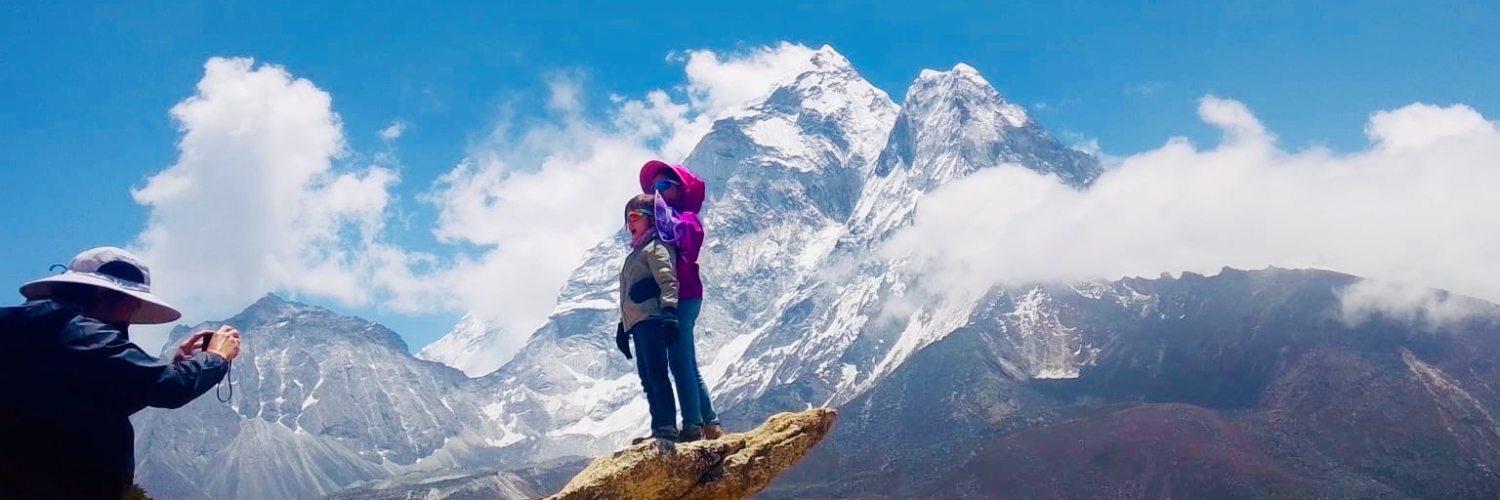
Leaving Tengboche, the landscape shifts dramatically. As you pass the permanent settlement of Pangboche, the alpine forests fade into a raw, windswept, and beautiful arctic shrub landscape. By the time you reach the stone-walled fields of Dingboche (4,360 m), you are firmly in the high-altitude realm, resting underneath the towering north face of Ama Dablam.
Pushing into the Glacier Zone: Dingboche to Lobuche (Day 7)
The trek to Lobuche climbs past the high-altitude grazing flats of Thukla. At the top of the Thukla Pass, you will pass the emotional stone memorials dedicated to fallen climbers and Sherpas who lost their lives on Everest. The trail then traces the lateral moraine of the massive Khumbu Glacier, revealing surreal glacial landscapes as you approach Lobuche (4,930 m).
The Trekkers' Triumph: Everest Base Camp & Kala Patthar (Day 8 & 9)
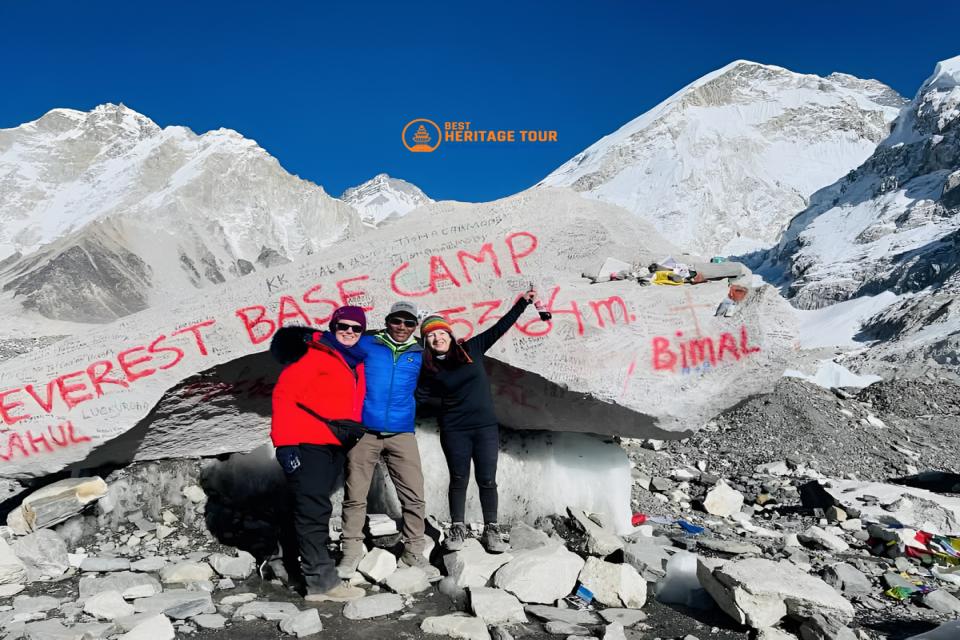
Day 8 is your crowning achievement. An early morning walk along the rocky moraine brings us to Gorak Shep for a quick lunch, before pushing forward to the historic boulder marking Everest Base Camp (5,364 m). Standing here, surrounded by the moving ice of the Khumbu Icefall and towering Himalayan giants, is an unforgettable milestone.
While Base Camp puts you right at the foot of the mountain, the summit itself is hidden by neighboring peaks. That is why Day 9 begins before dawn with a steady, determined climb up Kala Patthar (5,555 m). From this rocky peak, you will watch the sun rise directly behind Mount Everest, casting an unforgettable golden glow over the entire Nuptse-Lhotse massif.
The Descent and Return Journey (Days 10-12)
With your goals accomplished, your body benefits from the rapidly increasing oxygen levels as we descend back down the valley. Walking through Pheriche, Namche, and back to Lukla feels completely different on the return leg - your legs are lighter, the air is thick, and the celebrations with your guide and porter crew create lifelong bonds.
Essential Travel Planning & Preparation Guide
Packing and Baggage Weight Reality
Because you will be traveling on small Short Takeoff and Landing (STOL) aircraft to Lukla, baggage weight limits are strictly enforced by all domestic carriers (Tara Air, Summit Air, and Sita Air).
-
Total Weight Allowance: 15 kg (~33 lbs) per passenger.
-
Checked Luggage: Fixed at 10 kg.
-
Hand Carry/Daypack: Fixed at 5 kg.
Pro-Tip from Our Guides: Wear your heaviest trekking boots and down jacket directly onto the plane to maximize your available checked bag weight allowance!
Conclusion
The Everest Base Camp trek is more than a hike - it is a life-changing journey through ancient cultures, sacred monasteries, and the grandest landscapes on our planet. By choosing the balanced pacing of our 12-day itinerary, you set yourself up for a safe, successful, and deeply enriching Himalayan adventure.
At Best Heritage Tour, we handle every detail of your journey - from coordinating the 2026/2027 Ramechhap flight logistics and securing required local permits, to pairing you with first-class, wilderness-first-aid-certified guides and supportive local porters.
Let us turn your Everest dream into reality.
Phone / WhatsApp / Viber: +977-9851149197 / +977-9810043046
Email: info@bestheritagetour.com / bestheritagetour@gmail.com
Website: www.bestheritagetour.com
Office: Thamel Marg, Kathmandu, Nepal
Frequently Asked Questions (FAQs)
What permits are required for the 12-Day EBC Trek?
You need two primary permits: the Khumbu Pasang Lhamu Rural Municipality Entry Permit (NRs. 3,000) and the Sagarmatha National Park Entry Permit (NRs. 3,000). The old TIMS card system has been updated, and our team handles all permit logistics entirely on your behalf.
What is the accommodation and food like on the EBC trail?
You will stay in traditional, family-run mountain lodges called teahouses. While simple, they offer twin-share rooms, cozy common dining rooms warmed by central stoves, and surprisingly diverse menus ranging from the traditional Dal Bhat (lentils, rice, and vegetable curry) to pasta, soups, and pancakes.
What happens if my Lukla flight is delayed or canceled?
Mountain weather is unpredictable. If fixed-wing planes are grounded due to fog or wind, helicopters can often still operate under lower visibility rules. A shared helicopter seat from Manthali to Lukla typically ranges between USD 400 to 600 per person. We always advise building 2 buffer days into your overall international travel itinerary to protect your flight home.
Author: Best Heritage Tour
Date: 8th July, 2026