Standing before the towering, snow-draped massifs of the Himalayas is a dream that draws thousands of travelers to Nepal every single year. Among the country’s legendary walking paths, the Annapurna Circuit remains an absolute crown jewel. However, if you are planning your very first Himalayan adventure, one critical question likely dominates your research: How hard is the Annapurna Circuit Trek Difficulty, and can a regular person with no mountaineering background successfully conquer it?
When analyzing the Annapurna Circuit Trek Difficulty, the question we hear most often from aspiring adventurers is: Is Annapurna Circuit Trek Difficulty for Beginners manageable, or should first-timers look elsewhere?
At Best Heritage Tour, we have spent over a decade guiding international travelers, families, and solo explorers through these rugged valleys. The short answer is yes - with the right preparation, a tailored itinerary, and professional guidance, this iconic route is entirely within your reach. However, underestimating the terrain or ignoring the rules of high-altitude acclimatization can quickly turn a dream holiday into a hazardous situation.
This comprehensive guide will strip away the internet myths and give you an honest, expert breakdown of what it truly takes to cross the Thorong La Pass, how the trail has evolved, and how we ensure our guests achieve their trekking goals safely and comfortably.
Understanding the Landscape: The Reality of the Annapurna Circuit
Before diving into physical metrics, it is vital to understand what the Annapurna Circuit actually looks like today. The trail loops around the massive Annapurna Massif, taking you through an astonishing variety of climates. You will begin your journey walking through lush, subtropical forests, terraced rice paddies, and deep river gorges before ascending into the arid, windswept high alpine plateau that mirrors the Tibetan landscape.
The Impact of Modern Infrastructure
A common point of confusion for beginners researching the trek is the presence of motorable roads. Infrastructure development has introduced dirt jeep tracks connecting Besisahar to Manang on the eastern side, and Muktinath down to Jomsom and Beni on the western descent.
For a beginner, this is actually a massive advantage rather than a drawback. In the past, the classic circuit required a mandatory 21 days of continuous walking. Today, we leverage this infrastructure to design smarter, shorter, and safer hybrid itineraries. We skip the dusty lower roads by using private, comfortable local jeeps, allowing you to save your leg strength and energy for the pristine, high-altitude alpine sections where no roads exist - and where no roads ever could be built due to the extreme topography.
The Core Challenges: What Makes the Annapurna Circuit Trek Difficult?
To accurately answer the question, Is Annapurna Circuit Trek Difficulty a Beginner Friendly Trek?, we need to dissect the specific factors that contribute to its grading. The trek is officially classified as moderate to challenging. There are no technical climbing sections, vertical rock faces, or crevasse crossings that require ropes, harnesses, or ice axes. It is a walking trek - but it is a walking trek under demanding conditions.
Here are the four primary factors that determine the true difficulty of the journey:
1. The Invisible Opponent: Extreme Altitude
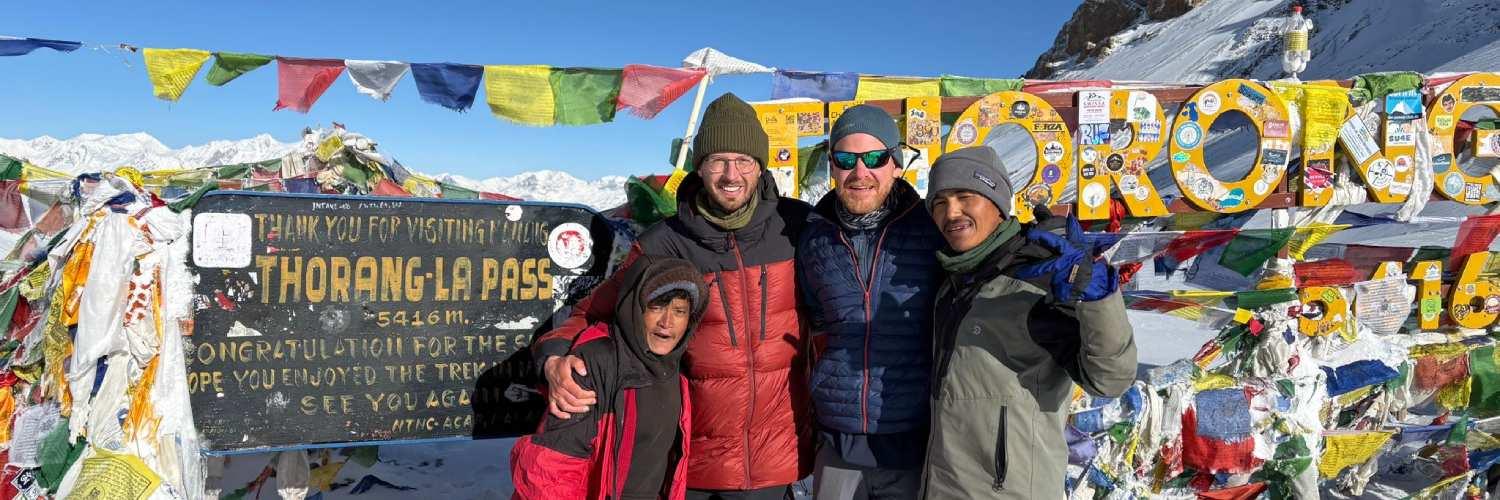
Altitude is the single greatest variable on the Annapurna Circuit, and it treats seasoned athletes and casual walkers with complete neutrality. The trail starts at relatively low elevations, but steadily climbs day by day until it reaches its dramatic apex at Thorong La Pass, sitting at a breathtaking 5,416 meters (17,769 feet) above sea level.
At this altitude, every breath you take delivers roughly 50% less oxygen to your bloodstream compared to sea level. Pushing your body too quickly through these thin air zones carries the very real risk of Acute Mountain Sickness (AMS). Managing this risk requires a slow, conservative pace, professional monitoring, and an unhurried itinerary - elements that form the backbone of our operations at Best Heritage Tour.
2. Sustained Endurance and Daily Trekking Hours
You do not need to be a marathon runner to complete the Annapurna Circuit, but you do need sustained stamina. The average trekking day involves walking between 5 to 7 hours over distances ranging from 10 to 15 kilometers (6 to 9 miles).
While a single 6-hour walk in your home country might feel straightforward, doing it for 10 to 12 consecutive days on rocky, uneven, and constantly ascending paths exerts a compounding physical toll. Fatigue accumulates, making proper rest and nutrition at the end of each day non-negotiable.
3. The Summit Strike: The Thorong La Pass Crossing
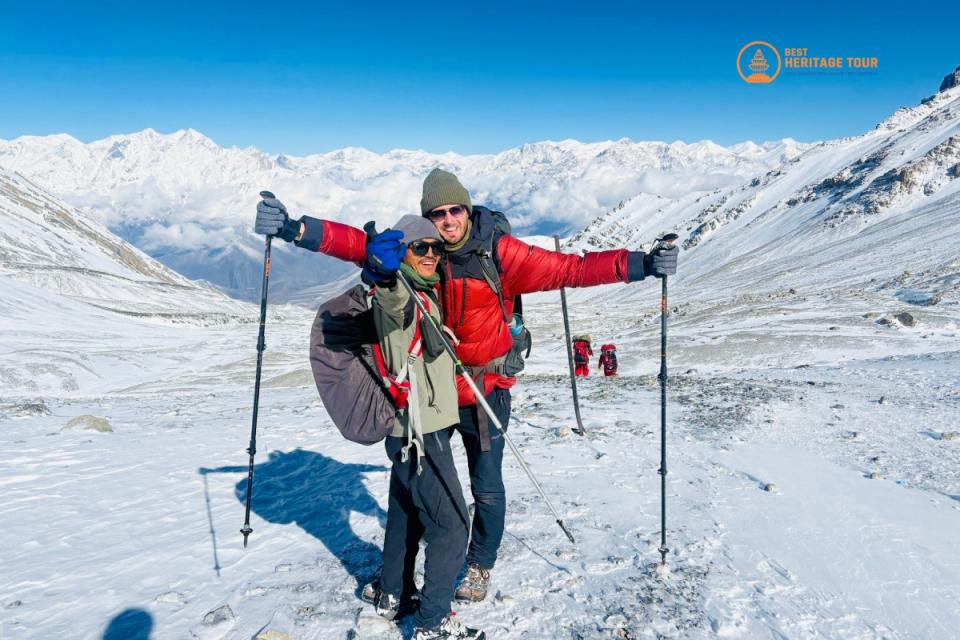
Every trekker on the circuit circles one specific day on their calendar: the crossing from Thorong Phedi or High Camp over the Thorong La Pass to Muktinath. This is undeniably the hardest day of the entire trek.
-
The Ascent: You will wake up around 3:00 AM or 4:00 AM in freezing, pitch-black conditions. Using a headlamp, you will slowly climb roughly 600 to 900 vertical meters through loose gravel, scree, and frequently snow or ice. The freezing temperatures and high winds make breathing heavily a cold, challenging task.
-
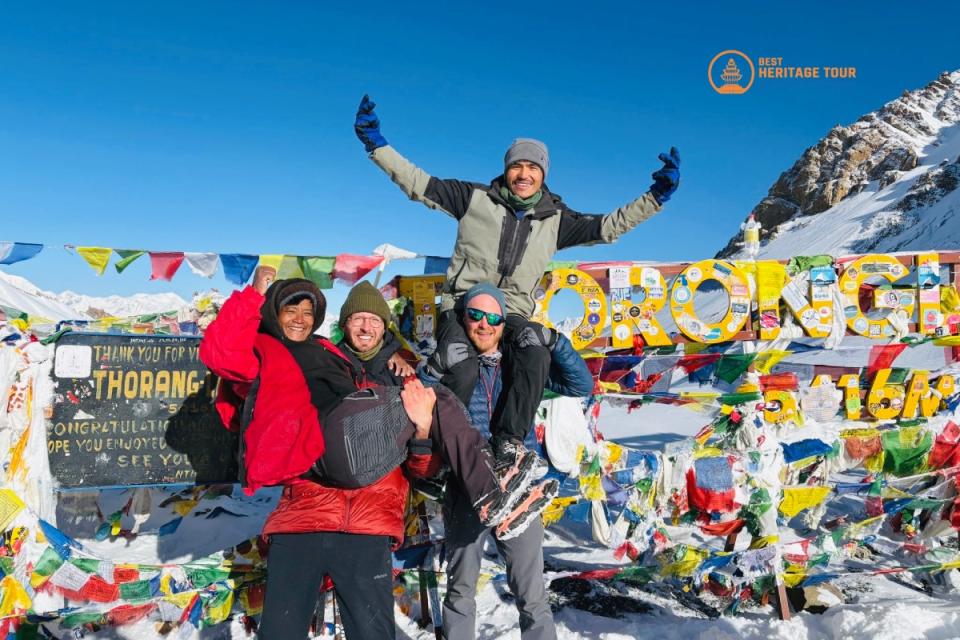
The Descent: Reaching the top of the pass, adorned with thousands of fluttering Buddhist prayer flags, is a moment of pure euphoria. However, the challenge is only half over. You must then endure a steep, unrelenting descent of over 1,600 vertical meters down to the sacred temples of Muktinath. This long descent takes a heavy toll on your quadriceps and knees, demanding intense focus and stable footing.
4. Unpredictable Himalayan Weather
The weather in the high Himalayas can shift with terrifying speed. Even during the peak trekking seasons of Spring (March to May) and Autumn (September to November), clear blue morning skies can give way to sudden afternoon snowstorms or high-velocity winds at elevation. Temperatures near the pass routinely drop below -10°C (14°F) early in the morning, requiring proper layered gear to prevent hypothermia.
Day-by-Day Difficulty: A Strategic Overview
To give you a clearer picture of how the physical demands evolve over time, let us look at the structure of a professionally optimized itinerary. We break the journey down into distinct structural phases, allowing your body to adapt smoothly to the changing environment.
1. The Acclimatization Phase: Chame to Manang (3,519m).
You start walking through pine-scented forests and historic stone villages. The trails are well-defined, and the air is still relatively thick. The key here is to maintain a slow, measured pace even if you feel completely fine, building up your cardiovascular baseline.
2. The Active Rest Milestone: The Manang Rest Day.
A mandatory stop. You do not stay in bed; instead, we follow the time-tested mountaineering rule of "climb high, sleep low." We take a short, steep hike up to the Gangapurna Ice Lake or a local monastery, then return to Manang to sleep. This triggers your body to produce more red blood cells without exhausting your muscles.
3. The Alpine Ascent: Manang to Thorong Phedi (4,525m).
Vegetation disappears, replaced by an alpine desert landscape. The air becomes noticeably thin, and your walking speed will naturally cut in half. Every step requires deliberate breathing, and the evenings turn sharply cold.
4. The Pass Crossing: Thorong Phedi over Thorong La (5,416m) to Muktinath.
The ultimate test of stamina. A pre-dawn start, sub-zero temperatures, and a long 8-hour day crossing the pass. Success here depends entirely on mental resilience, stable pacing, and the supportive guidance of your local team.
The Ultimate Beginner’s Preparation Strategy
If you are a beginner looking at the challenges listed above, you might feel a bit intimidated. That is completely normal. The secret to transforming the Annapurna Circuit into a rewarding, safe adventure lies entirely in your preparation. Here is how you can train your body and mind before arriving in Kathmandu.
1. Cardiovascular Conditioning
Your heart and lungs will be working overtime at 5,000 meters. Focus your training on building aerobic endurance at least 8 to 12 weeks prior to your departure date.
-
Best Exercises: Swimming, long-distance cycling, running, and using the elliptical machine. Aim for 45 to 60 minutes of sustained cardio, 4 to 5 times per week.
-
Simulated Training: If you live in a completely flat city, spend time on a treadmill set to the maximum incline setting, or spend an hour walking up and down the stairwells of a local office building or stadium.
2. Targeted Strength Building
Steep descents require resilient leg muscles to protect your joints. Incorporate strength training sessions 2 to 3 times a week, focusing entirely on your lower body and core stability.
-
Essential Movements: Weighted squats, walking lunges, step-ups onto a bench, and planks. These exercises strengthen your quads, hamstrings, and calves, ensuring your legs do not give out during the long descent from Thorong La.
3. Practical Hiking Practice
Nothing prepares you for a multi-day hiking trip better than actually walking on dirt paths. Find local hiking trails near your home. Spend your weekends going on 10 to 15-kilometer walks.
-
Pro Tip: Always wear the exact trekking boots you plan to use in Nepal during these practice hikes. Breaking in your footwear early is the only definitive way to prevent debilitating blisters on the trail. Additionally, carry a backpack loaded with 5 to 7 kilograms of weight to get your back and shoulders accustomed to the pressure.
Conclusion
The Annapurna Circuit is far more than just a physical challenge; it is a profound journey through ancient cultures, sacred Hindu and Buddhist pilgrimage sites, and some of the most awe-inspiring mountain vistas on Earth. While the Annapurna Circuit Trek Difficulty is real, it is an obstacle that can be safely dismantled with intelligent planning, robust training, and expert local leadership.
If you are ready to stop dreaming and start walking, let us help you turn this challenging trail into the most rewarding achievement of your life.
Contact Best Heritage Tour
Phone / WhatsApp / Viber: +977-9851149197 / +977-9810043046
Email: info@bestheritagetour.com / bestheritagetour@gmail.com
Website: www.bestheritagetour.com
Office: Thamel Marg, Kathmandu, Nepal
Frequently Asked Questions
Can I complete the Annapurna Circuit Trek if I have never hiked at high altitude before?
Absolutely. A significant percentage of the travelers we guide over the Thorong La Pass have never stood above 2,500 meters before arriving in Nepal. The secret is not your past experience, but your willingness to follow a slow pace, drink 4 to 5 liters of water daily, and use an itinerary that features dedicated rest days.
Is there clean drinking water available along the Annapurna Circuit route?
Yes. To protect the delicate mountain ecosystem, buying single-use plastic water bottles is discouraged in many parts of the Annapurna Conservation Area. Instead, villages feature safe, purified drinking water stations where you can refill your bottles for a nominal fee. Alternatively, you can bring a reusable stainless steel bottle and use water purification tablets or a UV Steripen.
What kind of food can I expect at the Annapurna Circuit route teahouses?
The food available on the trail is surprisingly diverse and highly nutritious. The definitive staple is the traditional Nepali Dal Bhat - a hearty platter of lentil soup, rice, vegetable curry, and pickles. It is packed with clean carbohydrates and protein, and the plates are always refilled for free. You will also find pasta, potatoes, eggs, soups, and even fresh apple pies in the lower valleys. We recommend sticking to a vegetarian diet once you climb past Manang, as meat transported up the mountain without refrigeration can cause stomach issues.
Author: Best Heritage Tour
Date: 13th July, 2026