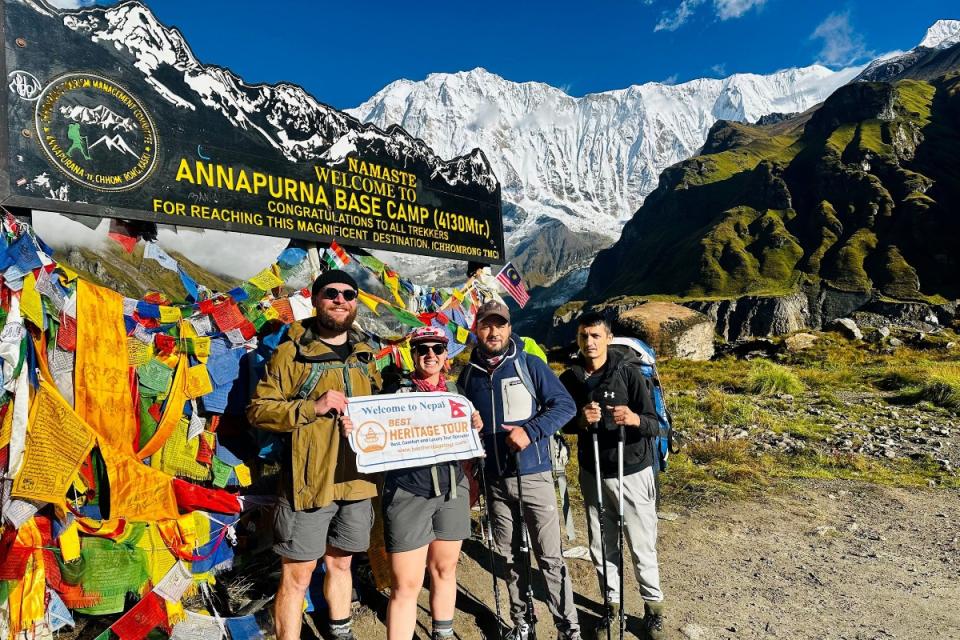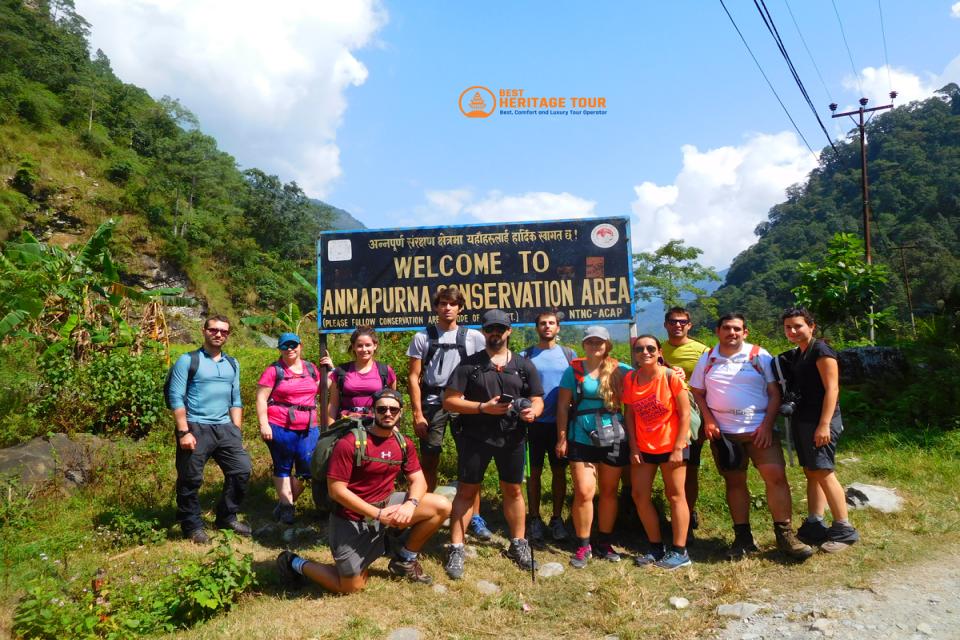
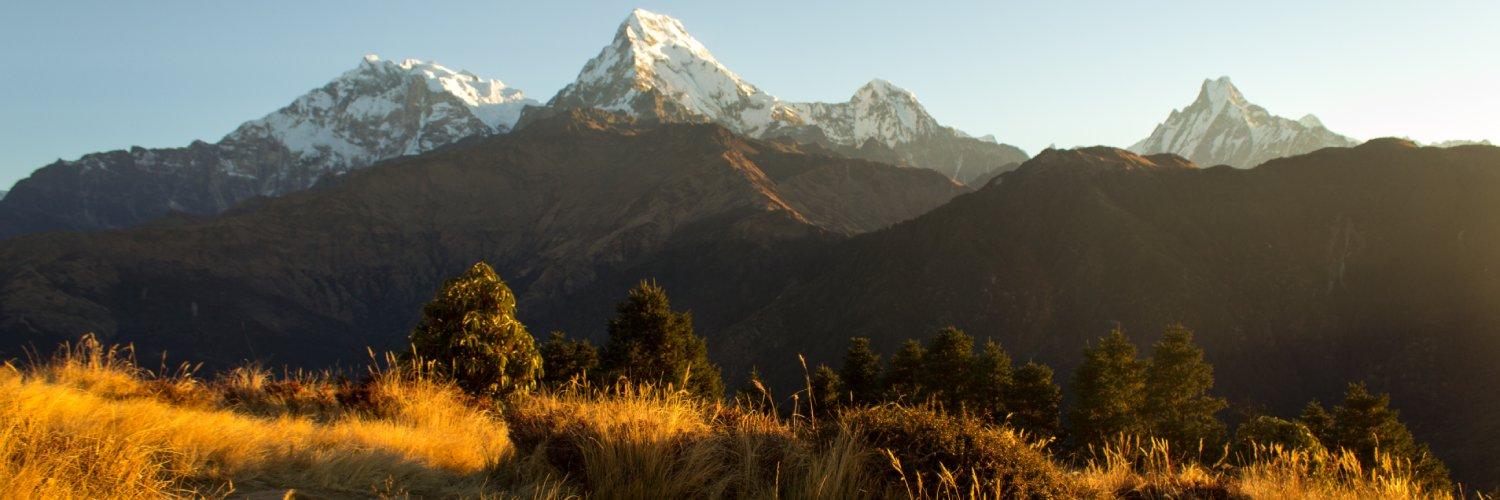
The Annapurna region is home to some of the world's most spectacular mountain scenery - a majestic amphitheater of 7,000m and 8,000m peaks culminating in the awe-inspiring Annapurna Base Camp (ABC) at 4,130 meters.
Traditionally, reaching this sanctuary takes 8 to 12 days of trekking. But in the modern age of adventure travel, time is often the biggest luxury. If you have limited vacation days, a tight schedule, or simply crave a rapid, high-intensity mountain experience, you don't have to miss out on ABC.
Thanks to improved road access and strategic logistical planning, a 5-Day Annapurna Base Camp Short Trek is now a feasible and highly sought-after itinerary.
This definitive guide, crafted by the local experts at Best Heritage Tour, validates this fast-track approach, breaks down the itinerary, explains the critical safety factors (especially altitude management), and shows you exactly how this extraordinary adventure is possible in just five days.
I. Is a 5-Day ABC Trek Truly Possible? (The Logistics Explained)
Yes, a 5-day trekking portion is possible, but it requires maximizing modern transportation to bypass the lower, longer sections of the trail. The traditional 8-day route starts near Nayapul; the 5-day route uses a direct jeep drive to a higher trailhead.
The Key to the Fast Itinerary: The Jeep Drive
The entire feasibility of the ABC Short Trek hinges on utilizing a private jeep transfer from Pokhara deep into the Modi Khola valley, significantly reducing walking days:
-
Traditional Start: Pokhara to Nayapul (Bus/Jeep) - Day 1
-
5-Day Fast Start: Pokhara to Ghandruk/Kimche/Matque/Jhinu Danda (Private Jeep) - Saves 2-3 Days of Walking
By driving straight to a point near Ghandruk or Jhinu Danda, you cut out approximately 40-50 km of the lower-altitude trail, allowing the 5 days to be focused entirely on the climb and return from the Annapurna Sanctuary's heart.
The Trade-Off: Increased Daily Effort
This is not a leisure walk. While you save days, the daily trekking hours and distance are significantly increased (often 6-7 hours per day). This trek is graded as Moderate to Challenging due to the sustained effort required over the five days.
II. 5-Day Annapurna Base Camp Short Trek: The Rapid Itinerary
This itinerary is designed for maximum efficiency, minimizing transit time and maximizing high-altitude trekking hours. Best Heritage Tour optimizes this route for safety and speed.
|
Day |
Route Section |
Elevation Gain/Loss (Meters) |
Trek/Drive Time (Approx.) |
Key Highlights |
|---|---|---|---|---|
|
Day 1 |
Pokhara → Jhinu Danda (Drive) → Sinuwa (Trek) |
820m → 1,780m → 2,340m |
3-4 hrs Drive / 4-5 hrs Trek |
Entering the Sanctuary; Steep climb to Sinuwa; Panoramic views of Machhapuchhre (Fishtail). |
|
Day 2 |
Sinuwa → Deurali |
2,340m → 3,230m |
6-7 hrs Trek |
Trekking through dense Bamboo and Rhododendron forests; Crossing Dovan and Himalaya; Significant altitude gain. |
|
Day 3 |
Deurali → Annapurna Base Camp (ABC) |
3,230m → 4,130m |
4-5 hrs Trek |
Passing Machhapuchhre Base Camp (MBC) (3,700m); Final approach into the Annapurna Sanctuary bowl; Reaching ABC! |
|
Day 4 |
ABC → Bamboo |
4,130m → 2,340m |
7-8 hrs Trek |
Sunrise at ABC; Massive descent; Retracing steps through MBC, Deurali, Himalaya, and Dovan. |
|
Day 5 |
Bamboo → Jhinu Danda (Trek) → Pokhara (Drive) |
2,340m → 1,780m → 820m |
4 hrs Trek / 3-4 hrs Drive |
Final descent; Relaxing at Jhinu Danda Hot Springs (optional); Jeep drive back to Pokhara. |
Altitude Management (The Key Safety Factor)
While this itinerary is fast, it is critical to address the rapid ascent. The total time spent above 3,000 meters is minimal (less than 48 hours), but the speed means you must be diligent:
-
Hydration: Drink 4-5 liters of water daily.
-
Slow Pace: Trekking "Nepali Flat" (a slow, consistent pace) is mandatory, especially on Day 2 and Day 3.
-
Licensed Guide: A Best Heritage Tour guide will monitor your symptoms closely, ensuring you are safe and that the pace is appropriate for everyone.
Note on Day 3: The ascent from Deurali (3,230m) to ABC (4,130m) is done in a single stage. While challenging, the final push is relatively short (4-5 hours), and a quick descent is planned for Day 4, minimizing prolonged exposure to the high altitude.
III. Permits Required for the ABC Short Trek (2026 Update)
Unlike the Manaslu Circuit, the Annapurna region is generally an "open" area, meaning a guide is not mandatory, and permits can be obtained by individuals. However, for a 5-day itinerary where time cannot be wasted on bureaucracy, booking through an agency like Best Heritage Tour is highly recommended.
You will need two mandatory permits to enter the Annapurna Conservation Area (ACA):
1. Annapurna Conservation Area Permit (ACAP)
-
Purpose: To fund the conservation efforts, ecosystem preservation, and community development within the ACA.
-
Cost: NPR 3,000 (Approx. USD $30) for foreign trekkers (Non-SAARC).
-
Validity: Valid for a single entry and unlimited days within the conservation area.
2. Trekkers' Information Management System Card (TIMS)
-
Purpose: To register and track all trekkers for safety reasons, emergency contact, and rescue coordination.
-
Cost: NPR 2,000 (Approx. USD $20) for foreign trekkers organized through an agency.
-
Note: Solo/Free Individual Trekkers (FIT) are now subject to slightly higher fees, reinforcing the value of booking a package.
Arrangement: When you book the ABC Short Trek package with Best Heritage Tour, we handle the procurement of both the ACAP and TIMS permits, saving you a full day of bureaucratic hassle in Pokhara or Kathmandu. We require two passport-sized photos and a copy of your passport/visa.
IV. What is Included in the ABC Short Trek Package Cost?
While the total cost varies based on group size and service level (budget, standard, luxury), an all-inclusive package with a licensed local agency provides the best value and minimizes logistical risks, especially on a time-critical itinerary.
The Three Pillars of Your Package Cost:
|
Cost Component |
Details |
Why It's Critical for a 5-Day Trek |
|---|---|---|
|
1. Licensed Local Guide |
Salary, food, accommodation, insurance, and equipment for a professional, Government-certified guide. |
Non-negotiable for safety. Ensures the pace is sustainable and manages immediate altitude issues. Essential for navigating the trail efficiently and communicating with teahouse staff to ensure rapid service. |
|
2. Transportation |
Private jeep transfer from Pokhara to the trailhead (Jhinu Danda/Kimche) and the return journey. |
The key factor that makes the 5-day itinerary possible. Public transport is too slow and unreliable for this schedule. |
|
3. Permits and Logistics |
ACAP and TIMS permit fees (USD $50 Total) + all documentation and processing fees. |
Saves vital time. Ensures legality and smooth passage through all checkpoints without delay. |
The Full Package Breakdown (What to Expect):
-
Accommodation: 4 nights of twin-sharing accommodation in local teahouses/lodges along the trail.
-
Meals: Full board (Breakfast, Lunch, and Dinner) during the 5 days of the trek.
-
Staff: Highly experienced, licensed guide (and porter, depending on your luggage).
-
First Aid & Safety: Comprehensive first-aid kit carried by the guide, including oxygen saturation checks (a key safety feature on a fast ascent).
Expected Personal Expenses (What to Budget For):
-
Drinks: Bottled water, soft drinks, beer, and hot beverages (tea/coffee) outside of meals.
-
Charging/Wi-Fi: Small fees (NPR 300-500) for charging electronic devices and accessing Wi-Fi at teahouses, especially at higher elevations.
-
Tips: Customary tipping for your guide and porter at the end of the trek (budget 10-15% of the total staff cost).
-
Hot Showers: Available at lower-altitude teahouses for a small fee (NPR 300-500).
V. Preparing for the ABC Short Trek: Fitness and Gear
The rapid nature of this trek means physical fitness is more important than on longer, more leisurely itineraries.
1. Physical Fitness Requirements
You should be capable of sustained effort for 6-9 hours per day over varied terrain (steep stone staircases, dense forest paths, and high-altitude rocky trail).
-
Training Focus: Cardiovascular endurance (running, cycling) and leg strength (hiking with a daypack, stair climbing).
-
Mindset: The trek is manageable for anyone with a good level of fitness and a determined, positive attitude. Your guide will ensure your pace is sustainable.
2. Essential Gear for a 5-Day Trek
Packing efficiently is vital. Since you are moving quickly, every kilo matters.
|
Item Category |
Essential Items for High Altitude and Speed |
|---|---|
|
Base/Mid-Layers |
Moisture-wicking thermal tops/bottoms; Fleece or lightweight down jacket. |
|
Outerwear |
Waterproof and windproof shell jacket/pants (mandatory). |
|
Footwear |
Broken-in, waterproof hiking boots with excellent ankle support. Camp shoes or sandals for the evenings. |
|
Daypack |
A 30-40L backpack for carrying water, snacks, camera, and extra layers. |
|
Safety & Hydration |
Headlamp (with spare batteries), water purification tablets/Lifestraw, essential personal first aid. |
|
Optional but Recommended |
Trekking poles (reduce strain on knees), a negative-rated sleeping bag (for comfort/cold), and a portable power bank. |
Ready to Conquer ABC in 5 Days?
Stop dreaming and start planning. Your rapid, unforgettable journey to the base of Annapurna I awaits.
Best Heritage Tour Contact Details:
Phone / WhatsApp / Viber: +977-9851149197 / +977-9810043046
Email: info@bestheritagetour.com / bestheritagetour@gmail.com
Website: www.bestheritagetour.com
Office: Thamel Marg, Kathmandu, Nepal
Author: Best Heritage Tour
Date: 5th December, 2025