When trekkers talk about pushing their limits in the Himalayas, one name rises above the rest - the Dhaulagiri Circuit Trek. Remote, wild, technically demanding, and fiercely beautiful, this legendary route is often called the hardest trek in Nepal. And after guiding adventurers across its glaciers, high passes, and hidden valleys, I can confidently say - this is not just a trek, it’s an expedition-style journey into the raw heart of the Himalayas.
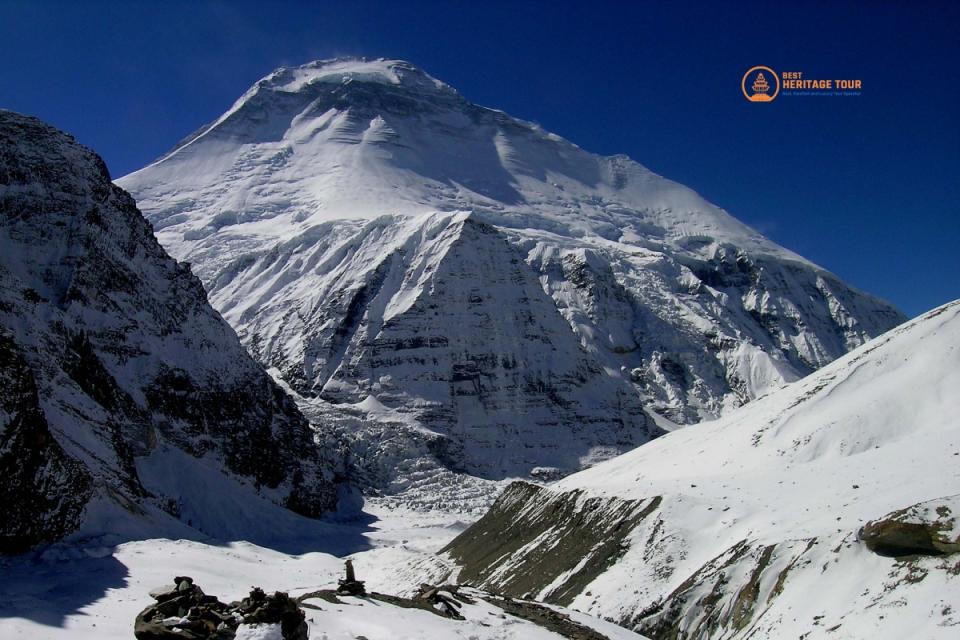
Dominated by the towering presence of Mount Dhaulagiri (8,167 meters), the seventh highest mountain in the world, this circuit takes you into terrain where trails disappear into ice, rivers roar through deep gorges, and isolation becomes your closest companion. Unlike the busier Everest or Annapurna regions, Dhaulagiri remains untouched by mass tourism - and that is exactly what makes it extraordinary.
If you are a trekker seeking the ultimate challenge in Nepal, this guide will help you understand why the Dhaulagiri Circuit Trek stands as the toughest trek in Nepal and whether it is the right adventure for you.
Where is Dhaulagiri and Why Is It So Special?
The Dhaulagiri massif lies in western Nepal, separated from the Annapurna range by the mighty Kali Gandaki Gorge - the deepest gorge in the world. While many trekkers explore the popular routes around Annapurna Circuit, only a small percentage venture toward Dhaulagiri.
The name “Dhaulagiri” comes from Sanskrit:
-
Dhavala = white
-
Giri = mountain
Together, it means “The White Mountain,” and when you see its snow-clad pyramid rising above the clouds, you understand why.
What makes Dhaulagiri special?
-
Remote and less commercialized
-
Technical glacier crossing
-
High altitude passes above 5,000 meters
-
True wilderness camping experience
-
Minimal teahouse infrastructure
-
Expedition-like adventure
This is not a comfort trek. This is for serious trekkers.
Why Dhaulagiri Circuit Trek is the Hardest Trek in Nepal
Many treks in Nepal are challenging, but Dhaulagiri is on another level. Let’s break down why.
1. High Altitude Exposure
The trek crosses French Pass (5,360m) and Dhampus Pass (5,240m) - both above 5,000 meters. At these elevations:
-
Oxygen levels drop significantly
-
Weather changes rapidly
-
Temperatures fall below freezing
-
Risk of Acute Mountain Sickness increases
Unlike some treks with gradual acclimatization villages, Dhaulagiri involves extended exposure to high altitude camping.
2. Glacier Crossing
You will cross the Chhonbardan Glacier, a rugged stretch of ice and moraine that requires careful footing. There are no teahouses, no marked signs - just ice, rocks, and snow.
In some seasons, ropes may be required. It feels closer to mountaineering than trekking.
3. Camping-Based Trek
Unlike the Annapurna or Everest region, Dhaulagiri does not offer comfortable teahouses throughout. Most of the route is fully camping:
-
Tents
-
Cook staff
-
Porters
-
Expedition logistics
This adds to the physical and logistical challenge.
4. Long Duration and Isolation
The standard Dhaulagiri Circuit Trek takes 18 to 21 days. During the central section, you may not see other trekking groups for days.
For many, this isolation is the greatest reward - and the toughest mental test.
Dhaulagiri Circuit Trek Route Overview
The journey usually begins with a drive from Pokhara to Darbang. Pokhara, known for its lakes and mountain views, serves as the gateway to many western Himalayan adventures including treks around Pokhara.
Typical Itinerary Highlights:
-
Darbang (1,180m) - Trek begins
-
Muri Village - Cultural Magar settlement
-
Italian Base Camp (3,660m) - Dramatic rock amphitheater
-
Dhaulagiri Base Camp (4,740m) - Surrounded by 7,000m+ peaks
-
French Pass (5,360m) - Highest point
-
Hidden Valley (5,050m) - Vast snow desert
-
Dhampus Pass (5,240m) - Final major challenge
-
Descend toward Marpha and Jomsom
The descent often connects toward Jomsom, part of the famous Annapurna Region, bringing you back into civilization after days in isolation.
Scenery: Raw Himalayan Drama
If you think Everest offers dramatic landscapes, wait until you witness Dhaulagiri.
From base camp, you are surrounded by:
-
Dhaulagiri I (8,167m)
-
Dhaulagiri II
-
Dhaulagiri III
-
Tukuche Peak
-
Gurja Himal
The sense of scale is overwhelming. Unlike more developed trails near Mount Everest, here you feel small - truly small - in front of nature.
The glaciers shimmer in silver-blue light. Icefalls crash in the distance. The silence is profound.
This is Himalayan wilderness at its purest.
Cultural Experience Along the Trail
Although the upper region is remote, the lower villages offer beautiful cultural encounters.
You will meet:
-
Magar communities
-
Gurung settlements
-
Thakali villages near Marpha
Stone houses, terraced fields, traditional farming, and warm local hospitality give you a glimpse into rural Nepali mountain life.
Unlike commercial trekking hubs, these villages still retain authenticity.
Difficulty Level: Who Can Do This Trek?
Let’s be honest.
The Dhaulagiri Circuit Trek is NOT for beginners.
You should have:
-
Previous high-altitude trekking experience
-
Strong cardiovascular fitness
-
Ability to walk 6-8 hours daily
-
Mental resilience
-
Comfort with basic camping
Trekkers who have completed routes like the Annapurna Circuit or Everest Base Camp and are looking for the next big challenge often consider Dhaulagiri.
Best Time to Trek Dhaulagiri Circuit
Timing is crucial for this trek.
Spring (March - May)
-
Stable weather
-
Clear mountain views
-
Moderate temperatures
-
Rhododendron forests in bloom (lower section)
Autumn (September - November)
-
Best visibility
-
Crisp air
-
Stable high-altitude conditions
Avoid monsoon (June-August) due to landslides and winter (December-February) due to heavy snowfall at passes.
Altitude and Acclimatization
Proper acclimatization is critical.
Most itineraries include:
-
Rest day at Italian Base Camp
-
Rest day at Dhaulagiri Base Camp
Hydration, slow ascent, and experienced guides are essential to minimize risk.
Permits Required for the Dhaulagiri Circuit Trek
Trekkers need:
-
Annapurna Conservation Area Permit (ACAP)
-
Restricted Area Permit (depending on route)
Working with a registered trekking company like Best Heritage Tour ensures all paperwork and logistics are managed professionally.
What Makes Dhaulagiri Different from Everest or Annapurna?
Let’s compare briefly:
|
Feature |
Everest Base Camp |
Annapurna Circuit |
Dhaulagiri Circuit |
|---|---|---|---|
|
Infrastructure |
Developed |
Well-developed |
Minimal |
|
Accommodation |
Teahouses |
Teahouses |
Mostly camping |
|
Crowds |
High |
Moderate |
Very low |
|
Technical Sections |
Moderate |
Moderate |
High |
|
Isolation |
Low |
Moderate |
Extreme |
If Everest is iconic and Annapurna is diverse, Dhaulagiri is wild and untamed.
Packing Essentials for the Hardest Trek in Nepal
Because of its demanding nature, packing properly is critical.
Essential Gear:
-
Four-season sleeping bag
-
Down jacket
-
Crampons (season dependent)
-
Trekking poles
-
High altitude boots
-
Glacier sunglasses
-
Thermal layers
-
Headlamp
-
First aid kit
Weather can change within minutes, especially near French Pass.
Is Dhaulagiri Circuit Trek Worth It?
If you are looking for:
-
Luxury lodges → No
-
Easy Instagram shots → No
-
Crowded trails → No
If you are seeking:
-
Real adventure → Yes
-
True wilderness → Yes
-
The toughest trekking challenge in Nepal → Absolutely yes
This trek transforms you. It pushes your physical boundaries and strengthens your mental endurance.
Conclusion: Ready to Conquer the Hardest Trek in Nepal?
The Dhaulagiri Circuit Trek is not just the hardest trek in Nepal - it is one of the most demanding trekking adventures in the entire Himalayas.
It is for those who want to step beyond comfort zones.
For those who crave silence over crowds.
For those who respect mountains not as destinations, but as powerful forces of nature.
In a world where many trekking routes are becoming commercialized, Dhaulagiri remains raw, authentic, and uncompromising.
And that is exactly why it stands apart.
At Best Heritage Tour, we specialize in organizing high-altitude, expedition-style treks across Nepal with experienced guides, trained support staff, and carefully designed acclimatization schedules to ensure both safety and success.
Whether you are preparing for your biggest Himalayan challenge or seeking expert advice, our team is ready to guide you every step of the way.
Phone / WhatsApp / Viber: +977-9851149197 / +977-9810043046
Email: info@bestheritagetour.com / bestheritagetour@gmail.com
Website: www.bestheritagetour.com
Office: Thamel Marg, Kathmandu, Nepal
Author: Best Heritage Tour
Date: 3rd March, 2026