Whether you are sitting in a cozy cafe in Thamel or planning your 2026 adventure from across the globe, one question inevitably surfaces when comparing Nepal’s two most iconic circuit treks: Is Larkya La Pass harder than Thorong La Pass?
At Best Heritage Tour, we have guided thousands of feet across these high-altitude giants. We’ve seen the triumph at the prayer flags and the grit required in the pre-dawn freezing temperatures. While both passes are crown jewels of the Himalayas, they offer fundamentally different challenges.
In this comprehensive guide, we’ll break down the technicality, the physical toll, and the logistical realities of these two legendary passes to help you decide which one belongs on your 2026 bucket list.
The Tale of Two Passes: At a Glance
Before we dive into the "why," let’s look at the "what." Here is the statistical reality of these two mountain crossings as of the 2026 trekking season.
Comparison Table: Larkya La vs. Thorong La
|
Feature |
Larkya La Pass |
Thorong La Pass |
|---|---|---|
|
Elevation |
5,106 meters (16,752 ft) |
5,416 meters (17,769 ft) |
|
Primary Challenge |
Endurance & Technical Descent |
Pure Altitude & Thin Air |
|
Summit Day Duration |
10-12 Hours |
7-9 Hours |
|
Starting Point |
Dharamsala (4,460m) |
Thorong Phedi (4,450m) or High Camp (4,880m) |
|
Terrain |
Glacial Moraine, Rocky & Often Icy |
Steep Switchbacks, Well-Beaten Path |
|
Infrastructure |
Remote, Basic Teahouses |
Highly Developed, Modern Amenities |
|
Best Season |
Oct-Nov / March-May |
Oct-Nov / March-May |
The Altitude Factor: Why Numbers Can Be Deceiving
On paper, Thorong La Pass is the winner of the "difficulty" badge because it sits 310 meters higher than Larkya La. In the world of high-altitude trekking, 300 meters is significant - it’s the difference between "I’m breathing hard" and "I’m gasping for every molecule of oxygen."
However, at Best Heritage Tour, we often tell our clients: Altitude is a number, but fatigue is a feeling.
-
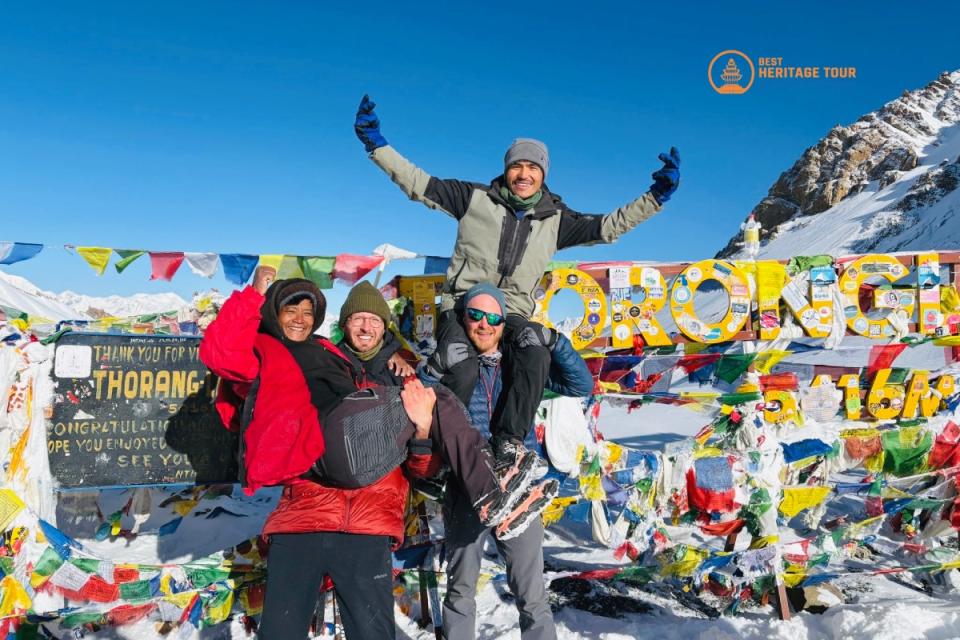
Thorong La: The crossing is a test of your lungs. Because the Annapurna Circuit is so well-traveled, the path is wide and the "staircase" to the top is clear. If you have acclimatized properly in Manang (3,540m), the final push is a slow, steady grind.
-
Larkya La: While lower, the approach is more rugged. You spend more time above 4,000 meters before the actual pass day compared to the standard Annapurna route. This cumulative fatigue can make the 5,106m summit feel every bit as taxing as its 5,416m cousin.
The "Summit Day" Breakdown: Sprint vs. Marathon
This is where the true difference lies. If you ask a Best Heritage Tour guide which day they find more exhausting, they will almost always point to Larkya La.
Thorong La: The Steep Ascent
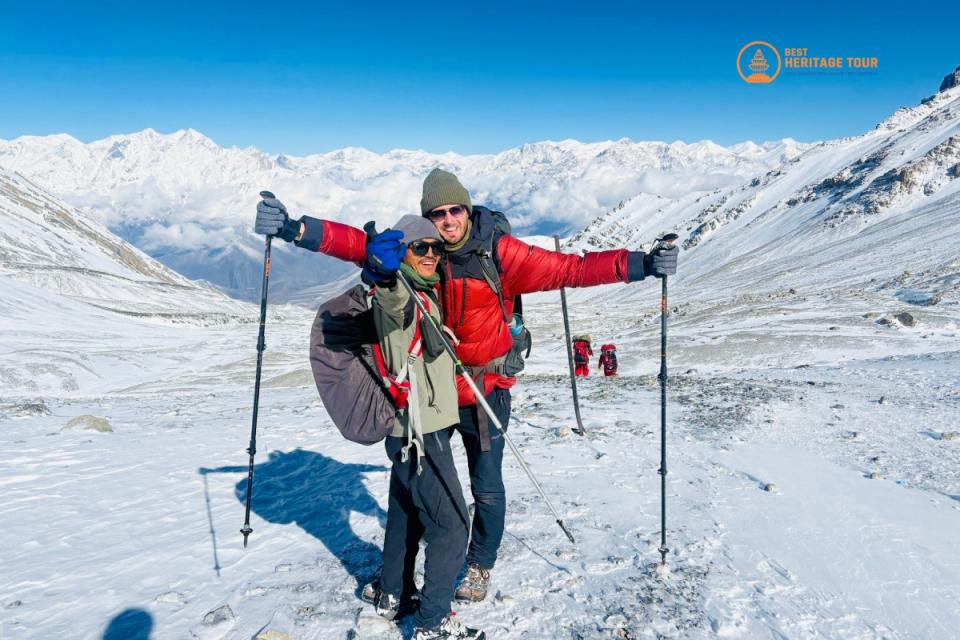
The day usually starts at 3:00 AM or 4:00 AM from Thorong Phedi or High Camp. It is a vertical battle. You climb, you reach the top, you take your photos, and then you begin a very steep, knee-crushing descent to Muktinath. By 1:00 PM, you are likely sitting in a comfortable teahouse in Muktinath, enjoying a hot shower and maybe even a Wi-Fi connection.
Larkya La: The Long Haul
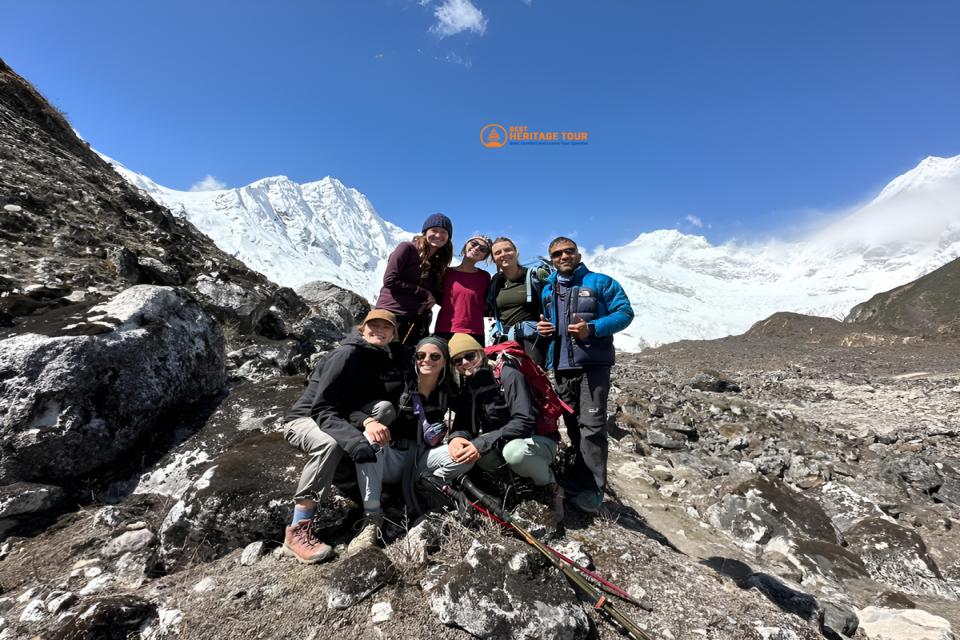
Larkya La is a marathon. Starting from Dharamsala (Larkya Phedi), the trail traverses across lateral moraines and across the head of the Larkya Glacier. It isn't just "up and down" - it's a long, undulating journey.
The real challenge, however, is the descent. After reaching the pass, you face a relentless, steep drop toward Bimthang. This descent is notorious among trekkers for being slippery (especially if there is ice) and physically draining. You are often walking for 10 to 12 hours before you reach the safety of your lodge.
Expert Insight: "In 2026, with shifting glacial patterns, the descent from Larkya La has become more technical. Proper trekking poles and micro-spikes are no longer 'optional' - they are essential for safety." - Best Heritage Tour Lead Guide.
Terrain and Technicality
When we evaluate difficulty, we must look at what is under your boots.
-
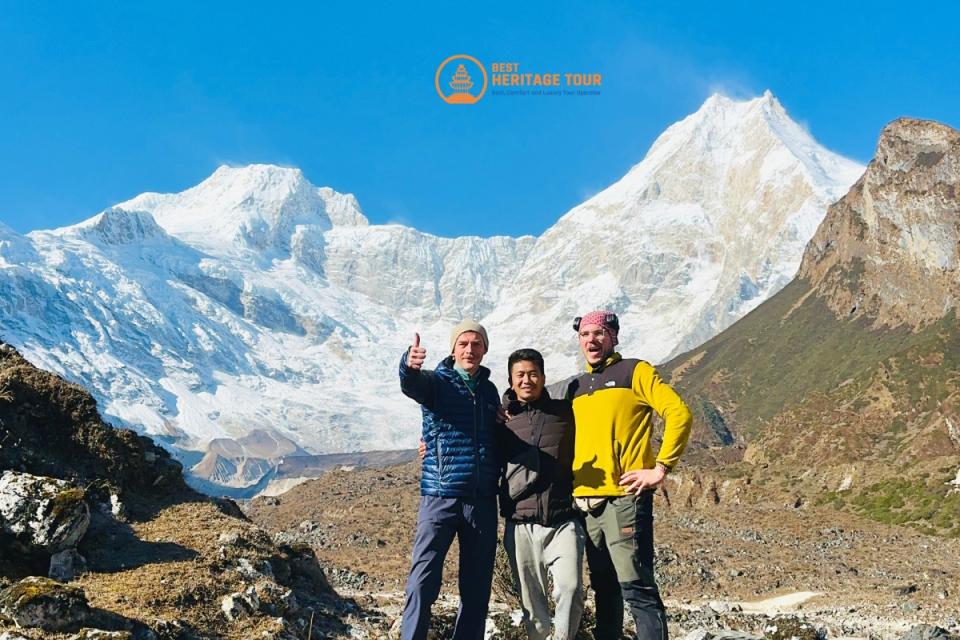
Larkya La (Manaslu): The trail is "raw." You are often walking on loose scree, crossing sections of the glacier, and navigating around rocky outcrops. It feels like a true wilderness expedition. In the early morning, the "frozen" path can be treacherous without the right traction.
-
Thorong La (Annapurna): This is the "expressway" of Himalayan passes. Thousands of trekkers cross it every month during peak season. The trail is well-defined, and unless there has been a recent heavy blizzard, you are following a clear, packed path.
Remoteness and Infrastructure: The "Safety Net"
At Best Heritage Tour, your safety is our primary concern. The difficulty of a pass is also measured by what happens if things go wrong.
The Annapurna Safety Net
The Annapurna Circuit is one of the most developed trekking routes in the world. If you feel the early signs of Altitude Sickness (AMS) near Thorong La, help is relatively close. There are horse-rescue services available to take you down from the pass, and the lodges in Manang and Muktinath are equipped with better communication and even basic medical clinics.
The Manaslu Isolation
The Manaslu Circuit remains a Restricted Area. This means it is less crowded, which is beautiful for the soul, but harder for logistics. Teahouses are more basic. If you get injured or fall ill near Larkya La, a helicopter evacuation is often the only way out, and arranging one in the narrow valleys of Manaslu can be more complex due to weather and terrain.
Preparation: How to Train for Each
Regardless of which pass you choose, the preparation remains intense. At Best Heritage Tour, we recommend a minimum of 12 weeks of physical conditioning.
-
Cardiovascular Endurance: You need "long-slow" stamina. Think 4-hour hikes with a weighted pack.
-
Leg Strength: Focus on eccentric loading (lunges, step-downs) to prepare your knees for the 1,600m descent from either pass.
-
Mental Grit: On the 10th hour of the Larkya La crossing, your mind will want to quit before your legs do.
Which One is Right for You in 2026?
Choose Thorong La Pass if:
-
You want to stand at one of the highest trekking points on Earth (5,416m).
-
You enjoy a social atmosphere and meeting travelers from around the world.
-
You prefer a bit more comfort (better food, occasional Wi-Fi, better beds).
-
You are a first-time high-altitude trekker looking for a well-supported route.
Choose Larkya La Pass if:
-
You crave solitude and "off-the-beaten-path" adventure.
-
You want to experience authentic Tibetan-influenced culture that hasn't changed in decades.
-
You are an experienced trekker who values the "journey" over the "destination."
-
You want a physical challenge that tests your endurance more than just your lungs.
Conclusion
So, is Larkya La harder than Thorong La?
Technically, Larkya La is harder due to the length of the day, the complexity of the terrain, and the remote nature of the Manaslu region. However, Thorong La is more physically taxing on the respiratory system due to its higher elevation.
Most of our guides at Best Heritage Tour agree: You "climb" Thorong La, but you "survive" the long day of Larkya La. Both are life-changing. Both will leave you with a sense of accomplishment that words cannot describe.
Ready to Cross Your Next Pass?
Planning a trek in Nepal can be overwhelming, especially with the 2026 permit regulations and guide requirements. Let the experts at Best Heritage Tour handle the logistics while you focus on the journey.
Phone / WhatsApp / Viber: +977-9851149197 / +977-9810043046
Email: info@bestheritagetour.com / bestheritagetour@gmail.com
Website: www.bestheritagetour.com
Office: Thamel Marg, Kathmandu, Nepal
Author: Best Heritage Tour
Date: 15th April, 2026