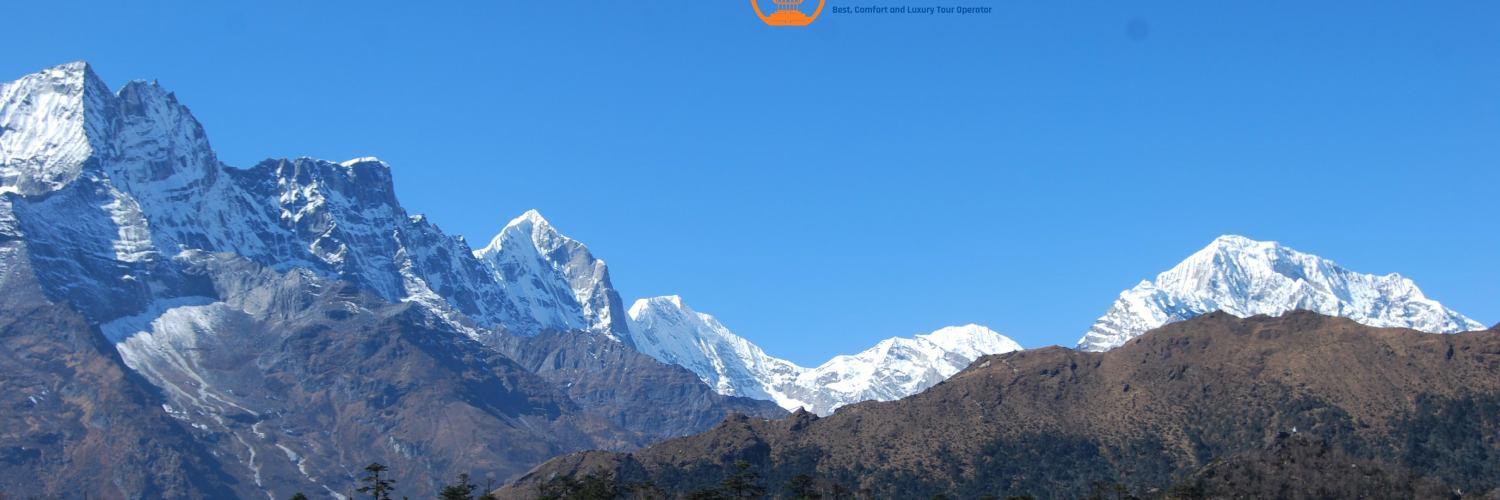
The Everest Base Camp trek is often described as a "conquest" of the physical self. We see the photos daily: the colorful tents of Base Camp, the stark gray of the Khumbu Glacier, and the triumphant summit of Kala Patthar. But at Best Heritage Tour, we have always believed that the mountains of Nepal are not just rocks to be climbed - they are cathedrals to be experienced.
If you are looking for a reason to choose 2026 as your year for the Himalayas, there is one event that stands above the rest. It isn't a mountain peak, but a heartbeat. It is the Mani Rimdu Festival.
In this definitive guide, we will explore why the EBC Trek with Mani Rimdu Festival is the ultimate cultural odyssey, why the Mani Rimdu Festival Exact date 2026 is so crucial for your planning, and how our company provides an insider’s lens into this sacred Sherpa world.
The Sacred Calendar: Mani Rimdu Festival Exact Date 2026
Timing is everything in the Himalayas. The Khumbu region follows the Tibetan lunar calendar, meaning the "High Season" and the "Sacred Season" don't always align perfectly. However, 2026 offers a rare atmospheric gift.
The Mani Rimdu Festival Exact Date 2026 is confirmed for October 26th, 27th, and 28th.
By these dates, the post-monsoon "wash" has finished. The dust has settled, the air is at its thinnest and clearest, and the peaks of Everest and Ama Dablam appear so close you could reach out and touch them. But more importantly, these dates fall during the pinnacle of the autumn trekking season, allowing you to combine the world's most famous trek with its most elusive festival.
What is Mani Rimdu? More Than Just a Festival
To the uninitiated, Mani Rimdu might look like a colorful dance performance. To the Sherpa people, it is the spiritual glue that holds the Khumbu together. The festival was established at Tengboche Monastery in the early 20th century, brought over from the Rongbuk Monastery in Tibet.
The name itself is a prayer: "Mani" refers to Chenrezig (the deity of compassion), and "Rimdu" refers to the small red pills (Rilwu) that are blessed during the 19 days of secret rituals leading up to the public celebration. When you Trek to EBC during the Mani Rimdu Festival in 2026, you are witnessing the culmination of weeks of deep meditation, sand mandala construction, and ancient exorcism rites intended to purify the valley of negative energy.
The Best Heritage Tour Perspective: A Journey in Three Acts
To help you visualize this journey, we have broken down the EBC Mani Rimdu experience into three distinct phases: The Ascent of the Senses, The Sacred Pause, and The Glacial Finale.
Act I: The Ascent of the Senses (Kathmandu to Namche)
Your journey with Best Heritage Tour begins in the chaotic, beautiful streets of Kathmandu. Before we even head to the airport, we take you to the Boudhanath Stupa. Why? Because the monks who perform at Mani Rimdu often share a spiritual lineage with those in Kathmandu. Seeing the "Eyes of the Buddha" in the city provides the context for what you will see at 3,800 meters.
The flight to Lukla is your initiation. As the twin-otter plane touches down on the tilted runway, the air changes. It’s colder, thinner, and smells of woodsmoke and pine.
As we trek through Phakding and into the Sagarmatha National Park, the SEO value of your journey begins to climb - not just in altitude, but in experience. We don't just walk; we observe. Our guides point out the Mani stones - flat rocks carved with the mantra Om Mani Padme Hum. During the festival season, these stones seem to vibrate with more intensity as locals prepare for the pilgrimage to Tengboche.
The Namche Transition:
We spend two nights in Namche Bazaar (3,440m). In 2026, Namche is a marvel - a horseshoe-shaped capital of the Sherpas where you can find high-end espresso and artisanal bakeries next to shops selling yak bells. This is where you will see the first signs of the festival: Sherpas from the Lower Solu region heading upward, carrying their finest traditional Chubas (robes) in their packs.
Act II: The Sacred Pause (The Tengboche Experience)
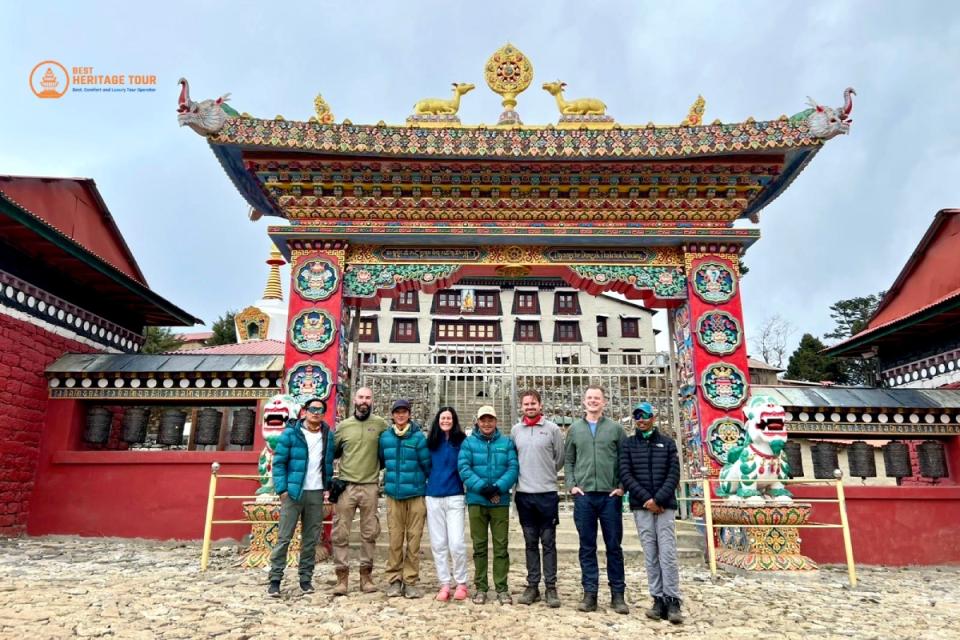
While most trekking companies use Tengboche as a quick lunch stop or a one-night stay on the way to Everest, Best Heritage Tour treats it as the centerpiece. To truly understand Why Trek to EBC during the Mani Rimdu Festival in 2026, you must be there for the three days of public ceremony.
Day 1: The Empowerment (Wong)
October 26, 2026, is the day of the Wong. The courtyard of Tengboche Monastery is a sea of maroon robes and colorful Sherpa hats. The Rinpoche (the reincarnate lama) sits on a high throne, bestowing long-life blessings. You will wait in line with hundreds of locals. There is no "tourist line" here; you are part of the community. As you receive the sacred Mani pills and the silk protection cord, the connection to the mountain becomes personal. It is no longer just a trek; it is a blessing.
Day 2: The Masked Dances (Chham)
October 27 is the visual highlight. The Chham are not mere dances; they are "meditation in motion." Monks wear heavy, ornate silk costumes and masks representing fierce protectors of the Dharma.
As a travel company, we emphasize the symbolism:
-
The Skeleton Dancers: Reminding us of the impermanence of life (a vital lesson when trekking in the shadow of giants).
-
The Deer Dance: Representing the gentleness of the Buddha’s teachings.
-
The Victory Dance: Celebrating the triumph of light over the "demons" of ego and greed.
Imagine the sound: the deep, guttural resonance of the long copper horns (Dungchen) echoing off the face of Ama Dablam. The smell: burning juniper incense (Sang) filling the crisp mountain air. This is the "Human-Like" experience that AI cannot replicate and a blog cannot fully capture - you have to feel the vibration of the drums in your chest.
Day 3: The Fire Puja (Jinsak)
On October 28, the festival concludes with the Fire Puja. A sacred mandala, painstakingly created from colored sand over ten days, is dismantled. The sand is taken to the river, symbolizing the flow of life and the lack of attachment. For a trekker, this is a profound moment. We spend so much energy "attaining" Base Camp, yet the festival teaches us that the journey and the release are what matter.
Act III: The Glacial Finale (Tengboche to EBC and Kala Patthar)
Once the festival concludes, the trail ahead feels different. Most of the crowds return to Namche, but your EBC Trek with Mani Rimdu Festival continues toward the high altitudes.
The walk from Pangboche to Pheriche is where the landscape shifts from forest to tundra. The trees vanish, replaced by hardy shrubs and the stark beauty of the "Himalayan Desert." By the time we reach Lobuche (4,940m), the air is crisp and the excitement is palpable.
Standing at Everest Base Camp:
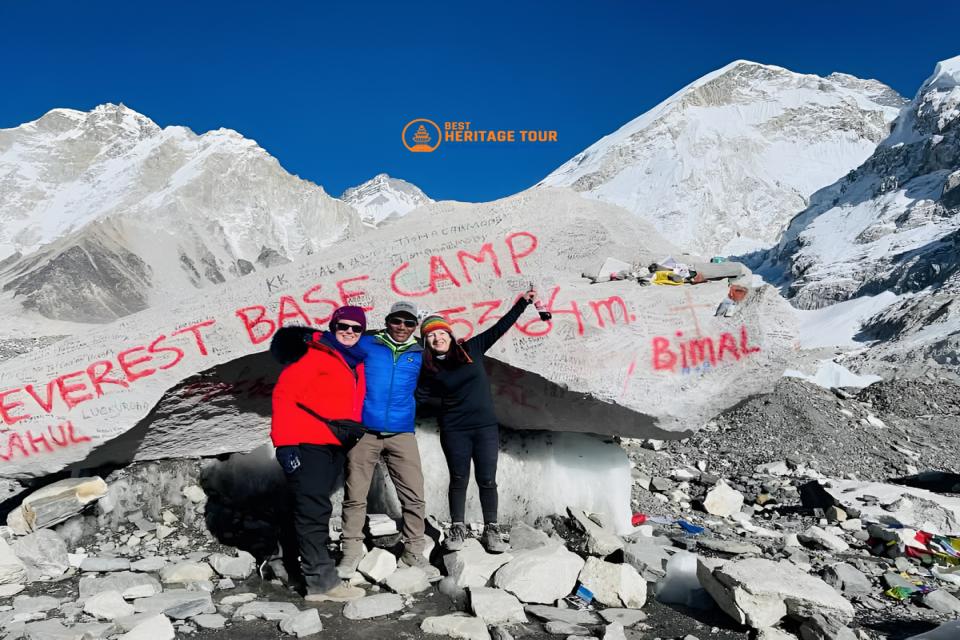
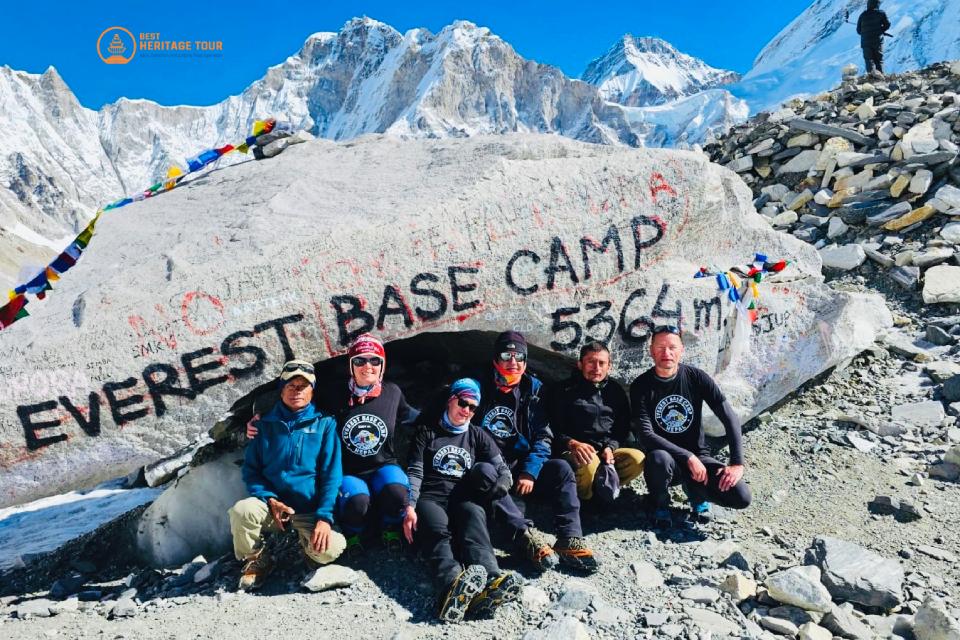
Reaching Base Camp (5,364m) in late October 2026 is a unique experience. While the spring climbing season has the famous "Yellow City" of tents, the autumn season offers something better: peace. You can stand on the edge of the Khumbu Icefall, surrounded by the silence of the giants. In the quiet, you might find yourself reflecting on the dances you saw at Tengboche just a few days prior. You realize that the "protectors" the monks were dancing as are these very mountains.
The Kala Patthar Sunrise:
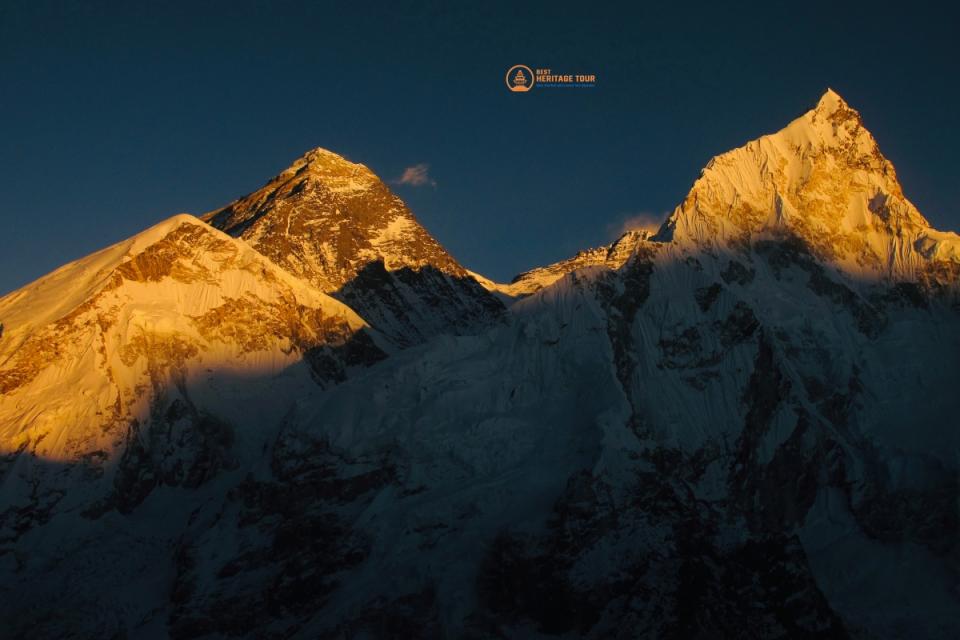
No trek is complete without the ascent of Kala Patthar (5,550m). As the sun rises behind the black pyramid of Everest, turning the snow into molten gold, you understand the "Why." You trekked for the view, but you stayed for the vision.
Practical Intelligence for the 2026 Trekker
To ensure your journey is as smooth as the silk of a monk’s robe, Best Heritage Tour provides this essential logistical breakdown.
1. Training for the Terrain
The EBC trek is not a technical climb, but it is a "test of inches." You will be walking for 5 to 7 hours a day over rocky, uneven terrain.
-
The Heritage Tip: Start your training 4 months before October 2026. Focus on stairs and incline walking. If you can, do some "weighted hikes" to simulate your daypack.
2. Packing for Two Climates
October in the Khumbu is a season of contrasts. In the sun, it feels like summer; in the shade, it is winter.
-
For the Festival: Bring a high-quality sit-mat. The stones of the monastery courtyard are freezing, and the ceremonies last for hours.
-
For the Summit: A -20°C rated down jacket is non-negotiable for the early morning climb of Kala Patthar.
3. Food and Hydration
In 2026, teahouse menus have expanded, but we recommend sticking to the "Sherpa Power" diet: Dal Bhat (lentil soup and rice). It is fresh, calorie-dense, and sustainable.
-
Insider Secret: Garlic soup is the local remedy for altitude. Drink it daily once you pass 3,000 meters.
4. Altitude Awareness
Altitude Sickness (AMS) is a real concern. Our itineraries include two mandatory acclimatization days. We monitor our guests’ oxygen levels daily using oximeters, but the best medicine is "Bistari, Bistari" (Slowly, Slowly).
Conclusion
As the final echoes of the drums fade at Tengboche and you make your way back down toward Lukla, you will carry more than just photos in your camera. You will carry the rhythm of the mountains in your heart.
The Everest Base Camp trek changes your body, but the Mani Rimdu Festival changes your perspective. In 2026, let the world’s highest peaks be the backdrop to your spiritual awakening.
At Best Heritage Tour, we are ready to lead the way. We don't just show you the path; we show you the heritage.
Ready to Start Your Journey?
Don't wait until 2026 to start planning. The Mani Rimdu window is the most sought-after time in the Everest region, and spaces fill up remarkably fast.
Phone / WhatsApp / Viber: +977-9851149197 / +977-9810043046
Email: info@bestheritagetour.com / bestheritagetour@gmail.com
Website: www.bestheritagetour.com
Office: Thamel Marg, Kathmandu, Nepal
Author: Best Heritage Tour
Date: 2nd April, 2026